I have commissioned enough standby generators to know that the sales pitch and the reality diverge at the transfer switch. Homeowners buy peace of mind; what they get depends on whether the unit was sized to the load, wired to code, and maintained like the engine it is. A 20 kW air-cooled generator feeding a 400-amp service through an undersized transfer switch is a lawsuit waiting for a hot August afternoon. This guide covers the real reasons to invest in standby power — the ones that matter to your electrician, your insurance agent, and your family at 2 AM in a ice storm — plus the load calculations, fuel comparisons, and NEC requirements that turn a generator from an ornament into infrastructure.

Portlandia Electric Supply stocks residential standby generators from Generac, Briggs & Stratton, Cummins, and Champion, along with the automatic transfer switches, battery starters, and portable units that complete the backup power picture.
What a Standby Generator Actually Does (And Does Not Do)
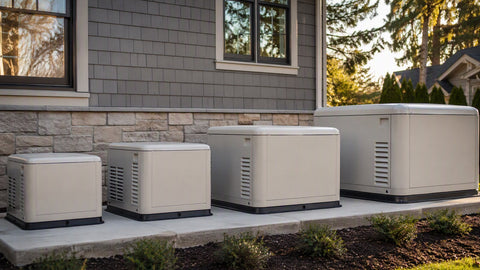
A standby generator is a permanently installed engine-alternator set that automatically starts when utility power fails, transfers the home's electrical load to generator power through an automatic transfer switch (ATS), and returns to standby when utility power returns. The entire sequence takes 10–30 seconds from outage to full power — fast enough for furnaces, refrigerators, and medical equipment to ride through without reset.
What it does not do: power everything in a large home simultaneously unless it is sized for the full load. Most residential standby generators are specified for "essential circuits" or "managed whole-house" operation, not unrestricted full-service backup. Understanding this distinction prevents the most common post-install complaint: "Why can't I run the dryer and the AC at the same time?"
Reason 1: Automatic Protection Without Human Intervention
The defining feature of a standby generator is that it requires no action from the homeowner. The ATS monitors utility voltage continuously. When it detects an outage — typically after a 2–5 second delay to avoid nuisance starts during brief flickers — it signals the generator to start, waits for stable voltage and frequency (usually 5–10 seconds), transfers the load, and energizes the house. When utility power returns, the ATS switches back to utility, runs a cool-down period (typically 1–5 minutes), and shuts down the engine.
Contrast this with a portable generator: drag it from the garage, fill it with fuel, run extension cords through a window or connect a manual transfer switch, start it manually, and refuel every 6–10 hours. In a storm, at night, in freezing rain, that process is dangerous. Carbon monoxide poisoning from portable generators kills an average of 70 Americans per year. A standby generator eliminates that risk entirely — the engine lives outdoors in a weatherproof enclosure, exhausts through a rated muffler, and runs on a fuel source (natural gas or propane) that does not require manual refilling.
Reason 2: Preserve Home Value and Marketability
A permanently installed standby generator is a capital improvement that increases resale value. Realtor surveys consistently show standby generators rank among the top ten features buyers pay a premium for in hurricane, tornado, and ice-belt markets. The premium varies by region — 3–5% in the Gulf Coast, 2–3% in the Northeast — but the underlying logic is consistent: buyers in outage-prone areas value certainty.
From an appraiser perspective, a standby generator adds value when it is properly permitted, inspected, and transferred with the property. A DIY install without permits can actually reduce value or create title issues. Our PowerLink Network contractors handle permitting and inspection as standard practice; we do not ship generators without verifying the installation plan includes AHJ coordination.
Reason 3: Prevent Catastrophic Loss from Extended Outages
The financial case for a standby generator is easiest to make by looking at what an outage costs. A 72-hour blackout in winter creates a cascade of losses:
| Loss Category | Typical Cost | Generator Prevention |
|---|---|---|
| Refrigerator/freezer food spoilage | $200–$500 | Keeps appliances running |
| Frozen pipe burst and water damage | $5,000–$50,000+ | Maintains furnace/boiler circulation |
| Sump pump failure and basement flooding | $3,000–$25,000 | Powers sump pump continuously |
| Hotel stay during outage (3 nights, family of 4) | $450–$900 | Eliminates need to evacuate |
| Lost wages (work-from-home interruption) | $300–$1,500 | Maintains internet and power for home office |
| Medical equipment rental (portable O2, CPAP battery) | $150–$500 | Keeps built-in medical devices operational |
| Mold remediation from humidity (no AC in summer) | $2,000–$10,000 | Runs central air or dehumidifiers |
| Total single-outage exposure | $11,100–$88,400 | Generator cost: $4,000–$12,000 installed |
In regions with frequent outages — the Gulf Coast averages 4–6 hurricane-related outages per decade, the Northeast sees 2–3 ice-storm events — a standby generator pays for itself in prevented losses within the first major event. I have had customers tell me the generator saved them from a $30,000 flooded basement on its first automatic start. That is not a sales story; it is a claims report.
Reason 4: Safer Than Portable Generators in Every Dimension
The safety comparison is not close. Portable generators produce deadly carbon monoxide, require handling of flammable fuel during emergencies, create electrocution hazards through improper extension cord use, and generate noise levels (70–85 dB) that violate many municipal ordinances. Standby generators:
- Exhaust through rated mufflers and enclosed housings, with CO emissions directed away from structures per manufacturer clearance requirements
- Connect through a listed transfer switch that eliminates backfeeding — the primary cause of lineman electrocution during outage restoration
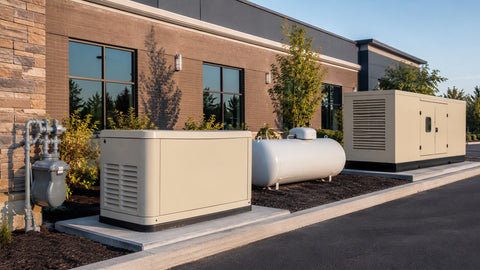
- Run on natural gas (piped continuously) or propane (stored in a buried or above-ground tank) with no manual fuel handling
- Operate at 62–68 dB at 23 feet — comparable to a central air conditioner — and meet local noise ordinances
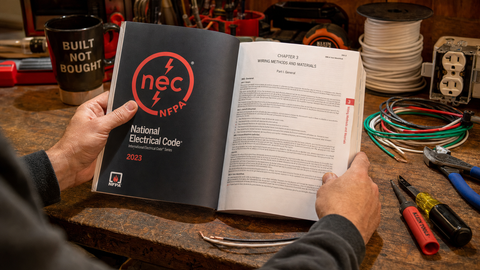
NEC 702.12 requires signage at the service entrance indicating a standby power system is present. This protects utility workers and satisfies OSHA requirements for energized premises. We include NEC-compliant placards with every generator shipment.
Reason 5: Power for Medical and Life-Safety Equipment
For households with medical dependencies — oxygen concentrators, CPAP machines, home dialysis, insulin refrigeration, motorized mobility devices — a standby generator is not a convenience. It is medical infrastructure. Medicare and many private insurers recognize this: some policies cover standby generator costs under durable medical equipment provisions when prescribed by a physician.
The design consideration for medical loads is redundancy. The generator should be sized to carry all medical equipment plus climate control (heating or cooling for respiratory patients is critical), and the ATS should transfer without interruption. For the most critical cases, we recommend a UPS (uninterruptible power supply) on the medical circuit to bridge the 10–30 second generator start interval. A 1,500 VA medical-grade UPS costs $300–$600 and provides peace of mind that no generator-start delay can match.
Reason 6: Maintain Connectivity and Security

Modern homes rely on continuous power for security systems, internet routers, cell signal boosters, and smart home hubs. A standby generator keeps these systems operational through outages that otherwise create vulnerability windows — when alarm batteries die, cameras go dark, and smart locks revert to manual operation. For home offices, the generator maintains routers, modems, and workstations, preventing the productivity loss that comes with forced evacuation to coffee shops or hotels.
The security consideration extends beyond electronics. A lit house with active alarm systems is a less attractive target for looting during extended outages — a documented phenomenon in disaster sociology. The generator keeps exterior lights, cameras, and alarm panels energized, signaling occupancy and vigilance.
Reason 7: Load Management and Smart Prioritization
Modern standby generators do not need to power everything at once. Load-management modules — standard on Generac Guardian and Briggs & Stratton PowerProtect units — intelligently shed non-essential loads when the generator approaches capacity. The module monitors total generator output and temporarily disables the electric dryer, second AC compressor, or pool pump when the furnace and refrigerator need priority.
This intelligence allows a smaller, less expensive generator to protect the whole house. A 14 kW air-cooled unit with load management can cover a 3,000 sq ft home's essential circuits plus cycling non-essentials — a configuration that would require a 22 kW unit without load management. The module pays for itself in reduced generator cost.
Reason 8: Fuel Choices and Run-Time Economics
Standby generators run on natural gas, propane, or diesel. Each fuel has distinct economics, logistics, and maintenance implications.
| Fuel Type | Energy Content | Generator Efficiency | Storage / Supply | Maintenance Interval | Best Application |
|---|---|---|---|---|---|
| Natural gas | 1,000 BTU/ft³ | ~25% (air-cooled) | Utility pipeline; unlimited runtime | Oil/filter: 200 hrs or 2 yrs | Urban/suburban residential; highest convenience |
| Propane (LPG) | 91,500 BTU/gal | ~25% (air-cooled) | Above-ground or buried tank; 500-gal typical | Oil/filter: 200 hrs or 2 yrs | Rural homes without gas service; long-term storage |
| Diesel | 138,700 BTU/gal | ~30% (liquid-cooled) | On-site tank; 48–72 hr typical | Oil/filter: 100–150 hrs | Commercial; large residential; cold climates |
Natural gas is the default for residential standby generators in gas-serviced areas. The fuel is piped continuously, prices are stable relative to propane and diesel, and runtime is unlimited — the generator runs as long as the gas utility maintains pressure, which is typically more reliable than electric distribution. Propane is the choice for rural properties without gas lines; a 500-gallon tank at 70% fill (350 usable gallons) provides roughly 7–10 days of continuous operation for a 20 kW air-cooled generator at 50% load. Diesel offers the best fuel efficiency and cold-start reliability but requires more maintenance and on-site fuel storage that degrades without biocide treatment.
For liquid-cooled diesel and propane units in commercial applications, see our Cummins standby generator guide and Generac brand guide for model-specific specifications.
Reason 9: Sizing the Generator Correctly (The Math That Matters)
Generator sizing is the step where most installations succeed or fail. Undersize and the generator stalls under load; oversize and you spend money on capacity you cannot use while suffering reduced engine loading that causes carbon fouling and premature wear. The correct method: calculate the running watts of all loads to be served, add the starting (surge) watts of the largest motor, and apply a 20–25% margin.
Residential Load Calculation Worksheet
| Load | Running Watts | Starting (Surge) Watts | Priority |
|---|---|---|---|
| Refrigerator/freezer (20 cu ft) | 700 | 2,200 | Essential |
| Central AC (3 ton, 16 SEER) | 3,500 | 7,000 | Essential (summer) |
| Gas furnace blower (½ HP) | 600 | 1,800 | Essential (winter) |
| Electric heat pump (3 ton) | 4,500 | 7,500 | Essential |
| Well pump (1 HP) | 2,000 | 4,000 | Essential |
| Sump pump (½ HP) | 800 | 1,500 | Essential |
| Electric water heater (50 gal) | 4,500 | 4,500 | Managed |
| Electric dryer | 3,000 | 3,000 | Managed |
| Electric range (one element) | 2,000 | 2,000 | Managed |
| Lighting and outlets (general) | 1,500 | 1,500 | Essential |
| Security system / router | 200 | 200 | Essential |
| Essential circuit total | ~10,800 W | + largest surge: 7,000 W | |
| Generator size with 20% margin | (10,800 + 7,000) × 1.20 = 21,360 W → 22 kW generator | ||
A 22 kW air-cooled standby generator — the most common size for whole-house backup in 2,500–3,500 sq ft homes — handles this load profile with load management cycling the water heater and dryer. For homes with all-electric heat pumps instead of gas furnaces, upsize to 24–26 kW or add load management for the heat pump compressor.
Our load calculators and NEC wire sizing guide help contractors run these numbers before specifying equipment. For larger residential and light commercial loads, see our guides to 13 kW generators and 18 kW generators.
Reason 10: Longevity and Total Cost of Ownership
A quality air-cooled standby generator with proper maintenance lasts 20–30 years. The maintenance burden is modest: oil and filter change every 200 hours or 2 years (whichever comes first), air filter and spark plug every 2–4 years, and battery replacement every 3–5 years. Annual maintenance contracts run $300–$500 and include exercise-cycle verification, load-bank testing, and fluid analysis.
Over 20 years, a $8,000 installed 20 kW natural gas generator with $400/year maintenance totals $16,000 — or $67 per month. Against the prevented-loss table above, that is inexpensive insurance. Propane adds fuel cost: at $2.50/gallon and 2.5 gallons per hour at 50% load, a 48-hour outage costs $300 in propane. Natural gas costs less — roughly $0.015/kWh equivalent — but varies with local utility rates.
NEC Requirements for Standby Generator Installations
| NEC Article | Requirement | Common Violation |
|---|---|---|
| 702.5 (Disconnecting means) | Generator must have disconnecting means within sight of the building or lockable in open position | Remote generator without visible disconnect; padlock missing on breaker |
| 702.12 (Signage) | Sign required at service entrance indicating standby system present | No placard; utility worker safety hazard |
| 445.13 (Ampacity of conductors) | Generator supply conductors sized at 115% of nameplate current | Undersized feeder from generator to ATS |
| 250.35 (Generator grounding) | Separately derived system grounding per 250.30; ground electrode conductor required | Missing ground rod; improper neutral bonding |
| 110.3(B) (Installation instructions) | Must follow manufacturer clearance and ventilation requirements | Generator installed too close to structure; overheats |
The grounding requirement trips up more installers than any other. A standby generator with a transfer switch that switches the neutral is a separately derived system and requires its own ground electrode per 250.30. A generator with a solidly bonded neutral and a non-switching transfer switch does not. The distinction matters for inspector approval and for safety. We include grounding diagrams with every standby generator order and recommend a pre-install consultation with our Pro Account team.
How to Choose the Right Standby Generator
- Calculate the load: Use the worksheet above or our load calculator. Do not guess.
- Choose the fuel: Natural gas if available; propane for rural; diesel for commercial or cold-climate reliability.
- Select the transfer switch: Match amperage to the service (200A or 400A). Specify service-entry rated for whole-house or load-center type for essential-circuits.
- Verify clearances: Manufacturer requires 3–5 feet from structures, 5 feet from windows/doors, and adequate airflow. Check local amendments — some jurisdictions require greater setbacks.
- Plan maintenance access: The technician needs to reach all sides. Do not bury the generator in landscaping.
- Permit and inspect: Pull an electrical permit; coordinate gas line work if needed; schedule inspection before activation. Unpermitted installs void homeowner's insurance for fire claims.
Frequently Asked Questions
How much does a standby generator cost installed?
A 14–22 kW air-cooled standby generator with automatic transfer switch costs $4,000–$8,000 for the equipment and $2,000–$4,000 for installation, permitting, and connection. Liquid-cooled units (22–48 kW) range from $10,000–$25,000 installed. Natural gas connection adds $500–$2,500 depending on run length.
How long does a standby generator last?
With proper maintenance, air-cooled standby generators last 20–30 years. Engine life is typically 3,000–5,000 running hours. At 100 hours per year (generous for most regions), that is 30–50 years of calendar life — longer than most homeowners stay in one house.
Will a standby generator power my whole house?
It depends on sizing. A 22 kW generator with load management can power most 2,500–3,500 sq ft homes including central AC. Larger homes with all-electric heat, pools, and multiple HVAC zones may need 26–38 kW or managed load shedding. Run the load calculation before buying.
How loud is a standby generator?
Most residential air-cooled standby generators produce 62–68 dB at 23 feet — comparable to a central air conditioning condenser. Liquid-cooled units are quieter (58–62 dB). Local noise ordinances vary; check municipal code before installation. Enclosure upgrades can reduce noise by 3–5 dB.
How often should I maintain my standby generator?
Change oil and filter every 200 running hours or 2 years, whichever comes first. Replace air filter and spark plug every 2–4 years. Test the automatic transfer switch monthly using the exercise function (most generators self-test weekly). Replace the starter battery every 3–5 years. Annual professional service is recommended.
Can I install a standby generator myself?
We do not recommend it. Standby generator installation requires electrical permit, gas line work, transfer switch integration with the service panel, grounding electrode installation, and inspection. Mistakes in any of these create fire, electrocution, and carbon monoxide hazards. Use a licensed electrician and coordinate with your gas utility.
What is the difference between an air-cooled and liquid-cooled generator?
Air-cooled generators use engine-driven fans to cool the alternator and engine. They are lighter, less expensive, and adequate for residential loads up to ~24 kW. Liquid-cooled generators use a radiator and coolant loop, run quieter, handle larger loads (22–150+ kW), and last longer in continuous-duty applications. Spec liquid-cooled for homes over 4,000 sq ft or commercial use.
Does a standby generator require a battery?
Yes. All automatic standby generators use a 12V lead-acid or AGM battery to start the engine during an outage. The battery trickle-charges from the generator's alternator when utility power is present. Replace every 3–5 years; cold weather shortens battery life. We stock replacement starter batteries for all major brands.
The Bottom Line for Homeowners
A standby generator is not an impulse purchase. It is infrastructure — an engineered system that requires correct sizing, professional installation, and regular maintenance to deliver on its promise. The benefits are real: automatic protection, preserved home value, prevented catastrophe, and the quiet confidence that your family will stay warm, safe, and connected when the grid goes down. But those benefits accrue only to systems that are designed and installed correctly. A cheap generator in a cramped location with no maintenance plan is a liability, not an asset.
Portlandia Electric Supply stocks standby generators from Generac, Briggs & Stratton, Cummins, and Champion in sizes from 10 kW to 48 kW, with transfer switches, starter batteries, and portable units to complete any backup power design. Our Pro Account program offers contractor pricing and technical support, and our PowerLink Network connects you with certified installers in your area. Before you buy, contact our team — we will run the load calculation with you and make sure the generator you specify is the generator you need.