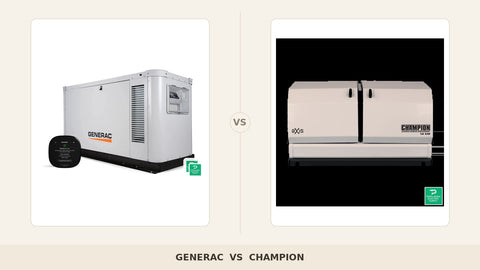
A 48kW generator sits in a sweet spot that a lot of buyers overlook: it's too much machine for the average single-family home, but it's exactly right for large estates, small commercial buildings, agricultural operations, medical offices, and light industrial shops. I've specced 48kW units into a winery in the Willamette Valley, a two-story dental practice, and a 9,000-square-foot custom home with dual geothermal heat pumps — and in every case the math said 48kW was the smallest machine that carried the load without gasping. This guide walks through what a 48kW generator actually powers, how the fuel and electrical math shakes out, and how to decide whether 48kW is your number or whether you should step down to a 35kW unit or up to a 60kW class machine.

What 48kW Really Means in Watts, Amps, and Circuits
Forty-eight kilowatts is 48,000 watts of continuous rated output. On the electrical side, that translates into very different ampacities depending on voltage and phase configuration, and this is where I see the most sizing mistakes in the field. A buyer hears "48kW" and pictures a wire size without ever asking which voltage the unit is wound for.
- 240V single-phase: 48,000W ÷ 240V = 200 amps of full-load current. That's an entire residential service on one generator.
- 208V three-phase: 48,000W ÷ (208V × 1.732) = 133 amps. Common in small commercial buildings.
- 480V three-phase: 48,000W ÷ (480V × 1.732) = 57.7 amps. The efficient choice for industrial feeders.
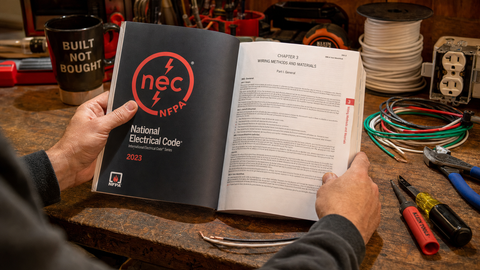
Per NEC 445.13, the conductors from a generator to the first overcurrent device must be sized at no less than 115% of the nameplate current rating, unless the design prevents sustained overload. That 15% headroom changes the wire table in ways buyers rarely expect:
| Voltage / Phase | Full-Load Amps | 115% NEC 445.13 | Copper THHN (75°C, NEC 310.16) | Breaker (NEC 240.6) |
|---|---|---|---|---|
| 240V / 1-phase | 200 A | 230 A | 4/0 AWG (230 A) | 250 A |
| 208V / 3-phase | 133 A | 153 A | 2/0 AWG (175 A) | 175 A |
| 480V / 3-phase | 57.7 A | 66.4 A | #4 AWG (85 A) | 80 A |
Notice the 240V single-phase row: the 115% rule pushes you past 200A conductor ampacity into 4/0 copper and a 250A breaker, even though the generator's "headline" output is exactly 200A. I've watched an inspector red-tag an otherwise clean install over exactly this detail. If you're pulling the feeders yourself, cross-check your run against our NEC wire sizing and ampacity guide and the NEC ampacity chart before you buy wire — 4/0 copper is expensive enough that you only want to order it once.
What a 48kW Generator Powers: Real Load Tally
The honest way to evaluate a 48kW machine is to tally actual loads, not brochure language. Below are the appliance tables our team uses on site surveys, followed by a worked example. These wattage figures come from nameplate readings and clamp-meter measurements, not marketing sheets.
Typical Kitchen and Heavy Appliance Loads
|
Appliances |
Wattage |
|
Refrigerator |
300-1000 |
|
Microwave |
800-1000 |
|
Dishwasher |
1200-2400 |
|
Drip Coffee Machine |
550-1200 |
|
Deep Fryer |
1000 |
Comfort, Office, and Entertainment Loads
|
Appliances |
Wattage |
|
Plasma TV |
150-500 |
|
Incandescent Light Bulbs |
60 |
|
Standard Desktop Computer |
65-250 |
|
Printer |
30-50 |
Laundry Loads
|
Appliances |
Wattage |
|
Chain Saw |
1,200 |
|
Drill |
720 |
|
Edge Trimmer |
500 |
Worked Example: Small Commercial Building
Here's a real-style load tally for a mixed office/retail building we surveyed — the kind of job where a 48kW unit earns its keep:
| Load | Quantity | Running Watts Each | Running Total | Starting Surge |
|---|---|---|---|---|
| 5-ton rooftop HVAC unit | 2 | 6,000 W | 12,000 W | +11,000 W (one unit starting) |
| Walk-in refrigerator compressor | 1 | 1,800 W | 1,800 W | +3,600 W |
| LED interior + exterior lighting | 1 lot | — | 4,200 W | — |
| POS systems, servers, network | 1 lot | — | 2,400 W | — |
| Electric water heater | 1 | 4,500 W | 4,500 W | — |
| Receptacles / misc. office load | 1 lot | — | 3,000 W | — |
| Totals | — | — | 27,900 W running | ~42,500 W worst-case surge |
Running load lands at about 28kW — roughly 58% of the generator's rating, which is a healthy operating point. Worst-case coincident starting surge (one rooftop unit plus the walk-in compressor kicking together) approaches 42.5kW, still inside the machine's motor-starting capability. That's the profile you want: running load between 40% and 70% of rating, with surge headroom to spare. Running a diesel at 20% load for months causes wet stacking — unburned fuel and carbon fouling the exhaust — and running anything at 95% load shortens its life. 48kW hits the middle for buildings in the 25–35kW running range.
One more nuance from the field: modern inverter-driven HVAC compressors start soft and draw far less surge than the across-the-line compressors in older equipment. If your building has been re-equipped with variable-speed rooftop units in the last five years, your surge picture is friendlier than the nameplate LRA suggests. I've re-tallied buildings where a VFD-driven retrofit dropped the worst-case surge by 8kW — enough to keep a customer in a 48kW machine instead of stepping up a class.
Fuel: Diesel, Propane, and Natural Gas Math
Fuel choice drives operating cost, runtime, and maintenance cadence. Here's the comparison table we hand customers, using class-typical consumption figures for the 45–50kW range (always confirm against the spec sheet of the exact model you're buying — consumption varies by engine):
| Load Level | Diesel (gal/hr) | Propane LP (gal/hr) | Natural Gas (cu ft/hr) |
|---|---|---|---|
| 100% (48 kW) | ~3.8 | ~7.0 | ~700 |
| 75% (36 kW) | ~3.0 | ~5.6 | ~560 |
| 50% (24 kW) | ~2.1 | ~4.1 | ~420 |
| 25% (12 kW) | ~1.3 | ~2.6 | ~280 |
Runtime example, checked math: a 500-gallon propane tank can only be filled to about 80% (400 usable gallons) for thermal expansion. At 50% load burning ~4.1 gal/hr, that's 400 ÷ 4.1 ≈ 97 hours — about 4 days of continuous running. The same building on natural gas never refuels at all, which is why I push customers toward natural gas units whenever a utility line with adequate pressure is within reach of the pad. Where there's no gas service, propane standby units paired with a 1,000-gallon tank buy you eight-plus days, and diesel gives you the best fuel economy per kWh if you can manage on-site storage and fuel polishing.
Diesel vs. Gaseous: The Honest Trade-Offs
Diesel engines in this class are the workhorses: better fuel economy per kWh, longer engine life under heavy loading, and no dependence on utility gas pressure. The costs are on-site fuel management — diesel degrades, grows algae, and needs polishing on a maintenance contract — plus stricter emissions permitting in some air districts. Gaseous units (natural gas or propane) start more reliably in cold weather, run cleaner, and eliminate fuel storage headaches, but they derate at altitude and depend on gas utility pressure staying up during the disaster that knocked the power out. After the 2021 Texas freeze, we started asking every commercial customer one question before recommending natural gas: does your gas utility have backup compression on your lateral? If they can't answer, plan on propane storage.
Outage Runtime Planning
How long an outage can you actually ride out? This table combines the consumption figures above with common fuel storage sizes:
| Fuel Configuration | Usable Fuel | Runtime @ 50% Load | Runtime @ 100% Load |
|---|---|---|---|
| 250-gal propane tank | 200 gal | ~49 hrs (2 days) | ~29 hrs |
| 500-gal propane tank | 400 gal | ~97 hrs (4 days) | ~57 hrs (2.4 days) |
| 1,000-gal propane tank | 800 gal | ~195 hrs (8 days) | ~114 hrs (4.8 days) |
| Diesel, 100-gal sub-base tank | 95 gal | ~45 hrs | ~25 hrs |
| Natural gas (utility) | Unlimited* | Continuous | Continuous |
*Assuming utility gas pressure is maintained. Size your storage against your region's realistic outage history — ice-storm country plans for 5–7 days; urban grid customers may only need 24 hours.
48kW vs. Its Neighbors: A Decision Table
Most shoppers land on 48kW after ruling something else out. This is the comparison I sketch on a legal pad during site visits:
| Size Class | Best Fit | Typically Undersized For |
|---|---|---|
| 22kW (guide) | Whole homes up to ~3,500 sq ft with gas appliances | Homes with electric heat or multiple AC units; any commercial use |
| 26kW (guide) | Large homes, ~4,000 sq ft, with managed loads | Dual-HVAC estates; small businesses |
| 35kW | Very large homes, small offices with one HVAC unit | Buildings with two large HVAC units plus refrigeration |
| 48kW | Estates, medical/dental, retail, ag shops, small industrial | Facilities with elevator banks or heavy three-phase machinery |
| 80kW | Larger commercial footprints, multi-tenant buildings | Overkill for most single-occupant small buildings |
| 125kW+ | Industrial plants, grocery, cold storage | Anything this article describes |
Installation: Transfer Switch, Permits, and Code
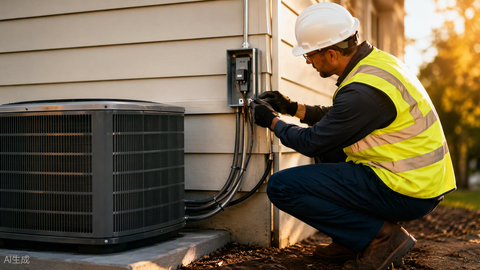
A 48kW installation is not a DIY weekend project, and I don't say that to gatekeep — the 4/0 copper run alone weighs what a person weighs, and the torque specs on those lugs matter. Budget for a licensed electrician and, in most jurisdictions, a mechanical permit for the fuel work.
- Transfer switch: At 240V single-phase you need a service-rated automatic transfer switch at 200A minimum — or a 250–400A switch if the generator feeds the whole service. Browse 200–225A transfer switches and 400A+ transfer switches for the common configurations. For selective-load installs, a manual transfer switch or subpanel approach can cut cost substantially.
- NEC Article 445 governs generator installation: conductor sizing (445.13), overcurrent protection, and the required disconnecting means.
- NEC 700/701/702: Know which article your loads fall under. Legally required standby (701) and optional standby (702) have different wiring rules; emergency systems (700) require separated raceways and stricter listing. A dental office with nitrous storage may land in a different code article than the retail shop next door.
- Setbacks and sound: Most jurisdictions enforce 5-foot minimums from openings and property lines, plus noise ordinances. A 48kW liquid-cooled unit runs about 65–72 dB at 23 feet — plan the pad location before you pour concrete, not after the neighbor complains.
Maintenance: The Schedule That Keeps the Warranty Alive

| Interval | Task | Notes from the Field |
|---|---|---|
| Weekly (automatic) | Self-exercise cycle, 12–20 min | Verify it actually ran; I've found units with exercise disabled for years |
| Monthly | Visual inspection, check oil/coolant, battery voltage | Battery failure is the #1 no-start cause — about 80% of failed starts I've responded to |
| Every 200 hrs or annually | Oil and filter change | Annually even on low-hour standby units; condensation contaminates oil |
| Annually | Coolant check, belts, hoses, air filter, spark plugs (gas units) | Load-bank test if the unit runs mostly unloaded |
| Every 2–3 years | Battery replacement, valve adjustment (as specified) | Replace the battery on schedule, not on failure — failure happens during storms |
What It Costs
Equipment-only pricing for the 48kW class typically runs $14,000–$22,000 depending on fuel type, enclosure rating, and brand, with diesel and 480V three-phase configurations at the top of the band. Installed cost — pad, fuel plumbing, transfer switch, electrical, permits — commonly lands between $24,000 and $40,000. Anyone quoting you a single number without a site survey is guessing, and I tell customers to treat the cheapest bid with suspicion: the skipped items (load calculation, gas line upsizing, proper conductor sizing) show up later as change orders.
On operating cost, run your own numbers with the consumption table above: at $3.50 per gallon of propane and a 24-hour outage at half load, you're burning about 98 gallons — roughly $345 per outage day. Diesel at $4.00 per gallon comes in near $200 per day at the same loading, and natural gas at typical commercial rates is usually the cheapest of the three. Over a 20-year service life, fuel often costs more than the machine, which is why the fuel decision deserves as much scrutiny as the brand decision.
Single-Phase vs. Three-Phase: Match the Service, Not the Wish
About once a month someone calls asking for a 48kW single-phase unit to feed a building that has a 208V three-phase service, or the reverse. The generator has to match the service it's backing up. Three-phase services exist because the building has three-phase loads — usually HVAC compressors, walk-in coolers, machine tools, or elevators — and a single-phase generator cannot start or run them, full stop. Conversely, ordering a 480V three-phase unit for a farm shop with a 240V single-phase service forces you into a transformer you didn't budget for. Read the meter base and the main disconnect before you shop, and if the building is a candidate for a service upgrade anyway, do the service upgrade first — the generator decision gets cleaner afterward.
There is one legitimate exception: some 48kW-class machines are alternator-configurable across common voltages (120/240 single, 120/208 three, 277/480 three) at the factory or by reconnection in the field. If your distributor quotes one of these, get the reconnect procedure in writing and confirm the amp rating at your chosen voltage — the kW stays the same, but the amps, the breaker, and the wire all change, as the table at the top of this article shows.
Noise, Placement, and Enclosures
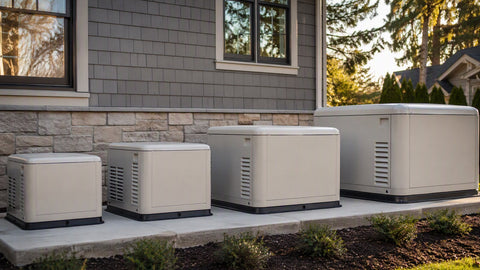
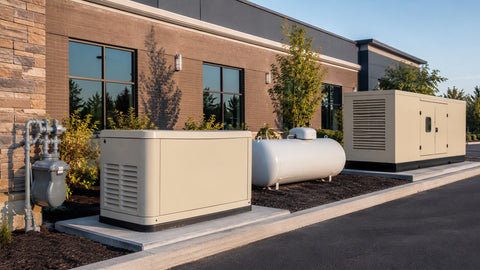
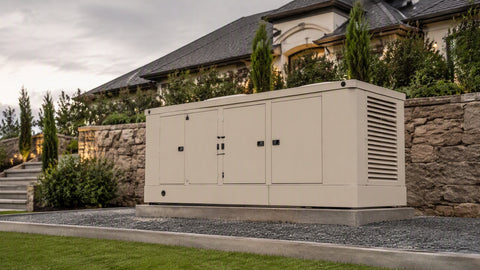
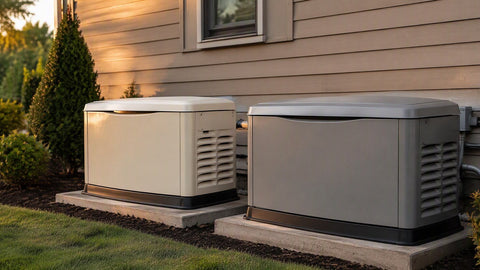
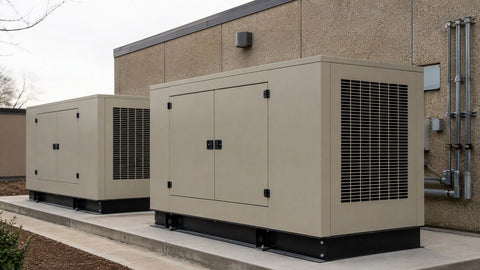
Liquid-cooled 48kW units are physically large — figure roughly 8 feet long, 3.5 feet wide, and 2,500–3,500 pounds depending on fuel and enclosure. The concrete pad typically runs 10 by 5 feet at 6 inches thick with rebar, and most manufacturers require 3–5 feet of clearance on the radiator side for airflow. I've seen a beautifully installed unit shut down on high temperature in its first heat wave because a landscaper planted a hedge 18 inches off the radiator; give the machine its breathing room in writing on the site plan.
Sound-rated enclosures knock output down to the 65–70 dB range at 23 feet, but the tone matters as much as the number — a low-frequency rumble carries through walls in ways the dB meter doesn't capture. If the building has occupied bedrooms or exam rooms near the pad, spend the extra money on the Level 2 sound enclosure and point the exhaust away from windows. Your neighbors and your future self will both be glad.
Parallel Operation and Planning for Growth
If your load study says 40kW today but the business plan says expansion in three years, consider two smaller units in parallel instead of one big one — for example, a pair of 24kW or 30kW sets with paralleling switchgear. Paralleling buys you redundancy (one unit can carry critical loads while the other is serviced), better fuel economy at partial load, and a growth path: add a third set later. The trade-off is upfront cost — paralleling gear and controls can add 30–40% to the project — and maintenance doubles. For most single-building commercial customers, one correctly sized 48kW unit plus a disciplined maintenance plan is the better value. But for medical, refrigeration-heavy, or revenue-critical loads, redundancy is cheap insurance compared to a single point of failure.
The Five Mistakes I See on 48kW Jobs
- Sizing off the electric bill instead of the load. Your kWh consumption tells you almost nothing about peak kW demand. A building that averages 15kW can spike to 45kW when the compressors cycle together. Clamp the mains or pull interval data from the utility.
- Forgetting the 115% conductor rule. Covered above, and worth repeating: NEC 445.13 is the detail that fails inspections.
- Undersizing the gas line. A 48kW gaseous unit at full load wants roughly 700 cubic feet per hour. The half-inch line that feeds a residential furnace won't carry it; most commercial installs need a dedicated 1¼"–2" run and a utility meter upgrade. Get the gas utility's capacity letter before you commit to the equipment.
- Skipping the load-bank test. Standby units that only ever run their 15-minute weekly exercise never see real load. An annual load-bank test at 50–75% for a couple of hours burns off deposits and proves the machine can do its job.
- No fuel plan for a long outage. The generator is only the middle of the system; fuel is the limit. Work the runtime table backward from your region's worst historical outage, then add two days.
Buying Checklist
- Load tally done, including motor starting surge, with running load at 40–70% of rating
- Fuel decision made against your region's outage profile and gas utility reliability
- Voltage/phase configuration matched to your service (don't assume — read the meter base)
- Conductor and breaker sized per NEC 445.13, 310.16, and 240.6
- Transfer switch amperage and listing matched to the install type (service-rated vs. subpanel)
- Pad location checked for setbacks, noise, exhaust, and service access
- Maintenance plan in place before commissioning day
Frequently Asked Questions
Is a 48kW generator enough for a whole house? For almost any house, yes — 48kW can run multiple central AC units, an electric range, a water heater, and a full complement of household circuits simultaneously. It's generally sized for estates over 5,000 sq ft or homes with all-electric appliances and dual HVAC.
How much propane does a 48kW generator use? Class-typical consumption is about 7.0 gallons per hour at full load and 4.1 gallons per hour at half load. A 500-gallon tank (400 usable gallons) supports roughly 97 hours at half load.
Can a 48kW generator run a commercial building? Yes, for small commercial buildings — offices, retail, dental and medical suites — with running loads in the 25–35kW range. Tally your loads including motor starting surge before committing.
What size wire do I need for a 48kW generator? At 240V single-phase: 4/0 copper THHN per NEC 445.13's 115% rule and NEC 310.16's 75°C column, protected at 250A. At 480V three-phase, #4 copper with an 80A breaker typically suffices.
How loud is a 48kW generator? Liquid-cooled standby units in this class typically measure 65–72 dB at 23 feet under load — comparable to a central air conditioner. Check local noise ordinances for setback requirements.
How long will a 48kW generator last? With scheduled maintenance, liquid-cooled standby units commonly deliver 10,000–30,000 operating hours. Since standby duty accumulates hours slowly, that translates to 20+ years of service life in most applications.
Whether 48kW is your answer depends on a load tally, not a hunch. If your running loads sit under 20kW, a 30kW unit will do the job for less money and less fuel. And if you want a second set of eyes on the math, our team at Portlandia Electric Supply runs these calculations daily — reach out with your load list and we'll sanity-check the sizing before you spend a dollar on equipment.