Last Updated: 2026 • NEC references: 690.8, 690.31, 310.16 • Voltage-drop math worked with standard copper resistance values

Nobody falls in love with wire. Panels get the brochure photos, inverters get the app screenshots, and the photovoltaic cable — the component that carries every watt your array will ever produce — gets ordered by the spool at the end of the BOM. That ordering instinct is exactly backwards. Cable is where system efficiency is physically won or lost: every ohm of resistance in a homerun is a permanent tax on production, and every insulation system that cracks early is a ground fault waiting for its first rainstorm.
Omni Cable has built its name in this space as a specialist supplier of photovoltaic wire — the sunlight-resistant, direct-burial-rated, 90°C-or-better cable that modern NEC-compliant arrays run on. This guide uses the Omni Cable photovoltaic lineup as the working example for the questions that actually decide cable selection: PV wire vs. USE-2 vs. THHN-2, how to size for ampacity under NEC 690.8, how to run voltage-drop math before you commit to a gauge, and what separates a cable that lasts 30 years on a roof from one that fails in seven.
⚡ Quick Answer
For exposed rooftop and ground-mount DC runs, specify PV wire (UL 4703) — 600V/1000V/2000V rated, sunlight-resistant, direct-burial rated, 90°C wet/dry — from a specialist supplier like Omni Cable. Size conductors at 156% of module Isc per NEC 690.8 (125% continuous × 125% irradiance), then check voltage drop: keep string-level runs under ~2% and battery circuits under ~1–2%, upsizing gauge on long runs. 12 AWG covers most residential strings; 10 AWG is the voltage-drop fix; THHN-2 belongs in conduit only, never exposed.
Three cable types dominate solar DC work, and inspectors know the difference cold. Choosing wrong isn't a gray area — it's a failed inspection or a premature failure:
| Cable Type | Listing / Rating | Where It's Allowed | Key Strengths | Watch-Outs |
|---|---|---|---|---|
| PV Wire (UL 4703) | 600V, 1000V, or 2000V; 90°C wet/dry; sunlight resistant; direct burial | Exposed array wiring, rooftops, ground mounts, buried runs | Thick cross-linked insulation; the modern standard for module-level DC | Costs more per foot than USE-2; verify voltage rating matches system |
| USE-2 | 600V; 90°C; sunlight resistant; direct burial | Exposed runs where 600V suffices | Lower cost; long field history | 600V ceiling rules it out of many modern 1000V/1500V strings |
| THHN-2 / THWN-2 | 600V; 90°C dry | Inside conduit only — inverter AC output, DC in raceways | Cheap, everywhere, easy to pull | Not sunlight resistant, not direct burial — never exposed on a roof |
The field rule is simple: anything the sun can see is PV wire (or legacy USE-2 at 600V and below), anything in a raceway can be THHN-2, and the transition happens at a listed enclosure. Omni Cable's photovoltaic line — including the PV wire and related PV constructions we stock — exists precisely for that exposed-wiring zone where generic building wire doesn't belong. When in doubt, read the jacket print against the table above; the markings are the law of the installation.
I've opened junction boxes on ten-year-old arrays where someone ran THHN across the roof "just for that short section." The insulation was chalked, crazed, and flaking off the conductor. The fix was a rewire; the cost was a week of lost production plus labor. The price difference doing it right the first time was about forty dollars of PV wire. That ratio — pennies of prevention against days of repair — is the whole argument for speccing cable like it matters, because it does.
NEC 690.8 sets the floor for PV source and output circuit conductors: 125% of maximum current for continuous operation, multiplied by another 125% irradiance factor where no exception applies — the familiar 156% rule. The conductor's corrected ampacity (after temperature and conduit-fill adjustments) must clear that number, and so must the termination ratings and any overcurrent device.
| Copper Conductor (90°C) | Ampacity, NEC 310.16 | Max Module Isc Covered (÷ 1.56) | Typical Solar Application |
|---|---|---|---|
| 14 AWG | 25A | ~16.0A | Legacy or low-current strings, short jumpers |
| 12 AWG | 30A | ~19.2A | Standard residential string homeruns |
| 10 AWG | 40A | ~25.6A | High-current modules, long runs needing drop control |
| 8 AWG | 55A | ~35.2A | Paralleled strings, commercial output circuits |
Worked example on a modern 450W residential module with Isc = 13.9A: 13.9 × 1.56 = 21.7A required. A 12 AWG PV wire at 30A clears it with room — which is why 12 AWG is the residential default. Parallel two strings onto one output circuit and the requirement doubles to 43.4A: now you're at 10 AWG minimum before temperature corrections, and 8 AWG if rooftop heat forces a derate. The table above is the starting point; ambient temperature correction factors from NEC 310.15 finish the job. Our solar wiring basics guide walks the full conductor-selection sequence, and the NEC compliance guide maps the Article 690 rules behind it.
Ampacity keeps you legal and safe. Voltage drop decides what the system earns. Every DC run behaves per the same formula: Vd = 2 × L × I × R ÷ 1000, where L is one-way length in feet, I is operating current, and R is conductor resistance per 1,000 feet. The "2" is the round trip — electrons come home too. Copper resistances to work with: 12 AWG ≈ 1.93 Ω/1000 ft, 10 AWG ≈ 1.21, 8 AWG ≈ 0.764.
| Run Scenario | Math | Voltage Drop | Verdict |
|---|---|---|---|
| 100 ft homerun, 12 AWG, 11A operating (400V string) | 2 × 100 × 11 × 1.93 ÷ 1000 | 4.2V = 1.1% of 400V | ✓ Fine |
| 250 ft homerun, 12 AWG, 11A (400V string) | 2 × 250 × 11 × 1.93 ÷ 1000 | 10.6V = 2.7% | ⚠ Upsize to 10 AWG → 6.6V = 1.7% |
| 15 ft battery cable, 10 AWG, 100A (48V system) | 2 × 15 × 100 × 1.21 ÷ 1000 | 3.6V = 7.6% of 48V | ✗ Way over — this is why battery runs use 2/0–4/0 |
| 400 ft ground-mount feeder, 8 AWG, 22A (500V circuit) | 2 × 400 × 22 × 0.764 ÷ 1000 | 13.4V = 2.7% | ⚠ Marginal — consider parallel conductors or larger gauge |
Two design rules fall out of that table. First, high-voltage strings forgive distance — the same wire loses a smaller percentage at 400V than at 48V, which is one underappreciated reason the industry keeps climbing in system voltage. Second, low-voltage battery circuits are brutally unforgiving: at 48V, a 2% drop budget is about one volt, and that forces big copper on short runs. We spec 2/0 or 4/0 between batteries and 48V hybrid inverters as routine, not as overkill.
A practical target: keep total DC voltage drop at or under 2% string-to-inverter, and under 1–2% on battery circuits. Each point of drop you eliminate is a point of production you keep, every sunny hour, for 30 years. Oversizing one gauge on a long homerun is the cheapest energy upgrade in the whole system. And remember the correction nobody likes: conductor resistance rises with temperature, so a rooftop run on a hot afternoon drops slightly more than the cold math says. Building margin into the gauge selection covers both the distance and the July version of that distance.
Not all "solar cable" is built alike. When we evaluate a PV wire line — Omni Cable's included — the checklist that separates 30-year cable from 7-year cable is physical:
- Cross-linked (XLPE/XLPO) insulation. Thermoset compounds that don't melt back, flow, or chalk under UV the way cheaper thermoplastic jackets do. This is the single biggest longevity differentiator.
- 90°C wet and dry ratings. Rooftop conduit and cable in free air both run hot; a wet rating covers the buried and in-raceway moisture reality.
- Sunlight resistance per UL. Not a marketing phrase — a tested listing. If it's not printed on the jacket, assume it isn't.
- Direct burial rating for trench runs to ground mounts, so a misplaced conduit fitting doesn't become a failure point.
- Tinned, finely stranded copper. Corrosion resistance at terminations and the flexibility to dress through racking without fighting the installer.
- −40°C cold rating. Northern installs embrittle cheap jackets; the cable that cracks at a January bend is a ground fault with a date on it.
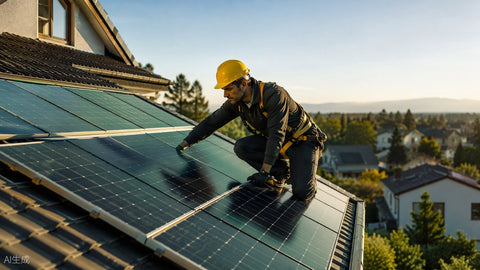
Specialist suppliers earn their place on exactly this list. The reason contractors come back to the Omni Cable photovoltaic line isn't the logo — it's that the print legend carries the full rating stack (UL 4703, voltage class, temperature, sunlight resistant, direct burial), the stranding is consistent spool to spool, and the jacket still flexes after winters on a reel. When you're pulling 5,000 feet across a commercial roof, you feel the difference by lunchtime.
A Worked 10 kW System: The Complete Cable Takeoff

Theory is cheap; let's do the takeoff. A 10 kW residential system — 24 × 420W modules, two strings of 12, string inverter on the garage wall, array on the back roof. The DC design:
| Run | Design Basis | Cable Decision |
|---|---|---|
| Module-to-module jumpers | Factory leads, 12 AWG PV wire, mated MC4s | As shipped — verify connector brand matches across all modules |
| String homeruns, 2× 60 ft | Isc 13.5A × 1.56 = 21.1A required; Vd at 12 AWG ≈ 1.0% of 470V string | 12 AWG PV wire, 1000V, SR, red/black pairs — ~250 ft with waste allowance |
| Attic transition in EMT | Conduit section per NEC 690.31 | Same PV wire through EMT, or THWN-2 if the conduit run is complete end to end |
| DC to inverter landing | Listed lugs, torque to spec | Mark torque values; photograph for the closeout package |
| Grounding (NEC 690.41–47) | 6 AWG Cu equipment ground typical | Per the grounding & bonding guide |
The whole wire package for that system — homeruns, grounding, clips, and the connector stock — lands under a few hundred dollars, and it's the cheapest insurance in the build. The expensive version is the same system with undersized homeruns eating 3% of production for 30 years: on a 10 kW array making ~13,000 kWh a year at $0.15/kWh, 3% is roughly $60 a year, $1,500 over the system's life, against a one-time $40 upsize to 10 AWG. Do the math once and you never spec the minimum gauge again.
Patterns repeat across thousands of roofs. The cable failures that generate service calls cluster into a short, preventable list:
- THHN in free air. Building wire across a roof "just for a short section," chalked and cracked inside a decade. PV wire exists for this; use it.
- Unsupported spans. Homeruns dangling from module leads instead of clipped to rails. Wind works the cable against sharp edges until the insulation loses. NEC 690.31 wiring methods aren't bureaucracy — they're the fix for a documented failure mode.
- Minimum-gauge homeruns on long runs. Ampacity-legal, voltage-drop-lazy. The system works on day one and under-earns for thirty years.
- Undersized battery cables on 48V systems. The voltage-drop math at 48 volts is unforgiving; a 10 AWG battery jumper that "fits the lug" is a heat generator at 100 amps.
- Mixed connector ecosystems. Field-terminated ends that don't match the module lead brand — an NEC 690.33(C) violation and a resistance time bomb. Our connector guide covers the mating rules.
- No as-built documentation. Unlabeled homeruns turn a 20-minute fault isolation into a two-hour attic crawl. Label both ends, every run, every time.
Every item on that list is cheaper to prevent than to repair — by an order of magnitude once you count the truck roll. Cable discipline is the highest-leverage workmanship habit in the trade.
Everything you need to know about a PV cable is printed on its jacket every couple of feet — if you can read the code. Here's the translation table our counter team uses when a contractor holds up a mystery spool:
| Jacket Marking | What It Means | Why You Care |
|---|---|---|
| PV WIRE / UL 4703 | Listed for photovoltaic systems per UL 4703 | The baseline legal listing for exposed array wiring |
| 600V / 1kV / 2kV | Voltage class of the insulation system | Must meet or exceed your corrected max system voltage (NEC 690.7) |
| 90°C WET/DRY (or 105°C) | Temperature rating in both conditions | Sets the ampacity column and rooftop heat margin |
| SR (sunlight resistant) | UV-tested jacket compound | Non-SR cable on a roof is a five-year failure clock |
| DIR BUR (direct burial) | Rated for trench installation | Required for buried runs to ground mounts without conduit |
| -40°C | Cold-bend rating | Winter installs and northern service life |
If any of those marks are missing, the cable is what the missing mark says it isn't. We've seen "solar cable" from no-name online sellers with no UL file number and a jacket that started chalking its second summer. Saving $0.08 a foot on a 25-year asset is a trade nobody should make twice.
Good cable installed badly fails like bad cable. The practices that matter:
- Respect bend radius. As a working rule, keep bends at or beyond 8× the cable's outer diameter. Kinks work-harden strands and crack insulation from the inside out.
- Support, don't suspend. Use listed PV wire clips and hangers under modules; never let cable rest on the roof membrane or drape over sharp racking edges. NEC 690.31's wiring-methods requirements exist because chafed-through homeruns were an epidemic in early arrays.
- Keep it out of water paths. Cable sitting in a gutter line or ponding zone lives a hard, short life even with a direct-burial rating.
- Match the connector system. PV wire terminates into listed locking connectors crimped with the manufacturer's die — see our solar connector field guide for the termination procedure and the NEC 690.33(C) mating rules.
- Label both ends. Future-you, troubleshooting a ground fault at dusk, will be grateful.
Cable is a logistics product as much as an electrical one. Buy it that way: spool quantities matched to the design takeoff with a 5–10% waste allowance, cut-to-length service on long commercial feeders so the crew terminates instead of measures, and jacket print verified against the submittal before the spool leaves the dock. On utility-scale work, a single reel mix-up across 40 identical-looking spools is a week of crew time — the good suppliers tag and segregate by circuit, and it's worth specifying.
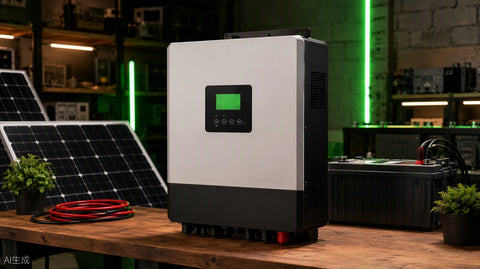
At PES Supply we stock Omni Cable photovoltaic wire alongside the rest of the DC package — modules, racking, connectors, and the hybrid inverters they feed. Browse the electrical supplies category or send the takeoff for a bundled quote. If the design is still fluid, our system calculator and inverter sizing calculator help lock the architecture before the wire list.
Bottom line from the supply side: cable is the smallest line on the BOM and the longest-lived component on the roof. Spec it once, spec it right, and it will quietly do its job for three decades. Spec it casually and it will remind you — on the customer's dime and your reputation — that every watt flows through it.
What is PV wire and how is it different from regular building wire?
PV wire is cable listed to UL 4703 specifically for photovoltaic systems: sunlight-resistant, direct-burial rated, 90°C wet/dry, and available in 600V, 1000V, and 2000V classes with thick cross-linked insulation. Regular building wire like THHN-2 is rated 600V dry, is not sunlight resistant, and is only code-appropriate inside conduit — never exposed on a roof or array.
What gauge PV wire do I need for solar panels?
Most residential strings run 12 AWG, which covers module Isc up to roughly 19A after NEC 690.8's 156% sizing factor. High-current modules, paralleled strings, or long runs push you to 10 or 8 AWG. After ampacity, check voltage drop: keep string-level runs under about 2% by upsizing gauge on long homeruns — the production you save pays for the copper.
Can I use THHN wire for solar panels?
Only inside conduit or raceways — for example, the inverter's AC output run or DC circuits fully enclosed in raceway. THHN-2 is not sunlight resistant and not rated for direct exposure or burial, so it can never legally run exposed across a roof or along racking. Exposed array wiring requires PV wire (or USE-2 at 600V and below).
How much voltage drop is acceptable in a solar array?
A solid design target is 2% or less from array to inverter on DC string circuits, and 1–2% on low-voltage battery circuits, which are far less forgiving because of their low system voltage. Every point of voltage drop is a point of production lost every operating hour for the life of the system, which is why long runs justify upsizing a gauge.
How long does photovoltaic cable last?
Quality PV wire with cross-linked insulation, proper UV listing, and 90°C wet/dry ratings is engineered to match the 25–30+ year life of the array — provided it's installed within bend radius, properly supported, and kept out of water paths and abrasion points. Cheap or misapplied cable (non-UV-rated, thermoplastic jackets) can chalk and crack in well under ten years of sun exposure.
Is USE-2 still acceptable for solar installations?
USE-2 remains code-acceptable for exposed runs on systems at or below its 600V rating, and it has decades of field history. But modern residential strings frequently operate above 600V, and utility systems run 1000–1500V, which rules USE-2 out. For new work, PV wire in the correct voltage class is the standard specification.
PV Wire, Connectors & the Full DC Package
Omni Cable photovoltaic wire, listed connector systems, and matched tooling — 50,000+ SKUs, 169 authorized brands, nationwide LTL freight from Louisville, KY. Spool and cut-to-length programs for project volumes.
Shop Electrical Supplies Get a Cable QuoteRelated Guides & Resources
About PES Supply
PES Supply is a nationwide distributor of photovoltaic wire, solar panels, inverters, connectors, racking, and complete electrical project kits — 50,000+ SKUs across 169 authorized brands with full OEM warranties and nationwide LTL freight from our Louisville, Kentucky supply house. Phone: 1-888-876-0007 • portlandiaelectric.supply