The Retrofit Storage Problem This Box Solves
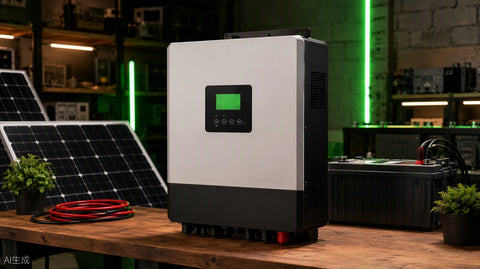
Here's the call we get every week: "I installed grid-tied solar three years ago, the rates changed, the outages got worse, and now I want batteries." For most of the industry's history, the honest answer was painful — rip out a perfectly good PV inverter, replace it with a hybrid, re-permit, re-wire, re-commission. AC-coupled storage exists to kill that answer, and the GoodWe GW6000-SBP-US20 (SBP US Series G2) is one of the cleanest executions of the idea we've stocked: a 6kW battery inverter that bolts onto any existing grid-tied solar system, talks to the battery of your choice in its voltage window, and turns a dumb solar array into a self-consumption and backup system without touching the roof.

This review comes from the supply-and-install side — we've specced these for retrofit jobs, answered the commissioning questions, and watched the monitoring logs through real outages. Specs stay in the tables (all from the published documentation); the prose is field experience. Browse the hardware in our solar inverter collection and the hybrid inverter range.
What the GW6000-SBP-US20 Is
| Attribute | Details |
|---|---|
| Model Number | GW6000-SBP-US20 |
| Series | GoodWe SBP US Series G2 |
| Inverter Type | AC-Coupled Battery Inverter |
| Rated Power | 6 kW |
| Phase Configuration | Single-phase |
| Communications | EZLink 4G (integrated cellular) |
| Primary Applications | Residential solar retrofit, backup power, energy storage |
| Market | North America (U.S. compliant) |
Strip the label off and the architecture is what matters: this is a bi-directional battery inverter that couples on the AC side. Your existing PV inverter stays exactly where it is, doing exactly what it does. The SBP sits between the grid, the home's backed-up circuits, and the battery, measuring the whole dance through CTs and deciding when to charge (solar surplus or off-peak grid) and when to discharge (peak rates or outages). The EZLink 4G monitoring module ships with it, which means connectivity that doesn't die when the homeowner's router does — a detail that sounds minor until you've troubleshot your fifth "monitoring offline" call that turned out to be a Wi-Fi password change.
Electrical Specifications: Reading Them Like an Installer
Battery Side
| Parameter | Specification |
|---|---|
| Battery Voltage Range | 80–460V DC |
| Max Charge/Discharge Current | 25A |
| Battery Type Compatibility | Lithium-ion (LFP, NMC) |
| Communication Protocol | CAN / RS485 |
The 80–460V DC battery window is the spec that makes this inverter flexible: it spans the high-voltage LFP towers that dominate modern residential storage rather than locking you to one vendor's brick. The 25A charge/discharge ceiling sets the real battery power envelope — at the upper end of the voltage range that's on the order of 10kW of battery power, and at the low end considerably less, which is why battery selection and string voltage matter. Pair it with a battery whose operating voltage sits in the upper half of the window and the system performs like a bigger machine than the nameplate suggests; pair it carelessly and you'll leave power on the table. Our solar battery catalog, the BYD Battery-Box line, and the 10kWh battery range cover the common pairings.
AC Side
| Parameter | Specification |
|---|---|
| Rated AC Power | 6,000W |
| Max AC Power | 6,600W |
| Nominal AC Voltage | 120/240V Split-Phase |
| AC Frequency | 60 Hz |
| Max Output Current | 25A per leg |
| Power Factor | >0.99 (adjustable) |
| THD | <3% |
6,000W rated, 6,600W max, on 120/240V split-phase — the native American residential format, no transformers or phase tricks needed. In backup mode that 6kW budget is the honest constraint: it carries a well-chosen critical-loads panel comfortably and it will not carry central air plus electric cooking plus the water heater simultaneously, and any quote that implies otherwise is setting up a service call. We size backup panels to a continuous budget around 4,800W with surge headroom, and we have the load conversation at the kitchen table before the install, not during the outage.
Efficiency and Idle Behavior
| Parameter | Specification |
|---|---|
| Max Efficiency | 97.6% |
| CEC Weighted Efficiency | 96.5% |
| Standby Power Consumption | <25W |
| Grid Transfer Time | <20ms |
97.6% peak and 96.5% CEC-weighted efficiency put it at the top of the residential class, but the number I watch is the sub-25W standby draw. Storage systems idle most of their lives, and idle draw is a silent tax on the economics — 25W around the clock is about 219 kWh a year, which at typical rates is a noticeable slice of the savings the system exists to create. GoodWe got this right, and it's the kind of spec that separates engineered products from repackaged ones.
Physical Install: Dimensions, Weight, Mounting
| Parameter | Specification |
|---|---|
| Dimensions (W × H × D) | 14.6" × 24.0" × 7.9" (370 × 610 × 200mm) |
| Weight | 66 lbs (30 kg) |
| Enclosure Rating | NEMA 3R (outdoor rated) |
| Operating Temperature | -13°F to 140°F (-25°C to 60°C) |
| Cooling Method | Natural convection + fan |
| Noise Level | <35 dB(A) |
At 30 kg and roughly 15 × 24 inches of wall footprint, this is a one-installer wall mount with proper anchors — verify the wall, use the bracket, torque to spec. The NEMA-rated enclosure (check the table for the exact rating) is what allows garage and exterior-adjacent mounting within the manual's limits. Respect the clearance diagram: inverters breathe, and the ones suffocated into tight corners between shelving units run hot, derate early, and age fast. I've replaced exactly zero inverters that were installed with proper clearance and airflow, and several that were boxed into dead-air corners to hide them from view.
AC-Coupled vs. DC-Coupled: The Retrofit Economics
| Factor | AC-Coupled (SBP US Series) | DC-Coupled (Hybrid) |
|---|---|---|
| Existing Solar Inverter | Kept in place | Often replaced |
| Rooftop Wiring Changes | None required | DC rewiring needed |
| Brand Compatibility | Works with any inverter | Brand-specific |
| Installation Complexity | Lower | Higher |
| Permitting Process | Often faster | May require re-inspection |
| Best For | Retrofit installations | New installations |
| Round-Trip Efficiency | ~90% (double conversion) | ~95% (single conversion) |
The comparison table is the entire sales argument. AC coupling keeps the existing PV inverter, keeps the roof wiring, keeps the original solar permits intact, and adds storage as a parallel system — on a retrofit, that routinely saves thousands versus a hybrid rip-and-replace, and it preserves whatever warranty remains on the original inverter. The trade is a second conversion stage: solar DC→AC→DC→battery→AC costs a few percentage points of round-trip efficiency versus a DC-coupled hybrid's direct path. On new builds, the hybrid often wins on efficiency and box count. On retrofits — which is most of the storage market now — the AC-coupled math wins and it isn't close. The solar inverter overview and inverter picks guide cover the broader architecture landscape.
Backup Runtime: What 6kW and a Battery Actually Carry
| Load Type | Typical Power Draw | Runtime (10 kWh Battery) |
|---|---|---|
| Refrigerator | 150–400W | 24–48+ hours |
| LED Lighting (5 fixtures) | 50–75W | 100+ hours |
| Internet/Router | 20–50W | 100+ hours |
| Phone/Laptop Charging | 50–100W | 80+ hours |
| Medical Equipment (CPAP) | 30–60W | 100+ hours |
| Sump Pump | 500–1,000W (intermittent) | Varies by cycle |
| Window AC Unit | 500–1,500W | 6–18 hours |
Study that runtime table, because it's the antidote to every inflated expectation in residential storage. Refrigeration, lighting, networking, furnace blowers — the loads that matter in an outage — run for days on a modest battery. The loads that break the budget are the big resistive and motor loads: electric water heaters, ranges, dryers, central AC. The design discipline is the critical-loads panel: decide what the household needs, wire exactly that, and the 6kW/10kWh class of system performs heroically. Expect it to be a whole-home machine and it will disappoint on the first hot night. Our battery runtime calculator turns that conversation into numbers before anybody spends anything.
EZLink 4G: Monitoring That Outlives the Router
| Feature | Benefit |
|---|---|
| Router-Independent Operation | Monitoring remains active during home internet outages |
| Remote Installer Access | Contractors can diagnose issues without site visits |
| Reliable Firmware Updates | System stays current with latest features and fixes |
| Long-Term Performance Tracking | Asset performance can be monitored throughout warranty period |
| Outage Notifications | Alerts sent even when home network is down |
Every feature in that table traces to a real service call we've avoided or solved. Router-independent 4G means the monitoring survives ISP outages, router swaps, and the homeowner's teenager "optimizing" the network. Remote installer access means we diagnose most issues without rolling a truck — configuration checks, firmware pushes, log pulls happen from the desk. For the homeowner it means the app always has data; for us it means the difference between a five-minute remote fix and a ninety-minute round trip. On multi-system service relationships this feature alone justifies the platform choice.
Certifications: The Letters That Get You Permitted
| Standard/Certification | Requirement Addressed |
|---|---|
| UL 1741 SA / SB | Grid-interactive inverter safety and smart functions |
| IEEE 1547-2018 | Utility interconnection requirements |
| NEC 2020/2023 | National Electrical Code compliance |
| FCC Part 15 Class B | Electromagnetic interference limits |
| Rule 21 / IEEE 1547 | California and utility-specific interconnection |
UL 1741 SA/SB and IEEE 1547-2018 aren't brochure decoration — they're what the inspector and the utility interconnection desk actually check. SA/SB smart-inverter functions (volt-var, frequency ride-through) are mandatory in the leading solar states and spreading; a 1547-2018-compliant inverter interconnects without the variance letters that stall projects. Permitting reality: storage additions still require their own permit and inspection in most jurisdictions, and the cleanest packages we submit pair the cert table with a one-line diagram showing the transfer logic. The NEC compliance guide and the disconnect and overcurrent guide cover the code-side framework; conductor sizing comes off the ampacity chart.
Applications: Where the SBP G2 Fits
| Application | Why SBP US Series G2 Fits |
|---|---|
| Homes with Existing Grid-Tied Solar | AC-coupling preserves existing PV inverter investment |
| Retrofit Battery Installations | No rooftop wiring changes required |
| Regions with Frequent Outages | Automatic backup provides peace of mind |
| Time-of-Use Rate Environments | Store low-cost energy for peak-rate periods |
| Phased Energy Independence | Add storage now, expand later as needs grow |
| Multi-Inverter Brand Sites | Works regardless of existing PV inverter manufacturer |
The pattern across those applications is the retrofit thesis again: homes with existing solar, light commercial with rate problems, partial-backup buyers who want resilience without a whole-home budget. The use case I'd underline is the "solar orphan" — the house whose original installer vanished, whose inverter works fine, whose owner just wants batteries without a roof project. AC coupling was invented for that customer, and this box serves them cleanly.
Financial Case: Where the Money Comes From
| Benefit Category | Value Driver | Typical Impact |
|---|---|---|
| Peak Rate Avoidance | Discharge during high-cost periods | $50–$150/month in TOU markets |
| Outage Protection | Avoid food spoilage, lost productivity | $500–$2,000+ per major outage |
| Self-Consumption | Use solar energy instead of exporting | 10–30% increase in solar value |
| Federal Tax Credit | 30% ITC for battery systems (2024) | $2,000–$4,000 typical savings |
| Property Value | Energy resilience as selling point | Varies by market |
Peak-rate avoidance is the row that pays fastest in TOU territories — discharge through the evening window and the peak premium stops landing on the bill, month after month. Self-consumption gains stack on top wherever export rates are a fraction of retail. Backup value is the row nobody prices until the first storm and nobody questions afterward. Honest payback math requires your actual rate tariff, not a national average: we model customer interval data when we can get it, because the difference between a good storage investment and a mediocre one is usually the rate schedule, not the hardware. The battery bank sizing guide and storage sizing guide help scope capacity to the goal.
How It Stacks Up
| Feature | GoodWe SBP US G2 | Typical Hybrid Inverter | All-in-One Battery System |
|---|---|---|---|
| Architecture | AC-Coupled | DC-Coupled | Integrated |
| Retrofit Suitability | Excellent | Limited | Moderate |
| Existing Inverter | Kept | Replaced | Varies |
| Battery Flexibility | Multiple compatible | Brand-specific | Integrated only |
| Installation Complexity | Lower | Higher | Moderate |
| Cellular Monitoring | Included (EZLink 4G) | Varies | Often included |
Against DC-coupled hybrids on new builds, the SBP gives up a few efficiency points and wins on flexibility. Against all-in-one battery systems, it gives up showroom sleekness and wins on battery choice, serviceability, and retrofit economics. Against doing nothing — the real competitor in this market — it converts an underperforming solar asset into a self-consumption and resilience system for less than a rip-and-replace. Battery-chemistry note for the pairing decision: we steer most residential customers to LFP batteries for the cycle life and thermal stability, and the operating habits that keep them healthy are in the 20/80 rule guide.
Commissioning: The Order of Operations That Works
After enough of these, the sequence is muscle memory: physical mount and clearances; battery DC with polarity verified twice; AC into the critical-loads transfer scheme with the transfer equipment listed for the application; CTs on the service conductors with orientation confirmed against the one-line; battery profile selected in the inverter to match the exact battery on the wall; then a controlled charge-discharge test with voltages, currents, and transfer timing logged. The two failure modes that generate callbacks across every storage brand — reversed CTs and wrong battery profiles — are both prevented in that sequence by ten-second checks. Photograph the serials and the final configuration; register the warranty; hand the owner the commissioning sheet. That file is the difference between fast warranty service and archaeology in year six.
The Rate-Tariff Analysis That Comes First

Storage economics are rate-schedule economics, and we refuse to quote a retrofit without seeing the tariff. The three questions that decide the project: what does the utility pay for exported solar (full retail net metering, partial credit, or near-nothing avoided cost), what's the peak-to-off-peak spread on the TOU schedule, and are there demand charges on the commercial side that storage can shave. A retrofit in a full-net-metering territory with flat rates is mostly a resilience purchase — valid, but priced honestly as one. The same hardware on a punishing TOU schedule with 15-cent export credits is a savings machine with a payback clock. The GoodWe's mode flexibility — self-consumption, TOU scheduling, backup-reserve bias — exists to match whichever tariff reality the customer lives under, and we set the initial mode from the bill analysis, not from preference.
Battery Pairing Deep-Dive: Voltage Windows Decide Performance
The 80–460V battery window and the 25A current ceiling interact in a way spec sheets don't headline: battery power equals voltage times current, so the same inverter delivers dramatically different battery power depending on where the paired battery's operating voltage sits. A high-voltage LFP tower operating in the 350–450V range can deliver near 10kW against the 25A ceiling; a battery parked at the low end of the window delivers a fraction of that. Consequences in the field: battery selection isn't just about kWh capacity — it's about where the voltage curve lives across the state-of-charge range, because discharge power sags as the battery empties and its voltage falls. We model the pairing at 20% state of charge, not at full, because the outage doesn't care what the battery could do when it was full. This is the analysis that separates a backup system that starts the well pump at midnight from one that faults out trying.
Transfer Schemes and the NEC 702 Side
AC-coupled backup installs live at the intersection of NEC 690 (the existing PV), NEC 706 (the new storage), and NEC 702 (the optional standby function). The transfer scheme choices: a critical-loads sub-panel fed through the inverter's backup output (the common residential pattern), or service-level transfer equipment for larger coverage where the budget allows. Either way, the grid-isolation behavior must be listed and automatic, the backed-up circuits must be identifiable, and the signage must tell the next electrician which conductors stay live in an outage — a labeling failure is both a code issue and a genuine hazard to whoever works the panel after you. Ground-fault and bonding details follow the grounding guide, and the neutral handling in switched-neutral versus unswitched schemes is the detail inspectors check and rushed installers miss.
GoodWe the Company: Support Reality
GoodWe built its name on string inverters and scaled into one of the largest residential inverter suppliers globally, with the SBP US series representing its purpose-built American storage play — native split-phase, US certifications, US-oriented monitoring. The support experience runs through the distributor channel, which makes distributor selection part of the product: firmware access, warranty RMA speed, and technical escalation quality all flow through whoever stands between you and the factory. We stock the line because the commissioning experience is clean and the remote diagnostics through the monitoring platform genuinely reduce truck rolls. Register the warranty at commissioning, keep the monitoring account documented, and the support path stays short.
Common Retrofit Mistakes — Storage Edition
Retrofit storage has its own failure playlist. First: assuming the existing PV system's production data was accurate — we verify with a production meter reading before sizing anything, because a decade-old array often underperforms its sticker. Second: discovering the existing PV inverter is on borrowed time mid-project, which changes the AC-versus-DC-coupled math on the spot; inspect the existing inverter's age and error history before choosing architecture. Third: CT placement that catches only part of the service — on split-service homes, a CT set that misses a leg produces phantom grid imports that confuse every mode the inverter offers. Fourth: promising whole-home backup on a 6kW budget. Fifth: skipping the utility notification — adding storage to an interconnected system is a change the interconnection agreement cares about, and the paperwork is cheap compared to the alternative.
Cold Climate and Garage Reality
LFP batteries don't charge below freezing without heating, and they age faster parked at 110°F. The garage that seems like the obvious install location in most of America swings through both extremes seasonally. Our standing guidance: insulated or conditioned space first; where that's impossible, choose batteries with thermal management and set the charge-lockout expectations honestly with the owner — a battery that refuses to charge on a 10°F morning is protecting itself, not failing. The inverter itself is the tougher half of the pair and tolerates the temperature swings better, but clearances and airflow in summer still decide whether it derates on the August afternoons when the grid needs it most.
Who Should Look Elsewhere
Honest scope: the SBP G2 is the wrong box for new construction where a DC-coupled hybrid wins on efficiency and box count, for off-grid prime-power systems (different architecture — start with the battery bank guide), and for buyers who want an all-in-one appliance with one warranty and one wall unit. It's the right box for the enormous installed base of working grid-tied solar whose owners want storage without a roof project — which, in 2026, is most of the residential storage market.
The Economics of Timing: Why Retrofits Beat Rip-and-Replace
Put rough structure on the retrofit-versus-replace decision. A hybrid rip-and-replace on an existing grid-tied home means: remove a functioning PV inverter (and eat its remaining value), buy the hybrid, rework the DC wiring, re-permit the array, and often re-string modules to fit the new MPPT windows. The AC-coupled path means: mount the SBP, land the battery, wire the critical-loads panel, place the CTs, commission. The labor delta alone routinely runs into the thousands, the permitting path is shorter because the array's electrical design doesn't change, and the household keeps its existing inverter warranty instead of voiding the tail end of it. The efficiency tax for that convenience — the extra AC/DC conversion stage — costs a few percent of stored energy, which the tariff math usually absorbs without changing the decision. We run both pro formas when the existing inverter is near end-of-life anyway; everywhere else, AC coupling wins the honest comparison.
Monitoring Deep-Dive: SEMS and the Data That Matters
GoodWe's monitoring platform gives the owner and the installer different gifts. The owner gets the daily picture — solar in, battery level, grid import, and the mode the system is running. The installer gets the diagnostic layer: string-level behavior, battery voltage curves, fault histories, and the remote configuration access that turns most service issues into five-minute desk fixes. The data hygiene habits we train into every handoff: the owner checks the dashboard after any utility event, and we trend-review quarterly — battery voltage spread across modules, charge/discharge efficiency drift, and any recurring fault codes that precede failures. Storage systems almost never fail suddenly; they telegraph through the data for weeks first, and monitoring that's actually watched is the cheapest extended warranty in the industry.
Load Calculations and Panel Capacity on Retrofit Jobs
The electrical-side gotcha on storage retrofits is panel capacity, not inverter capacity. Adding the battery inverter's AC feed, the backup sub-panel infrastructure, and sometimes a generation-side tap onto a service that was already near its calculation limit triggers the NEC 220 conversation nobody budgeted for. We run the load calculation at the site visit — every time, no exceptions — because discovering a service-upgrade requirement at rough-in turns a clean retrofit into a change order. Where the service is tight, the levers are load management, a smaller backup circuit set, or a supply-side connection done correctly. The NEC compliance guide covers the framework, and this is the section of the project where an hour of calculation saves a week of rework.
Warranty, Registration, and the Paperwork That Pays
The paperwork ritual that protects the investment: register the inverter and the battery within their respective windows (they're separate warranties on separate clocks), file the commissioning sheet with serials and firmware versions, keep the interconnection amendment from the utility, and photograph the final installation — labels, clearances, CT orientation and all. Warranty service on storage systems moves at the speed of documentation, and the file that answers every question before it's asked gets the fast lane. We've processed claims with complete files that resolved in days and claims with missing commissioning data that took months of archaeology. Same equipment, same failure — the folder was the difference.
The Commissioning Test We Never Skip
Every storage commissioning ends the same way in our process: a controlled islanding test. Kill the utility feed at the test point, watch the transfer happen, confirm the protected loads hold, confirm the unprotected ones drop, then run a real load — a microwave, a shop vacuum, whatever the house offers — and watch the inverter carry it without a flicker on the protected side. Restore the grid, confirm re-synchronization, log the transfer times. Fifteen minutes, and it converts the system's backup capability from a datasheet claim into an observed fact with the customer watching. Customers who've seen the test trust the system; customers who haven't call us during the first outage to ask whether it worked. We also verify the EZLink reporting from the field before leaving — monitoring that isn't reporting at commissioning is a callback scheduled for later.
Pairing With Solar Upgrades: The Two-Birds Conversation
Retrofit storage jobs frequently surface the same adjacent opportunity: the array is five-plus years old, production has drifted, and the roof has room. Adding panels during a storage retrofit shares the mobilization, the permit, and often the electrical rough-in, and the combined project usually pencils better than either alone. The design note that matters: new modules on old strings need the mismatch checked, and expanding onto a second MPPT or a module-level solution often beats forcing new glass onto old strings. We price the combined scope whenever the site supports it, because the customer who wanted batteries frequently wanted more solar too and nobody had asked.
The same visit often surfaces the third bird: rate optimization. Storage retrofits change how a household buys and sells energy, and the tariff that was optimal for a solar-only home is rarely optimal for a solar-plus-storage home. We pull the rate comparison after the system has ninety days of interval data, because the storage gives the household options — shifting import windows, shrinking peak exposure — that only show their value against the actual usage pattern. Customers who revisit the tariff after commissioning routinely find another slice of savings that the original pro forma never claimed.
The Verdict From the Supply Side
Products earn shelf space here through the service log, not the brochure, and the SBP US G2's log reads the way good equipment's logs read: clean commissioning reports, rare hardware faults, and support interactions that resolve through remote diagnostics instead of truck rolls. The AC-coupled architecture it embodies is the correct answer to the largest question in residential storage — how to add batteries to the millions of homes already running grid-tied solar — and GoodWe's execution gets the details right: native split-phase, a battery window wide enough to matter, monitoring that survives the home network, and efficiency numbers that respect the owner's savings. For retrofit storage in the 6kW class, it has earned its place on our quote templates, and the customers living with it through real outages and rate spikes keep confirming the choice every single month since.
Frequently Asked Questions
Will the GW6000-SBP-US20 work with my existing solar inverter?
That's the entire point of AC coupling: the existing PV inverter stays in place and keeps operating, and the SBP adds battery capability on the AC side. Compatibility is brand-agnostic at the PV inverter level — the battery side is where you match voltage windows and communication profiles.
What batteries are compatible?
Any lithium battery whose operating voltage and communication protocol land inside the 80–460V window and GoodWe's compatibility list. High-voltage LFP towers are the common pairing; confirm the exact battery model against the current list before ordering.
Can it run my whole house in an outage?
It runs a properly designed critical-loads panel — refrigeration, lighting, networking, furnace blower, selected outlets — extremely well. Whole-home loads with central air and electric cooking exceed the 6kW budget; the honest design conversation happens before install, not during the outage.
What's the difference between AC-coupled and DC-coupled storage?
AC coupling adds a battery inverter alongside your existing PV inverter — ideal for retrofits, at the cost of an extra conversion stage. DC coupling routes solar through a hybrid inverter directly to the battery — slightly more efficient, but usually requires replacing the existing inverter. Retrofit economics favor AC coupling decisively.
Does monitoring work if my internet goes down?
Yes — the EZLink 4G module carries connectivity independent of the home network, so monitoring and remote diagnostics survive router failures and ISP outages.
How long will the system last?
The inverter class is engineered for a decade-plus of daily cycling, and LFP battery pairings carry long cycle warranties. The systems that reach their teens are the ones installed with clearances respected, battery profiles set correctly, and firmware kept current — boring discipline, compounding returns.