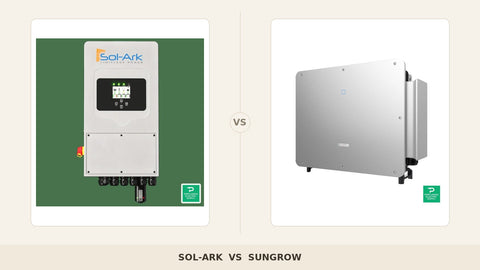
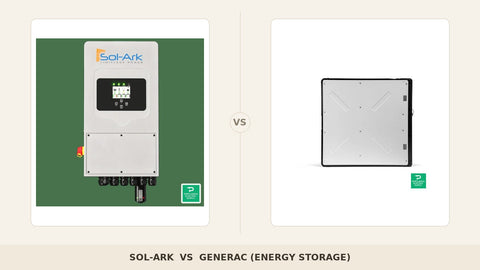
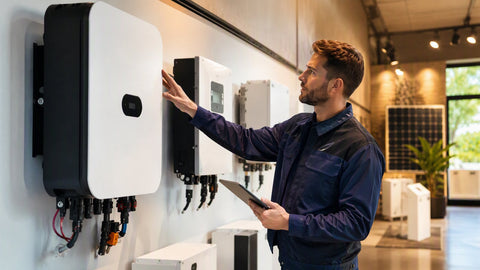
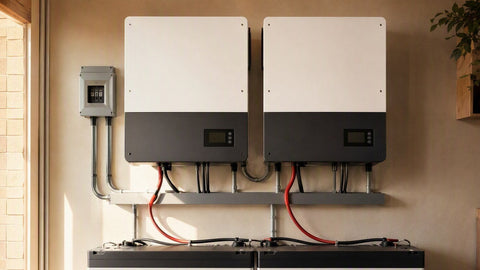
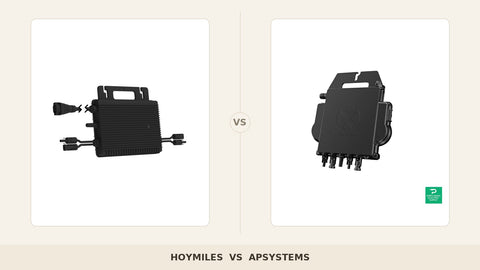
The inverter is the brain of every solar system, and choosing the wrong type is the most expensive mistake I see in residential and small-commercial solar. Panels last 30 years and rarely fail; inverters carry the system's entire workload — DC-to-AC conversion, grid synchronization, safety shutdown, monitoring, and (increasingly) battery management — and they're the component most likely to need service in year eight. I've replaced hundreds of inverters across every architecture, from a failed string unit that took down a whole 9kW array to a single dead microinverter that cost the owner one panel's output and nothing more. This guide compares the four architectures that matter — string, microinverters, power optimizers, and hybrid — with real sizing math, NEC calculations, and a decision framework based on your roof, your shading, and your plans for storage. For model-level picks once you've chosen a type, see our top inverter picks roundup and the manufacturer landscape overview.

The Four Architectures at a Glance
Every solar inverter does the same fundamental job — convert panel DC into grid-synchronous AC. Where that conversion happens, and what else the box manages, defines the architecture:
| Architecture | Where DC→AC Happens | Panel-Level Optimization | Battery-Ready | Typical Cost per Watt |
|---|---|---|---|---|
| String inverter | One central unit per array | No — string-level MPPT only | Needs separate battery inverter | $0.10–$0.18/W |
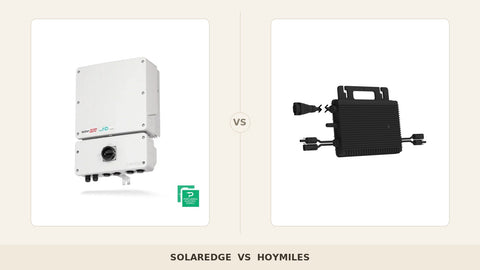
| Microinverters | One unit per panel, on the roof | Yes — independent per panel | AC-coupled batteries | $0.25–$0.40/W |
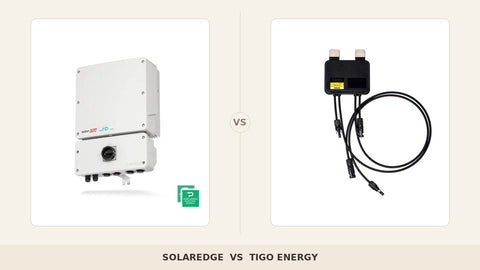
| Power optimizers + string | Optimizers condition DC per panel; one inverter converts | Yes — via DC optimizers | Depends on inverter model | $0.20–$0.30/W |
| Hybrid inverter | Central unit managing solar + battery + grid | String-level (add optimizers if shaded) | Yes — native battery port | $0.20–$0.35/W |
String Inverters: The Workhorse
A string inverter takes panels wired in series strings and converts their combined DC to AC at a single wall- or pad-mounted unit. The architecture's virtues are real: lowest cost per watt, one service point at ground level, decades of field-proven reliability, and straightforward permitting. The limitations are equally real: every panel in a string performs only as well as the worst-performing panel, so shade on one module drags the whole string; monitoring is string-level rather than panel-level; and the inverter carries no native battery path.
String inverters shine on unshaded, single-orientation roofs — the classic south-facing rectangle — and on commercial arrays where uniform tilt and azimuth make panel-level electronics unnecessary expense. Modern string units have also quietly improved: multiple MPPT inputs now let one box serve two or three roof faces independently, and integrated DC disconnects and AFCI protection simplify installation and inspection. On a clean 12kW commercial rooftop with zero shading, a string inverter is simply the right answer, and I'd be wasting the customer's money selling anything else.
| Feature | Description |
|---|---|
| Function | Converts DC power from panels into AC power for home use. |
| Advantages | Simplicity and efficiency make them popular for straightforward installations. |
String Sizing Math: NEC 690.7 Voltage Calculation
String length is limited by cold-weather open-circuit voltage — panels produce higher voltage as temperature drops, and exceeding the inverter's or conductor's voltage rating is both dangerous and a code violation. NEC 690.7 requires the correction. Worked example with real-style module data: a 430W residential module with Voc of 41.2V and a Voc temperature coefficient of −0.28%/°C, installed where the design minimum temperature is −10°C.
| Step | Calculation | Result |
|---|---|---|
| Temperature delta from STC (25°C) | 25°C − (−10°C) | 35°C |
| Voltage correction factor | 1 + (0.0028 × 35) | 1.098 |
| Cold-corrected Voc per module | 41.2 V × 1.098 | 45.2 V |
| 24 modules in series | 24 × 45.2 V | 1,084.8 V — fails 1,000V limit |
| 22 modules in series | 22 × 45.2 V | 994.4 V — passes |
That two-panel difference is why string sizing is engineering, not guesswork: in a cold climate, the 24-panel string that looked fine on the brochure exceeds 1,000V on the coldest design morning. On the current side, NEC 690.8 requires conductors and overcurrent devices sized at 125% of the array's short-circuit current, with an additional 125% continuous-duty factor — 1.56 × Isc in total. For a module with 13.9A Isc: 13.9 × 1.56 = 21.7A, so 10 AWG copper (30A at 75°C per NEC 310.16) with a 25A breaker per NEC 240.6. The solar panel wiring basics guide covers series/parallel string design in detail, and our PV wire selection guide covers conductor types.
Microinverters: Panel-Level Everything
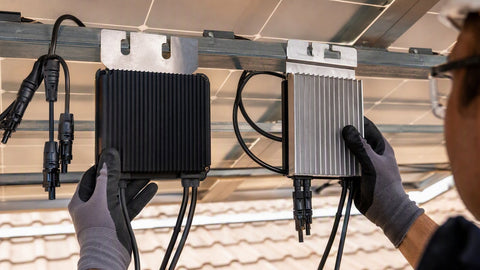
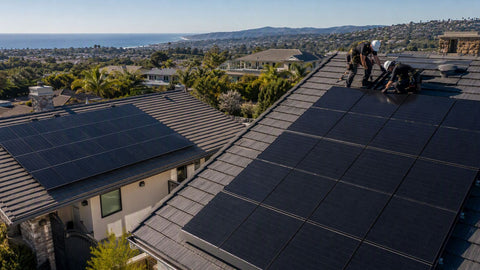
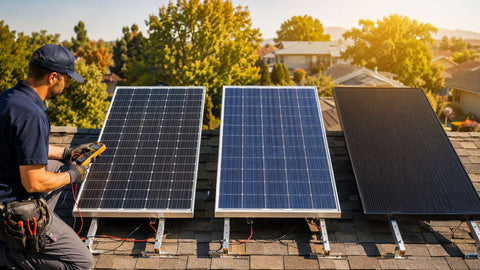
Microinverters mount one small inverter per panel, converting DC to AC right on the roof. Every panel becomes an independent power plant: shade one panel and its neighbors don't care. Panel-level monitoring shows you exactly which module underperforms. There's no high-voltage DC on the roof — a genuine safety and rapid-shutdown advantage under NEC 690.12 — and system expansion means adding a panel and a micro, not re-engineering strings.
The costs: highest price per watt of any architecture; more electronics in the harshest environment (roof temperatures); and replacement means roof work. Modern microinverter reliability has largely answered the durability concern — 25-year warranties are now standard in the microinverter category — but the economics still pencil best where shading, multiple roof faces, or panel-level monitoring genuinely add value. For a complex roof with a chimney, two dormers, and a mature fir tree, microinverters routinely harvest 8–15% more annual energy than a string system on the same roof. On a clean roof, that premium buys you monitoring granularity and not much else.
| Feature | Benefit |
|---|---|
| Compatibility | Works seamlessly with both grid-tied systems and standalone solar power systems |
| Functionality | Manages energy flow from solar panels into the battery pack and converts it to AC power |
Power Optimizers: The Middle Path
Power optimizers put a DC-DC conditioner on each panel — recovering panel-level MPPT, shade tolerance, and monitoring — while a single string inverter still performs the DC-to-AC conversion at the wall. You get most of the microinverter benefit at a middle price, with only one AC conversion device to service and no high-voltage AC wiring on the roof. The catch is ecosystem lock-in: optimizers and their inverter come from the same manufacturer, so your replacement parts channel runs through one company for the system's life. Where I deploy them: homes that need panel-level electronics but also want a straightforward path to a specific battery ecosystem, and retrofits where existing AC wiring favors a central inverter location.
Hybrid Inverters: Built for the Storage Era
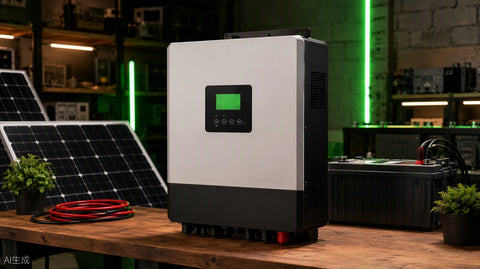
A hybrid inverter manages solar production, battery charge and discharge, grid interaction, and backup loads in one box — the architecture I now quote first for any customer who mentions outages, time-of-use rates, or future batteries. The operational differences from a standard string unit are substantial: hybrids island the home during outages (a string inverter legally must shut down), they store midday surplus for evening peak rates, and they accept generator input for extended backup. Our hybrid solar inverter deep-dive covers operating modes in detail.
| Inverter Type | Advantages |
|---|---|
| String Inverters | Simplicity and cost-effectiveness |
| Microinverters & Power Optimizers | Panel-level optimization |
| Hybrid Inverters | Ability to integrate seamlessly with battery storage systems |
Sizing follows the same string math above, plus battery-side checks: confirm the inverter's battery voltage class matches your storage — most residential hybrids run 48V-class or high-voltage (200–600V) battery buses — and confirm continuous output covers your backed-up loads panel. An 8kW hybrid can start a 3-ton AC with a soft starter; it cannot start two simultaneously. Browse the 6–8kW hybrid inverters for typical residential sizes, 10–12kW hybrids for larger homes, and 13–18kW units for whole-home-plus-EV loads.
Efficiency: What the Numbers Actually Mean
| Metric | What It Measures | Class-Typical Range (2026) | Why It Matters |
|---|---|---|---|
| Peak efficiency | Best-case conversion at optimal loading | 97.0–98.4% | Brochure number — rarely your operating point |
| CEC weighted efficiency | Performance across a realistic load profile | 96.5–98.0% | The honest comparison number; used for CA incentives |
| MPPT voltage range | Window where the inverter tracks max power | Varies — check cold/hot string Vmp stays inside | Strings sized outside this window clip or stall |
| DC/AC ratio limit | Max array watts per inverter watt | 1.2–1.55 depending on model | Oversizing array boosts morning/evening harvest |
On DC/AC ratio: pairing a 10kW array with an 8kW inverter (1.25 ratio) is standard practice, not a mistake — panels rarely produce nameplate power, and modest clipping at solar noon is repaid many times by stronger harvest in the shoulders of the day. The system size calculator walks through the array side of that math.
Central Inverters and Off-Grid Inverter/Chargers: The Two Other Types
Two more architectures complete the map. Central inverters are the utility-scale extreme of the string concept — single machines rated 100kW to several megawatts serving entire ground-mount arrays, with the lowest cost per watt and single-point maintenance at scale. They're irrelevant to residential buyers but defining for commercial projects; our 100kW, 150kW, and 250kW+ inverter categories cover that class. Off-grid inverter/chargers are the other specialty: no grid reference at all, forming their own AC waveform, managing generator input and battery banks as the system's heart. If the grid doesn't reach your site — or you don't want it to — that's your architecture, and everything about the design (surge capacity, battery bank sizing, generator integration) differs from grid-tied practice.
Rapid Shutdown and NEC 690.12: The Safety Layer

Since the 2017 code cycle, NEC 690.12 has required module-level rapid shutdown for most rooftop systems: conductors more than one foot inside the array boundary must drop to 30 volts or less within 30 seconds of shutdown initiation. The practical consequence shapes architecture choice. Microinverters and power optimizers satisfy module-level shutdown natively — the electronics are already at each panel. String systems need added module-level shutdown devices (or a listed module-level inverter circuit), which narrows their cost advantage on residential roofs. On commercial flat roofs with arrays over a certain size, the code offers more flexibility, but any residential string quote without a rapid-shutdown line item is incomplete, and we flag it every time we see one in a competing bid.
Monitoring, O&M, and What Actually Fails
Fifteen years of service calls have taught me a consistent failure hierarchy. Fans and capacitors in string inverters are the most common failure — heat-cycled electrolytics age, and the unit derates or faults, typically in years 7–12. Communications hardware fails next: gateways, Zigbee boards, cellular modems — the inverter keeps producing while reporting goes dark, which is why production-visible monitoring matters. Microinverter failures are rare per unit but annoying in logistics: one dead unit costs one panel's output and a roof visit. Hybrid inverters add battery-side failure modes — BMS communication faults and firmware mismatches — that we usually resolve remotely. The O&M lesson: whichever architecture you choose, enable production alerts and check them. A silent inverter failure discovered on the annual true-up bill is the most expensive kind.
Warranty and Replacement Economics
Warranty length by architecture tells you what the manufacturers believe: 25 years on microinverters, 10–12 years standard on string units (extendable to 20–25 for a price), 10 years on most hybrids. Price the replacement into your 30-year system math honestly: a string inverter will likely need one replacement — call it $2,000–$4,000 installed for a residential unit a decade from now — while a microinverter fleet statistically loses a few units over 25 years, each covered under warranty but requiring a service call. Neither path is prohibitive, but the string path concentrates the cost in one event and the micro path spreads it across service visits. For commercial arrays, extended warranties on central inverters plus a spare-parts kit are standard practice we write into every proposal.
The Decision Framework I Use on Site
- Shading and roof geometry first. Clean single-face roof → string inverter. Shade, multiple orientations, or complex geometry → microinverters or optimizers.
- Storage plans second. Battery now, or battery "someday soon"? Hybrid architecture. Battery unlikely and rates are flat → string or micros on economics.
- Outage resilience third. Need backup power? Hybrid or AC-coupled microinverter-plus-battery system. Grid-tie-only systems legally cannot power your home during an outage — a surprise I never want to deliver after the fact.
- Monitoring appetite last. If you'll actually watch per-panel production and act on alerts, panel-level electronics pay for themselves in early fault detection; if you'll never open the app, don't pay for the granularity.
Common Mistakes I Correct on Quotes
- Buying inverter watts to match panel watts exactly. A 1.0 DC/AC ratio wastes array potential; 1.2–1.3 is the productive band for most climates.
- Ignoring cold-weather voltage. The NEC 690.7 calculation above isn't optional — it's the difference between a passing inspection and a fried inverter input stage.
- Assuming any inverter works with any battery. Battery compatibility lists are narrow and model-specific; verify the exact pairing before ordering either component. Our battery sizing guide covers the storage side.
- Sizing backup output off the array size. Backup power depends on inverter continuous output and battery capacity, not on how many panels you have. An 11.4kW array on an 8kW hybrid still delivers 8kW in an outage.
Cost Comparison: What Each Architecture Actually Costs
Installed inverter-cost differences are smaller than component prices suggest, because labor, wiring, and balance-of-system shift with each architecture. On a typical 8kW residential system in 2026 pricing: a quality string inverter adds roughly $1,000–$1,600 to the project, plus rapid-shutdown devices where required. A microinverter fleet for the same 8kW runs $2,200–$3,200 including the envoy/gateway hardware. Optimizer-based systems land between, around $1,800–$2,700. Hybrid inverters price at $2,000–$3,500 for the unit alone but can eliminate the separate battery inverter and some transfer equipment later — the honest comparison includes the storage path, not just today's box. We've quoted every architecture against the same roof and watched the winner change with nothing but the customer's answer to "do you want batteries within three years?"
Grid-Tie Rules: Interconnection and Export
Whatever architecture you choose, the utility has a say. Interconnection agreements specify export limits, anti-islanding behavior (IEEE 1547 and UL 1741 SA/SB certified functions), and in many territories, smart-inverter functions like volt-var and frequency-watt response. Modern inverters in all four architectures ship with these certifications — it's a checkbox, but it's a checkbox your installer must actually enable and document. Export-limited systems ("zero export") are increasingly common where utilities restrict backfeed; hybrids and microinverter ecosystems handle export limiting natively, while string systems need added metering hardware. Ask your installer which rule set applies to your interconnection before equipment is ordered — swapping architectures after the utility study is the expensive way to learn this.
Sizing for Growth: Batteries and EVs Change the Math
Two loads are reshaping inverter sizing in 2026: home batteries and EV charging. A Level 2 EV charger adds 7.7–11.5kW of potential simultaneous load; a battery adds 5–10kW of charge or discharge throughput. If either is in your three-year plan, size the inverter architecture for it now. For hybrids, that means choosing continuous output for the backed-up loads panel plus the EV, not just today's critical loads — the reason 11.4kW-class units have become the default whole-home hybrid size. For string systems, it means oversizing conduit and panel space today so the AC-coupled battery install later is a one-day job. The customers who get stranded are the ones who sized to the watt for today's house and then bought the truck. We now ask about EV plans on every single residential quote, no exceptions.
A Field Story: The Two Roofs That Settled the Debate
Two of my customers live on the same street with identical 8kW arrays installed the same month — one on a clean south roof with a string inverter, one across the street under a big cedar with microinverters. Eight years of production data later, the shaded microinverter house has harvested 11% more lifetime energy than a string system would have there, and the clean-roof string house has spent exactly $0 more than it needed to and would have gained nothing from panel-level electronics. Same street, opposite right answers — which is the entire thesis of this guide. Architecture follows the roof, the shading, the storage plan, and the outage expectations, in that order. Anyone who tells you one inverter type is simply "the best" is selling inventory, not solving your problem.
Frequently Asked Questions
Which type of solar inverter is best? It depends on the site: string inverters for unshaded single-orientation roofs, microinverters for shaded or complex roofs, power optimizers as a middle path, and hybrid inverters for anyone planning battery storage or outage backup.
How long do solar inverters last? String inverters typically carry 10–12 year warranties with 12–15 year service lives; microinverters carry 25-year warranties; hybrid inverters typically 10 years. Plan on one inverter replacement over a 30-year panel life.
Can I add a battery to a string inverter later? Yes, via AC coupling — a separate battery inverter/charger installs alongside the existing string inverter. A hybrid inverter is the cleaner architecture if storage is planned from the start.
What size inverter do I need for a 10kW solar array? Typically a 7.6–8kW inverter, giving a DC/AC ratio around 1.25–1.3. Confirm string voltages against the inverter's MPPT window and cold-weather maximum input per NEC 690.7.
Do microinverters work during a power outage? Standard grid-tied microinverters shut down during outages like any grid-tie inverter. Backup requires either a battery-based hybrid system or a microinverter ecosystem with a dedicated battery and system controller.
What does NEC 690.7 require for string sizing? It requires correcting module open-circuit voltage for the site's design minimum temperature. Cold weather raises Voc; series string voltage must stay below conductor and equipment voltage ratings on the coldest design day.
The inverter decision locks in your system's behavior for the next decade-plus — shade response, outage behavior, battery path, and monitoring depth all flow from this one choice. Spend the extra hour on the roof assessment and the extra page on the load calculation; both are cheaper than any architecture swap after installation. Bring your roof layout and your rate schedule to the team at Portlandia Electric Supply and we'll spec the architecture against your actual conditions, not a generic recommendation — whether that lands you on a value string unit, a per-panel microinverter fleet, or a storage-ready hybrid.