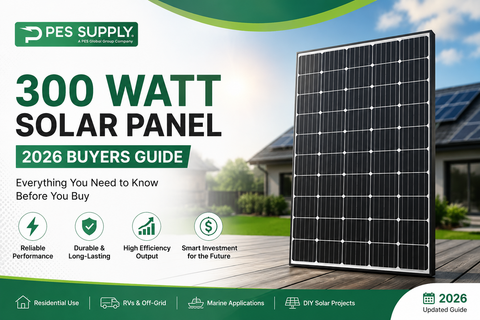
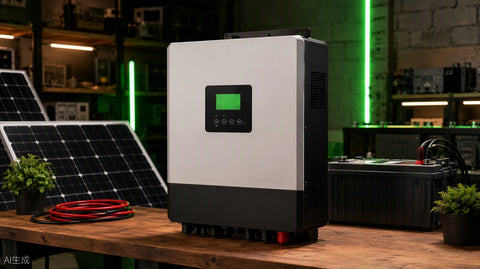
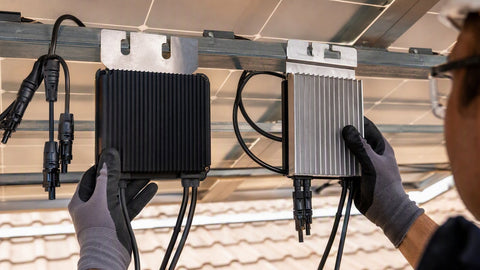
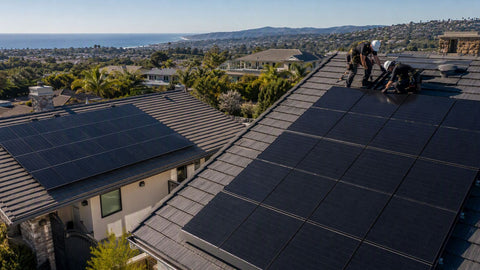
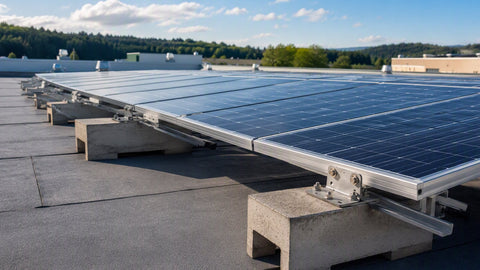
High-volume energy work lives or dies on supply. The installer with a 40-home subdivision package, the EPC staging a commercial rooftop, the facility team standardizing backup power across a dozen sites — none of them can afford a distributor who quotes in three days, ships in three weeks, and substitutes SKUs without asking. That gap between what projects need and what typical supply chains deliver is exactly where Portlandia Electric Supply operates. We stock deep, we quote fast, and we treat a 500-panel order with the same part-level rigor as a single inverter.

We came to this model the honest way: by watching good contractors lose good projects to supply failures that had nothing to do with craftsmanship. A rooftop finished on time because the racking landed in week one. A subdivision energized because the meter bases showed up with the panels, not three weeks after. Supply is invisible when it works and existential when it doesn't, and we built this operation to keep it invisible. I've been on the warehouse floor at 6 a.m. counting in pallets that arrived overnight so a crew could start at 7 — that urgency is the whole point of this business.
This article lays out how a high-volume energy supply partnership actually works: what to expect on pricing structure, logistics, product breadth, and technical support — plus the numbers behind volume procurement that project managers can use in their own planning. Every figure here comes from actual quotes, actual deliveries, and actual project P&Ls we've reviewed with partners.
What "High-Volume" Means in Practice
High-volume isn't a marketing adjective; it's an operating mode with concrete thresholds. In our world, it means pallet-quantity and truckload-quantity orders, staged releases against a project schedule, and inventory commitments measured in weeks of supply rather than units on a shelf. A residential installer running ten crews might pull 2–3 complete solar kits a day. A commercial EPC might need 400 modules, 6 string inverters, and the full balance-of-system — racking, wire, disconnects, rapid shutdown — arriving on one site, on one day, in the right sequence. The failure mode looks the same at both scales: one missing $40 component idles a $4,000-a-day crew, and nobody remembers the 98% of the order that arrived on time.
The product categories where volume demand concentrates:
| Category | Typical Volume Order Unit | Where We Stock Deep |
|---|---|---|
| Solar modules (400–600W class) | Pallet (31–36 pcs) to truckload | 400–459W, 550–709W |
| String & hybrid inverters | Case quantities, mixed SKUs | String inverters, Hybrid inverters |
| Battery storage | Project kWh allocations | Battery storage, Energy storage systems |
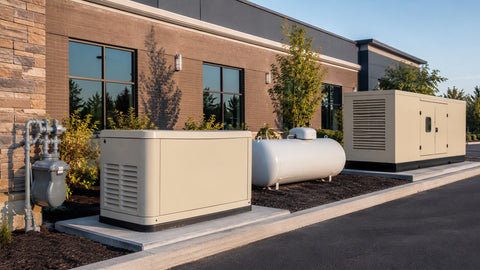
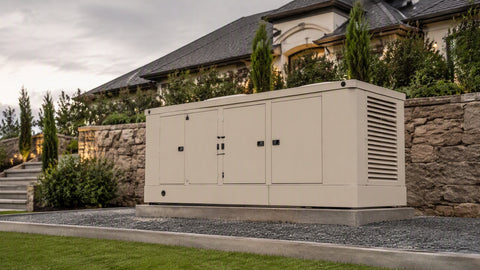
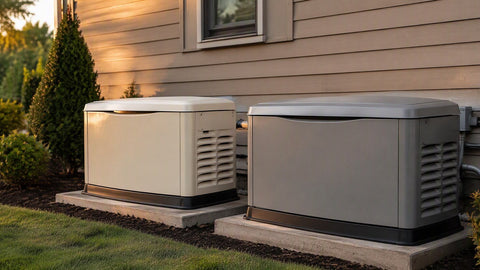
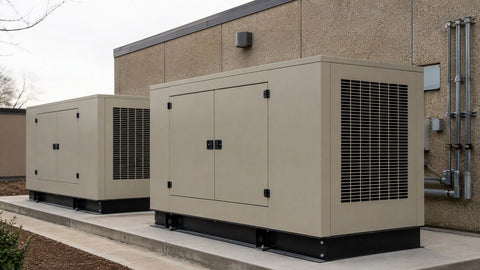
| Standby generators | Fleet orders, 5–50 units | Commercial standby, 20–28kW class |
| Balance of system (wire, conduit, breakers) | Bulk reels, case lots | Circuit breakers, conduit, wire |
The Math of Volume Procurement
Volume buying changes project economics in ways that compound. Consider a 100 kW commercial rooftop: roughly 200 modules in the 500W class, two 50kW string inverters, and about 1.2 miles of PV wire and THHN for the home runs. Every dollar per watt shaved off procurement is $100,000 of system cost movement at utility scale — and at commercial scale, even $0.02/W is $2,000 on this single project.
| Line Item (100 kW commercial rooftop) | Retail-Channel Cost (typical) | Volume-Channel Cost (typical) | Delta |
|---|---|---|---|
| Modules, 200 × 500W class | $0.32–0.40/W → $32,000–40,000 | $0.26–0.33/W → $26,000–33,000 | $4,000–9,000 |
| String inverters, 2 × 50kW | $6,500–8,000 each | $5,200–6,800 each | $2,600–3,600 |
| PV wire + THHN home runs, ~6,500 ft | $0.55–0.70/ft avg | $0.42–0.55/ft avg | $850–975 |
| Rapid shutdown, disconnects, breakers | $4,000–5,200 | $3,300–4,300 | $700–900 |
| Freight (LTL vs. dedicated) | $1,200–2,000 | $800–1,400 | $400–600 |
| Project total impact | $8,400–14,500 saved | ||
Those ranges reflect typical channel spreads we see quoted in the market — your numbers will vary with module brand, allocation timing, and freight lane. The point isn't the exact dollar; it's that procurement channel selection moves project margins by 8–12% on material alone, before you count the cost of delays. On a $400,000 commercial project, 10% material savings is $40,000 — the difference between a profitable job and one that breaks even after liquidated damages.
The Delay Math Nobody Quotes
A two-week material delay on a commercial project doesn't cost two weeks — it costs the crane remobilization, the crew's dead days, and often a liquidated-damages conversation with the owner. We've watched a $900 freight savings turn into a $14,000 delay cost because a distributor shipped modules from two warehouses on two different weeks. Staged, sequenced, single-source delivery is worth a premium, and honestly priced it's usually not even a premium.
Here's the delay cost framework we share with partners:
| Delay Scenario | Direct Cost | Hidden Cost | Total Impact |
|---|---|---|---|
| Module delivery 1 week late | $0 (vendor delay) | Crew dead days: $2,500/day × 5 = $12,500 | $12,500 |
| Inverter substitution without approval | $0 (equal value) | Re-engineering, permit revision, re-inspection: $3,000–5,000 | $3,000–5,000 |
| Racking arrives, modules don't | $0 | Crew remobilization, equipment rental extension: $4,000–8,000 | $4,000–8,000 |
| Wrong disconnects shipped | Return freight: $150 | Emergency will-call, 2-hour drive, crew idle: $1,200 | $1,350 |
| Full project delay (liquidated damages) | $0 | $500–2,000 per day per contract | $500–2,000/day |
The substitution scenario is especially common and especially painful. A distributor swaps a 50kW string inverter for a different brand with a different MPPT voltage range. The array was designed around the original unit's 200–1,000V window; the substitute tops out at 850V. On a cold morning, the string voltage exceeds the substitute's limit and the inverter faults. Now you're not just delayed — you're redesigning.
Logistics: Where Volume Partnerships Prove Themselves
Anybody can take an order. The partnership test is what happens between the PO and the job site. Our logistics operation is built around the realities of energy projects:
- Staged releases. Buy the full bill of material at today's pricing, take delivery in phases against your construction schedule. Modules in week 3, racking in week 1, wire when you're ready for it.
- Multi-site fulfillment. Fleet and franchise customers ship to dozens of addresses on one PO with per-site packing lists and tracking rolled up to one dashboard.
- Jobsite-direct freight. Liftgate, flatbed, and crane-accessible delivery windows coordinated with your site super — not a carrier's default "sometime Tuesday" window.
- Damage and shortage resolution. Freight damage happens on 3–5% of palletized solar shipments industry-wide. The measure of a supplier is whether a replacement module ships in 48 hours or after a three-week claims process. We stock buffer inventory on high-velocity SKUs specifically so claims never gate a project.
Technical Support at Volume
High-volume buyers don't need hand-holding; they need fast, correct answers to specific questions. Will this inverter's MPPT window accept 14 modules of this Voc at this design temperature? What's the fill count for 2-inch EMT with these conductors? Which rapid-shutdown boxes are listed with this module frame? Our counter staff and inside sales engineers answer those questions daily, and our resource library covers the recurring ones — from the NEC ampacity guide to the conduit fill chart to system sizing math.
For installers scaling from residential into commercial work, that support layer matters even more. The first 100kW project has a hundred first-time questions; having a supplier who answers the phone with an engineer on the line compresses the learning curve by a full project cycle. I spent two hours on the phone last month walking a residential installer through his first commercial string inverter configuration — the MPPT stringing, the Rapid Shutdown requirements, the AC disconnect sizing. He passed inspection on the first try. That conversation cost us two hours and earned a partner who now orders 500kW a quarter.
Freight: The Line Item That Eats Unwatched Budgets
Freight on solar and generator freight is heavy, palletized, and increasingly volatile. A pallet of modules runs 800–1,000 lbs; a 26kW standby generator crate approaches 600 lbs. Getting the freight plan right is a five-figure decision on a commercial project:
| Freight Decision | Cheap-Path Cost | Wrong-Path Cost | Notes |
|---|---|---|---|
| LTL vs. dedicated flatbed (20+ pallets) | LTL saves $400–900 | Two extra touches = 2× damage probability | Dedicated wins above ~14 pallets |
| Jobsite window vs. "carrier convenience" | $0 to accept default | Crew dead day: $2,500–6,000 | Book the window; always |
| Residential liftgate adder | $75–150 per delivery | Failed delivery + redispatch: $300+ | Cheaper to add it upfront |
| Will-call vs. delivery for BOS | Your truck, your time | Half-day of a $65/hr tech | Will-call wins within ~40 miles |
I've done the will-call math a hundred times: inside about a 40-mile radius, sending a truck to our dock beats any LTL quote on small balance-of-system orders, and your tech leaves with the material in hand instead of hoping the box truck shows. Past that radius, delivery with a booked window is the only professional answer. The crews who treat freight as an afterthought are the same ones whose installers are standing around at 9 a.m. waiting on a pallet — at crew rates, that's the most expensive pallet on the project.
What We Ask From Partners (So the Model Works)
Volume partnership is a two-way commitment, and being plain about it saves everyone time. Here's what makes the economics work on our side:
- Forecasts, even rough ones. A rolling 60–90 day outlook — "about 12 kits a month, one commercial rooftop in June" — lets us position inventory before you need it. Surprises are what safety stock is for; patterns are what allocation is for.
- Honest SKU discipline. Standardize where you can. The installer running two module SKUs and one inverter family gets better pricing, better allocation priority, and faster warranty handling than the one running eleven of each.
- Delivery windows you actually hold. A confirmed jobsite window that slips twice burns a carrier relationship and eventually costs everyone money. We'd rather reschedule 48 hours out than no-show a flatbed.
- One point of contact with authority. The fastest-resolving issues are the ones where a single person on your side can approve a substitution, a split shipment, or a damage claim on the spot.
In return, partners get what this article has been describing: allocation priority when supply tightens, price locks on committed volume, buffer inventory held on our balance sheet, and a phone answered by people who know a rapid-shutdown box from a combiner.
A Note on Market Cycles

Energy supply is cyclical, and 2026 is no exception: module pricing moves with polysilicon and policy, wire moves with copper, and allocation tightens without much warning. The installers who ride cycles best share one habit — they treat procurement as a relationship that exists between projects, not a transaction that starts at each one. When the 2021–2022 module crunch hit, the buyers who had allocations slept fine; the spot buyers paid 30% premiums and waited. We allocate to partners first, openly and on the record, and we think that's how a supply house should work.
Our team has watched this market from the distributor's chair through boom, tariff, and allocation cycles. The constant is that projects finish on the strength of their supply chain — equipment is engineered; supply chains are relationships.
Inventory Depth as a Service
The least visible part of a supply partnership is the inventory we carry so you don't have to. Capital tied up in a warehouse of modules is capital not spent on crews, trucks, and growth. Consider the carrying-cost math:
| Inventory Strategy | Cash Committed | Annual Carrying Cost (est. 18–22%) | Stockout Risk |
|---|---|---|---|
| Installer self-stocks 60 days of material | $250,000–400,000 | $45,000–88,000 | Low, but capital-heavy |
| Just-in-time from broadline distributors | Near zero | Near zero | High — allocation-dependent |
| Volume partnership with reserved allocation | Deposit only | Deposit cost only | Low — inventory held by partner |
Carrying cost is the quiet killer in self-stocking models: shrink, damage, obsolescence when module generations turn over, insurance, warehouse space, and the opportunity cost of the cash itself. The reserved-allocation model — commit to volume, we hold the inventory — moves that burden to the balance sheet best equipped to carry it. I've sat across the table from installers who figured this out after a warehouse full of last-generation modules lost 15% of its value to a wattage-class turnover; it's a lesson that only needs learning once.
Run the sensitivity for yourself: at a 20% blended carrying cost, every $100,000 of average inventory consumes $20,000 a year before it earns anything. An installer turning $1.2M of material annually who trims average stock from 60 days to 30 frees roughly $100,000 of cash and $20,000 of annual cost — enough to fund a service truck and the tech who drives it. That's the arithmetic that converts warehouse owners into volume partners.
How a Volume RFQ Actually Runs
The RFQ process is where most supplier relationships quietly fail — not on price, but on turnaround and accuracy. A clean volume RFQ has a rhythm:
- Send the BOM, not the brochure. A line-item bill of material with part numbers or clear specs gets quoted in 24–48 hours. A napkin list gets clarifying questions and a week of drift.
- State the delivery constraint first. "Modules on site by May 12, sequenced after racking" changes the quote — allocation, freight mode, and price. Suppliers can't optimize what they don't know.
- Compare landed cost, not line price. The right comparison is material + freight + damage risk + schedule risk. A 3% cheaper quote that ships in two waves from two warehouses is usually the more expensive quote wearing a disguise.
- Lock what you lock, float what you float. Commit the long-lead items (modules, inverters, generators) and float the commodity BOS if copper's moving against you — or lock everything when it's moving for you. We quote both structures and let the calendar decide.
One habit I'd import into every installer operation: keep a standing BOM template per system design. When your 8kW residential kit is a locked 34-line BOM, quoting drops from hours to minutes, substitutions get caught automatically, and your margin stops leaking through improvised change orders. We maintain those templates jointly with several partner installers — it's some of the highest-leverage work we do.
Payment Structures for Project Work
Project-scale procurement needs project-scale payment structures, and mismatching them strains both sides. The structures that work:
| Structure | Best For | How It Flows |
|---|---|---|
| Net-30 trade account | Established installers, steady residential volume | Monthly statement against approved credit line |
| Deposit + progress billing | Commercial projects with staged releases | Deposit locks price/allocation; each release bills on shipment |
| COD with volume pricing | New relationships, spot volume buys | Full volume discount applied, payment at shipment |
| Project escrow-style milestone terms | Large EPC work with owner-funded milestones | Aligned to the project's own draw schedule |
The deposit-plus-release structure deserves emphasis because it solves the two problems that kill project cash flow: it locks the price (protecting your quoted margin) while keeping your cash free until material actually ships (protecting your working capital). We structure these weekly, and they're usually the moment a transactional buyer becomes a partner — the deal starts working for both balance sheets at once.
Where the Industry Is Heading
Three shifts are reshaping high-volume energy supply as we move through 2026. First, storage attach rates keep climbing — a growing share of solar projects now include batteries, which means the BOS list now includes storage system components, and the freight plan includes hazmat-aware handling for lithium. Second, module wattage classes keep turning over; the 400W pallet that was standard three years ago is a niche product now, which is another argument for allocation partnership over speculative self-stocking. Third, electrification is merging trades — the electrical contractor quoting a panel upgrade is now routinely also quoting an EV circuit, a heat pump feed, and a generator inlet. Suppliers organized by single product silos can't serve that contractor; one that stocks across the whole stack can.
That's the model we've built, and it's why the partner roster keeps growing: not because any single line item is revolutionary, but because the whole machine — inventory, logistics, engineering-literate support, and straight dealing on allocation — removes friction from every project that runs through it. We measure ourselves the way our partners measure their own operations: quote turnaround in hours, fill rates in the high nineties, damage resolution in days, and renewal of the relationship at the end of every project. Anything less is a distributor; anything more is what we're aiming at.
Who We Build These Partnerships With
- Residential solar installers running 5+ crews who need kit-level fulfillment and consistent module allocation.
- Commercial EPCs staging 100kW–5MW projects who need sequenced delivery and engineering-literate support.
- Electrical contractors adding energy services — EV charging, generators, battery — who need one source across EV chargers, standby power, and storage.
- Facilities and fleet operators standardizing backup power and energy infrastructure across multiple sites.
- Government and institutional buyers who need documentation, compliance paperwork, and delivery performance that survives an audit.
How to Start
The first conversation is a capabilities check on both sides: your project pipeline and delivery requirements, our inventory position and freight lanes on the SKUs you actually pull. Bring your last three material lists — we'll price them line by line against your current channel, flag anything we'd stock differently, and show you the logistics plan for your next project. That exercise alone usually finds 5–10% in material cost and a week in schedule float.
Reach the team through the contact page, or review our how we do business overview to see whether our model fits your pipeline.
If you're comparing us against your current channel, the most useful thing you can bring to that first call is your last ninety days of purchase history. We'll map it against our stock positions, tell you honestly which categories we'd win and which we'd just match, and quote the freight lanes for your actual delivery addresses. Some of those conversations end in a partnership; some end with a buyer confirming their current channel is fine. Either way you leave with a benchmark you didn't have before, and we leave with a clearer picture of the market. That's a fair trade for an hour.
Frequently Asked Questions
What order size qualifies as high-volume?
There's no hard threshold — pallet-quantity module orders, multi-unit generator purchases, and any project with a staged delivery schedule all qualify for volume pricing and logistics support. If you're buying by the pallet instead of the piece, the conversation is worth having.
Can we lock pricing across a multi-month project?
Yes — committed-volume orders can carry price locks with staged releases against your construction schedule, so a module price move in month three doesn't hit a project quoted in month one.
Do you ship direct to job sites?
Yes. Jobsite-direct freight with liftgate, flatbed, and scheduled delivery windows is standard for volume orders, coordinated with your site superintendent rather than the carrier's default window.
What happens if freight arrives damaged?
We stock buffer inventory on high-velocity SKUs specifically so replacements ship fast — typically within 48 hours of claim confirmation — instead of gating your project behind a carrier claims process.
Which product categories do you stock deepest?
Solar modules in the 400–700W classes, string and hybrid inverters, battery storage systems, standby generators from residential 14kW through commercial liquid-cooled units, and the full balance-of-system: wire, conduit, breakers, disconnects, and rapid shutdown.
Do you support multi-site or franchise operations?
Yes — one PO, dozens of ship-to addresses, per-site packing lists, and consolidated tracking. Fleet standardization programs can also lock specific SKUs so every site gets identical equipment.
What is the typical quote turnaround for volume orders?
Complete BOMs with part numbers or clear specs typically receive quotes within 24–48 hours. Repeat orders from established partners with locked BOM templates often quote same-day.
Can you help with NEC compliance documentation?
Yes — we provide datasheets, UL listings, and equipment spec sheets for all stocked items. For commercial projects requiring engineered submittals, our inside sales team can coordinate directly with your project engineer.
Related Resources
- Commercial solar installation costs — where procurement fits the project budget
- Solar panel kits buyer's guide — kit-level fulfillment explained
- Complete solar kits — pre-engineered packages for installer crews
- Solutions by industry — sector-specific supply programs
- NEC wire sizing guide — ampacity for large-scale installations
- Conduit fill chart — bulk wire runs for commercial projects
- Solar system size calculator — array sizing for commercial rooftops
- Battery bank sizing guide — storage for commercial and residential
- What is an energy storage system? — ESS fundamentals for project planners
- EV chargers — the electrification category every contractor is adding
The common thread through everything above is simple: energy projects are built from parts, but they're finished on relationships, inventory discipline, and logistics that respect a construction schedule. Whether your next order is a pallet or a truckload, the supply partner behind it should make the project easier — never harder. That's the standard we hold ourselves to on every quote, every release, and every delivery window we book.