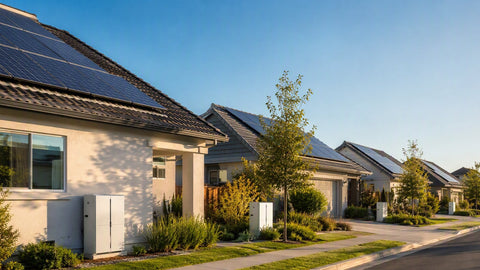
An energy storage system is, in one sentence, a machine for moving electricity through time: charge when power is cheap or sunny, discharge when it is expensive, dark, or dead. Everything else — the chemistry debates, the C-rate tables, the NEC article, the interconnection paperwork — is engineering in service of that one trick. At Portlandia Electric Supply we kit storage for off-grid homesteads, grid-tied backup, time-of-use arbitrage, and commercial demand management, and the same fundamentals govern all four. This guide lays those fundamentals out with real math: what an ESS contains, how the chemistries compare, how to size one in kilowatt-hours and kilowatts, and what the code requires before the inspector signs.
The term itself is broader than most customers expect. An ESS is not a battery. The battery is one component of an ESS, the way the engine is one component of a truck. Getting that distinction straight is where competent system design starts.
What is actually inside an energy storage system
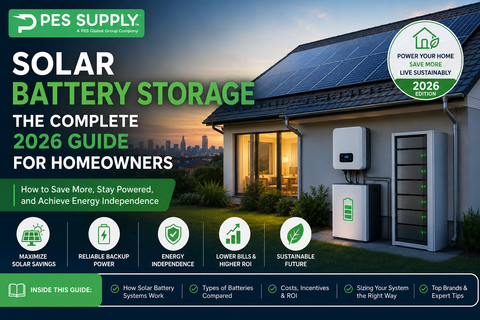
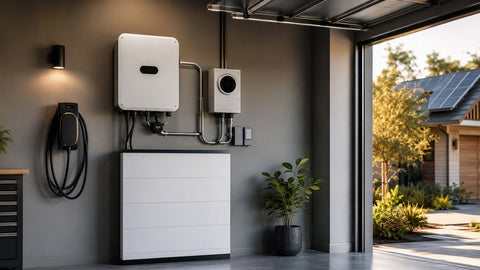
NEC Article 706 defines an ESS as one or more devices assembled together capable of storing energy to supply electrical energy at a future time. In practice, a complete electrochemical ESS has six functional layers:
| Layer | Component | Job |
|---|---|---|
| Energy reservoir | Battery cells/modules (LFP, NMC, lead-acid, flow) | Stores DC energy chemically |
| Safety brain | Battery management system (BMS) | Monitors cell voltage, temperature, current; disconnects on fault; balances cells |
| Power conversion | Inverter/charger (hybrid, or dedicated bidirectional PCS) | DC↔AC conversion in both directions |
| Protection | Overcurrent devices, disconnects, contactors, fusing | Fault isolation per NEC 240, 706, 705 |
| Control | Energy management system (EMS) | Decides when to charge/discharge — schedules, tariffs, reserve levels |
| Envelope | Listed cabinet/enclosure, thermal management | Fire containment, temperature control, the UL 9540 listing boundary |
When a product claims a UL 9540 listing, the listing applies to the whole assembled system — cells, BMS, cabinet, thermal controls — evaluated as one unit. Mixing components from different manufacturers can produce a perfectly functional system that is nevertheless not a listed ESS, which matters enormously at inspection. Our BMS and protection collection covers the component layer for builders of custom banks.
The chemistry comparison that actually drives the decision
Four chemistries dominate the market we ship into, and the tradeoffs are stable enough to table:
| Chemistry | Cycle life (typical rating) | Round-trip efficiency | Usable DoD | Best fit | Honest weakness |
|---|---|---|---|---|---|
| LiFePO4 (LFP) | 4,000–6,000+ cycles @ 80% DoD | ≈ 95% | 80–90% | Residential and C&I default choice | Heavier per kWh than NMC; cold-charging limits below freezing |
| NMC lithium | 2,000–4,000 cycles | ≈ 94–95% | 80–90% | Space-constrained, EV-derived platforms | Higher thermal-runaway energy; stricter fire code attention |
| AGM / lead-acid | 400–1,000 cycles @ 50% DoD | ≈ 80–85% | 50% for decent life | Budget backup, cold-storage-tolerant sites | Half the energy is unusable ballast; lifespan punished by deep cycling |
| Flow (vanadium etc.) | 10,000+ cycles | ≈ 65–75% | ≈ 100% | Long-duration commercial, daily deep cycling | Cost, footprint, and installer familiarity |
For the residential and small-commercial work that dominates our order book, LFP at 48 V nominal has won so decisively that the interesting question is no longer which chemistry but which form factor and protocol. Our 48 V battery lineup and 100 Ah-class modules reflect that reality.
Sizing an ESS: kWh first, then kW, then days
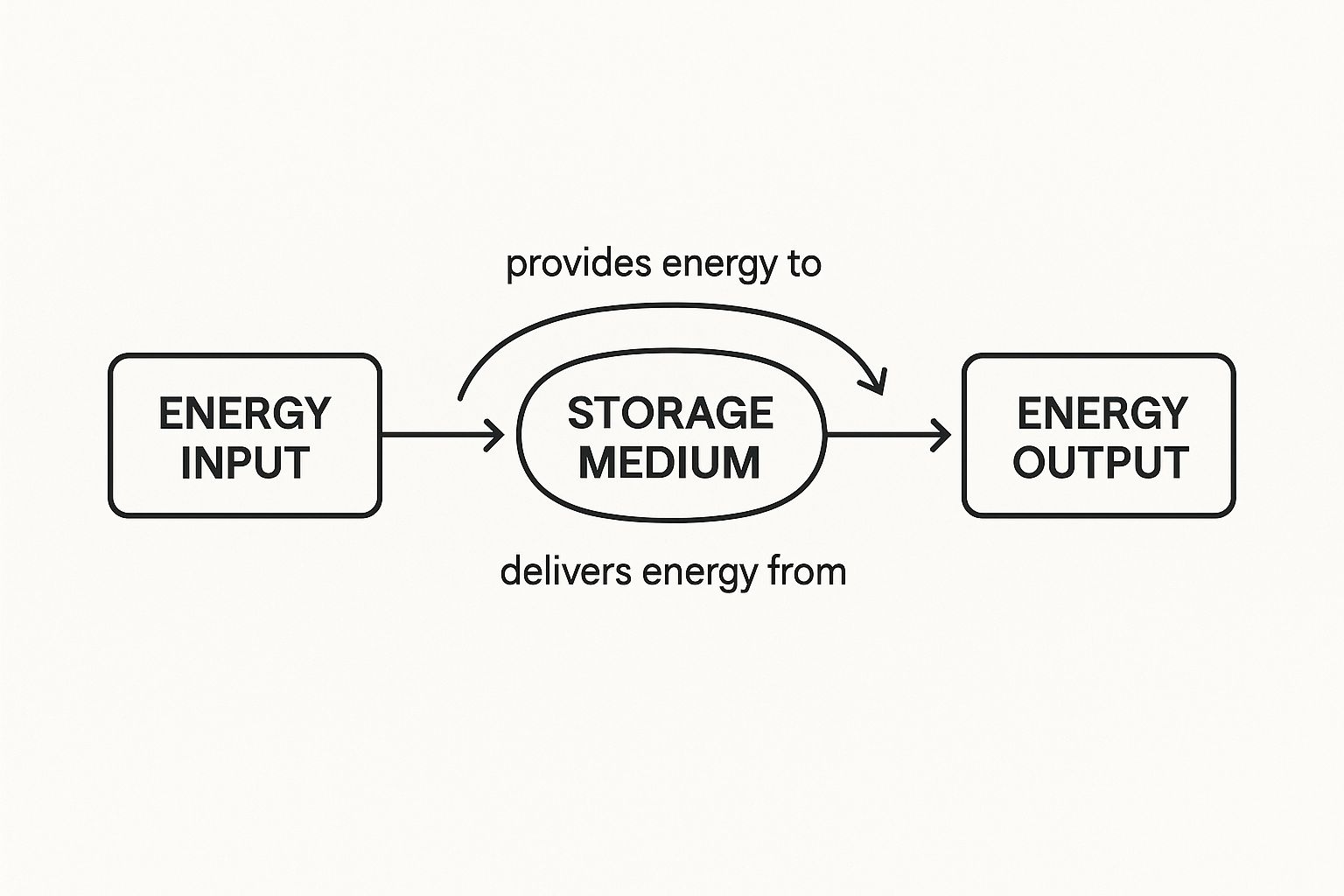
Storage sizing errors almost always confuse energy (kWh) with power (kW). They are different specifications answering different questions: how long versus how much at once. The correct sequence:
Step 1 — energy. List the protected loads and their daily consumption. A refrigerator at 150 W average over 24 hours is 3.6 kWh/day; a furnace blower at 600 W for 6 winter hours is 3.6 kWh/day; add lighting, networking, and outlets and a disciplined critical-loads list commonly lands at 10–18 kWh/day for a residence. Divide by usable depth of discharge and round-trip efficiency to get nameplate capacity: 12 kWh/day needed ÷ 0.9 DoD ÷ 0.95 efficiency ≈ 14 kWh nameplate per day of autonomy.
Step 2 — power. The inverter's continuous output must exceed simultaneous load, and its surge must start the largest motor. A 10 kW continuous / 20 kVA surge hybrid covers most residential critical panels comfortably; our 10–12 kW hybrid range exists because that band fits so many homes.
Step 3 — autonomy days. Grid-tied backup customers usually choose 1 day (outage bridge) or pair with solar for indefinite cycling. Off-grid customers should size for the worst solar week, not the average day — in our region that is a December call, and it is routinely 2–4 days of autonomy or a generator in the loop. The battery bank sizing guide and off-grid storage math walk both cases; the runtime calculator sanity-checks the result.
| Scenario | Daily critical loads | Autonomy target | Nameplate kWh (0.9 DoD, 0.95 RTE) | Typical build |
|---|---|---|---|---|
| Grid-tied outage bridge | 10 kWh | 1 day | ≈ 11.7 kWh | One 10 kWh-class unit, light rationing |
| Grid-tied whole-night + morning | 15 kWh | 1.5 days | ≈ 17.5 kWh | 15–20 kWh bank |
| Off-grid cabin, generator-assisted | 8 kWh | 2 days | ≈ 18.7 kWh | 20 kWh LFP + small genset |
| Off-grid home, solar-primary winter | 18 kWh | 3 days | ≈ 63 kWh | 40 kWh+ rack bank, often staged in phases |
| Small commercial demand shaving | Peak window only | 2–4 h at peak | Peak kW × hours ÷ DoD | C&I cabinet or stacked rack |
C-rate and duration: the specs people misread
C-rate expresses charge or discharge current relative to capacity: a 10 kWh battery at 1C delivers 10 kW; at 0.5C, 5 kW. Two consequences matter. First, a battery's kWh and kW are linked by its C-rating — a "10 kWh" unit with a 0.5C ceiling cannot run your 8 kW of loads no matter how full it is. Second, duration ratings describe the same physics from the grid side: a "4-hour battery" is simply one sized at 0.25C relative to its power rating. When a datasheet buries the discharge-rate limit in a footnote, that footnote is the spec that decides whether the furnace starts.
The code framework: NEC 706, NFPA 855, UL 9540/9540A
Energy storage got its own NEC article in 2017, and the framework has matured fast:
| Instrument | Scope | What installers must know |
|---|---|---|
| NEC Article 706 | ESS installation requirements | Disconnects (706.15), overcurrent protection (706.21), directory/labeling, working space |
| UL 9540 | Listing standard for complete ESS | The listing applies to the assembled system — field-mixed components leave it |
| UL 9540A | Test method for thermal runaway propagation | The fire data AHJs and fire marshals use to approve installations |
| NFPA 855 | Installation standard for stationary storage | Location rules: separation distances, garage mounting, egress clearance, residential size caps per location |
| NEC 705.12 / 702 | Interconnection and standby operation | Busbar math for backfeed; transfer means that prevent islanding into the utility |
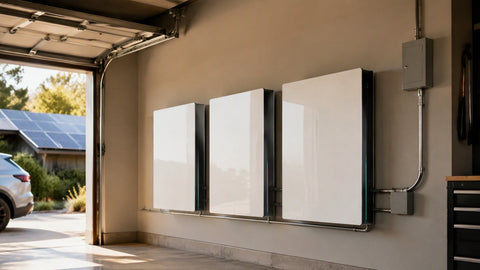
The residential location rules under NFPA 855 and local fire code amendments deserve early attention: individual ESS units are commonly capped per location (80 kWh thresholds appear in many adoptions, with spacing and aggregate limits), garages require vehicle-impact protection in many jurisdictions, and bedrooms and egress paths are out entirely. Bring the fire marshal the UL 9540A report summary with the permit package and the conversation goes noticeably better. Our disconnect guide and grounding guide cover the adjacent wiring requirements.
Where storage earns its keep: the four business cases
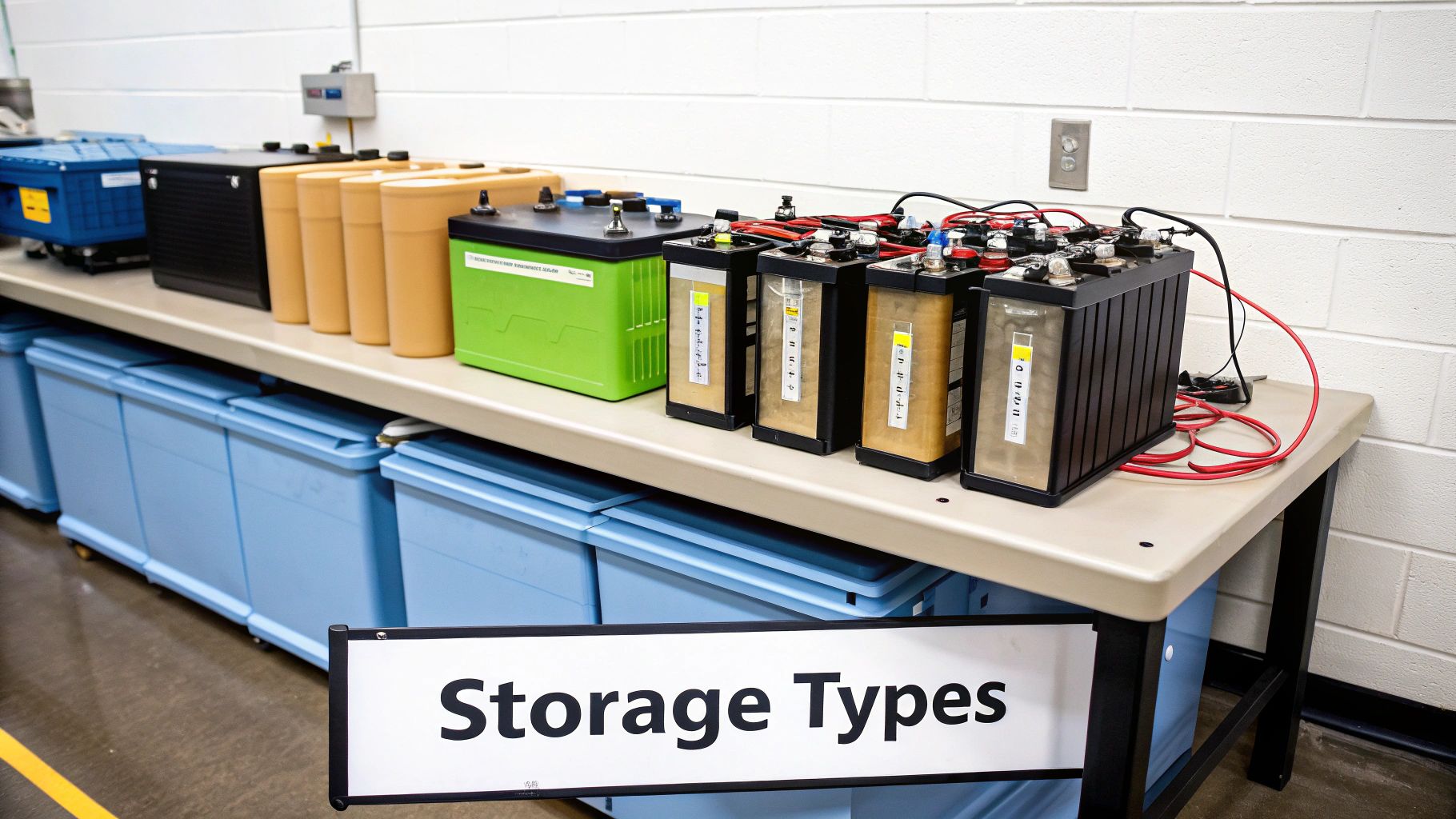
Backup. The refrigerator-furnace-wifi case. One day of autonomy, a hybrid inverter, a critical loads panel. Payback is measured in freezers not lost and pipes not frozen, not in tariff arbitrage. Self-consumption. Where export rates are poor, storage moves solar from noon to evening. The ESS pays against the spread between export credit and retail price. Time-of-use arbitrage. Charge cheap, discharge peak — the hybrid inverter guide runs the worked arithmetic. Demand management. For commercial customers, clipping the 15-minute demand peaks that dominate a C&I bill can justify storage on that line item alone; our 100–200 kWh C&I battery range serves exactly that case.
A fifth case deserves an honest mention: doing nothing yet. If the grid is reliable, the tariff flat, and the budget tight, a battery-ready hybrid installed without batteries preserves every option at minimal premium. Storage prices trend down; optionality has value; nobody should buy 20 kWh to solve a problem they do not have. That is not a hedge — it is how we advise family, and it is why customers come back.
Commissioning and living with an ESS
Commissioning an ESS is a checklist, not a ceremony: firmware current on inverter and BMS, battery protocol verified communicating, charge and discharge limits set per the battery datasheet, reserve SOC configured (20–30 percent is a sane grid-tied default for backup reserve), operating mode selected and explained to the owner, and — non-negotiable — a live transfer test with the customer watching. Then the living-with-it part, which is mercifully dull: keep the ambient temperature in the datasheet's happy band, glance at the app monthly, and expect LFP calendar aging of a percent or two a year. The 20–80 battery rule explains why partial-cycling habits extend life, and battery maintenance best practices covers the rest.
Field notes: the freezer that made the sale
Years ago a customer called after a four-day outage, furious — not at us, at physics. He had declined the battery option on his solar quote to save money, and the outage had cost him a chest freezer of venison, a fridge of groceries, and a basement that took on water when the sump pump sat dead. He bought the 15 kWh bank that month, and he has told the story at every neighborhood gathering since: the battery did not pay for itself in tariff arbitrage; it paid for itself in one bad week. We have kitted hundreds of systems since, and the pattern holds — customers size storage with their heads and buy it with their scars. Our job at the counter is to hand them the arithmetic before the scar arrives: the backup kit collection exists so that conversation ends in a complete bill of materials instead of a guess.
Thermal management and placement: the unglamorous decider
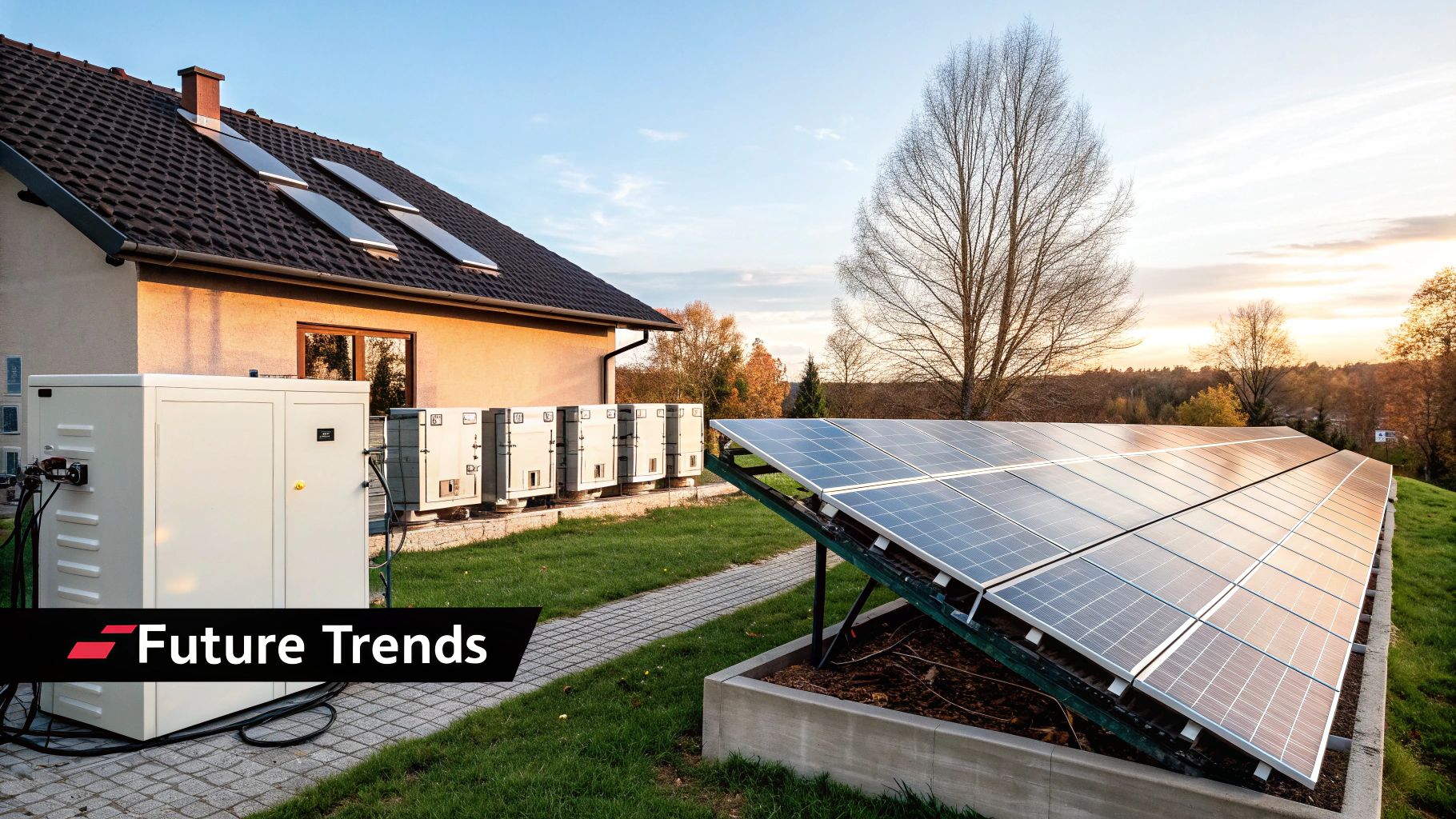
Batteries age by temperature the way milk ages by time. LFP cells are happiest between roughly 15 and 30°C; sustained operation above 35°C accelerates degradation measurably, and charging below freezing without a heater or BMS protection plates lithium and permanently costs capacity. Placement follows from that physics. A garage in the Willamette Valley is nearly ideal — buffered, dry, rarely extreme. A metal shed in central Oregon that sees -15°C nights and 40°C afternoons needs an insulated, conditioned enclosure or the warranty math changes. Wall-mounted units want real structure behind them — 100 to 300 pounds of cabinet does not hang on drywall anchors — and clearances from the manual are not decoration: they are airflow and fire-code space. Outdoor-rated cabinets solve the space problem where the garage is spoken for, at the price of watching the enclosure's own temperature rating. Put the ESS where you would put a good freezer: protected, ventilated, accessible, and out of the flood zone.
The economics: costs, incentives, and honest payback
Residential installed storage in 2026 typically prices between $800 and $1,200 per kWh turnkey depending on scope, with the standalone federal tax credit for storage (30 percent under current law, available to batteries over 3 kWh even without solar) taking a real bite out of that figure. Payback honesty requires separating the cases: pure arbitrage on a modest TOU spread may return 6 to 10 percent annually — decent, not dazzling; outage protection returns nothing until the week it returns everything; demand-charge management on commercial tariffs can pay back in three to five years when the peaks are spiky and the tariff punishes them. The mistake to avoid is blended payback spreadsheets that count the same dollar twice — arbitrage value and backup value both computed as if the battery were in two places at once. It is one battery. Model one mode, treat the other as a free rider, and the decision stays honest.
Second life, recycling, and end of the road
Customers increasingly ask where the battery goes when it dies, and the answer has improved markedly. LFP packs contain no cobalt, which removes the ugliest material concern, and lithium recycling infrastructure has scaled with EV volumes — hydrometallurgical recyclers now recover lithium, copper, and iron at meaningful rates, and take-back programs through manufacturers and distributors are becoming standard rather than exceptional. Before recycling comes repurposing: an EV pack retired at 70 percent capacity still serves stationary duty comfortably, and second-life residential products built on that logic are a growing, legitimate category. The planning takeaway for buyers today: buy from manufacturers with published take-back terms, keep the purchase records with the house documents, and expect that the 2045 version of this decision will be easier than the 2026 version. Durability is the greenest spec — a battery that cycles 6,000 times displaces two that cycle 3,000.
Putting it together
The ESS decision, stripped to its frame: decide which problem you are solving (backup, arbitrage, self-consumption, demand), size energy in kWh against honest loads, size power in kW against the surge table, pick LFP unless a specific constraint says otherwise, buy a UL 9540 listed system with a real warranty desk, and install it to NEC 706 and NFPA 855 with permits pulled. Do those six things and storage becomes what it should be — the most reliable appliance in the building, quietly moving sunlight through time while everything else on the wall takes the credit.
Storage plus solar: the pairing rules
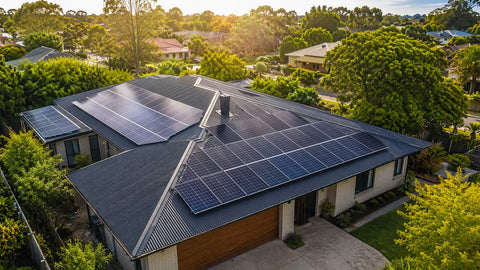
Most residential ESS we ship goes in alongside PV, and the pairing has rules worth stating plainly. DC-coupled systems — solar and battery both landing on a hybrid inverter — win on efficiency and simplicity for new builds: one inverter, one conversion chain, one monitoring platform. AC-coupled retrofits — a battery inverter added beside an existing string inverter — win when the solar already exists and replacing it would be waste; the battery charges from AC and the two inverters coordinate through the panel rather than through shared electronics. Either architecture works; the wrong move is mixing them accidentally, which is how customers end up with two apps, two warranties, and one confused electrician. Battery capacity should also respect array size: a 5 kW array in a cloudy climate cannot reliably refill a 30 kWh bank in winter, and a bank that never reaches full charge is capacity paid for and never used. As a counter rule of thumb, we like array watts to be at least 40 to 50 percent of bank watt-hours per day of intended daily cycling — a 12 kW array against a 20 kWh bank cycles happily; a 4 kW array against that same bank is a rationing exercise. The system size calculator on the solar side keeps the two specs in proportion.
What to ask before you sign
Five questions separate a solid storage quote from a future regret. What is the usable kWh, not the nameplate? What is the continuous and surge kW, and for how many seconds? What chemistry and what cycle-life warranty, in writing, at what end-of-warranty capacity? Who answers the warranty phone — the installer, the distributor, or a manufacturer with no US desk? And what does the system do at year ten when the firmware server is sunset — does it keep running locally, or does the app becoming abandonware brick the features you paid for? A vendor who answers all five crisply has earned the order. A vendor who deflects any of them has told you something worth hearing.
Storage is the last big piece of the home-energy puzzle, and it is the piece that turns everything else — the panels, the hybrid, the generator, the tariff — from a collection of compromises into a system with a spine. Size it with arithmetic, buy it with those five questions, install it to the article, and it will outlast the roof it charges beside.
That is the whole answer to what an energy storage system is: not a battery in a box, but a listed, code-governed machine for making electricity patient — and in a decade of electrification, patience is the scarcest resource on the wall.
Charge it when the sun is generous; spend it when the night is not.
Frequently asked questions
What is an energy storage system (ESS)? Per NEC Article 706, an ESS is one or more devices assembled to store energy and supply it later. In practice it combines batteries, a battery management system, a bidirectional inverter, protection devices, and controls in a listed assembly — the battery alone is only one component.
How is an ESS different from a battery? A battery stores DC energy. An ESS is the complete listed system around it — BMS, inverter/charger, disconnects, enclosure, and controls — evaluated as a unit under UL 9540. Installing "batteries" without the system layer is where code and safety problems begin.
How many kWh of storage does a house need? A disciplined critical-loads panel (fridge, furnace blower, lights, networking) typically draws 10–18 kWh per day. For one day of backup autonomy at 90 percent usable depth of discharge, that means roughly 12–20 kWh nameplate. Off-grid homes often need 2–4 days, sized against the worst solar week.
What is the difference between kW and kWh in batteries? kWh is energy — how long the system runs. kW is power — how much it can run at once. A 10 kWh battery limited to 0.5C delivers only 5 kW; both specs must be checked against your loads, especially motor starting surge.
Is LiFePO4 better than lead-acid for home storage? For daily cycling, decisively: LFP offers roughly 4,000–6,000 cycles at 80 percent depth of discharge versus 400–1,000 cycles at 50 percent for AGM, plus about 95 percent round-trip efficiency versus 80–85 percent. Lead-acid retains a niche in cold, budget, or rarely-cycled backup roles.
Do I need a permit to install home battery storage? Yes. ESS installations fall under NEC Article 706 and NFPA 855 with local fire-code amendments, requiring electrical permits and usually fire marshal review. UL 9540 listing documentation and UL 9540A test summaries are standard submittal items.