Residential Storage Without the Science Project
I've commissioned enough home battery systems to know the two ways they go: either the equipment is engineered to work together and commissioning takes an afternoon, or it's a bag of parts from three vendors and commissioning takes a week plus a support ticket thread that never quite dies. The FoxESS 5.7-US hybrid inverter paired with its 8kWh LFP battery and the FoxESS Hub is the first kind. It's a right-sized, integrated residential storage system — solar in, battery buffered, grid interactive, outage-capable — aimed squarely at the largest slice of the American market: homes with 5–8kW of rooftop solar whose owners want self-consumption savings plus real backup, without paying for commercial-grade capacity they'll never use.

This review comes from the supply and install side: we've sold the components, answered the midnight "is this normal" texts, and read the monitoring logs. Real specs stay in the tables; field experience stays in the prose. Current stock lives in our hybrid inverter collection and solar battery range.
What the System Actually Is
| Component | Function | Key Benefit |
|---|---|---|
| 5.7kW Hybrid Inverter | Converts and manages power flow | Bi-directional capability for solar, grid, and battery |
| 8kWh Lithium Battery | Stores excess energy for later use | Powers home during outages and peak hours |
| Central System Hub | Monitors and coordinates operation | Intelligent automation and remote access |
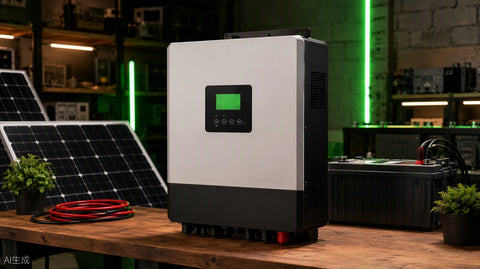
Three components, one system, one app. The inverter is the brain and the muscle — it converts PV DC to household AC, charges and discharges the battery, and decides in real time where every watt goes. The battery is the buffer — 8 kWh of lithium iron phosphate, the chemistry we spec first for stationary storage for reasons we'll get into. The Hub is the traffic controller — it handles the grid connection, the backup circuits, and the rapid transition when the utility drops. Nothing in the box requires the owner to understand any of that, which is exactly the point.
The 5.7kW Inverter: Right-Sizing Is the Feature
Inverter sizing is where residential storage quotes go wrong in both directions. Oversize the inverter and the customer pays for silicon and copper that idles; undersize it and the system clips solar production or can't carry the loads the brochure implied. The 5.7 kW class lands where most American homes actually live: a typical residential array of 12–18 panels produces comfortably inside this window, and the continuous AC output covers the real evening load profile — cooking, laundry, HVAC blower, entertainment — with the battery filling the peaks.
| Hybrid Inverter Specifications | |
|---|---|
| Model | FoxESS 5.7-US |
| Rated Output Power | 5.7 kW |
| Maximum AC Output | 5,700 W continuous |
| Inverter Type | Hybrid (Grid-tied + Battery + Backup) |
| AC Output Voltage | 240V Split Phase |
| Maximum Efficiency | >97% |
| MPPT Channels | 2 independent trackers |
| Grid Connection | Bi-directional |
Read that spec table the way an installer does. Continuous output at 5,700W means the honest simultaneous-load budget is in the 4,500–5,000W range for comfort margin. Surge capability is what starts motors — refrigerator compressors, well pumps, garage door openers — and the hybrid architecture handles those surges from the battery side without drama. If your load list includes a large central AC or an electric range running concurrently with everything else, that's a sizing conversation, not a dealbreaker: either the bigger FoxESS unit steps in, or load management trims the peaks. Our hybrid inverter explainer covers the architecture and the inverter picks guide covers the competitive field.
Hybrid by Design: Where Every Watt Can Go
| Power Flow Direction | Function |
|---|---|
| Solar → Home | Converts DC solar energy into AC household power for immediate use |
| Solar → Battery | Stores excess solar production for later consumption |
| Grid → Battery | Charges battery during off-peak rate periods when advantageous |
| Battery → Home | Discharges stored energy to power loads during peak hours or outages |
| Solar → Grid | Exports excess production for net metering credits (where available) |
The power-flow table is the system's entire philosophy in three rows, and it's why "hybrid" is a design, not a label. Solar feeds the home first because self-consumed solar is the most valuable solar. Excess solar charges the battery instead of exporting at whatever your utility pays — which in most territories is a fraction of retail. Battery discharges into evening peaks when grid power costs most. And the grid fills gaps and absorbs true surplus, on your terms. The operating modes let the owner bias the system toward savings (aggressive time-of-use arbitrage), resilience (keep the battery full, grid be damned), or a blend. We set most customers on the blend and revisit it after the first utility bill arrives with data attached.
The 8kWh Battery: What It Runs and How Long It Lasts
| Use Case | Typical Duration |
|---|---|
| Evening household loads (lights, TV, appliances) | 4-6 hours |
| Critical circuits during outage (refrigerator, lights, WiFi) | 12-24 hours |
| Overnight home coverage (minimal loads) | 8-10 hours |
| Peak rate period offset (4-9 PM typical) | Full coverage |
Eight kilowatt-hours is a deliberate number, and the runtime table shows why: it covers the evening household load window for hours, and it carries a critical-loads panel — refrigerator, lights, Wi-Fi, furnace blower, device charging — through a typical overnight outage with margin. It is not whole-home-with-central-air capacity, and honest sizing says so up front. The customers who are happy with 8 kWh are the ones whose backup circuit was designed around essentials; the ones who are disappointed are the ones nobody had that conversation with. Run your own list through the battery runtime calculator before you decide what "backup" means at your house.
| Battery Specifications | |
|---|---|
| Usable Capacity | 8 kWh |
| Battery Chemistry | Lithium Iron Phosphate (LFP) |
| Cycle Life | >6,000 cycles at 80% DoD |
| Depth of Discharge | Up to 100% |
| Round-Trip Efficiency | >95% |
| Operating Temperature | -10°C to +50°C |
| Expandable | Yes (additional modules available) |
| Warranty | 10 years |
The chemistry row deserves emphasis: LFP. No cobalt, high thermal stability, and a cycle life rating over 6,000 cycles. Do the arithmetic on that cycle count — one full cycle per day, every day, is over sixteen years before the rated figure, and capacity doesn't fall off a cliff at the end, it glides. LFP also tolerates being held at high state of charge better than NMC, which matters because a backup-oriented battery spends its life sitting full, waiting. The operating habits that extend that life further — avoiding chronic deep discharge, keeping charge rates inside the BMS envelope, respecting temperature limits — are covered in the 20/80 rule guide and our battery maintenance guide. Expandability matters too: systems in this family scale with additional battery capacity, so the 8 kWh you install this year isn't a ceiling.
The Hub: The Part That Makes Backup Boring
The Hub is the component reviewers skip and installers appreciate. It centralizes the grid connection, the protected-loads output, and the transfer logic, so the system switches to battery when the grid fails fast enough that the computers don't reboot and the clocks don't blink. That transition quality is the difference between "backup power" as a brochure phrase and backup power as an experience — the house simply doesn't notice. The Hub also coordinates the energy flow between inverter, battery, grid, and home so the owner never thinks about it. Coordination over complexity: the owner gets an app with three numbers that matter (solar today, battery level, grid status), and everything else is automation.
Installation: What a Clean Install Looks Like
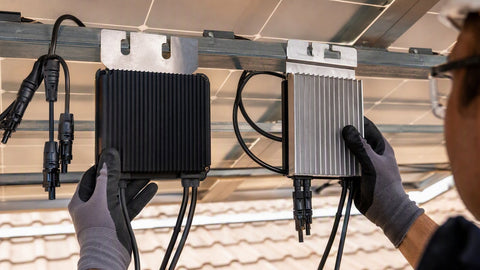
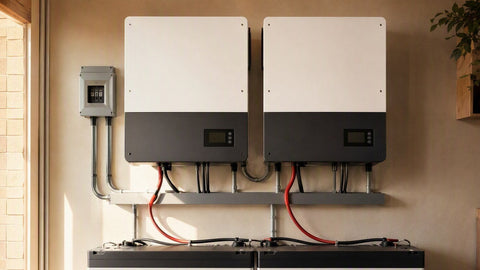
A FoxESS system install done right: inverter and battery on a solid wall with the manual's clearances — battery towers reject leaning installations the hard way, and LFP wants space that stays inside its temperature envelope, so a conditioned garage beats a 115°F one every time. The critical-loads sub-panel gets the circuits the household actually needs in an outage, decided with the homeowner standing at the panel, not guessed from the truck. CT clamps land on the correct service conductors with correct orientation — reversed CTs are the number-one cause of "my system exports when it should charge" calls across every hybrid brand, and a ten-second orientation check at commissioning prevents all of them. DC and AC wiring follow NEC 690 and 706 respectively, ampacity from the wire ampacity chart, and the whole thing gets a controlled charge-discharge test with the numbers logged into the commissioning sheet.
Permitting note from the field: storage-plus-solar permits in most jurisdictions now follow a well-worn path, but the load calculation for the protected panel still gets eyeballed by inspectors, and a clean one-line diagram with the transfer logic shown is the difference between a signature and a correction notice. Our NEC compliance guide covers the framework.
Economics: Where the Savings Actually Come From
Self-consumption math first. In territories where exported solar earns a fraction of retail — which is most of the post-net-metering map — every kWh you store and use yourself is worth retail minus the export rate, and that spread is the system's daily paycheck. Time-of-use arbitrage stacks on top: charge the battery off solar or off-peak grid, discharge through the evening peak window, and the peak-rate premium stops landing on your bill. In the aggressive TOU markets, customers routinely see meaningful monthly reductions; in flat-rate markets the system earns its keep as resilience plus self-consumption, and the payback conversation is longer but still real. Backup value is the unquantified row: the outage that doesn't spoil a freezer, the workday that doesn't die with the grid, the sump pump that keeps running. Nobody prices that row until the first storm, and afterward nobody questions it.
| Benefit Category | Value to Homeowner |
|---|---|
| Energy Cost Reduction | Maximize solar self-consumption and avoid peak utility rates |
| Backup Protection | Maintain essential power during grid outages without generators |
| Energy Independence | Reduce reliance on utility pricing decisions and grid conditions |
| Environmental Impact | Lower carbon footprint by storing and using clean solar energy |
| Home Value | Solar-plus-storage systems add measurable resale value |
| Low Maintenance | Minimal ongoing attention required—system operates automatically |
Who Should Buy This — and Who Should Look Elsewhere
Buy it if: your array is in the 5–8kW class, you want integrated savings-plus-backup without a multi-vendor science project, your backup expectations are essentials-focused, and you value one app and one warranty path. Look elsewhere if: you need to carry central air and heavy 240V loads through outages (step up in capacity or add managed loads), you're building a large off-grid system (different architecture entirely — start with the battery bank sizing guide and 48V equipment), or you want maximum DIY configurability (this is an integrated ecosystem, and that integration is the product). For bigger storage ambitions, the off-grid storage guide and our 10kWh battery range cover the next tier up.
Ownership: What Years Two Through Ten Look Like
The ownership curve on an integrated LFP system is flat, which is the nicest thing storage can be. Firmware arrives over the air. The BMS manages itself. The app tells you what the system did today in three numbers. Annual ownership ritual: glance at the monitoring app monthly, keep the battery space inside temperature limits, and after any long outage, check the logs once. The failure modes we actually see across residential storage — dead router taking monitoring offline (the system keeps working; the visibility pauses), reversed CTs from rushed commissioning, and the occasional firmware update that wants a reboot — are annoyances, not failures. Compare notes with the battery backup kits if you're still deciding between integrated and component approaches.
Designing the Critical-Loads Panel: The Conversation That Decides Everything

The most important hour of any storage install happens at the panel with the homeowner, before any hardware is ordered. We walk the house together and list what must stay alive: refrigerator and freezer, furnace blower or mini-split heads, the well pump if there is one, the internet gear, selected lighting circuits, the garage door, medical devices, and one kitchen receptacle for the coffee maker that makes outages tolerable. Then we measure or look up each load, stack the starting surges, and check the total against the inverter's continuous rating with headroom. The circuits that don't make the list — electric water heater, range, dryer, central AC in most cases — stay on the grid side, and saying that out loud at the kitchen table prevents the disappointed first outage. Households that want more coverage either accept load management, step up to additional battery capacity, or pair the system with a generator for extended events; all three are legitimate answers, and we design for whichever the customer actually wants.
A Time-of-Use Worked Example
Take a home on a typical aggressive TOU tariff: peak power in the 4–9 PM window costs two to three times the off-peak rate. The array generates through midday when the house is empty and exports at a low credit rate. Without storage, the family buys back its own sunshine at triple price every evening. With the FoxESS system in a TOU-biased mode, the battery charges off midday solar and discharges through the peak window — the 8 kWh covers most or all of a normal evening, and the peak line on the bill withers. Multiply a few kWh of avoided peak consumption by the rate spread by thirty days and the monthly savings become a number the finance office understands. In flat-rate territories the same system earns through self-consumption arbitrage against the export rate instead; the mechanism changes, the direction doesn't.
Generator Pairing: The Belt-and-Suspenders Architecture
For customers in serious outage territory, the architecture we increasingly install is solar plus battery plus a modest generator — the battery handles the first day silently and instantly, the generator handles day three of an ice storm, and each machine covers the other's weakness. Battery-first design means the generator runs a fraction of the hours it otherwise would, which is fuel, noise, and maintenance saved. The integration detail that matters: the generator must connect through equipment listed for the application, and the inverter's settings must accept generator input correctly — this is a commissioning step, not a plug-and-play assumption. Done right, the household essentially stops experiencing outages as events.
FoxESS the Company: What Buyers Should Know
FoxESS grew out of the Tsingshan industrial group's energy ambitions and scaled fast on the strength of integrated residential storage — inverter, battery, and hub designed together rather than sourced together. That integration shows up in commissioning time and in the single support path when something needs attention. The company's US-market push brought the certifications, the 120/240V native split-phase hardware, and monitoring infrastructure that the American market demands. As with any fast-scaling brand, we advise customers to buy through channels that stock parts and answer the phone — which is, not coincidentally, the business we're in. The warranty and support experience on an integrated system is only as good as the distributor behind it, and that's a selection criterion as real as any spec in the tables above.
Common Mistakes We See on Residential Storage Jobs
The repeat offenders, in order of frequency: reversed or misplaced CT clamps discovered when the system "charges from the grid at noon"; critical-loads panels designed by guesswork instead of measurement; batteries installed against their temperature envelope in unconditioned spaces and then blamed for winter capacity dip; Wi-Fi-only monitoring dependencies that die with the first router upgrade; and commissioning without a controlled charge-discharge test, which means the first real test happens during the first real outage. Every one of these is a ten-minute prevention at install. The pattern underneath all of them is rushing commissioning — the hour spent testing methodically is the cheapest hour of the whole project.
Monitoring and the App: What to Actually Watch
Owners drown in data and starve for signal. Three numbers carry the story: solar production today versus the seasonal expectation (a drifting shortfall means shading, soiling, or a string issue), battery state of health (glides slowly on LFP; a step change wants a look), and grid import during the peak window (should approach zero in a TOU mode; if it doesn't, the mode settings want tuning). Everything else in the app is entertainment. Set a calendar reminder to glance monthly, and check the logs after any long outage — that rhythm catches problems while they're small, which is the entire value of monitoring.
Sizing the Battery to the Household: The 8kWh Question
Capacity questions dominate the quote conversation, so here's the framework we apply. Start with the evening window: total the loads that run between sunset and midnight — cooking, lighting, entertainment, laundry, HVAC circulation. For most efficient households that window draws 4–7 kWh, which is precisely the territory 8 usable kWh covers. Then add the outage case: the critical-loads list, multiplied by the hours of autonomy the household wants. One overnight of essentials fits comfortably; two days of essentials wants either expansion modules or a generator partner. The customers happiest with this class of system share one trait: they sized from the measured load list instead of the square footage. The battery bank sizing guide walks the full method, and the off-grid sizing guide covers multi-day autonomy math for bigger ambitions.
Solar-Only Mode, Storage-Only Mode, and Everything Between
A flexibility point worth surfacing: the system operates sensibly across the whole spectrum of configurations. Solar-plus-storage is the headline, but the battery-only configuration — charging off off-peak grid power and discharging through peaks — pencils in pure TOU arbitrage territories even for homes without arrays, and the solar can come later. Conversely, the inverter runs solar-only while the battery order waits on budget. Systems that let households stage the investment without re-buying hardware are the systems we see actually get finished, and staged projects beat postponed projects every time.
The First-Year Ownership Report Card
Across the integrated residential systems our customers run, year one teaches the same lessons. The app becomes a household habit for about two months, then fades into background — which is the system working as designed, not being ignored. The first meaningful outage converts skeptics permanently; the household that watched the street go dark while their lights held stops asking whether the battery was worth it. The first summer bill in TOU mode validates the math. And the one support interaction almost everyone has — a monitoring reconnect after a network change — teaches the value of equipment that keeps operating when visibility blinks. Year two onward, the system is furniture: present, silent, and doing its job. That's the best review a home battery can earn.
The pattern behind that report card is deliberate engineering. Systems that demand owner attention get neglected; systems that automate the decisions get reliable. The FoxESS stack automates mode transitions, battery protection, and grid interaction, leaving the owner exactly three voluntary behaviors: glance at the app occasionally, keep the battery space temperate, and tell us when the household's load profile changes materially — an EV, a hot tub, a workshop — because storage sized for last year's house deserves a settings review for next year's. That fifteen-minute review is the difference between a system that quietly drifts out of tune and one that compounds value for a decade and a half.
Permitting and Paperwork for Hybrid Storage
Hybrid storage permits follow a well-worn path in most jurisdictions now, but the details still trip rushed submissions: the one-line diagram needs the transfer logic and the critical-loads boundary shown explicitly, the battery listing documentation needs to accompany the plan set, and the utility interconnection amendment goes in before operation, not after the inspector leaves. Load calculations for the protected panel get reviewed in the stricter territories. We submit the whole package at once — diagram, listings, load calc, spec sheets — because piecemeal submittals are how two-week permits become six-week sagas. The paperwork is the cheapest part of the project and the most commonly botched.
Stacking It Against the Alternatives One More Time
The cross-shop snapshot we give every undecided customer: premium all-in-one wall batteries offer more capacity per unit and a slicker single-vendor story at a higher ticket; DIY-component builds offer lower cost and full configurability at the price of your own engineering time and warranty fragmentation; this FoxESS package sits deliberately between — integrated enough to commission in an afternoon, modular enough to grow, priced for the mainstream. Match the architecture to the household's actual loads, budget, and appetite for involvement, and the right column picks itself. Bring the load list to the quote desk and we'll run the comparison against your rate tariff, not a national average.
Why Integration Wins at This System Size
The residential storage market splits into two philosophies: best-of-breed components assembled by the installer, and factory-integrated systems where inverter, battery, and hub were engineered on the same bench. Component builds win on paper flexibility and occasionally on price; integrated systems win on commissioning time, single-throat support, and the absence of finger-pointing when something misbehaves. At the 5–10kWh residential scale, our service log is unambiguous — the integrated systems generate fewer callbacks, shorter diagnoses, and faster warranty resolutions, because one vendor owns the whole interaction chain. The component approach earns its complexity at larger off-grid scales where customization actually matters; at the size this FoxESS package targets, integration is the feature, not the compromise.
Frequently Asked Questions
What size solar array works best with the FoxESS 5.7-US inverter?
Arrays in the 5–8kW class pair naturally with it — typical 12–18 panel residential systems. Significantly larger arrays can still work with some clipping at peak sun hours; significantly smaller ones underuse the hardware. Match the array to the inverter window during design, not after purchase.
How long will the 8kWh battery power my home during an outage?
On a properly designed critical-loads panel — refrigerator, lights, Wi-Fi, furnace blower, device charging — expect overnight-plus coverage, with exact runtime set by your actual loads. Whole-home loads with central air conditioning exceed what 8 kWh can carry; the runtime table above shows real numbers per load.
Can I add more battery capacity later?
Yes — the system family supports expansion, so 8 kWh is a starting point rather than a ceiling. Plan the wall space and wiring for the final configuration at install; it's cheaper than retrofitting.
Does the system work if the grid goes down during the day?
Yes. Solar keeps producing, the battery buffers, and the Hub islands the protected circuits automatically, fast enough that household electronics don't notice. At night or in poor sun, the battery alone carries the protected loads.
Is the FoxESS battery safe to install in a garage?
The LFP chemistry is the most thermally stable lithium family in common stationary use, and the system carries the listings required for residential installation. Follow the manual's clearances and temperature range, keep the space conditioned or insulated in extreme climates, and the install is routine.
How does this compare to a Tesla Powerwall?
Different philosophies. The Powerwall is a higher-capacity monolith with a strong ecosystem; the FoxESS package is a right-sized, expandable, installer-friendly system often at a friendlier entry price. The right answer depends on your load list — which is why we start every quote there.