EG4 vs FranklinWH 2026: DIY Rack Bank vs Integrated Whole-Home
Component-built EG4 rack bank versus FranklinWH's aPower 2 appliance: cost per kWh, power output, generator integration, install labor, warranty structure, and the outage experience — so you can pick the path that fits your house and your skills.
EG4 and FranklinWH both keep your lights on when the grid drops, and they could not approach the problem more differently. EG4 is the component path: 48V rack batteries plus a separate hybrid inverter, assembled and configured by an installer or a genuinely handy owner, at roughly half the cost per kWh of integrated systems. FranklinWH's aPower 2 is the appliance path: a 15 kWh AC-coupled battery with 10 kW continuous output, a smart aGate panel handling whole-home orchestration, native generator integration, per-circuit load control, and a 15-year warranty — delivered, installed, and supported as one finished system.
We deploy both architectures, and we tell every customer the same thing up front: you are not choosing between two batteries — you are choosing between two project shapes. One is a build. The other is an appliance. Everything below follows from that. Live inventory: EG4 Electronics and FranklinWH. If you are still mapping loads, the bank sizing guide and runtime calculator come first.
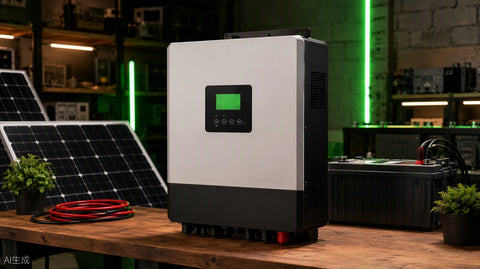
Under the enclosure, both systems run lithium iron phosphate cells — safe chemistry, 100% depth-of-discharge rated, no cobalt. Both scale by stacking units. Both carry full-home backup ambitions. The divergence is integration: FranklinWH ships a sealed appliance with the inverter, BMS, and control plane inside one UL 9540-listed box; EG4 ships best-in-class components that you (or your installer) integrate into a system that gets listed as a combination of its parts.
That single difference cascades into everything a buyer cares about: cost, install hours, inspection paperwork, the outage experience, who you call when something blinks red, and how the system behaves when a generator enters the picture. Neither philosophy is wrong. They serve different owners — and honestly, different personalities.
Class-level specs; confirm exact SKU datasheets. Both chemistries are LFP with 100% DoD ratings.
| Attribute | EG4 component path | FranklinWH aPower 2 path |
|---|---|---|
| Architecture | 48V rack batteries + separate hybrid inverter | Integrated AC-coupled battery appliance + aGate |
| Capacity unit | 5.12 kWh per rack module | 15 kWh per unit |
| Max stack class | 80 kWh-class per bank | 15 units / 225 kWh |
| Continuous output | Set by inverter (12 kW class typical) | 10 kW per unit; 15 kW 10-sec peak |
| Motor starting | Inverter surge class (2x typical) | 185A LRA-class motor starting |
| Solar coupling | DC-coupled through the hybrid inverter | AC-coupled — works with any existing solar |
| Generator integration | Via hybrid inverter gen input | Native via aGate — orchestrated |
| Load control | Breaker-level, manual design | Per-circuit smart control in aGate |
| Warranty | 5–10 yr class by line | 15 years |
| Install shape | Component build: rack, wire, configure | Appliance mount + aGate + commissioning |
The component path's price advantage is structural, not promotional. You are buying cells, a BMS, and an inverter at distributor pricing instead of an integrated appliance at retail-plus-installer margin:
EG4 column is equipment-only for DIY or owner-managed builds; FranklinWH column reflects installed appliance pricing. Add $3,000–$8,000 professional install labor to the EG4 column for an apples-to-apples comparison.
| System size | EG4 path (equipment class) | FranklinWH path (installed class) | Delta |
|---|---|---|---|
| ~15 kWh | 3 modules + 12 kW-class hybrid ≈ $7,000–$9,500 | 1 × aPower 2 + aGate ≈ $14,000–$18,000 | ≈ 2x |
| ~30 kWh | 6 modules + hybrid ≈ $10,500–$14,500 | 2 × aPower 2 + aGate ≈ $22,000–$28,000 | ≈ 2x |
| ~45 kWh | 9 modules + larger/parallel inverters ≈ $15,000–$20,000 | 3 × aPower 2 ≈ $30,000–$38,000 | ≈ 2x |
Read the delta row honestly: even after paying a licensed electrician to build the EG4 system professionally, the component path typically lands 30–45% cheaper per installed kWh. That gap buys a lot of panels, a generator, or a second inverter. What it does not buy is FranklinWH's integration polish — which is what the next sections price out in lived experience rather than dollars.
Capacity is how long the lights stay on; output is which lights. The aPower 2 puts out 10 kW continuous with a 15 kW ten-second peak and motor-starting capability in the 185A LRA class — enough to start a 4-ton compressor without load management in many homes. Stack two units and you are at 20 kW continuous, whole-home territory for almost anything short of dual HVAC plus electric range plus EV charging simultaneously.
On the EG4 path, output is your inverter choice. A 12 kW-class hybrid (18kPV or FlexBOSS21 class) delivers 12 kW continuous with roughly 2x surge for motor starting — comparable on paper to a single aPower 2, with the important footnote that you engineered the surge path: battery discharge current across enough parallel modules, correct DC busbar sizing, and inverter settings that allow the surge. Done right, we have started 4-ton scroll compressors on single EG4 hybrids. Done with an undersized two-module battery bank, the same attempt faults the inverter and the homeowner learns about inrush current the hard way. The whole-house power overview covers the load side of that math.
Runtime at 80% DoD. Both systems need load discipline or load management at whole-home scale — see the load-control section.
| Load | aPower 2 (1 unit) | EG4 12 kW-class hybrid + 4-module bank |
|---|---|---|
| Fridge + lights + network (~1 kW) | ✓ 15 hr class | ✓ ~16 hr class (20.5 kWh @ 80%) |
| Above + window AC (~2.5 kW) | ✓ 6 hr class | ✓ 6.5 hr class |
| 4-ton central AC start (LRA ~120–185A) | ✓ within 185A class | ✓ if bank discharge ≥ surge draw |
| Range + water heater + AC together | ✗ load-shed required | ✗ load-shed required |
| EV Level 2 charging (7.7–11.5 kW) | ✗ alone; ✓ with 2 units | ✗ on 12 kW hybrid at night |
This is where the appliance path earns its premium in lived experience. A FranklinWH system detects the outage, transfers in a fraction of a cycle class, and the aGate starts making decisions: shedding the water heater at 60% state of charge, shedding EV charging at 40%, reserving the last 20% for refrigeration overnight. The homeowner's phone shows a calm dashboard and nothing else happens.
An EG4 build can absolutely do the same job — hybrid inverters have gen inputs, smart-load outputs, and configurable SOC thresholds — but the behavior is configured, not shipped. Our commissioning sheets for EG4 builds run two pages of settings: charge voltages, grid-tie behavior, gen-start thresholds, smart-load rules. We document them because the difference between a great EG4 outage experience and a frustrating one is a settings audit, not hardware. I have taken the 11 p.m. call from a DIY customer whose bank sat at 100% through a three-hour outage because grid-tie sell settings fought the backup mode — a five-minute fix that a configured system would never have needed.
If that paragraph sounded like fun, buy EG4. If it sounded like a nightmare, buy FranklinWH. There is no wrong answer — only honest self-knowledge about who is maintaining the system in year seven.
Hybrid resilience — solar, battery, and generator — is where the integration gap is widest. FranklinWH's aGate treats a generator as a first-class citizen: automatic start/stop on SOC thresholds, seamless blending, clean transfer back to grid. It is the most polished generator-battery handoff in the residential market, full stop.
EG4 hybrids accept generator input on a dedicated port with start/stop logic and charge-current control — fully capable, and we run several such systems — but the orchestration is yours to tune: exercise schedules, voltage tolerance windows for cheaper generators, and charge-rate limits so the generator is not overloaded. Pair either approach with the right genset from standby generators or portable units, an appropriate transfer switch, and size with the generator sizing guide.
Both paths end with a permitted, inspected system on professional jobs. The DIY legality difference is the biggest practical fork for owner-builders.
| Install element | EG4 component path | FranklinWH appliance path |
|---|---|---|
| Typical pro install hours | 16–30 hr class | 8–14 hr class |
| Listing paperwork | Component listings (UL 1973 batteries, UL 1741 inverters) | System-level UL 9540 documentation |
| AHJ familiarity | Varies — educate your inspector | High — appliance installs read familiar |
| DIY legal path | Yes in many jurisdictions (owner-builder) | No — certified installer required |
| Panel work | Critical-loads subpanel or service tap design | aGate service-rated integration |
| Total installed cost shape | Equipment + more labor | Higher equipment + less labor |
One permitting note from the field: inspectors who see battery systems weekly know the appliance products by name. Component builds sometimes take a second visit with manufacturer documentation in hand — we pre-print the listing sheets and commissioning report for exactly this reason. Budget the paperwork hour either way, and keep the electrical side clean per the NEC wire sizing guide and ampacity chart.
FranklinWH's 15-year warranty on the aPower 2 is among the longest in residential storage, and the support model is single-throat-to-choke: one company owns the battery, the gate, the software, and the answer. EG4's lines carry 5–10-year class warranties depending on product and registration, with support split rationally across the component makers — battery BMS question to the battery desk, inverter behavior to the inverter desk. Signature Solar's channel gives EG4 owners unusually deep documentation and a huge peer community.
Our service log: appliance-path tickets resolve faster on software issues (one vendor, one remote session); component-path tickets resolve faster on hardware swaps (a $200 BMS board or a module under warranty beats scheduling an appliance tech). Different failure shapes, different fix velocities. Either way, register the product, keep commissioning records, and follow the longevity practices and the 20–80 rule that keep LFP chemistry happy.
Choose the EG4 component path if: you or your installer are comfortable configuring a system; you are building new solar plus storage together (DC coupling wins); budget discipline matters and you will trade settings time for thousands saved; you might expand the bank over years; or the project is off-grid, barn, shop, or cabin where appliance installers do not travel. Start in the EG4 ecosystem — batteries, inverters like the FlexBOSS21, racks, and comms.
Choose FranklinWH if: you want whole-home backup that behaves like a utility appliance; you have existing solar to keep (AC coupling preserves it untouched); a generator is or will be part of the resilience plan; the 15-year warranty and single-vendor support matter; or the homeowner wants a dashboard, not a hobby. Cross-shop the appliance category at EG4 vs Tesla Powerwall and the Powerwall line for the full integrated picture.
Our honest summary after deploying both: the EG4 path is the best value in residential storage, and the FranklinWH path is the best experience. Value is a number; experience is every outage for fifteen years. Buy the one whose trade-offs match the human who owns the house.
Storage systems are software products wearing electrical enclosures, and the app experience is part of what you are buying. FranklinWH's app is a homeowner product: clean state-of-charge display, outage history, reserve settings, and load-control toggles a non-technical owner can operate confidently on day one. EG4's monitoring — through the EG4 app and the broader Solar Assistant / community toolchain — exposes deeper data: per-string solar harvest, battery cell-group voltages, inverter internals. Enthusiasts love it; normal humans sometimes find it dense.
The operational difference shows up at month three. Appliance-path owners check the app after storms like weather radar. Component-path owners who engaged with the settings become genuinely expert operators — we have customers who tune their charge windows seasonally and squeeze 8–10% more self-consumption out of the same hardware. Both outcomes are wins. They are just wins for different owners.
Storage demand grows: an EV arrives, a heat pump replaces the furnace, the kids discover every device with a plug. FranklinWH expansion is a phone call — another aPower 2 bolts on, the aGate absorbs it, capacity steps in 15 kWh increments up to 225 kWh. EG4 expansion is a module order — 5.12 kWh increments, rack space permitting, at value pricing, with the matched-module caveat (same model, similar age) applying on the DC bus.
Cost shape matters here. Adding 15 kWh to a FranklinWH system is one appliance plus modest labor. Adding 15 kWh to an EG4 bank is three modules and an afternoon — at roughly a third of the appliance-path cost per added kWh. Owners certain they will expand should weigh that seriously; it is the component path's most underappreciated advantage. Keep the inverter headroom in mind on either path: capacity is cheap to add, output is not. If the inverter is already at its continuous limit, more batteries buy hours, not watts.
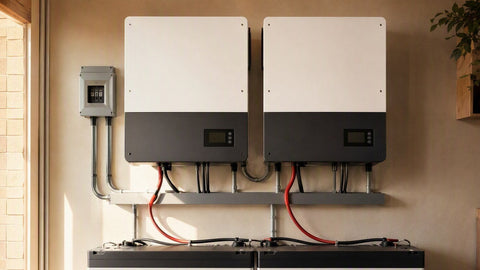
Walk into the garage on install day and the philosophies are visible. A FranklinWH install reads like a utility project: the aPower 2 on the wall, the aGate beside the main panel, clean conduit, one vendor's labels everywhere. An EG4 build reads like a well-built equipment rack: a battery cabinet (six modules is a serious piece of furniture), the hybrid inverter with its conduit array, DC disconnects, busbar hardware, and labeled everything if your installer is worth the invoice.
Both are code-compliant when done right; they differ in serviceability. The appliance is serviced by swapping units under warranty. The component system is serviced at the component level — a module, a board, a cable — by anyone qualified, a decade from now, with parts from the open market. Long-term owners should price that difference too: appliance service is convenient until the product line is discontinued; component systems stay repairable as long as the category exists. Our server-rack battery category exists precisely because this form factor has become an industry standard, not one vendor's lock-in.
Abstract trade-offs stall decisions. Here are the three customer profiles we quote most often and where each lands:
The architecture follows the customer profile — budget and engagement for the component path, experience and integration for the appliance path.
| Customer profile | Constraint | Our quote | Why |
|---|---|---|---|
| Handy homeowner, new solar + storage, budget-led | $ per kWh, willing to learn settings | EG4: 12 kW hybrid + 6 modules | Best kWh per dollar; DC coupling on new solar; expansion is cheap |
| Busy family, existing solar, generator already on pad | Zero-configuration outage experience | FranklinWH: 2 × aPower 2 + aGate | AC coupling preserves existing array; generator orchestration ships working |
| Off-grid new build, no grid to couple to | Component flexibility, DC-first design | EG4 bank + hybrid (or premium off-grid inverter) | Appliance path assumes a grid reference; off-grid is component territory |
If you do not see yourself in the table, the deciding question is simpler than any spec: when the system needs attention in year four, do you want to open a settings menu or a support ticket? Answer honestly and the choice makes itself. Either path benefits from disciplined operation — the 20–80 state-of-charge rule, reasonable depth of discharge, and temperature management from the longevity guide add years to LFP banks regardless of enclosure.
Is FranklinWH better than EG4?
They are different product categories. FranklinWH aPower 2 is an integrated AC-coupled appliance — 15 kWh, 10 kW continuous, per-circuit load control, native generator integration, 15-year warranty — installed and supported as one system. EG4 is a component path (rack batteries + hybrid inverter) at roughly half the cost per kWh with full configurability. Better depends on whether you want an appliance experience or a value-priced build.
Can EG4 batteries do whole-home backup?
Yes, with the right inverter and bank sizing. A 12 kW-class EG4 hybrid (18kPV or FlexBOSS21 class) fed by four or more 5.12 kWh modules runs most homes' critical loads and can start a 4-ton compressor when the battery bank supplies adequate discharge current. Unlike appliance systems, load management is configured rather than automatic — the settings audit is part of the build.
Which lasts longer?
FranklinWH carries the longer written warranty — 15 years versus EG4's 5–10-year class depending on line. Both use LFP chemistry rated for 6,000+ cycles, so real-world longevity tracks usage patterns, temperature management, and depth-of-discharge discipline more than the badge. Expect 15+ years of useful service from either when operated inside spec.
Do both work with generators?
Yes. FranklinWH integrates generators natively through the aGate with automatic start/stop on state-of-charge thresholds — the most polished implementation in the category. EG4 hybrids accept generator input with configurable start logic and charge control; fully capable, but the orchestration is tuned during commissioning rather than shipped pre-configured.
Which is cheaper installed?
EG4, decisively. Equipment for a ~30 kWh EG4 bank with inverter runs $10,500–$14,500 class; adding professional install labor still lands 30–45% below a comparable two-unit FranklinWH system installed. The appliance premium buys integration, the 15-year warranty, per-circuit load control, and single-vendor support.
Can I install EG4 myself?
In many US jurisdictions, yes — owner-builder electrical permits allow DIY installs, and EG4's documentation community supports it. You must still pull permits, pass inspection, and follow NEC requirements for battery systems (Articles 480, 705, 706 as applicable). FranklinWH requires certified installer commissioning; DIY is not a supported path.
PES Supply carries both paths at wholesale: the EG4 ecosystem and FranklinWH, plus every storage format, 48V batteries, and hybrid inverters. Bring your load data; our design desk returns a sized quote for both architectures.