A DIY solar home is absolutely buildable — people do it every week — but the gap between a system that passes inspection and one that doesn't is mostly paperwork, wire sizing, and respect for the electrical code. I've helped dozens of owner-builders through their first installs, and the ones who finish on schedule share one trait: they treat the permit package as the first phase of construction, not an annoying preface to it. This guide walks the full arc — deciding whether DIY fits you, assessing your site, sizing and selecting components, navigating permits, building safely, and commissioning — with the actual math shown at each step.

Deciding if a DIY solar home fits your goals
Key considerations for the DIY homeowner
Be honest on three axes before anything else. Skills: you need comfort with roof work, basic structural fastening, DC and AC wiring, and reading single-line diagrams. If you've rewired a subpanel or built an addition, you have the raw skills; if you haven't used a torque wrench, borrow competence before you borrow tools. Time: a first-timer's 8 kW rooftop system runs 80–150 labor hours including permitting and inspection cycles — spread across weekends, that's a season. Legal scope: most jurisdictions allow owner-builders to work on their own primary residence, but utilities in many states require a licensed electrician to make the final grid connection. Know your local answer before you buy hardware.
Beyond the bottom line
The money case is real: turnkey residential solar typically installs at $2.50–$3.50/W, while owner-builder hardware-plus-permits lands at $1.20–$1.80/W. On an 8 kW system that's roughly $9,000–$15,000 of savings. But price against the risks honestly: workmanship on your own roof penetrations is yours forever, some module warranties require licensed installation, and a failed inspection costs time. The sweet spot for DIY is ground mounts, shops, barns, off-grid cabins, and straightforward composition-shingle roofs. The bad fits are tile roofs, steep pitches, and anything over a finished cathedral ceiling where a leak hides for a year.
Performing your own solar site assessment
Evaluating roof health and structure
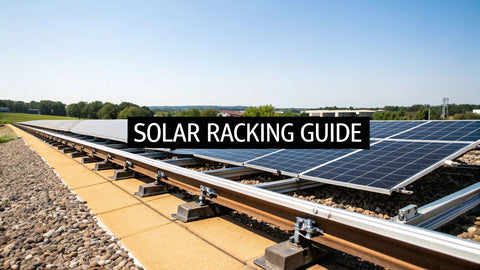
The roof comes first, always. A composition-shingle roof with fewer than 10 years of life left gets replaced before panels go on — lifting and re-setting an 8 kW array for a re-roof costs $2,000–$4,000, which erases much of the DIY savings. Check the structure while you're at it: a solar array adds roughly 3–4 psf distributed, well within normal residential design loads, but the attachments are point loads into rafters. Locate rafters (not just sheathing), verify they're sound, and plan attachment spacing per your racking engineering — typically every other rafter. Racking selection drives everything downstream; our racking system guide and racking comparison cover the main families.
Mapping solar access and shading
Shade is the silent killer of DIY systems. Map your array area at winter solstice (the worst case): in most of the U.S., anything that casts a shadow on the array between 9 AM and 3 PM in December costs you real production. A $30 solar pathfinder tool or a phone-based shading app gives you the data; guesswork gives you a 20% production haircut you'll blame on the equipment. If shade is unavoidable on part of the array, that's a design input: microinverters or DC optimizers isolate shaded modules so one chimney shadow doesn't drag down a whole string.
Conducting your home energy audit
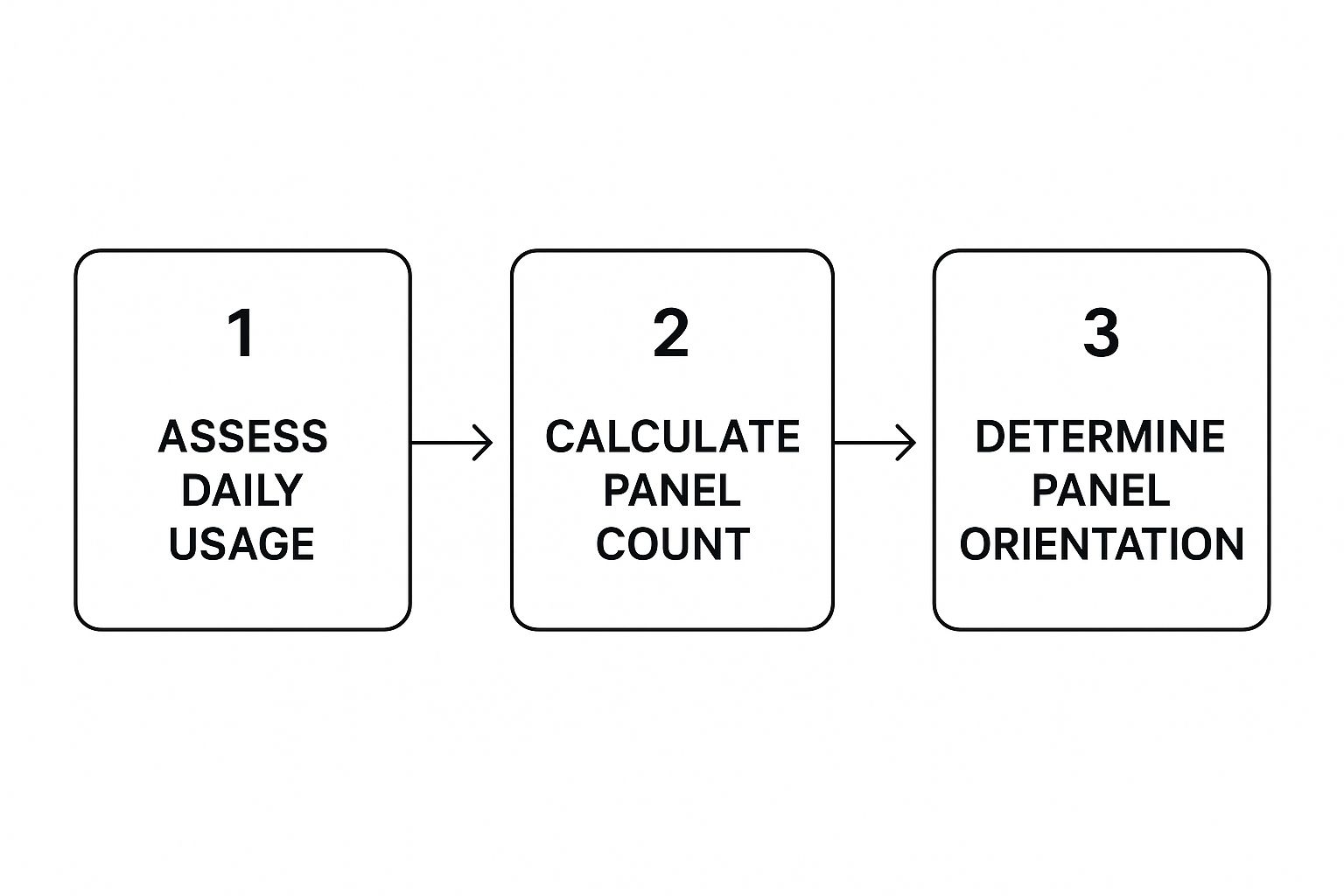
Size from data, not vibes. Pull 12 months of kWh from your utility bills and note the monthly shape — heavy summer air-conditioning loads argue for sizing to summer, not average. Then decide your offset target: 100% offset is the common goal, but utilities with unfavorable export rates sometimes make 70–80% the economic optimum. The backup runtime calculator and battery sizing guide are the right companions if storage enters the picture.
Sizing and selecting your solar components
From energy audit to array size
The core formula: required array kW = annual kWh target ÷ (peak sun hours × 365 × system efficiency). With 4.5 peak sun hours and 0.80 system efficiency (a realistic figure including temperature, wiring, and inverter losses), offsetting 10,000 kWh/year takes 10,000 ÷ (4.5 × 365 × 0.80) ≈ 7.6 kW. In the Pacific Northwest at 3.5 sun hours, the same target needs ~9.8 kW; in Arizona at 6.0, ~5.7 kW. Never size from a national average — your sun hours are your system.
| Daily kWh Use | Recommended Solar Array Size (kW) | Recommended Inverter Size (kW) | Recommended Battery Bank Size (kWh) |
|---|---|---|---|
| 15-20 kWh | 4-6 kW | 5-8 kW | 10-15 kWh |
| 20-30 kWh | 6-9 kW | 8-12 kW | 15-20 kWh |
| 30-40 kWh | 9-12 kW | 12-15 kW | 20-30 kWh |
| 40-50 kWh | 12-15 kW | 15+ kW | 30+ kWh |
The inverter decision: string vs. microinverters
This choice shapes your whole build. String inverters cost less per watt, put the electronics at ground level where service is easy, and suit unshaded arrays — but a single shaded or failed module drags its whole string. Microinverters put one inverter per module on the roof: module-level monitoring, no single point of failure, and shade isolation, at a cost premium of roughly $0.15–$0.30/W. For first-time DIY builders with any shade or any complex roof, I recommend microinverters despite the premium — module-level data turns commissioning from guesswork into a checklist. Our string inverter explainer, the Enphase ecosystem guide cover the leading options.
Decoding spec sheets for panels and batteries
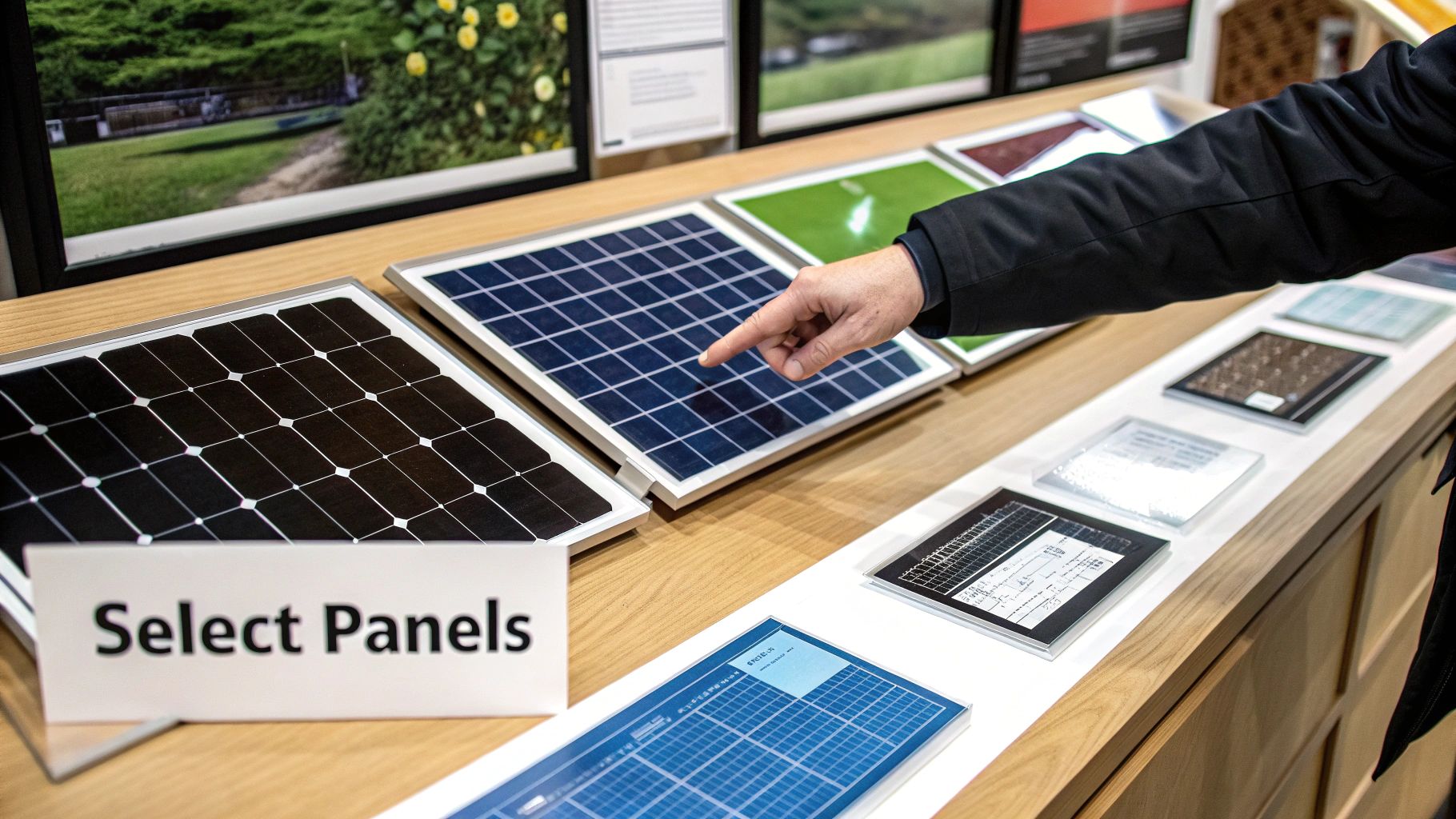
Four datasheet lines matter for DIY buyers: wattage and efficiency (how much roof you need), Voc and its temperature coefficient (string sizing — covered below), and the mechanical load rating (snow country needs 5,400 Pa ratings). On batteries, the lines that matter are usable capacity (not nameplate), continuous power rating (can it start your well pump?), and chemistry — LFP has effectively won the residential market on cycle life and safety. See the EG4, Fortress Power, and BYD Battery-Box guides for the leading residential LFP options.
String sizing math you must run (NEC 690.7)
If you choose a string inverter, the coldest-morning voltage check is mandatory — it's the calculation inspectors actually verify. Using a 450 W module with Voc 41.0 V:
| Step | Calculation | Result |
|---|---|---|
| Module Voc at STC | From datasheet | 41.0 V |
| Cold correction at −10°C (NEC 690.7 factor 1.14) | 41.0 × 1.14 | 46.7 V |
| Max modules on a 600 V residential string | 600 ÷ 46.7, rounded down | 12 modules |
| Verify against inverter max input (assume 500 V) | 500 ÷ 46.7 | 10 modules — inverter binds first |
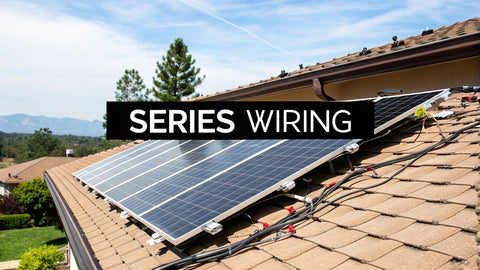
Note the last row: the inverter's input limit often binds before the 600 V code limit. Both numbers must pass. The series wiring guide walks through parallel string combinations from here.
Wire sizing and overcurrent protection (NEC 310.16, 240.6)
PV source circuits run at continuous duty, so NEC 690.8 requires sizing conductors and protection at 156% of Isc (1.25 × 1.25). Worked example for a string with Isc = 11.5 A: 11.5 × 1.56 = 17.9 A minimum conductor ampacity → 12 AWG copper (20 A at 75°C per Table 310.16) works electrically, but 10 AWG PV wire is the field standard for voltage drop and durability. The inverter output circuit: a 7.6 kW inverter at 240 V draws 31.7 A continuous; ×1.25 = 39.6 A → 40 A breaker (a NEC 240.6 standard size) on 8 AWG copper. Our PV wire guide covers conductor selection, and the load calculation guide handles the service-side math.
Navigating local permits and compliance
Assembling your permit application package
A residential solar permit package typically needs: a site plan showing array location and setbacks, a single-line electrical diagram, module and inverter spec sheets with UL listings, a structural letter or racking engineering (many AHJs accept the racking manufacturer's standard engineering), and a roof-access/rapid-shutdown layout for the fire marshal. Some jurisdictions offer simplified or instant permitting for standard residential systems — ask. The package takes a first-timer a weekend to assemble; an incomplete one bounces back in 2–4 weeks with corrections, which is why completeness beats speed on submission day.
Understanding key NEC compliance issues
The code articles that govern your build, in plain terms:
| NEC Article | What It Governs | The DIY Takeaway |
|---|---|---|
| 690.7 | Maximum system voltage with temperature correction | Run the cold-weather Voc math; inspectors check it |
| 690.8 | Circuit sizing at 125% continuous (×1.56 on Isc) | Sizes your wire and fuses |
| 690.12 | Rapid shutdown of PV systems on buildings | Module-level shutdown is effectively required on roofs; microinverters satisfy it natively |
| 705.12 | Interconnection to your panel (120% rule) | A 200 A panel with a 200 A main accepts up to a 40 A solar breaker load-side |
| 250 / 690.41-47 | Grounding and bonding | Every rail and module frame bonds to the equipment grounding system — no skipped lugs |
Communicating with your utility
File the interconnection application the same week you file the permit. Utilities run on their own clock — 2–8 weeks for residential approval is normal — and operating before permission to operate (PTO) is a genuine violation that can cost you net-metering eligibility. Ask the utility two questions up front: whether your transformer or service needs an upgrade (rare but expensive), and whether your rate schedule changes with solar. Some utilities move solar customers to time-of-use rates; that's not automatically bad, but you should model it before PTO, not after your first bill.
Your guide to safe installation and commissioning
The mechanical build: securing your array
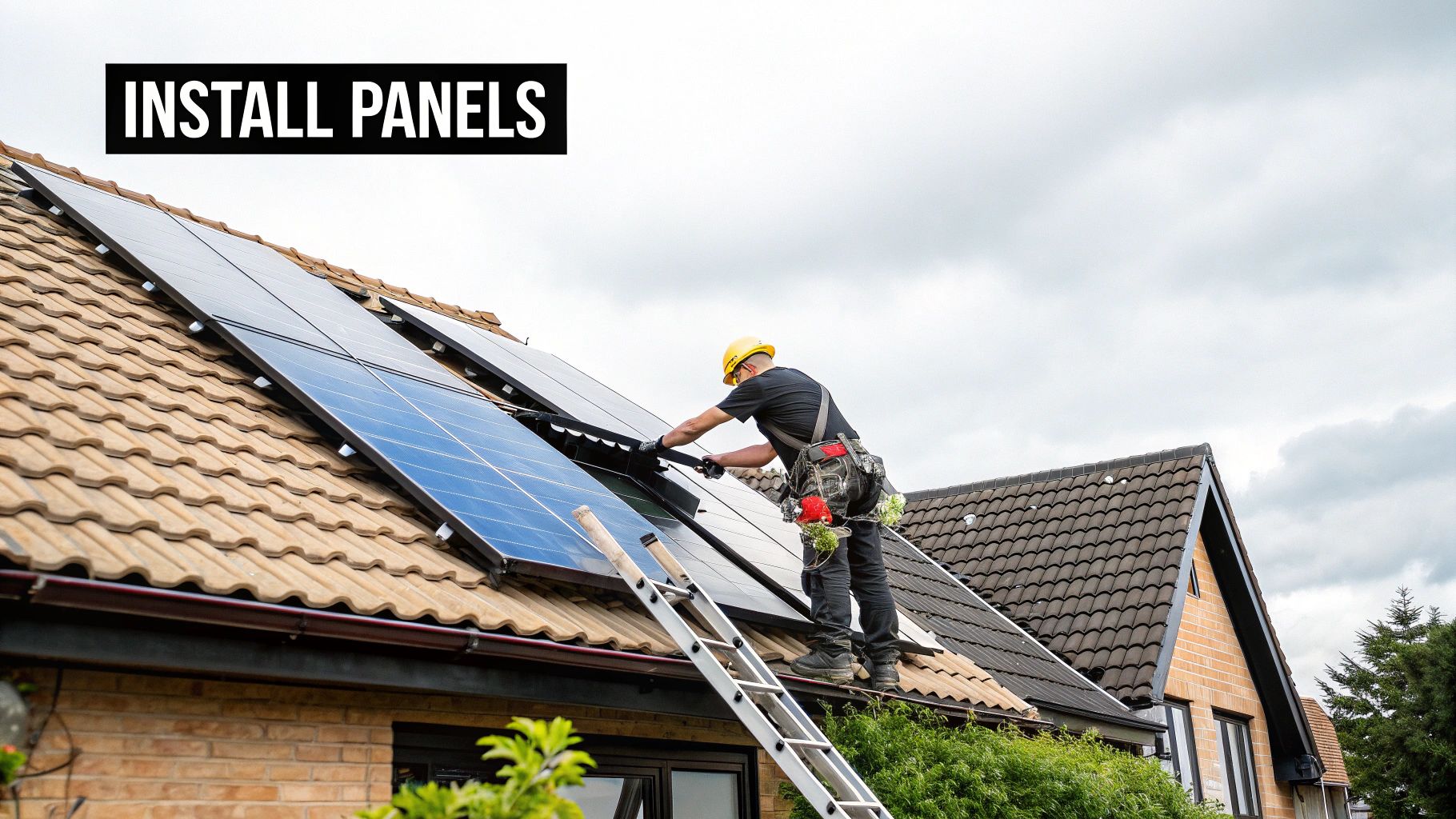
Sequence matters: locate and mark rafters, install flashings and attachments (torqued to spec — over-torqued lag bolts crack rafters; under-torqued ones leak), assemble rails, then set modules. On composition shingles, proper flashing is the entire waterproofing game: the flashing slides under the course above and the sealant is a backup, not the primary defense. Work the roof in the cool of the morning, use a fall-protection harness above one story (it's the law for pros and just sense for you), and never carry modules in wind — a 26-pound panel is a sail. Two people can set a 20-module array in a long day once the racking is up.
The electrical work: wiring for power and safety
DC side first, everything de-energized: home runs in UV-rated PV wire, strings landed per your single-line, string fusing where parallel strings require it, and a DC disconnect within reach. Then the AC side: inverter output to its dedicated breaker, per the sizing math above. Grounding deserves its own reminder because it's the most-failed DIY inspection item: module frames bond to rails, rails bond together across splices, and the equipment grounding conductor runs unbroken to the inverter and panel. Every lug torqued, every bond continuous. Keep conduit runs between roof and panel short, strapped, and sealed at the penetrations.
Commissioning your system
After inspection passes and PTO arrives, commissioning is a checklist, not a celebration — celebration comes after the checklist:
- Verify open-circuit voltage on each string against your design number (within ~5%).
- Verify polarity before connecting anything — reversed polarity kills charge controllers instantly.
- Energize the inverter, confirm it syncs to grid and begins producing.
- Compare first-day clear-sky output against 75–85% of nameplate; log it as your baseline.
- Configure monitoring and set alerts; a system you don't watch is a system that fails silently.
The full DIY budget: where the money actually goes
Hardware is more than panels. A complete 8 kW owner-builder budget breaks down roughly like this (grid-tied, microinverter architecture, new composition roof):
| Line Item | Typical Cost (8 kW System) | Notes |
|---|---|---|
| Modules (18 × 450 W) | $2,900 – $4,100 | Pallet-quantity pricing; see the bulk buying guides |
| Microinverters (18) | $2,200 – $2,900 | String inverter alternative: $1,500 – $2,200 total |
| Racking, flashings, attachments | $1,400 – $2,000 | Buy the engineered system, not generic rails |
| Wire, conduit, disconnects, breakers | $600 – $1,000 | PV wire, EMT, ground hardware, labels |
| Monitoring gateway | $300 – $600 | Often bundled with microinverter systems |
| Permits, engineering, interconnection fees | $400 – $1,200 | Wildly jurisdiction-dependent |
| Tools (owned forever after) | $300 – $800 | Torque wrench, crimpers, fall protection |
| All-in total | $8,100 – $12,600 | ≈ $1.00 – $1.60/W before tax credits |
Compare against the same system turnkey at $20,000–$28,000 and the DIY discount is $8,000–$15,000 — the range that makes this worth a season of weekends for most builders. Note where the savings come from: not cheaper hardware (you're buying the same modules the pros install) but the absence of labor, overhead, and sales cost. That also tells you what you can't skimp: the hardware quality has to be full-spec, because the warranty path on owner-built systems is narrower.
Tools and workspace: the unglamorous enablers
First-time builders chronically under-budget tools. The non-negotiables: a calibrated torque wrench (every attachment and lug has a spec, and inspectors spot-check), proper MC4 crimpers (not the $9 kind — bad crimps are the leading cause of DC arc faults), an impact driver with clutch settings, rafter-finding tools that actually work (a magnet and a tape measure beat a $40 electronic stud finder on roofs), and real fall protection — harness, rope, anchor. Rent scaffolding for the eave work; ladders alone make module handling dangerous and slow. Set up a ground-level assembly station for pre-building rail sections and pre-terminating jumpers: every hour of electrical work done standing on the ground is an hour not spent kneeling on a hot roof with a crimper. I've watched first-timers double their build time by skipping the staging setup, and I've never seen anyone regret an hour spent on it.
A realistic DIY timeline
Plan the calendar honestly. Weeks 1–2: site assessment, energy audit, system design, and parts list. Weeks 2–4: permit package assembly and submission; utility interconnection application filed in parallel. Weeks 4–8: permit review (the dead time is normal — use it to receive and inventory hardware), then the build: two to four weekends for a two-person crew on an 8 kW rooftop. Week 8–10: inspection, corrections if any, utility meter swap, PTO. Then commissioning day. Ten weeks start to finish is a well-run DIY project; sixteen is common; anyone promising you three is selling something. The schedule risk lives in permits and utility review, not on your roof — which is another way of saying the paperwork is the project.
Insurance, resale, and the long view
Two ownership topics DIY builders should settle early. Insurance: tell your homeowner's carrier about the array before energization; most add it to the dwelling coverage for a small premium, and some require documentation of permitted, inspected installation — one more reason the paper trail matters. Resale: owned solar generally adds value at sale, but buyer's inspectors scrutinize owner-built systems harder than permitted contractor work. Keep everything: permits, inspection sign-offs, PTO letter, equipment manuals, photos of the flashing work before modules covered it, and your commissioning baseline. That binder converts "the owner installed this themselves" from a red flag into evidence of a meticulous build. Twenty-five years is a long asset life; the documentation you keep in year one is what the system is worth in year fifteen.
Ground mounts and other non-roof options
If your roof is shaded, steep, fragile, or facing the wrong way, a ground mount often beats it — and for DIY builders it's frequently the better first project. No ladder work for the array itself, no roof penetrations to waterproof, tilt set to your exact latitude, and cleaning and snow removal at arm's height. The costs: trenching from array to panel (dig safe — call 811 before any excavation), concrete footings sized for frost depth and wind, and usually a bit more racking steel. A pole-mounted 4 kW array is a genuinely approachable first build; two people can set one over two weekends. Carports and patio covers occupy the middle ground — structural work without roof warranty entanglement. Whichever mounting you choose, the electrical math from the string-sizing and wire-sizing sections above doesn't change; only the mechanical work does.
Seasonal reality: what your first year will teach you
Design models give you an annual number; your roof gives you a monthly story. Expect December production around 40–60% of June's in most of the U.S., and expect the first-year surprise to be soiling — pollen season, dust, and wildfire smoke can each clip 3–8% until rain or a rinse resets it. This is where module-level monitoring pays for itself a second time: a string inverter tells you the array is down 12%; microinverters tell you it's module 7 under the maple shadow at 4 PM. Log your production monthly for the first year against your model's monthly predictions. Persistent shortfalls beyond 10% deserve investigation; seasonal swings within the model are the system working as designed. The builders who keep that log are the ones who catch the failing optimizer in month nine instead of year four.
Troubleshooting your first year
Three issues account for most first-year DIY calls. Low production: check shading changes (trees grow), soiling, and monitoring data before suspecting hardware — actual module failures are rare. Ground faults: usually a nicked wire at a conduit entry or a pinched cable under a rail; they appear after rain, and they reward the patient visual inspection over the parts cannon. Communication dropouts: the gateway lost power, the Wi-Fi password changed, or a PLC signal issue — annoying, not dangerous. Keep a multimeter, the torque wrench, and your as-built single-line in one tote; every one of these diagnoses starts with the drawing, not the roof ladder.
Working with your inspector productively
Inspectors are allies if you let them be. Three practices that change the tone of inspection day: have your permit card, approved plans, and equipment spec sheets printed and on site; walk the inspector through your grounding path before they ask (it signals you know what matters); and treat corrections as free consulting — an inspector's red tag is a list of exactly what stands between you and a safe system, written by someone who has seen a thousand installs. I tell every first-time builder the same thing: the inspector wants your system to pass. Make that easy. The combative builders get re-inspections; the prepared ones get signatures and occasionally good advice about their service panel they weren't expecting.
Safety culture for owner-builders
Professionals survive this trade because of habits, not luck, and DIY builders should steal those habits wholesale. Electricity: treat every PV conductor as live in daylight — modules make voltage whenever light hits them, and series strings make lethal voltage from ordinary sunshine. LOTO (lockout/tagout) isn't bureaucracy; it's the difference between a procedure and a story. Roof work: harness and anchor above one story, always, including "just stepping up for a second." Lifting: modules get carried by two people or one person with a panel carrier, never overhead in wind. Heat: summer rooftop work schedules itself for mornings, with water staged on the roof, not in the truck. And the habit that matters most: stop work when you're tired. Every experienced installer I know has a story about the last-hour shortcut that cost a weekend or worse. Your 25-year system does not care whether it was finished this Saturday or next.
When to call a professional anyway
Good DIY judgment includes knowing the edges of it. Hire out the service-panel work if your interconnection requires a main-panel upgrade or a supply-side tap — that's service-entrance territory where mistakes are unforgiving. Hire out structural questions on anything but standard stick-frame roofs. Consider hiring the final AC connection even where not legally required; a half-day of electrician time buys a second set of professional eyes on your whole build, which is cheap insurance on a system designed to outlive your mortgage. And if the permit process in your jurisdiction turns adversarial, a local solar contractor's engineering package often breaks the logjam for a few hundred dollars. DIY is a spectrum, not a religion: the winning move is owning the work you're genuinely equipped to do and buying the rest.
Snow, wind, and wild weather: designing for your climate
Climate should shape three decisions. Snow country: choose modules with 5,400 Pa front-load ratings, set ground-mount tilt steep (it sheds), and accept that December production may approach zero under cover — size annual offset with that reality priced in. High-wind and hurricane zones: attachment spacing tightens, rail splices get engineered locations, and the racking's wind certification for your exact exposure category belongs in the permit set; a racking system rated for 115 mph exposure C is not the same product as one rated 140 mph exposure D. Hot climates: temperature coefficients stop being datasheet trivia — a module at −0.40%/°C versus −0.29%/°C differs by roughly 5% of summer output, which compounds for decades. Check hail ratings where storms demand it (25 mm ice at terminal velocity is the standard test; some modules certify beyond it). The permit office in your county has seen every local failure mode already; their roofing and wind requirements are a free engineering consultation, and the smart move is treating them that way rather than as obstacles.
Your first maintenance year: what to actually do
DIY systems ask little, but not nothing. Quarterly: glance at monitoring for anomalies and walk the array looking for anything that changed — a lifted edge clip, a new shading branch, bird activity under modules (critter guards pay for themselves the first time they stop a squirrel from teething on a home run). Annually: re-torque a sample of attachments, check roof flashings for sealant fatigue, rinse the array if your climate doesn't do it for you, and pull your production log against the model. Keep the receipts and photos in that documentation binder. None of this takes more than a few hours a year, and it is the entire difference between a system that produces its nameplate promise for 25 years and one that quietly degrades 10% while everyone assumes it's fine.
Common questions about DIY solar homes
How much money can I realistically save?
Against turnkey installation at $2.50–$3.50/W, a DIY build at $1.20–$1.80/W all-in saves $9,000–$15,000 on an 8 kW system. Subtract the value of your labor (80–150 hours), tool purchases, and the risk you self-insure, and the honest net is still strongly positive for capable builders — typically a 30–45% discount to turnkey.
What are the most common DIY mistakes?
In order of frequency at inspection: inadequate or missing roof flashing, grounding/bonding gaps, string voltages exceeding inverter limits on cold mornings, wrong breaker size on the interconnection, and operating before PTO. All five are planning errors, not skill errors — which is good news, because planning is free.
Can I add a battery for backup power later?
Yes, and it's easier if you plan for it. AC-coupled batteries retrofit to any grid-tied system; hybrid inverters need to be chosen at build time. If storage is on your horizon within a few years, a hybrid inverter now beats a string inverter plus a retrofit inverter later. The home battery backup guide and battery storage overview map the options.
Do I need a professional for the final grid connection?
In many jurisdictions, yes — utilities often require a licensed electrician to make or witness the final connection, and some AHJs require licensed sign-off on the whole AC side. Check local rules during design. A common hybrid approach: you build everything, then hire an electrician for a half-day connection and sign-off — a few hundred dollars that keeps everyone legal.
Is an off-grid DIY system easier than grid-tied?
Electrically simpler (no interconnection, no net metering), but the system design is harder: you're sizing batteries for your worst week, not your average day, and a generator usually enters the design for resilience. Off-grid shines for cabins, barns, and new structures where the utility wants $20,000+ for a service drop. See the off-grid kit guide and off-grid system roundup for that path.
Related resources
- How to Install Solar Panels on a Rooftop
- Solar Panel System Components
- Connecting Solar Panels in Series
- Off-Grid Solar Kits
- Solar Battery Sizing Guide
- Charge Controller Sizing Guide
- Solar Power Solutions
The DIY builders who succeed treat this as an electrical project with a roof attachment, not a roofing project with wires. Do the math first, file the paperwork early, torque everything to spec, and wait for PTO before you flip the switch. The system you build yourself is the system you'll understand for the next 25 years — and that understanding is worth as much as the savings. Build it carefully, document it thoroughly, and it will pay you back every single sunny day for decades.