Joplin knows what a dead grid looks like. The 2011 tornado rewrote this city's relationship with emergency preparedness, and every ice storm since has underlined the lesson: when the lines go down in the Ozarks, they can stay down for days. A standby generator in Joplin isn't a luxury appliance — it's the difference between riding out a February ice event at home and checking into a motel in Springfield. This list ranks the backup generators we actually recommend to southwest Missouri customers, with the sizing math, fuel realities, and installed costs that matter here.

We sell and support every brand on this list — Generac, Kohler, Cummins, Briggs & Stratton, and Champion — so the ranking reflects what survives Missouri weather and local service reality, not who buys the most advertising. I've spec'd standby units from Neosho to Nevada, Missouri, and the pattern is consistent: the right generator sized correctly beats the biggest generator sized by guesswork.
The Quick List: Joplin's Best Backup Generators for 2026
| Rank | Model | Output (NG/LP) | Best For | Warranty |
|---|---|---|---|---|
| 1 | Generac Guardian 26kW (7291) w/ 200A SE ATS | 26kW LP / 22.5kW NG | Whole-house coverage for most Joplin homes; deepest dealer network in Jasper County | 5 yr limited |
| 2 | Kohler 20RESCL 20kW | 20kW LP / 18kW NG | Premium build quality; commercial-grade engine lineage | 5 yr / 2,000 hr |
| 3 | Cummins QuietConnect RS20A 20kW | 20kW LP / 18kW NG | Quietest in class (~65 dB); tight lot lines | 5 yr / 2,000 hr |
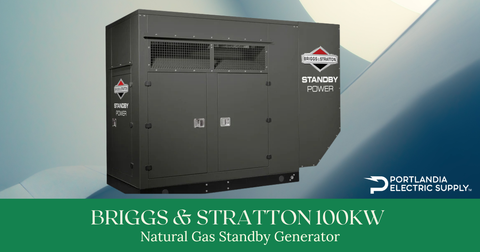
| 4 | Briggs & Stratton PowerProtect 22kW | 22kW LP / 20kW NG | Value pick with solid cold-weather options | 6 yr limited |
| 5 | Champion 22kW aXis | 22kW LP / 19.8kW NG | Budget whole-house; strong feature-per-dollar | 10 yr limited |
| 6 | Generac Guardian 22kW (7043-class) | 22kW LP / 19.5kW NG | The proven mid-size default; see our 22kW guide | 5 yr limited |
| 7 | DuroMax / Westinghouse 12–13kW dual-fuel portables | 12–13kW peak gasoline, ~10–11kW propane | Manual backup for essentials; storm-season insurance under $2k | 3 yr |
Why Joplin Is Different: The Local Case for Standby Power
Storm risk here isn't abstract. The National Weather Service's Springfield office covers one of the most tornado-active counties in Missouri, and the winter side of the ledger is nearly as sharp — ice storms in 2007 and subsequent years left parts of the region dark for one to two weeks. Liberty Utilities' service territory covers most of Joplin, and like any rural-edged grid, restoration prioritizes density: the further you are from downtown, the longer you wait.
Three local realities shape the recommendation. First, natural gas availability: most in-town Joplin homes have Spire gas service, which makes a natural-gas standby unit the no-brainer choice — no refueling, indefinite runtime. Second, rural propane properties: outside the gas grid, a 500-gallon LP tank feeding a standby generator carries a typical house through a week-long outage with margin, which is why every unit on this list runs dual-rated for NG and LP. Third, the sump pump problem: Joplin basements plus spring storms plus a dead grid equals flooded basements. A generator that starts itself in ten seconds saves the basement even when you're out of town.
Sizing: What Joplin Homes Actually Need
Generator sizing starts with a load audit, not a guess. The short version: add up your essential circuits, account for motor starting surges, and size for the worst case — a January ice storm with the furnace running hard, not a mild April evening. Our generator sizing guide walks the full calculation, and the 2026 whole-home sizing update adds the HVAC soft-start math. Here's the working table we use for Joplin-area homes:
| Home Profile | Critical Loads | Recommended Size |
|---|---|---|
| Small home / essentials only (~1,200 sq ft) | Furnace blower, fridge, sump pump, lights, outlets, WiFi | 10–14kW (10–14kW standby class) |
| Typical Joplin ranch (~1,600–2,200 sq ft) | Above + 3-ton A/C, water heater management, garage | 18–22kW (17–20kW or 22kW class) |
| Large two-story (~2,800–4,000 sq ft) | Whole house incl. 4–5-ton A/C, well pump, kitchen circuits | 24–26kW (26kW class — see the 26kW guide) |
| Estate / small business (4,000+ sq ft) | Multiple HVAC zones, outbuildings, commercial loads | 30–48kW (48kW class) with load management |
The mistake I see most in this market: undersizing for the air conditioner. A 4-ton compressor wants roughly 12–16 kVA at locked-rotor if it starts hard, and Missouri summers mean the A/C is not optional load. Modern standby units with load-management modules and soft starters tame this, but the kW rating has to cover the worst simultaneous case. When in doubt, go one size up — the fuel penalty for a bigger unit at partial load is modest, and the regret penalty for a too-small unit in a three-day outage is enormous.
Fuel: Natural Gas vs. Propane in Jasper County
Fuel choice decides runtime, and runtime is the whole point. The consumption math for a loaded 22kW-class unit:
| Fuel | Consumption @ 50% Load | Consumption @ Full Load | Runtime Reality |
|---|---|---|---|
| Natural gas | ~180–220 ft³/hr | ~280–330 ft³/hr | Unlimited while the gas grid lives; verify your meter can deliver the volume — some older Joplin services need a meter upgrade |
| Propane (LP) | ~2.0–2.5 gal/hr | ~3.5–4.0 gal/hr | A 500-gal tank (400 gal usable) runs ~6–8 days at half load; size the tank for your longest credible outage |
| Gasoline (portables) | ~0.7–1.0 gal/hr at 50% on a 12kW dual-fuel | ~1.3–1.6 gal/hr | Refuel daily, store safely, rotate fuel; fine for 1–3 day events, miserable for week-long outages |
One Joplin-specific note: after the 2011 tornado, natural gas service to damaged areas was shut off at the district level. That's rare, but it's why some of our rural customers choose LP even with gas available nearby — a 500-gallon tank on your property is infrastructure nobody else controls. Browse the natural gas and propane collections; nearly every standby unit we sell converts between the two with a field adjustment.
The Transfer Switch: The Half of the System People Forget
A standby generator without an automatic transfer switch is a very expensive lawn ornament. The ATS monitors utility power, starts the generator within seconds of a failure, transfers the house load, and reverses the process when the grid returns — no extension cords, no midnight trips to the garage in sleet. For most Joplin homes, a 200A service-entrance-rated ATS (like the one bundled with the Generac 7291 package) sits between the meter and the main panel and runs the whole house. Smaller budgets can use a 100A ATS or a managed-load setup on selected circuits — the 100–125A transfer switch class covers that, and our transfer switch catalog spans both approaches.
Code note that matters: any generator interconnection must prevent backfeeding the utility lines — that's what protects line crews during restoration. Missouri jurisdictions follow the NEC on this, inspectors check it, and honestly it's the one rule I'd want enforced even if nobody checked. Every standby install we supply includes the ATS; every portable setup should include an interlock or a manual transfer switch. No exceptions, no "suicide cords," ever.
Installed Costs in the Joplin Market (2026)
| Scope | Equipment | Typical Installed Range |
|---|---|---|
| 14kW standby, NG, 100A ATS, essentials | ~$3,800–4,500 | $8,500–11,500 |
| 22kW standby, NG, 200A SE ATS, whole house | ~$5,500–6,500 | $11,000–15,000 |
| 26kW standby, NG/LP, 200A SE ATS, whole house | ~$6,200–7,200 | $12,500–16,500 |
| 12–13kW dual-fuel portable + manual transfer switch | ~$1,500–2,300 | $2,800–4,200 with inlet, interlock/MTS, and electrician |
Installed cost swings mostly on three things: gas-line plumbing distance, electrical panel location relative to the generator pad, and whether your service needs a meter or panel upgrade. Get a site assessment, not a phone quote. Maintenance runs $200–400/year for an annual service visit — oil, filter, battery check, firmware — and it's the difference between a generator that starts on day 1,900 and one that doesn't.
Our Honest Recommendation for Joplin

For the typical in-town home with gas service: the standby class in 22–26kW, Generac or Kohler, 200A service-entrance ATS, professionally installed. That's the set-and-forget answer, and after fifteen-plus years in this region it's the configuration with the fewest regrets. Rural propane customers: same units, LP-configured, with the biggest tank the budget allows. Storm-season-only insurance on a tight budget: a quality dual-fuel portable from DuroMax or Westinghouse paired with a proper manual transfer setup beats a standby unit installed wrong — and beats a portable with extension cords by a mile.
Whatever you choose, buy before the storm forecast, not after. Every ice-storm warning empties every generator shelf in the Four States within 48 hours — I've watched it happen more than once, and the folks calling during the event are buying whatever is left, at whatever price, with whatever install slot opens up in six weeks. Browse the full home backup lineup, read the whole-house generator guide and the standby primer, or call the shop. We'll size it for your house, your fuel, and your street's restoration history — and we'll be honest if the answer is a portable and a transfer switch instead of a five-figure standby.
Installation Reality: Permits, Pads, and Placement
A standby generator install in Joplin touches three trades and two inspectors. The electrical scope — ATS, feeders, grounding — requires a permit and inspection through the city or county depending on your address. The gas scope, whether a new branch line or an LP regulator setup, needs a licensed plumber or gas fitter and usually its own inspection. And the unit itself sits on a pad — poured concrete or a manufacturer-approved composite pad — positioned to code: typically 5 feet from operable windows and doors, 3 feet minimum clearances per manufacturer, and outside any flood-prone low spot on your lot. Missouri frost depth and Joplin's clay soils mean pads need real footings, not a slab floating on topsoil. I've seen units walk themselves off cheap pads inside two winters of freeze-thaw.
Placement has a neighbor dimension too. Modern air-cooled units run 63–71 dB at 23 feet — conversational loudness, roughly — but a unit parked under a bedroom window buys you a decade of side-eye. The Cummins QuietConnect earns its premium exactly here. Budget one to three days for the install itself, plus inspection scheduling. A competent local installer handles the dance routinely; a discount out-of-town crew learning Joplin's permit office on your dime is a savings that rarely survives contact with the process.
Maintenance: The Schedule That Keeps the Warranty Real
Standby generators fail on a schedule, and the schedule is "whenever the owner stopped maintaining them." The units self-test weekly — you'll hear it run for five to twelve minutes, and you should; a unit that's silent for a month is telling you something. Beyond that: oil and filter annually or every 100–200 run hours depending on the model, air filter inspection with the Missouri pollen load in mind, spark plugs per the manual, battery replacement every three to four years without fail, and a firmware/controller check while the tech is on site. Cold-weather kits — battery warmers and oil warmers — are cheap insurance for January ice events, when a cold-soaked battery is the number-one no-start cause. Most manufacturers require documented annual maintenance to keep the warranty valid. Keep the receipts in a folder. The folder is worth real money at claim time.
The 2011 Lesson: What Fourteen Years Taught This City
Every Joplin generator conversation eventually reaches May 22, 2011. The EF5 that cut through the city didn't just damage the grid — it reset how the region thinks about self-sufficiency. Hospitals rebuilt with redundant power. The city hardened its emergency operations. And thousands of homeowners quietly installed standby units in the years after, a wave of resilience you can still read in the housing stock. The lesson that stuck with me from customers who lived it: the families who fared best weren't the ones with the most preparation stuff — they were the ones whose preparation worked automatically. A generator that starts itself at 2 a.m. in an ice storm, while you're asleep or away, is preparation that works automatically. That's the standard worth buying to.
It also explains why the local market favors whole-house standby over partial solutions. After you've watched a neighborhood go dark for a week in freezing rain, the $3,000 delta between essentials-only and whole-house coverage stops looking like a luxury line item. It looks like the point.
How We Ranked: The Methodology Behind the List
Rankings mean nothing without criteria, so here are ours, weighted the way Joplin ownership weights them. Reliability track record comes first — a generator's only job is starting when it's 12°F and sleeting. Local service depth comes second: Generac's dealer and parts network in the Four States is simply deeper than anyone else's, which is why the 7291 takes the top slot even where competitors match it on spec. Noise, warranty length, cold-weather options, and total installed cost follow in that order. Champion's 10-year warranty and aggressive pricing earn it a spot despite a thinner service network. The dual-fuel portables round out the list because a $1,800 unit with a proper transfer setup serves more Joplin households per dollar than any standby system — preparedness for the many, not the few.
Generator Plus Solar and Battery: The 2026 Hybrid Answer
A growing slice of our Joplin-area customers now pair a generator with solar and storage rather than choosing one. The logic is compelling: LiFePO4 batteries handle the short outages — the two-hour flickers that constitute most real-world events — silently and instantly, while the generator covers the multi-day ice storms that exhaust any practical battery bank. A hybrid inverter coordinates the handoffs automatically, and the generator's run hours drop by 80% or more, stretching maintenance intervals and fuel. For rural properties, this hybrid is becoming the default design; our battery sizing calculator shows how much storage a generator-backed home actually needs. It's less than people expect, because the generator carries the long tail.
Five Mistakes Joplin Buyers Make (So You Don't)
1. Sizing off the neighbor's unit. Your neighbor's insulation, HVAC tonnage, and panel schedule aren't yours. Get the load audit.
2. Forgetting the sump pump. It's a small motor with a huge consequence, and it only matters during exactly the storms that take the grid down. Make sure it's on the backed-up circuits.
3. Buying portable power without the transfer hardware. The generator is half the system. An inlet box and interlock installed by an electrician turns a portable into a real backup plan instead of a cord-management exercise in the dark.
4. Skipping the cold-weather kit. In this climate a battery warmer is a $100 part that prevents the single most common no-start condition. Order it with the unit.
5. Waiting for the forecast. Covered above, and worth repeating: the time to buy is a quiet Tuesday in October, not a Friday with ice on the radar. Inventory, installers, and inspectors all have queues — be at the front of them. After fourteen years of watching the same scramble repeat, the pattern never changes: the prepared bought early, and everyone else paid the panic premium or went without.
Frequently Asked Questions
These six questions come up in nearly every Joplin-area generator consultation we run, from first-time buyers in town to rural landowners sizing propane systems for week-long ice events. If yours is different, the phone call is free and the sizing advice is specific.
What size generator does a typical Joplin home need?
Most Joplin homes between 1,600 and 2,800 square feet land in the 18–26kW standby class for whole-house coverage including central air. Essentials-only coverage — furnace blower, refrigerator, sump pump, lights, and outlets — can run on 10–14kW. The deciding load is usually the air conditioner's starting surge, so a load audit with HVAC soft-start considerations beats square-footage rules of thumb.
Is natural gas or propane better for a backup generator in Joplin?
If your home has Spire natural gas service, NG is usually the better choice: no refueling, unlimited runtime, and lower fuel cost. Rural properties without gas service use propane from an on-site tank — a 500-gallon tank runs a 22kW unit at half load for roughly 6–8 days. Some buyers prefer LP even with gas available because an on-site tank is infrastructure independent of any utility.
How much does a standby generator cost installed in Joplin?
In 2026, a 22kW whole-house standby generator with a 200A automatic transfer switch typically installs for $11,000–15,000 in the Joplin market, including equipment, pad, gas plumbing, electrical work, and permits. Smaller 14kW essentials packages run $8,500–11,500; 26kW systems run $12,500–16,500. Site-specific factors — gas line distance, panel location, meter upgrades — move the number, so a site assessment is essential.
Do I need an automatic transfer switch with a standby generator?
Yes. The ATS is what makes a standby generator "standby": it detects the outage, starts the unit, and transfers your home's load automatically within about ten seconds, then reverses when utility power returns. It also prevents dangerous backfeeding onto utility lines, which is both an NEC requirement and a matter of line-crew safety. Portable generators should connect through a manual transfer switch or interlock for the same reason.
How long can a standby generator run continuously?
Natural-gas units run indefinitely as long as gas service continues, limited mainly by maintenance intervals — check oil every 24–48 hours of continuous operation per most manufacturers' extended-run guidance. Propane units run until the tank empties: plan on roughly 6–8 days at half load from a 500-gallon tank. Air-cooled residential units are built for outage duty measured in days; true prime-power applications call for liquid-cooled commercial units.
When should I buy a generator in Joplin — before or after storm season?
Before, by months. Spring storm season and winter ice events both clear out regional inventory within 48 hours of a forecast, and standby installations book out for weeks after a major outage. The best time is late winter for storm season or early fall for ice season — equipment is in stock, installers have calendar space, and you can commission and test the system calmly instead of during an emergency.