Why Accurate Electrical Load Calculation Is Mission-Critical
Shop this guide


Every service panel, every feeder, every generator, and every solar-plus-storage system starts with the same question: how much power does this building actually need? Get the answer wrong in one direction and you buy thousands of dollars of service equipment nobody uses. Get it wrong in the other direction and you get nuisance trips, overheated conductors, and a red tag from the inspector — the tag that shuts a project down mid-rough-in.

Load calculation is not guesswork and it is not nameplate addition. The NEC's Article 220 exists because buildings never run everything at once — demand factors are the codified memory of a century of measured building behavior. Learn to apply them and your designs land within a few percent of what the utility's meter will ever see.
We've run these calcs for service upgrades, standby generator sizing, and solar interconnection packages more times than we can count, and the pattern never changes: the raw nameplate sum scares everyone, the Article 220 result reassures everyone, and the meter history — when you can get it — sides with Article 220.
Critical Mistakes: The Cost of Inaccurate Calculations
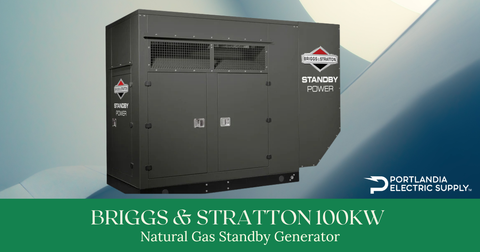
Over-sizing wastes money visibly: a 400A service where 200A would do is bigger panels, bigger conductors, bigger utility fees, and a bigger bill. Under-sizing wastes money sneakily: a service that can't absorb the hot tub, the EV charger, and the heat pump that were "definitely someday" loads at design time. The most expensive version we see is the generator sized off an optimistic guess — undersized standby units fail on the hottest or coldest day of the outage, which is the day they exist for. Our standby generator sizing guide applies the load calc from this article to that exact purchase. The companion guides for calculating power consumption at the device level and totaling the watts a home needs cover the bottom-up approach that feeds into this top-down NEC procedure.
The Role of Load Calculation in Project Success
Permits, utility coordination, equipment lead times, and inspection all hang off the calculated load number. A clean, documented load calc is the difference between a plan review that sails through and one that bounces twice. Write it down, show the demand factors you used, cite the article numbers — plan reviewers approve what they can follow.
Mastering the Core Formulas and NEC Standards

Load calculation rewards the methodical. Get the units right, classify the loads honestly, and the procedure carries you to a defensible answer — the same answer the inspector, the utility engineer, and the meter will eventually agree on.
Three formulas do nearly all the work:
- Single-phase current: I = VA ÷ V. A 9,600 VA EV charger on 240V: 9,600 ÷ 240 = 40A.
- Three-phase current: I = VA ÷ (V × 1.732). A 45 kVA commercial load at 208V: 45,000 ÷ 360 = 125A.
- Service sizing: Total calculated VA ÷ service voltage = required amps → round up to the next standard size (100A, 150A, 200A, 225A, 400A…).
Volts-amperes versus watts: for the sizing purposes of Article 220 you work in VA because conductor and breaker sizing care about current, and current doesn't care about power factor. Resistive loads (water heaters, ranges) are watts ≈ VA; motor and electronic loads carry power factor, and nameplate VA is the number you owe the calculation.
Putting NEC Article 220 Into Practice
Article 220 offers two paths for dwellings: the Standard Method (Parts III) and the Optional Method (220.82–220.84). The Standard Method itemizes every load with its own demand factor. The Optional Method — available for single-family homes, multifamily units, and certain existing installations — applies a flat percentage to a broad total and usually lands within a few amps of the Standard result with a tenth of the arithmetic. Verify your AHJ accepts it before designing to it; most do.
Key NEC Demand Factors for Load Calculation

Demand factors are where raw nameplates become realistic service sizes. The table preserves the code references from the original guide, with the practical notes we annotate on our own worksheets:
| Load Type | NEC Article | Demand Factor Rule | Practical Note |
|---|---|---|---|
| General Lighting | 220.42 | First 3,000 VA @ 100%; 3,001–120,000 VA @ 35%; >120,000 VA @ 25% | Most residential calcs land in the 35% band |
| General Receptacles | 220.44 | First 10 kVA @ 100%; remainder @ 50% | Significant savings on large commercial layouts |
| Household Ranges | Table 220.55 | One 12 kW range → demand = 8 kW; varies by count & rating | Always check Table 220.55 — don't use nameplate directly |
| Fixed Appliances (4+) | 220.53 | 75% demand factor if 4 or more fixed appliances on same feeder | Excludes range and HVAC from the count |
| Largest Motor Load | 220.50 | 125% of the largest motor's nameplate rating | Upward multiplier, not a reduction — feeds the feeder calc |
| Continuous Loads | 210.19, 215.2 | 125% of load for any circuit running 3+ hours continuously | Commercial lighting, HVAC, EV chargers — always apply |
| Optional Method | 220.82 | Single-family homes with 100A+ service; percentage-based approach | Verify local AHJ allows this method before using |
Two entries deserve emphasis. Table 220.55's range derating is the single biggest freebie in residential design — a 12 kW range counts as 8 kW because nobody runs all four burners and both ovens simultaneously for hours. And 220.53's 75% fixed-appliance factor quietly shaves a quarter off the dishwasher-disposal-water-heater-trash-compactor cluster. Together they routinely move a service design down an entire frame size.
A Practical Walkthrough: Residential Load Calculation

Here is the Standard Method run end-to-end on a 2,000 sq ft all-electric home — the same worked example from the original guide, with the arithmetic shown so you can audit every line:
Step 1 — General Lighting and Receptacle Loads
General lighting: 2,000 sq ft × 3 VA/sq ft (220.41) = 6,000 VA. Small-appliance branch circuits: two required kitchen circuits × 1,500 VA = 3,000 VA. Laundry circuit: 1,500 VA. Total general load: 6,000 + 3,000 + 1,500 = 10,500 VA.
Step 2 — Applying NEC Demand Factors to General Loads
220.42: first 3,000 VA at 100% = 3,000 VA. Remainder: 7,500 VA × 35% = 2,625 VA. General demand load: 5,625 VA. Notice we just discarded 4,875 VA of "load" that measurement says never coincides.
Step 3 — Fixed Appliances and HVAC
Range: nameplate 12,000 VA → Table 220.55 → 8,000 VA. Dryer: 5,000 VA at 100%. Dishwasher: 1,200 VA. Water heater: 4,500 VA. HVAC: 6,000 VA (take the larger of heating or cooling — they never run together, 220.60). Fixed-appliance count check: fewer than four qualifying appliances on this feeder besides range/HVAC, so the 75% factor doesn't apply to this example — run it when the count qualifies.
Step 4 — Final Service Sizing
| Load | Nameplate | Demand Applied | Calculated VA |
|---|---|---|---|
| General Demand Load | 10,500 VA | NEC 220.42 | 5,625 VA |
| Electric Range | 12,000 VA | Table 220.55 → 8 kW | 8,000 VA |
| Electric Dryer | 5,000 VA | 100% nameplate | 5,000 VA |
| Dishwasher | 1,200 VA | 100% nameplate | 1,200 VA |
| Water Heater | 4,500 VA | 100% nameplate | 4,500 VA |
| HVAC System | 6,000 VA | Larger of heat/cool | 6,000 VA |
| TOTAL | — | — | 30,325 VA |
30,325 VA ÷ 240V = 126A. Next standard service size up: 150A minimum — though the field reality is that 200A panels have become the default because the cost delta is trivial and the spare capacity is not. Add one EV charger (9,600 VA → +40A) and the answer moves to 166A, making the 200A decision for you.
How Demand Factors Reduce Your Service Size

This is the section to screenshot. Demand factors are where a load calculation earns its fee.
The worked example's raw nameplate sum is 35,200 VA against a calculated 30,325 VA — modest, because small homes have limited diversity. Scale changes everything. On a 4,000 sq ft home with two HVAC systems, a pool, and a workshop, raw nameplates can crest 80 kVA while the 220 calculation lands near 45 kVA — the difference between a 400A service and a 200A one, which is several thousand dollars of gear and utility work. Demand factors aren't a loophole; they're the code's statistical model of human behavior, backed by a century of utility metering data.
Navigating Commercial and Industrial Load Calculations

Commercial work replaces the dwelling demand tables with load-specific articles and a harder continuous/non-continuous line. Three-phase arithmetic (the √3 factor) enters every formula. Lighting loads come from Table 220.12's VA-per-square-foot values by occupancy type — offices at 1.3 VA/sq ft (2023 cycle), retail at higher values — plus receptacle allowances and the actual equipment schedules. Kitchen demand factors (220.56), motor feeders (Article 430), and welder duty-cycle multipliers (Article 630) each carry their own tables; the building is the sum of its articles.
| Consideration | Residential Projects | Commercial Projects |
|---|---|---|
| Calculation Method | NEC Article 220 Standard or Optional Method | Nameplate-based; specific NEC articles per load type |
| Typical Loads | Lighting, receptacles, range, dryer, water heater, HVAC | Three-phase motors, large HVAC, walk-ins, specialized machinery |
| Load Classification | Mostly non-continuous; general demand factors | Strict continuous/non-continuous distinction — 125% rule applies |
| Demand Factors | Standardized NEC dwelling tables | Granular and load-type specific (kitchens, motors, lighting) |
| Voltage System | 120/240V single-phase | 120/208V or 277/480V three-phase typical |
| Future Capacity | Recommended (EV charger, hot tub, heat pump) | Critical — always build in 20–25% spare capacity |
The continuous-load discipline matters more commercially because commercial loads genuinely run continuously: retail lighting at ten-hour days, refrigeration around the clock, server rooms forever. Every continuous load gets the 125% multiplier on conductor and breaker sizing, and our breaker sizing guide walks that rule from the protection side.
Advanced Load Profiling for Modern Energy Systems

Solar, batteries, EV charging, and smart panels have changed what a load calc is for. The static Article 220 number still sizes the service; but designing backup, storage, or load management needs the dynamic version — when the load happens, not just how big it is.
Commercial Building 24-Hour Load Profile
| Period | Typical Small Commercial Load Shape | Dominant Loads | Design Implication |
|---|---|---|---|
| Midnight–6 a.m. | 15–25% of peak | Refrigeration, servers, exterior lighting, phantom loads | Baseline never reaches zero — batteries see this floor all night |
| 6–9 a.m. | Ramp to 60% | HVAC pre-conditioning, lighting, kitchen warm-up | Morning ramp defines battery discharge rates |
| 9 a.m.–5 p.m. | 80–100% of peak | HVAC against solar gain, full occupancy, equipment | Solar production overlaps peak — self-consumption is natural |
| 5–9 p.m. | Declining, 40–70% | Lingering HVAC, lighting, cleaning crews | Evening peak in TOU rate windows — storage discharge target |
| 9 p.m.–midnight | 20–35% | Setback HVAC, security lighting | Battery recharge window in TOU arbitrage designs |
The profile matters because money and survival both live in the timing. A battery dispatched against the 5–9 p.m. TOU peak can pay for itself on rate arbitrage alone; the same battery sized only from a static calc might be half the useful capacity. Our battery sizing calculator and watts-to-kWh calculator convert profile data into storage sizing.
Peak Shaving and Managed Loads
Smart panels and load-shed devices let a smaller service or generator serve a bigger house by sequencing the big resistive loads — water heater and dryer don't run while the range is cooking. Done with listed energy-management hardware, NEC 220.70 now recognizes load management as a legitimate design input rather than a handshake. We design these for generator jobs constantly: a managed 200A home runs comfortably on a 22kW standby generator that would choke on the unmanaged version, and the transfer switch sizing chart shows how the ATS follows the managed load, not the panel label.
The Load Calc in the Wild: Three Documents You'll Touch
The permit set carries the calc on the electrical sheet, the utility service-upgrade request quotes it, and the generator or solar proposal derives from it. Keep all three copies consistent — the fastest way to stall a project is a 200A number on the permit and a 150A number on the utility form. Attach meter data when you can get it: twelve months of utility kWh, converted to an implied peak (many utilities will provide actual 15-minute interval peak data on request), either validates the calc or exposes its optimism. I've had interval data talk a customer out of a 400A upgrade the nameplate math swore he needed — the meter said his all-time peak was 71A.
The Optional Method (220.82) Run on the Same House
Same 2,000 sq ft all-electric home, Optional Method this time, so you can see the two answers side by side:
| Load Item | Raw VA | 220.82 Treatment | Counted VA |
|---|---|---|---|
| General (3 VA/sq ft + small appliance + laundry) | 10,500 | First 10 kVA @ 100%; remainder @ 40% | 10,000 + (17,200 × 0.40) = 16,880 |
| Range + dryer + dishwasher + water heater | 22,700* | ||
| — subtotal for percentage calc — | — | ||
| (items above combined = 27,200 → 10,000 + 17,200×0.40) | — | ||
| HVAC — larger of heat/cool | 6,000 | 100% nameplate | 6,000 |
| Optional Method total | — | — | 22,880 VA ≈ 95A |
*Appliance nameplates enter at full value under 220.82(B) — the 40% factor does the derating instead of Table 220.55.
Two methods, two defensible answers: 126A (Standard) versus 95A (Optional). The Optional result would technically fit a 100A service; the Standard says 150A. Both are code-legal; the AHJ's acceptance and your future-load plans pick the winner. This is exactly why the 200A panel has become the field default — the argument disappears for a modest material delta.
Load Calculation Mistakes That Fail Inspections
The correction notices we see cluster on a short list:
- Counting both heating and cooling. 220.60 — non-coincident loads count once, the larger one. Adding both is the most common way services get oversized on paper.
- Forgetting the 25% largest-motor bump on feeders. 220.50 applies the 125% factor to the largest motor in the feeder total; it hides in the math and bites commercial calcs.
- Using range nameplate instead of Table 220.55. A 14 kW double-oven range counts at its Table 220.55 demand, not its label — and counting label value on several ranges compounds the error upward fast.
- Treating EV charging as a general load. 220.57 counts EVSE at 100% with no diversity. It's the load that broke the old "2,400 sq ft house = 100A" heuristics.
- Ignoring the AHJ's adopted cycle. Demand factor numbers moved between NEC 2017, 2020, and 2023 editions. Calculate against the cycle your jurisdiction actually adopted, not the one you memorized.
Using Meter Data Instead of Math: The 220.87 Path
Article 220.87 lets you determine existing loads from actual demand measurements — the maximum demand over a one-year period, times 1.25, is your calculated existing load. For service upgrades on existing buildings this is gold: real buildings behave better than nameplate math predicts, and I've watched 220.87 studies justify adding 60A of new load to a "full" 200A service that metered peaks showed never cresting 95A. Requirements: one year of data (or an engineered all-season measurement), a documented maximum demand, and the 1.25 multiplier. Utilities will often export interval data on request; smart-meter portals sometimes expose it directly. When the nameplate method says "upgrade" and the meter says "plenty of room," the meter wins — legally and physically.
Multifamily Buildings: Where Demand Factors Really Earn Their Keep
Apartment work amplifies everything. Table 220.84's optional multifamily demand factors run from 46% down to 23% as unit count climbs — a 20-unit building counts its dwelling loads at barely a quarter of their summed value, because twenty families statistically never cook dinner, dry laundry, and heat water in perfect unison. The standard method (220.84's Part III equivalent) reaches a similar destination with more arithmetic. Either way, the feeder for a 20-unit all-electric building lands far below what nameplate summation suggests, and the developer who understands this saves a service size. House loads — corridors, elevators, common HVAC — ride on top at their own factors, continuous where applicable, with the elevator and common-area motors carrying their 220.50 largest-motor bumps.
From Calculation to Equipment: Sizing the Gear the Number Points At
A calculated load by itself buys nothing — it exists to specify hardware. The cascade below is the order we work through when a calculation comes back from the engineer and becomes a purchase order.
The calculated amperage cascades into four hardware decisions, in order:
| Decision | Driven By | Typical Mistake |
|---|---|---|
| Service entrance conductors / meter base | Calculated amps → 310.12 (dwellings) or 310.16 | Sizing conductors to the main breaker instead of the calculated load when 310.12 applies |
| Main panel / load center | Bus rating ≥ service size; spaces for all circuits + spares | Buying a 30-space panel for a 38-circuit life; see our bus bar guide |
| Transfer equipment (if generator) | Managed load, not panel label | A 200A ATS where a 100A service-rated switch would do — the ATS types guide walks the choice |
| Backup system size | Critical-loads sub-list, not whole-service calc | Buying whole-home capacity to protect eight circuits |
That last row is the one that saves real money: the same calculation discipline applied to a critical-loads list — fridge, furnace blower, some lights, internet, a well pump — routinely halves the generator or battery a household actually needs. The battery runtime calculator does the storage version of this math.
Reading Your Own Meter: The Homeowner's Field Calc
You can approximate your peak demand without any NEC tables. Most digital utility meters flash instantaneous kW if you know the display code (the meter manual or utility website lists it); smart-meter online portals commonly chart 15-minute or hourly peaks. Watch the meter on the hottest evening of the year with everything normal running — cooking, cooling, dryer, water heater recovering. That displayed kW × 1.25 gives you a service-size sanity check: 15 kW observed peak × 1.25 = 18.75 kW ≈ 78A at 240V — a 100A service is fine, a 200A service is comfortable, and anyone quoting a 400A upgrade is selling something. I run this check at kitchen-table consultations with the customer's own portal open; it reframes the entire conversation from fear to arithmetic.
Worked Example: Small Commercial Service, Three-Phase
A 3,000 sq ft retail suite at 120/208V three-phase, to show the commercial arithmetic end-to-end:
| Load Item | Raw Value | NEC Treatment | Counted VA |
|---|---|---|---|
| Lighting (retail) | 3,000 sq ft × 3.0 VA | Table 220.12; continuous × 1.25 | 11,250 |
| Receptacles (60 outlets) | 10,800 VA | 220.44: first 10 kVA @100%, remainder @50% | 10,400 |
| Roof-top HVAC (2 × 5-ton) | 14,000 VA | 220.60 larger-of rule + largest motor ×1.25 | 15,750 |
| Water heater + misc fixed | 6,000 VA | Nameplate | 6,000 |
| Sign circuit | 1,200 VA | 220.14(F) required outlet | 1,200 |
| Total | — | — | 44,600 VA |
44,600 ÷ (208 × 1.732) = 124A → a 150A, 208V three-phase service. Compare the raw connected sum of roughly 41 kVA-plus-continuous-markups against older hand methods and the modern granular treatment keeps the answer tight. Every continuous load carried its 125% factor inside the table, which is where commercial calcs most often go wrong in review.
Common Load Calculation Questions Answered
How do you account for future loads?
Add them explicitly to the calculation at nameplate value — an EV charger at 7,700–11,500 VA, a hot tub at 6,000–9,000 VA, a future heat pump at its MCA. "Spare capacity" is not a code concept; it is a line item you add on purpose. The EV charger and heat-pump futures are the two that most often ambush residential services.
What is the difference between connected load and demand load?
Connected load is the raw sum of every nameplate — the number that scares people. Demand load is the Article 220 result after demand factors — the number the service is legally sized to. Actual metered peak usually lands at or below the demand figure, which is the code working as designed.
When should you use the Optional Method (NEC 220.82)?
For single-family dwellings with 100A+ service where the AHJ accepts it. It's dramatically faster: general load at 10 kVA plus 40% of the remainder, HVAC at nameplate of the larger system, plus 25% of the largest motor. Expect results within a few percent of the Standard Method.
How do you handle three-phase commercial loads?
Convert everything to VA, apply load-specific NEC articles per equipment type, then divide by voltage × 1.732 for line current. Track per-phase loading on panel schedules — a "balanced" panel with 90% of its load landed on phase B is a neutral-overload story waiting to be told.
What is the NEC's 125% rule for continuous loads?
Conductors and overcurrent devices serving continuous loads (3+ hours) must be sized at 125% of the continuous current. It lives in 210.19(A)(1), 215.2(A)(1), and 210.20(A), and it applies inside the load calculation wherever a continuous load feeds a feeder or service.
Do solar and batteries reduce the calculated service load?
Not the grid service calc — the utility service must carry the house as if the solar doesn't exist. But they absolutely reduce the backup-system sizing: a battery-backed critical-loads panel only carries what you choose to back up, which is why backup designs start from a sub-load list instead of the whole-service number.
Put the Calculation to Work
The calc is step one; the equipment is step two, and the gap between a worksheet and a purchase order is where projects either tighten up or drift. Load centers, genuine breakers, THHN copper, transfer switches, and generator packages all live in our electrical collections, with guides organized at the electrical hub and code cross-references in the NEC compliance guide. Bring the load list to the quote desk — a documented Article 220 worksheet gets you a tighter material list and a faster answer than "it's a normal house."