⚡ Key Takeaways
- 60 kW is the sweet spot for small commercial backup: clinics, retail, small data rooms, and multi-tenant offices.
- Cummins RS60/C60-class sets deliver 60 kW standby (75 kVA at 0.8 PF) on diesel, with natural-gas variants in the same footprint.
- Budget $45,000–$75,000 installed; the generator is barely half the project cost.
- The three killers of standby sets: dead batteries, stale fuel, and chronic light loading. All three are cheap to prevent.
- Buy the rating that matches your duty cycle — standby-rated equipment on prime duty voids the warranty.
Sixty kilowatts is where backup power stops being a residential conversation and becomes a business-continuity decision. It keeps a dental surgery's compressors and sterilizers running, a retail box's refrigeration and POS alive, a small data room's racks and cooling online. We've supplied and supported Cummins sets in this class through storm seasons and multi-day outages at Portlandia Electric Supply, and this guide is the full briefing: ratings, specs, fuel math, installation, transfer switches, maintenance, and total cost. Live inventory: 60 kW generators, Cummins generators, and specific SKUs like the Cummins RS60, RS60 three-phase, and RS60 Quiet Connect.

Why 60 kW? The Strategic Case for Mid-Range Backup Power
Sixty kW at 480V three-phase is 72–90 amps of honest capacity; at 240V single-phase it's 250 amps. That band covers a specific and underserved middle: too big for residential units (which top out around 26–38 kW), small enough that installation doesn't require a crane-and-switchgear production. The economics favor it too — the cost per protected kW drops steeply from 20 kW to 60 kW, then flattens. If your critical load calc lands between 35 and 50 kW, 60 kW with 20–30% headroom is usually the right buy; above that, look at 80 kW generators or the 175 kW Cummins class.
Ideal Applications for 60 kW Generators
| Facility Type | Typical Critical Loads | Headroom |
|---|---|---|
| Small Data Centers | Server racks, cooling systems, network equipment | 20-30% |
| Retail Buildings | POS systems, refrigeration, lighting, HVAC | 25-35% |
| Healthcare Clinics | Medical equipment, refrigeration, life safety systems | 30-40% |
| Multi-Tenant Office | Elevators, emergency lighting, HVAC controls, tenant IT | 20-30% |
| Manufacturing (Light) | Critical process equipment, safety systems, controls | 25-35% |
| Agriculture | Irrigation pumps, ventilation, milking parlors, cold storage | 30-40% (motor starting) |
A caveat we repeat on every site visit: the nameplate sum of your loads is not your load. Demand diversity — the fact that everything never runs at once — typically cuts real peak draw 20–40% below the arithmetic sum. Get a proper load study or at least a clamp-meter survey across a representative week before you size anything. The generator sizing guide and kW-to-amps calculator structure that work.
Understanding Power Ratings: Prime vs. Standby
Rating Definitions and Applications
| Rating Type | Definition | Best For |
|---|---|---|
| Standby Rating | Maximum power available during utility outages; limited annual hours; no overload capability | Emergency backup for grid-connected facilities |
| Prime Rating | Maximum power available for unlimited hours at variable load; 10% overload for 1 hour in 12 | Off-grid applications, areas with unreliable grid, peak shaving |
| Continuous Rating | Maximum power available for unlimited hours at constant 100% load | Base load power generation, utility peak plants, remote sites |
The same Cummins engine carries three different kW numbers, standby being the highest. A 60 kW standby set is typically a 54–55 kW prime machine. We untangled a painful version of this mistake for an ag customer who bought a standby-rated unit at auction and ran it 14 hours a day through harvest — the warranty claim died on page two of the warranty document. Match rating to duty cycle, on the purchase order, in writing.
Sizing for Startup Surges
Motor starting is where 60 kW systems succeed or fail. An across-the-line motor draws 6–8× running current for the first second or two; a 20 hp three-phase motor at 480V can demand 150+ kVA of instantaneous starting capacity. Cummins sets in this class typically tolerate 25–35% voltage dip on a full-block load step and recover in 1–2 seconds — fine for lighting and IT (behind UPS), marginal for sensitive process controls. The fixes, cheapest first: stagger starts with a load sequencer, fit soft starters or VFDs on the big motors (a VFD cuts starting kVA by 60–70%), or oversize the alternator. Our rule: if your single largest motor exceeds 25% of generator capacity, run the starting analysis before you buy, not after the first nuisance trip.
Key Specifications to Compare
Cummins RS60 Technical Specifications
| Specification | Value | Notes |
|---|---|---|
| Standby Power Rating | 60 kW / 75 kVA | At 0.8 power factor |
| Voltage Options | 120/240V, 120/208V, 277/480V | Single and three-phase configurations |
| Frequency | 60 Hz | Standard for North American applications |
| Engine | Cummins Diesel | Proven reliability with extensive parts network |
| Fuel Type | Diesel #2 | High energy density, wide availability |
| Alternator | Brushless, 4-pole, revolving field | Voltage regulation ±1%, steady state |
| Controller | PowerCommand digital | Remote monitoring capable, Modbus/BACnet gateways |
| Sound Level (attenuated pkg) | ~65–70 dBA @ 7 m | Verify per enclosure option on the datasheet |
Confirm every line against the current datasheet revision for your exact SKU — Cummins runs multiple configurations (open, weather-protective, Quiet Connect) and voltage reconnectables under the same model family, and the differences matter at submittal time. For brand-level context, the Cummins brand guide and the head-to-heads — Generac vs Cummins and Kohler vs Cummins — show how the RS60 class stacks on service network and controls.
Fuel Consumption Estimates
| Load Percentage | Power Output | Est. Fuel Consumption | Runtime per 100 Gal |
|---|---|---|---|
| 25% | 15 kW | ~1.8 gal/hr | ~55 hours |
| 50% | 30 kW | ~2.9 gal/hr | ~34 hours |
| 75% | 45 kW | ~4.0 gal/hr | ~25 hours |
| 100% | 60 kW | ~5.2 gal/hr | ~19 hours |
Tank sizing follows from your runtime requirement. A common municipal/healthcare-adjacent spec is 48–72 hours at half load: 72 hr × 2.9 gal/hr ≈ 209 gal usable, so a 250-gallon sub-base tank at 90% fill. Add a fuel-polishing plan for any tank holding more than a season's worth of diesel — algae and water kill more standby sets than lightning does. Check your numbers with the fuel consumption calculator and runtime calculator.
Engine and Fuel Considerations
| Fuel Type | Advantages | Considerations |
|---|---|---|
| Diesel | High energy density, reliable starting, best motor-starting punch, longest engine life | Requires fuel storage, periodic fuel treatment and polishing, gelling in deep cold |
| Natural Gas | No fuel storage, unlimited runtime if gas supply holds, cleaner emissions | Requires gas supply at adequate pressure, lower energy density, utility dependency |
| Propane (LP) | Clean combustion, long-term storage stability, off-grid capable | Tank installation required, slightly lower output vs diesel, vaporization limits in cold |
| Dual-Fuel | Fuel flexibility, enhanced resilience, on-site diesel backs up utility gas | Higher initial cost, more complex maintenance and controls |
Why diesel dominates commercial backup at 60 kW: when the ice storm takes the grid down for four days, the fuel in your sub-base tank doesn't depend on a utility's compressor station staying up. The counterargument is real too — natural gas eliminates the fuel-maintenance line item and the Tier 4 conversation on some packages. We lay out the full decision tree in natural gas vs propane vs diesel standby generators. Cold-climate diesel buyers: order the cold-weather kit — block heater, battery warmer, oil warmer — with the unit. Retrofitting it in January costs more and arrives after the failure.
Installation, Location, and Enclosure Options
Site Planning Essentials
A 60 kW package weighs 3,500–5,500 lb wet. The pad is a real pad: 6-inch reinforced concrete minimum, sized to the manufacturer's template with anchor bolts set before the pour, leveled to spec because oil sumps and radiators care. Clearances: typically 3 ft minimum on service sides, more at the radiator discharge — these sets move serious cooling air and will recirculate their own exhaust heat against a wall until the high-temp shutdown saves them from you. Setbacks from openings and property lines follow local code and NFPA 37/110; five feet is common, but your AHJ's number is the only one that matters.
Enclosure Options and Acoustic Performance
| Enclosure Type | Sound Level | Best Applications |
|---|---|---|
| Standard Weather-Protective | 72-78 dB(A) | Industrial sites, rural locations, areas without noise restrictions |
| Sound-Attenuated | 65-72 dB(A) | Commercial areas, suburban locations, most business applications |
| Super-Quiet/Hospital Grade | 58-65 dB(A) | Healthcare facilities, residential areas, noise-sensitive environments |
Buy attenuation against the property-line measurement, not the unit's spec sheet. A 70 dBA unit at 7 meters reads about 63 dBA at 25 meters in free field — but corner reflections off a building add it right back. If a neighbor's bedroom window is 40 feet from the pad, the super-quiet package is cheaper than the lawsuit.
Electrical Integration and Transfer Switches
Full-load current: 60 kW at 480V three-phase, 0.8 PF = 90.2A; at 208V three-phase it's 208A; at 240V single-phase, 250A. Conductor sizing per NEC 445.13 at 115% of nameplate:
| Voltage Config | Full-Load Current | Conductors @115% (NEC 445.13) | Copper Size (75°C, NEC 310.16) | OCPD (NEC 240.6) |
|---|---|---|---|---|
| 277/480V 3-ph | 90.2 A | ≥ 103.7 A | 2 AWG (115A) | 110–125 A frame |
| 120/208V 3-ph | 208.2 A | ≥ 239.4 A | 250 kcmil (255A) | 250 A frame |
| 120/240V 1-ph | 250 A | ≥ 287.5 A | 350 kcmil (310A) | 300 A frame |
The ATS decision rides on the grounding scheme. A 3-pole ATS keeps the generator non-separately-derived (neutral bonded at the service); a 4-pole switched-neutral ATS makes the generator a separately derived system with its own neutral bond and ground-fault scheme. Get this wrong and you'll chase ground-fault nuisance trips forever — we've been called to "mystery trip" jobs that were exactly this. Service-rated ATS with the right pole count, sized to the table above: browse transfer switches, automatic transfer switches, 100–125A, and 200–225A frames. Deep dives: what is a transfer switch, the manual vs automatic ATS guide, and the ATS sizing chart.
Remote Monitoring and Diagnostics
PowerCommand controls at this class give you digital voltage regulation, full NFPA 110 annunciation capability, and remote monitoring via cellular or Ethernet gateway. In 2026 there is no excuse for an unmonitored commercial set: the monitoring subscription costs less than one emergency site visit, and the 2 AM low-battery alert is the difference between a $150 battery swap on Tuesday and a failed start during Saturday's outage. Confirm at order time whether the gateway hardware and first-year subscription are included — on some configurations they're options, and finding out at commissioning is a bad afternoon.
Maintenance, Warranty, and After-Sales Support
Maintenance Schedule Overview
| Interval | Maintenance Tasks | Typical Duration |
|---|---|---|
| Weekly | Visual inspection, oil level check, coolant check, exercise run | 15-30 min |
| Monthly | Exerciser run (30 min under load), battery check, fuel system inspection | 45-60 min |
| Semi-Annual | Oil and filter change, air filter inspection, coolant test, belt check | 2-3 hours |
| Annual | Comprehensive service: all fluids, filters, battery test, load-bank or full building-load test, connection IR scan | 4-6 hours |
| Every 2-3 Years | Coolant replacement, battery replacement, thermostat and sensor verification, ATS contact service | 6-8 hours |
Two lines deserve emphasis. The monthly exercise should run under load — a 30-minute no-load spin builds carbon and tells you almost nothing about the fuel system. And the annual test should push the set to at least 75% load for an hour; if the building can't provide that, rent a load bank. Chronic light loading causes wet stacking — unburned fuel washing cylinder walls — and we've torn down 60 kW engines at 800 hours that looked like 8,000 because they spent their lives idling at 20% load. Service parts are easy: normal-duty and heavy-duty preventive maintenance kits for RS50/RS60, plus the extreme-cold kit, and the broader maintenance kit collection. Full schedule: generator maintenance guide.
Warranty Coverage and Service Networks
Cummins commercial standby sets typically carry a 2-year/2,000-hour base warranty (standby duty) with extended coverage purchasable to 5–10 years — verify the current terms for your configuration, because standby, prime, and continuous duty carry different paper. The deeper value is the service network: Cummins distributors cover every North American metro with factory-trained techs and stocked parts. A cheaper brand with a 10-year warranty and no tech within 200 miles is a worse bet than Cummins with a 2-year warranty and a service truck 40 minutes away. Downtime cost at a clinic or cold-storage site is measured in thousands per hour; buy the network.
Total Cost of Ownership Analysis
| Cost Category | Components | Cost Drivers |
|---|---|---|
| Capital Cost | Generator unit, ATS, enclosure options, accessories | Features, brand, enclosure type, tank size |
| Installation | Site prep, foundation, electrical, fuel system, permits | Site complexity, local labor rates, code requirements |
| Fuel (Operating) | Diesel, testing fuel, emergency runtime | Outage frequency, load percentage, fuel price |
| Maintenance | Scheduled service, consumables, repairs, load-bank tests | Service frequency, parts quality, technician rates |
| Downtime Risk | Revenue loss, productivity loss, equipment damage, spoilage | Business criticality, outage frequency, transfer reliability |
| End of Life | Overhaul or replacement at 15,000–30,000 hours (diesel) | Maintenance history, load profile, environment |
Realistic 2026 numbers for a turnkey 60 kW diesel standby: unit $28,000–$42,000 depending on enclosure and tank, ATS $2,500–$6,000, installation $12,000–$25,000 with pad, fuel, and electrical. Call it $45,000–$75,000 all-in, then $1,500–$3,500 a year for a service contract plus fuel. Over 15 years the generator itself is roughly a third of lifecycle cost — which is why skimping on installation and maintenance to afford a bigger unit is exactly backwards. Buy the right size, install it properly, maintain it religiously.
Frequently Asked Questions
What's the difference between prime and standby power ratings?
Standby is maximum output during utility outages with limited annual hours and no overload allowance. Prime is unlimited hours at variable load with a 10% overload allowance — at about 5–10% fewer kW on the same engine. Match the rating to your duty cycle or the warranty won't survive the claim.
How do I determine if 60 kW is the right size for my facility?
Get a load study or a clamp-meter survey of your critical loads across a representative week, add starting surges for the largest motors, then add 20–30% headroom. If the answer lands 35–50 kW, a 60 kW set is right; if it's under 30, you'll chronic-light-load the engine.
How often should a standby generator be serviced?
Weekly automatic exercise, monthly loaded exercise and battery check, semi-annual oil and filters, annual full service with a loaded test, and coolant/battery service every 2–3 years. The loaded annual test is the one everyone skips and shouldn't.
What fuel storage capacity do I need for a 60 kW generator?
At half load, a 60 kW diesel burns about 2.9 gal/hr. A 72-hour runtime target means roughly 210 usable gallons — a 250-gallon sub-base tank at 90% fill — plus a fuel-polishing plan for long storage.
Can I install a generator near residential areas without noise complaints?
With the super-quiet enclosure (58–65 dBA at 7 m), usually yes — but model the sound at the property line including building reflections, check local noise ordinances, and buy attenuation up front. Retrofitting quiet is expensive.
What warranty coverage comes with Cummins generators?
Commercial standby sets typically carry a 2-year/2,000-hour base warranty with extensions to 5–10 years available. Terms differ by duty rating — verify the document for your configuration at order time.
Should I choose diesel or natural gas for my commercial generator?
Diesel for fuel autonomy, motor-starting punch, and engine life — at the cost of fuel maintenance. Natural gas for zero fuel logistics and cleaner running — at the cost of utility dependency. Site risk profile decides.
What's involved in generator installation, and how long does it take?
Pad, set, fuel system, ATS and electrical, permits, commissioning with a load test. From order to commissioned: typically 8–16 weeks in 2026, driven by equipment lead time and permit queue more than labor.
Case Study: 60 kW at a Multi-Tenant Office, Done Right
A property manager for a 42,000 sq ft multi-tenant office came to us after losing tenants' goodwill through two summer outages — elevators down, server closets cooking, one tenant's insurance carrier asking pointed questions. Load study said 38 kW critical: elevator recall and one car, emergency lighting, fire panel, telecom room with its own 5-ton mini-split, and the common-area systems. We quoted a 60 kW diesel Quiet Connect-class package: standby-rated, sound-attenuated Level 2 enclosure (the property line was 60 feet from a residential fence), 250-gallon sub-base tank for roughly 72 hours at half load, 480V three-phase, 125A service-rated ATS ahead of the tenant distribution. Installed cost landed at $58,000 including the pad and a gas-free diesel fuel system. Commissioning included a 90-minute load-bank test and a witnessed transfer drill. Eight months later a feeder fault put the building on generator for 11 hours on a Tuesday — tenants' only complaint was that the gym's TVs went dark, which was by design. That's what a correct 60 kW project looks like: invisible on the day it matters.
Emissions and Permitting at 60 kW
At this size the federal framework treats you as a stationary emergency engine under the RICE rules: outage response plus a limited annual testing/maintenance allowance (commonly cited as 100 hours with sub-limits — read your state's version, several are stricter). Stay inside that envelope and a diesel 60 kW typically avoids Tier 4 Final aftertreatment. Step outside it — demand-response revenue, peak shaving, prime duty — and you've bought yourself a DPF, SCR, DEF logistics, and a different permit. California buyers: CARB-certified configuration or nothing, and the air-district permit is a critical-path item measured in months. Natural-gas 60 kW units sidestep most of this but answer to the gas utility's capacity letter instead. Either way, the permit conversation happens before the equipment order, or the schedule suffers.
Buying Mistakes We Watch People Make at 60 kW

After enough site visits the patterns repeat. Mistake one: sizing from the panel schedule instead of measured demand — the 600A service label tells you nothing about what actually runs at 2 PM. Mistake two: buying the enclosure after the noise complaint; attenuation is an order-time option and a retrofit nightmare. Mistake three: treating commissioning as a formality — an unwitnessed transfer test is a hope, not a system. Mistake four: no fuel plan. A diesel set with a tank nobody polishes and no supplier relationship is a very expensive lawn ornament by year three. Mistake five: skipping the monitoring subscription to save $30 a month, then discovering the failed battery from the tenant's angry email. The whole point of the machine is that it works unattended; the monitoring is how you know it will.
Competitive Set: How the RS60 Class Stacks Up
Buyers cross-shop three names at 60 kW, so here's the working comparison we use on quotes. Specs are representative published values — confirm the current datasheet for the exact SKU.
| Attribute | Cummins RS60/C60 class | Generac 60 kW (1800 rpm) | Briggs & Stratton Fortress 60 kW |
|---|---|---|---|
| Standby output | 60 kW / 75 kVA | 60 kW | 60 kW (LP/NG) |
| Default fuel | Diesel (NG variants in family) | Diesel or gaseous by SKU | LP or natural gas |
| Engine speed | 1800 rpm liquid-cooled | 1800 rpm liquid-cooled | 1800 rpm liquid-cooled |
| Controls | PowerCommand digital, NFPA 110 capable | Generac commercial controller, connected monitoring | InfoHub / commercial controls |
| Service network | Deepest commercial distributor bench | Broad dealer network, strong residential-to-commercial crossover | Regional variability — verify local bench |
| Price position | Premium | Competitive | Value |
| Representative SKU | RS60 Quiet Connect | Generac 60 kW 1800 rpm | B&S 076860 Fortress |
The pattern to notice: at 60 kW the hardware has converged — everyone's on 1800 rpm liquid-cooled engines, brushless alternators, and digital controllers. What hasn't converged is the support layer. Cummins' PowerCommand ecosystem and distributor bench is the deepest; Generac's dealer density means a tech is usually close; the value brands are perfectly good machines whose ownership experience depends heavily on your local service company. Buy the support layer as deliberately as the engine.
Commissioning: The Day That Decides the Next Decade
A 60 kW commissioning done properly takes most of a day and produces a paper trail. The sequence we insist on: one, megger and continuity-test the feeders before energization; torque every lug to spec with a calibrated wrench and paint a witness mark. Two, verify rotation and voltage at the ATS with the generator running before first transfer. Three, witness a full transfer cycle — utility fail, engine start in spec time (typically under 10 seconds plus transfer delay), load pickup, utility restore, retransfer, cooldown. Four, load test at the highest available load, ideally a load bank at 75–100% for an hour while logging voltage, frequency, oil pressure, and coolant temp. Five, register the monitoring, fire every alert type once, and hand the owner a binder with the settings printout, torque log, and test data. Skip any of it and you own a hypothesis, not a backup system.
Cold Weather and Hot Weather: The Two Enemies
Diesel 60 kW sets fail at temperature extremes in predictable ways. Cold: fuel gels toward its cloud point (untreated #2 diesel can start waxing around 10–15°F), batteries lose a third of their cranking capacity at 0°F, and thick oil strains starters. The standard armor — block heater, battery warmer, oil pan heater, winter-blend or treated fuel — is the extreme cold kit for RS60/RS100 territory, and it's an order-time option for a reason. Heat: radiator airflow is the constraint. An enclosure crammed against a wall recirculates its own discharge air and high-temps out at 105°F ambient on the dot of your worst outage. Keep clearances, keep louvers clean, and verify the radiator core annually — cottonwood season clogs more radiators than you'd believe.
Financing, Incentives, and Insurance
Three financial angles worth checking before you pay cash. Equipment financing and municipal lease programs spread the $45k–$75k over 5–7 years, often below the cost of the downtime the set prevents — run both numbers. Some utilities and states run resilience incentive programs for critical facilities (water, telecom, public safety) that offset capital cost; they change constantly, so check current program lists at quote time. And commercial property insurers increasingly offer premium credits for documented standby power on refrigeration and data risks — bring the commissioning report and maintenance contract to your broker, because "we have a generator" without paperwork rarely moves the premium.
Reading a Cummins Spec Sheet Without Getting Lost
Cummins datasheets are dense but honest, and five fields tell you most of what matters. Standby/prime kW and kVA: confirm both, at your altitude and ambient temperature — ratings assume sea level and 25°C-ish conditions, and a 5,000-foot site or a 45°C mechanical yard derates output meaningfully; ask for the derated number, not the brochure number. Voltage and reconnectability: many alternators in this family are 12-lead reconnectable across common voltages, but the unit ships strapped for one — changing it later is a service call. Fuel consumption table: read it at your expected load profile, not at full load; most facilities live at 40–60%. Sound data: note whether it's quoted at no load or full load and at what distance — comparing a no-load 7-meter number against a competitor's full-load 23-foot number is how bad decisions get made. And the outline drawing: the exhaust outlet position, radiator discharge direction, and service-door swing decide where on your pad the thing can actually go. Twenty minutes with the datasheet before the order saves a change order after it.
Altitude, Ambient, and the Derating Conversation
That derating point deserves its own paragraph because it's the most-missed line item in quotes we review. Naturally aspirated diesels lose roughly 3–4% of output per 1,000 feet of altitude; turbocharged engines hold ratings higher but still give up capacity, and all engines derate as ambient temperature climbs past the rating point. A 60 kW standby set at a 6,000-foot Colorado site at 40°C summer ambient is not a 60 kW set anymore — it might be a 50–54 kW set depending on engine and cooling package. If your load study says 45 kW critical, the altitude-adjusted machine still fits; if it says 52 kW, you need to step up a frame size or specify the heavy-duty cooling option. This is a five-minute conversation at quote time and a five-figure problem at commissioning time. Ask for the site-adjusted rating in writing.
The Owner's First Year: A Realistic Calendar
New 60 kW owners ask what they've signed up for. Here's the honest first-year calendar. Month one: commissioning, owner training, monitoring configured, warranty registered, service contract signed. Month two: first monthly loaded exercise under building load, baseline fuel sample drawn. Months three through eleven: weekly automatic exercise, monthly visual and fluid checks, one semi-annual service visit for oil and filters. Month twelve: annual full service — all fluids and filters, battery load test, connection IR scan, and the loaded test (load bank if the building can't supply 75%). Year-one cost beyond the install: roughly $1,500–$3,000 in service plus test fuel, and an hour a month of somebody's attention. Owners who run this calendar almost never meet the emergency-rate service truck. Owners who "set it and forget it" eventually do.
Generator + Solar + Storage: How 60 kW Fits the Hybrid Picture
An increasing share of our 60 kW conversations now include batteries and PV, and the architecture question matters. The generator's role in a hybrid commercial system shifts from sole backup to capacity-of-last-resort: PV and storage carry short outages and shave peaks, and the genset covers multi-day events and battery-depleted nights. That duty profile — fewer hours, longer runs — actually suits diesel well, and it changes sizing logic: a site that needed a 100 kW standby-only set sometimes lands at 60 kW plus storage. If you're evaluating that route, pair this guide with our hybrid inverter overview, the battery sizing calculator, and 100–200 kWh C&I batteries. The controls integration (ATS + storage PCS + genset start logic) is the part to engineer carefully — it's a design conversation, not a plug-and-play accessory.
Documentation: The Binder That Protects the Investment
One more practice separates professionally run 60 kW installations from improvisations: the documentation binder (physical or digital, but maintained). What goes in it: the load study and sizing rationale, the signed commissioning report with load-test data, the torque log, the monitoring settings printout, every service invoice, fuel sample results, battery replacement dates, and the warranty registration confirmation. When you sell the building, that binder transfers real value — buyers and their insurers price documented resilience differently than a dusty genset of unknown provenance. When the warranty claim comes at year four, the binder is the difference between a covered repair and a coverage argument. And when the facility manager changes jobs — and they always do — the binder is how the next one inherits a system instead of a mystery. It costs nothing but habit.
Seasonal Rhythm: What Good Ownership Feels Like
Owners sometimes ask what "normal" looks like for a Cummins at this size, so here's the sensory version. Spring: the semi-annual service visit happens before storm season, the fuel sample comes back clean, the tech tops the tank. Summer: the weekly exercise runs mid-morning, the app shows green, and if a storm rolls through, the transfer is a non-event you learn about from the monitoring email. Fall: the block heater gets verified with a hand on the housing before the first freeze, batteries get load-tested, and the load-bank appointment goes on the calendar. Winter: the set exercises into the cold without complaint because the cold-weather kit was ordered with it. That's it. No drama, no mystery lights, no emergency-rate invoices. A 60 kW Cummins maintained on this rhythm is one of the most undramatic pieces of capital equipment a business can own — which is precisely the point of owning it.
Why the Cummins Premium Pencils Out
Let's close the loop on the money, because it's the question every 60 kW buyer eventually asks: why pay the Cummins premium when a value brand makes the same kilowatts? The arithmetic lives in the tail risks. A 60 kW set exists for the worst week of the decade, and the value of the machine is the probability that it starts, takes load, and holds it on that week — plus the speed of repair if it doesn't. Cummins' edge is boringly structural: the largest commercial service bench in North America, parts depth that reaches back across engine generations, and a controls ecosystem (PowerCommand) that every generator tech in the country already knows. In year one, those things are invisible next to a lower quote. In year nine, when a voltage regulator fails during a heat wave and the difference between "part on the shelf, tech tomorrow" and "three-week lead from overseas" is the whole ballgame, they're the only things that matter. Price the badge honestly: not as logo tax, but as the insurance layer on the insurance policy. For most commercial buyers protecting real revenue, that's a premium that pays for itself the first time it activates.
A Note on Buying Used at 60 kW
Because the question comes up weekly: used and surplus 60 kW diesels are plentiful and tempting, often at half the new price. They can be smart buys with three non-negotiables — verified hours from the controller (not the seller's memory), a witnessed load-bank test before money moves, and service records showing oil analysis and loaded exercise rather than "it ran when parked." Missing any of the three, the discount is pricing in unknowns you can't afford at this duty. We help customers evaluate used units against new RS60-class pricing regularly, and the honest outcome splits about evenly: a documented low-hour ex-telecom unit is a genuine value; a mystery-hours rental-fleet retiree is a parts donor wearing fresh paint.
The used market at this size rewards patience and punishes haste in equal measure — budget the inspection either way, because the load bank tells the truth that the paint job won't.
That discipline — verify hours, witness the load test, audit the records — is the same one that governs the new-equipment decision, and it's the thread running through every section of this guide: a 60 kW Cummins earns its premium not through the brochure but through the documented, witnessed, maintained reality of the machine on your pad. Whether the unit on that pad arrives new from the factory or carefully chosen from the surplus channel, the standard is identical, and the ownership rhythm above is what keeps it true for the next two decades of Tuesday afternoons when nobody is thinking about backup power at all.
The Smart Choice for Commercial Backup Power
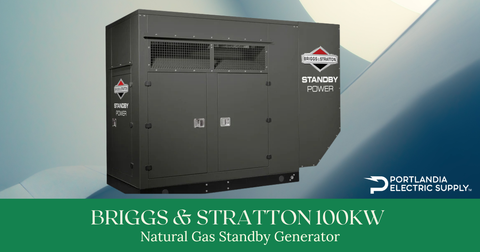
A 60 kW Cummins is not the cheapest way to make 60 kW. It's the way you buy 60 kW when the cost of not making it — spoiled inventory, cancelled surgeries, lost tenants — dwarfs the price difference. Size it from a real load study, install it on a real pad with the right ATS, maintain it on the schedule above, and it will still be starting on the first crank long after the cheap alternative has been replaced twice. Browse 60 kW generators, the RS60 Quiet Connect three-phase, C60D6 configurations, or comparable options like the Briggs & Stratton 60 kW Fortress and Generac 60 kW 1800 rpm, and talk to our team about a site-specific quote.
About PES Supply: Portlandia Electric Supply is a national distributor of generators, solar, and electrical equipment with contractor pricing and freight consolidation. Related reading: best 60 kW backup generators · generator sizing guide · whole-home sizing 2026 · transfer switch wiring · 48 kW · 80 kW · 125 kW generators