Five years ago, residential battery storage was a luxury add-on for the prepared and the paranoid. In 2026, with NEM 3.0-style rate structures gutting export credits across California and copycat tariffs spreading, with grid outages lengthening, and with LFP pack prices a fraction of what they were, the battery has become the part of the solar system that determines whether the economics work at all. We size home battery systems every day — this guide is the same math we run, written for homeowners who want to understand what they're buying and installers who want a reference they can hand to customers.
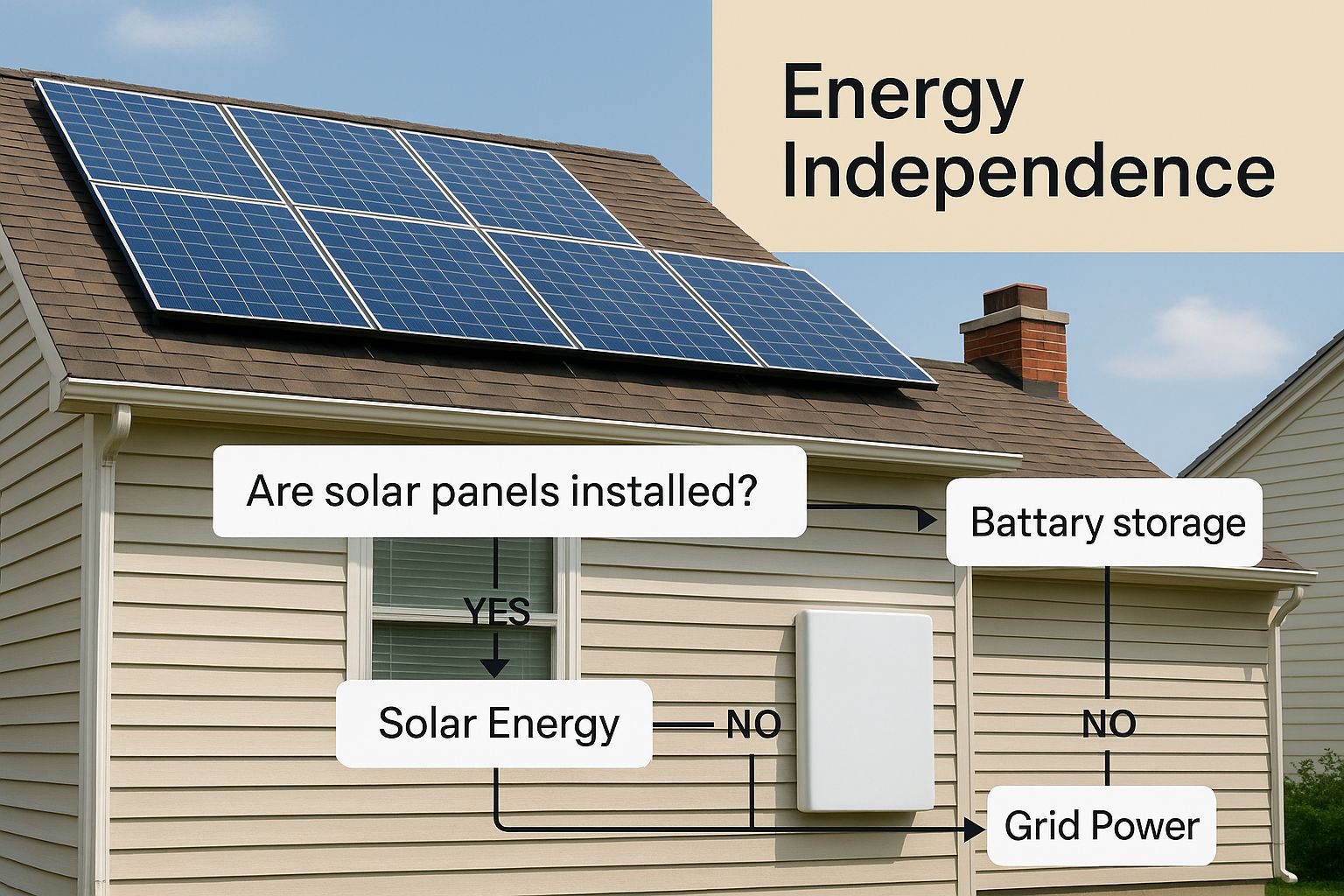
Why Solar Batteries Are a Necessity, Not a Luxury
The New Realities Driving Battery Adoption
Three forces converged. First, rate design: under net-billing tariffs, a kilowatt-hour exported at noon is worth a fraction of a kilowatt-hour avoided at 7 p.m. — in California's case, often 75% less. Solar without storage under those rules is a machine for selling low and buying high. Second, resilience: outage hours per customer have trended upward for a decade, and homeowners who lived through a multi-day PSPS event or an ice storm don't need convincing. Third, cost: LFP storage packs have fallen to the point where a 10 kWh residential battery installed costs what a 4 kWh NMC unit cost in 2019.
Taking Control of Your Energy Future
The mental shift matters: a grid-tied solar array without storage is a fuel-saving device for the utility's generator. Solar plus storage is your own power plant — you decide when to buy, when to store, when to use, and whether an outage is an emergency or a non-event. Every design decision below follows from treating the battery as infrastructure, not an accessory.
How Home Solar Battery Technology Actually Works
Understanding Key Battery Metrics
Four numbers define any home battery, and marketing materials reliably blur them:
| Metric | Units | What It Actually Tells You | Typical Residential Range |
|---|---|---|---|
| Usable capacity | kWh | How long it runs your loads — the gas tank | 5–20 kWh per unit |
| Continuous power | kW | How many loads run at once — the engine size | 3–11.5 kW per unit |
| Peak/surge power | kW | Whether it starts motors (pumps, AC compressors) | 1.5–2× continuous, for seconds |
| Round-trip efficiency | % | Energy out ÷ energy in — the conversion tax | 90–96% (AC-coupled lower end) |
The confusion we untangle weekly: a "13.5 kWh battery" that can only deliver 5 kW continuous will run your refrigerator for days but won't start your well pump. Capacity and power are independent specs, sized by different parts of your load profile, and a quote that only mentions the kWh number is hiding the kW number.
Common Battery Chemistries
| Technology Type | Key Benefit | Best For | Common Brands |
|---|---|---|---|
| Lithium Iron Phosphate (LFP) | Exceptional safety & long cycle life (4,000–6,000 cycles) | Homeowners prioritizing reliability and longevity; mandated in some jurisdictions like NYC | FranklinWH, Enphase, BYD, HomeGrid, EG4 |
| Nickel Manganese Cobalt (NMC) | Higher energy density (more power, less space) | Installations with limited space or weight constraints | Tesla Powerwall, LG Energy Solution |
Our default recommendation is LFP unless a physical constraint says otherwise. The cycle-life gap is roughly 2×, the thermal safety margin is real — LFP's thermal-runaway onset temperature sits well above NMC's — and the density penalty is irrelevant in a garage. If you're in a fire-code-strict jurisdiction, your AHJ may effectively choose LFP for you.
Worth knowing what's coming, too. Sodium-ion residential packs are beginning to ship, promising better cold-weather charging and lower materials cost at the price of density and field history. Flow batteries remain a commercial-scale technology. Solid-state lithium is still a lab-and-luxury-car story. For a purchase you're making this year, the decision tree stays simple: LFP from a manufacturer with a U.S. warranty operation, sized from your interval data, installed to NFPA 855. The exotic chemistries will be here when their warranties mature; your outage protection shouldn't wait for them.
AC-Coupled vs. DC-Coupled: The Retrofit Question
AC-coupled batteries (Powerwall-class, Enphase IQ Battery, FranklinWH) carry their own inverter and connect on the house side of your electrical panel. They bolt onto any existing solar system without touching the roof or the PV inverter, which is why they own the retrofit market. The cost is a double conversion — solar DC to AC to battery DC and back — that shaves round-trip efficiency a few points.
DC-coupled systems (hybrid inverters like the Sol-Ark 8K or EG4 FlexBOSS21 paired with 48V rack batteries) share one inverter between PV and battery. One fewer conversion step means better round-trip efficiency and a cleaner wall — but they make the most sense in new construction or full system replacements, since retrofitting one usually means replacing the existing PV inverter. New build or re-roof: price DC-coupled. Existing system you like: AC-couple and move on.
Sizing Your Home Solar Battery System Correctly
Step 1: Define Your Primary Goal
Backup-first systems size to critical loads and outage duration. Bill-savings-first systems size to the evening peak window. Whole-home systems size to everything — and cost like it. The goal decides the budget before any hardware is discussed. Be honest here: most homes don't need whole-home backup; they need the fridge, the furnace blower, the internet, some lights, and one outlet circuit alive through the night.
Step 2: Analyze Your Real-World Energy Usage
Pull 12 months of utility data. You're looking for two shapes: total daily kWh, and the hourly profile showing what you use between 4 p.m. and 9 p.m. — the evening peak that batteries exist to cover under modern rate structures. Our system size calculator and battery runtime calculator turn those numbers into equipment quantities.
Step 3: Calculate Your Power and Capacity Needs — Worked Example
Full arithmetic for a typical 2,400 sq ft home:
| Sizing Step | Value | Calculation |
|---|---|---|
| Home daily usage | 30 kWh/day | Utility data, annual ÷ 365 |
| Evening peak window usage (4–9 p.m.) | 9 kWh | Hourly profile |
| Overnight critical loads (9 p.m.–8 a.m.) | ≈ 7 kWh | 600W average × 11 hours |
| Usable capacity target | 16 kWh | 9 + 7 |
| Nameplate at 90% DoD (LFP) | 17.8 kWh | 16 ÷ 0.90 |
| Round-trip efficiency check (95%) | 18.7 kWh solar input needed | 17.8 ÷ 0.95 |
| Continuous power requirement | 5 kW (7.5 kW surge) | Peak simultaneous load + motor-start margin |
| Configuration that fits | 2 × 10 kWh / 5 kW LFP units | 20 kWh nameplate, 10 kW continuous |
Two units instead of one oversized one, deliberately: redundancy on a failure, and the second unit's inverter doubles continuous power for motor starts. This is the configuration pattern behind most of the two-Powerwall or dual-FranklinWH installs you see — it's not upselling, it's the surge math.
What a Battery Actually Runs During an Outage
Runtime for a 20 kWh nameplate / 18 kWh usable LFP system on typical critical loads:
| Load Combination | Average Draw | Runtime on 18 kWh Usable | Calculation |
|---|---|---|---|
| Refrigerator only (cycling) | 150 W | ≈ 120 hours (5 days) | 18,000 ÷ 150 |
| Fridge + furnace blower + lights + internet | 750 W | ≈ 24 hours | 18,000 ÷ 750 |
| Above + window AC (12k BTU) | 1,950 W | ≈ 9.2 hours | 18,000 ÷ 1,950 |
| Above + well pump cycling (1 HP) | ≈ 2,600 W average | ≈ 6.9 hours | 18,000 ÷ 2,600 |
| Whole-home with central AC (4-ton) | 4,500–6,000 W | 3–4 hours | Why whole-home backup needs 40+ kWh |
The table tells the strategy: batteries paired with solar recharge daily, so a "24-hour" critical-load runtime is effectively indefinite through a multi-day outage as long as the sun comes up. That's the combination that carried our customers through multi-day ice-storm outages — the battery rode the nights, the array refilled it by noon. A battery alone is a countdown timer; a battery with solar is a power plant.
The True Cost and Financial Benefits
Analyzing the Total Installed Cost
Installed pricing in 2026 typically lands at $900–$1,500 per kWh for residential LFP storage, all-in — equipment, labor, permits, and electrical work. A 20 kWh system: $18,000–$30,000 before incentives. The 30% federal Investment Tax Credit applies to storage (standalone storage qualifies now, not just solar-paired), dropping the net to roughly $12,600–$21,000. State and utility programs can stack further.
How a Solar Battery Pays for Itself
Under net-billing rates, the payback mechanism is spread capture: every kWh you store at noon (worth ~$0.05–0.08 exported) and use at 7 p.m. (worth ~$0.30–0.45 avoided) pockets the difference. On 14 kWh of daily shifting at a $0.25/kWh average spread, that's about $1,275 a year — a 10–14 year simple payback on the net cost, inside the warranty window, before counting any outage-protection value or demand-response revenue. Under legacy 1:1 net metering, the bill payback is weak and the battery is a resilience purchase — be honest with yourself about which regime you're in.
Critical Watchout: Hidden Costs
The line items that surprise homeowners: main panel upgrades or a critical-loads subpanel ($1,500–$4,000 when the 100A panel can't accept the battery backfeed), long wire runs to a detached garage, permits and utility application fees, and — the big one — gateway/transfer hardware that some quotes bury as "miscellaneous electrical." Insist on an itemized quote. Every legitimate installer will provide one.
Budget also for the invisible line: your time in the first month. You'll learn the app, tweak the reserve, maybe adjust the charge schedule twice before the system settles into your household's rhythm. That's normal — a battery is the first piece of home infrastructure most people own that has settings. The installers who warn you about the tuning month get better reviews than the ones who promise set-and-forget, because the second group gets the confused phone call instead.
Unlocking Smart Energy Management
Modern batteries are dispatch systems, not dumb tanks. The modes that matter: self-consumption (store solar, use it at night — the default), time-of-use arbitrage (charge from the grid at cheap hours too, discharge at peak), backup reserve (hold a set percentage for outages), and storm-watch modes that automatically fill the battery when severe weather is forecast. Set the reserve deliberately: a 20% reserve on 20 kWh keeps 4 kWh — about 5 hours of critical loads — always in the tank. Homeowners who set reserve to zero for maximum savings discover the trade-off at the first outage.
One operating habit worth adopting: the 20–80 rule. LFP packs are happiest cycling in the middle of their charge range; the BMS handles the hard limits, but owners who avoid routinely pinning the battery at 100% in hot garages see slower capacity fade. The details are in our 20–80 battery rule explainer and the battery life maintenance guide.
The app is also your early-warning system. Check it monthly, the way you'd glance at a car's dashboard: daily charge/discharge patterns should look seasonal and sensible, and any new alarm — a cell-balance warning, a temperature event, an unexplained drop in reported capacity — deserves a support call while it's a footnote, not after it's a failure. Batteries telegraph problems weeks in advance through their telemetry. The owners who watch the data get warranty replacements; the ones who don't get surprised.
Navigating Installation and Permitting
The Installation and Commissioning Checklist
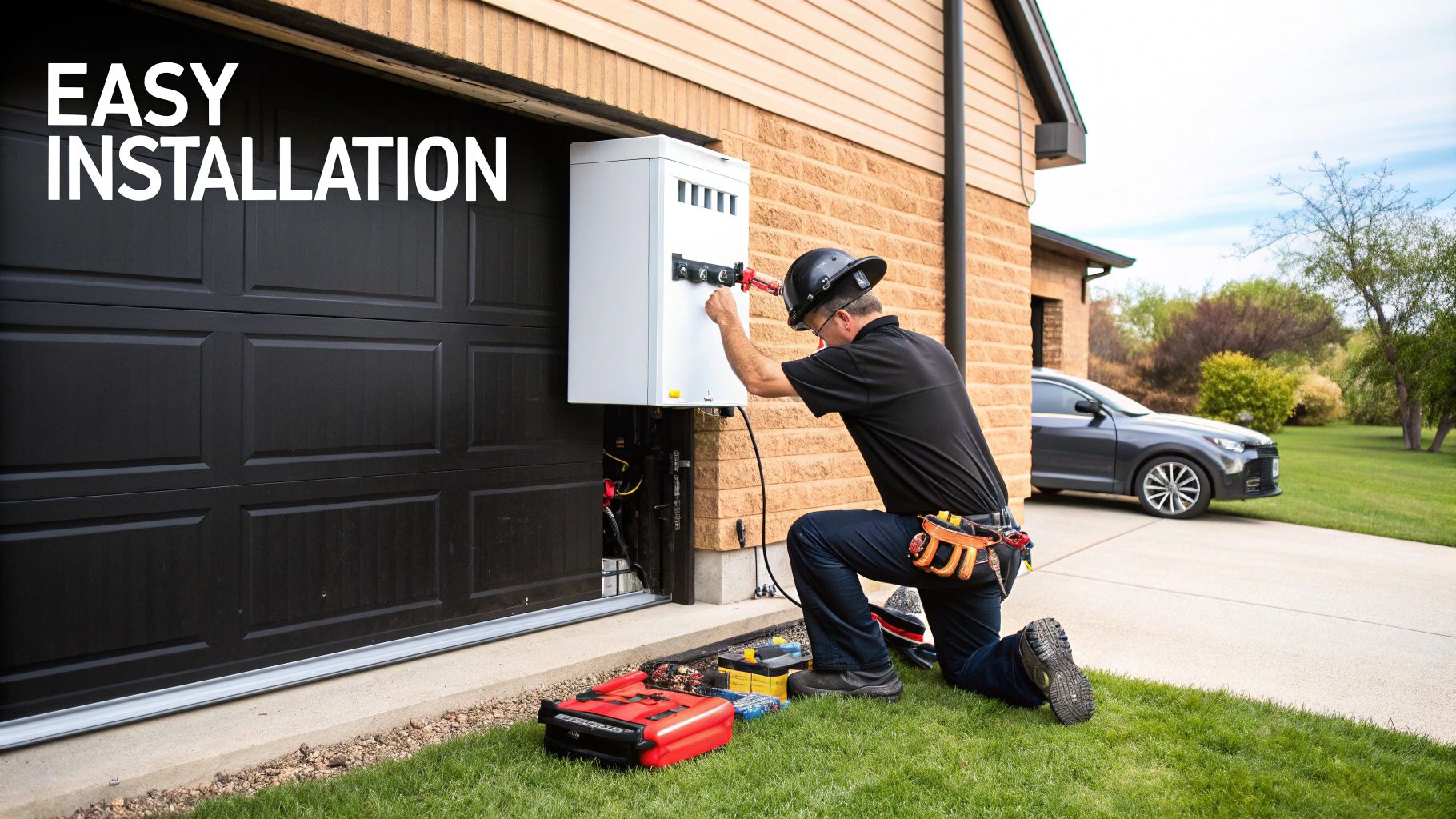
A proper residential install: load calculation and critical-loads panel decision; battery location per NFPA 855 (garage wall with vehicle-impact protection, or exterior pad with clearances from windows and doors — typically 3 feet); permits with the AHJ including the UL 9540 listing documentation; utility notification or interconnection update; physical install and torque-verified connections; commissioning with a real backup test — actually throw the main breaker and watch the house transfer; monitoring setup on the homeowner's phone; and a walkthrough of the app, the reserve settings, and what the alarm lights mean. If your installer doesn't throw the main breaker during commissioning, ask them to. That thirty-second test is the entire point of the purchase.
Safety and Compliance Are Non-Negotiable
UL 9540 listing is the permit path — no listing, no approval, full stop. Placement follows NFPA 855 spacing rules, and bedrooms and escape paths are off-limits. The disconnect and overcurrent protection guide covers what the inspector will look for on the electrical side.
Round-Trip Efficiency by Architecture: The Real Numbers
That "few points" of coupling efficiency compounds over thousands of cycles, so put numbers on it:
| Architecture | Conversion Path | Typical Round-Trip Efficiency | Annual Loss on 14 kWh Daily Cycling |
|---|---|---|---|
| DC-coupled (hybrid inverter) | Solar DC → battery DC → house AC (2 conversions) | 94–96% | ≈ 205–310 kWh lost/yr |
| AC-coupled (battery inverter) | Solar DC → AC → battery DC → house AC (3 conversions) | 89–92% | ≈ 410–560 kWh lost/yr |
| Grid-charged AC-coupled (TOU arbitrage) | Grid AC → battery DC → house AC (2 conversions) | 90–93% | ≈ 360–510 kWh lost/yr |
At a $0.30/kWh blended value, the AC-coupling penalty costs roughly $60–$100 a year on a daily-cycled system — real but rarely decisive. Retrofit simplicity usually wins that argument. The efficiency gap is decisive only in new construction, where DC-coupling costs nothing extra and pays the difference forever.
What About the Solar Side of the Pairing?
A battery sized to shift 14 kWh of evening usage needs an array that overproduces by at least that much, plus efficiency losses. Working backward from our worked example: 18.7 kWh of storable solar surplus per day requires roughly a 5–6 kW array at 4 peak-sun-hours after the house's daytime loads are served — which is why "add a battery to my existing 4 kW system" sometimes fails the math. The array was sized to the old net-metering rules, not to charging a battery under net billing. Run the production-versus-consumption shape before assuming the existing array can fill the new tank; our array sizing reference and the panel catalog cover the expansion side when it can't.
Virtual Power Plants: Letting the Utility Pay You Back
The newest line in the payback column is grid-services revenue. Virtual power plant programs pay enrolled batteries for dispatching during grid emergencies — typical programs pay per kW of committed capacity or per dispatched kWh, with event counts capped per year. Real numbers we've seen on customer agreements: $50–$150 per kW-year of committed capacity, or per-event payments in the $1–2/kWh dispatched range. A 10 kW committed battery in an active program can return $500–$1,500 a year — which changes the payback math materially where programs exist.
Read the enrollment terms with your eyes open: how many events per year, minimum state of charge guarantees after events, and whether you keep a backup reserve during dispatch season. A VPP that drains your battery ahead of a hurricane watch is a bad trade; one that respects a 30–50% resilience reserve is found money. Set the reserve, keep the revenue, sleep fine.
Maintenance: What Ownership Actually Looks Like
The good news: LFP residential batteries are nearly maintenance-free compared to the generator alternative. No oil, no exercise cycles, no fuel. The actual ownership list: keep the unit's firmware updated (most update over-the-air); keep vents and clearances clear; watch the monitoring app for cell-balance or temperature warnings; and cycle your expectations about capacity fade — a few percent in year one, then roughly 1–2% per year toward the 70% warranty floor at year ten. Winter note for cold-climate installs: most LFP packs restrict charging below freezing to protect the cells, so outdoor or unheated-garage batteries in cold snaps may accept little charge until they self-warm. That's the BMS protecting your investment, not a fault — but it's worth knowing before the first polar vortex convinces you the system is broken.
Who Should (and Shouldn't) Buy a Home Battery in 2026
Straight answer, because we lose sales telling it: buy now if you're under net-billing rates (California NEM 3.0 and similar), if outages materially threaten your household (medical equipment, well water, home business), or if you're building new and can DC-couple cheaply. Wait and watch if you're under full 1:1 net metering with a reliable grid — your economic case is weak and prices keep drifting down. And if your electrical panel needs a service upgrade anyway, bundle the battery with that project; the shared labor and permitting trims real money off both.
For the in-between cases, run your own numbers with the worked example above as the template. Fifteen minutes with your actual utility data beats any brochure, including ours. And if the math says "not yet," put a battery-ready panel in the solar design now — a main panel with busbar headroom and a reserved breaker space costs almost nothing at install and saves a $3,000 panel upgrade when the battery day comes.
Common Questions About Home Solar Batteries
How Long Will a Solar Battery Power My Home During an Outage?
Divide usable capacity by your load. 18 kWh usable runs critical loads (~750W: fridge, furnace blower, lights, internet) about 24 hours — and with solar recharging daily, effectively indefinitely through multi-day outages. Add air conditioning and runtime drops to hours; whole-home backup with central AC realistically needs 40+ kWh.
Can I Add a Battery to My Existing Solar Panel System?
Yes — AC-coupled batteries (Powerwall-class, Enphase, FranklinWH) bolt onto any existing system without touching the roof. Your PV inverter stays; the battery adds its own inverter on the house side of the panel. The main constraints are panel capacity, a place for the critical-loads wiring, and utility notification.
What Is the Lifespan of a Home Solar Battery?
LFP packs are typically warranted 10 years to 70% retained capacity, with 4,000–6,000 cycle ratings — at one cycle per day, that's an 11–16 year structural design life. Expect usable service well past the warranty, with gradually reduced capacity.
Do I Still Need the Grid If I Have Solar and Batteries?
For most homes, yes — the grid is your seasonal battery. Solar plus storage handles daily cycling and outages beautifully; two cloudy winter weeks is a different engineering problem. True off-grid homes oversize the array and battery bank substantially (see our battery bank sizing guide) and usually keep a generator for the dark stretches.
Is LFP or NMC better for home storage?
LFP for most homes: roughly double the cycle life, a wider usable depth-of-discharge window, and a stronger thermal safety profile, at a space cost that's irrelevant in a garage. NMC's density advantage matters only when wall space or weight is genuinely constrained.
How much does a home battery system cost in 2026?
Installed residential LFP storage runs about $900–$1,500 per kWh all-in. A typical 20 kWh two-unit system lands at $18,000–$30,000 before incentives, or roughly $12,600–$21,000 after the 30% federal ITC. Panel upgrades and transfer hardware can add $1,500–$4,000 — demand an itemized quote.
Get Sized Right the First Time
Send us your last 12 months of utility data and your outage priorities, and we'll return a sized configuration — power, capacity, panel implications, and itemized cost — usually with two options at different price points. Browse batteries and energy storage, the Fortress eFlex Max 5.4 kWh and Briggs & Stratton PHi 3.8 modular packs, LG RESU 10H Prime, and Powerwall-class systems, or pair with hybrid inverters for new construction. The sizing math above is the whole trick — everything else is choosing whose box you trust on the wall.