Two homeowners in the same neighborhood can request solar quotes for identical houses and receive numbers $8,000 apart — with the cheaper one sometimes being the worse deal and sometimes the better one, and no obvious way to tell which. Solar quotes are dense documents: production models, equipment schedules, financing structures, warranty stacks, and incentive assumptions, all formatted to make the issuer look good. After a decade of supplying the installers who write them and debriefing the homeowners who sign them, we can tell you the truth: quotes are comparable if you normalize five numbers and interrogate five assumptions. This guide gives you that process — for homeowners comparing bids, and for installers and EPCs who want to write quotes that win on merit instead of formatting.
Preparing for Your Solar Quote Requests
The quality of your quotes is capped by the quality of your inputs. Garbage in, glossy PDF out.
Assemble Your Energy Usage History
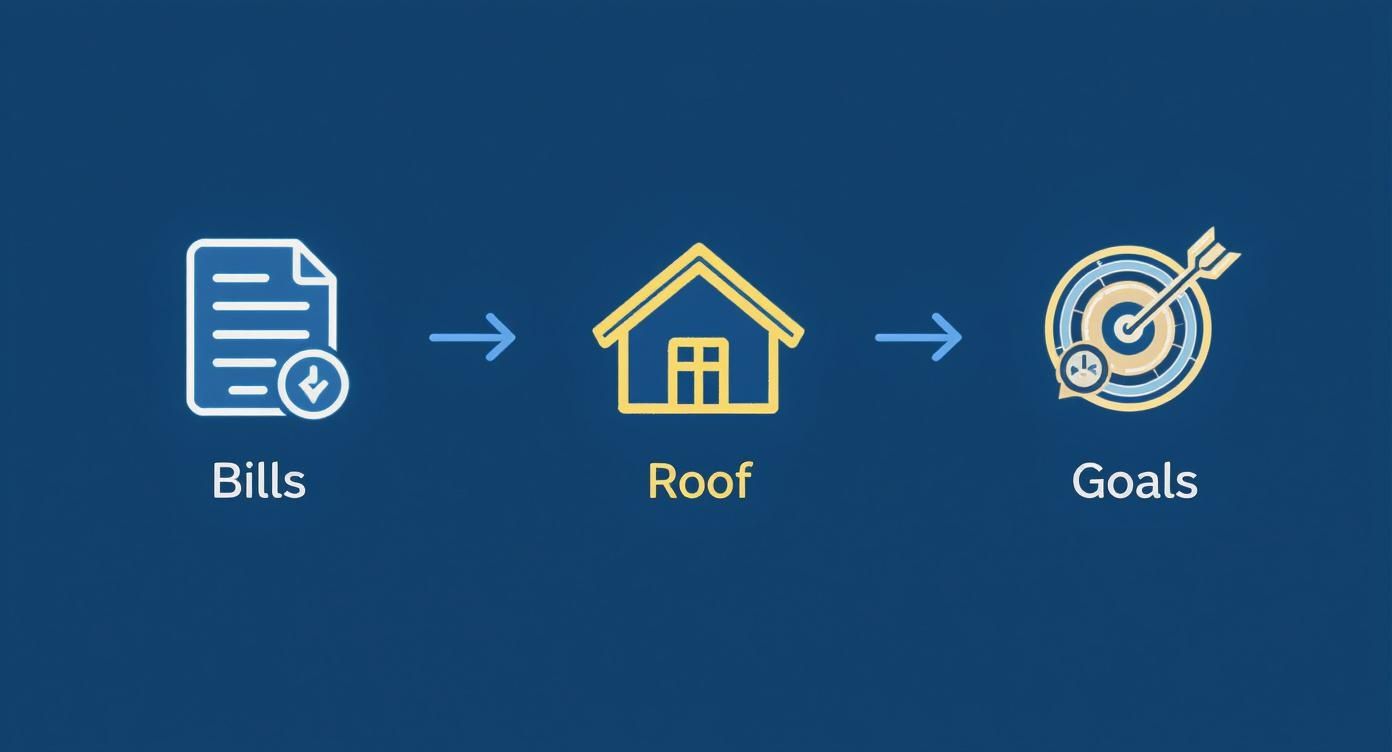
Pull twelve full months of electric bills — not the summary screen, the actual kWh per month. Annual usage sizes the system; the monthly shape reveals seasonal spikes (summer AC, winter heat) that a good designer uses to plan array orientation and any future battery strategy. If you know a big load is coming — an EV, a heat-pump conversion, a pool — say so upfront. A system sized to last year's bill with a 7kW EV charger arriving in June is undersized on day one.
Document Key Site and Property Details
- Roof age, material, and remaining life (under ten years old: fine; older: discuss re-roofing before solar)
- Electrical panel brand, bus rating, and main breaker size (photo of the panel label is gold)
- Shade sources: trees, chimneys, second stories, and their rough heights
- HOA status and any known architectural review requirements
- Utility name and rate plan — net metering rules change the entire economic model
Your Pre-Quote Information Checklist
Hand every bidder the same packet: twelve months of kWh, panel photo, roof age, shade notes, and your goal (max savings, outage backup, EV readiness, or max offset). Identical inputs make quotes genuinely comparable, and the exercise flushes out the sales operations that skip design diligence — the ones who quote from a satellite thumbnail will reveal themselves by ignoring your packet.
Define Your Primary Project Goals
"I want solar" is not a goal; it is a category. The design forks early: maximum bill offset points at the largest array the roof and the 120% rule allow; outage backup points at a hybrid inverter and battery before array size; future EV or electrification points at panel capacity and inverter headroom. Write the goal down. Every line item on the quotes you receive should trace back to it, and the ones that do not are margin, not engineering.
How to Read and Understand a Solar Quote
Key Components to Scrutinize
Normalize every quote to these five numbers before comparing anything else:
- System size (kW DC) — total module nameplate. Bigger is only better if production backs it.
- Year-1 production estimate (kWh) — and the assumptions behind it: shading percentage, weather dataset, degradation, soiling. Two quotes for the same roof should land within 5–8% of each other; an outlier is a modeling choice, and it is never the conservative one.
- Price per watt ($/W) — total cash price before incentives ÷ watts DC. Most US residential markets run $2.50–$3.50/W; the number makes a 7.6kW and an 11.4kW system comparable.
- Equipment schedule — exact module, inverter, and racking models with warranties. "Premium Tier 1 panels" is not an equipment schedule.
- Warranty stack and its servicer — module product (12–25 years) and performance (25–30 years at 84–87.5% retention), inverter (10–25 by class), workmanship (10+ years from a solvent installer), and who answers the phone for each.
Comparing Two Real-World Quotes
Here is a normalized comparison of two actual-style bids for the same house — 12,000 kWh/year, clean south roof, 200A panel:
| Line Item | Quote A | Quote B |
|---|---|---|
| System size | 9.2 kW (23 × 400W) | 10.0 kW (25 × 400W) |
| Year-1 production | 12,900 kWh (shading 3%, PR 0.82) | 14,800 kWh (shading "0%", PR 0.90) |
| Cash price / $ per W | $26,900 / $2.92 | $27,400 / $2.74 |
| Inverter | String + module-level RSD | Microinverters, 25-yr warranty |
| Module warranty | 25 yr product / 30 yr performance | 15 yr product / 25 yr performance |
| Workmanship warranty | 10 years, local service dept | 2 years, national call center |
| Production guarantee | None stated | "95% of estimate" — no remedy clause |
Quote B looks better on $/W and headline production. Read the assumptions and it collapses: zero shading on a roof with a chimney is fiction, a 0.90 performance ratio is the top of physics, and the "guarantee" has no remedy — a guarantee without a remedy is a poster. Quote A's honest model, longer warranties, and local service make it the better asset even at a higher $/W. This is why normalization precedes comparison.
The Anatomy of a Quote Document, Section by Section
Knowing where bodies get buried in a proposal PDF saves you from finding them later. The cover page is marketing — skip it. The system summary (size, production, offset percentage) is where optimistic assumptions hide; find the shading and performance-ratio inputs or demand them. The equipment schedule should list model numbers down to the revision — "or equivalent" language transfers your equipment choice to the installer's purchasing department the week of your install. The scope of work section defines what is excluded, and exclusions are where change orders breed: trenching, panel upgrades, drywall repair after conduit runs, permit fees, and HOA documentation all live or die here. The financial page deserves a calculator: for financed deals, compute total payments over the loan term and compare against the cash price — the gap is your true cost of financing, and it routinely shocks people. Finally, the contract terms: cancellation window (three days federally for door-to-door sales, longer in some states), change-order process, and dispute resolution. Twenty minutes with these five sections beats an hour with the cover art.
Financing Structures: The Second Quote Inside the First
Every financed solar deal is two transactions — the system and the money — and each deserves its own comparison. The structures differ more in lifetime cost than the hardware ever will:
| Structure | True Cost Drivers | 25-Year Economics | Gotchas |
|---|---|---|---|
| Cash | None — price is price | Best; 6–10 yr payback typical | Opportunity cost of capital |
| Solar loan (low advertised APR) | Dealer fee 20–30% embedded in principal | Good if fee-free; poor at high fees | Compare financed price to cash price — the delta is the fee |
| Home equity (HELOC / HE loan) | Real interest, no dealer fee | Often the best financed path | Lien on the home; closing costs |
| Lease | Escalator (0–2.9%/yr), term 20–25 yr | Modest savings; no tax credit to you | Home-sale transfer friction; buyout schedules |
| PPA | Per-kWh rate vs. utility rate trajectory | Modest; savings depend on utility rate growth | Same transfer friction; production risk usually theirs |
The single highest-value question in financed solar: "What is the cash price, and what is the financed price, for identical equipment?" A $28,000 cash system quoted at $36,000 financed is carrying $8,000 of dealer fee, and no APR makes that arithmetic good. Homeowners with home equity should price a HELOC against the solar loan almost every time.
Price Benchmarks: What Systems Actually Cost

Benchmarks discipline both sides of the table. Current cash-market ranges before incentives, all-in with quality equipment:
| System | Typical Size | Cash Price Range | $/W | Notes |
|---|---|---|---|---|
| Small residential | 4–6 kW | $13,000–$20,000 | $3.00–$3.60 | Fixed costs (design, permit, mobilization) dominate small systems |
| Average residential | 7–11 kW | $19,000–$35,000 | $2.60–$3.30 | The market's sweet spot; most competitive pricing |
| Large residential / small commercial | 12–25 kW | $32,000–$70,000 | $2.40–$3.00 | Economies of scale engage |
| Add 10 kWh battery | — | +$9,000–$14,000 installed | — | Cheaper at initial install than any retrofit |
| Ground mount premium | — | +$0.15–$0.35/W | — | Civil work, trenching, structure |
Geography moves these bands: high-cost labor markets (California, the Northeast) push the top of each range; competitive Sun Belt markets push the bottom. What should NOT move the number: the salesperson's month-end. Any price that expires tonight was manufactured this morning.
Timeline Expectations: What a Quote Should Say About When
A complete proposal states a timeline, and honest timelines have honest ranges: site survey within one to two weeks of signing, design approval one week after that, permits two to eight weeks depending on the AHJ, installation one to three days, inspection within two weeks, and utility PTO anywhere from three days to eight weeks. Contract-to-PTO lands at six to fourteen weeks in most markets. Two timeline red flags: "we can install next week" from a company with no permit pulled yet (they cannot, legally, in most jurisdictions), and no PTO discussion at all (PTO limbo is where unhappy solar customers live). Build your own calendar expectations from the quote's stated process, and hold the installer to the milestones they printed.
How to Actually Compare Solar Bids
Digging into Equipment Quality
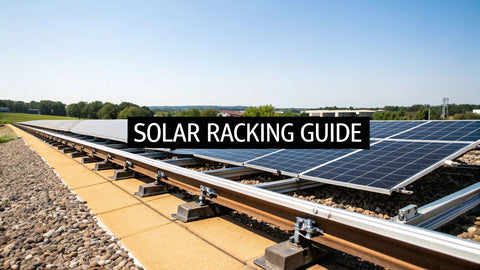
Run the equipment schedule through three filters. Modules: manufacturer financial strength (a 25-year warranty is only as good as the company behind it), degradation rate, and efficiency relative to your roof constraints — space-limited roofs justify premium watts; open roofs justify value watts from lines like JA Solar, Trina, or Mission Solar in our panel catalog. Inverter: the architecture decision (string vs. micro vs. hybrid) drives 25 years of monitoring, expansion, and service economics — our inverter pricing guide breaks down the tiers. Racking: listed, engineered systems (UL 2703) with the design letter included in the permit package; see the racking guide for what to demand.
Verifying Installer Credentials and Warranties
The installer is the most perishable part of your warranty stack — module makers outlive installers regularly. Verify: active contractor's license in the company's own name, current insurance certificates from the insurer, years under the current entity, NABCEP-certified staff on the install side, and a real service department. Our installer vetting guide walks the full checklist. On workmanship warranties, two clauses matter most: the term (ten years is the healthy-market standard) and the response commitment (a warranty without a response time is a mood, not a contract).
Spotting Hidden Costs and Maximizing Incentives
Common Unseen Project Expenses
| Hidden Cost | Typical Range | How It Appears (or Doesn't) |
|---|---|---|
| Main panel upgrade | $1,800–$4,500 | Surfaced after the site survey as a "necessary addition" |
| Re-roofing before install | $8,000–$20,000+ | Ignored by the quote, discovered by the crew |
| Tree removal / trimming | $500–$3,000 | Buried in the production model's optimistic shade assumptions |
| Structural repair (sistering rafters, decking) | $500–$5,000 | Change order after attic inspection |
| Trenching for ground mounts / detached structures | $800–$3,500 | "Excludes trenching" in fine print |
| Utility interconnection / meter fees | $100–$800 | Passed through at PTO |
| Dealer fees in financed deals | 20–30% of principal | Embedded in the "low APR" loan |
Ask every bidder one disarming question: "What is not included in this price?" Good installers answer with a list; the others answer with a pause.
Securing Every Available Incentive
The federal clean-energy credit (30% at the time of writing — verify current law with a tax professional, as these provisions have changed repeatedly) covers equipment and labor, including paired storage. Beyond it: state tax credits, utility rebates, sales and property tax exemptions, SRECs in eligible markets, and net-metering structure itself, which is the largest economic lever of all. A quote that does not model your actual utility tariff is a brochure, not a proposal. Batteries paired with solar qualify for the federal credit, which changes the storage math meaningfully — browse battery options and hybrid inverters with that 30% in the model.
Smarter Procurement for Installers and EPCs
If you are the one writing quotes, the reverse discipline applies. Win on normalization: publish your assumptions (shading, PR, degradation) on page one — sophisticated buyers and honest competitors both reward it. Spec equipment you can actually service: two inverter platforms, two module lines, one racking ecosystem, deep enough in your BOS supply chain that a nine-week lead time never stalls a signed job. And price your service department into the quote; the installer who loses a bid by $400 because a real warranty costs real money and the winner promises the moon for free has watched this movie before — the company with the service line gets the year-nine call either way, but only one of them got paid for it.
De-Risking Your Projects with Deep Inventory
Quote validity lives and dies with supply. A proposal priced against allocation-constrained inventory is a re-quote waiting to happen, and re-quotes kill close rates and margin. Working with distribution that holds real stock — modules, inverters, and racking on the shelf — converts your quoted price from an estimate into a commitment. That is the entire business model on our side of the counter, and we built it because we spent years on your side of it.
Negotiation Leverage That Actually Works

Solar quotes negotiate differently than car prices — the leverage is in scope and assumptions, not sticker theater. The moves that consistently win value: Competing written bids remain the strongest lever; a real competitor's PDF is worth more than an hour of haggling. Scope normalization — ask the higher bidder to match the lower bidder's equipment, or the lower bidder to match the higher's warranty term; the repricing reveals where each margin lives. Timing flexibility — installers with a slow month will trade price for schedule freedom, especially in the winter shoulder season when crews need work. Bundling real scope — adding a battery or a panel upgrade to the initial contract is legitimately cheaper than either as a standalone project later, because mobilization, permitting, and interconnection are already paid. And the move that never works: beating a quality installer below their cost. You will not get a better system; you will get a worse version of the same contract, delivered by the B-team on a Friday.
A Second Worked Example: The Battery Question
Same house as before — 12,000 kWh/year — but the owner wants outage protection. Quote C: 9.2 kW + string inverter, with a note that batteries "can be added later," $26,400. Quote D: 9.2 kW + hybrid inverter + 10 kWh battery, $36,800. The normalized read: Quote D's incremental cost for storage readiness and 10 kWh of storage is $10,400 — fair against the $9,000–$14,000 benchmark, and it includes the critical-loads panel work. Quote C's "later" is the expensive word in the document: retrofitting storage behind that string inverter means an AC-coupled battery inverter, a second wall of equipment, a second permit, and an interconnection revision — $13,000–$18,000 for the same capability, if the local utility even approves the revision quickly. When a quote defers a feature you know you want, price the deferral, not just the feature. "Later" in solar routinely costs 40–70% more than "now."
After You Sign: Managing the Project to PTO
The signed quote becomes a project, and the homeowner who manages it lightly gets a better result. Keep the one-page milestone list from the proposal and check it weekly. Attend the site survey if you can — the measurements taken that day drive everything downstream, and your answers about future loads and preferences are design inputs. On install day, verify the equipment model numbers on the pallets against the contract before anything goes on the roof; substitutions happen, and the time to catch one is on the driveway, not on the ridge. At commissioning, collect the turnover package before the final payment clears: as-builts, permit sign-offs, warranty registrations, monitoring credentials, and the PTO letter when it arrives. None of this is adversarial — good installers expect it and the great ones provide it unasked. It is simply how a five-figure construction project on your house deserves to be run.
Commercial and EPC Quote Dynamics
Above residential scale, the quote becomes a proposal and the rules shift. Commercial buyers compare on levelized cost of energy and NPV over the contract term, not $/W alone — a design producing 4% more kWh per installed watt beats a cheap design every year for twenty-five years. Bid documents should fix the variables: a defined module class, inverter class, racking standard, production modeling methodology (named software, named weather file, disclosed loss tree), and warranty minimums, so the bids that come back differ on execution and price rather than on quietly different products. Three commercial-specific items deserve explicit line items in any RFP: the O&M plan and its price for years one through ten (unpriced O&M is unbudgeted O&M), the production guarantee's remedy structure (liquidated damages per kWh shortfall, or nothing), and the interconnection cost responsibility — utility upgrade charges landing on the owner's side of the meter have sunk more commercial projects than any equipment failure. EPCs pricing portfolios should additionally demand unit-price schedules for change-order conditions (rock excavation, unsuitable soils, structural remediation), because the base bid is a fiction until the site tells the truth.
Smaller commercial buyers — the warehouse owner, the church board, the farm operation — sit awkwardly between the residential and utility playbook. For them the residential normalization discipline still applies, plus one addition: demand the pro-forma cash flow with the current tariff, the degradation curve, and the escalator assumptions printed. A commercial solar proposal without a printed cash-flow model is a brochure with a signature line.
The Site Survey: Where Quote Promises Meet Physical Reality
Every number on a quote is provisional until the site survey, and the survey's thoroughness predicts the project's smoothness. A real survey includes roof measurements and condition photos, an attic structural check (rafter size, spacing, and any prior repairs), the electrical panel opened and photographed (bus rating, breaker spaces, brand — some legacy panel brands carry known issues that change the interconnection plan), a shade analysis with a physical site tool or verified LIDAR-grade data, and conduit path planning. Satellite-only designs are legitimate for preliminary quotes but must be validated before contract finalization; vent stacks, skylights, and panel surprises move arrays and budgets. Ask each bidder directly: "Does this price survive your site survey unchanged?" The ones who answer with their change-order policy are the honest ones — every installer hits surprises; the difference is whether surprises become gouging opportunities or fair, pre-agreed unit prices. Get the change-order rate schedule in the contract before signing, while everyone is still smiling. It is two lines of text that can save you four figures, and any installer who balks at providing it has told you something important about how they price surprises.
Why the Cheapest Quote So Often Costs More
There is a floor below which a quote cannot be honest. Panels, inverters, racking, wire, permits, insurance, and licensed labor cost what they cost; a bid dramatically under market is buying those things with something removed — thinner warranties, subcontracted crews paid by speed, equipment from distressed inventory, or a business model that does not include answering the phone in year four. The removal is never labeled. It surfaces later, as a leak with no workmanship warranty behind it, an inverter nobody will service, or a production shortfall nobody modeled. We have supplied this industry long enough to watch the lifecycle: the deep-discount operator wins the bids, the service tickets accumulate, the entity folds, and the orphaned customers call manufacturers and distributors looking for anyone who will touch the system. Pay the market rate to a solvent company with a service department. In a 25-year asset, the installer is a component — and it is the one component no manufacturer warranty can replace.
Common Questions About Solar Quotes
How many solar installation quotes should I get?
Three. Below three you cannot see the market's shape; above five you are collecting noise. If three bids diverge wildly on system size or production, get a fourth specifically to arbitrate that discrepancy.
What is a good price per watt for a solar system?
Most US residential markets run $2.50–$3.50/W before incentives for quality equipment and a real warranty. Below $2.25/W, interrogate what was removed; above $3.75/W, interrogate what was added. Batteries, panel upgrades, tile roofs, and ground mounts all move the number legitimately.
Is the most expensive solar quote always the best?
No — and the cheapest is not automatically the worst, either. Price correlates with quality only after you normalize the five numbers and verify the assumptions. A premium is worth paying for longer warranties, better service infrastructure, and honest modeling; it is not worth paying for marketing budgets.
How can I tell if a solar quote is legitimate?
Four tests: exact equipment model numbers on the schedule, licensing and insurance that verify independently, disclosed production assumptions with a named weather dataset, and a payment schedule that never front-loads more than 10–20% before materials arrive. Bonus test: ask what is not included. The answer quality tells you everything.
Should production guarantees sway my decision?
Only if they have teeth. A guarantee with a defined remedy — a check for the shortfall, a service obligation — is worth real money. A guarantee without a remedy clause is a poster on the wall. Read for the remedy, not the percentage.