Updated September 2026 — refreshed against the live PES catalog; product pricing verified 2026-09-26.
Battery Energy Storage System: The Complete Guide to How BES Systems Work, Applications, and ROI
Chemistries, sizing math, cycle life, degradation, NEC Article 706, and the honest economics of storing your own power.
A battery energy storage system (BESS or BES) is deceptively simple to describe — a box that stores electricity — and genuinely complicated to buy well. Chemistry decides safety and lifespan. Capacity sizing decides whether the lights stay on for hours or days. The inverter architecture decides what the battery can even run. And the economics decide whether any of it pencils. We've sized battery banks for off-grid cabins, grid-tied homes chasing time-of-use arbitrage, and small commercial peak-shavers, and the mistakes are always the same four: wrong chemistry for the duty cycle, undersized inverter, fantasy depth-of-discharge assumptions, and forgetting that batteries degrade on a calendar as well as a cycle count. This guide kills all four mistakes with math.
What is a Battery Energy Storage System and How It Works
Every battery energy storage system, from a 5 kWh wall unit to a containerized commercial bank, is the same four subsystems wearing different-sized clothes:
Integration with Solar, Grid Assets, and BMS Software
- Cells and packs. The electrochemical storage itself, organized into modules and racks at a DC bus voltage — 48V class for residential and off-grid, 400–800V for hybrid residential and commercial, 1,000–1,500V DC for utility scale.
- Battery management system (BMS). The referee. Monitors every cell group's voltage, temperature, and current; balances cells; and — the part that saves your investment — disconnects the pack before over-charge, over-discharge, or thermal events turn into insurance claims. Never buy a lithium pack without a documented BMS, and never bypass one. We've seen the aftermath; it smells expensive.
- Power conversion system (PCS). The inverter/charger that turns battery DC into household AC and back. Its continuous and surge wattage ratings — not the battery's kWh — decide what you can actually run. A 20 kWh battery behind a 5 kW inverter will not start your 4-ton AC; it will run your fridge, lights, and internet for a day and a half.
- Energy management system (EMS). The software layer that decides when to charge, discharge, hold for backup, or sell to the grid. This is where time-of-use arbitrage and solar self-consumption strategies actually live.
Keep the architecture in mind while shopping, because spec sheets blend these subsystems shamelessly. "10 kW / 20 kWh" tells you the PCS and the pack are different numbers doing different jobs — power (kW) is the size of the pipe, energy (kWh) is the size of the tank.
Lithium-ion variants: LFP vs NMC/NCA, safety, and cost considerations
In 2026 the stationary-storage chemistry debate has a clear winner for almost every application we touch. Lithium iron phosphate (LiFePO4 or LFP) took over residential and commercial stationary storage because it trades a little energy density — irrelevant in a garage — for safety, cycle life, and cost. Nickel manganese cobalt (NMC) still powers most EVs and some legacy wall units where density matters. Lead-acid and its AGM/gel variants survive at the budget and legacy end, where upfront cost trumps everything and the owner accepts replacement cycles. Flow batteries remain a commercial niche.
| Attribute | LFP (LiFePO4) | NMC Lithium | AGM / Gel Lead-Acid | Flow (Vanadium) |
|---|---|---|---|---|
| Cycle life @ 80% DoD | 6,000–10,000 | 2,000–4,000 | 400–800 (at 50% DoD) | 10,000+ |
| Usable DoD | 90–100% | 90–95% | 50% recommended | ~100% |
| Thermal runaway risk | Very low | Moderate | Minimal (off-gassing instead) | Minimal |
| Energy density | Moderate | High | Low (heavy!) | Very low |
| Round-trip efficiency | 94–96% | 94–96% | 80–85% | 70–80% |
| $/kWh (cells, 2026) | Lowest | Moderate | Low upfront, high lifetime | High |
| Best fit | Residential, C&I, off-grid | EVs, space-constrained | Budget backup, legacy systems | Long-duration C&I |
The lead-acid row deserves emphasis because it still seduces budget buyers: a "cheap" 10 kWh AGM bank delivers only ~5 kWh usable at the 50% depth-of-discharge that preserves its 400–800 cycle life. The LFP bank at 90%+ DoD delivers 9+ kWh usable through 6,000+ cycles. Per delivered lifetime kilowatt-hour, LFP beats AGM by a factor of three to five, which is why our LiFePO4 inventory outsells AGM for new builds by a wide margin. Lead still earns its place for starter duty and legacy systems — our lead-carbon off-grid options bridge the gap for cold climates.
Sizing a BESS is one formula with three fudge factors, and the fudge factors are where sales decks lie:
The sizing formula
Usable kWh needed = (Daily backup load in kWh × Days of autonomy) ÷ (DoD × system efficiency)
Worked example — critical-loads backup for a Joliet-area home: 8 kWh/day of fridge, furnace blower, sump, lights, and internet × 2 days of autonomy ÷ (0.90 DoD × 0.92 efficiency) = 19.3 kWh of nameplate battery. Call it a 20 kWh bank.
Now the discipline. First, measure the load — a week of smart-plug or whole-home monitor data on the circuits you actually intend to back up. Nameplate math ("fridge = 700W") overstates duty-cycle loads and understates starting surges; measured data settles both. Second, be honest about autonomy: two days covers most grid events; off-grid design uses three to five days plus a generator for the statistical tail. Third, derate the bank for temperature — lithium capacity and, more critically, charge acceptance collapse below freezing, which is why batteries live indoors or in conditioned enclosures in northern climates.
| Backup Target | Typical Daily Load | 1-Day Bank | 2-Day Bank | Notes |
|---|---|---|---|---|
| Fridge + lights + internet + phones | 3–4 kWh | 5 kWh | 10 kWh | The "keep the house sane" tier |
| Above + furnace blower + sump | 7–9 kWh | 10 kWh | 20 kWh | Winter-storm tier; 10 kWh and 15 kWh classes |
| Partial home incl. well pump | 12–16 kWh | 15 kWh | 30 kWh | Rural tier; pump surge sizes the inverter |
| Whole home, no AC | 20–30 kWh | 30 kWh | 60 kWh | 40 kWh+ territory |
| Whole home with AC | 35–60 kWh | — | — | Generator hybrid is the honest answer |
For interactive sizing, our battery sizing calculator runs this exact formula, and the home battery bank sizing guide works the off-grid version with solar recharge math. The off-grid storage calculation adds the solar-array pairing side.
Batteries age two ways: by cycles (throughput) and by calendar (time and temperature). Quality LFP cells retain 80% capacity after 6,000–10,000 cycles at 80% DoD — at one cycle per day, that's 16–27 years of cycling, which means calendar aging and electronics lifespan usually end the story first. The practices that maximize lifespan:
| Factor | Effect on LFP Lifespan | Field Practice |
|---|---|---|
| Depth of discharge | 100% DoD cycles age ~2× faster than 80% | Set reserve to 10–20%; use the 20-80 rule for max life |
| Temperature | Sustained 35°C+ doubles aging rate; charging below 0°C plates lithium | Indoor or conditioned install; BMS low-temp charge cutoff |
| Charge rate | 1C+ sustained charging accelerates wear | Keep to 0.2–0.5C for daily cycling |
| Float at 100% | Weeks at full charge stress cells | Backup-only systems: float at 80–90% |
| Calendar age | ~2–3%/yr capacity fade even unused | Buy for today's loads; expansion later beats oversizing now |
One caveat on those cycle-life numbers: they're laboratory conditions — 25°C, controlled C-rates, perfect BMS behavior. Field life runs shorter; we budget customer systems at 70–80% of lab cycle counts and they're still decade-plus assets. Treat the spec sheet as the ceiling and the installation environment as the discount that decides what you actually keep.
Operations, Maintenance, and End-of-Life Recycling
The 20–80 rule deserves its reputation: cycling between 20% and 80% state of charge roughly doubles cycle life versus full swings. For backup-critical systems we don't enforce it — availability beats longevity when the ice storm hits — but for daily TOU-arbitrage cycling, the 20–80 window is free lifespan. Our battery life extension guide has the full maintenance playbook.
Residential storage economics in 2026 run $400–700 per usable kWh installed for AC-coupled retrofits, less for DC-coupled new builds and DIY-friendly 48V rack systems. Whether that pencils depends entirely on which job the battery does:
| Application | Mechanism | Typical Payback | Verdict |
|---|---|---|---|
| TOU arbitrage | Buy off-peak, use at peak ($0.10–0.30/kWh spread) | 6–12 yrs | Pencils in high-spread markets (CA, AZ, NE) |
| Solar self-consumption | Store excess solar vs. wholesale export | 7–12 yrs | Pencils where export pays pennies |
| Demand-charge management (C&I) | Shave 15-min demand peaks | 3–6 yrs | Best economics in storage, period |
| Backup only | Insurance against outage losses | Not financial | Value = what an outage costs you |
| Off-grid enabler | Replaces grid connection entirely | vs. line-extension cost | Pencils past ~1/4 mile of line extension |
The comparison shoppers should run: battery versus generator for backup duty. A 15 kWh battery with a 7 kW inverter runs critical loads silently for a day or two and cycles daily for arbitrage; a standby generator runs the whole house for a week on natural gas but sits idle between outages. Increasingly the answer is both — battery for the two-hour events and the daily economics, generator for the four-day ice storm. The EG4 vs. Powerwall comparison benchmarks the two residential philosophies we sell most.
Installation and Code: NEC 706 Essentials

Energy storage graduated to its own NEC article — 706 — and the rules that bite installers most often:
- Listing. NEC 706.5 and UL 9540 listing requirements mean assembled-in-the-garage lithium banks face inspection resistance in many jurisdictions. Listed systems sail; DIY builds should expect scrutiny. Our server-rack batteries with UL1973 cell certifications and documented BMS satisfy most AHJs when assembled per instructions.
- Location limits. Residential energy limits per location (the 20 kWh per location default in recent code cycles, with spacing rules between units) push big banks into multiple separated groups. Garages need vehicle-impact protection — bollards or elevation.
- Disconnects and labeling. A readily accessible disconnect (706.15) and placards at the service. Firefighters want to know where the electrons live before they ventilate your roof.
- Interconnection. Grid-interactive systems fall under NEC 705 alongside solar; the utility interconnection agreement treats storage like generation, with anti-islanding requirements.
- UL 9540A test data. AHJs increasingly request the thermal-runaway propagation test report for the specific model. Listed residential products publish it; ask before you buy.
Lithium batteries do not charge below freezing.
Charging lithium cells below 0°C plates metallic lithium on the anode — permanent, cumulative, and a fire risk later. Any lithium bank in an unconditioned space needs BMS low-temperature charge cutoff plus a heating solution, or it lives indoors. We've autopsied garage-bank failures from exactly this; the cells don't fail loudly, they fail in February.
Build the rest of the system
How the battery connects to the solar array shapes efficiency, cost, and retrofit difficulty. AC-coupled systems put a battery inverter alongside your existing solar inverter; solar AC feeds the house, and the battery inverter converts to DC for charging and back for discharge. Two conversions cost roughly 5–8% round-trip efficiency, but installation is independent of the solar system — the standard answer for adding storage to an existing array. DC-coupled systems charge the battery directly from the DC bus through a hybrid inverter, skipping a conversion and gaining efficiency; they're the right answer for new builds and require replacing or co-specifying the solar inverter. The practical counter guidance: retrofitting storage to existing solar means AC coupling in almost every case; building new means pricing a hybrid inverter like the units in our hybrid inverter overview before defaulting to separates.
| Attribute | AC-Coupled | DC-Coupled (Hybrid) |
|---|---|---|
| Round-trip efficiency | ~88–92% | ~94–97% |
| Retrofit to existing solar | Easy | Requires inverter swap |
| New-build cost | Higher (two inverters) | Lower (one hybrid) |
| Solar keeps producing in outage | Yes, with compatible pairing | Yes, natively |
| Best scenario | Adding storage later | New solar + storage builds |
Two philosophies split the residential market. All-in-one units — the Powerwall class — integrate battery, inverter, BMS, and EMS in a listed enclosure with one warranty and one app. They cost more per kWh, install faster, and transfer the engineering burden to the manufacturer. Component builds — a 48V rack of LiFePO4 modules behind a hybrid inverter — cost 30–50% less per kWh, expand module-by-module, and let you service any part without replacing the whole. The trade is labor and responsibility: component builds want an owner or installer who understands DC torque specs, CAN-bus configuration, and firmware updates. We sell both happily; the wrong choice is buying a component system expecting appliance simplicity, or paying appliance pricing for a build you were equipped to assemble. The 5–15 kWh and 15–30 kWh rack lines cover the component path; integrated units like the Powerwall and LG RESU represent that class.
If residential storage is a comfort purchase with economic upside, commercial storage is the reverse — pure economics with a resilience bonus. Demand charges punish commercial accounts for their worst fifteen minutes each month; a battery that shaves 100 kW off the peak can cut four figures from a monthly bill in high-tariff territories. The 100–200 kWh commercial-and-industrial class exists precisely for this duty: containerized or cabinet LFP systems with three-phase PCS, EMS software that learns the building's load shape, and paybacks that routinely land under five years in the right tariff. Add backup operation and the same asset carries the building through outages between peak events — dual-use assets are where storage ROI stops being a spreadsheet argument and starts being obvious.
The demand-charge mechanics deserve one concrete walkthrough. Most commercial tariffs bill the highest 15-minute average demand each month, anywhere from $10 to $30+ per kW. A bakery whose ovens and HVAC coincide at 6 a.m. might peak at 180 kW for one interval while averaging 60 kW the rest of the month — paying demand charges on triple its typical draw. A 60 kW / 120 kWh battery discharged through just that morning coincidence caps the grid draw at 120 kW; at $18/kW demand pricing, that's over $1,000 saved that month and every month the pattern repeats. The EMS earns its keep by learning when the coincidence happens — which is why commercial storage quotes should always include the tariff analysis, not just the hardware.
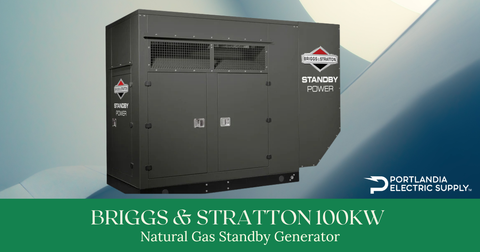
Small-commercial buyers should run one more comparison before committing: storage versus a commercial standby generator. For pure outage protection measured in days, diesel or gas wins on dollars per day of autonomy. For demand management, power quality, and the two-hour events, storage wins silently and cycles profitably between outages. The hybrid — battery for peaks and short events, generator for the long tail — is increasingly the standard spec we see from engineers who've run both sets of numbers.
Measure before you size
A week of monitored data on backup circuits beats every rule of thumb. Identify starting surges — well pumps, compressors, AC — because they size the inverter, not the battery.
Separate power from energy
kW runs things; kWh runs them longer. Confirm both numbers on any quote and map them to your load list and autonomy target.
Verify listing and test data
UL 9540 listing for the system, UL 1973 for cells/packs, UL 9540A propagation report available on request. Your AHJ and insurer will ask; have the answers before the truck arrives.
Plan the thermal environment
Indoors, conditioned space, or heated enclosure for lithium in cold climates. Garages work with low-temp charge protection; unheated sheds don't.
Read the warranty's throughput clause
"Ten years" often hides a throughput cap (e.g., 37 MWh) or a cycle cap. Daily-cycling TOU applications hit throughput caps years before the calendar does — do the division before signing.
Confirm expansion path
Modular systems let you add capacity as loads grow. Verify the maximum stack size and whether adding modules later requires matching firmware vintages.
Warranty photos teach faster than spec sheets. The recurring BESS failures crossing our counter: frozen-charge damage in unheated garages, where the BMS either blocked charging (best case) or didn't (plated cells, swollen modules by spring); overloaded inverters, where a 20 kWh bank behind a 4 kW inverter couldn't start the well pump the buyer assumed it would — energy and power confusion again; imbalanced parallel strings in DIY 12V series builds, where mismatched cable lengths turned one battery into the pack's workhorse and killed it in eighteen months; and firmware orphans, where a discount brand's app company folded and the battery became a brick with good cells. Every one of these is a purchasing or installation decision, not a technology flaw. Buy documented BMS, torque parallel interconnects identically, keep lithium warm, and pick brands whose business model survives your battery's warranty.
The monitoring habit closes the loop. Modern systems report cell voltages, temperatures, and cycle counts to an app; the five-minute monthly review — any cell group drifting, any temperature anomaly, cycle count versus warranty throughput cap — catches problems while they're still warranty claims instead of replacements. Storage is the only major home system that tells you exactly how it's dying, months in advance, for free. Read the dashboard.
Three trends worth planning around even if you buy today. Vehicle-to-home (V2H) turns an EV's 60–100 kWh pack into the biggest battery most homes will ever own; bidirectional chargers are shipping and utilities are piloting interconnection rules. If an EV is in your driveway's future, a hybrid inverter with V2H-ready architecture is cheap insurance. Second-life EV packs — retired vehicle batteries at 70–80% capacity — are entering stationary channels at steep discounts; they make sense for non-critical cycling duty where degraded capacity is priced in, less sense for life-safety backup. Sodium-ion is the chemistry to watch: worse density than LFP, better cold behavior, and potentially cheaper at scale; early products are appearing in the 48V class now. None of this argues for waiting — storage bought today starts earning or protecting today — but it argues for modular systems that expand and accept firmware updates gracefully.
What is a battery energy storage system (BESS)?
An integrated system of battery cells, a battery management system, a power conversion system (inverter/charger), and energy-management software that stores electricity for later use — from residential wall units to containerized commercial banks.
How long do home battery systems last?
Quality LFP systems retain 80% capacity through 6,000–10,000 cycles — 16–27 years of daily cycling — with 10-year warranties standard. Calendar aging and inverter electronics typically define real-world end of life before the cells do.
How many kWh of battery do I need to back up my home?
Critical loads (fridge, furnace blower, sump, lights) typically need 8–10 kWh per day; whole-home backup without AC needs 20–30 kWh per day. Multiply by days of autonomy and divide by usable depth of discharge (~0.9 for LFP).
LFP or NMC for home storage?
LFP for stationary storage, nearly always: longer cycle life, lower thermal risk, lower cost. NMC's density advantage matters in vehicles, not garages.
Can a battery replace a generator?
For short outages and daily economics, yes. For multi-day events, batteries run out and generators don't — a 15 kWh battery is hours-to-days of critical loads, while a natural-gas standby runs indefinitely. Many homes now run both.
Is battery storage worth it financially?
Yes in three cases: time-of-use markets with wide peak/off-peak spreads, solar systems paid pennies for exports, and commercial demand-charge management (the strongest case, at 3–6 year paybacks). Pure backup value is insurance math — what does an outage cost you?
Size it with us before you buy it
Send us your load list and usage profile. We'll spec the chemistry, capacity, inverter, and enclosure — and tell you honestly if a generator fits better.
Shop Battery StorageNeed pricing or availability on anything in this guide?
Portlandia Electric Supply dropships direct from the manufacturer — most items Ship Direct with lead times stated up front, no surprises.
Get a quote from PESBulk, pallet and contractor pricing available.