Briggs & Stratton has built small engines for over a century, and their generator catalog now stretches from 1,800W inverter portables to 60kW liquid-cooled standby units. That range is the problem: "a Briggs generator" could mean a $500 camping machine or a $15,000 whole-house system. This buyer's guide sorts the lineup by job, gives you the sizing math our counter staff uses, and flags the traps we see customers walk into — so the unit you buy is the unit you needed. Everything here applies across the Briggs & Stratton catalog we stock.
The Briggs & Stratton lineup, sorted by job
| Series | Output class | Fuel | Best fit |
|---|---|---|---|
| P-series / PowerSmart inverter portables | 1,800–4,500W | Gasoline | Camping, tailgates, electronics-safe power, one fridge in an outage |
| Elite / Q-series open-frame portables | 3,500–9,500W | Gasoline | Job sites, essential-circuit home backup through an interlock |
| PowerProtect air-cooled standby | 10kW / 13kW / 18kW / 22kW / 26kW | NG or LP | Automatic home backup, whole-house at the top of the range |
| Liquid-cooled standby | 35kW–60kW+ | NG / LP / diesel | Large homes, small commercial, light industrial |
Pick the row by duty cycle, not by budget. Anything running more than a couple hundred hours a year belongs in the standby rows — portables are rated for intermittent duty and their engines show it if you ask them to be prime power.
Sizing: the worksheet math that prevents buyer's remorse
Two numbers define every generator: running watts and starting (surge) watts. Motors multiply. A refrigerator compressor pulls 4–6× its running current for a half-second; a well pump, 3×; a central AC condenser, 3–5× unless it has a soft starter. Size the machine so running watts cover your simultaneous load and surge watts cover the running total plus the single largest motor start.
| Typical home load group | Running watts | Starting watts | Minimum Briggs class |
|---|---|---|---|
| Fridge + lights + phone chargers + router | ≈ 1,000 | ≈ 2,200 | 2,200W inverter portable |
| Above + furnace blower + sump pump | ≈ 2,500 | ≈ 5,500 | 5,500–7,500W open-frame |
| Above + well pump + kitchen circuits | ≈ 4,500 | ≈ 9,000 | 10–13kW standby |
| Whole house + 3–4 ton central AC | ≈ 9,000–14,000 | ≈ 17,000–21,000 | 18–22kW standby |
| Large all-electric home / small business | 16,000+ | 25,000+ | 26kW standby or liquid-cooled |
Two derates the spec sheet will not warn you about: altitude steals roughly 3% of engine power per 1,000 ft above sea level, and summer heat takes another 1% per 10 °F above 77 °F on air-cooled machines. A 22kW unit at 6,000 ft on a 95 °F afternoon is really an ~18.5kW unit. If your load calc lands within 15% of the nameplate, step up a size.
Field note: The most common return conversation we have is a customer who bought a 5,500W portable for "the essentials" and discovered the well pump and the furnace blower cannot start at the same time. Spend the extra hour on the worksheet, or buy one size up — either is cheaper than the second generator.
Portable or standby: the honest fork
| Factor | Portable | Standby (PowerProtect) |
|---|---|---|
| Installed cost | $500–$2,500 plus $400–$900 for interlock/manual switch | $9,000–$16,000 turnkey with 200A ATS |
| Startup in an outage | Manual — wheel out, fuel, start, flip switch | Automatic — power back in ~10–30 seconds, nobody home required |
| Runtime | 8–18 hours per tank; gasoline storage and rotation on you | Weeks on NG; days per propane tank |
| Central AC | Realistically no | Yes at 18kW+ |
| Noise | 65–75 dBA open-frame; ~55–60 dBA inverter | ~63–67 dBA at 23 ft, runs unattended |
| Lifespan | 1,000–2,000 hours with maintenance | 15–20 years / 1,500–3,000 hours |
| Resale/property value | None | Documented bump in many markets |
The deciding question is simple: does the power need to come on when nobody is home? Sump pumps, medical devices, freezers full of inventory, a house you travel from — any one of those answers the question and ends the debate. If not, a quality portable plus a proper manual transfer switch or interlock is honest, code-compliant backup for a tenth of the money.
If you go standby: what the PowerProtect line gets right
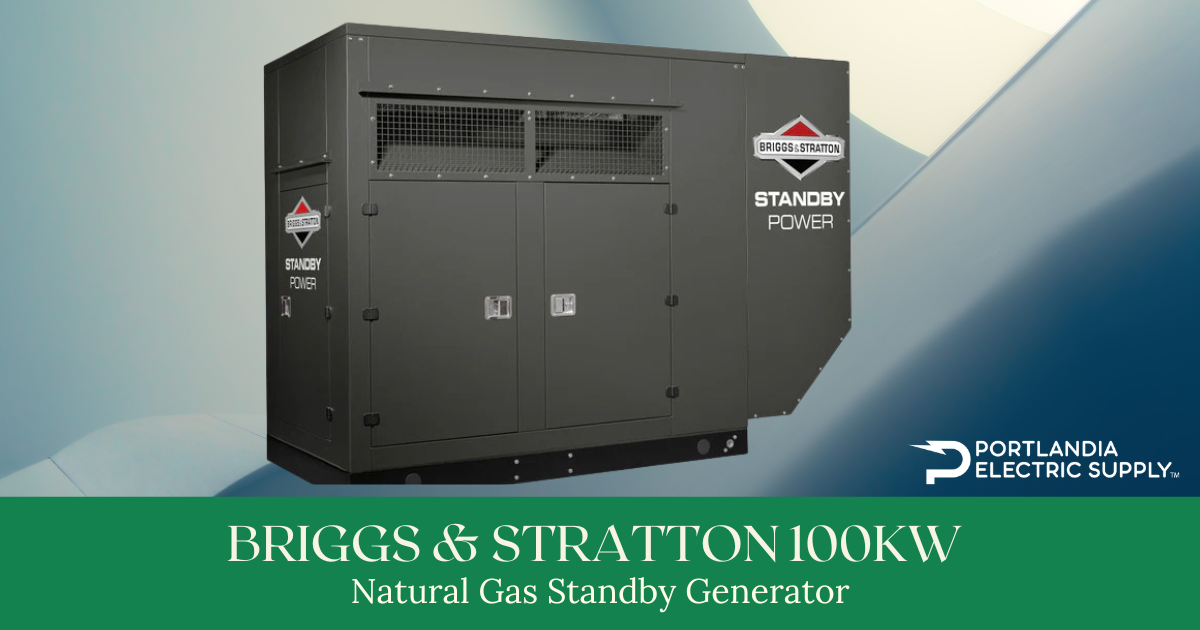
Briggs' air-cooled PowerProtect series covers 10–26kW, and two things distinguish it in the class. First, the top models hold their full rating on natural gas — the 22kW delivers 22kW on NG and LP alike, where much of the competition derates on NG. Second, warranty terms run up to seven years on bundled configurations, which is the longest coverage commonly offered in air-cooled residential standby. We detail the flagship in our Briggs & Stratton 22kW buyer's guide, including verified specs and install budgeting.
Every standby install, Briggs or otherwise, needs the same skeleton: a pad with NFPA 37 clearances, a gas line sized for full-load BTU, a service-rated automatic transfer switch matched to the panel, permits, and a factory-protocol startup. NEC Article 702 governs the optional standby system; generator conductors size per NEC 445.13 and the ampacity tables in our NEC wire sizing guide.
Fuel: match the machine to what the property already has
- Natural gas: the default for standby where a meter exists. Unlimited runtime, no tank, and on PowerProtect units, no output penalty. Confirm meter capacity early — a 22kW engine wants 300,000+ BTU/hr at full load.
- Propane: the rural answer. A 250-gallon tank runs a 22kW at half load for roughly three to four days. Fully utility-independent.
- Gasoline: portables only. Stabilize it, rotate it, and never store more than you can use in a season. A generator you cannot feed is yard art.
Maintenance: cheap insurance, expensive neglect
| Interval | Portable | Standby |
|---|---|---|
| Weekly/monthly | Run 15 minutes under load monthly | Automatic exercise; verify green status light |
| Every 50–100 hours / seasonally | Oil and filter, air filter, plug check | Visual inspection, louvers clear, battery terminals |
| Annually | Full service before storm season | Oil, filters, plugs, battery load test, firmware |
| Every 2–3 years | Carb cleaning if stored with fuel | Proactive starting-battery replacement |
Stock the consumables ahead of storm season from the maintenance kits and add cold-weather kits — battery and oil warmers — anywhere January drops below zero. The single most common standby no-start is a dead starting battery; the single most common portable no-start is stale gasoline. Both are $100 problems that turn into $1,000 emergencies during an outage.
Buying checklist
- Run the load worksheet — running watts, worst-case surge, 20% headroom, altitude/heat derate.
- Decide portable vs standby by the "nobody home" question, not by budget alone.
- Pick fuel from existing infrastructure: NG meter → standby NG; rural → propane; occasional use → gasoline portable.
- Price the whole system — generator, transfer device, pad, gas work, permits, startup — not the generator alone.
- Verify local service: the best generator is the one the nearest service company stocks parts for.
- Register the warranty and schedule the first annual service the day it is commissioned.
Cross-shop the class against Generac, Kohler, and Cummins in our standby generator catalog, or browse portables. Contractors can kit generator, ATS, pad, and maintenance supplies on one PO through a Pro Account, and our team will sanity-check your load calc before anything ships.
The engine platforms under the label
Briggs builds its own engines, and the platform tells you the intended duty. The Vanguard V-twin line — commercial-grade, cast-iron sleeved, with proper oil filtration and pressure lubrication — powers the standby series and the better portables, and it is the engine with the decades-long reputation in rental and turf fleets. The PowerBuilt and CR-series engines cover the value portables: honest engines for intermittent duty, not engineered for 2,000-hour service lives. Matching engine class to duty cycle is the whole game — a PowerBuilt portable running three-week storm duty every year will wear out fast, and a Vanguard standby exercised weekly will outlive the mortgage. Ask which engine is in the specific model you are buying; the answer is always on the spec sheet.
What the inverter technology buys you in the P-series
The PowerSmart inverter portables rectify and re-synthesize their output, holding total harmonic distortion under roughly 3% — clean enough for furnace control boards, laptops, and modern variable-speed appliances that choke on open-frame power. They also throttle down at light load: a 2,200W inverter unit idling through the night on a fridge and a few lights sips fuel and runs near conversation volume, where a conventional open-frame holds 3,600 RPM regardless and drinks accordingly. For camping, tailgates, and single-appliance backup, the inverter premium pays for itself in fuel and hearing preservation. For job-site motors and essential-circuit backup where THD matters less, the open-frame Elite series delivers more watts per dollar.
Sound levels and jobsite etiquette

| Briggs class | Typical sound @ 23 ft | Etiquette notes |
|---|---|---|
| 2,200W PowerSmart inverter | ≈ 55–60 dBA at load | Campground-legal in most jurisdictions |
| 4,500W inverter | ≈ 60–64 dBA | Fine for residential backup; keep off the property line |
| 7,500–9,500W open-frame | ≈ 70–76 dBA | Daytime job sites; check local ordinances for overnight residential use |
| PowerProtect standby | ≈ 63–67 dBA exercising | Schedule exercise for mid-morning, not 6 AM Sunday |
Warranty structure, portable vs standby
| Line | Typical warranty | What it covers in practice |
|---|---|---|
| PowerSmart / Elite portables | 2–3 years consumer, shorter commercial | Defects; wear items and stale-fuel carburetor damage excluded |
| PowerProtect air-cooled standby | Up to 7 years on bundled configurations | Parts and labor with registered install and documented service |
| Liquid-cooled standby | 5 years typical | Commercial terms; service contract strongly advised |
Read the exclusions before they matter: stale gasoline kills more portable carburetors than all manufacturing defects combined, and no warranty covers it. Fuel stabilizer is a $12 insurance policy — use it or drain the tank, every single time.
Accessories that actually earn their place
- Wheel kits and handles on anything over 150 lb — your back will thank you the first time the unit has to cross a lawn.
- Weather covers for portables stored in sheds; never run covered, always stored covered.
- Cold-weather kits (battery and oil warmers) for standby units anywhere that sees real winter.
- Heavy-gauge 240V cords sized to the receptacle — a 30A L14-30 circuit on a skinny cord is a heater, not a power path. Size generator conductors and cords per the ampacity tables in our NEC wire sizing guide.
- Transfer equipment purchased with the generator, not after: interlock, manual switch, or ATS matched to the plan.
Outlet and circuit anatomy on portables
Read the receptacle panel before you buy — it defines what the machine can actually feed. A typical 7,500W open-frame carries four 5-20R 20A duplex outlets plus a 30A L14-30R 120/240V twist-lock; that twist-lock is the only honest path to a transfer switch, because the duplexes share 20A breakers and cannot deliver the machine's full output. Larger portables add a 50A 14-50R. Match the cord to the receptacle and the receptacle to the plan: an L14-30 inlet box on the house pairs with an L14-30 cord and a 30A breaker at the panel, and no amount of adapter daisy-chaining changes the physics. GFCI protection on the duplex outlets trips under some transfer-switch neutral configurations — if your setup trips instantly, that is the first suspect, and the fix is in the neutral switching, not the generator.
Breaking in a new engine correctly
The first five hours set the ring seal for the engine's whole life. Run the new unit at varying moderate loads — not idling, not pinned — change the break-in oil early per the manual (typically 5–30 hours), and verify valve clearance where the platform specifies it. We can tell a properly broken-in engine at trade-in by the compression numbers and the oil analysis; the ones that idled through break-in burn oil by hour 300. Thirty minutes of reading the manual and one early oil change is the cheapest longevity money can buy.
Storage between seasons
Portables die in storage, not in service. The end-of-season ritual: stabilizer in the last tank, run ten minutes to move treated fuel through the carburetor, drain the float bowl or run it dry, fog or oil the cylinder on long layups, battery on a maintainer for electric-start models, and a cover in a dry space. The standby units mostly care for themselves, but they want the opposite treatment — never disconnect the battery tender, and never shut off the gas valve "for the off-season" unless you enjoy no-start calls in October.
Briggs for contractors: the fleet math
For crews running power daily, the calculus is hours-per-dollar, and it favors the Vanguard-powered portables and buying one size up. A 9,500W unit loafing at 4kW outlasts a 6,500W unit screaming at 4kW by a wide margin, and the price step is smaller than the first engine replacement. Keep a shared pool of maintenance kits — oil, filters, plugs — in the shop, log hours on a tag wired to each frame, and retire units to backup duty at 1,500 hours rather than discovering end-of-life on a paying job.
The questions that settle the purchase
Bring these answers to any supplier and the conversation gets short and productive: outage history in hours per year; fuel on the property; the five must-run loads with nameplate amps; panel brand and service size; and the nearest authorized servicer's distance. A buyer with those five answers cannot be sold the wrong machine, because the machine picks itself. A buyer without them gets sold whatever is on the truck.
Spec-sheet literacy, Briggs edition
Four lines carry the truth on any Briggs generator spec sheet. Running watts per fuel — not the headline surge figure. Engine family — Vanguard means commercial duty; anything else means intermittent. Alternator — brushless regulates better and lives longer. Warranty exclusions — the exclusions page, not the years number, is where the coverage actually lives. Learn to read those four lines and every spec sheet in the industry becomes transparent, because the same four truths apply to every brand we stock.
What the first outage teaches
Every generator owner gets one free lesson; the smart ones take it during a deliberate test instead of a storm. Kill the main breaker on a calm weekend. Watch the start sequence or do the portable drill — fuel on, choke, start, warm-up, transfer. Time it. Find the flashlight, the cord, the interlock sequence, the one thing that does not work. Then fix it in daylight with phone signal and no stakes. The families who run this drill once a year treat outages as inconvenience; the families who never do treat them as emergencies. The machine is identical in both houses.
Frequently asked questions
Are Briggs & Stratton generators reliable?
Yes — the Vanguard engine platform has a long commercial track record and a broad parts network. Reliability in practice tracks maintenance: annual service and a fresh starting battery every 2–3 years is the difference between a 20-year machine and a dead one.
What size Briggs & Stratton generator do I need?
Essential circuits run on 10–13kW standby or a 7,500W portable; whole-house with central AC takes 18–22kW. Size from a load worksheet — running watts plus the largest motor's surge, 20% headroom, and altitude/heat derate — not from square footage rules of thumb.
Can a Briggs portable run my house?
A 7,500W-class portable through an interlock or manual transfer switch covers fridge, furnace blower, sump pump, lights, and device charging. It will not start central AC, and it demands gasoline logistics and manual operation during the outage.
Who services Briggs & Stratton generators?
A national dealer and service network covers the standby line, and most small-engine shops handle the portables. Confirm your nearest authorized servicer before purchase — parts availability in year nine matters more than any spec-sheet advantage.
How long do Briggs & Stratton standby generators last?
Air-cooled standby units typically deliver 1,500–3,000 run-hours, which under normal residential outage duty plus weekly exercise is a 15–20 year service life — provided oil changes, annual service, and battery replacement actually happen.