The Complete Buyer's Guide to 50 kW Cummins Electric Generators
Sizing math, fuel burn, transfer-switch pairing, NEC installation rules, and the real-world numbers our counter team uses every week.

A 50 kW standby unit sits at a sweet spot in the commercial power world. It is big enough to carry a mid-size restaurant, a small medical clinic, a farm shop with three-phase motors, or a large custom home with every circuit live — and small enough that you can still set it on a pad without a crane the size of a house. We've spec'd, sold, and helped commission dozens of these units, and the Cummins generator line is the one we reach for when a customer tells us downtime costs them real money.
This guide walks through everything we cover with a buyer at the counter: what 50 kW actually runs, how the amps shake out at 208V, 240V, and 480V, fuel consumption by load level, transfer switch and feeder sizing per the NEC, and what separates the Cummins QuietConnect and PowerCommand families. Bring a pencil — there are tables worth printing.
Fifty kilowatts is 50,000 watts of real power. On paper that number is abstract, so here is how we translate it for customers. A typical 2,500-square-foot all-electric home with two 4-ton heat pumps, an electric range, a water heater, and a hot tub peaks around 30–38 kW with everything running — a 50 kW unit carries it without load management. A small restaurant with walk-in refrigeration, a hood fan, and electric cooking equipment usually lands between 35 and 45 kW of connected demand. A farm shop running a 10 HP air compressor, a welder, and three-phase dust collection fits comfortably too.
I've walked sites where the customer swore they needed 80 kW and a load study showed 41 kW of actual peak demand. I've also seen the reverse — a grocery store that added a second freezer bank after the original calc and tripped their undersized unit on the first hot Saturday in July. Measure first. A week of utility interval data or a clamp-meter survey on the main feeders beats any rule of thumb, every time.
| Application | Typical Peak Demand | 50 kW Fit | Notes |
|---|---|---|---|
| Large all-electric home (3,000+ sq ft) | 30–40 kW | Excellent | Full-house coverage, no load shedding |
| Small restaurant / café | 35–45 kW | Good | Verify refrigeration and HVAC startup overlap |
| Medical / dental clinic | 30–42 kW | Good | Check NEC 517 essential electrical system rules |
| Farm shop with 3-phase motors | 25–40 kW | Good | Motor inrush sizing matters more than running load |
| Small grocery / convenience store | 45–60 kW | Borderline | Load study required; freezer banks spike hard |
| Light industrial / machine shop | 50–90 kW | Too small | Step up to an 80 kW or 100 kW class unit |
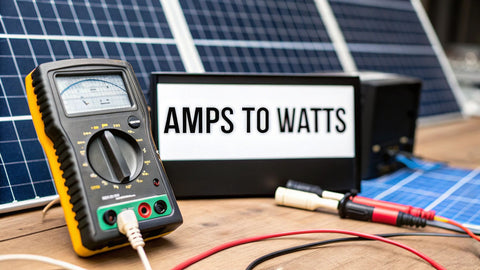
Here is where buyers get tripped up. The same 50 kW generator produces wildly different currents depending on the voltage and phase configuration. Order the wrong voltage code and your feeder, breaker, and transfer switch are all wrong too. The formulas are simple:
- Single-phase: Amps = (kW × 1,000) ÷ Volts ÷ power factor
- Three-phase: Amps = (kW × 1,000) ÷ (Volts × 1.732 × power factor)
Using a 0.8 power factor (the standard assumption for standby sets), a 50 kW unit delivers the currents in the table below. We keep this printed and taped inside the counter cabinet — it settles most sizing arguments in thirty seconds.
| Voltage / Phase | Full-Load Amps @ 0.8 PF | Min. Breaker (NEC 240.6) | Copper Feeder @ 75°C (NEC 310.16) |
|---|---|---|---|
| 240V single-phase | 208 A | 250 A | 300 kcmil (285 A) |
| 208V three-phase | 173 A | 200 A | 4/0 AWG (230 A) |
| 240V three-phase | 150 A | 175 A | 3/0 AWG (200 A) |
| 480V three-phase | 75 A | 90 A | 3 AWG (100 A) |
| 600V three-phase | 60 A | 70 A | 4 AWG (85 A) |
Notice the pattern: higher voltage means smaller wire and smaller conduit. That's why most commercial 50 kW installs we sell are 208Y/120V or 480Y/277V three-phase. A 240V single-phase 50 kW set — common for large homes and small ag — pushes 208 amps, which means 300 kcmil copper, 2.5-inch conduit, and a 250-amp ATS. It's perfectly doable; we've pulled thousands of feet of 300 kcmil through EMT on exactly these jobs. But factor the copper cost into your budget, because at current prices those feeders are not cheap.
For a deeper dive on conductor selection, our NEC wire sizing and ampacity guide covers derating, ambient temperature correction, and conduit fill in detail.
Cummins splits the 50 kW class into two personalities. The QuietConnect RS50 is a liquid-cooled, natural gas or propane unit aimed at residential estates, small commercial buildings, and anywhere noise ordinances matter — it runs around 65 dBA at 23 feet, roughly conversation level. The PowerCommand C50D6 family is the diesel commercial line: heavier skid, bigger alternator options, paralleling capability, and the control ecosystem (PowerCommand 1.1/2.1/3.3 controllers) that facility engineers already know.
| Attribute | QuietConnect RS50 (NG/LP) | PowerCommand C50D6 (Diesel) |
|---|---|---|
| Primary fuel | Natural gas or propane | Diesel (ULSD) |
| Typical application | Estate homes, offices, clinics | Commercial, industrial, ag, telecom |
| Sound level (approx.) | ~65 dBA @ 23 ft | ~70–75 dBA with standard enclosure |
| Cooling | Liquid-cooled | Liquid-cooled, heavy-duty radiator |
| Controller | Integrated residential control | PowerCommand family, paralleling-ready |
| Exercise cycle | Programmable, low-noise mode | Configurable with load-bank options |
| Fuel storage | Utility gas line or LP tank | Integral or sub-base day tank |
Which one do we recommend? If your building has natural gas service, the gaseous unit wins on fuel logistics — no tank, no polishing, no fuel deliveries, and indefinite runtime as long as the gas utility holds pressure. If you're off the gas grid, need black-start reliability independent of utilities, or run a site where diesel is already on the ground for equipment, the C50D6 is the call. Browse our current 48 kW and 60 kW inventory for the adjacent sizes if your load study lands between classes.
Nobody runs a standby generator at 100% load for long. The honest way to budget fuel is by load factor. Manufacturer data sheets for the 50 kW diesel class typically show the burn rates below; treat them as planning figures and verify against the exact engine datasheet for your serial number — Cummins publishes per-model curves and they matter.
| Load Level | Diesel Burn (typical) | Natural Gas Burn (typical) | Runtime on 200-gal Tank |
|---|---|---|---|
| 25% load (12.5 kW) | ~1.4 gal/hr | ~250 cu ft/hr | ~143 hours |
| 50% load (25 kW) | ~2.3 gal/hr | ~400 cu ft/hr | ~87 hours |
| 75% load (37.5 kW) | ~3.2 gal/hr | ~530 cu ft/hr | ~62 hours |
| 100% load (50 kW) | ~4.1 gal/hr | ~650 cu ft/hr | ~49 hours |
Two field notes on fuel. First, diesel units hate light loading — run a 50 kW diesel at 15% load for weeks and you'll wet-stack the engine with unburned fuel. Schedule a load-bank test annually or exercise under real building load. Second, natural gas derates at altitude and temperature; above roughly 3,000 feet expect to lose 3–4% capacity per 1,000 feet depending on the engine. Our generator sizing guide has the full derating worksheet.
Don't size the gas line off the rating plate alone.
A 50 kW gaseous unit at full load can demand over 650 cubic feet per hour at 7–11 inches of water column. We've seen installs starve at startup because the plumber ran 3/4-inch pipe 60 feet. Most 50 kW NG installs need 1.25–2 inch dedicated runs depending on distance. Get the gas fitter the generator's BTU/hr requirement — roughly 550,000–700,000 BTU/hr at full load — before the pad is poured.
Transfer Switches and NEC Installation Rules

The transfer switch is not an accessory — it's the code-required heart of the install. NEC 702 (optional standby) and 700/701 (emergency and legally required) all forbid interconnecting the generator and utility without a listed transfer means. For a 50 kW unit you have two practical choices:
- Service-entrance ATS (200–400 A): The whole building transfers. Clean, automatic, and the right answer for homes, offices, and small commercial. Pair a 240V single-phase 50 kW unit with a 250 A or 400 A service-rated switch.
- Load-side ATS with subpanels: For larger buildings where the generator only covers selected loads. Common in clinics and restaurants — life-safety and refrigeration on the generator, decorative lighting left dark.
A few NEC checkpoints we verify on every 50 kW job:
- NEC 445.13 — the generator's ampacity must be at least 115% of the nameplate rating for the feeder calculation.
- NEC 240.6 — standard overcurrent sizes: 70, 80, 90, 100, 110, 125, 150, 175, 200, 225, 250 A. A 208 A load lands on a 250 A breaker.
- NEC 250.35 — grounding depends on whether the ATS switches the neutral. Switched-neutral systems make the generator a separately derived system with its own grounding electrode. Get this wrong and you'll chase ground-fault gremlins for months.
- NFPA 110 — if the building is a healthcare or emergency facility, Level 1 or Level 2 rules dictate fuel supply, testing, and alarms on top of the NEC.
- Clearances — most jurisdictions want 5 feet from openings and combustibles; Cummins publishes per-model setback drawings. Check them before the concrete truck shows up.
Need the switching hardware? We stock generator transfer switch kits and generator accessories sized for the 50 kW class, including cold-weather kits for northern installs.
A standby generator that doesn't start is worse than no generator — it breeds false confidence. The maintenance cadence we hand every customer:
| Interval | Task | DIY or Tech |
|---|---|---|
| Weekly (automatic) | 12–20 minute exercise cycle, no load | Automatic |
| Monthly | Visual check: oil, coolant, battery, rodent damage, enclosure louvers | DIY |
| 6 months / 125 hrs | Oil and filter change (gaseous units), battery load test | DIY or tech |
| 12 months / 250 hrs | Diesel oil and filters, fuel filter, coolant test, air filter | Tech |
| 12 months | Load-bank or building-load test to 30%+ for one hour minimum | Tech |
| 24–36 months | Coolant replacement, valve lash check (diesel), fuel polishing if tank stored | Tech |
One habit worth stealing from commercial fleets: keep a logbook zip-tied inside the enclosure. Date, hours, oil pressure, battery voltage, anything odd. When a unit fails under load, the logbook is the first thing the warranty adjuster asks for — and the difference between a paid claim and a denied one.
Cold climates change the maintenance picture too. Below about 32°F, a diesel without a block heater and battery warmer is a coin flip at 3 a.m., and battery cranking power drops roughly 40% by 0°F. Cummins cold-weather kits — battery warmers, oil pan heaters, and for gaseous units, fuel-line insulation where propane pressure sags — pay for themselves the first January storm. We spec them by default on any install north of the Mason-Dixon line, and we've never had a customer ask to remove one.
Budget honestly across three buckets. Equipment: a Cummins 50 kW gaseous package typically runs in the mid-$20,000s to low-$30,000s depending on enclosure and options; diesel PowerCommand packages price higher with tanks and commercial controllers. Installation: figure $8,000–$18,000 for pad, feeders, ATS, gas plumbing or fuel system, and permits on a straightforward site — long feeder runs or service upgrades push past that fast. Ownership: plan $600–$1,200 per year in maintenance and exercise fuel for a gaseous unit, more for diesel with fuel polishing.
Compare quotes against adjacent sizes before you commit. Sometimes a 60 kW Cummins costs only marginally more installed and buys real headroom; sometimes stepping down to a 26 kW class unit with load management covers the same building for thousands less. The load study decides, not the brochure.
Related guides from the counter
Running load is easy. Starting load is where under-spec'd jobs fall apart. A NEMA code-G motor pulls roughly six times its running current for the first half-second. A 10 HP three-phase motor that runs at 28 amps will demand 150-plus amps the moment the contactor slams shut. If your generator can't ride through that dip, the voltage collapses, the contactor chatters, and everything else on the bus flickers or drops.
The rule we use at the counter: total your motor horsepower, assume 2 kVA per horsepower for across-the-line starts, and stagger starts wherever the process allows. A 50 kW set at 0.8 PF delivers 62.5 kVA — that starts roughly a 25–30 HP motor across the line on an otherwise lightly loaded bus, more with soft starters or VFDs. If the site has a 40 HP compressor that must start unattended, either add a soft starter or step up to an 80 kW class machine. VFD-driven loads are friendlier — they ramp instead of slam — but they inject harmonics, so specify a PMG (permanent magnet generator) excitation option on the alternator. Cummins offers PMG on the PowerCommand line, and we recommend it on any job with more than about 20% VFD load.
A clean 50 kW commercial install runs about eight to twelve weeks from purchase order to commissioning, and the long poles are almost never the generator itself. The utility gas-service upgrade, if needed, can eat six weeks alone. Here is the sequence that keeps jobs moving:
Load study and voltage confirmation
Pull utility interval data or run a clamp survey. Lock the voltage code — 208Y/120, 240/120 single, or 480Y/277 — before anything is ordered. Changing voltage after the fact means a new alternator.
Permits and utility applications
Electrical permit, mechanical/plumbing permit for gas, and the gas load letter to the utility. In many jurisdictions the AHJ wants the generator's spec sheet and the one-line diagram with the permit set.
Pad, plumbing, and feeders
Pour the pad with the manufacturer's anchor template. Run gas pipe sized to the BTU load, pull feeders, set the ATS. Concrete wants a week to cure before a 3,000-pound unit lands on it.
Set, wire, and startup
Crane or forklift set, terminate feeders (torque to the ATS manufacturer's spec — usually 250–375 in-lb on 300 kcmil lugs), battery, coolant, and the factory-authorized startup. Keep the startup report; warranty clock starts there.
Buyers cross-shop three classes constantly, so we keep the comparison honest:
| Class | Full-Load Amps @ 240V 1ph | Best For | Installed Cost Band |
|---|---|---|---|
| 48 kW | 200 A | Homes, small offices, light commercial | $32k–$45k |
| 50 kW | 208 A | Restaurants, clinics, farm shops, estates | $35k–$50k |
| 60 kW | 250 A | Larger commercial, grocery, multi-tenant | $42k–$60k |
| 100 kW | 417 A (rarely 1ph) | Industrial, healthcare, data | $70k–$110k |
The jump from 50 to 60 kW typically adds 15–20% to the project. If your peak measured demand is within 20% of 50 kW, buy the headroom — generators live longest between 30% and 70% load, and growth always shows up uninvited.
Warranty and dealer support deserve a hard look at this size class too. Cummins backs these units with a two-year base warranty in most standby applications, extendable to five or ten years, and — more importantly — a service network dense enough that a factory-trained tech is usually within a county or two of your site. I've watched buyers save $2,000 on an off-brand 50 kW unit and then wait eleven days for a control board while their walk-in inventory thawed. The purchase price is a one-time number; the service network is the insurance policy you renew every outage. Ask any quote you collect who performs warranty work locally, what the response-time commitment is, and whether parts are stocked regionally. A cheaper unit with no local support is the most expensive generator you'll ever own.
How many amps is a 50 kW generator?
It depends on voltage and phase: 208 A at 240V single-phase, 173 A at 208V three-phase, and only 75 A at 480V three-phase, all at 0.8 power factor. Always match the voltage code to your service before ordering feeders and the transfer switch.
Will a 50 kW generator run my whole house?
For almost any home, yes — including large all-electric homes with dual HVAC systems. The exceptions are estates over about 6,000 square feet with multiple electric water heaters, pool heaters, and EV chargers all running; those want a load study and possibly a 60–80 kW unit.
How long will a 50 kW diesel run on a tank of fuel?
On a typical 200-gallon sub-base tank at half load (25 kW), expect roughly 85–90 hours — over three and a half days. At full load that drops to about two days. Natural gas units run indefinitely as long as utility pressure holds.
Natural gas or diesel at 50 kW — which is better?
If you have utility gas service, gaseous wins on fuel logistics, maintenance simplicity, and runtime. If you're rural, need utility-independent black start, or already store diesel on site, the diesel PowerCommand is the stronger tool. Diesel also handles motor-starting inrush better per kilowatt.
What size transfer switch do I need for 50 kW?
For 240V single-phase service, a 250 A minimum — most buyers choose a 400 A service-rated ATS to cover the full panel. For 480V three-phase, a 100 A switch suffices. The ATS must be rated for the service it interrupts, not just the generator output.
How much does a 50 kW Cummins cost installed?
Plan $35,000–$50,000 all-in for a typical gaseous install with pad, ATS, gas plumbing, and permits. Diesel packages with sub-base tanks and commercial controls often run $5,000–$15,000 more. Complex sites — long runs, service upgrades, sound ordinances — add to both.
Ready to spec your 50 kW unit?
Our counter team sizes generators against real load data every day. Send us your utility interval data or panel schedule and we'll match you to the right Cummins package.
Shop Cummins Generators