Buying solar panels by the container is where project economics change character. Pallet-quantity pricing gets you to market rate; container-quantity pricing gets you 15–30% below it, plus control over production slots, documentation, and branding that smaller buyers never see. We move container volumes of Tier 1 modules through Portland regularly — for installers, developers, exporters, and distributors across the Americas — and we've watched the same mistakes repeat: buyers who chase the cheapest FOB quote into a customs problem, or who sign for 600kW of panels without a flash-test report in hand. This guide is the complete playbook: what fits in a container, what it costs at each incoterm, which Tier 1 brands to spec, how to run QC properly, and how the import paperwork actually works in practice. For single-pallet or kit-scale buying, start instead with our solar panel kits buyer's guide; this article is for buyers ready to think in megawatts.

Container Math: What a 40HQ Actually Holds
The standard unit of wholesale solar is the 40-foot high-cube container (40HQ). Module packing density depends on panel dimensions and pallet design, and the industry's shift to larger-format modules has changed the arithmetic. Here's the worked math we run on quotes, using current mainstream formats:
| Module Format | Modules per Pallet | Pallets per 40HQ | Modules per Container | kW per Container |
|---|---|---|---|---|
| Residential format, 440W (1722×1134mm) | 36 | 26 | 936 | 411.8 kW |
| Commercial format, 550W (2278×1134mm) | 31 | 24 | 744 | 409.2 kW |
| Utility format, 620W (2384×1303mm) | 28 | 24 | 672 | 416.6 kW |
Notice the convergent result: regardless of format, a 40HQ lands in the 400–420kW band, because the larger modules carry more watts but fewer frames per pallet. The practical takeaways: budget logistics per watt, not per panel; confirm the exact pallet configuration on the packing list (counts vary by manufacturer and production line); and remember that weight, not volume, occasionally limits loading — a container of glass-glass bifacial utility modules can approach the 28-tonne road-weight limit before the cube is full. Browse current formats in our 400W-class, 550W-class, and 600W+ module categories.
What Container-Load Pricing Looks Like
Container pricing varies with the market cycle, technology, and incoterm, so treat these as structural relationships rather than quotes. In the 2026 market, mainstream Tier 1 TOPCon modules trade at container scale in a band roughly 15–25% above the 2025 trough, with the exact number moving monthly. What matters for the buyer is the structure of the price stack:
| Cost Layer | Typical Share of Landed Cost | Notes |
|---|---|---|
| Module FOB price | 70–78% | The negotiable core; volume and payment terms move it |
| Ocean freight (40HQ) | 5–10% | Volatile; a single rate spike changed container economics in 2024 |
| Insurance, duties, tariffs | 8–15% | Highly origin- and policy-dependent — see the trade section below |
| Port, drayage, delivery | 3–6% | Chassis splits and demurrage are the silent killers |
The lesson we drill into first-time container buyers: negotiate the FOB number hard, but manage the landed number. A supplier who wins your order on a $0.01/W FOB advantage and then misses a vessel booking can cost you $0.02/W in port storage alone.
Incoterms: Who Owns the Risk Where
| Incoterm | Seller's Responsibility Ends | Best For | Risk Note |
|---|---|---|---|
| EXW (Ex Works) | Factory gate | Buyers with their own freight forwarder in Asia | Maximum buyer burden; cheapest paper price |
| FOB (Free On Board) | Loaded on vessel at origin port | Experienced importers with freight relationships | The industry default for module containers |
| CIF (Cost, Insurance, Freight) | Arrival at destination port | Buyers wanting predictable ocean logistics | Insurance is minimal coverage — upgrade it |
| DDP (Delivered Duty Paid) | Your warehouse, duties paid | First-time importers; landed-cost certainty | Highest price; verify the seller actually clears customs correctly |
For a first container, we usually steer buyers toward CIF or a DDP arrangement with a named customs broker — the paperwork complexity of a first import (ISF filing, bond, entry summary) is genuinely easy to get wrong, and errors compound at the port at several hundred dollars per day.
Tier 1 Brands: What the Label Means and Who Qualifies
"Tier 1" is a bankability classification — originally BloombergNEF's — based on projects financed with the manufacturer's modules, not a quality certification. It signals that lenders accept the brand, which matters enormously for financed projects and resale value. The manufacturers with the deepest US wholesale presence:
| Brand | Current Flagship Technology | Container-Buyer Notes | Our Catalog |
|---|---|---|---|
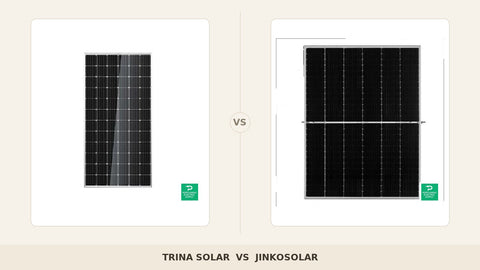
| Jinko Solar | Tiger Neo TOPCon | Massive capacity, strong US assembly presence, deep format range | Jinko collection |
| Trina Solar | Vertex TOPCon / 210mm formats | Utility-format leader; strong bifacial lineup | Trina collection |
| LONGi | Hi-MO series, BC technology | Efficiency leader; premium residential formats | LONGi collection |
| JA Solar | DeepBlue TOPCon | Value-positioned Tier 1; strong C&I presence | JA Solar collection |
| Canadian Solar | TOPHiKu / BiHiKu bifacial | Western corporate structure eases some trade friction; strong project pipeline | Canadian Solar collection |
All five maintain the documentation packages container buyers should demand: IEC 61215/61730 certification, PAN files for modeling, and per-container flash-test data. For the current model-level picture, our best solar panels of 2026 roundup tracks what's actually performing in the field.
The QC Discipline That Protects a Container Purchase
A container of modules is a $80,000–$150,000 decision made mostly on trust. Shrink the trust requirement:
- Pre-shipment inspection: Third-party inspection (SGS, TÜV, or similar) at the factory costs $500–$1,500 and verifies count, packaging condition, serial numbers, and random-sample flash testing. We've seen inspections catch shorted pallets and mixed-wattage containers before the vessel sailed — cheap insurance.
- Flash-test reports: Every pallet should ship with electroluminescence (EL) and IV-curve flash data traceable to serial numbers. Refuse containers without it; you cannot warranty-claim what you cannot trace.
- Documentation audit: Certificates, packing list, bill of lading, and country-of-origin documentation should be reviewed by your customs broker before the vessel arrives, not after.
- Arrival inspection: Photograph the container seal before breaking it, document pallet condition as it comes off, and EL-sample any pallet showing transit damage. Insurance claims live and die on this paper trail.
Trade Policy: The Part That Can Sink the Economics
US module imports operate under a layered tariff structure — Section 201 safeguard duties, Section 301 measures, and antidumping/countervailing duties that vary by country of origin and have shifted repeatedly over the past three years, with AD/CVD cases covering several Southeast Asian manufacturing hubs decided in 2024–2025. We deliberately don't quote specific duty rates here because they change faster than an article can be updated, and quoting a stale number would be worse than quoting none. The operational advice instead: engage a licensed customs broker before committing to an origin country, obtain a binding ruling or written duty estimate for your specific product and origin, and price the container on landed cost with duties included. Buyers who skip this step have watched a "cheap" container land 30% over budget. Buyers who do it properly know their exact number before signing the pro forma invoice.
Lead Times, Payment Terms, and Negotiation Levers
Standard container timelines: production slot 2–6 weeks from deposit for stock formats (longer for custom or premium BC formats), ocean transit 3–5 weeks Asia–US West Coast, port and delivery 1–2 weeks. Plan 8–12 weeks end to end, and add buffer during pre-tariff-deadline rushes, which have repeatedly congested West Coast ports. Payment terms at this scale are typically 30% deposit / 70% against bill of lading via wire, or letter of credit for larger programs; anything demanding 100% upfront from an unestablished supplier is a red flag we tell buyers to walk away from. The levers that actually move pricing: volume commitment across multiple containers, payment-term acceleration, off-peak production slots, and format flexibility (accepting a manufacturer's stock format rather than a custom order).
From Sample to Program: The Sensible Path
The buyers who succeed at container scale almost never start there. The proven progression: sample order (2–10 modules, tested and torn down), pallet order (field-deployed and monitored for a season), first container, then a multi-container program with a framework agreement. Each step retires a different risk — product quality, supplier reliability, logistics competence, and price stability, in that order. We support every step of that ladder, from a single pallet of 440W modules for evaluation through multi-container programs with scheduled releases, and we're candid with buyers about which step they're actually ready for.
Export Programs: Re-Exporting to Latin America and the Caribbean

A meaningful share of our container volume isn't bound for US projects at all — it transits the US for re-export into Latin American and Caribbean markets, where island grids, high retail electricity prices, and chronic utility fragility make distributed solar compelling economics. Puerto Rico, the Dominican Republic, Jamaica, and the Central American markets all absorb significant container volumes, and the logistics differ from domestic imports in ways buyers must plan for. Bonded warehousing allows containers to enter US commerce without duty payment when they're destined for re-export — a structure your broker sets up in advance, not retroactively. Destination documentation varies sharply by country: some require in-country certification of the modules themselves, others accept IEC certificates directly, and a few maintain local content or licensing regimes that change the viability math entirely. Ocean legs to the Caribbean run weekly from Gulf and Atlantic ports, but hurricane-season bookings compress, and we've watched August shipments slip three weeks. The buyers who succeed in these markets treat the destination's electrical code, certification regime, and port reality as seriously as the FOB price — a container that clears Long Beach smoothly can still sit for a month in San Juan if the paperwork anticipated the wrong country's rules.
Warehousing, Staging, and the Last 50 Miles
The container's arrival is a logistics event, not an ending. A 40HQ of modules weighs 20+ tonnes and unloads as 24–26 pallets; the delivery site needs a dock or a forklift with 5,000-lb capacity and 8-foot forks, plus dry indoor staging if the modules won't install immediately. Palletized modules tolerate weather poorly — cardboard and corner protectors are transit packaging, not storage packaging — and warranty coverage for storage damage requires indoor, dry, flat stacking, typically no more than two pallets high. Delivery appointments matter more than buyers expect: ports and rail ramps work on strict windows, and a missed appointment starts the demurrage clock at $150–$400 per day. Our standard advice for a first container: arrange the receiving warehouse before the vessel sails, confirm the forklift and driver hours in writing, and have the delivery address's access — gate codes, dock height, turning radius for a 53-foot chassis — documented and sent to the drayage carrier. The last 50 miles are where otherwise clean container transactions accumulate their surprise costs.
Insurance and Risk Management at Container Scale
Marine cargo insurance deserves more attention than the CIF default gives it. The automatic coverage under a CIF sale is typically minimal — Institute Cargo Clauses C, covering total loss scenarios but not partial damage, which is exactly what container shipments actually suffer: a forklift tine through a pallet, moisture ingress, a dropped crate. All-risk coverage (Clauses A) costs roughly 0.3–0.6% of cargo value and covers the realistic loss scenarios; on a $120,000 container that's $400–$700, the easiest insurance decision in the transaction. Beyond marine coverage, container-scale buyers should carry warehouse inventory coverage from the moment of delivery, verify their general liability policy covers product resale, and understand the supplier's warranty claim mechanics for transit-damaged modules before the damage happens. We also recommend documenting serial-number ranges per pallet at receipt — when a claim or a warranty event arrives two years later, that spreadsheet is the difference between a settled claim and an argument.
Financing and Cash-Flow Structure
Container purchases strain cash flow in a specific pattern: 30% deposit at order, 70% at bill of lading — meaning the full cash outlay lands four to six weeks before the inventory arrives and months before it converts to revenue. Buyers manage this three ways. Inventory financing and floor-plan arrangements from specialty lenders cover 70–90% of landed cost against the modules as collateral; interest runs prime-plus, and lenders require the QC and insurance disciplines described above, which is a feature. Supplier credit emerges after relationship history — first containers are cash business, but multi-container programs routinely negotiate 30–60 day terms on the balance. And presale structures, where the buyer commits containers against signed project pipelines, convert inventory risk into scheduling risk, which is the cheaper kind. What we counsel against: stretching a first container purchase across maxed credit lines with no buffer for demurrage, duty variance, or a freight-rate spike. The buyers who get hurt at this scale aren't undercapitalized on the purchase price — they're undercapitalized on the surprises.
The Six Mistakes First-Time Container Buyers Make
- Comparing FOB instead of landed cost. Duties, freight, insurance, and delivery add 20–30%; the cheapest FOB quote routinely loses on the landed number.
- Skipping the customs broker until the vessel sails. Broker engagement is a pre-signature activity; duty structures change by origin country and the wrong choice is unfixable once the goods are on the water.
- No pre-shipment inspection. A $900 inspection is the only leverage you hold while the goods are still at the factory — after the vessel sails, every dispute gets slower and more expensive.
- Underestimating receiving. No dock, no forklift, no appointment discipline — and the demurrage meter runs.
- Accepting custom formats on a first order. Stock formats ship faster, price better, and resell more easily. Custom is a third-container conversation.
- No serial traceability. Without per-pallet serial records, warranty claims and insurance claims both degrade into negotiation.
Reading a Module Datasheet Like a Volume Buyer
At pallet scale you can buy on wattage and price; at container scale the datasheet's second page decides your margin. The lines we check on every quote, in order: first, the power tolerance — a module warranted at 0/+5W outperforms one at ±3% before it leaves the factory. Second, temperature coefficient of Pmax — every −0.29%/°C TOPCon panel out-earns a −0.35%/°C predecessor on hot afternoons across a 30-year life, and on a 400kW container that difference compounds into thousands of kilowatt-hours. Third, degradation schedule — 1% first-year with 0.4% annual linear degradation is the current Tier 1 benchmark; anything materially worse should price accordingly. Fourth, mechanical load ratings — 5400Pa front / 2400Pa rear is the snow-and-wind standard for most US jurisdictions, and coastal or high-wind projects need the enhanced ratings verified on the certificate, not the brochure. Fifth, the warranty issuer — the entity legally behind the 25-year performance warranty, because a warranty from a shell entity is marketing, not coverage. The 2026 panel roundup shows how these numbers land across current models, and our team runs datasheet comparisons across the full Tier 1 lineup on request.
A Realistic First-Container Timeline
Compressing everything above into a calendar for a first-time buyer: Weeks 1–2, samples evaluated and format selected; broker engaged; duty estimate in writing. Week 3, pro forma invoice negotiated — price, incoterm, payment terms, production slot — and deposit wired. Weeks 3–7, production; week 6, pre-shipment inspection at the factory; week 7, balance payment against bill of lading and vessel departure. Weeks 7–11, ocean transit; your broker files the ISF and entry while the container is on the water, not after arrival. Weeks 11–12, port clearance, drayage, receiving, and arrival inspection. Week 13 onward, the modules are inventory — warehoused correctly, serials recorded, ready for the projects or buyers they'll serve. Twelve to thirteen weeks from deposit to sellable inventory is the honest planning number; anyone promising six is quoting the best case as the standard case.
Payment Security: Escrow, Letters of Credit, and Fraud Red Flags
Container-scale transactions attract container-scale fraud, and the defenses are procedural. Letters of credit remain the professional standard for new supplier relationships above two containers: the bank intermediates payment against conforming documents, which disciplines both sides. For single containers, third-party escrow services and trade-assurance programs offer lighter-weight protection. The red flags we train buyers to walk away from: prices more than 10% below the market band (someone is always buying the lesson); a supplier who can't produce factory audit reports or references from other importers; bank account changes communicated by email mid-transaction (the classic business-email-compromise pattern — verify account changes by a second channel, always); pressure to pay 100% before shipment; and resistance to pre-shipment inspection. A legitimate Tier 1 factory or authorized distributor welcomes inspection, provides traceable references, and never changes banking details by email. The 30/70 wire structure with inspection leverage in the middle has protected our buyers for years; deviate from it only when a stronger mechanism replaces it, never because a sales rep is in a hurry.
Where Domestic Wholesale Fits
Not every volume buyer needs to import. Domestic wholesale — factory-direct from US assembly plants or through distributors holding bonded or duty-paid inventory — trades a modest per-watt premium for eliminated import risk: no customs exposure, two-week delivery instead of twelve-week pipelines, and returns that don't require an ocean. Since the US assembly buildout, domestic TOPCon modules at container volume price within a few cents per watt of imported landed cost once duties and freight are fully loaded, and for buyers under time pressure or tariff uncertainty the domestic container frequently wins the real comparison. We stock and move both channels, and the honest answer to "import or domestic?" in 2026 is: model both with current duty numbers, because the crossover point moves with every trade-policy headline.
Frequently Asked Questions
How many solar panels fit in a 40-foot container? Depending on module format, 670–940 modules per 40HQ container, totaling roughly 400–420kW. Residential-format 440W modules pack at 936 per container; larger utility formats carry fewer frames but similar total wattage.
How much does a container of solar panels cost? In the 2026 market, a 40HQ of Tier 1 TOPCon modules typically represents an $80,000–$150,000 landed investment depending on wattage, brand, duties, and freight. Request a landed-cost quote rather than comparing FOB numbers.
What does Tier 1 mean for solar panels? Tier 1 is a bankability classification based on the manufacturer's track record in financed projects — it signals lender acceptance and financial durability, not directly panel quality, though the two correlate at the top of the market.
What is the minimum order for wholesale solar panels? Factory-direct container programs typically start at one 40HQ (~400kW). Pallet-quantity wholesale (roughly 16–20kW per pallet) is available through distributors without import complexity.
How long does it take to import a container of solar panels? Plan 8–12 weeks end to end: 2–6 weeks production, 3–5 weeks ocean transit to the US West Coast, and 1–2 weeks for customs clearance and delivery.
Do I need a customs broker to import solar panels? Effectively, yes. The layered tariff structure on modules (safeguard, Section 301, and origin-specific AD/CVD duties) makes professional brokerage essential; duty errors on a container run to tens of thousands of dollars.
Container-scale buying rewards preparation: the buyer who arrives with a broker engaged, QC budgeted, warehouse space reserved, and formats flexible gets the pricing, the production slot, and the documentation that protects the investment for 25 years. Portlandia Electric Supply runs this pipeline continuously — containers in, containers out, domestic and imported — across the Tier 1 brands profiled above. If you're sizing up a first container or structuring a multi-container program, bring us the project scope and timeline; we'll put real numbers, real lead times, and real availability against it before you commit a single dollar.