EV charging projects fail on budget before they fail on hardware. The charger is a line item you can look up; the trench, the transformer, the demand charges, and the utility's timeline are where project managers earn their paychecks. We supply charging equipment to homeowners, fleets, and commercial developers, and the gap between a project that pencils and one that stalls is almost always in the "make-ready" infrastructure, not the EVSE. This guide prices the whole stack — residential Level 2 through public DC fast — with the numbers and the gotchas we've seen play out on real jobs.
Understanding the True Cost of EV Charger Installation
Key Cost Drivers for Home Installations
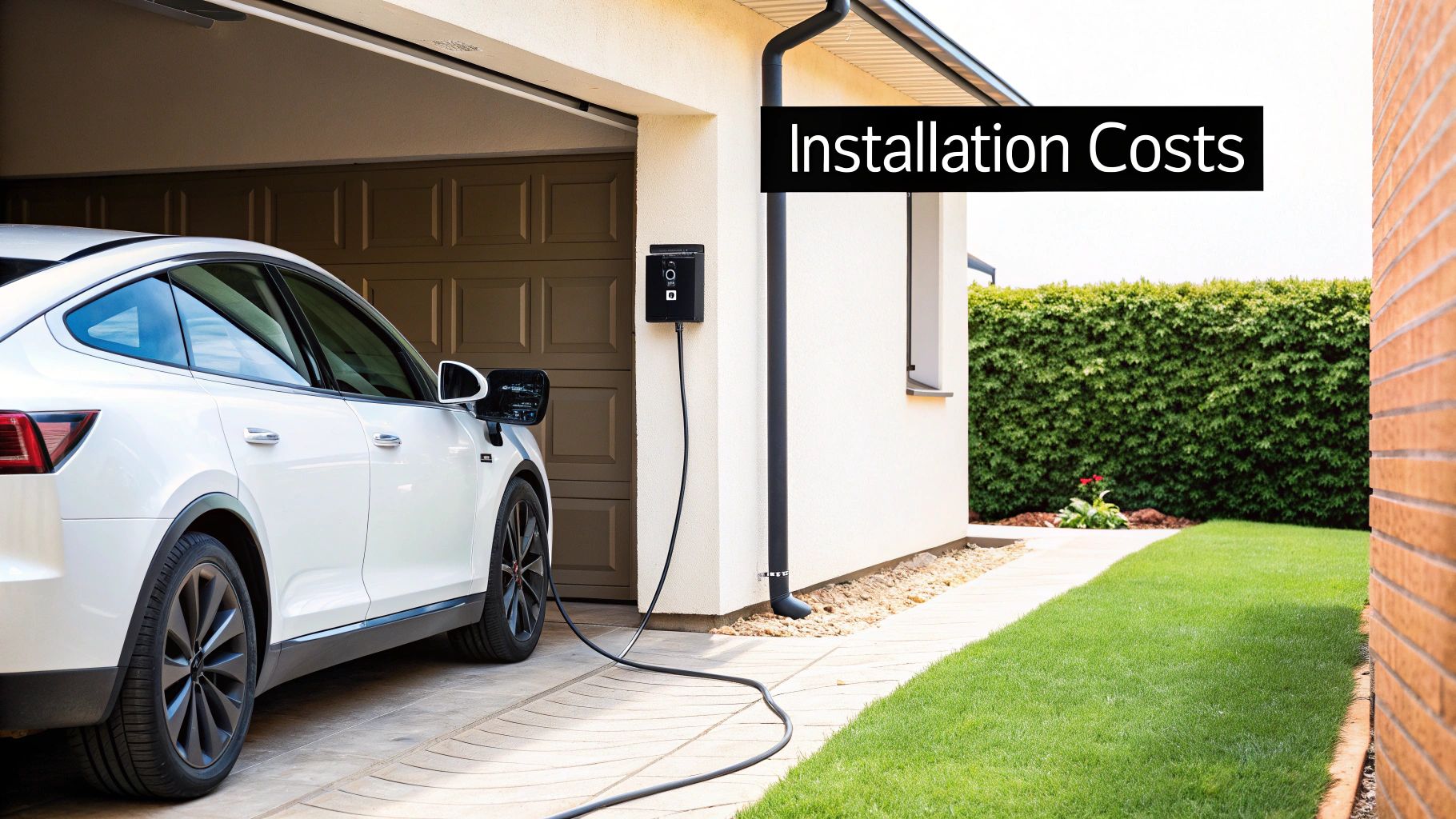
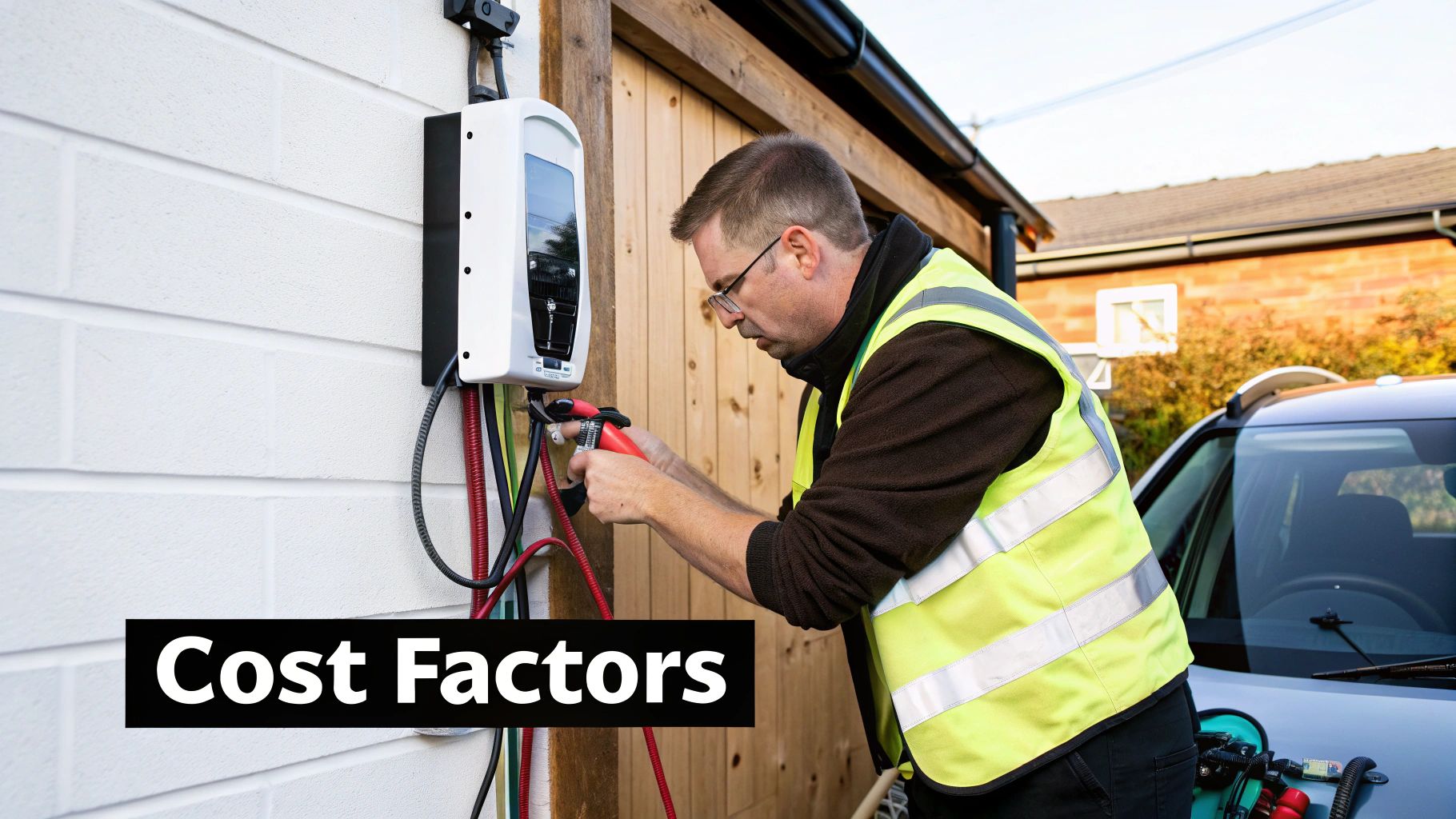
Before the numbers, one framing note: a home EV charger install is a small electrical project, and it prices like one. The EVSE hardware is a fixed, shop-able number — you can compare it across EV charger listings in five minutes. The installation labor and materials are the variable, and they're quoted against the physical reality of your house: panel location, spare capacity, wall construction, and distance. That's why online estimators disagree with each other by hundreds of dollars and why two neighbors with identical chargers can pay wildly different totals. Everything below separates the fixed numbers from the variable ones so you can tell a fair quote from a padded one.
Residential pricing hinges on three variables, in order: distance from panel to parking, panel spare capacity, and wall construction in between. A panel in the garage with a charger mounted ten feet away is a half-day job. A panel in the basement on the opposite side of the house from a detached garage is a trench, a conduit run, drywall repair, and a full day of labor. The equipment barely moves the needle by comparison. Season matters too — electricians book out weeks ahead in EV-dense markets, and a December install in frozen ground can add trenching cost that a May install avoids entirely.
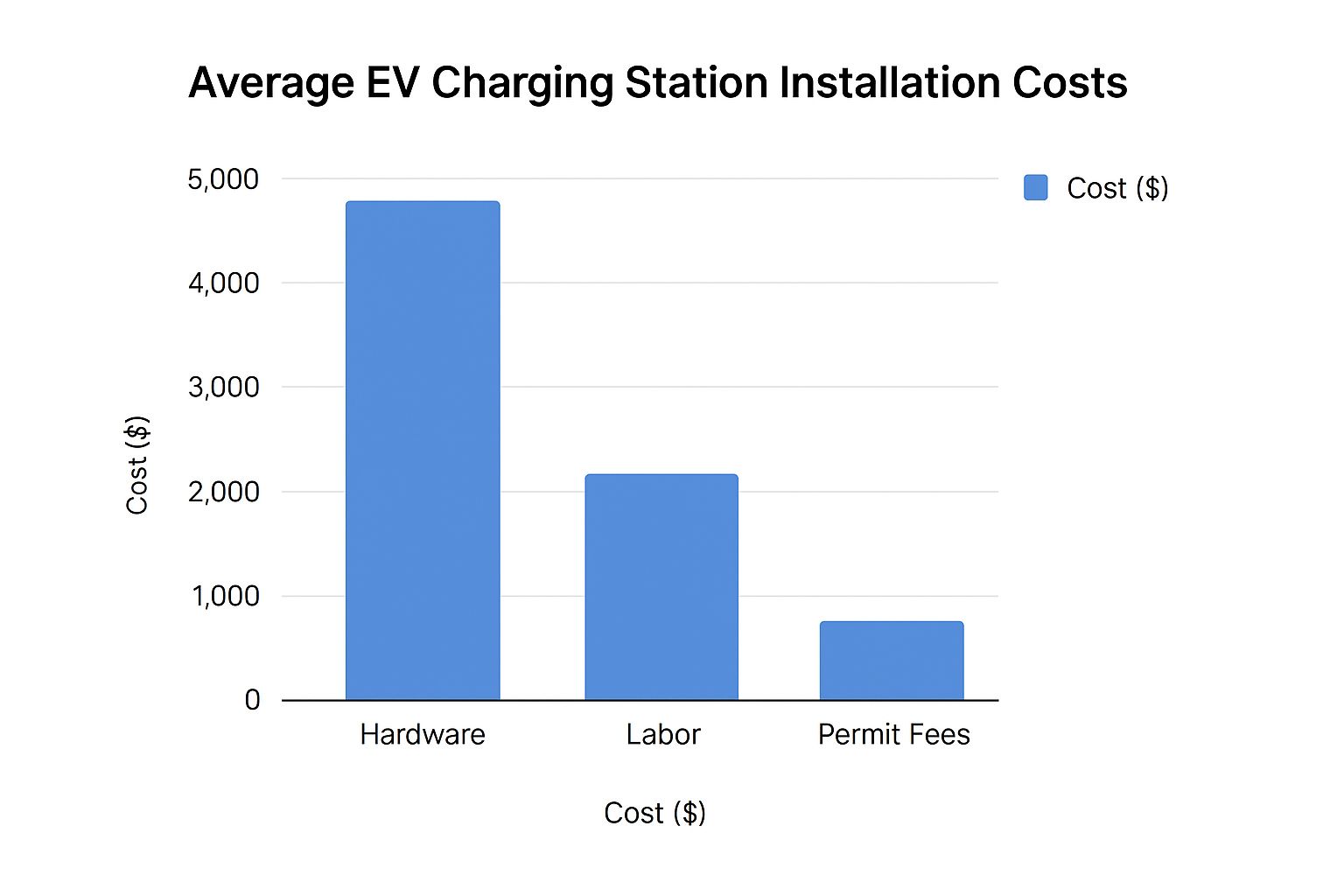
Typical Residential EV Charger Installation Cost Breakdown
| Cost Component | Typical Price Range (USD) | Notes for Budgeting |
|---|---|---|
| Level 2 EVSE hardware | $350–$750 | Wi-Fi/app models mid-range; ruggedized units higher |
| Circuit materials (wire, breaker, conduit) | $100–$400 | Scales with distance; copper wire price swings matter on 100+ ft runs |
| Labor — simple garage install | $400–$800 | Half day, surface-mount conduit, panel adjacent |
| Labor — complex (finished walls, long run) | $1,200–$2,500 | Drywall/fishing wire or exterior trenching |
| Panel upgrade (if required) | $1,800–$4,000 | 100A→200A service, permit and utility coordination included |
| Permit & inspection | $50–$300 | Required essentially everywhere for a new 240V circuit |
| All-in typical total | $1,200–$2,500 | Without panel upgrade; with upgrade $3,500–$6,000 |
Remember the NEC math underneath every quote: EV charging is a continuous load under NEC 625.42, so the circuit sizes at 125% of charger rating. A 40-amp charger requires a 50-amp circuit, which per NEC 310.16 (75°C copper) means 6 AWG conductors — about $2–3 per foot before anyone digs anything. Long runs get expensive in a hurry, which is why the "garage panel" location question dominates residential cost.
Budgeting for Commercial and Public Stations
Commercial is a different animal entirely. The EVSE is 10–20% of project cost; the rest is site work, electrical service, and soft costs. We've seen $3,000 chargers installed into $60,000 projects and nobody blinked, because the trenching, boring, switchgear, and utility work is where the money goes. If you take one idea from this entire guide, take this one: budget commercial charging as an infrastructure project that happens to include chargers, and you'll never be surprised by the total that lands on your desk.
Decoding Home EV Charger Installation Costs
Essential Installation Components
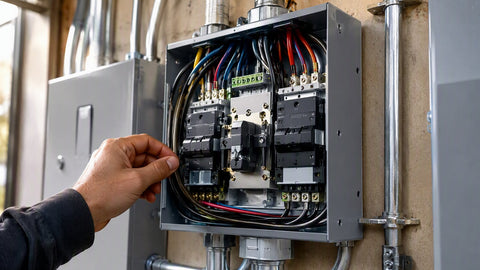
A residential install quote should itemize: the EVSE, the double-pole breaker matched to NEC 240.6 standard sizes (40A, 50A, or 60A for most Level 2 work), THHN conductors sized per NEC 310.16, conduit where exposed, the receptacle if plug-in (spec an EV-duty NEMA 14-50R — the cheap ones cook under nightly continuous load), permit fee, and labor. If any of those lines is missing from a quote, it's not a quote; it's a down payment on a change order. Insist on the itemization in writing before work starts, and keep the final invoice with the permit sign-off in your home records file.
Uncovering Hidden Costs
The surprises we hear about from homeowners, ranked by frequency: drywall repair after fishing wire through finished spaces ($300–$800), discovery that the panel has no physical breaker spaces even when amperage is available (tandem breakers or a sub-panel, $150–$600), utility service-drop upgrades when the overhead service is undersized (utility-dependent, sometimes free, sometimes $2,000+), and trenching to a detached garage ($25–$50 per linear foot trenched, more if boring under a driveway). Ask each bidder to walk the actual route and price what they see, not what they hope.
On the commercial side, hidden costs scale with ambition: ADA-compliant access aisles and signage retrofits, bollards and wheel stops nobody included in the civil set, cellular signal that's too weak for networked EVSE at the back of a below-grade garage (a repeater adds $500–$2,000), asbestos or contaminated soil discovered in the trench path, and my personal favorite — the landscape architect who placed a brand-new tree exactly where the charger pad belongs. Every one of these has hit a project we supplied. The contingency line exists for this list; 10% minimum on commercial site work, 15% if the site predates 1980.
Analyzing Commercial EV Charging Station Costs
Core Cost Components for Commercial Projects
| Component | Level 2 Commercial (per port) | DC Fast Charging (per stall) |
|---|---|---|
| EVSE hardware | $2,500–$7,500 (networked, dual-port) | $40,000–$100,000+ (50–350 kW) |
| Electrical service & switchgear | $5,000–$30,000 | $50,000–$250,000 (often new service + transformer) |
| Site work (trench, bore, conduit, repave) | $5,000–$40,000 | $25,000–$150,000 |
| Design, engineering, permits | $2,000–$10,000 | $15,000–$75,000 |
| Networking, software, payment (annual) | $250–$700/port | $1,500–$5,000/stall |
| Typical all-in per stall | $15,000–$50,000 | $100,000–$400,000+ |
The spread within each column is site work and utility scope. A Level 2 stall fed from spare panel capacity in an adjacent electrical room costs a fraction of one fed from a new service across a parking lot. Nobody can quote your project from a brochure — only from a site walk and a conversation with the utility.
Commercial EV Charger Cost Comparison Per Unit
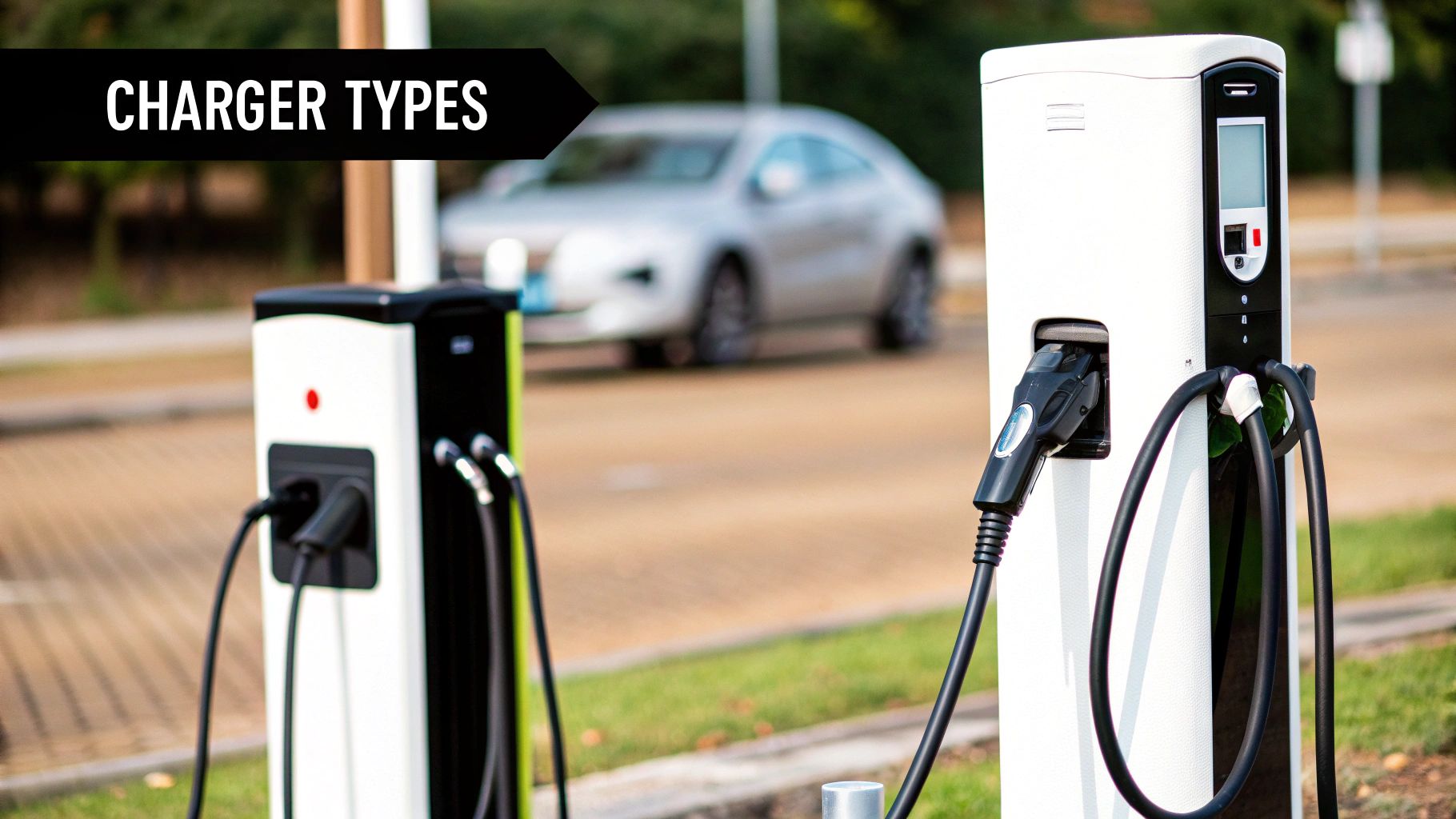
| Charger Type | Power Output | Estimated All-In Installation Cost | Key Considerations for Deployment |
|---|---|---|---|
| Level 2 single-port (workplace) | 7.7–11.5 kW | $8,000–$20,000 | Lowest entry cost; load-share multiple ports on one circuit to cut cost 30–40% |
| Level 2 dual-port networked | 2 × 7.7–19.2 kW | $15,000–$35,000 | Best $/port for retail, hospitality, multifamily |
| DC fast 50–62.5 kW | 50–62.5 kW | $80,000–$150,000 | Fleet and corridor top-up; check demand charges carefully |
| DC fast 150–180 kW | 150–180 kW | $150,000–$280,000 | The current highway-corridor standard; requires substantial service |
| DC fast 350 kW | 350 kW | $250,000–$450,000+ | Premium corridor sites; utility coordination is the project |
Real-World Cost Scenarios
Three composites from projects we've supplied. Scenario one, a hotel with four dual-port Level 2 stations on existing spare capacity: $58,000 all-in, about $7,250 per port, mostly site work and networking. Scenario two, a fleet depot with twelve 19.2 kW ports plus load management on a new 800A service section: $210,000, dominated by switchgear. Scenario three, a two-stall 180 kW DC fast site at a gas station: $385,000, of which the chargers were $140,000 — the rest was a new utility service, transformer, and six months of coordination. The pattern holds across the industry: hardware is the minority of commercial project cost, and the minority shrinks as power rises.
Navigating Permits And Utility Coordination
The Permitting and Code Compliance Process
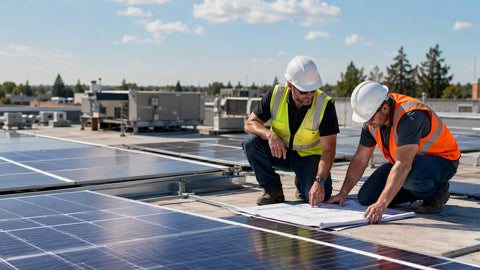
Commercial EV projects touch NEC Articles 625 (EV charging), 230 (services), 240 (overcurrent protection), and often 220 load calculations at building scale, plus ADA accessibility requirements for public stalls and local zoning for signage and setbacks. AHJ review runs 2–8 weeks in efficient jurisdictions and 3–6 months in the slow ones. Submit complete plan sets the first time — the number-one permitting delay we watch is resubmittals for incomplete load calcs and missing site plans. Our NEC code compliance guide covers the article framework inspectors apply.
Two permitting details that catch newcomers: ADA stall count scales with total stalls (typically one accessible stall per 5–25 charging spaces, with specific dimension and reach-range requirements under the ADA Standards and local amendments), and fire-marshal review increasingly applies to charging in enclosed parking structures — some jurisdictions now require ventilation assessments or sprinkler modifications for garage installations. Neither is expensive if it's in the original plan set; both are brutal as resubmittal surprises.
Coordinating with the Local Utility
Call the utility's EV program desk before you finalize site design, not after. The questions that matter: Can the existing transformer and service support the added load? What are the make-ready costs, and who pays them — some utilities fund make-ready infrastructure as an incentive? What are the demand charges on the commercial rate tariff, and is there an EV-specific or managed-charging rate? A 150 kW DC fast charger running a handful of sessions a day can trigger $1,500–$3,000/month in demand charges at $12–20/kW — enough to invert the site economics. Battery-buffered DC fast charging exists precisely for this problem; pairing chargers with energy storage systems clips the peak the utility sees.
Document every utility interaction with dates and names. Service territories are bureaucracies, and the PM with a paper trail gets their transformer months before the PM working from memory. If the feasibility answer comes back with upgrade costs, ask for the itemized scope — we've seen $90,000 "system upgrades" negotiate down to $25,000 when the utility had to defend each line item against an actual load profile with managed charging.
How To Reduce Your EV Charging Installation Costs
Leverage Every Available Incentive
| Incentive Layer | Typical Value | Who Qualifies |
|---|---|---|
| Federal 30C credit (refueling property) | 30% of cost, up to $1,000 residential / $100,000 commercial per unit | Qualifying census tracts; commercial adds prevailing wage requirements |
| State rebates | $500–$5,000 residential; up to 50–75% of commercial project cost in aggressive states | Varies — check incentives by state |
| Utility make-ready programs | Infrastructure cost coverage, sometimes 100% to the stub | Utility territory specific; always ask |
| Utility EV rates / demand-charge holidays | Ongoing operating savings, often $100–$500/month per DCFC | Opt-in tariffs; enrollment required |
Stacked incentives routinely cover 40–70% of commercial project cost. The project managers who capture them all share one habit: they apply before construction starts, because nearly every program disqualifies retroactive applications.
Smart Planning for Commercial Projects
Trench once, grow forever. Conduit and conductors for future stalls cost a small fraction installed during initial construction versus a second mobilization — we've priced the delta at roughly 5:1. Specify load-sharing EVSE so four ports share a 100A circuit instead of four dedicated 50A circuits; on a workplace site where cars sit eight hours, nobody notices the difference. And cluster stalls near existing electrical infrastructure even when the "best" parking spots are elsewhere — the parking spot is free, the 200-foot trench isn't.
Two more planning moves that separate seasoned PMs from first-timers. Reserve panel and switchgear capacity in the initial gear order — a switchboard with 400A of spare breaker spaces costs marginally more today and eliminates a $30,000 gear replacement at expansion. And negotiate the transformer with the utility at maximum build-out size even if phase one is small; utilities would rather set one 1,000 kVA pad-mount than come back in three years to swap a 500 kVA unit, and some will cost-share the upsizing.
Cost-Saving Tips for Homeowners
Mount the charger as close to the panel as the parking layout allows; every ten feet of circuit is $50–$150 of wire, conduit, and labor. Right-size the charger to the car — if your EV's onboard charger caps at 32A, a 48A EVSE buys you nothing. Consider a load management device instead of a panel upgrade if the load calculation is close. And collect the federal credit plus utility rebates, which together frequently cover half the project. Browse EV chargers and 240V home fast chargers for current hardware, and charging accessories for the mounts and cable management that finish the job.
Multifamily and Workplace Charging: The Volume Middle Ground
Between single-family installs and corridor DC fast sits the fastest-growing segment we supply: apartments, condos, and workplace campuses. The economics are distinct because utilization is high, dwell time is long, and the property owner — not the driver — controls the electrical room. A 10-port workplace build with load sharing on two 100A circuits routinely prices at $4,000–$6,000 per port, a fraction of dedicated-circuit economics. Multifamily retrofits run higher, $6,000–$12,000 per port, because panels are scattered, parking is assigned, and every stall seems to be on the far side of a concrete wall from the electrical room.
Three decisions drive multifamily cost. First, panel vs. service: if the building needs a service upgrade for 10 ports, phase the project — four ports now on load management, expansion when the utility upgrades the transformer. Second, billing: networked EVSE with per-driver billing costs $25–$40/month/port in software fees but turns the amenity into a revenue line, which changes how the ownership committee votes. Third, conduit oversizing on day one — the retrofit premium we've measured across multifamily jobs is consistently 4–6× the incremental cost of roughing in spare conduit during the initial build.
Fleet and Depot Charging Economics
Fleet charging flips the script: utilization is predictable, vehicles charge on schedule, and the operator controls everything. That's the good news. The discipline required is route and dwell analysis before anyone sizes a circuit. A delivery van that returns at 6 PM with 40% battery and leaves at 6 AM needs about 100 kWh overnight — a 19.2 kW Level 2 port handles that with hours to spare, which means most van fleets don't need DC fast at all. We've watched fleets spec $100,000 DCFC stalls for duty cycles that a $3,000 Level 2 port covers comfortably, because somebody shopped hardware before analyzing duty cycles.
Where fleets do need DC fast — ride-share, taxis, emergency services — the question becomes peak management. Ten 60 kW chargers running simultaneously is a 600 kW service event; staggering start times across a shift change with managed software drops the coincident peak 30–50%, and that's real money every single month on the demand line of the bill. Pair the fleet design with a battery sizing pass if the utility's demand tariff is above $15/kW — buffered charging often pays for itself inside three years on demand savings alone.
Utility Rate Structures: The Operating Cost Nobody Models
Installation cost is a one-time event; the rate tariff is forever. The four structures we see, and what they do to project economics:
| Rate Structure | How It Bills | Impact on Charging Economics | Mitigation |
|---|---|---|---|
| Flat commercial energy rate | Per kWh only | Best case for DCFC; rare for large loads | None needed — if offered, take it |
| Demand + energy | kWh plus $8–25/kW monthly peak | Can exceed energy cost 3:1 at low utilization | Managed charging, battery buffering, lower-power staging |
| Time-of-use (TOU) | kWh price varies 2–4× by hour | Rewards overnight/daytime flexibility | Scheduled charging, smart EVSE standard |
| EV-specific tariff | Demand holiday or kW-capped pricing for charging load | Designed to make DCFC pencil | Enroll — usually requires separate metering |
Get the tariff sheet from the utility's EV desk and run the operating model at 10%, 30%, and 50% utilization before you sign a site lease. The difference between the right tariff and the default tariff on a two-stall DC fast site is routinely $20,000–$40,000 per year. Nothing else in the pro forma moves that much money.
Site Design Decisions That Move the Budget
The most expensive words in commercial EV are "we'll figure out the layout later." Stall placement relative to the electrical service sets the trench length; the trench sets the site-work budget; the site work sets the project. The rules of thumb we give every PM: put stalls within 100 feet of the electrical source if at all possible — trenching past that runs $25–$50 per linear foot and boring under pavement or landscaping doubles it. Avoid routes under mature landscaping, retention structures, and future building footprints. Reserve ADA-compliant stall dimensions and access aisles in the first layout, because retrofitting accessibility after striping means re-striping the lot. And leave physical space at the pad for the next generation of chargers — the 50 kW unit you install today will be a 180 kW unit in its mid-life refresh, and pads are cheap while trenches are not.
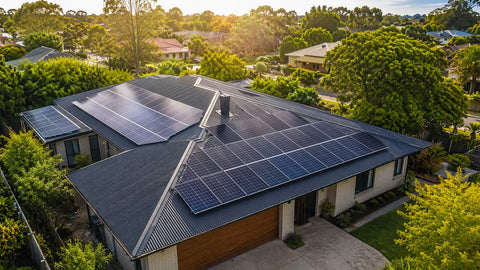
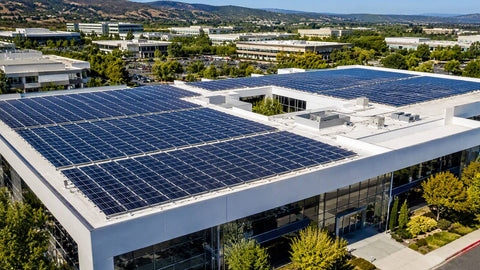
Canopies and solar integration deserve a look on sun-belt sites. A commercial solar canopy over charging stalls provides shade (which measurably improves both driver experience and battery thermal behavior in summer), generates offsetting energy, and qualifies the structure for the solar ITC in many configurations. We supply both sides of that package, and the combined projects consistently show better 10-year economics than charging-only builds at the same site.
Operations, Maintenance, and Networking: The Costs After Opening Day
Budget O&M from day one or the asset degrades visibly. Level 2 commercial ports need $300–$600/year each for networking, software, payment processing, and occasional cable/holster replacement — cables are consumables at public sites, plan on replacement every 2–4 years at high-traffic locations. DC fast chargers need service contracts, typically $3,000–$8,000 per stall per year, because power electronics at 400+ volts with liquid-cooled cables are not a DIY maintenance item. Uptime SLAs matter: a networked charger that's down 15% of the time loses more than 15% of revenue, because drivers delete unreliable stations from their mental map. The operators with 97%+ uptime all do the same boring things: remote monitoring with automatic ticketing, a stocked spare cable on site, and a service contract with a named response time.
A Commercial Cost Case Study: Retail Site, Six Stalls
Composite of several grocery-anchored retail projects we've supplied: six stalls — four Level 2 dual-port pedestals (eight charging spaces) plus two 180 kW DC fast stalls. Hardware, about $95,000. Electrical service upgrade with a new 1,000 kVA transformer section and switchgear, $140,000. Site work including trenching, boring under a drive aisle, pads, bollards, striping, and signage, $85,000. Engineering, permits, and utility fees, $30,000. Networking and software year one, $6,000. Total: roughly $356,000, of which the chargers themselves were 27%. Federal 30C credits and a state rebate covered about $120,000 of that. Payback at modeled utilization ran just under seven years — respectable for an amenity that also drives basket size while drivers wait. The owner's own words at the ribbon cutting: "I thought I was buying chargers. I was actually buying a utility project that comes with chargers."
Choosing Equipment: Networked vs. Non-Networked, and What Actually Matters
The hardware decision tree is simpler than vendor marketing suggests. For a private home charger, non-networked or Wi-Fi-connected units both work — the app features (scheduling, utility rate sync, energy tracking) are worth $100–$200 of the price spread, and everything beyond that is decoration. For any shared, commercial, or billable installation, networked EVSE is non-negotiable: access control, per-user billing, load management, and uptime monitoring all require connectivity, and retrofitting it costs more than buying it upfront.
| Decision | Residential Guidance | Commercial Guidance |
|---|---|---|
| Amperage | Match the car's onboard limit (usually 32–48A) | 19.2 kW ports maximize vehicle compatibility; load-share above 4 ports |
| Connectivity | Wi-Fi models for scheduling/rate sync | Cellular + OCPP networking mandatory for billing and uptime |
| Cable length | 18–25 ft; longer reaches a second parking spot | 25 ft minimum; cable management retractors at public sites |
| Connector | J1772 or NACS per vehicle; adapters fine as backup | Dual-standard or field-swappable cables future-proof the stall |
| Enclosure rating | NEMA 3R minimum outdoors; NEMA 4 in harsh climates | NEMA 3R/4 with vandal resistance at unsupervised sites |
Cable management is the detail commercial buyers underrate. A 25-foot liquid-cooled DC fast cable weighs enough that drivers drop it, and a dropped connector on wet pavement is a service call. Retractors and holsters add $300–$800 per stall and pay for themselves the first winter. Check the Level 3 charger lineup and Wallbox units for current hardware across both classes.
Project Timeline: From Decision to Energization
PMs consistently underestimate duration more than cost. Residential runs 2–6 weeks end to end: a week to quote, a week for the permit, a day for the install, and inspection scheduling on the jurisdiction's calendar. Commercial Level 2 runs 3–6 months with permitting and utility review on the critical path. DC fast runs 6–18 months, and the long pole is almost never construction — it's the utility's service design and transformer lead time, which we've seen stretch past 9 months in growth markets. Order long-lead electrical gear the week the design freezes, submit the utility application before final design, and sequence the site civil work so a slipped transformer date doesn't idle a finished parking lot. Every month of utility delay is a month of revenue that never comes back.
Residential Deep Dive: Where Home Installation Quotes Diverge
Two homeowners, same charger, quotes of $900 and $2,400 — both legitimate. The delta almost always traces to four things. Circuit length: 15 feet versus 60 feet of 6 AWG copper in conduit is a $300–$500 material and labor swing. Wall type: open garage studs versus finished drywall with fishing and patching. Panel location: a garage panel is a morning; a basement panel on the opposite corner of the house is a day. And permitting overhead: some jurisdictions inspect same-week for $75; others take three weeks and $250. This is why we tell homeowners to ignore per-port national averages and get route-specific quotes — national averages describe a house that doesn't exist.
One more residential trap: the "we can just use the dryer outlet" idea. Dryer circuits are 30A on 10 AWG wire, sized for intermittent use, and sharing one between a dryer and an EV via a switcher violates the listing of most equipment and the intent of NEC 625. A dedicated circuit is the right answer, and on a 200A panel it's rarely more than a few hundred dollars more than the clever workaround that creates a load-management headache forever.
Revenue Models: How Commercial Charging Pays for Itself
Public and semi-public charging generates revenue four ways, and the strongest sites stack all of them. Per-kWh or per-session fees are the obvious line — typical retail pricing runs $0.25–$0.45/kWh for Level 2 and $0.40–$0.60/kWh for DC fast against electricity costs of $0.08–$0.20/kWh. Dwell-time revenue is the sleeper: a driver charging 35 minutes at a grocery or retail site spends measurably more than a fuel-only stop, which is why site hosts increasingly treat charging as an amenity with P&L upside rather than a standalone profit center. Advertising on charger screens adds modest income at high-traffic sites. And in some markets, utility or state programs pay for availability — guaranteed uptime contracts that monetize reliability rather than electrons.
The utilization math is unforgiving: a $200,000 DC fast stall needs roughly 15–25% utilization at healthy margins to cover debt service, O&M, and electricity. That's 4–6 sessions a day at typical session energies. Sites that hit it share traits — highway visibility, amenities within a two-minute walk, reliable uptime, and pricing at or slightly below the corridor norm. Sites that miss it usually compromised on one of those four to save capital cost, which is backwards: in this business, revenue risk dwarfs capital cost risk.
Your Top Questions About EV Charger Installation Costs
Is a Level 2 Charger Really Worth the Extra Cost?
For daily drivers, absolutely — Level 1's 3–5 miles of range per hour can't keep up with a real commute. The $1,200–2,500 all-in cost of a Level 2 install typically pays back in 18–36 months against public DC fast charging prices, and faster against paid workplace or retail charging.
How Can I Tell If My Electrical Panel Needs an Upgrade?
Three checks: the main breaker rating (100A is marginal, 200A is comfortable), physical spaces for a new double-pole breaker, and a NEC 220.83 load calculation. If the first two fail, the third usually confirms it. If it's close, a load management module often bridges the gap for a few hundred dollars instead of a few thousand. An electrician can run the load calc in about twenty minutes with your appliance list and square footage — ask for it in writing before you commit to either path.
For a Commercial EV Project, What's the Biggest Cost?
Site work plus electrical service — typically 60–80% of total project cost combined. The chargers are the small number. This is why site selection and early utility engagement matter more than hardware negotiation.
Related Resources
- EV Charger Installation: Installing an EV Charger at Home
- Home EV Charger Benefits & Costs: Is It Worth It?
- Commercial EV Charging Station Installation
- Finding EV Charging Station Installers
- Public EV Charging Stations
- Solar EV Charging Solutions
- Request a Project Quote