SimpliPhi AccESS 15.2: The Complete Owner's Guide to the 4× PHI 3.8kWh / 12kW All-in-One Storage System
Four LFP batteries, a 12kW Sol-Ark hybrid inverter, and integrated charge control in one pre-engineered cabinet — specs, runtime math, code requirements, and real-world sizing.

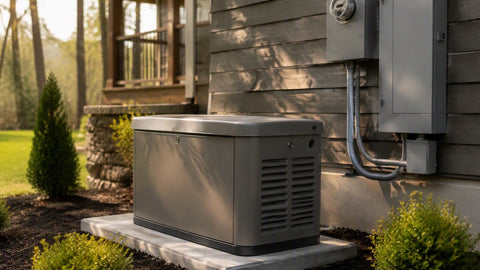
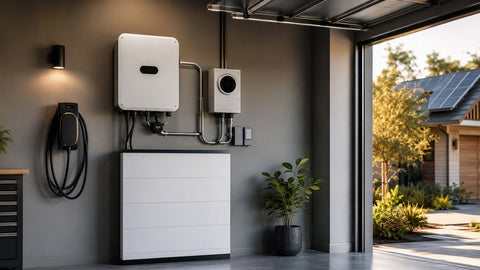
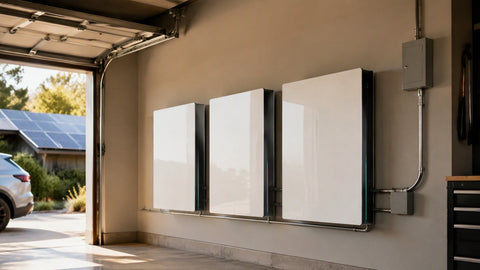
The SimpliPhi AccESS 15.2 occupies a rare middle ground in the storage market: big enough to run a whole home through an outage, engineered enough that an electrician can commission it in a day, and safe enough to mount in a garage without a hazmat conversation. The package combines four PHI 3.8kWh lithium ferro phosphate batteries, a 12kW hybrid inverter (the Sol-Ark 12K in the A-4PHI-SA-12 configuration), and integrated multi-stage charge controllers in a single enclosure. This guide covers what the system actually delivers — usable capacity math, runtime against real loads, the NEC articles your inspector will cite, cold-weather behavior, and the expansion path when 15.2kWh stops being enough. If you're shopping the category broadly, it helps to know where the AccESS sits: it is not the cheapest way to store a kilowatt-hour, and it is not trying to be. It is the option for buyers who intend to own the system for two decades and want the safety file, the warranty, and the expansion mechanics to be as durable as the cells themselves.
SimpliPhi Power — now part of Briggs & Stratton Energy Solutions — built its reputation on the PHI battery line: cobalt-free lithium ferro phosphate cells in a form factor originally ruggedized for film production and military field power. The AccESS (All-in-one Energy Storage System) wraps four of those batteries around a hybrid inverter and factory-integrated charge control, eliminating the three most common DIY storage failure points: mismatched inverter/battery communications, undersized DC cabling, and improvised charge profiles.
For the full brand backstory and how the PHI chemistry differs from commodity LFP, see our SimpliPhi Power brand guide. The short version: LFP cells have no cobalt and no nickel, which means no thermal-runaway propagation pathway of the kind that gave early lithium home batteries their reputation — a PHI cell can be punctured, shorted, or overcharged in testing without fire, which is why the line carries some of the most permissive indoor-mounting documentation in the industry.
The inverter half of the package deserves equal attention. The 12kW hybrid unit inside the A-4PHI-SA-12 is a split-phase 120/240V machine that can run grid-interactive, grid-zero, or fully islanded, with enough surge headroom to start well pumps and compressor loads that stall lesser inverters. Because the inverter, batteries, and charge controllers ship as one engineered assembly, the system also arrives with a single warranty umbrella — one phone number covers every component, which anyone who has ever mediated a battery-maker-versus-inverter-maker warranty dispute will appreciate.
| Feature | Details |
|---|---|
| Battery type | Lithium Ferro Phosphate (LFP), cobalt-free |
| Total energy storage capacity | 15.2 kWh nominal (4 × 3.8 kWh) |
| Battery units | 4× PHI 3.8kWh modules |
| Inverter capacity | 12 kW hybrid (Sol-Ark 12K in A-4PHI-SA-12 configuration) |
| System voltage | 48 V DC nominal |
| Charge controllers | Integrated, multi-stage |
| Depth of discharge | Up to 80% recommended for rated cycle life; 100% capable |
| Cycle life | 10,000+ cycles at 80% DoD per PHI battery datasheet |
| Warranty | 10 years or more |
| Applications | Residential, commercial, off-grid |
Marketing says 15.2kWh. Your loads see less — and that's by design, because depth of discharge is the lever that buys you the 10,000-cycle life. Here's the honest arithmetic:
| Operating Mode | Calculation | Usable Energy | Cycle-Life Impact |
|---|---|---|---|
| Nameplate | 4 × 3.8 kWh | 15.2 kWh | — |
| Recommended daily cycling (80% DoD) | 15.2 × 0.80 | 12.16 kWh/day | 10,000+ cycles (~27 years daily) |
| Round-trip efficiency loss (~95% LFP) | 12.16 × 0.95 | ~11.6 kWh delivered to loads | — |
| Emergency deep discharge (100%) | 15.2 × 0.95 | ~14.4 kWh delivered | Occasional use; shortens cycle life |
| Lifetime throughput @ 80% DoD | 12.16 kWh × 10,000 cycles | ~121,600 kWh | Rated design life |
That last row reframes the purchase price: divide system cost by ~121 MWh of warranted lifetime throughput and the AccESS's cost per stored kWh delivered is competitive with any battery in its class — before you credit the safety profile. For a broader cost framework, our Generac PWRcell cost guide shows how to run the same math on a competing architecture, and EG4 vs Tesla Powerwall benchmarks the budget and premium ends of the market.
The question every buyer actually asks: how long will it run my house? Using 12.16kWh usable at the recommended 80% DoD, here is the runtime math against typical load profiles (with 12kW continuous inverter output, power is rarely the constraint — energy is):
| Load Scenario | Continuous Draw | Runtime on 12.16 kWh | Practical Note |
|---|---|---|---|
| Critical loads only (fridge, lights, router, furnace fan) | ~600 W | ~20 hours | Standard backup panel configuration |
| Critical loads + well pump cycling | ~900 W avg | ~13.5 hours | Pump surge handled easily by 12kW inverter |
| Average whole-home (no A/C, no electric range) | ~1,500 W | ~8 hours | Typical evening-through-morning outage |
| Whole home + 3-ton efficient A/C | ~3,500 W | ~3.5 hours | Runtime, not capacity, is the limit |
| Off-grid daily cycle with 8kW solar array | Net-zero most days | Indefinite (solar refills daily) | Design point for off-grid use |
To model your own load list against battery capacity, use our battery backup runtime calculator and the battery sizing calculator — both let you enter actual appliance draws rather than averages.
The AccESS is a listed energy storage system, which means the installation lands under NEC Article 706 (Energy Storage Systems) with the 48V battery plant additionally touching Article 480 (Storage Batteries) requirements for venting and disconnects, and the PV charging side under Article 690. The checkpoints that decide pass/fail on inspection day:
| Item | Requirement | AccESS-Specific Note |
|---|---|---|
| ESS disconnect (NEC 706.15) | Readily accessible disconnecting means for the storage system | Inverter's built-in AC/DC disconnects typically satisfy this; verify AHJ interpretation |
| AC output breaker (NEC 240.6 + 210.19 125% rule) | 12,000 W ÷ 240 V = 50 A continuous × 1.25 = 62.5 A → 70 A breaker | 70 A is the next standard size up per NEC 240.6(A) |
| AC output conductor (NEC 310.16, 75°C Cu) | 62.5 A minimum ampacity → 4 AWG copper (85 A) | 6 AWG only if 60°C termination allowances apply — they rarely do |
| DC battery circuit | 12,000 W ÷ 48 V ≈ 250 A at full discharge rate | 4/0 copper battery cable; factory harness is pre-sized — do not substitute |
| Working clearances (NEC 110.26) | 36" depth in front of equipment | Applies to the inverter face, not the whole room |
| Location | Follow listing and manufacturer instructions (NEC 706.10) | LFP chemistry + listing documentation simplifies garage mounting |
For deeper grounding and bonding practice on hybrid systems, our NEC code compliance guide walks the inspector's checklist end to end.
Solar Charging and the Integrated Controllers

The AccESS's integrated multi-stage charge controllers handle the battery side of the relationship: bulk, absorption, and float profiles matched to the PHI chemistry. The practical benefit over a generic inverter-charger is charge termination accuracy — LFP cells want precise voltage ceilings, and overcharging is the one abuse that meaningfully shortens their life. The multi-stage profile holds the bank inside the chemistry's happy zone across seasons without user tuning.
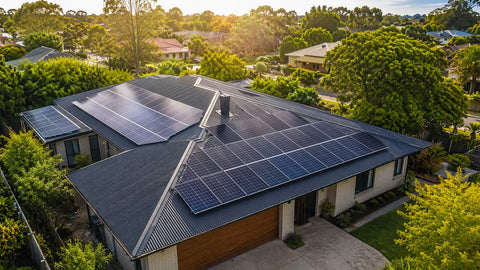
Paired with the 12kW hybrid inverter, the system accepts a substantial PV array and can operate grid-tied with sell-back, grid-tied with backup, or fully off-grid. If you're weighing hybrid architectures against separate charge-controller builds, our comparison of Sol-Ark hybrid inverters — the same inverter family inside this package — and the overview of inverters for solar battery systems map the alternatives. For off-grid system design from scratch, start with best off-grid solar system architecture and the off-grid battery sizing guide.
The modular PHI architecture is the AccESS's long-game advantage. Homes grow — an EV arrives, a workshop gets a mini-split, a parent moves in — and storage that can't grow with the load profile becomes a stranded asset. Because every PHI module shares the same voltage class, battery management, and mechanical format, expanding an AccESS is an afternoon of rack work rather than a redesign. The expansion ladder:
| Stage | Configuration | Capacity | Fit |
|---|---|---|---|
| Base | 4× PHI 3.8kWh + 12kW | 15.2 kWh | Critical loads / modest whole-home backup |
| Step up | AccESS 19 (5× PHI 3.8kWh) | 19 kWh | Whole-home overnight, light A/C support |
| Expanded | Additional PHI batteries in cabinet/rack | 22.8 kWh+ | Off-grid daily cycling |
| Multi-unit | Stacked AccESS systems | 30 kWh+ | Commercial backup, large off-grid homes |
Browse current inventory across this capacity class in the 15–30kWh battery collection, and compare total-system bundles like the 10kW solar + battery kit if you're scoping a complete new build rather than retrofitting storage.
Because the AccESS costs more per kWh than a rack of commodity server batteries, it's worth laying the comparison out plainly rather than pretending the budget option doesn't exist. Here's how the two paths actually differ over a ten-year ownership window:
| Decision Factor | SimpliPhi AccESS 15.2 | DIY Rack Battery + Hybrid Inverter |
|---|---|---|
| Upfront cost per kWh | Premium | 30–45% lower |
| Commissioning time | ~1 day; factory-matched inverter/battery comms | 2–4 days including firmware, charge profiles, BMS integration |
| Safety documentation | Full abuse-test history; cobalt-free LFP; indoor-friendly listing paperwork | Varies widely by cell vendor; some rack batteries lack UL 9540 system-level listing |
| Cycle life rating | 10,000+ cycles @ 80% DoD | Typically 6,000 cycles claimed; real-world variance is large |
| Warranty support | Single vendor (Briggs & Stratton), 10 years | Split between battery maker, inverter maker, and you |
| Expansion | Drop-in PHI modules, same cabinet family | Add racks; mixing battery ages/chemistries requires care |
| Best for | Owners who value safety documentation, serviceability, and time | Hands-on builders with electrical experience and time to spare |
The honest summary: if your labor is free and your risk tolerance is high, a DIY bank wins on day-one cost. If you're paying an electrician by the hour, filing permits, or insuring the building, the AccESS's engineering premium frequently costs less over the project than the DIY path's commissioning hours and documentation gaps.
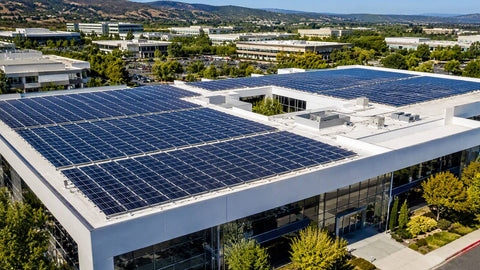
The AccESS isn't only a residential product — light commercial buyers use it for two distinct jobs. The first is backup: keeping point-of-sale systems, refrigeration, and network gear alive through outages with zero transfer delay. The second is demand-charge management. Many commercial rate schedules bill a monthly demand charge based on your single highest 15-minute power peak; a 12kW inverter that caps those peaks by discharging the battery can cut a demand-heavy bill by 20–30% without changing any operations. Run the payback like this: if your demand charge is $18/kW and the battery trims 10kW off your monthly peak, that's $180/month — $2,160/year — before counting the backup value or any solar self-consumption gains.
For businesses evaluating storage economics alongside generation, our commercial solar energy guide covers the rate-structure side, and the battery energy storage system overview explains how systems like this one are classified for permits and incentives.
LFP chemistry has one honest weakness: it cannot accept a charge below freezing. The PHI batteries manage this with built-in charge protection — below 32°F the battery simply refuses charge current until it warms, which protects the cells but surprises owners who mount the system in an unconditioned space. If you live where winters bite, mount the cabinet in an insulated garage or conditioned utility room; the modest thermal mass of four PHI modules keeps them above freezing through normal cold snaps, but a week at −10°F in an open shed will park the system exactly when you need it most. Discharge, by contrast, continues well below freezing — it's charging that's restricted.
On the hot side, LFP tolerates heat far better than lead-acid or NMC lithium, but sustained cabinet temperatures above 100°F still shave cycle life. Shade, airflow, and avoiding west-facing exterior walls in sunbelt climates are free longevity.
For extended outages, the AccESS pairs cleanly with a standby or portable generator through the hybrid inverter's generator input. The design pattern that works: battery carries the loads overnight in silence, generator runs two to four hours in the morning to refill the bank and carry heavy loads simultaneously. That duty cycle cuts generator runtime — and fuel consumption, noise, and maintenance — by 70–80% versus generator-only backup, which is why hybridized backup has largely replaced the generator-only approach in our outage-prone service areas. Sizing the generator side of that pair is covered in our whole-home generator sizing guide.
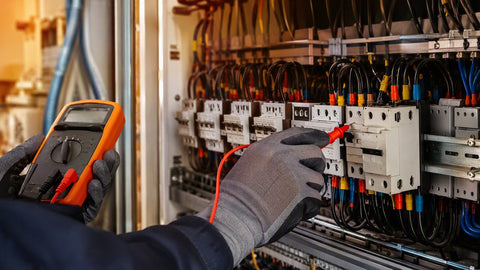
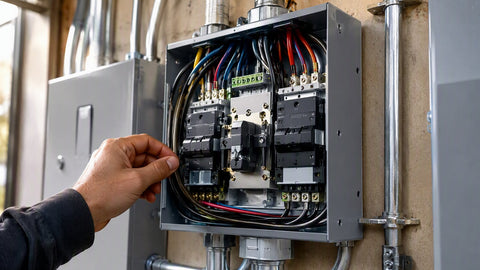
A professional AccESS install follows a predictable sequence. The crew confirms the wall or pad can carry the cabinet weight, sets and levels the enclosure, lands the factory battery harnesses, and mounts the inverter interface. The AC side gets its 70A breaker and 4 AWG run back to the main or a backup subpanel; the PV side lands on the integrated controllers; the electrician then verifies polarity, torques every DC lug to spec, and only then energizes. Commissioning is a firmware-and-settings pass: grid mode selection, sell-back enable or disable, charge limits, and the backup subpanel test where the crew kills the mains and watches the transfer. Plan on the power being down for a few hours during panel work. After that, the system is boring — which is exactly what you want from infrastructure.
LFP storage is not maintenance-free, but it's close: no watering, no equalization charges, no venting schedules. What remains is firmware updates, annual visual inspection of connections, and — the single biggest longevity lever — avoiding chronic 100% states of charge in daily cycling. Treat 20–80% as the everyday operating band and reserve full charges for storm prep. Keep the cabinet vents clear of storage boxes and dryer lint, check the display monthly for fault codes, and log your cycle count annually so warranty documentation is effortless if you ever need it. Our guide on extending solar battery life details the 20–80% operating band and temperature management that keep the PHI chemistry inside its 10,000-cycle envelope. For household context on what these batteries back up, battery storage for home solar covers the use-case taxonomy. Choosing among chemistries and brands more broadly starts with the best solar batteries roundup and the solar battery buyer's guide.
How long will the SimpliPhi AccESS 15.2 run my house in an outage?
At the recommended 80% depth of discharge you have 12.16kWh usable (about 11.6kWh delivered after round-trip losses). That runs critical loads (~600W) for roughly 20 hours, an average home without A/C (~1,500W) for about 8 hours, or a home with efficient air conditioning (~3,500W) for about 3.5 hours. Energy capacity, not the 12kW inverter, is the runtime constraint.
Is the PHI lithium ferro phosphate chemistry actually safer?
Yes. PHI cells are cobalt-free LFP, with no thermal-runaway propagation pathway — they can be punctured or overcharged in abuse testing without fire. That safety documentation is why the AccESS carries permissive indoor and garage mounting guidance compared with nickel-chemistry batteries.
What breaker and wire size does the 12kW inverter need?
Per NEC 240.6 and the 125% continuous-load rule: 12,000W ÷ 240V = 50A, × 1.25 = 62.5A, so a 70A breaker (next standard size) with 4 AWG copper conductors per NEC Table 310.16 at 75°C. The 48V DC battery side draws about 250A at full output and uses factory 4/0 harnessing.
Can I add more batteries later?
Yes — the modular PHI architecture scales from the base 4×3.8kWh (15.2kWh) to 5 modules (19kWh) and beyond, and multiple AccESS units can stack for 30kWh+ commercial or off-grid builds. Expansion is a cabinet-and-busbar job, not a system replacement.
How many cycles will the batteries last?
The PHI 3.8kWh datasheet rates 10,000+ cycles at 80% depth of discharge — daily cycling for over 27 years. Lifetime throughput works out to roughly 121,600kWh, which is the number to divide system cost by when comparing cost per stored kWh across brands.
Can the AccESS work completely off-grid?
Yes. With a properly sized PV array (typically 8kW+), the integrated charge controllers and 12kW hybrid inverter run fully off-grid, refilling the bank daily. It also supports grid-tied with sell-back and grid-tied backup modes if you keep utility service.
What maintenance does the system need?
Very little: keep vents clear, review the display monthly for fault codes, hold daily cycling inside a 20–80% state-of-charge band, and install firmware updates when Briggs & Stratton releases them. There is no watering, equalization, or venting schedule as with lead-acid banks.
Ready to spec an AccESS for your home or project? We stock the SimpliPhi AccESS line and the full PHI battery family. Call 866-607-3636 for system design help, freight quotes, and current lead times.