Last Updated: August 2026 • A Practical Sizing Guide for Commercial Property Owners, Farm Operators, and Large Estate Buyers
Producing 10,000 kWh of electricity per month from solar is a serious engineering target-roughly 11 times the average U.S. household's consumption, or about 333 kWh every day. Businesses, farms, multi-family complexes, and large estates hitting this number need a system that is sized correctly the first time, because getting the math wrong on a project this size means tens of thousands of dollars in wasted capital or years of underperformance.
Sizing a system of this scale is not a single calculation-it is a sequence of decisions that build on each other: your real consumption, your location's sun resource, your panel and inverter selection, your space constraints, and your budget. This guide walks through that sequence step by step, so you arrive at a system spec you can hand to an installer with confidence.
We've walked this exact sequence with farm operators outside Louisville, warehouse owners running three shifts, and estate buyers who just wanted the pool heat and the EVs covered. The ones who get burned all skip Step 1 — they size to a round number instead of their bills. The ones who get it right treat the math below as the opening bid, then pressure-test it against their actual roof, their actual utility tariff, and their actual budget.
⚡ Quick Answer
Sizing a 10,000 kWh/month solar system requires seven key steps: (1) confirm your actual monthly and annual energy target from utility bills, (2) apply the core panel-count formula, (3) adjust for your location's peak sun hours, (4) select panel wattage and technology, (5) size your inverter and battery storage, (6) confirm you have enough roof or ground space, and (7) budget the full installed cost. Most 10,000 kWh/month systems land at 70–110 kW DC, use 120–275 panels, and cost $150,000–$270,000 fully installed before incentives.
Key Takeaways for Sizing a 10,000 kWh/Month System
- System Size: A 10,000 kWh/month target typically requires 70–110 kW DC, or roughly 120–275 panels depending on wattage and location.
- Peak Sun Hours Drive Panel Count More Than Anything Else: Phoenix (6.5 PSH) needs roughly half the panels Seattle (3.5 PSH) needs for the same output.
- Higher Wattage Cuts Panel Count: Moving from 400W to 580W panels reduces panel count by about 31%, lowering labor and racking costs.
- Space Is Rarely the Limiting Factor: Most systems this size need 3,700–5,000 sq ft of unobstructed roof or about 0.1 acre of ground mount.
- Batteries Are Optional, Not Automatic: Grid-tied systems with net metering are usually the most cost-effective; add storage only when demand charges, outage risk, or time-of-use rates justify it.
- Incentive Rules Have Shifted for 2026: The residential 30% federal credit expired at the end of 2025; third-party-owned systems can still capture Section 48E credits through 2027 under FEOC sourcing rules.
- PES Supply: Tier 1 solar panels, inverters, battery storage, racking, and switchgear available at wholesale pricing with nationwide delivery and free system-sizing support.
In This Guide
- Step 1: Confirm Your Actual Energy Target
- Step 2: Apply the Core Sizing Formula
- Step 3: Adjust for Peak Sun Hours in Your Location
- Step 4: Select Panel Wattage and Technology
- Step 5: Size Your Inverter and Battery Storage
- Step 6: Confirm You Have Enough Space
- Step 7: Budget the Full Installed Cost
- Federal and State Incentives for 2026
- Quick Reference: Panel Count by Wattage and Sun Hours
- Frequently Asked Questions
Before running any panel-count math, pull your last 12 months of utility bills and confirm the number you are actually designing for. "10,000 kWh per month" is a useful planning figure, but your real target should come from your bills, not a round number. The average American home uses about 900 kWh per month according to the U.S. Energy Information Administration, so a 10,000 kWh target sits over 11 times that-roughly 333 kWh per day, or 14 kWh every hour around the clock.
Properties operating at this level are typically large commercial buildings, manufacturing or warehouse operations, multi-family residential complexes, farms with irrigation and processing loads, or large estates with EV charging, pools, and extensive HVAC. Design for your annual average monthly usage, not your single highest month-designing to your peak month oversizes the system and wastes capital on months you will rarely see.
What to Pull From Your Bills Before Sizing
- Total annual kWh consumption: Sum 12 months of usage and divide by 12 to get your true average monthly target.
- Seasonal variation: Note your highest and lowest usage months-this matters more in climates with large PSH swings between summer and winter.
- Demand charges: If your commercial rate includes a demand charge based on peak 15-minute draw, this affects whether battery storage makes financial sense.
- Available roof or land area: A rough estimate of usable space helps confirm the project is physically feasible before spending on design.
The fundamental calculation divides your monthly energy target by the monthly output of a single panel. Getting the per-panel output right depends on two variables: panel wattage and your location's peak sun hours (PSH).
📐 The Solar Sizing Formula
Panels Needed = Monthly kWh Target ÷ (Panel Watts ÷ 1,000 × Peak Sun Hours × 30 days)
After the base count, add a 15% system loss factor for wiring resistance, inverter conversion, soiling, temperature derating, and module mismatch-consistent with derate factors used in tools like PVWatts.
| Step | Calculation (400W panel, 5.0 PSH) |
|---|---|
| Daily output per panel | 400W × 5 hrs ÷ 1,000 = 2.0 kWh |
| Monthly output per panel | 2.0 kWh × 30 = 60 kWh |
| Panels before losses | 10,000 ÷ 60 = 167 panels |
| Add 15% system losses | 167 × 1.15 = ~192 panels |
| Total system size | 192 panels × 400W = 76.8 kW DC |
⚠ Don't Estimate-Use Your Actual Bills
Submit your actual 12-month utility history rather than a rough estimate. Monthly usage varies by season, and designing off your true annual average-rather than an assumed flat 10,000 kWh-prevents oversizing while keeping you on track for your annual production target.
Peak sun hours are the single biggest variable in your panel count and the factor most often underestimated by first-time system planners. One peak sun hour equals 1,000 watts of solar energy hitting one square meter for one hour-it is a measure of usable solar intensity, not simply daylight hours. A city like Phoenix averages around 6.5 PSH annually, while Seattle averages closer to 3.5. That gap alone can nearly double the panel count needed for the same 10,000 kWh target.
| Location | Avg. Peak Sun Hours | 400W Panels Needed* | System Size (kW DC) |
|---|---|---|---|
| Phoenix, AZ | 6.5 | 148 | 59.2 |
| Miami, FL | 5.8 | 166 | 66.4 |
| Denver, CO | 5.5 | 175 | 70.0 |
| Louisville, KY | 4.5 | 214 | 85.6 |
| Portland, OR | 4.2 | 229 | 91.6 |
| Seattle, WA | 3.5 | 275 | 110.0 |
*All figures include a 15% system loss factor.
One thing I insist on with every commercial proposal: monthly PVWatts runs, never an annual average. I've seen a Louisville warehouse project pencil beautifully on an annual 4.2 PSH and then come up 18% short in December and January — right when the electric heat was running. The annual number hides the winter, and the winter is where undersized systems get exposed.
⚠ Design for Your Lowest-Producing Months
PSH varies significantly by season-a site averaging 5.0 PSH annually might see 7.0 in summer and only 3.0 in winter. If your load is consistent year-round, size for your worst months or pair the system with battery storage and grid backup to cover the gap. Ask your installer for monthly PVWatts modeling, not just an annual average.
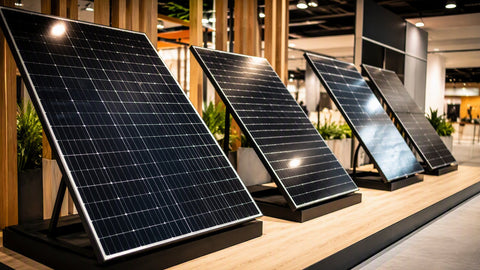
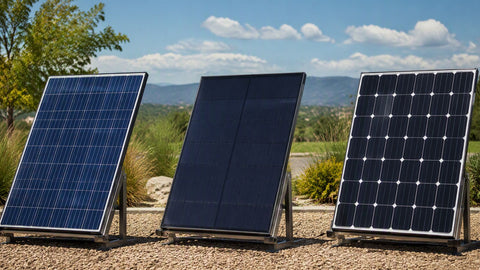
Today's Tier 1 panels range from 400W to 600W+ for commercial-scale modules. Higher-wattage panels produce more energy per square foot, directly reducing panel count. Moving from 400W to 580W panels cuts the panel count by roughly 31%-a meaningful reduction in labor, racking, and wiring costs on a system this size.
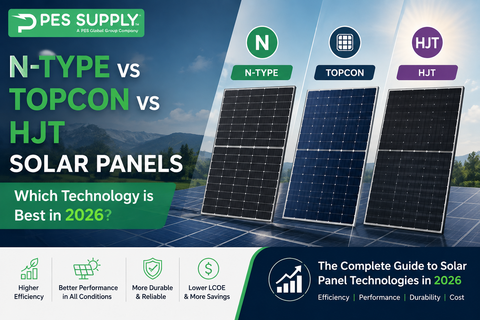
Panel technology compounds this advantage. N-type TOPCon and HJT panels deliver 23–26% cell efficiency, lower temperature coefficients (−0.26% to −0.32%/°C versus −0.35% to −0.40%/°C for P-type PERC), and slower annual degradation (0.4–0.5% versus 0.8–1.0%). Over a 25–30 year system life at this scale, that difference adds up to tens of thousands of additional kWh produced. Our N-type vs. P-type breakdown goes deeper on the cell technology, and the solar panel collection shows current Tier 1 pricing by wattage — high-volume modules like the United Renewable 445W and the Trina Vertex S 385W bifacial pallet are the kind of buys that move a project this size.
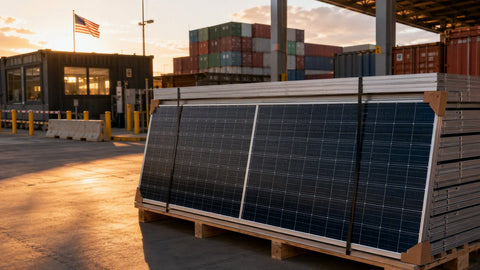
At this scale I steer buyers toward pallet-quantity 540W+ modules almost every time. Fewer clamps, fewer homeruns, fewer points of failure — and on a 130-panel job, the racking and labor savings usually beat whatever you gave up in per-watt pricing.
| Factor | Impact on Output | Mitigation |
|---|---|---|
| Lower-Wattage Panels | Requires more panels (+31% at 400W vs. 580W) | Upgrade to 500W–600W Tier 1 modules |
| East/West Orientation | −10% to −20% vs. south-facing | Add panels to compensate, or use ground mount |
| Partial Shading | −30% to −50% per affected string | Microinverters or DC power optimizers |
| High Temperature (45°C+) | −10% to −15% from STC rating | N-type panels with low temperature coefficients |
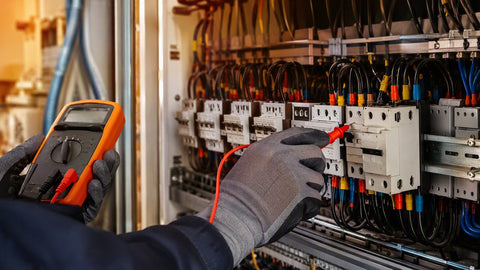
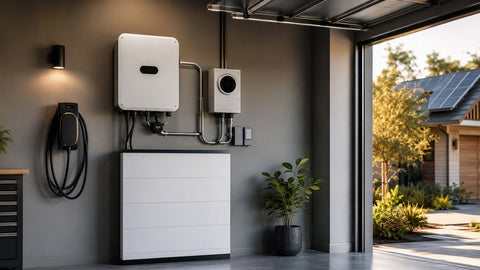
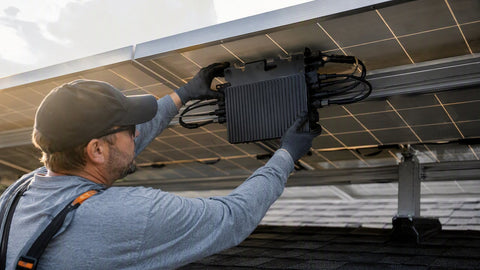
Panels alone don't make a functional system. For a roughly 77 kW DC array, inverters totaling at least 60–77 kW AC are typical, depending on your utility's DC-to-AC ratio requirements. String inverters suit uniform, unshaded arrays at the lowest cost; microinverters handle complex rooflines or shading with panel-level optimization; hybrid inverters add battery integration for backup and self-consumption.
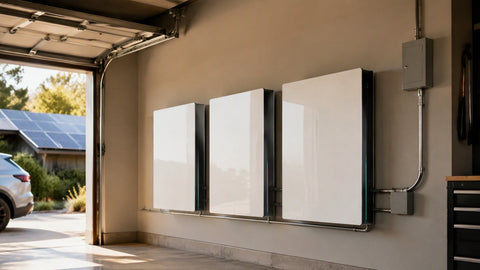
For a property consuming 333 kWh per day, a battery bank of 40–80 kWh covers 4–8 hours of critical loads. Add storage when demand charges are significant, your operations need outage resilience, or time-of-use rates create a strong arbitrage case-not by default. Browse current options in our inverter collection and battery storage collection, or shortcut the spec work with a pre-engineered solar panel power system kit. Our solar system size calculator is a fast sanity check on the array math before you request formal quotes.
| Component | Sizing for ~77 kW System | Best For |
|---|---|---|
| String Inverters | 60–77 kW AC total | Uniform, unshaded arrays, lowest cost |
| Microinverters | One per panel (~192 units at 400W) | Complex rooflines, shading, mixed orientations |
| Hybrid Inverters | 60–77 kW AC with battery ports | Backup power, self-consumption, off-grid |
| Battery Storage (ESS) | 40–80 kWh (4–8 hrs critical loads) | Peak shaving, TOU arbitrage, outage backup |
💡 Pro Tip: DC-to-AC Ratio
Most utilities allow a DC-to-AC ratio of 1.2–1.3, so a 77 kW DC array can often pair with inverters rated near 60 kW AC. This clips a small amount of midday peak production while lowering inverter cost, with little impact on total annual energy. Confirm your utility's interconnection rules before finalizing.
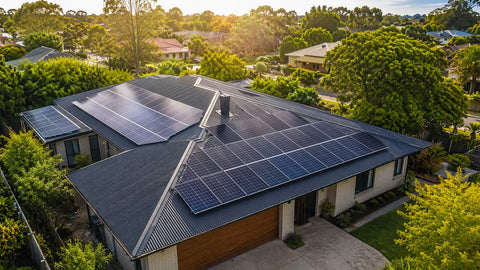
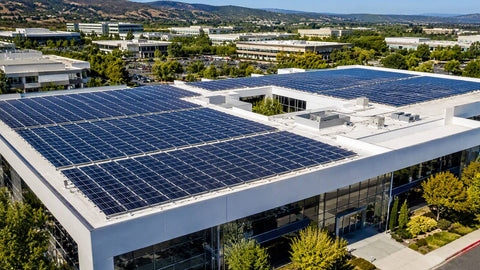
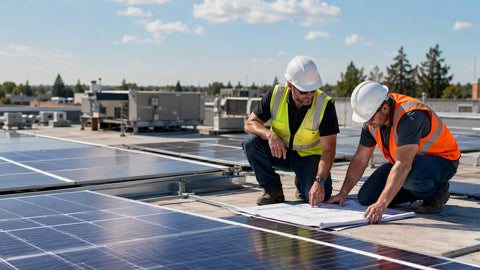
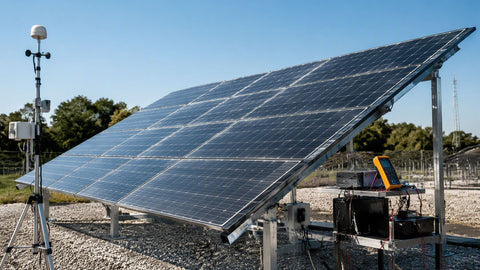
A standard 400W panel measures about 6.8 ft × 3.4 ft (~23 sq ft). A 580W commercial panel is larger-roughly 7.5 ft × 3.8 ft (~28 sq ft)-but needs fewer units for the same output. For a 192-panel, 400W system, plan on 4,400–5,000 sq ft of unobstructed area once setbacks, fire-code pathways, and row spacing are factored in-roughly a large commercial rooftop or about a tenth of an acre for ground mount.
| Panel Type | Area per Panel | Panels for 10K kWh* | Total Area Needed |
|---|---|---|---|
| 400W Residential | ~23 sq ft | 192 | 4,400–5,000 sq ft |
| 580W Commercial | ~28 sq ft | 132 | 3,700–4,200 sq ft |
*Based on 5.0 PSH with 15% system losses, including setbacks and row spacing.
⚠ Roof Space Limited? Consider Ground Mount
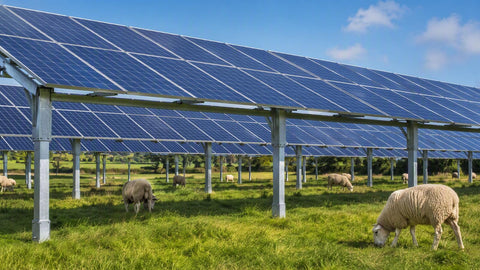
Ground-mount systems allow optimal south-facing orientation, ideal tilt for your latitude, easier maintenance access, and bifacial panels paired with reflective ground surfaces for 10–25% additional energy gain. For systems above 50 kW with available land, ground mount is often the stronger choice.
Understanding the full cost breakdown for a 77 kW system helps you evaluate bids and avoid surprises. Get at least three competing quotes using the same load analysis and site data, since commercial-scale pricing can vary 15–30% between installers for comparable equipment.
| Cost Component | Cost Range (77 kW System) | Notes |
|---|---|---|
| Solar Panels (Wholesale) | $19,000–$42,000 | $0.25–$0.55/W depending on brand, technology, and volume |
| Inverters | $8,000–$20,000 | String lowest; microinverters highest |
| Racking & BOS | $10,000–$18,000 | Roof vs. ground mount; wind and snow loads |
| Battery Storage (Optional) | $20,000–$60,000 | 40–80 kWh; varies by chemistry and brand |
| Installation Labor | $40,000–$80,000 | Varies by region, complexity, and permitting |
| Total Installed Cost | $150,000–$270,000 | $2.00–$3.50/W all-in, before incentives |
After quoting commercial arrays for years, I can tell you the bids that go sideways share one trait: they hide the balance-of-system. Panels and inverters are commodity pricing — anyone can check them. Racking, switchgear, trenching, and utility interconnection fees are where a $150,000 bid quietly becomes $210,000. Force every bidder to itemize BOS and interconnection separately, or you're comparing apples to invoices.
⚠ 2026 Incentive Alert
The residential 30% federal solar tax credit (Section 25D) expired at the end of 2025 under the One Big Beautiful Bill Act. Third-party-owned systems-leases, PPAs, and prepaid products-installed through the end of 2027 can still qualify for Section 48E credits, including domestic content bonuses, though strict FEOC (Foreign Entity of Concern) sourcing rules now apply. Many states still offer rebates, SRECs, or performance-based incentives that stack on top. Consult a tax advisor before committing to a financing structure.
| Incentive | Value | Who Qualifies |
|---|---|---|
| Section 48E ITC (Third-Party-Owned) | Up to 30–40% of system cost | Leases and PPAs installed through end of 2027, subject to FEOC sourcing rules |
| MACRS 5-Year Depreciation | Full system cost depreciated over 5 years | Businesses that own the system with sufficient tax liability |
| USDA REAP Grant | Up to 50% of project cost | Agricultural producers and rural small businesses |
| State Tax Credits & SRECs | 5–25% of system cost, varies by state | Businesses in NY, MA, MD, NM, and other participating states |
| Panel Wattage | 3.5 PSH | 4.5 PSH | 5.5 PSH | 6.5 PSH |
|---|---|---|---|---|
| 350W | 314 | 244 | 200 | 169 |
| 400W | 275 | 214 | 175 | 148 |
| 450W | 244 | 190 | 156 | 132 |
| 500W | 220 | 171 | 140 | 118 |
| 580W | 190 | 148 | 121 | 102 |
*All figures include a 15% system loss factor.
Is 10,000 kWh per month realistic for solar?
Yes. A 70–110 kW system can produce 10,000 kWh monthly depending on your location's peak sun hours. These are common sizes for commercial rooftops, agricultural operations, and large residential estates, provided there is sufficient roof or ground space and access to quality Tier 1 equipment.
How many panels do I actually need?
It depends on panel wattage and your local peak sun hours. At 400W panels and 5.0 PSH, plan on roughly 192 panels (76.8 kW DC). Moving to 580W panels drops that to about 132. In sunnier markets like Phoenix, 400W count falls to 148; in cloudier markets like Seattle, it can rise to 275.
Do I need battery storage?
Not necessarily. Grid-tied systems without batteries are usually most cost-effective where net metering is available. Add storage if you want outage backup, face demand charges, or can benefit from time-of-use rate arbitrage-a 40–80 kWh bank covers 4–8 hours of critical loads for a 333 kWh/day property.
What is the payback period for a system this size?
Most commercial-scale systems pay back in 5–10 years depending on local rates, incentives, and financing, with many moderate-to-high-rate markets achieving payback in 6–8 years before continuing to generate savings for the system's remaining 17–27 warranted years.
Ready to Size Your 10,000 kWh System?
PES Supply provides wholesale Tier 1 solar panels, inverters, batteries, racking, and switchgear with nationwide delivery. Whether you're a property owner, farm operator, or contractor quoting a commercial project, our team can help you spec the right equipment at the right price.
Get a Free Custom QuoteSubmit Your Bill for AnalysisRelated Guides
- N-Type vs. P-Type Solar Panels: The Complete 2026 Guide
- Solar Panel Cost: What Should I Actually Pay?
- Lease vs. Loan vs. Cash: Which Option Is Best?
- How Many Solar Panels for 1,500 kWh Per Month?
- Solar System Size Calculator
- Request a Quote - Wholesale pricing on commercial panels, inverters, and complete system kits
About PES Supply
PES Supply is a nationwide distributor of Tier 1 solar panels, commercial inverters, battery storage systems, EV charging hardware, racking, switchgear, circuit breakers, generators, and complete electrical project kits. With a catalog of 50,000+ SKUs spanning 169 authorized brands, full OEM warranties, and nationwide LTL freight delivery from our Louisville, Kentucky supply house, PES Supply serves contractors, EPCs, developers, and businesses with fast delivery, wholesale pricing, and expert procurement guidance.
Location: 1507 Portland Ave, Louisville, KY, United States | Phone: 1 888-876-0007 | Website: www.portlandiaelectric.supply
Article: How Many Solar Panels Do I Need for 10,000 kWh Per Month?-The Complete 2026 Guide
Category: Solar Technology | System Sizing | Commercial Solar
Last Updated: August 2026
Disclaimer: System sizing estimates, cost figures, and incentive information referenced in this guide are based on industry-standard calculations and current federal and state programs as of August 2026. Always consult a licensed tax advisor, financial professional, and qualified solar EPC before making investment decisions. Incentive programs and rates are subject to change.