An automatic transfer switch is the brain of a standby power system — the device that notices the grid has failed, starts your generator, moves your home's electrical load from utility to generator power, and reverses the whole process when the lights come back on. I've commissioned ATS units in everything from modest ranches to small commercial buildings, and the pattern holds everywhere: when a standby system works flawlessly, nobody remembers the transfer switch exists, and when it fails, it's the only thing anyone talks about. This guide covers what the switch actually does, the step-by-step sequence with real timing numbers, the different types, how to size one under the NEC, and the installation details that separate a clean commissioning from a callback.

What an Automatic Transfer Switch Actually Does
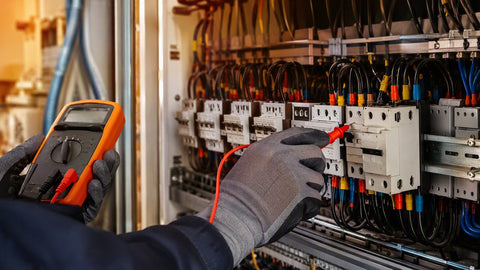
Strip away the enclosure and an ATS is three things working together: a sensing circuit that watches utility voltage and frequency, a controller that makes decisions and runs timers, and a switching mechanism — either a big solenoid-driven contactor or a motorized breaker pair — that physically connects your load to one source or the other, never both. That "never both" is the entire point: interconnecting a generator with the utility grid, even for a cycle, can destroy the generator, injure line workers, and vaporize equipment. NEC 702.5 requires transfer equipment that prevents inadvertent interconnection, and a listed ATS satisfies it by mechanical and electrical interlocking. The physics are unforgiving and the code is unambiguous; this is the one component in the whole system where the DIY impulse should end at the research stage.
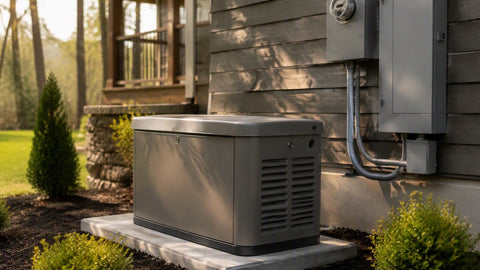
The switch sits between your utility meter and your loads. In a whole-house configuration it's installed right after the meter as service equipment; in a selective-circuit configuration it feeds a dedicated subpanel containing only the circuits you're backing up. Either way, every electron your backed-up loads consume flows through it, which is why the ampacity rating isn't a suggestion.
The Sequence of Operation, Step by Step
Here's what actually happens when the grid drops, with the timing I see in the field on quality equipment:
| Step | Event | Typical timing | What's happening |
|---|---|---|---|
| 1 | Utility failure detected | 0.5–3 seconds | Controller sees voltage drop below ~80% of nominal or frequency drift; pickup delay prevents nuisance starts on flickers |
| 2 | Engine start signal | Immediate after step 1 | Controller closes the two-wire start circuit; generator cranks |
| 3 | Warm-up / stabilization | 5–25 seconds | Generator reaches rated speed; controller verifies voltage and frequency are in range |
| 4 | Transfer to generator | 10–30 seconds total elapsed | Switch mechanism moves load from LINE to GEN; house goes dark for under a second during the break |
| 5 | Utility returns, verified | Continuous monitoring | Controller watches restored utility power for a retransfer delay — typically 5–30 minutes — to confirm it's stable |
| 6 | Retransfer to utility | Under 1 second | Load moves back to LINE; lights blink once |
| 7 | Engine cooldown and shutdown | 5–15 minutes unloaded | Generator runs unloaded to cool the turbo and windings, then shuts down and waits |
Two design details in that sequence are worth understanding. The pickup delay in step 1 exists because grids flicker constantly — a tree branch brushing a line shouldn't start your generator. And the retransfer delay in step 5 is your protection against a utility that's flapping: power that returns for thirty seconds and dies again would otherwise bounce your house between sources all night, which is brutal on both the switch mechanism and your electronics. Most controllers let you adjust both timers; I typically leave pickup at factory and extend retransfer to 15 minutes in areas with flaky rural feeds.
Types of Transfer Switches
Service-Entrance (Whole-House) ATS
A service-rated ATS installs between the meter and your main panel and carries the entire house. It includes its own main disconnect and overcurrent protection, which is what "service entrance rated" means on the data sheet. This is the standard pairing for 16 to 26 kW air-cooled standby units on modern homes with adequate panel capacity. The catch: the ATS must be rated for your full service — 200 amps on a typical modern home — even though the generator can only supply a fraction of that. You're rating for the utility fault current and continuous duty, not the generator's output.
Load-Side (Selective Circuit) ATS
Instead of the whole house, the ATS feeds a subpanel holding 8 to 16 chosen circuits: furnace, refrigerator, sump pump, some lights and outlets. These switches carry 50 to 100 amp ratings and pair with smaller generators. They're the right answer when the generator can't carry the whole house, when the main panel is full, or when budget rules. The labor of moving circuits into the subpanel is the hidden cost — budget a full day of electrician time.
Managed (Load-Shedding) Systems
Modern standby systems increasingly ship with load management: the controller monitors generator output and dynamically sheds and re-engages heavy loads — central AC, electric water heater, dryer — so a 14 kW generator can serve a house that would otherwise demand 22 kW. Generac's load management modules and Cummins' intelligent load management are the common implementations. Done well, managed systems cut the generator size — and price — by a third with no perceptible lifestyle change. Done carelessly, they shed the AC compressor mid-cycle and short-cycle it to death; insist on proper compressor protection delays.
| ATS type | Typical rating | Pairs with | Installed cost | Best for |
|---|---|---|---|---|
| Service-entrance whole-house | 100–400 A | 16–26 kW standby | $1,500–$3,000 (with generator install) | Modern homes, full coverage |
| Load-side subpanel | 50–100 A | 7.5–14 kW units | $900–$1,800 | Partial backup, full panels, budget builds |
| Managed whole-house | 100–200 A + load modules | 12–22 kW standby | $2,000–$3,500 | Big loads on smaller generators |
| Manual transfer switch | 30–100 A | Portable generators | $400–$900 | Portables, occasional outages |
Sizing Your Transfer Switch
Sizing has two independent questions, and confusing them is the classic mistake. Question one: what's the switch's continuous ampacity? That must meet or exceed the load it carries — the full service rating for a whole-house unit (100A, 200A, or 400A), or the subpanel's calculated load for a selective unit. Question two: can the generator actually supply what the switch passes through? NEC 702.4 requires the standby system to have adequate capacity for the loads served, or to employ automatic load management. The ATS ampacity has nothing to do with generator size — a 200A service-entrance ATS is correct on a 200A service even with a 14 kW (58 amp) generator behind it.
| Generator output | Amps @ 240V | Breaker feeding ATS (NEC 240.6) | Copper feeder, 75°C (NEC 310.16) | Typical ATS rating |
|---|---|---|---|---|
| 7.5 kW | 31.3 A | 40 A | 8 AWG (50 A) | 50 A load-side or 100–200 A service |
| 10 kW | 41.7 A | 50 A | 8 AWG (50 A) | 100 A service-entrance |
| 14 kW | 58.3 A | 70 A | 4 AWG (85 A) | 100–200 A service-entrance |
| 18 kW | 75 A | 80 A | 4 AWG (85 A) | 200 A service-entrance |
| 22 kW | 91.7 A | 100 A | 3 AWG (100 A) | 200 A service-entrance |
| 26 kW | 108.3 A | 125 A | 1 AWG (130 A) | 200 A service-entrance |
Generator conductors carry continuous load, so apply the 125 percent rule of NEC 215/702 practice where the manufacturer requires it — most standby units' installation manuals specify the breaker and conductor sizes explicitly, and the manual is part of the listing. When the manual and the generic table disagree, follow the manual and note it on the permit drawings.
ATS vs. Manual Transfer Switch vs. Interlock
| Feature | Automatic transfer switch | Manual transfer switch | Breaker interlock |
|---|---|---|---|
| Response time | 10–30 seconds, unattended | Minutes, requires you present | Minutes, requires you present |
| Works while you're away | Yes | No | No |
| Installed cost | $900–$3,500 | $400–$900 | $150–$400 |
| Generator pairing | Standby units | Portables | Portables |
| Code basis | NEC 702.4–702.6, listed equipment | NEC 702.5 | NEC 702.5, must be listed for the panel |
| Typical lifespan | 15–25 years (contactor service mid-life) | 20+ years | Life of panel |
The honest decision rule: if anyone in the home depends on powered medical equipment, if the property sits empty for stretches, or if sump-pump failure means a flooded finished basement, automatic transfer is mandatory, not premium. If outages are rare, short, and you're reliably home, a manual switch or interlock with a portable generator covers the same loads for a fraction of the cost — our backup power buying guide walks that whole decision tree.
Installation Realities: Neutral Switching, Grounding, Permits
Three details separate a clean ATS install from a troubleshooting saga. First, the neutral: does the switch transfer the neutral conductor or not? A solid-neutral ATS keeps the utility and generator neutrals bonded at one point; a switched-neutral (separately derived) design transfers the neutral and makes the generator its own separately derived system requiring its own grounding electrode connection. Ground-fault protection on the service dictates which you need — get it wrong and GFP breakers nuisance-trip or, worse, fault current finds creative paths home. The grounding and bonding guide covers the electrode side; your generator's manual specifies which architecture it expects.
Second, location and clearances: the ATS needs working space per NEC 110.26 (typically 36 inches of depth in front), must be protected from physical damage, and in service-entrance form goes between meter and panel — which often means a utility disconnect and reconnection, coordinated with the power company. Schedule that early; utility crews are the long pole on many installs.
Third, permits and inspection: an ATS is transfer equipment under NEC 702, and virtually every jurisdiction requires an electrical permit. Inspectors check the listing label, conductor sizes, torque marks, grounding, and the placard identifying the standby source. Our NEC compliance guide gives the broader framework inspectors work from.
What an ATS Costs, Realistically
Budget transparency, because transfer-switch pricing confuses even experienced buyers. The hardware itself runs $400 to $900 for a residential load-side unit, $700 to $1,500 for a service-entrance whole-house switch, and $1,500 to $2,500 for managed systems with load-shed modules. Labor dominates: expect $500 to $1,500 of electrician time depending on whether the install is a simple panel-adjacent mount or a service-entrance replacement requiring utility coordination, meter pulls, and riser work. In a standby generator package the ATS is usually bundled, and the bundle is often cheaper than line-item pricing — but always ask what the switch costs separately, because a bundled "smart" managed switch sometimes carries a $1,000 premium over the standard unit the same generator pairs with happily. Permits add $50 to $300 in most jurisdictions. If a quote shows an ATS line above $4,000 total on a standard residential service, make the contractor itemize it; there's usually a service upgrade hiding in there that deserves its own conversation.
Failure Modes and Maintenance
Transfer switches are reliable but not immortal. The failures I've actually diagnosed, in order of frequency: dead exercise timers and failed controller boards after lightning events (surge protection on both sources is cheap insurance); contactor coils weakened by years of weekly exercise cycles, presenting as a switch that hums but won't pull in; corroded lugs on aluminum feeders installed without antioxidant compound; and — my personal favorite — the generator start battery, which isn't part of the ATS at all but gets blamed for it every time. Maintenance is simple: an annual visual inspection, lug torque check, a live transfer test under load (not just an exercise cycle), and keeping the enclosure clean and dry. Test under load twice a year. A transfer switch that's never been asked to carry real current is a theory, not a system.
Buying Guide: The Specs That Actually Matter
ATS marketing buries the meaningful specs under brand language, so here's what I read first on any data sheet. Ampacity and service rating: whole-house units should be service-entrance rated with a listed disconnect; anything less shifts code burden onto the installer. Poles and neutral architecture: confirm whether the unit switches the neutral and whether that matches your generator and any ground-fault protection on the service. Withstand and closing ratings: the switch must survive the fault current available at your service — 10,000 amps is a common residential minimum, 22,000 is better on stiff urban feeds. Controller features that earn their keep: adjustable pickup and retransfer delays, exerciser scheduling, load-shed capability with compressor protection delays, and remote monitoring — being able to see from my phone that a customer's system exercised cleanly is worth real money during storm season. Enclosure rating: NEMA 3R minimum outdoors. Warranty and parts availability matter more than brand prestige; transfer switches are twenty-year assets, and orphaned controllers are how good switches end up in dumpsters. Brands I've had good field experience with include Generac's Smart Switch line, Cummins' RSS and RA series, ASCO's residential 185/230 series, and Briggs & Stratton's Symphony managed systems — each with distinct strengths in load management, service network, or simplicity.
The Generator Side of the Pairing
An ATS is only as good as the generator behind it, and the pairing rules are simpler than the catalogs suggest. Fuel first: natural gas standby units start instantly and never need refueling, but they depend on the utility's gas network surviving the same event that killed the power — after earthquakes and major floods, that's a real assumption to question. Propane stores indefinitely and burns clean, but a week-long outage at half load drinks 350-plus gallons, so tank sizing is a real engineering decision. Diesel dominates commercial work for its energy density and shelf stability, though it gels in deep cold without treatment. Output quality matters more than it used to: modern furnace boards, variable-speed well pumps, and home electronics expect clean sine-wave power, and every reputable standby unit delivers it — but if you're pairing an ATS with an older portable through a manual setup, an inverter generator is the safe choice for anything with a control board. Size the generator to the managed load, not the service: with load shedding handling the AC and water heater, most 2,500-square-foot homes are genuinely comfortable on 14 to 18 kW, and I've yet to meet the customer who could tell which day the load module had exercised. Finally, respect the exercise schedule. A standby generator that runs itself unloaded for twelve minutes weekly will start when it's needed; one that's been ignored for two years is an expensive lawn ornament with a dead battery, and the ATS will faithfully report the failure at the worst possible moment.
Transfer Switches in a Solar and Battery World
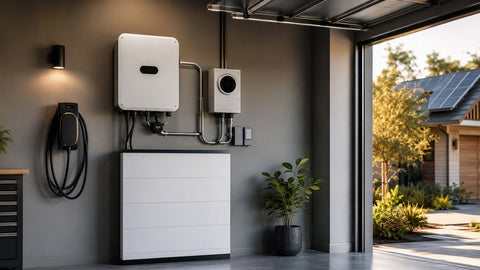
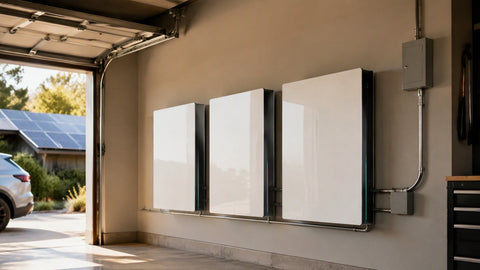
The ATS concept is converging with solar-plus-storage equipment, and the overlap confuses buyers weekly. A modern hybrid inverter with a grid port performs the same core function as an ATS — it senses grid failure and islands your backed-up loads — but it does it electronically, in milliseconds, with no mechanical contactor, while also managing solar and battery flow. Whole-home batteries increasingly ship with integrated transfer equipment listed as service equipment. So which architecture? If your primary goal is multi-day outage protection on unlimited fuel, a generator with a conventional ATS remains the rugged, fuel-flexible answer. If your goal is silent daily self-consumption with backup as a bonus, the hybrid inverter path wins — our hybrid inverter guide explains that topology in detail. Plenty of homes now run both: battery carries the first hours and the nights, generator behind its own ATS covers the long dark stretches. I've commissioned that exact pairing three times in the past year, and it's the most resilient residential architecture I've put my name on. Whatever you choose, the non-negotiable stays the same — listed transfer equipment, correct neutral architecture, and a load test before you call it done.
Frequently Asked Questions
How fast does an automatic transfer switch actually work?
Total time from grid failure to generator power is typically 10 to 30 seconds: 0.5–3 seconds to confirm the outage, engine cranking, 5–25 seconds of warm-up and voltage verification, then the transfer itself, which takes under a second. The brief blink during transfer is normal — the switch is break-before-make by design.
Why does the ATS wait before switching back to utility power?
The retransfer delay — usually 5 to 30 minutes — protects against unstable grid power. A utility feed that's flapping on and off would otherwise bounce your home between sources repeatedly, wearing the switch mechanism and stressing electronics and compressor motors. The delay confirms stability before retransfer.
Can an automatic transfer switch overload a smaller generator?
The switch itself doesn't overload anything, but pairing a whole-house ATS with a small generator without load management can. NEC 702.4 requires the standby system to supply the loads it serves — that's why managed ATS systems shed heavy loads like central AC and electric water heaters automatically, letting a 14 kW unit serve a house that would otherwise need 22 kW.
Does the transfer switch need to match my generator's exact size?
No — the two ratings answer different questions. ATS ampacity must match the load path it carries: your full service rating (100A, 200A, 400A) for a whole-house unit, or the subpanel load for a selective switch. Generator output determines only the breaker and feeder sizes between the generator and the switch. A 200-amp ATS with a 14 kW generator is a completely normal pairing.
What happens if utility power flickers on and off repeatedly?
The pickup delay (a few seconds) ignores brief flickers without starting the generator, and the retransfer delay (minutes) holds the home on generator power until the utility proves stable. If your area suffers chronic flickering, both timers are adjustable on most controllers — extending the pickup delay to 5–10 seconds usually stops nuisance starts entirely.
Pair the Right Switch With the Right Generator
The ATS is the least glamorous and most consequential component in a standby system — it decides when you have power, protects the grid from your generator and your generator from the grid, and does it unattended for decades. Size it for the load path, match its architecture to your generator's neutral scheme, and test it under load. Browse our automatic transfer switches and generator accessories, the broader transfer switch catalog, and matched standby generators; for model-level guidance, see our whole-house generator reviews and the Cummins brand guide. Ready to spec a system? Request a quote and our team will size the switch, the generator, and the feeders as one engineered package.