We've been on both sides of this search — as the wholesale supplier watching installers buy equipment, and as the people friends call when three solar quotes land on the kitchen table and all three claim to be "the best in the area." Finding a good local solar company is not hard, but it is a skill. The companies with the biggest ad budgets are rarely the ones with the best crews, and the cheapest quote is often expensive in ways that show up in year six. This guide is the exact process we'd give a family member: where to look, how to verify, what to ask, and which red flags end the conversation.

Local vs. National Solar Companies: An Honest Comparison
National installers spend heavily on marketing and door-to-door sales organizations. Local installers spend on trucks, warehouse space, and journeyman electricians. Neither model is automatically better, but the economics shape what you get:
| Attribute | Local Installer | National Company |
|---|---|---|
| Pricing | Often 15–25% lower due to lower overhead and no national marketing spend | Higher marketing and sales-commission costs baked into the quote |
| Accountability | Owner answers the phone; reputation lives within 30 miles | Call centers; subcontracted crews are common |
| Equipment flexibility | Will install whatever fits your roof and budget | Often locked to one or two preferred equipment lines |
| Service after the sale | Same crew that installed it comes back | Warranty work routed through regional queues; some nationals have exited markets entirely |
| Financing options | Fewer in-house options; works with local credit unions | Slick in-house loans and leases, sometimes with dealer fees of 20–30% hidden in the principal |
| Speed | Booked out weeks to months in busy seasons | Fast sales pipeline; install speed varies wildly by local office |
Our bias is transparent: we supply local installers, and we've watched them warranty-work a ten-year-old array on a Saturday because the homeowner is also their kid's soccer coach. That accountability loop doesn't exist when the installer's office is four states away. But a well-run regional company beats a bad local one, so verification matters more than category.
The Best Sources to Find Local Solar Companies
Skip the paid-ad results at the top of the search page — at least at first. Start with directories that require something from the installer before listing them:
| Source | Why It Is Reliable | Limitation | Best For |
|---|---|---|---|
| NABCEP Certified Installer Directory | Lists only installers who have passed rigorous certification exams | Voluntary — good installers without NABCEP won't appear | Finding technically qualified pros |
| State energy program contractor lists (NYSERDA, MassCEC, etc.) | Government-vetted; must meet licensing and insurance minimums to participate | Only covers states with active programs | Vetted local options plus incentive access |
| Your utility's trade ally or approved contractor list | Utility verifies licensing and interconnection track record | Minimal quality filtering beyond paperwork | Contractors experienced with your specific utility's interconnection process |
| Local building department permit records | Shows who actually pulls solar permits near you — real activity, not marketing | Takes effort; records vary in accessibility | Verifying claimed experience is real |
| Wholesale suppliers and electrical distributors | They know which installers buy quality gear and pay their bills | You have to ask; no public directory | Insider referrals (call us — we keep this list) |
| Neighbors with 3+ year-old systems | Real service history, not install-day impressions | Small sample size | The single most honest reference available |
How to Use the NABCEP Directory
NABCEP (North American Board of Certified Energy Practitioners) is the closest thing solar has to a master electrician's card. Their installer locator lets you search by ZIP and certification type. Look for the PV Installation Professional (PVIP) certification specifically — it's the full-install credential, not the entry-level associate certificate. A company where the owner or lead installer holds a PVIP has invested real effort in the craft. That said, plenty of excellent 20-year electricians never bothered with the exam, so treat NABCEP as a strong positive signal, not a hard filter.
State Program Contractor Lists
If your state runs a solar incentive program, its contractor list is pre-vetted gold. Participating installers must maintain licenses, insurance, and program standing — and they can lose program access for bad behavior, which gives you leverage no private review site offers:
| State | Program | Where to Find the Contractor List |
|---|---|---|
| New York | NY-Sun (NYSERDA) | NYSERDA website, approved trade ally search by ZIP code |
| Massachusetts | MassCEC / SMART program | MassCEC installer directory |
| California | CSI/SGIP legacy programs | California DG Stats plus CSLB license lookup |
| Illinois | Illinois Shines (ADJUSTABLE Block Program) | Program-approved vendor list |
| New Jersey | SuSI program | NJ Clean Energy Program trade ally list |
| Oregon | Energy Trust of Oregon | Trade ally contractor search |
| Colorado | Utility programs (Xcel) | Xcel trade partner directory |
States without programs aren't dead ends — they're just states where the utility trade-ally list and permit records carry more weight.
Using Google Reviews the Right Way
Google reviews are useful if you read them like an investigator instead of a shopper. Our method:
- Read the 3-star reviews first. Five-star reviews tell you the install day went well. One-star reviews are often billing disputes. Three-star reviews are where thoughtful customers describe real problems and how the company responded — and company response to problems is the thing you're actually buying for a 25-year system.
- Filter for "newest." A company can change ownership, crews, or subcontractors. Reviews older than 18 months describe a company that may no longer exist in practice.
- Search review text for "service," "warranty," and "leak." Install quality is table stakes. Roof penetrations and after-sale service are where companies differentiate.
- Count reviews per year in business. A company claiming 500 installs a year with 11 total reviews is buying advertising, not earning referrals.
- Check the company's replies. Professional, specific responses to criticism signal ownership that reads its own reviews. Copy-paste apologies or silence tell their own story.
Cross-reference with the BBB (complaint patterns matter more than the letter grade), your state contractor license board's complaint history, and — if the company does electrical work beyond solar — your state electrical board. Three sources showing the same pattern is truth. One angry review is weather, not climate.
Understanding Lead-Generation Marketplaces
Platforms that promise "three free quotes from pre-screened installers" are lead brokers. Your contact information gets sold to three to seven installers for $20–$100 each, and the installers who buy leads are often the ones who can't fill their schedule with referrals. That doesn't make every marketplace installer bad — good companies sometimes buy leads in slow seasons — but understand the incentive structure: you are the product being sold, and the "pre-screening" usually means "has a license and a credit card that clears."
If you do use a marketplace, use it as a name generator, then run each company through the verification process below yourself. And expect the calls to continue for months; lead data gets resold. A Google Voice number for quote shopping is a trick our own staff uses.
How to Verify a Solar Company Is Legitimate
This is the ten-minute checklist. Do it for every finalist before you let anyone on the roof:
| Verification Step | Where | What "Good" Looks Like | What Ends the Conversation |
|---|---|---|---|
| Contractor/electrical license | State licensing board website (free lookup) | Active, in the company's exact legal name, correct classification (C-10 or C-46 in CA, or state equivalent) | Expired, suspended, or "the license is in the owner's brother's name" |
| General liability + workers' comp insurance | Certificate of insurance, verified by calling the agent | $1M+ GL; workers' comp for every crew member on your roof | COI that the agent can't verify, or "we're exempt" from workers' comp with a crew of five |
| Years in business under current entity | Secretary of State business registry | 3+ years under the same entity name | Five LLCs dissolved and re-formed every two years (warranty evasion pattern) |
| Physical address | Street view, or drive by | Real shop, warehouse, or office with trucks | A UPS Store mailbox for a company claiming 20 employees |
| Complaint history | BBB, state AG consumer protection, license board | Few complaints, all resolved | Pattern of unresolved abandonment or warranty-refusal complaints |
| References | Ask for three installs 2+ years old, then call them | Customers who'd hire them again; systems still producing | "We can't share customer info" — every happy customer we've ever asked was delighted to talk |
That last row is the strongest test on the list. We buy from vendors on the same principle: show me the customer from three years ago who still answers your calls. Solar is a 25-year asset; a company with no reachable three-year-old customers hasn't demonstrated anything yet.
Questions to Ask Before You Request a Quote
These questions separate professionals from sales operations in the first phone call:
- "Who performs the installation — your W-2 employees or subcontractors?" Subs aren't automatically bad, but the answer should be direct and the subs should be named and licensed.
- "Who is your licensed electrician of record, and will they be on site?" Solar is electrical work. In most states a licensed electrician must supervise. If the answer is vague, walk.
- "What inverters and panels do you install, and why those?" Good installers have opinions — string vs. microinverters, panel degradation rates, racking choices. "Whatever's cheapest this month" is an answer too, and it tells you something.
- "How do you handle the roof penetrations, and what flashing system do you use?" You want to hear the word "flashing" immediately and a named system. Caulk-only mounts are a leak with a ten-year fuse.
- "Who handles permitting and utility interconnection, and what's your timeline with my utility?" Experienced local installers know your utility's queue length to the week.
- "What's your warranty on workmanship, separate from equipment warranties?" Ten years on labor and roof penetrations is the industry standard for serious companies.
- "If you sell or close, who services my system?" There's no perfect answer, but companies that have thought about it say so.
Red Flags That End the Conversation
Some patterns predict bad outcomes with near-perfect reliability. Any one of these and you're done:
- Same-day pricing pressure. "This price expires tonight" is a sales tactic, not a market condition. Equipment prices change quarterly, not hourly.
- No site visit before quoting. A real quote requires roof measurements, shade analysis, and a panel-board inspection. Satellite-only quotes are opening bids, not commitments.
- "Free solar" language. Nothing is free. Leases and PPAs are financing products with escalator clauses, and the word "free" in the pitch means the details are ugly.
- Cash discount over ~10%. Legitimate cash discounts reflect avoided financing fees — a few points. Huge cash discounts usually mean the financed price was inflated to begin with.
- Unwillingness to put the equipment list in the contract. Brand and model numbers, or don't sign. "Or equivalent" clauses have downgraded more systems than any other contract language in this industry.
- No physical presence within ~100 miles. Storm damage on a Friday needs a crew that can reach you, not a ticket number.
The Real Cost of Choosing Wrong
We supply equipment to hundreds of installers, and we see the aftermath when homeowners pick poorly. The failures cluster into a few expensive patterns. Roof leaks from improperly flashed mounts are the most common — a leak that starts as a ceiling stain in year three becomes decking replacement and mold remediation by year five, and the workmanship warranty that would have covered it is only as good as the company still existing to honor it. Then there's the orphaned system: installer goes under, inverter fails in year eight, and the homeowner discovers the "25-year warranty" covered the panel glass, not the labor to diagnose and swap the inverter. Service calls on orphaned systems run $150–$250 an hour with a two-hour minimum, and some equipment lines require proprietary monitoring accounts the defunct installer controlled.
The worst cases we hear about are the abandonment pattern: deposit taken, permits pulled, crew never shows, LLC dissolved. The homeowners recover deposits through the state contractor bond — slowly — and start over six months behind. Every protection against this pattern is in the verification table above: years under one entity, bondable license status, references you actually call. Ten minutes of verification against a state registry is the cheapest insurance in the entire transaction.
Timeline: What a Well-Run Local Install Actually Looks Like

Knowing the normal sequence lets you spot a disorganized company by week two. Here's the cadence we see from good local installers:
| Phase | Typical Duration | What Happens | Warning Sign |
|---|---|---|---|
| Site visit and quote | Week 1 | Roof measured, shade analysis, panel board inspected, written quote with named equipment | Quote delivered without anyone visiting |
| Contract and engineering | Weeks 1–3 | Signed contract, structural/electrical review, permit drawings | Pressure to sign before engineering review |
| Permitting and utility application | Weeks 2–6 (varies hugely by AHJ and utility) | Building permit, interconnection agreement submitted | Installer can't name your AHJ's typical turnaround |
| Installation | 1–3 days for residential | Racking, panels, wiring, inverter, labeling | Crew asks you for equipment decisions on install day |
| Inspection and permission to operate (PTO) | 1–4 weeks after install | AHJ inspection, utility meter swap, PTO letter | Installer tells you to energize before PTO — never do this |
| Monitoring handoff | At PTO | App configured, production baseline recorded, warranty documents delivered | No documentation package at handoff |
Total realistic duration from signature to PTO: six to twelve weeks in most markets, longer where permitting is slow. Any company promising two weeks door-to-door is either exaggerating or planning to energize without permission to operate, which can void your interconnection agreement and complicate your homeowner's insurance. The good installers tell you the slow truth up front.
Leases, PPAs, and Loans: What the Pitch Leaves Out
You'll meet financing before you meet hardware, so a quick field guide. Cash purchase is the cheapest way to buy solar by a wide margin — you keep the 30% federal tax credit, the equipment is yours, and there's no escalator. Solar loans are second best when the dealer fee is low; ask the installer directly what the dealer fee is, because fees of 20–30% of principal hide inside the loan amount and turn a cheap APR into expensive money. Reputable local installers will show you the fee structure; national sales orgs train reps to deflect the question.
Leases and power purchase agreements (PPAs) put a third party's equipment on your roof in exchange for a monthly payment, usually with an annual escalator of 1–3%. The third party keeps the tax credit. The problems surface at resale: the lease must be transferred to the home buyer or bought out, and some buyers' lenders won't touch them. We've watched home sales collapse over lease transfers. If someone pitches you a lease, get the buyout schedule in writing at signing — the year-7 buyout number tells you what they actually think the deal is worth.
Finding Installers for Specialty Work
The mainstream search process above finds mainstream installers. Specialty jobs need specialty filters. Off-grid and battery-heavy systems: ask how many off-grid commissions they've done in the past year specifically — grid-tied habits (oversized inverters, no load management) fail off-grid, and you want someone who asks about your generator in the first ten minutes. Battery retrofits on existing arrays: look for AC-coupled experience and ask which storage platforms they've commissioned; our battery storage collection shows the major product families they'll name. Commercial and agricultural work: demand references from same-scale projects and ask about their structural engineer relationship — flat-roof ballast math and agricultural building loads are not residential skills.
Ground-mount specialists are their own category too; if your project is a ground array, an installer whose portfolio is 90% roof work will learn on your dime. Ask for photos of three completed ground mounts with the racking manufacturer named. Our solar panel racking systems guide gives you the vocabulary to evaluate the answers.
Timing Your Search
Seasonality is real in this trade. Installers are slammed from late spring through early fall and hungry from November through February. Winter quoting gets you more attention, faster schedules, and occasionally better pricing — though installation in snow country still waits for safe roof conditions. The end-of-year rush is the exception: everyone tries to complete systems before December 31 for tax-credit certainty, and December installs come with December shortcuts. Our advice: quote in winter, install in early spring, and be wary of any company that can start tomorrow in July — the good ones are booked.
The Site Visit: What a Professional Actually Checks
Treat the site visit as your audition of the installer, because it's theirs of your project. A competent assessor spends 45–90 minutes and does specific things you can watch for. On the roof: measures usable planes, notes vents, chimneys, and setbacks required by fire code (typically 3-foot ridges and pathways, varying by jurisdiction), checks rafter spacing and roof condition from the attic, and photographs everything. On the electrical side: opens your main panel, photographs the busbar rating and breaker layout, notes service size (100A vs. 200A), and checks grounding electrode condition. Around the property: a shade reading with a Solar Pathfinder or drone-based scan at the actual array corners, not a guess from the driveway.
Then the conversation. A good assessor asks about your electric bills (they should want 12 months of kWh history), future plans (EV, heat pump, hot tub — all change sizing), and your goals: max savings, backup power, or max production. An assessor who never asks about usage is designing to sell equipment, not to offset your bill. And the person who shows up matters: if the "site assessment" is done by a sales rep with a clipboard and no ladder, the real design is happening in an office far away, by someone who's never seen your roof.
Solar and Your Homeowner's Insurance
Two phone calls, both short. First, your insurer: rooftop arrays typically add $0–$100 per year to a homeowner's premium because the replacement-cost coverage rises with the home's value, but some carriers want the array scheduled explicitly and a few exclude ground mounts from standard coverage. Call before install, not after a claim. Second, understand what the installer's insurance covers during the work: a worker falls or a conduit drill hits a water line in week two — whose policy responds? Their general liability and workers' comp should, which loops back to why verifying the COI matters more than any other single document in this process.
Storm damage claims deserve one note. Panels are remarkably hail-tough (tested to UL 61730's 1-inch ice ball at terminal velocity, and quality glass survives most real storms), but when a storm does take an array out, the claim goes to your homeowner's policy, and the reinstall goes to whoever answers the phone fastest — one more argument for the installer with a warehouse twenty minutes away.
After PTO: The Relationship You Actually Bought
The install day is the start of a 25-year relationship, and the handoff tells you how it'll go. You should receive a documentation package: as-built drawings, equipment datasheets and warranty registrations, the monitoring app configured on your phone, and a production baseline. Good installers schedule a 30-day check-in call. Great ones monitor your system proactively and call you when production dips — ask candidates directly whether their office watches their installed fleet. It's a real dividing line in this industry.
Set your own expectations on maintenance: panels in most climates need nothing beyond rain, with an annual hose-down in dusty or pollen-heavy regions and a production review each season against the baseline. Inverters are the component most likely to need service in years 8–15 — microinverter systems swap a single unit under a 25-year warranty, string systems swap one box under a 10–12-year warranty, and either way, the relationship with a local company that still exists is the warranty that actually matters.
The Equipment Conversation: Brand Names as a Tell
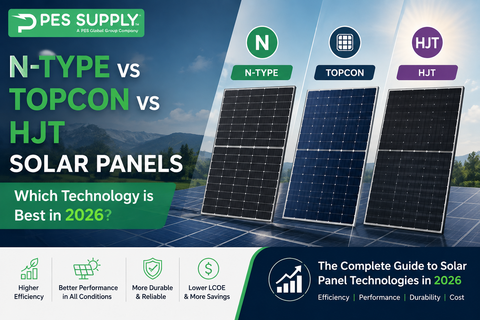
Here's a test that takes ninety seconds. Ask each candidate: "If your preferred panel brand is unavailable, what's your second choice, and what's the trade-off?" Script-driven reps freeze or say "they're all the same." Career installers give you a real answer — something about degradation curves, N-type versus P-type cells, or warranty claim experience with specific manufacturers. The panel market in 2026 has consolidated around TOPCon N-type technology for good reason: first-year degradation around 1% versus 2%+ on older PERC, and annual fade of roughly 0.4% versus 0.55%. An installer who can't discuss those numbers is selling, not engineering. Our solar panel degradation guide has the full numbers if you want to walk in with the vocabulary loaded.
The inverter question works the same way. Microinverters cost more per watt and put 25-year-warrantied electronics under every panel; string inverters cost less and centralize the failure point in one box with a 10–12-year warranty. Neither is "best" — shading, roof complexity, and budget decide. The installer's job is to explain which and why for your roof. If every house they show you got the same architecture regardless of shape or shade, you've found a one-product company, and one-product companies install their product whether or not it fits.
How Many Quotes to Get — and How to Compare Them
Three quotes is the standard advice and it's right, but only if you compare them correctly — and comparison takes a little discipline because no two quotes present numbers the same way. Normalize everything to price per watt (total cash price ÷ system watts DC) — it's the only apples-to-apples number. In most US markets, residential systems land between $2.50 and $3.50 per watt before incentives; quotes far below that deserve suspicion about equipment and labor quality, and quotes far above it deserve an explanation like a complex roof or long trenching runs. Build a simple spreadsheet: company, watts, cash price, price per watt, first-year kWh estimate, panel brand and model, inverter type, workmanship warranty years, and years the entity has existed. Ten minutes of data entry and the right answer usually becomes visually obvious — one column will glow.
Then compare production estimates skeptically. Each quote will show first-year kWh production. If one quote estimates 15% higher production from the same roof, someone is shading the shade analysis — pun intended, because it's almost always optimism about tree shading. Ask each company what modeling software they used (Aurora and Helioscope are the professional standards) and what degradation and loss assumptions are baked in. If the answers wander, our degradation guide and the hybrid inverter overview give you the baseline numbers a competent estimator should be working from.
Finally, compare the equipment, not just the price. A quote built on 25-year-warranty N-type panels with microinverters and one built on commodity panels with a single string inverter are different products wearing similar price tags. If you want to understand what the equipment tiers look like before the quotes arrive, browse our solar panel collections, the solar panel kits buyer's guide, and our solar system size calculator so you walk into those kitchen-table meetings already knowing what a 7.6 kW system should contain. The solar panel system components overview is a good second read, and if battery backup is on your list, the home battery bank sizing guide prepares you for that upsell conversation with real numbers. One more comparison tip from the supply side: ask each bidder who their distributor is. Installers with stable supply relationships get better equipment availability, better warranty support, and better pricing continuity than companies spot-buying whatever's cheapest on any given Tuesday. It sounds like inside baseball until your panel model gets discontinued in year four and your installer can still source a matching replacement.
Special Cases: Roofs, HOAs, and Older Panels
Three situations change the search. First, if your roof has fewer than ten years of life left, re-roof before solar — removing and reinstalling an array for a re-roof costs $3,000–$6,000, and a good local installer will tell you this even though it delays their sale. Second, HOAs: most states now have solar access laws limiting HOA blocking power, but architectural review still adds weeks; installers with HOA experience in your specific subdivision are worth asking for by name. Third, older homes with 100A service or fuse panels: the service upgrade is real money ($2,500–$5,000), and an installer who spots it at the site visit — versus "discovering" it as a change order — just showed you who they are.
What Good Looks Like: A Composite Sketch
After two decades around this trade, the good local installer has a recognizable shape: eight to fifteen employees, been under the same LLC for six-plus years, owner came up through electrical or roofing, shows you flashing details unprompted, quotes a fair price-per-watt with named equipment, books four to eight weeks out because referrals keep them busy, and — the tell — talks you out of something. A bigger array than your usage justifies, a battery you don't need, panels on a north-facing roof plane. The installer who edits your plans down is the one who'll answer the phone in year nine.
If you're in our region or want an equipment-first second opinion on any quote you've received, send it to us. We'll tell you what the hardware on that quote actually is, what it should cost wholesale, and whether the design makes sense — because we'd rather supply the good installers than watch a bad one burn a neighbor.