Last Updated: May 2026 • Based on NSW Government Energy Roadmap Announcements and AEMO Data
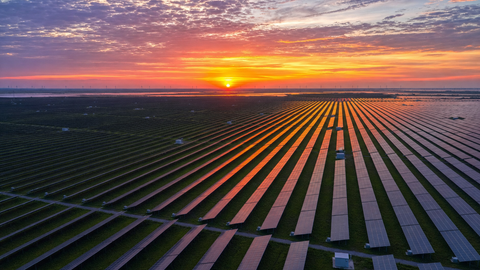
The New South Wales government has launched one of Australia's most ambitious state-level energy procurement drives, seeking 2.5 gigawatts (GW) of new renewable generation capacity and 12 gigawatt-hours (GWh) of grid-scale battery storage under its Electricity Infrastructure Roadmap. The program represents a defining moment for Australia's largest state electricity market-and a major procurement signal for solar installers, EPCs, developers, battery storage integrators, and project financiers operating across the Asia-Pacific region.
This article covers what the NSW Energy Roadmap is, what the 2.5 GW / 12 GWh targets mean in practice, the technology mix being sought, project timelines, investment implications, and what the program signals for the broader global clean energy transition.
⚡ Quick Summary
New South Wales is actively seeking 2.5 GW of new renewable energy capacity (solar, wind, and hybrid projects) and 12 GWh of long-duration and grid-scale battery storage under its Electricity Infrastructure Roadmap. The program uses long-term revenue contracts (Electricity Investment Agreements) to de-risk private investment and accelerate the retirement of coal-fired generation-targeting a 70%+ renewable grid share by 2030 and net-zero electricity by 2035.
Key Takeaways
- Scale: 2.5 GW of new renewable generation and 12 GWh of grid-scale storage-among the largest single state-level clean energy procurement programs in the Southern Hemisphere.
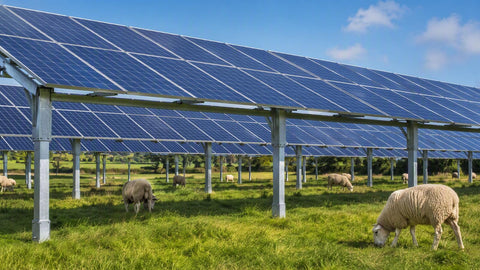
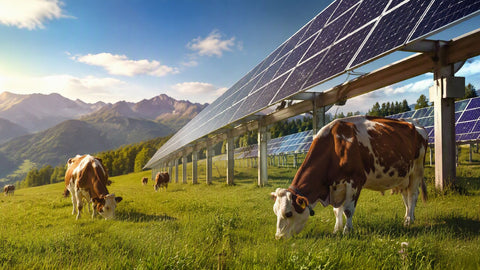
- Technology Mix: Solar PV (utility-scale and agri-solar), onshore wind, hybrid wind-solar projects, and grid-scale battery energy storage systems (BESS) are all eligible.
- Revenue Certainty: Projects receive long-term Electricity Investment Agreements (EIAs)-providing the revenue floor that enables project finance at scale.
- Coal Transition Driver: The program is directly calibrated to replace output from retiring NSW coal plants, including Eraring (Australia's largest coal plant), scheduled for closure.
- Transmission Backbone: The Roadmap designates Renewable Energy Zones (REZs) with coordinated transmission upgrades-reducing the connection cost barrier that has historically delayed large-scale projects.
- Jobs and Local Content: The program includes Australian Industry Participation requirements, targeting local manufacturing and workforce development in regional NSW communities.
- Global Signal: The NSW program mirrors procurement structures emerging across the US (IRA), EU (REPowerEU), and UK (CfD auctions)-confirming that long-term revenue contracts are the global standard for accelerating clean energy deployment.
In This Article
- What Is the NSW Electricity Infrastructure Roadmap?
- The 2.5 GW / 12 GWh Targets Explained
- Technology Mix: What Projects Are Being Sought
- Renewable Energy Zones (REZs)-Where Projects Will Be Built
- Electricity Investment Agreements-How the Revenue Model Works
- The Coal Transition Connection
- 12 GWh of Storage-Why It Matters
- Project Timeline and Milestones
- Global Context: How NSW Compares to Other Markets
- Investment and Developer Implications
- Frequently Asked Questions
The NSW Electricity Infrastructure Roadmap is the New South Wales government's long-term framework for transitioning the state's electricity system away from coal-fired generation and toward a predominantly renewable grid supported by dispatchable storage and transmission infrastructure. Enacted through the Electricity Infrastructure Investment Act 2020, the Roadmap established the legal and commercial framework for coordinated investment across generation, storage, and transmission over a multi-decade horizon.
NSW is Australia's most populous state and has historically been the most coal-dependent major grid in the country. The state's electricity system is anchored by large coal plants-many approaching end-of-life-and is served by the National Electricity Market (NEM), Australia's interconnected east-coast grid. The Roadmap recognises that the retirement of these coal assets creates both a capacity gap and a grid stability challenge that must be addressed through coordinated, policy-backed investment rather than merchant market signals alone.
NSW Electricity Infrastructure Roadmap-Three Pillars
- Pillar 1-Generation and Storage: Long-term revenue contracts (Electricity Investment Agreements) for new renewable generation and grid-scale battery storage projects in designated zones.
- Pillar 2-Transmission (REZ Infrastructure): Coordinated investment in high-voltage transmission upgrades connecting Renewable Energy Zones to load centers-reducing connection barriers for project developers.
- Pillar 3-Consumer Benefits: Consumer Trustee oversight to ensure that the benefits of lower-cost clean energy are passed through to residential and business electricity customers over time.
The 2.5 GW renewable generation target and the 12 GWh storage target are not standalone numbers-they are calibrated components of a system-level plan to replace retiring coal capacity while maintaining grid reliability during the transition. Understanding what these numbers mean in physical terms helps place the procurement ambition in context.
| Metric | Target | Real-World Equivalent |
|---|---|---|
| New Renewable Generation | 2.5 GW (2,500 MW) | ~5–7 large solar farms OR ~3–4 major wind farms, or a mix of both |
| Grid-Scale Battery Storage | 12 GWh (12,000 MWh) | ~24 × 500 MWh utility-scale BESS projects, or fewer larger installations |
| Grid Share Target (2030) | 70%+ renewables | Up from ~35–40% in 2024-requires near-doubling of clean generation |
| Net-Zero Electricity Target | 2035 | Full retirement of coal-fired generation in NSW by mid-2030s |
To put the 12 GWh storage target in perspective: the entire global grid-scale BESS fleet totaled approximately 45 GWh of installed capacity as recently as 2022. NSW alone is seeking to procure the equivalent of more than 25% of that historic global total-a scale of storage ambition that reflects both the urgency of the coal transition and the maturity of lithium-ion battery technology at utility scale.
The NSW Roadmap is technology-inclusive for the generation component-it does not mandate a specific split between solar and wind, allowing market competition to determine the optimal technology mix for each Renewable Energy Zone. Battery energy storage system (BESS) projects compete separately for storage-specific revenue contracts.
| Technology | Eligible Under Roadmap | Key Advantages in NSW Context | Typical Project Scale |
|---|---|---|---|
| Utility-Scale Solar PV | Yes | Fastest to build; lowest LCOE; strong NSW solar resource in central-west REZs | 100–500 MW per project |
| Onshore Wind | Yes | Better evening/overnight generation profile; complements solar intermittency | 150–600 MW per project |
| Hybrid Solar + Wind | Yes | Higher capacity factor; better grid firmness; shared transmission connection point | 200–800 MW combined |
| Solar + BESS (Co-located) | Yes | Dispatchable solar; can provide firm capacity and frequency services; qualifies for both generation and storage contracts | 100–400 MW solar + 200–1,000 MWh BESS |
| Standalone BESS | Yes-storage-specific EIAs | Grid services (FCAS, inertia), peak shifting, coal plant replacement firming | 200 MWh–2 GWh per installation |
| Pumped Hydro | Yes-long-duration storage pathway | Snowy 2.0 is the anchor project; additional smaller pumped hydro feasibility studies underway | Multi-GWh per project |
A defining feature of the NSW Roadmap compared to uncoordinated market approaches is the designation of Renewable Energy Zones (REZs)-geographic areas with high-quality renewable resources, identified transmission upgrade pathways, and coordinated connection processes. Instead of individual developers each negotiating their own transmission access and bearing the full cost of connection infrastructure, the REZ model pools transmission investment across multiple projects-dramatically reducing the per-project connection cost and timeline.
| Renewable Energy Zone | Location | Primary Resource | Target Capacity |
|---|---|---|---|
| Central-West Orana REZ | Central NSW (Dubbo region) | Solar PV and wind | 3+ GW (first REZ activated) |
| New England REZ | Northern Tablelands, NSW | World-class wind resource + solar | 8+ GW potential capacity |
| South-West REZ | South-West NSW (Broken Hill corridor) | Exceptional solar irradiance | 2+ GW solar potential |
| Hunter-Central Coast REZ | Hunter Valley, NSW | Wind; coal transition area | Under development-coal-to-clean transition focus |
The commercial mechanism that makes the NSW Roadmap work for private developers is the Electricity Investment Agreement (EIA)-a long-term revenue contract between a generation or storage project and the NSW government's Energy Corporation (EnergyCo). The EIA functions as a two-way financial contract for difference (CfD): when wholesale electricity prices are below the agreed "strike price," the government pays the project the difference; when prices are above the strike price, the project pays the surplus back to the government.
① Developer bids a "strike price" (AUD/MWh) in a competitive tender process
↓
② NSW Government (via EnergyCo) evaluates bids and awards EIAs to lowest-cost compliant projects
↓
③ Project finances and builds-lenders accept EIA as long-term revenue certainty
↓
④ Project generates electricity and sells into wholesale market at spot price
↓ Spot price BELOW strike price:
⑤A Government pays developer the difference → project revenue is protected
↓ Spot price ABOVE strike price:
⑤B Developer pays government the surplus → consumer protection is maintained
↓
⑥ Consumer Trustee distributes government receipts to electricity consumers as bill credits
Why This Matters for Developers: The EIA structure eliminates the merchant revenue risk that prevents many renewable projects from reaching financial close. With a bankable long-term contract, developers can access cheaper project finance at lower equity returns-directly reducing the cost of electricity delivered to consumers. This is the same mechanism used by the UK's Contract for Difference (CfD) scheme, which has driven UK offshore wind costs down by over 70% since 2015.
The NSW Roadmap's urgency is directly tied to the imminent retirement of the state's coal generation fleet. Eraring Power Station-Australia's single largest power station at 2,880 MW-was originally scheduled to close in August 2025. Its eventual closure (now targeted for 2027 following a temporary extension) will remove nearly 3 GW of baseload capacity from the NEM in a single event, representing the largest single capacity retirement in Australian electricity history.
⚠️ The Capacity Gap Challenge
Eraring's 2,880 MW output must be replaced by a combination of new renewable generation, grid-scale storage (to replicate coal's dispatchability), and demand-side flexibility-all within a compressed timeframe. The 2.5 GW renewable target is almost exactly calibrated to fill Eraring's capacity gap, making this not merely an aspiration but a grid reliability imperative. Delays in project delivery-from permitting, community opposition, supply chain constraints, or financing challenges-directly translate into reliability risk for NSW consumers.
The 12 GWh storage target is arguably more technically significant than the 2.5 GW generation target. Storage is the enabler that transforms intermittent renewable generation into firm, dispatchable power-the characteristic that coal plants have historically provided and that wind and solar cannot deliver without a storage complement.
| Storage Role | How It Supports Grid | Technology Best Suited |
|---|---|---|
| Peak Shifting | Stores midday solar surplus; discharges during 5–9pm evening peak demand | 2–4 hour lithium-ion BESS |
| Frequency Control (FCAS) | Responds in milliseconds to grid frequency deviations-replacing coal's synchronous inertia | Fast-response BESS (1–30 min) |
| Overnight Firming | Provides power after solar drops at sunset through to wind ramp-up-the "duck curve" valley | 4–8 hour BESS or pumped hydro |
| Multi-Day Storage | Bridges extended low-wind, low-solar periods ("dark doldrums") that last 3–7 days | Pumped hydro (Snowy 2.0)-175+ hours |
| Black Start Capability | Restarts the grid after a widespread blackout without requiring external power source | Large BESS with islanding capability |
The NSW Roadmap operates on a structured procurement calendar with defined tender rounds, EIA execution windows, and commercial operation deadlines tied to the coal retirement schedule:
2020-Electricity Infrastructure Investment Act enacted; REZ framework established
↓
2022–2023-Central-West Orana REZ transmission construction commenced; first EIA tender rounds
↓
2024–2025-2.5 GW generation + 12 GWh storage EIA tender processes underway
↓
2025–2027-Financial close and construction commencement for awarded projects
↓
2027-Eraring closure; first tranche of Roadmap projects must be online
↓
2030-70%+ renewable grid share target; New England REZ projects online
↓
2035-Net-zero electricity target; remaining coal retired; full Roadmap delivery
The NSW program does not exist in isolation-it mirrors procurement structures and ambition levels emerging across the world's major energy markets as governments recognize that merchant market signals alone are insufficient to drive the pace and scale of transition required.
| Market | Program | Revenue Mechanism | Scale |
|---|---|---|---|
| NSW, Australia | Electricity Infrastructure Roadmap | EIA (two-way CfD) | 2.5 GW + 12 GWh |
| United Kingdom | Contract for Difference (CfD) auctions | Two-way CfD | 50 GW offshore wind by 2030 |
| United States | Inflation Reduction Act (IRA) | Investment / Production Tax Credits | $369B clean energy investment |
| European Union | REPowerEU + national CfD schemes | National CfD auctions | 600 GW renewables by 2030 |
| Queensland, Australia | Queensland Energy and Jobs Plan | State-owned assets + CfD equivalent | 22 GW renewables by 2035 |
For developers, financiers, EPCs, and equipment suppliers-in Australia and globally-the NSW Roadmap's 2.5 GW / 12 GWh procurement signal creates a substantial and well-structured pipeline of project opportunities. The EIA revenue model provides the bankability that unlocks institutional debt finance at scale, reducing project finance costs and enabling competitive strike price bids.
Key Considerations for Project Developers and Equipment Suppliers
- REZ Co-location Advantage: Projects within designated REZs benefit from shared transmission infrastructure-materially reducing connection cost and time compared to greenfield transmission approaches.
- Australian Industry Participation (AIP): EIA contracts include local content requirements. Developers must document AIP plans-creating opportunities for Australian-based manufacturing, fabrication, and services businesses.
- Battery Supply Chain: The 12 GWh storage target requires secure supply of lithium-ion cells and battery management systems at scale. Developers should establish supply agreements early-global BESS demand is creating lead time pressure on Tier 1 battery manufacturers.
- Community Engagement: Projects in the New England and Central-West REZs involve agricultural landholders and regional communities. Early, genuine community engagement is both a regulatory requirement and a practical prerequisite for timely project approval.
- Transmission Timing Risk: REZ transmission upgrades are on the critical path for project energisation. Developers should model realistic transmission completion dates-not best-case scenarios-in their financial projections.
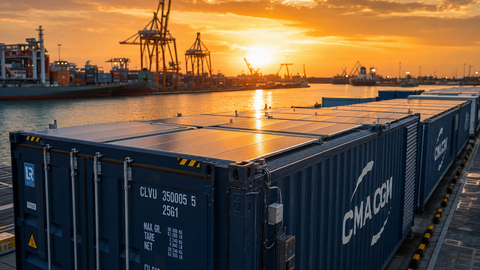
I've quoted containers of gear into Australian projects long enough to know the difference between a policy paper and a procurement signal. The NSW Roadmap is the second kind. When a government underwrites revenue floors through instruments like Electricity Investment Agreements, developers stop waiting for certainty and start asking for delivery schedules — and our inbox reflects it.
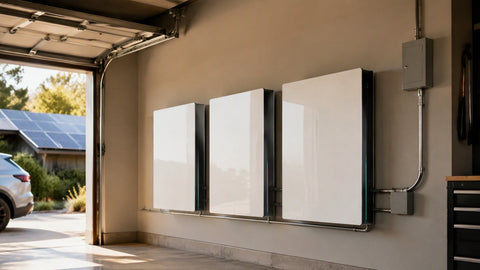
The storage number is the one I'd underline. Twelve gigawatt-hours is not a rounding error; it's a structural commitment that changes what gets ordered. Pairing ratios we used to see at two hours are moving to four, and that shifts the bill of materials toward larger battery enclosures, bigger PCS blocks, and more protection gear per megawatt.
One lesson from other coal-transition markets that applies here: the winners position inventory before the tenders close, not after. Eraring's closure timeline is public. The developers who win these rounds will be the ones whose supply chains were already warm.
What is the NSW Electricity Infrastructure Roadmap?
The NSW Electricity Infrastructure Roadmap is a long-term policy and commercial framework enacted by the NSW Government in 2020 to transition the state's electricity system from coal to renewables. It uses long-term revenue contracts (Electricity Investment Agreements), designated Renewable Energy Zones with coordinated transmission investment, and consumer protection mechanisms to attract and de-risk private investment in solar, wind, and battery storage projects.
Why is NSW targeting 12 GWh of storage specifically?
The 12 GWh storage target reflects the grid services that coal plants currently provide-firm dispatchable capacity, frequency regulation, and overnight supply-that variable renewable energy cannot provide without storage. As coal plants retire, an equivalent volume of dispatchable storage capacity must replace them to maintain grid reliability. The 12 GWh figure represents the minimum storage needed to support the 70% renewable grid share target by 2030 while maintaining NEM reliability standards.
What is Eraring Power Station and why does its closure matter?
Eraring is Australia's largest power station-a 2,880 MW coal plant in the Hunter Valley region of NSW, owned by Origin Energy. Its closure (currently targeted for 2027) will remove nearly 3 GW of baseload generation from the National Electricity Market in a single event-the largest capacity retirement in Australian history. The NSW Roadmap's 2.5 GW generation target is calibrated specifically to replace Eraring's output with renewable generation backed by the 12 GWh of storage needed to replicate its dispatchability.
How do Electricity Investment Agreements (EIAs) work?
An EIA is a two-way Contract for Difference between a renewable energy or storage project and the NSW Government's Energy Corporation (EnergyCo). Projects receive a guaranteed "strike price" for their electricity. When wholesale market prices are below the strike price, the government pays the difference, protecting the project's revenue. When market prices are above the strike price, the project pays the surplus back to the government, with that revenue recycled to electricity consumers. This structure gives lenders the revenue certainty they need to provide project finance at competitive rates.
What does the NSW Roadmap mean for global solar and storage markets?
The NSW Roadmap is part of a global wave of government-backed clean energy procurement programs-alongside the US Inflation Reduction Act, the UK CfD scheme, and the EU's REPowerEU targets-that collectively represent trillions of dollars of committed public investment in renewable infrastructure. For global solar panel manufacturers, battery suppliers, inverter makers, and EPC firms, this coordinated policy action creates a multi-decade pipeline of large-scale project demand that justifies continued investment in manufacturing capacity, cost reduction, and technology improvement.
Source Solar, Storage, and Grid Equipment for Large-Scale Projects
Whether you're developing utility-scale solar, grid-scale BESS, or hybrid renewable projects-in Australia, the US, or globally-PES Supply provides Tier 1 solar panels, inverters, battery storage systems, and complete project hardware with nationwide delivery, expert procurement support, and bundled freight for large-scale project timelines.
Shop Solar Panels Request a Project QuoteRelated Guides
- Solar Panel Output Guide-Seasonal production benchmarks for utility-scale solar planning
- Circuit Breaker Sizing Guide-Size protection equipment for large-scale solar and storage installations
- Solar Panel Wiring Basics-DC architecture and string design for utility-scale arrays
- Solar Installation Guide-Complete system design and commissioning practices
- Request a Quote-Tier 1 panel sourcing, battery storage, and large-project hardware
About PES Supply
PES Supply is a nationwide distributor of Tier 1 solar panels, grid-tied and off-grid inverters, battery storage systems, EV charging hardware, racking, circuit breakers, generators, and complete electrical project kits. With a catalog of 50,000+ SKUs spanning 169 authorized brands, full OEM warranties, and nationwide LTL freight delivery from our Louisville, Kentucky supply house, PES Supply serves contractors, EPCs, developers, and facility owners with fast delivery and expert procurement guidance for projects of all scales.
Location: 1507 Portland Ave, Louisville, KY, United States | Phone: 1 888-876-0007 | Website: www.portlandiaelectric.supply
Article: NSW Seeks 2.5 GW Renewable Capacity and 12 GWh Storage Under Energy Roadmap-Full Analysis
Category: Energy Policy | Utility-Scale Solar | Grid-Scale Storage | Australia Energy Transition | Clean Energy Markets
Last Updated: May 2026 • Based on NSW Government Energy Roadmap Announcements and AEMO Data
Disclaimer: Policy targets, project timelines, and market data referenced in this article are based on publicly available government and industry sources as of May 2026 and may be subject to change. Always verify current program requirements directly with NSW EnergyCo and AEMO before making investment or procurement decisions.
Related Resources:
- Best Solar Panels 2026 — Buyer's Guide
- EG4 vs Tesla Powerwall
- Qcells vs Trina vs JA
- Solar Inverter Buyer's Guide
- Solar Battery Buyer's Guide
- 5kW Solar Kit
- 10kW Solar + Battery Kit
- Off-Grid Cabin Kit
- EG4 Batteries
- Qcells Solar Panels
- Trina Solar
- JA Solar
- REC Solar
- Mission Solar
- Sol-Ark Inverters
- SolarEdge Inverters
- Generac PWRcell
Calculate how much storage you need with our battery sizing calculator.
Check solar incentives available in your state.
Use our free solar system calculator to size your array.
Check out our Solar Panel Comparison Tool. Check out our Inverter Sizing Calculator.
Calculate your solar payback and 25-year savings with our Solar ROI Calculator. Follow our complete DIY solar installation guide for step-by-step instructions. Keep your system running at peak performance with our Solar Maintenance Guide.
Related Products


Related Resources
- Solar System Calculator
- Battery Sizing Calculator
- Solar Panel Comparison Tool
- Inverter Sizing Calculator
- Solar ROI Calculator
- Solar Installation Guide
- Solar Maintenance Guide
- Solar Permitting Guide
- Battery Installation Guide
- NEC Code Compliance Guide
- Solar Panel Mounting Guide
- Grounding & Bonding Guide
- Solar Incentives by State
- Pro Account — Wholesale Pricing
- PowerLink Network — Contractor Program
How long do solar batteries last?
Most lithium-ion solar batteries last 10-15 years or 6,000+ cycles. The 20-80% charging rule extends battery life significantly.
What size battery do I need?
Battery sizing depends on your backup power needs. A typical home needs 10-15kWh of storage for overnight backup. Calculate your critical loads first.
Are batteries BABA-compliant?
PES Supply provides BABA documentation for qualifying products. Contact us for specific compliance documentation.
PES Supply carries a catalog of 50,000+ SKUs from 169 authorized brands. One PO, one invoice, every trade covered.
Need help sizing? Our team can calculate loads, select equipment, and source everything from one PO.
Call (502) 790-0600