FranklinWH Energy Storage has been selected to power what it describes as the first city-owned residential solar and battery pilot program in U.S. history — a program where the city itself, not a utility or a third-party solar financier, owns the solar panels and battery systems installed on residents' homes. I've watched municipal energy programs come and go for years, and most die in committee between the feasibility study and the funding line. This one crossed the line into hardware on rooftops, and that makes it worth a serious look — both as a news story and as a template other municipalities will study. Here's what the program is, why the ownership model matters, and what the FranklinWH equipment underneath it actually does.

What Was Announced
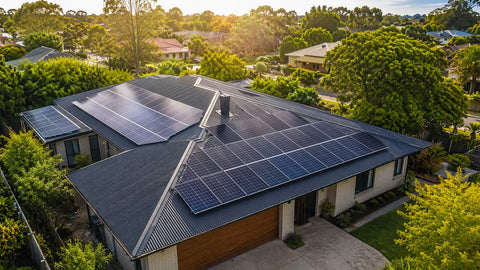
The pilot installs solar arrays and FranklinWH battery storage systems — the aGate intelligent energy management unit paired with aPower battery modules — on qualifying residential homes, with the city retaining ownership of the equipment. Homeowners receive reduced electricity bills; the city manages the fleet of distributed systems as a community grid asset. That structure is the story. Rooftop solar programs are common. City ownership of behind-the-meter residential assets is not.
For installers, EPCs, and municipal energy planners, the pilot tests a financing and ownership structure that could unlock a class of customers the private market serves poorly: households whose credit, roof tenure, or tax appetite never fit the standard lease-and-PPA machinery. When the city is the counterparty, the qualification logic changes completely.
Why the Ownership Model Is the Real Story
Third-party ownership — leases and power purchase agreements — built the residential solar industry, but it carries structural limits. The homeowner doesn't own the asset, contracts run 20–25 years, and the tax incentives flow to the financing entity. Municipal ownership rearranges every one of those lines:
| Dimension | Third-Party PPA / Lease | City-Owned Pilot Model |
|---|---|---|
| Asset owner | Private financing entity | The city |
| Homeowner receives | Power at a contracted rate | Reduced electricity bills |
| Who controls dispatch | Owner/financier | City as grid-asset operator |
| Credit barrier | Homeowner credit underwriting | Municipal program qualification |
| Grid value captured | Mostly private | Community-level — the city can aggregate and dispatch |
| Contract length | 20–25 years typical | Set by program terms |
The last row of the first table's logic is the one grid planners care about. A fleet of batteries under unified municipal control isn't just backup for individual homes — it's a dispatchable community resource: peak shaving, outage resilience at the neighborhood level, and demand response at a scale individual homeowners never bother to provide. That's the virtual power plant concept, moved from utility pilots into city ownership.
The Hardware: aGate and aPower
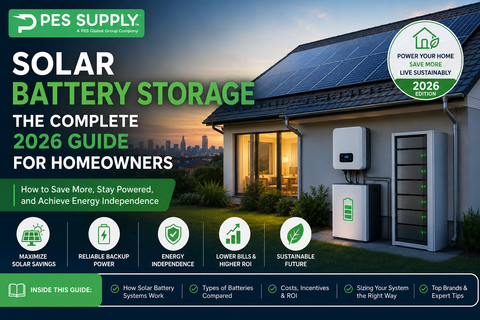
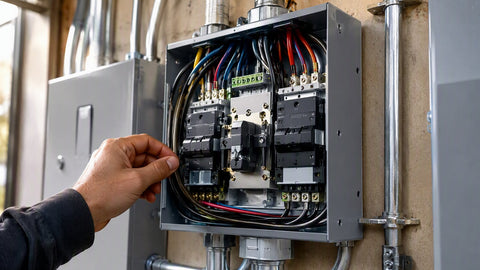
FranklinWH's residential stack splits the job into two boxes. The aPower is the battery; the aGate is the brain — an intelligent energy management controller that handles whole-home circuits, solar integration, generator input, and grid interaction. Published specifications for the current aPower-class module:
| Parameter | FranklinWH aPower Class | Field Significance |
|---|---|---|
| Usable capacity | 13.6 kWh per unit | One unit covers an average home's evening loads |
| Chemistry | Lithium iron phosphate (LFP) | Cobalt-free, thermally stable |
| Continuous power | 5 kW per unit | Essential loads plus more; stack for whole-home |
| Peak power | 10 kW (short duration) | Motor starting surge coverage |
| Controller | aGate energy management | Whole-home circuits, generator and solar integration |
| Warranty | 12 years (manufacturer) | Above the 10-year industry baseline |
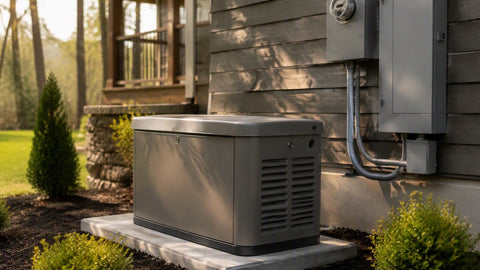
Capacity check the way we'd run it in a design review: 13.6 kWh usable against a typical U.S. household's 30 kWh/day consumption covers the 8–12 kWh overnight window most homes actually draw — one unit, honestly sized for the gap between sunset and sunrise when solar sleeps. The generator input on the aGate matters for resilience programs: batteries handle the hours, a standby generator handles the days.
The Value Stack a City Fleet Can Capture
A single home battery earns its keep on backup and bill management. A coordinated fleet of them earns on additional layers that only aggregation unlocks:
| Value Layer | Single Home | City-Aggregated Fleet |
|---|---|---|
| Outage backup | Yes — hours of essential loads | Yes, plus neighborhood-level resilience planning |
| Bill reduction / time-shifting | Yes | Yes, passed to participating households |
| Peak demand shaving | Minimal individual leverage | Meaningful — coordinated discharge flattens feeder peaks |
| Demand response revenue | Small program payments | Aggregated capacity bids at utility scale |
| Grid deferral | None | Potential deferral of distribution upgrades |
| Emergency management | One house stays lit | City knows which blocks have hours of reserve |
That last row is the one emergency managers mention to me: during an extended outage, a city that owns and monitors a residential battery fleet knows in real time which neighborhoods hold stored energy and which need warming centers and fuel deliveries first. Storage as civic infrastructure is a genuinely new category, and this pilot is among the first to test it with city ownership rather than utility programs.
What It Means for the Residential Storage Market
Programs like this expand the market in two directions at once. Down-market: households locked out of solar by credit requirements gain a path in, which grows the installed base. Up-market: municipal procurement standards — documentation, warranties, telemetry, service networks — push manufacturers toward the kind of institutional-grade support the industry has needed anyway. FranklinWH earned the selection on its grid-interaction capabilities and residential integration simplicity, per the program announcement, and both of those qualities are exactly what a city managing hundreds of distributed systems needs.
For context on where FranklinWH sits among the storage options we stock and track, the solar battery buyer's guide and the EG4 vs Powerwall comparison map the competitive field, and the energy storage overview covers the technology categories.
Questions a Pilot Like This Has to Answer
Healthy skepticism is part of the job. The open questions this pilot will answer — for every city watching:
- Maintenance at fleet scale. Who services 300 distributed batteries in year seven, and what does that cost per unit-year? Residential service networks are the industry's least mature layer.
- Homeowner experience. Reduced bills are promised; the details of rate structure, roof leases, and what happens when a participating home sells will define whether this model replicates.
- Dispatch rights and comfort. How much control does the city exercise over a battery in someone's garage, and what's the homeowner's override? The answer shapes public acceptance everywhere else.
- Economics without subsidy. Pilots run on grant and incentive fuel. The replicable model is the one whose cash flows survive their expiration.
None of these are reasons the model fails — they're the questions a pilot exists to answer. That's what pilots are for, and it's why the industry should watch this one closely rather than just applaud it.
The Bigger Pattern
Zoom out and the pilot sits inside a clear trend: distributed storage moving from consumer product to infrastructure. Utilities have run battery aggregation programs for years; municipalities owning the assets outright is the next step, pairing public ownership with the technology stack — LFP batteries, intelligent energy management, whole-home integration — that matured in the private market. The equipment is proven; the ownership and operating model is what's on trial. If the economics and the homeowner experience hold, expect the city's RFP documents to become templates, and expect "municipal fleet" to join "utility program" and "third-party PPA" as a standard residential storage business model.
The Ratepayer Math: What a Participating Household Could See

Program terms will define real numbers, but the arithmetic of solar-plus-storage bill reduction is well understood, so a plausible household example is worth tabulating. Take a home using 30 kWh/day with a $0.16/kWh utility rate — a monthly bill near $144 before fixed charges:
| Line Item | Without Program | With Solar + 13.6 kWh Battery (Illustrative) |
|---|---|---|
| Daily grid energy | 30 kWh | ~9 kWh (solar covers ~21 kWh across day and stored evening use) |
| Monthly grid energy | 900 kWh | ~270 kWh |
| Energy charges @ $0.16/kWh | $144 | ~$43 |
| Monthly energy savings | — | ~$101 (about 70% of energy charges) |
Illustrative, not a program quote: 900 − 270 = 630 kWh offset × $0.16 ≈ $101. Real savings depend on the array size, rate structure, and how the program shares value between the homeowner and the city that owns the asset. That last clause is the pilot's core design question: how the generated value splits between the participating household's bill and the city's grid-asset revenue determines whether the model is merely pilot-worthy or genuinely replicable.
The Policy Backdrop That Made This Possible
Municipal storage fleets didn't emerge from nowhere. Three policy currents converged. First, the federal incentive stack — the Investment Tax Credit, its adders for domestic content and energy communities, and the direct-pay provisions that let tax-exempt public entities monetize credits — made public ownership of clean energy assets financially coherent for the first time. Second, FERC Order 2222 opened wholesale market participation to aggregated distributed energy resources, giving battery fleets a revenue path beyond bill savings. Third, state-level resilience funding, accelerated by every hurricane and wildfire season, put real money behind distributed storage as emergency infrastructure. The FranklinWH pilot sits exactly where those three currents meet: public ownership economics, market aggregation rules, and resilience justification, tested on residential rooftops.
Resilience: The Case Studies Behind the Trend
The resilience argument isn't theoretical anymore. Extended outage events over recent years — ice storms in Texas, hurricane seasons in the Gulf and Southeast, wildfire public-safety shutoffs across the West — repeatedly demonstrated the same pattern: neighborhoods with distributed solar-plus-storage kept refrigerators cold, medical devices running, and phones charged while the wider grid recovered. Municipal emergency planners noticed. A city-owned fleet converts that scattered private resilience into managed public capability: dispatchable, monitorable, and targetable at the blocks that need it most. The aGate's generator integration adds a pragmatic layer — batteries carry the hours, and where a home has a backup generator, the system orchestrates it for the days, stretching fuel further than generator-only designs.
What Installers and EPCs Should Take From This
For the trade, the pilot is a business-development signal as much as a news item:
- Municipal procurement is a real channel now. Cities buying residential-scale equipment at fleet scale need installation capacity, service networks, and documentation discipline — capabilities that distinguish professional shops from truck-and-ladder operations.
- Fleet telemetry skills matter. Managing hundreds of distributed systems is a software job wrapped around an electrical job. Comfort with fleet monitoring platforms is becoming a bid qualification.
- The equipment bar rises. Municipal buyers need warranty depth, parts pipelines, and support infrastructure. Manufacturer selection in these programs — FranklinWH here — reflects that institutional due diligence, and it's the same diligence we apply when deciding what earns shelf space in our storage catalog.
- Watch for template RFPs. Successful pilots get photocopied. The city's procurement documents from this program will likely seed a dozen similar programs, and the shops that studied the first one will write the winning responses to the rest.
FranklinWH in the Broader Lineup
Against the competitive field, FranklinWH's pitch centers on whole-home integration: the aGate manages circuits at the panel level rather than forcing a critical-loads subpanel, which simplifies retrofits and preserves homeowner flexibility. The 12-year warranty slots between the 10-year baseline and Enphase's 15-year mark. The honest comparison depends on the job — AC-coupled retrofit ease points toward the Enphase architecture, cost-per-kWh leadership toward EG4 rack batteries, and panel-level circuit intelligence toward FranklinWH. The buyer's guide walks the full decision tree, and our team quotes across all three because the right answer is load-profile-shaped, not logo-shaped.
How the Technology Choice Fits the Program Model
It's worth pausing on why a municipal fleet program would select this particular equipment stack, because the criteria generalize. A city managing hundreds of distributed residential systems needs, in order of operational pain: remote fleet telemetry with per-site health visibility (a truck roll per fault destroys fleet economics); a chemistry with a long cycle life and a benign failure mode (LFP, on both counts); whole-home circuit intelligence that works across the wild variety of residential panels without a critical-loads subpanel rebuild per house; and a warranty long enough to outlast the political news cycle that funded the program. The aGate-plus-aPower selection reflects those institutional requirements rather than any single spec-sheet number. Installers bidding future municipal programs should read that list twice — it's the scoring rubric, in effect, and it maps directly onto the documentation package a winning bid includes.
The Equity Dimension
One more reason this model matters: who gets to participate in the clean energy economy at all. Private solar and storage skew toward homeowners with strong credit, high tax appetite, and long roof tenure — which is to say, toward households that need bill relief least. Municipal ownership inverts that. When the city owns the asset, the qualification question shifts from "can this household finance a system" to "does this home's roof and load fit the program." Renters remain a harder problem, but the city-owned model at least makes the question addressable rather than structurally impossible. If the pilot's economics hold, its most consequential export may be a financing template that finally brings distributed storage to the neighborhoods where a week-long outage hits hardest — the same neighborhoods that current incentive structures, for all their scale, have largely failed to reach.
There's a workforce angle too. Municipal programs buy through public procurement, which typically means prevailing-wage installation labor and formal apprenticeship pipelines. A program that puts batteries on hundreds of homes also puts trained electricians and installers on career ladders — and the clean energy workforce shortage makes that second output nearly as valuable as the stored kilowatt-hours. Cities counting the program's returns should count the training hours alongside the resilience metrics; both compound.
What We're Watching Next
From the distribution desk, three markers will tell us whether this model is replicating: follow-on RFPs from other cities citing the pilot, manufacturer announcements of municipal-fleet product configurations and service packages, and program economics published after the first operating year — real cost per participating household, real grid services revenue, real maintenance numbers. We'll track all three and stock accordingly. Municipal fleet storage won't replace the residential and commercial-industrial channels that pay today's bills, but if the pilot delivers, it adds a channel the industry has never had: cities as anchor customers for neighborhood-scale resilience. That's worth more than one headline's worth of attention.
For the homeowner reading this from outside the pilot's territory, the takeaway is simpler: the technology stack being tested at municipal scale — LFP batteries, intelligent whole-home management, generator integration — is the same hardware available today, without waiting for your city to move. The pilot validates the equipment; it doesn't gate it. Whether the power behind your outage plan is owned by you or by your city is a financing question. The resilience itself is a purchasing decision, and the sizing guides, runtime math, and comparison tools across this site exist to make that decision well. When city programs arrive in your market, evaluate them with the same lens this article applied: what's the split of value between household and city, what are the dispatch terms, and does the hardware earn its place on the wall. Good programs survive those questions — that's how you'll know the model matured. Until then, the private market's version of the same resilience is sitting in the catalog, proven, warrantied, and shipping to qualified buyers in every state we serve. The pilot is the headline; the hardware behind it is the story that matters to your next project. Watch the pilot, learn from its results, and don't wait on it to act. The homes that ride out the next storm week comfortably are the ones whose owners moved before the forecast, not after — a lesson every storm season reteaches.
The Customer's Question: Should I Care Where My Battery Is Built?
Strip away the policy mechanics and homeowners ask a simpler version: does domestic content matter to me? The honest answer has three parts. First, the direct tax benefit of the domestic content bonus is primarily a commercial-project instrument — don't buy hardware expecting a residential adder that may not apply to your credit situation. Second, the indirect benefits are real: domestic assembly shortens the warranty pipeline, stabilizes inventory against shipping shocks, and supports the service infrastructure your 15-year relationship with the battery depends on. Third, price: manufacturing incentives were designed to keep domestic content from carrying a penalty, and the market so far says that design is working — the qualifying products compete on price rather than asking a patriotic premium. So care about it the way you'd care about any supply-chain fact: not as a slogan, but as evidence about whether the manufacturer will still be standing behind your unit in year twelve.
Frequently Asked Questions
What makes this pilot program a first?
It's described as the first U.S. program where a city itself owns the solar panels and battery systems installed on residential homes. Previous programs relied on utilities or third-party private ownership through leases and PPAs.
What equipment is FranklinWH providing?
The aGate intelligent energy management system paired with aPower LFP battery modules — 13.6 kWh usable per unit with whole-home circuit control, solar integration, and generator input.
What do participating homeowners get?
Reduced electricity bills from the solar-plus-storage system on their home, without owning or financing the equipment themselves — the city retains ownership and manages the assets.
What is a virtual power plant?
A coordinated fleet of distributed batteries and solar systems dispatched as a single resource — providing peak shaving, demand response, and grid services at a scale no individual home can offer alone.
Can other cities copy this model?
That's the pilot's purpose — to test whether the economics, maintenance logistics, and homeowner experience support replication. Municipal ownership removes the homeowner credit barrier that limits private solar programs, which is why many cities will study the results.
Where can I buy FranklinWH equipment?
PES Supply stocks FranklinWH energy storage products — the same aGate and aPower platform selected for the pilot — along with the full range of residential and commercial storage options.