We've quoted, supplied, and troubleshot enough mini-split installs to know the honest answer to "what does it cost" is a range wide enough to be useless — until you break it into equipment, labor, and the electrical work every cost guide glosses over. This guide does that breakdown with 2026 US-market numbers, then walks the electrical requirements (breaker sizes, wire gauges, disconnects) that decide whether your quote holds or grows a change order.
Shopping equipment? Start with our mini-split systems category and the broader HVAC lineup. If you're weighing a heat-pump retrofit against other backup or efficiency projects, the ROI calculator and state incentives tracker will help you stack rebates before you sign anything.
Mini Split Installation Cost Ranges (2026, US Market)


These ranges reflect what our contractor customers actually invoice — equipment at street pricing, licensed labor, standard materials, one-story access. Regional labor swings of ±30% are normal; complex routing adds more.
| System Configuration | Equipment (Typical) | Total Installed (Typical) | Notes |
|---|---|---|---|
| Single-zone, 9k–12k BTU | $700–$1,800 | $2,000–$4,500 | One bedroom/office; the volume seller |
| Single-zone, 18k–24k BTU | $1,200–$2,600 | $3,000–$6,000 | Large living spaces, garages, open-plan areas |
| Dual-zone (2 heads) | $2,000–$4,000 | $4,500–$8,500 | Two rooms sharing one condenser |
| Tri-zone | $3,000–$5,500 | $6,000–$11,000 | Three heads; line-set routing gets complex |
| Quad/5-zone whole-home | $4,500–$8,000 | $9,000–$15,000+ | Whole-home ductless; compare against ducted options |
| DIY single-zone (pre-charged quick-connect lines) | $1,000–$2,500 | $1,200–$3,000 | No refrigerant handling; you supply labor and the electrical |
Two anchors for sanity checks. If a single-zone quote lands under $1,800 installed, ask which corner was cut — usually the electrical, the line-set insulation quality, or the warranty registration. If a straightforward single-zone lands over $5,500 without attic/crawlspace heroics, get a second quote.
Where the Money Goes (Line-Item Breakdown)
A representative single-zone 12k BTU install at $3,400 total typically splits like this:
| Line Item | Typical Cost | % of Job | Notes |
|---|---|---|---|
| Equipment (condenser + head) | $1,100–$1,500 | 35–40% | Brand tier and SEER2 rating move this most |
| Install labor (2 techs, 4–6 hrs) | $800–$1,200 | 25–35% | Mounting, line set, vacuum, commissioning |
| Line set, insulation, drain, pad/bracket | $150–$350 | 5–10% | Don't accept white uninsulated copper on sunny walls |
| Electrical (breaker, wire, disconnect, whip) | $300–$800 | 10–20% | The wildcard — see the next section |
| Permit and warranty registration | $100–$300 | 3–8% | Many jurisdictions require a mechanical permit; registration extends parts warranties |
The Electrical Requirements (The Part Cost Guides Skip)
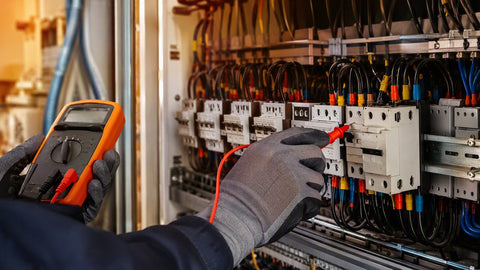
Every mini-split is a dedicated-circuit appliance. NEC 440 governs, the nameplate governs the specifics, and the nameplate values you need are MCA (minimum circuit ampacity) and MOCP (maximum overcurrent protection). The breaker protects against faults, not overload — the compressor's internal protection handles that — which is why MOCP can exceed what feels intuitive for the running amps.
| Mini Split Size (Cooling) | Typical MCA | Breaker (Per Nameplate MOCP) | Wire (Copper THHN, 75°C) | Voltage |
|---|---|---|---|---|
| 9k–12k BTU | 9–15A | 15–20A | 14–12 AWG | 208/230V (some 115V at 9k) |
| 18k BTU | 13–18A | 20–25A | 12–10 AWG | 208/230V |
| 24k BTU | 16–22A | 25–30A | 10 AWG | 208/230V |
| 36k BTU (multi-zone) | 22–30A | 30–40A | 10–8 AWG | 208/230V |
| 48k–60k BTU (multi-zone) | 30–45A | 40–60A | 8–6 AWG | 208/230V |
Field rules we enforce:
- Read the nameplate, not the brochure. MCA and MOCP printed on the outdoor unit are the legal sizing values (440.4(B), 440.35). Wire to MCA, breaker at or under MOCP. A unit with MCA 17.6A / MOCP 30A gets 10 AWG and a 30A breaker — the 25A "intuitive" choice isn't a standard size that fits the rules.
- The disconnect is not optional. 440.14 requires a disconnect within sight of the outdoor unit. A $15 non-fused pullout from our electrical supplies shelf satisfies it; skipping it fails inspection and endangers the next tech.
- Breaker standard sizes come from 240.6(A): 15, 20, 25, 30, 35, 40, 45, 50, 60A. If MCA × 1.25 lands between sizes, round up to the next standard size but never above MOCP. Browse circuit breakers matched to your panel brand.
- Check panel capacity before quoting. A quad-zone at 45A plus a water heater plus a range can push a 100A service over its NEC 220 calculation. We cover that math in power consumption calculations, and the upgrade path in service upgrades.
- Surge protection pays here. Inverter-drive compressors are electronics first, motors second. A panel-mounted SPD protects a $3,000 condenser board from a $0.40 lightning-induced transient; see our SPD guide (written for solar, applicable everywhere) and the surge protector category.
What It Costs to Run: SEER2 and the Operating Math
Installed cost is half the decision; operating cost is the other half. SEER2 (the post-2023 test standard) rates seasonal cooling efficiency; HSPF2 does the same for heating. The math that matters:
Annual kWh ≈ (Capacity BTU/h ÷ SEER2) × annual full-load-equivalent hours. A 12,000 BTU unit at 20 SEER2 draws 600W average while actively cooling. At 1,000 equivalent cooling hours (a mid-Atlantic summer), that's 600 kWh ≈ $96 at $0.16/kWh. The same capacity in a 13.4 SEER2 legacy-efficiency window unit draws 895W — $143/year, and no heat.
| Unit | SEER2 | Avg Draw While Cooling | Est. Annual Cooling Cost (1,000 hrs @ $0.16/kWh) | Heating COP Advantage vs Resistance |
|---|---|---|---|---|
| Budget single-zone 12k | 16–18 | 670–750W | $107–$120 | 2.0–2.5× |
| Mid-tier 12k | 20–23 | 520–600W | $83–$96 | 2.5–3.0× |
| Premium cold-climate 12k | 25–30+ | 400–480W | $64–$77 | 3.0–3.5× (full heat output to 5°F or below) |
| Window unit reference (12k) | ~13.4 (CEER ≈ 12) | ~895W | $143 | None |
| Electric resistance heat reference | — | — | — | 1.0× (definitionally) |
For heating-dominant climates, the cold-climate premium pays back fastest: every winter hour at COP 3 instead of resistance heat is 3 kWh of warmth for 1 kWh of electricity. In the Pacific Northwest — our backyard — that arithmetic is why heat pumps are displacing baseboards one room at a time.
Worked Examples: Three Real Quotes Explained
Example 1 — Garage workshop, single-zone 18k, $3,900 installed. Detached garage, 40 ft line set, new 25A circuit from the house panel in 1/2" liquidtight, wall bracket. Equipment $1,700, labor $1,300, electrical $550 (trench conduit from panel), pad and materials $200, permit $150. The electrical was the swing item — same job with the panel on the garage wall would have been $250 less.
Example 2 — Tri-zone replacement, $9,800 installed. Three existing heads replaced, line sets reused after pressure test and flush (a legitimate cost saver when the sets are sound and correctly sized for the new refrigerant), new 36k condenser, new 40A circuit. Reusing line sets saved $900 versus new routing through finished walls.
Example 3 — DIY single-zone with quick-connect, $1,850 all-in. Pre-charged line set unit from our portable/DIY category, homeowner installed over a weekend: unit $1,450, breaker + wire + disconnect $180 (self-installed under homeowner permit), pad and cover $120, permit $100. Honest caveat: DIY quick-connects handle the refrigerant, but the electrical still must be permitted and inspected in most jurisdictions, and DIY electrical mistakes on 230V are not forgiving.
DIY vs Professional Install: The Real Trade
| Factor | DIY (Quick-Connect Kit) | Professional Install |
|---|---|---|
| Total cost, single-zone | $1,200–$3,000 | $2,000–$4,500 |
| Refrigerant handling | Pre-charged, no EPA 608 needed for assembly | Requires EPA 608 certification for any line work |
| Warranty | Often reduced or contingent on registered professional commissioning — read the terms | Full manufacturer warranty with registration; labor warranty from the installer |
| Performance risk | Kinked line sets, poor drainage slope, and uninsulated suction lines are the common DIY failures | Vacuum depth and leak test verified with instruments |
| Electrical | Still requires a permitted dedicated circuit in most jurisdictions | Included, permitted, inspected |
| Time | 1–2 weekends | 4–8 hours |
Our honest position: DIY works well for handy owners on single-zone, ground-level installs with an easy electrical run. Multi-zone, second-story, or long line-set jobs earn their labor cost — a botched evacuation that leaves moisture in the circuit kills compressors in year two, past the point where the savings feel clever.
Multi-Zone vs Multiple Single-Zones
Covering three rooms, should you buy one tri-zone or three single-zones? The tradeoffs:
- Cost: A tri-zone usually wins on installed price ($6,000–$11,000 vs $7,500–$12,000 for three singles) because there's one condenser, one circuit, one pad.
- Efficiency at part load: Single-zones win. One head calling in a multi-zone system forces the condenser to run at its minimum modulation — often above what one small head needs, cycling losses included. Three singles each modulate to their room.
- Reliability: Singles win. One condenser failure in a tri-zone kills three rooms' conditioning; with singles you lose one room and keep living.
- Aesthetics and space: Multi-zone wins — one outdoor unit instead of three.
- Electrical: Multi-zone simplifies to one 30–45A circuit; three singles need three 15–25A circuits. Panel space sometimes decides this for you.
Rule of thumb we give customers: two rooms, consider either; three rooms with matched schedules (all bedrooms), multi-zone; three rooms with divergent schedules (office + bedroom + garage), singles.
Permits, Rebates, and Paperwork That Saves You Money
Mechanical and electrical permits run $100–$400 combined in most jurisdictions — pay them, because unpermitted HVAC work surfaces at home-sale inspections and insurance claims. On the money-back side: federal 25C energy-efficiency credits, utility heat-pump rebates ($200–$1,500 common, more for income-qualified programs), and state programs stack in many regions. Cold-climate rated units qualify for the richest incentives. Check current programs on our incentives by state page (it tracks HVAC rebates alongside solar) before purchasing — rebate pre-approval deadlines routinely expire before install dates.
Sizing by Room: BTU Requirements and Common Mistakes
Oversizing is the silent mini-split killer — a unit too big short-cycles, never dehumidifies properly, and leaves the room cold-and-clammy. The sizing table we use as a starting point (adjust for insulation, glazing, and climate):
| Room Size (sq ft) | Baseline BTU Need | Common Unit Size | Adjustment Notes |
|---|---|---|---|
| 150–250 | 5,000–6,500 | 6k–9k | Bedrooms, offices |
| 250–400 | 6,500–10,000 | 9k–12k | The volume seller for bedrooms |
| 400–650 | 10,000–16,000 | 12k–18k | Master suites, large offices |
| 650–1,000 | 16,000–24,000 | 18k–24k | Great rooms, open-plan areas |
| 1,000–1,500 | 24,000–36,000 | 24k–36k | Whole floors; evaluate air distribution honestly |
Add capacity for: kitchens (+4,000 BTU), high ceilings over 9 ft (+10–20%), poor insulation or single-pane glass (+15–30%), and hot climates (Manual J climate zone adjustments). Subtract for heavy shade and tight construction. When in doubt, a proper Manual J load calc costs $150–$400 and pays for itself by preventing one size-class error.
Line Sets, Routing, and the Installation Variables That Move Price
The equipment price is fixed; the routing is where quotes diverge. Each of these adds real cost:
| Variable | Cost Impact | Why |
|---|---|---|
| Line set length beyond 25 ft | +$15–$30/ft installed | Copper, insulation, and labor scale with distance; very long runs may need added refrigerant |
| Second-story head placement | +$200–$600 | Lift/ladder work and longer vertical runs |
| Finished-wall fishing (no attic access) | +$300–$800 | Drywall cuts, fishing, patching |
| Condenser on wall bracket vs pad | +$150–$400 | Bracket hardware and structural anchoring |
| Condensate pump (no gravity drain path) | +$150–$350 | Pump + tubing + a maintenance item forever |
| Panel far from condenser | +$8–$15/ft of circuit | Wire, conduit, and labor for the 230V run |
One routing rule worth engraving: the condensate drain is the highest-failure component in the whole system. Every sag in a gravity drain line is a future clog and a ceiling stain. We tell customers to accept a slightly less elegant head placement if it buys a clean, pitched drain run — aesthetics recover, water damage doesn't.
Cold-Climate Performance: When the Premium Unit Pays
Standard mini-splits lose capacity as outdoor temperature drops — many are done delivering useful heat below 17°F and shut down entirely below 5°F. Cold-climate ("hyper-heat" class) units hold 70–100% of rated capacity at 5°F and keep running to −13°F or lower. The premium is typically $400–$900 per system, and the payback question is simple: how many hours per year does your location sit below 17°F? In the Pacific Northwest's mild-winter zones, standard units suffice; anywhere with real winters, the cold-climate unit eliminates the resistance backup strip that otherwise erases the efficiency case. Check spec sheets for "rated capacity at 5°F" — the honest manufacturers publish it, and it's the number that matters.
Maintenance Costs and What Neglect Actually Costs
Mini-splits ask little but ask it consistently: filter cleaning monthly during heavy use (free, five minutes), coil cleaning annually, condensate drain flush annually, and an outdoor unit kept clear of vegetation and dryer lint. Professional deep-clean service runs $100–$250 per head per year. Neglect shows up as mold-fouled blower wheels (the "dirty sock" smell), which requires a $200–$400 disassembly clean, and as capacity loss that owners misdiagnose as refrigerant problems. A system on the simple maintenance schedule holds its SEER2 performance for its 12–15 year life; a neglected one degrades measurably by year five.
Five-Year Ownership Cost: Mini Split vs Window Unit vs Central Air
Installed price comparisons miss the operating story. Five-year total cost of ownership for conditioning a 400 sq ft space in a mixed climate (1,000 cooling hours, 1,200 heating hours annually, $0.16/kWh):
| Option | Installed Cost | 5-Yr Cooling Energy | 5-Yr Heating Energy | Maintenance (5 yr) | 5-Year Total |
|---|---|---|---|---|---|
| 12k mini-split, 22 SEER2 (mid-tier) | $3,400 | ~$440 | ~$650 (COP ~2.8) | $250 (DIY filters + 2 pro cleans) | ~$4,740 |
| 12k window unit + resistance heaters | $650 | ~$715 | ~$1,850 (COP 1.0) | $0 | ~$3,215 |
| Extending central ducted system (per-zone share) | $2,500–$5,000 | ~$560 (duct losses included) | ~$700 (gas furnace share) | $500 | ~$4,300–$6,800 |
Read that honestly: the window-unit-plus-space-heater path is still cheapest at five years — if the space is a workshop and comfort/dehumidification don't matter. The mini-split wins when heating hours are high (cold climates push its advantage further), when the space is occupied daily (comfort, noise, humidity control), and when rebates apply — a $1,000 utility heat-pump rebate flips the five-year comparison outright. It's also the only option that adds resale-recognized permanent HVAC to the space.
A Rebate Stacking Worked Example
Real example structure from a 2026 install in a rebate-active state: 18k cold-climate single-zone, quoted $4,600 installed. Utility heat-pump rebate −$800 (pre-approved before purchase — the pre-approval step is what most buyers miss). State weatherization program for the envelope work bundled into the same project −$400. Federal 25C credit no longer applies to 2026 expenditures, so the stack stops there. Net: $3,400 for a cold-climate unit — less than the standard-efficiency quote the customer almost signed. Two discipline points: rebate pre-approval deadlines precede install dates almost universally, and rebate-eligible model lists are specific down to the outdoor/indoor unit pairing. Verify the exact SKU combination on the program's qualified products list before ordering, not from the brochure's "rebate eligible" badge.
The Callback List: Install Mistakes That Surface in Year One
From warranty-claim patterns across the installs we supply, the recurring installer errors, in order of frequency:
- Condensate management failures. Sagging gravity drains, unglued drain joints, or condensate piped somewhere it freezes or drips onto a walkway. The single most common callback, and entirely preventable with proper pitch and insulation on the drain line in cold climates.
- Inadequate vacuum. Evacuation stopped at a pressure reading instead of held and decay-tested leaves moisture and air in the circuit. Compressor efficiency drops immediately; compressor death follows in years. A proper triple-evacuation with a micron gauge decay test under 500 microns is the standard.
- Line-set insulation gaps. Every inch of exposed suction line is efficiency leaking away and UV-degraded foam crumbling onto the condenser by year three. Premium insulation with UV-rated covering costs little and lasts; the cheap white foam doesn't.
- Head placement sins. Heads mounted blowing directly onto beds or desks, heads too close to ceilings to develop proper throw, outdoor units crammed into alcoves that recirculate their own discharge air and cook themselves in August.
- Electrical shortcuts. No disconnect within sight, breaker over MOCP "because it kept tripping," 14 AWG on a 25A nameplate. These fail inspections when inspected and fail equipment when not.
- No commissioning documentation. Pressures, temperatures, and amp draw recorded at startup are the baseline every future service call needs. Installers who leave a commissioning sheet get fewer arguments and better warranty outcomes.
Every item on that list is cheaper at install than at callback — which is exactly why the $1,800 single-zone quote should make you ask questions rather than reach for a pen. A note on timing that saves real money: HVAC contractors' calendars are seasonal. The same install quoted in a July heat wave runs 10–20% higher and books three weeks out; quoted in March or October, it's faster, cheaper, and done by the A-team crew instead of whoever was available. If your project can wait for the shoulder season, let it. And whatever the season, get the commissioning sheet — pressures, vacuum decay, amp draw, temperature split — before the crew leaves the driveway. That sheet is your warranty's best friend and your first diagnostic when performance drifts in year four. Keep it with the permit sign-off and the rebate paperwork — the three documents together answer every question a future service tech, home buyer, or program auditor will ever ask about the system. And photograph the nameplate before the condenser goes on its pad — MCA, MOCP, and model number in one shot, readable forever, no ladder required. Do it on every job — the two minutes has settled more sizing disputes than any manual we own.
Frequently Asked Questions
What does a mini split cost installed in 2026? $2,000–$4,500 for a single-zone, $4,500–$8,500 dual, $6,000–$11,000 tri-zone, $9,000–$15,000+ for whole-home multi-zone. DIY quick-connect singles: $1,200–$3,000 all-in.
What breaker size does a mini split need? Whatever the nameplate says: wire to MCA, breaker at or under MOCP. Commonly 15–20A for 9–12k BTU, 20–30A for 18–24k, 30–60A for multi-zone condensers.
Can I install one myself? Quick-connect pre-charged kits, yes — the refrigerant side is sealed. The electrical still needs a permit and inspection almost everywhere, and any open refrigerant work legally requires EPA 608 certification.
Does a mini split need a dedicated circuit? Yes, per NEC 440 — dedicated circuit sized to the nameplate, plus a disconnect within sight of the outdoor unit.
What does it cost to run? A 20 SEER2 12k unit averages ~600W while cooling — about $23/month at 8 compressor-hours daily and $0.16/kWh. Heating runs at roughly one-third the cost of resistance heat.
Multi-zone or multiple singles? Multi-zone is cheaper to install; singles are cheaper to run at part load and fail independently. Matched schedules favor multi-zone; divergent schedules favor singles.