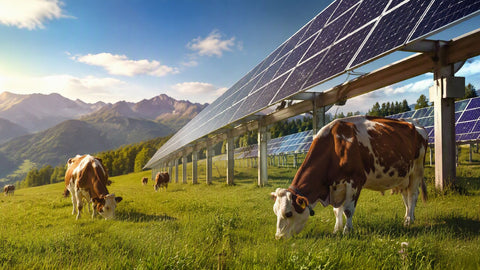
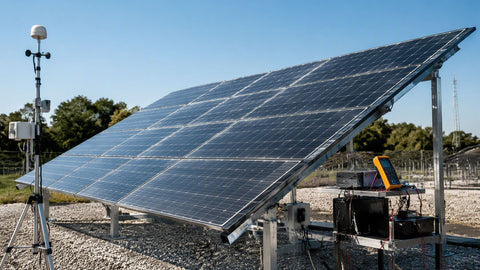
There's a moment on every good agrivoltaic project when the two industries stop negotiating and start cooperating. On a sheep-and-solar site I helped commission two springs ago, it happened when the grazier and the array operator realized they were both scheduling around the same rainstorm — the sheep moved to the far paddock, the wash crew came in behind them, and nobody's job made anybody else's harder. That's the whole idea in one afternoon. Getting to that afternoon, though, takes a disciplined build process, and that's what this guide is: the field-tested sequence for turning sun and soil into one revenue-producing system instead of two competing ones.

This is the practical companion to our concept piece on merging solar power and agriculture and our market analysis of agrivoltaics momentum in 2025. Those cover the why. This one is the how.
Step 1: Site Assessment — Read the Land Before You Draw Anything
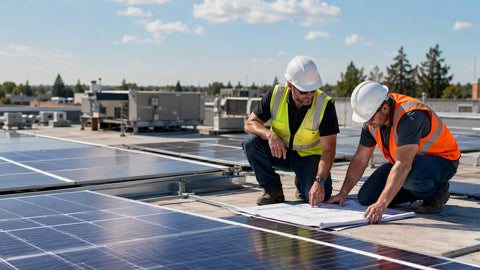
The site visit is where agrivoltaic projects are won, and it's where I spend twice as long as I would on a conventional ground mount. You're not just assessing solar resource; you're assessing a working agricultural system that will keep working inside your array. Bring boots, a soil probe, the farm's machine list, and a lot of questions.
| Assessment Item | What to Measure | Red Flags |
|---|---|---|
| Solar resource | Irradiance, shading from trees/buildings, terrain | Windbreak tree lines shading the south rows; rolling terrain complicating row alignment |
| Soil & geotech | Bearing capacity, corrosion potential, depth to refusal, tile drainage map | High organic topsoil depth requiring deeper piles; corrosive amendments history; undocumented drain tile |
| Crop plan | Rotation schedule, machinery dimensions (tallest, widest), irrigation type | Center pivots overlapping planned rows; machinery taller than any realistic clearance |
| Water | Well capacity, irrigation schedule, flood history | Ponding areas inside proposed array footprint; irrigation mains crossing pile fields |
| Electrical | Service size, utility interconnect options, existing loads | Weak rural feeder — the utility study may force a smaller or costlier design |
| Livestock plan | Species, head count, grazier contract terms | Cattle proposed under standard-height racking; no contracted grazier |
Two lessons from hard experience. First, get the tile drainage map. Farm country in the Midwest is laced with buried clay or plastic drainage tile that nobody has thought about since 1974, and a pile driver will find it the expensive way. Second, physically measure the tallest farm machine with its attachment on. "It's about ten feet" is how you end up owning a redesign.
Step 2: Pick the Configuration — Let the Crop Decide
With the assessment done, configuration selection is almost mechanical. Light-hungry grain plus big machinery points to vertical bifacial fence rows or wide-pitch inter-row. Vegetables and horticulture point to elevated fixed-tilt or raised trackers with eight-plus feet of clearance. Pasture and grazing point to standard or slightly raised inter-row fixed-tilt, which is also the cheapest per watt. Pollinator habitat works under anything. If the answer isn't obvious after the site assessment, do a pilot block of the two leading candidates and let a growing season decide. We've mapped the full trade-space in the configurations and cost table in our 2025 momentum guide, and I won't re-litigate it here — the point is the sequence: crop first, steel second.
Step 3: Engineering and Permitting — The Paper That Protects the Dirt
Agrivoltaic permitting is a three-front war: the electrical AHJ, the county land-use office, and the farm's own insurers and lenders. Run all three in parallel from day one.
| Permit / Engineering Item | Code or Standard | Agrivoltaic-Specific Notes |
|---|---|---|
| PV electrical design | NEC Article 690 (691 for large supply stations) | Nothing in 690 exempts farmland; wire methods must survive tillage, hooves, and UV — armored or buried below tillage depth |
| Rapid shutdown | NEC 690.12 | Module-level shutdown required inside array boundary on buildings; ground-mount rules differ, but fire lanes and access still get negotiated — design farm lanes and fire lanes as the same lanes |
| Grounding | NEC 690.41–.47, Article 250 | Freeze-thaw and tillage walk ground rods out of spec; bond to pile foundations per geotech or drive below tillage depth |
| Structural | ASCE 7 wind/snow loads, local amendments | Open farmland is exposure category territory — wind loads on elevated structures are not suburban numbers |
| Land use | County zoning / state agrivoltaic statutes where they exist | Bring the agronomic plan to the hearing; dual-use approvals increasingly require documented ongoing agriculture |
| Decommissioning | State/county requirements, EPR laws | Farmland deals attract the strictest decommissioning and soil-restoration language — budget the bond, read our 2025 EPR and recycling mandate rundown |
Step 4: Equipment — Build the BOM for Farm Duty
Spec everything for an environment that combines UV, fertilizer vapor, dust, equipment vibration, and freeze-thaw, and you won't be disappointed. A representative BOM for a 500 kW inter-row grazing build:
| BOM Line | Spec Choice | Why |
|---|---|---|
| Modules (~1,100 units @ 450–470 W) | Glass-glass bifacial or TOPCon n-type from our solar panel inventory | Ammonia resistance; bifacial gain over pasture; hot-climate derate advantage |
| Racking | Galvanized ground-mount frames; IronRidge ground systems and racking hardware kits for smaller blocks; the PES 24-panel Sinclair SkyRack 2.0 kit for repeatable sections | Farm soils demand deeper embedment and verified torque per geotech |
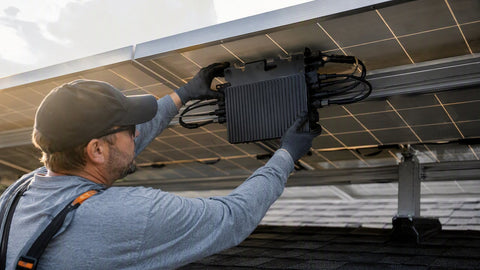
| Inverters | String architecture for export blocks; Enphase microinverters for barn-roof and small elevated sections; shop the full inverter catalog | Monitoring granularity pays when one array spans three land uses |
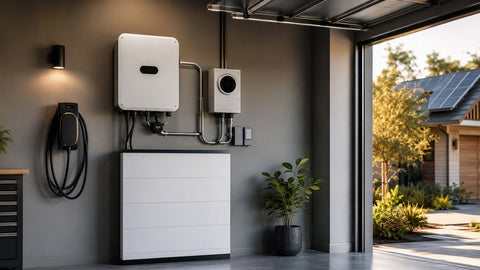
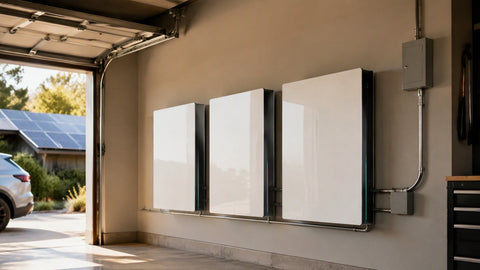
| Storage (optional) | Fortress Power FlexTower or eFlex Max 5.4 kWh modules for pump and cold-storage backup; browse batteries and energy storage | Keeps irrigation and refrigeration alive through outages; size it with our battery sizing guide |
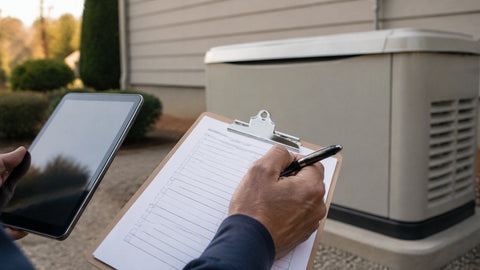
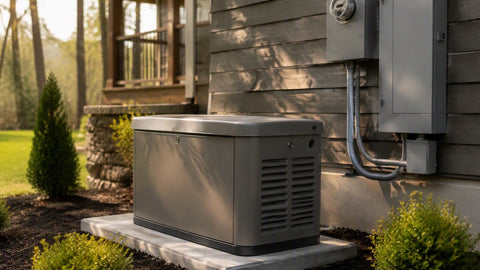
| Backup generation | Farm-duty genset; see the generator sizing guide and generator inventory | Well pumps and coolers can't wait for sunrise |
| BOS | Schedule 80 PVC in contact zones, stainless hardware, UV-rated PV wire from cables and accessories; grounding hardware from electrical supplies | Farm arrays eat residential-grade BOS; spec up once, not twice |
Step 5: Construction on Live Farmland
The golden rule: the farm's calendar outranks your Gantt chart. Build between crop windows, not across them. I've shut down a pile crew for three days so a grower could get a planting in, and that three days bought us a decade of goodwill and an unblemished compaction record. Practical rules that have never steered me wrong:
- Stake the lanes first. Construction traffic runs only on designated farm lanes; everything else is a compaction violation waiting to happen. One pass of a loaded lowboy over tilled ground can undo a decade of soil structure.
- Dust control is crop protection. Water the haul routes. A dust-coated crop row next to a construction entrance is a yield claim with your name on it.
- Torque and document per pile. Farm soils vary across a single parcel more than most engineers expect. Log torque per pile against the geotech spec; it takes minutes and it's the record that settles every later argument.
- Trench below tillage depth, always. Standard 18-inch burial is not enough where a subsoiler runs 24 inches deep. Ask what the deepest tillage pass is, then add margin.
- Commission with the farmer present. The person who will spend 25 years inside the array decides where placards go and how the lanes drain. That walkthrough is not a courtesy; it's a design review.
Step 6: Commissioning and the First-Season Baseline
Commission a farm array twice: electrically, per NEC and the utility's witness requirements, and agronomically, by establishing the baseline you'll measure everything against. Soil moisture readings under-panel and in the open, yield records by row band, irrigation runtime logs — boring data in year one becomes the proof that wins your permit renewals and your insurance renewals in year five. The University of Arizona trials that made agrivoltaics famous were, at heart, just rigorous baseline-keeping. Do the same and your project becomes its own evidence.
The O&M Calendar

| Season | Electrical / Structural Tasks | Agricultural Tasks |
|---|---|---|
| Spring | Post freeze-thaw torque check; IR scan of connections; verify grounding integrity after frost heave | Establish crop or grazing rotation; document pre-season soil moisture baseline |
| Summer | Soiling watch — clean after tillage dust events; check inverter thermal performance in heat waves | Manage grazing to keep vegetation below module edge; log irrigation intervals vs. open field |
| Fall | Post-harvest equipment-strike inspection; verify row clearances before snow season | Harvest records by shade band; reseed pollinator strips |
| Winter | Snow-load and drift pattern review; battery system cold-weather check if installed | Service machinery clear of array lanes; review year-one production and yield data together |
What the Economics Look Like When It's Done Right
A finished dual-use site earns on four ledgers at once: energy offset or export revenue, retained crop or grazing income, water and input savings from the shade microclimate, and avoided costs like mowing. Add the federal ITC on the energy side and USDA REAP eligibility on the farm side, and the stacked return routinely beats either single use — which is precisely what "revolutionizing" means here. Not a miracle technology. A structural improvement in how one acre works.
Design Details That Separate Working Systems from Expensive Write-offs
The difference between a farm array that hums for thirty years and one that becomes a cautionary tale lives in details nobody photographs. Row orientation is the first: north-south rows spread shade evenly across a crop bed through the day, while east-west rows park a persistent shade band on one side all season. Neither is universally right — a lettuce block might want the persistent band parked on its service lane, which means the designer has to know where the service lane is before the rows are drawn. Drip-edge management is the second: every tilted module sheds a concentrated strip of rainwater off its low edge, and on bare tilled soil that strip becomes an erosion gully by the second storm. Gravel the drip line, plant it to a water-loving ground cover, or intercept it with a shallow swale — pick one, because doing nothing is also a decision. Third is wind. Open farmland offers no buildings and no tree lines to break a fetch, and elevated structures present more sail area per watt than any other solar format. The structural engineer's exposure category assumption is not paperwork; it's the difference between a pile schedule that survives a derecho and one that becomes debris. I walked a site in Iowa after a straight-line wind event where the only arrays still fully racked were the ones whose crews had religiously torqued to the engineered spec — the VE'd connections told on themselves.
Fourth, and most underestimated: cable management in a biological environment. Standard UV-rated PV wire draped at lamb height lasts about one grazing season. Burial below tillage depth, or schedule 80 conduit and armored whips in contact zones, costs maybe two percent of project value and prevents the single most common farm-array fault I've been called to diagnose — insulation damage presenting as a ground fault that only appears on humid mornings.
The Workforce Question Nobody Budgets For
Dual-use sites need people who understand both industries, and those people are rare. The array operator's techs need orientation on farm biosecurity and crop calendars; the farm crew needs basic array awareness — where the disconnects are, what an alarm looks like, who to call before digging. Budget a half-day cross-training session at commissioning and a one-page laminated protocol at every gate. It costs almost nothing and it prevents the two failure modes I see most: the well-meaning farmhand who "helpfully" closes a disconnect mid-fault-find, and the solar tech who drives across a planted bed because nobody told him it was planted. I've also watched the workforce gap become a genuine opportunity: two of the best agrivoltaic site managers I know came out of farm families and learned the electrical side on the job, and both now out-earn their previous operations substantially. The labor market for this hybrid skill set is thin, and farms that train for it early hold a real advantage.
Scaling from Pilot Block to Portfolio
The pilot is not a smaller version of the final project; it's a different instrument entirely. Its job is to generate your own local data — soil moisture under panels versus open field, yield by shade band, grazing behavior near the rows, cleaning frequency your dust actually demands — so that the full-scale design rests on measurements from your dirt instead of averages from somebody else's. Two to five acres, instrumented, documented through all four seasons. The pilot also de-risks the human side: it gives your county planner a small yes to say before the big one, your insurer a loss-free year to price from, and your lender audited numbers instead of projections. When the pilot works — and if you followed the six steps, it will — the scale-up is mostly procurement and logistics. That's the part where we can help most directly: volume module buys, racking by the truckload, and BOS kits staged to your build sequence, shipped nationwide from our solar inventory and the rest of the catalog. Bring us the pilot data and the site plan, and we'll build the BOM around what your land actually told you.
The Microclimate Mechanics, Explained Without the Jargon
Everything good about agrivoltaics flows from four physical effects, and understanding them beats memorizing anybody's crop table. Effect one: shade fraction. Panels intercept a percentage of incoming light, and below a crop's light saturation point that interception costs yield — above it, the interception removes mostly heat stress. Your design job is to land the shade fraction in the band where your specific crop sits on the good side of that line, in your specific climate. Effect two: evaporation suppression. Shaded soil runs cooler and loses less water to the air, which is why irrigation intervals stretch under arrays. Effect three: the heat-exchange loop. Transpiring vegetation humidifies and cools the air layer the array breathes, and cooler modules convert better — every degree Celsius of cell temperature costs roughly 0.3–0.4% of output on standard modules, so a vegetated field is measurably kinder to silicon than a gravel pad. Effect four: boundary-layer shelter. Module rows break wind at canopy height, which reduces mechanical crop damage and slows the drying of the soil surface. Put the four together and you get the field-trial results everyone quotes: doubled cherry tomato production in the Arizona trials, jalapeño yields up by about a third, water use per unit of yield down hard. The trials weren't magic. They were these four effects, stacked and measured.
Financing Structures That Fit Farms
The capital side of agrivoltaics has matured into three recognizable shapes. The land-lease model is simplest: a developer builds, owns, and operates the array; the farmer keeps farming around it and collects lease payments with an escalator. It's the lowest-risk structure for the grower and the most common in grazing configurations, but it captures the least of the upside. The farm-owned model puts the system on the farm's balance sheet — usually sized to the farm's own loads, financed against the energy savings, and sweetened by USDA REAP grants and the federal ITC. This is the structure I push for load-matched systems under about a megawatt, because retail-rate offset is the most durable revenue stream in the business and nobody can renegotiate your meter. The hybrid or cooperative model — shared ownership between a developer and the farm, or a group of neighboring farms pooling one larger project — is the newest shape and the most paperwork-heavy, but it lets small operations reach project sizes that utility tariffs reward. Whichever structure you land on, negotiate the soil-restoration and compaction-remediation clauses with the same intensity as the price per megawatt-hour. The energy revenue lasts 30 years; the soil has to last forever.
One financing trap deserves its own warning: don't let a developer's pro forma dictate your crop plan. I've reviewed deals where the array geometry was optimized for the financier's yield model and the farm's rotation became an afterthought written in someone else's spreadsheet. The whole point of dual-use is that both uses stay real. If the agronomy page of the term sheet is blank, get a different term sheet.
Frequently Asked Questions
How long does an agrivoltaic project take from site visit to energization?
Small load-matched farm systems can complete in 6–12 months. Larger export projects live and die by interconnection queues, which can run two to four years in congested territories. Build the farm's crop calendar and the utility's queue into the same schedule from day one.
What clearance do I need under an elevated agrivoltaic array?
Eight feet is the practical minimum for hand-tended horticulture; 10–14 feet for tractor and implement access. Measure your tallest machine loaded and with attachments, then add margin — that number, not a catalog page, sets the low edge.
Do I need sheep, or can I use crops?
Either works. Sheep are the lowest-risk entry because grazing contracts are standardized and insurable. Crops under elevated arrays have strong field-trial data behind them but demand more design precision in shade management and machinery clearance.
What happens to the land at end of life?
Decommissioning plans are required in most jurisdictions and strictest on farmland. Piles pull out, soil gets remediated per the bond language, and the land returns to full agricultural use — which is the structural advantage agrivoltaics holds over any permanent development.
Can agrivoltaics power farm operations directly?
Yes, and load-matched designs are the most resilient financially. Arrays sized to pumps, cold storage, and shop loads offset retail rates; adding storage or a backup genset keeps critical loads alive through outages. Size storage with a proper load audit before buying hardware.
Who maintains the vegetation under the panels?
Whoever the contract says — and there must be a contract. Grazing leases, mowing agreements, or the farm's own crew all work. "We'll figure it out" is the single most reliable predictor of a shaded-out bottom row by midsummer.
Harness both, in that order. Sun and soil have been partners since the first seed went in the ground; agrivoltaics just adds a meter to the relationship. Follow the six steps, respect the crop calendar, spec for farm abuse, and the revolution turns out to be exactly what revolutions rarely are — durable, boring, and profitable for decades.