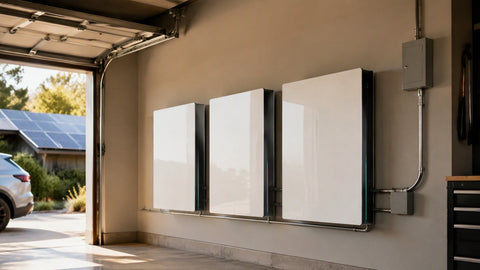
The Jinko Eagle 430W bifacial — model JKM430M-72HLM-TV — is the Eagle G4 generation's answer to a specific question: how much more energy can you harvest from the same footprint when the back of the panel works too? The answer, on the right surface, is 5% to 15% — real yield, not brochure yield. This guide covers the verified specifications, the bifacial gain math by surface type, string sizing under NEC 690.7, and the installation contexts where this module earns its premium over standard monofacial panels.

The module is stocked at the JKM430M-72HLM-TV product page and sits within our broader Jinko Solar and bifacial panel collections. For the series context, see our Eagle G4 series overview and the Jinko brand guide covering the newer Tiger Neo TOPCon line.
Verified Specifications
From the current product listing — not a recycled datasheet fragment:
| Specification | Value |
|---|---|
| Model | JKM430M-72HLM-TV (Eagle G4, bifacial) |
| Rated power (Pmax) | 430 W, 0/+3% tolerance |
| Module efficiency (front) | 19.97% |
| Cell type | Mono PERC, 166 × 166 mm |
| Cell configuration | 144 half-cut cells (6 × 24) |
| Open-circuit voltage (Voc) | 48.67 V |
| Short-circuit current (Isc) | 11.32 A |
| Voltage at Pmax (Vmp) | 40.77 V |
| Current at Pmax (Imp) | 10.67 A |
| Max system voltage | 1,500 V DC (IEC) |
| Bifaciality factor | 70% ± 5% |
| Temp coefficient of Pmax | -0.35%/°C |
| NOCT | 45°C ± 2°C |
| Operating temperature | -40°C to +85°C |
| Dimensions / weight | 2,096 × 1,039 × 40 mm (82.5 × 40.9 × 1.57 in) / 25.47 kg (56.2 lb) |
| Front glass | 3.2 mm anti-reflective, high-transmission, low-iron tempered |
| Junction box / cables | IP68; 12 AWG, 1,400 mm |
| Performance warranty | 30-year linear performance warranty |
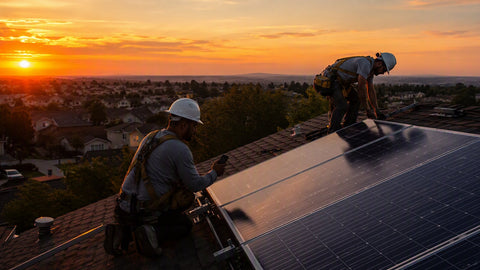
Four entries carry the design weight. The bifaciality factor of 70% ± 5% means the rear face converts light at about 70% of the front face's rate — the multiplier in every rear-gain calculation below. The 1,500V rating permits the long commercial strings that make bifacial ground-mount economics work. The 25.5 kg weight is a two-person module on any roof. And the IP68 junction box with a transparent backsheet construction is what separates this from glass-glass bifacials: lighter, cheaper, and familiar to install, at some cost to rear-face durability compared to dual-glass designs.
Bifacial Gain: The Math by Surface
Rear-side gain is not magic; it is albedo (surface reflectance) × bifaciality × a geometry factor for how much reflected light actually reaches the rear cells. Field-validated ranges for this class of module (70% bifaciality):
| Mounting Context | Surface Albedo | Typical Rear-Side Gain | Effective Watts (front 430 W) |
|---|---|---|---|
| White TPO/PVC membrane roof, elevated racking | 0.55–0.80 | 6–10% | 456–473 W equivalent |
| Light gravel or concrete | 0.30–0.45 | 4–7% | 447–460 W equivalent |
| Grass / vegetated ground mount | 0.18–0.25 | 2–5% | 439–452 W equivalent |
| Fresh snow (seasonal boost) | 0.80–0.90 | 8–15% while snow lasts | 464–495 W equivalent |
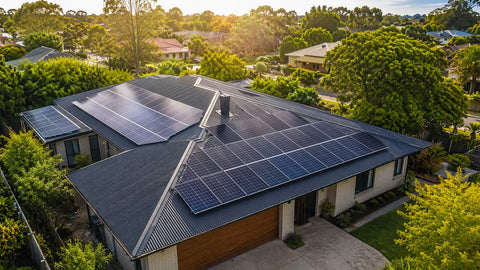
| Dark shingle residential roof, flush mount | 0.05–0.10 | 0–2% (effectively zero) | ~430 W — do not pay for bifacial here |
Check the top row's logic: a white membrane reflecting 65% of irradiance, with maybe 40% of that reflection geometrically reaching the rear face, times 70% bifaciality: 0.65 × 0.40 × 0.70 ≈ 18% theoretical rear irradiance contribution — which derates through mismatch and temperature to the 6–10% real yield gains the field data shows. The last row is the warning: flush-mounted on dark shingles, bifacial gain is a rounding error. I have had to talk two customers out of paying bifacial premiums for asphalt-shingle roofs; the same dollars buy another module, which always wins that trade.
String Sizing Under NEC 690.7 and 690.8
With Voc of 48.67V and the NEC 690.7(A) temperature correction factors:
| Design Low | Correction Factor | Corrected Voc | Max String (1,000 V) | Max String (1,500 V) |
|---|---|---|---|---|
| 0°C | 1.10 | 53.5 V | 18 | 28 |
| -10°C | 1.14 | 55.5 V | 18 | 27 |
| -20°C | 1.18 | 57.4 V | 17 | 26 |
| -40°C | 1.25 | 60.8 V | 16 | 24 |
Verification: -10°C row: 48.67 × 1.14 = 55.48V; 1,500 ÷ 55.48 = 27.0 — 27 modules, no headroom to spare, so conservative designers step to 26 in cold climates. One bifacial-specific caution: rear-side gain raises current, and NEC 690.8 calculations on bifacial arrays should account for the boost where the AHJ requires it. With Isc of 11.32A, the base design current is 11.32 × 1.56 = 17.7A; a 10% bifacial boost assumption pushes that to roughly 19.4A — still inside a 20A source-circuit OCPD under NEC 240.6 standard sizes, but the margin is thin, which is why many designers fuse bifacial strings at 25A where the module's max series fuse rating permits. Confirm the rating on the current datasheet. Our NEC 690 disconnect and overcurrent guide covers the OCPD framework, and the wiring basics guide covers string layout.
Production and System Configurations
At 4.8 peak sun hours and a 0.80 front-side derate, with surface-appropriate bifacial gain layered on:
| Configuration | System Size | Front-Side Annual kWh | +6% Bifacial (white roof) | +12% Bifacial (high-albedo ground) |
|---|---|---|---|---|
| 24 modules (1 string pair) | 10.3 kW | ~14,400 kWh | ~15,260 kWh | ~16,130 kWh |
| 48 modules | 20.6 kW | ~28,900 kWh | ~30,630 kWh | ~32,370 kWh |
| 96 modules | 41.3 kW | ~57,800 kWh | ~61,270 kWh | ~64,740 kWh |
Front-side check: 24 × 430 W = 10.32 kW × 4.8 × 365 × 0.80 = 14,463 kWh — the table's ~14,400. The bifacial columns show why surface selection is a design decision, not an afterthought: the same array produces 12% more energy on bright ground than the nameplate math suggests. Over 25 years on a white commercial roof, that 6% spread on a 41 kW system is roughly 87 MWh of free energy — worth $13,000+ at typical commercial rates, which pays for the bifacial premium several times over. Elevated racking that opens the rear view factor is part of the harvest; browse options in our racking and mounting collection and the racking systems guide.
Where This Module Fits — and Where It Doesn't
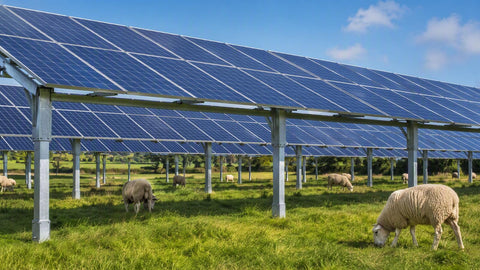
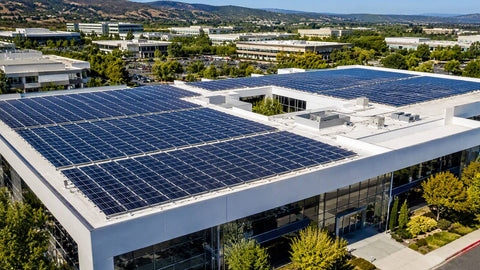
Spec it for: white-membrane commercial rooftops with elevated racking, ground mounts on light surfaces, carports and canopies (where rear-side light access is structural), and snow-belt installations where winter albedo runs high for months. Skip it for: flush-mount residential shingle roofs (gain ≈ 0), weight-constrained structures (at 25.5 kg it is among the heavier residential-scale modules), and projects where the budget delta versus the 385W Eagle Continental or current TOPCon modules matters more than yield. For cross-shopping, our JA Solar vs. Jinko and Trina vs. Jinko comparisons put the brand in competitive context, and the 430W collection shows the direct alternatives.
Warranty and Reliability, Honestly Read
The Eagle G4 carries a 12-year product warranty and a 30-year linear performance warranty — longer on the performance side than most p-type contemporaries, reflecting the dual-face architecture's slower effective degradation per face. Read the fine print the way we do on bids: confirm whether labor is covered for replacement, confirm the claim measurement protocol, and register the warranty at commissioning. The module's environmental testing pedigree (humidity, heat, rain, marine, wind, hail, snow per its certifications) and IP68 junction box are the right boxes ticked for exposed commercial work; the transparent backsheet is the component I watch on decade-scale outdoor exposure, and it is why glass-glass bifacials exist at a higher price point.
Field Notes: Installing the 430 Bifacial
Three lessons from jobs I have touched. First, row spacing is yield: on ground mounts, widening pitch from cramped to generous lifts rear gain measurably — we model a full percentage point of extra bifacial gain for every meaningful increase in ground clearance up to about a meter. Second, keep the rear face clean in the design: wire runs, junction boxes, and racking rails that shadow the rear cells cost more on a bifacial module than they do on a monofacial one, and sloppy wire management is a double penalty here. Third, torque discipline matters with 56-pound modules two-up on a ladder rack — this is a two-person module with no exceptions, and crews that treat it as one-person work crack frames and void warranties. I have watched it happen once; the customer relationship survived, the margin on that job did not.
How Bifacial Cells Actually Work

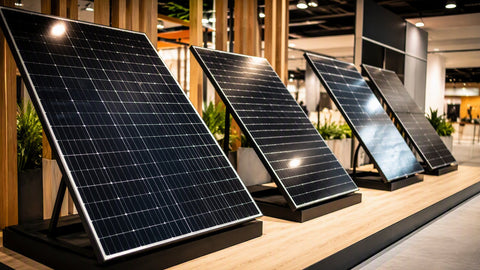
A conventional module sandwiches cells between front glass and an opaque backsheet; light that misses the cells or passes between them is lost. A bifacial module replaces the opaque back with a transparent layer — here, a clear backsheet rather than a second glass sheet — so reflected and diffuse light reaches the rear cell surfaces. The rear cells are the same PERC architecture as the front, converting at about 70% of the front's rate (the bifaciality factor), with the difference coming from grid-line metallization designed for the front face. Half-cut cell architecture matters doubly on bifacials: splitting 144 cells into parallel halves reduces resistive losses on both faces and improves shade behavior, since a shadowed half-string drags down only its own section.
The practical consequence: bifacial energy is diffuse-light energy. It is strongest under high-albedo diffuse conditions — bright overcast over snow beats clear blue over dark soil — and it is why the geometry of the installation (height, row spacing, surface) decides the gain more than the module does. Design the site for the rear face and the rear face pays you; ignore it and you bought an expensive monofacial.
Eagle G4 vs. Tiger Neo: Choosing Between Jinko Generations
Jinko's current Tiger Neo line (n-type TOPCon, 580W+) has moved the efficiency frontier, but the Eagle G4 430 retains specific advantages that keep it on bid tabs:
| Attribute | Eagle G4 430W (this module) | Tiger Neo 580W+ Class |
|---|---|---|
| Cell technology | P-type PERC bifacial | N-type TOPCon bifacial |
| Front efficiency | 19.97% | 22.0–22.8% |
| Bifaciality factor | 70% ± 5% | ~80% ± 5% |
| Temp coefficient (Pmax) | -0.35%/°C | ~-0.29%/°C |
| First-year / annual degradation | ~2.0% / ~0.55% (p-type typical) | ~1.0% / ~0.40% |
| Form factor | 2,096 mm — fits residential and light commercial layouts | 2,278+ mm — utility/commercial scale |
| Best role | White-roof C&I, carports, premium residential flat roofs | Ground-mount and large commercial where area is priced |
The Tiger Neo wins on nearly every datasheet line — efficiency, bifaciality, temperature behavior, degradation. The Eagle G4's counter is form factor and price: at 2,096mm it fits racking geometries and roof modules the 2,278mm+ formats cannot, and legacy-generation pricing per watt routinely undercuts the newest line. For the 580W TOPCon deep-dive, see our JKM580N Tiger Neo guide. The Jinko brand page maps the full catalog.
Total Cost of Ownership: The 30-Year View
Module price is a down payment on three decades of production. Running the verified numbers for a 96-module, 41.3 kW commercial array on a white membrane roof (6% bifacial gain): year-1 production of ~61,270 kWh, degrading at 0.55% annually after a 2% first-year step, delivers roughly 1.42 GWh over 30 years. At a $0.12/kWh commercial blended rate, that is $170,000 of energy value. Against a module cost around $17,800 (at ~$0.43/W pallet pricing), the modules themselves are about 10% of the lifetime value they produce — the enduring lesson of solar economics, and the reason module selection should optimize risk and yield rather than minimize sticker price.
The degradation line deserves the same scrutiny as the price line. A p-type module at 0.55%/year retains about 86% at year 30; an n-type at 0.40% retains about 89%. On 1.42 GWh, that three-point gap is roughly 43 MWh — $5,000+ at commercial rates. When the TOPCon premium is below that figure per project, buy the newer cell; when availability or form factor forces p-type, the Eagle G4's 30-year performance warranty is the strongest in its class.
Installation Engineering: Details That Decide Yield
Four spec-sheet-blind details separate good bifacial installs from average ones. Height above surface: rear irradiance scales with clearance; commercial flat-roof racking at 18–24 inches captures meaningfully more than low-profile ballast at 6 inches. Row pitch: generous spacing reduces rear shading from the row behind — on ground mounts, the trade between ground-coverage ratio and bifacial gain is a real optimization, not a footnote. Rear-side obstructions: torque tubes, rails, and wire runs shadow the rear face; bifacial-specific racking with minimized rear profile recovers yield that generic racking surrenders. Soiling of the rear: on ground mounts near unpaved roads, rear-face dust accumulates; include the rear in cleaning schedules. None of this is exotic — it is the difference between getting the modeled 6% and getting 3%.
Procurement at Pallet Scale
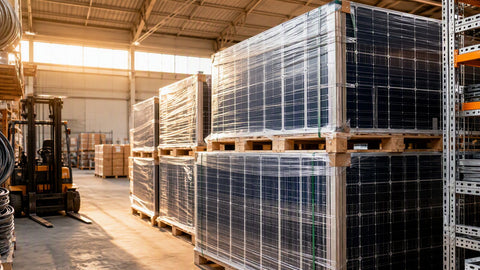
This module sells 30 pieces minimum, which puts the buyer in pallet territory from the first order — and that changes how to buy it. Three practices from our commercial desk. First, lock the full project quantity plus 1–2% attic stock in a single lot: mixed production batches complicate both flash-bin matching and warranty logistics, and a second lot ordered six months later may carry a different connector revision. Second, schedule freight before the crew: 96 modules is four pallets of LTL freight, and a commercial dock delivery coordinated to arrive the week racking completes keeps modules out of laydown-yard limbo. Third, document at receipt — photograph pallet labels, record serial ranges, and file the flash reports. The warranty clock and the registration record are the two artifacts your future self will need, and both are free at delivery and expensive to reconstruct later. Current pricing and lot availability are on the product page; for the electrical balance of the system, our commercial inverters collection covers the 1,500V string gear these arrays pair with.
Performance in Heat, Cold, and the Places Between
The -0.35%/°C Pmax coefficient is mid-pack for PERC and worth translating into plain numbers. At a 65°C cell temperature — a still, hot afternoon on a membrane roof — front-side output is 430 × (1 − 0.0035 × 40) ≈ 370W, a 14% temperature haircut every crystalline module takes. The bifacial gain partially compensates on bright surfaces, which is why the white-roof pairing is doubly smart: the membrane reflects heat as well as light, keeping cell temperatures lower than dark roofs while feeding the rear face. In cold, clear conditions the module runs above nameplate: at 5°C cell temperature, 430 × (1 + 0.0035 × 20) ≈ 460W before any rear contribution. Cold-climate designers should note the voltage consequence lives in the string-sizing table above — the same physics that gifts winter power raises winter Voc, and the 690.7 correction is not optional at -20°C design lows.
A Compact Case Study
A 48-module carport installation we supplied last year illustrates the module's best case: elevated structure, light concrete below, open rear aspect. Modeled front-side production was 28,900 kWh; first-year actuals came in at 31,400 kWh — an 8.7% realized bifacial gain, slightly above the modeled 7%, because the site's concrete was brighter than the albedo assumption. The owner's effective cost per kWh dropped under the monofacial alternative they had originally quoted, and the carport structure did double duty as shade. That is the bifacial thesis in one job: when the site is built to feed the rear face, the module beats its own datasheet; when it is not, buy something cheaper. The difference between those outcomes is decided on paper before the first purchase order, which is where guides like this one earn their keep. I have quoted both sides of that decision on real projects this year, and the honest spreadsheet has never once pointed at the prettier brochure.
Ordering, Lead Times, and What to Expect at the Dock
Logistics are part of the product at this scale. The module ships on 40mm-frame pallets via LTL freight with liftgate service available for sites without a dock; our team confirms freight details within one business day of order. Standard handling rules apply with extra weight behind them — 25.5 kg modules in 30-piece pallets are forklift or four-person territory, never drag-and-stack. Inspect pallets before signing the bill of lading: photograph any frame dents or glass chips while the driver waits, because freight claims filed after signature are uphill climbs. Store pallets flat, dry, and shaded until install day; modules are tougher than their glass suggests, but the junction boxes and connectors at the bottom of a leaning stack are the failure points we see in claim photos. It is unglamorous advice, and it has saved more projects than any datasheet line.
Bottom Line on the Eagle 430W Bifacial
Buy it when the site feeds the rear face: white membrane roofs with elevated racking, carports, canopies, bright ground mounts, and snow-belt sites. Skip it on dark flush-mount roofs where the premium buys nothing. On the right surface this module returns its premium in the first few years and keeps paying for thirty. Verify current lot pricing on the product page before finalizing any bill of materials.
Frequently Asked Questions
What are the specs of the Jinko JKM430M-72HLM-TV?
430W output (0/+3%), 19.97% front efficiency, 144 half-cut mono PERC cells (166mm), Voc 48.67V, Isc 11.32A, Vmp 40.77V, Imp 10.67A, 1,500V DC system rating, 70% ± 5% bifaciality, -0.35%/°C Pmax temperature coefficient, 2,096 × 1,039 × 40 mm, 25.5 kg, IP68 junction box, and a 30-year linear performance warranty.
How much extra power does the bifacial design add?
2% to 5% on grass ground mounts, 4% to 7% on gravel or concrete, 6% to 10% on white membrane roofs with elevated racking, and up to 15% seasonally over fresh snow. Flush-mounted on dark shingles, effectively zero.
Is the Jinko Eagle 430W good for residential roofs?
Only where the roof surface justifies it. On dark composition shingles with flush racking, the bifacial premium buys nothing — a monofacial module plus one extra panel is the better spend. On flat residential roofs with white coating and tilted racking, it earns its keep.
What is the warranty on the JKM430M-72HLM-TV?
A 12-year product warranty and a 30-year linear performance warranty. Confirm current terms and labor coverage on the datasheet at order time, and register the warranty at commissioning.
How many 430W panels make a 10 kW system?
10,000 ÷ 430 = 23.3, so 24 modules for 10.32 kW — before counting rear-side gain, which adds 4–10% effective yield on suitable surfaces.
What racking works with this module?
Any rail system rated for the module's 40mm frame and 2,096mm length, with clamp zones per the datasheet. Elevated designs that open the rear view factor maximize the bifacial harvest; verify the racking brand's module-compatibility letter before installation.