Off-grid solar is where system design stops being a spreadsheet exercise and starts being a promise. When a grid-tied array underperforms, the utility covers the gap silently. When an off-grid system falls short, the lights go out, the well pump stops, and somebody drives forty minutes on a gravel road to find out why. We design and supply off-grid systems for cabins, farms, telecom sites, and full-time homesteads, and the discipline is the same every time: size from the load, not from the budget, and build the battery bank like it is the heart of the system — because it is.
This guide walks the complete process the way we run it on real projects: the load analysis, the array math, the battery bank math, component selection, code compliance, and the maintenance habits that keep an off-grid plant alive for twenty years. Whether you are an installer quoting your first remote job or a project owner trying to sanity-check a contractor's proposal, the numbers below are the numbers that matter.
Why Off-Grid Solar Power Solutions Matter
Grid extension costs have made off-grid solar the rational economic choice for a huge slice of rural America. Utilities routinely quote $15,000 to $50,000 per mile for line extension — and that buys you a monthly bill forever. A properly engineered off-grid system for a modest home runs $25,000 to $45,000 installed and owns its power plant outright. For agricultural pumping, remote telecom, and monitoring sites where the nearest transformer is a ridge away, there was never a contest at all.
The technology has crossed a threshold too. LiFePO4 storage at sane prices, hybrid inverters that juggle array, battery, and generator inputs automatically, and 400W+ modules have turned off-grid from a hobbyist compromise into a professional product. The systems we ship today around units like the Sol-Ark SA-8K-48 or the EG4 FlexBOSS21 would have been science projects fifteen years ago.
Quick Overview: Off-Grid vs. Grid-Tied vs. Hybrid Solar
| Attribute | Grid-Tied | Off-Grid | Hybrid (Battery-Backed Grid-Tie) |
|---|---|---|---|
| Utility connection | Required | None | Present, used as backup |
| Battery bank | None | Mandatory — sized for days of autonomy | Optional, sized for outages or rate arbitrage |
| Generator integration | Rare | Standard design element | Common |
| Installed cost (typical home) | $2.50–$3.50/W | $25k–$45k+ all-in | Grid-tie cost + $8k–$20k storage |
| Design driver | Annual kWh offset | Worst-week load vs. worst-month sun | Critical loads and outage duration |
| Failure consequence | Higher utility bill | Blackout | Depends on backup design |
| Best fit | Any serviced property | Remote sites, high line-extension cost | Unreliable grids, TOU rate plans |
Planning Your Off-Grid System: Understanding the Core Components
An off-grid plant has four organs, and a weakness in any one of them defines the whole system's ceiling.
Solar Panels: The Power Generators
Module choice matters less than array sizing, but format matters for logistics. Remote sites favor larger-format modules — fewer clamps, fewer connections, faster racking — and mono PERC or TOPCon modules in the 400–550W class from our solar panel inventory hit the best balance of watts per dollar and watts per roof or ground-mount square foot. For ground-mount arrays on raw land, pre-engineered kits like the Sinclair Sky Rack 2.0 24-panel ground mount kit eliminate the ugliest part of remote racking design.
The Battery Bank: Your Energy Reservoir
The battery bank is the most expensive, most abused, and most frequently undersized component in off-grid design. LiFePO4 has won the chemistry war for new installs: 80–90% usable depth of discharge, 4,000–6,000 cycle life, no maintenance, and no ventilation requirements. Sealed AGM still appears in budget builds and extreme-cold sites, but you size AGM at 50% DoD and replace it in 5–7 years. Server-rack lithium modules like the Fortress eFlex Max 5.4 kWh scale cleanly — stack four and you have a 21.6 kWh bank that talks to every major hybrid inverter over CAN.
Charge Controllers and Inverters: The Brains of the Operation
On component-based systems, the MPPT charge controller sits between array and battery. Size it by array watts divided by battery voltage, with NEC-mandated 125% headroom on current. Our charge controller sizing guide and MPPT vs. PWM breakdown cover the selection logic; the short version is that PWM has no business on a modern off-grid build. Quality MPPT units from Victron — like the Victron SmartSolar 250/100 class — or MidNite's MidNite Classic 150 line run for decades. The inverter (or inverter-charger) must carry the largest simultaneous load plus surge: well pumps and compressors pull 3–5× running watts at start. Increasingly the answer is an all-in-one hybrid that merges inverter, charger, dual MPPTs, and generator input — browse our hybrid inverter collection for the current lineup.
The Backup Generator: The Insurance Policy
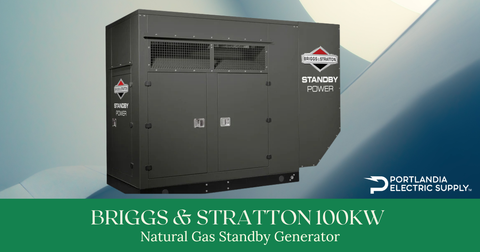
Every honest off-grid design includes a generator. Not because solar fails, but because weather happens in streaks — a nine-day November gloom will defeat any economically sane battery bank. A Champion 22kW or a Generac from our standby generator lineup on an automatic generator start (AGS) signal from the inverter turns a blackout into a non-event. Fuel burn planning matters, and we give the numbers below.
How to Size Your System for Peak Performance
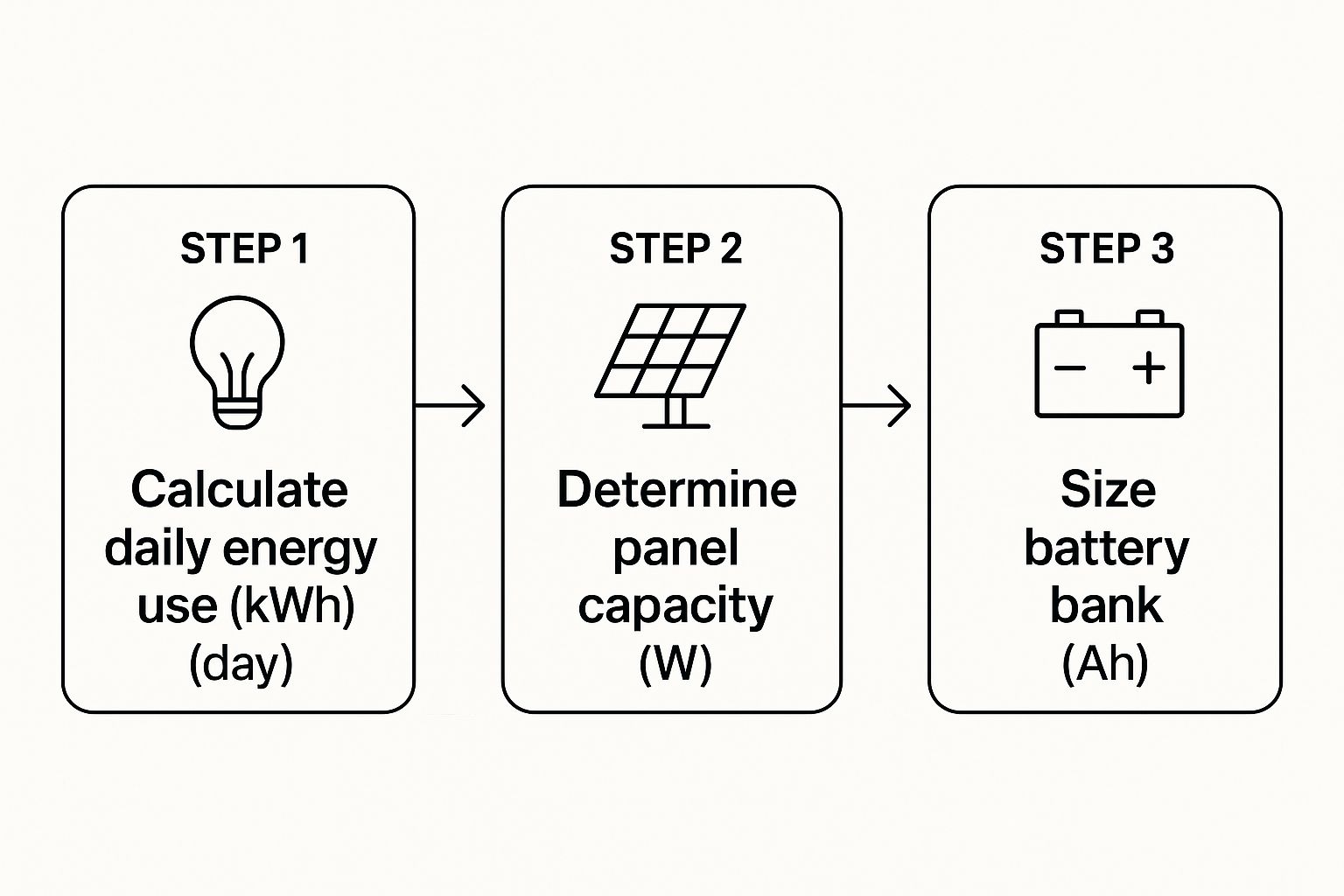
Sizing is arithmetic, not opinion. Three steps, in order, and never out of order: load, array, battery. Anyone who quotes you a "10kW off-grid package" without a load analysis is selling a box, not a system.
Step 1: Conduct a Detailed Load Analysis
List every load, its running watts, its duty cycle, and its surge. Use measured values from a plug-in watt meter where possible; nameplate values overstate resistive loads and understate motor surge. Then multiply watts × hours for daily watt-hours. Seasonal loads (AC, heating fans, stock tank heaters) get their own columns, and you design for the worst credible week, not the average day.
Sample Load Calculation for a Remote Cabin
| Load | Running Watts | Hours/Day | Daily Wh | Surge (W) |
|---|---|---|---|---|
| Refrigerator (Energy Star, 18 cu ft) | 150 | 8 (cycle) | 1,200 | 900 |
| Well pump, ½ HP, 240V | 1,050 | 1 | 1,050 | 3,200 |
| LED lighting, whole cabin | 120 | 5 | 600 | 120 |
| Chest freezer | 100 | 8 (cycle) | 800 | 600 |
| Mini-split heat pump, 12k BTU | 1,100 | 6 | 6,600 | 1,800 |
| Internet + laptops + TV | 180 | 6 | 1,080 | 250 |
| Water heater (heat-pump type) | 500 | 2 | 1,000 | 600 |
| Microwave | 1,100 | 0.3 | 330 | 1,100 |
| Totals | — | — | 12,660 Wh | Peak coincident ≈ 4,500 W |
Twelve and a half kWh a day is a real, livable cabin — not a hair-shirt survival shed. Notice what is not on the list: electric resistance heat, electric range, electric dryer. Those three loads kill off-grid budgets faster than any other design decision, and propane or wood handles them better. If the owner insists on electric cooking, add 3–5 kWh/day and re-run every number that follows.
Step 2: Calculate Solar Array Capacity
The formula is simple; the inputs are where people cheat:
Array watts = Daily Wh ÷ (peak sun hours × system derate)
Peak sun hours (PSH) come from NREL data for the site's worst design month — for off-grid, that is usually December or January, not the annual average. The derate factor captures temperature, soiling, wiring, and charge-controller losses; use 0.75 for an honest design, 0.80 if the site is cool and the wiring generous. For our cabin in a northern climate with 2.8 PSH in December:
12,660 Wh ÷ (2.8 × 0.75) = 6,029 W → a 6 kW array, or fifteen 400W modules.
Round up, always. Module prices make oversizing the array the cheapest insurance in the system — a 20% larger array costs a fraction of one extra battery module and extends battery life by reducing depth of discharge on normal days.
Step 3: Determine Your Battery Bank Size
Usable capacity (Wh) = Daily Wh × days of autonomy ÷ inverter efficiency
Nameplate capacity = Usable capacity ÷ usable DoD
Days of autonomy is a climate decision: 1.5–2 days for sunny regions, 2.5–3 for cloudy northern sites with a generator. LiFePO4 gives you 80–90% usable DoD; AGM gives you 50%. For the cabin with 2.5 days of autonomy on lithium at 90% inverter+battery round-trip and 80% DoD:
12,660 × 2.5 ÷ 0.90 = 35,167 Wh usable → ÷ 0.80 = 43,958 Wh ≈ 44 kWh nameplate
At 48V nominal: 44,000 Wh ÷ 51.2V ≈ 859 Ah — eight 5.4 kWh server-rack modules like the Fortress eFlex, or a comparable stack from our lithium battery collection.
Yes, 44 kWh is a big bank. That is what 2.5 days of honest autonomy costs in December. The levers are obvious: cut the mini-split runtime, accept 1.5 days with a generator, or move south. The math does not negotiate.
Sizing Reference Table: Load vs. Array vs. Battery
| Daily Load | Climate (Winter PSH) | Array Size (0.75 derate) | LiFePO4 Bank (2 days, 80% DoD) | Recommended Inverter Class |
|---|---|---|---|---|
| 4 kWh (camping cabin) | 3.5 | 1.5 kW | 11 kWh | 3 kW (e.g., MidNite MN3024 class) |
| 8 kWh (efficient cottage) | 3.0 | 3.6 kW | 22 kWh | 6 kW |
| 12.7 kWh (our cabin) | 2.8 | 6.0 kW | 44 kWh | 8–12 kW hybrid (Sol-Ark 8K / EG4 FlexBOSS21) |
| 20 kWh (full-time home) | 2.8 | 9.5 kW | 70 kWh | 12–15 kW, often dual inverters |
| 35 kWh (large home + shop) | 3.0 | 15.6 kW | 110+ kWh | Stacked hybrids, 240V split-phase |
Generator Backup: Fuel Burn and Runtime Planning
Size the generator to carry the house loads and charge the bank at the inverter-charger's full rate. An 8 kW hybrid pulling 100A into a 48V bank wants roughly 6 kW of charging headroom on top of pass-through loads — hence the common 12–22kW standby pairing. Fuel consumption drives the propane tank or NG sizing conversation:
| Generator | Fuel | ½ Load Burn | Full Load Burn | 500 gal Propane Runtime (½ load)* |
|---|---|---|---|---|
| 12kW standby | Propane | ≈1.4 gal/hr | ≈2.2 gal/hr | ≈285 hrs |
| Champion 22kW | Propane | ≈2.1 gal/hr | ≈3.6 gal/hr | ≈190 hrs |
| 22kW standby | Natural gas | ≈203 ft³/hr | ≈281 ft³/hr | NG: meter-limited, not tank-limited |
| 26kW (e.g., Generac 7291) | Propane | ≈2.3 gal/hr | ≈3.9 gal/hr | ≈174 hrs |
*A 500-gallon propane tank holds ~400 gallons usable (80% fill rule). Figures from manufacturer spec sheets; always derate for altitude and temperature per the installation manual. Our 22kW generator guide and the 2026 whole-home generator sizing walkthrough go deeper on generator selection. With AGS configured to fire at 30% state of charge and stop at 90%, a typical off-grid home burns 40–80 generator hours per year — a rounding error in fuel, a career's worth of peace of mind.
System Architectures: Component-Built vs. All-in-One Hybrid
Two philosophies dominate off-grid design, and we build both. The component architecture separates the functions: discrete MPPT charge controllers feed the battery bank, and a pure sine inverter-charger draws from it. Victron, MidNite, and OutBack built their reputations here. The upside is redundancy and granular sizing — a dead controller leaves the inverter running, and you replace a $900 box instead of a $5,000 one. The downside is wiring complexity, more wall space, and more labor hours. The all-in-one hybrid architecture — Sol-Ark, EG4, Deye-class units — puts dual MPPTs, the inverter-charger, the transfer switch, and generator management in one enclosure. Install time drops by a third, the wiring diagram fits on one page, and the monitoring is integrated out of the box. The tradeoff is a single point of failure and less flexibility when your array voltage and battery voltage want different answers.
Our rule of thumb after building both for years: under 8 kW and owner-maintained, the hybrid wins on simplicity. Above 12 kW, or on sites where a service visit is a full-day commitment, component systems earn their wall space through redundancy. Some of the most resilient systems we maintain are hybrids for daily duty with a component-based spare inverter on the shelf — cheap insurance when the nearest service tech is you.
Architecture Decision Table
| Factor | Component System (Victron / MidNite / OutBack) | All-in-One Hybrid (Sol-Ark / EG4) |
|---|---|---|
| Typical install labor | Higher — more enclosures, more conduit | Lower — one wall-mount unit |
| Single point of failure | No — functions are independent | Yes — one board runs everything |
| Expandability | Excellent — add controllers or stack inverters à la carte | Good — parallel identical units |
| Remote monitoring | Strong (Victron VRM is best-in-class) | Strong, integrated |
| DC-coupled retrofit to existing array | Natural fit | Possible but clunkier |
| Best system size | Any; shines above 12 kW | Shines at 6–15 kW residential |
Conductor Sizing and Voltage Drop on the DC Side
More off-grid systems are crippled by wire than by any component. Low-voltage DC is unforgiving: a 2-volt drop that is noise on a 240V circuit is a 4% loss on a 48V battery run. Keep inverter battery cables under ten feet, and size them from NEC 310.16 ampacity with the 125% continuous-load factor from NEC 690.8 and 210.19(A)(1). The copper ampacities we design to (75°C column, THHN/THWN-2 in conduit):
| Copper Conductor | Ampacity @ 75°C (NEC 310.16) | Max Continuous (×0.8) | Typical Off-Grid Use |
|---|---|---|---|
| 10 AWG | 35 A | 28 A | Small charge controller output, 12/24V subsystems |
| 8 AWG | 50 A | 40 A | Mid-size MPPT output at 48V |
| 6 AWG | 65 A | 52 A | 3–4 kW inverter at 24V (short runs) |
| 4 AWG | 85 A | 68 A | 4 kW inverter at 48V |
| 2 AWG | 115 A | 92 A | 6 kW inverter at 48V |
| 2/0 AWG | 175 A | 140 A | 8 kW inverter at 48V |
| 4/0 AWG | 230 A | 184 A | 12 kW inverter at 48V; parallel runs above that |
Check voltage drop independently of ampacity — ampacity keeps insulation from melting, voltage drop keeps the system efficient. Target under 2% on battery-to-inverter runs and under 3% array-to-controller. On long array runs, raising string voltage is the professional answer: a 400V string moves the same power as a 100V string on one-sixteenth the copper. This is why modern MPPT controllers with 250V or 500V input windows — the Victron 250/100 and MidNite Classic 250 classes — are worth their premium on any site where the array cannot hug the battery room.
Seasonal Reality: A Monthly Energy Balance
Annual-average sun hours lie. Off-grid viability lives or dies in the worst month, so we model the whole year. Here is the cabin example (12.66 kWh/day load, 6 kW array, 0.75 derate) in a northern climate:
| Month | Peak Sun Hours | Array Daily Yield (kWh) | Load (kWh) | Balance (kWh/day) |
|---|---|---|---|---|
| December | 2.8 | 12.6 | 14.2 (heating fans up) | −1.6 → generator covers |
| January | 3.1 | 14.0 | 14.2 | −0.2 → break-even |
| February | 3.9 | 17.6 | 13.5 | +4.1 |
| April | 5.2 | 23.4 | 11.8 | +11.6 |
| June | 6.1 | 27.5 | 12.2 | +15.3 |
| August | 5.8 | 26.1 | 13.0 (cooling) | +13.1 |
| October | 3.9 | 17.6 | 12.4 | +5.2 |
Read the December row twice. That −1.6 kWh/day is the entire reason the generator exists, and it is roughly 5.5 kW-hours a week — call it an hour of generator runtime every two days at moderate load. That is the honest shape of northern off-grid life: abundance nine months a year, a managed deficit for six weeks, and a propane tank bridging the gap. Anyone selling you a generator-free design in this climate is selling you a February blackout.
What an Off-Grid System Actually Costs
Budget transparency saves everyone pain. Realistic equipment-level budgets for our three archetypes (racking, wire, and balance-of-system included; labor varies wildly by region and access):
| System Tier | Array | Battery | Power Electronics | Generator | Equipment Total (typical) |
|---|---|---|---|---|---|
| Weekend cabin (4 kWh/day) | 1.5 kW — $1,800 | 11 kWh LiFePO4 — $4,500 | 3 kW all-in-one — $1,600 | Portable 4–7kW — $1,200 | $11,000–$14,000 |
| Our cabin (12.7 kWh/day) | 6 kW — $6,500 | 44 kWh LiFePO4 — $16,000 | 8–12 kW hybrid — $5,000 | 22kW standby — $6,500 | $36,000–$42,000 |
| Full-time home (20 kWh/day) | 9.5 kW — $10,000 | 70 kWh LiFePO4 — $25,000 | Dual 12kW hybrids — $10,000 | 22–26kW standby — $7,500 | $55,000–$65,000 |
Add 30–60% for professional installation depending on trenching, ground-mount civil work, and distance from civilization. The 30% federal Investment Tax Credit applies to the solar and storage portions (and the racking and wiring that serve them), which takes real bite out of the residential numbers — confirm current IRS guidance with your tax professional, because the ITC rules have shifted more than once recently.
Navigating Installation and Code Compliance

The Critical Steps of Installation
Sequence matters on off-grid builds because the battery is live before the array is: rack and mount, run array wiring to a locked-open combiner, set and wire the battery bank, land the inverter-charger, verify polarity with a meter at every termination (not by color — by meter), then commission in stages. Battery first, inverter second, array last. We torque every battery terminal to the manufacturer spec — typically 8–12 N·m on M8 server-rack terminals — and initial the lug with a paint pen. Six months later you can see at a glance what has been verified.
Compliance Watchout: Common and Costly Pitfalls
- NEC 690 and 705 still apply off-grid. Rapid shutdown (690.12), grounding (690.41–47), and disconnect requirements do not vanish because there is no utility. Most inspectors treat off-grid identically to grid-tied.
- Battery location rules. NEC 480 and the IRC govern clearances, working space (typically 36 inches), and — for lithium ESS above 20 kWh — UL 9540 listing requirements that many AHJs now enforce hard. Buy listed equipment the first time.
- Conductor sizing. Battery cables on a 12kW inverter at 48V carry 250A+ continuous — that is 4/0 copper territory per NEC 310.16 (230A at 75°C, so you are parallel 2/0 or 4/0 with the 125% continuous factor), not the 2 AWG we find in failed DIY builds. Voltage drop at 48V is brutal; keep battery runs under 10 feet.
- Permits. Off-grid does not mean permit-free. Structural (racking loads), electrical, and sometimes septic-adjacent rules all still apply. A permitted system insures; an unpermitted one gives your insurance company a reason to say no after a fire.
Site Assessment: Reading the Land Before You Design
Every credible off-grid proposal starts with a site visit, not a phone call. We carry a solar pathfinder (or its app-based equivalent), a compass, and a notebook, and we look for five things. Solar window: unobstructed southern exposure from 9 a.m. to 3 p.m. solar time in December — a tree that is harmless in June eats the low winter sun whole. Structure or ground: roof mounts save money; ground mounts give you perfect tilt, easy snow clearing, and room to grow — on raw land we default to ground. Distance: array-to-power-room runs dictate string voltage strategy; over 150 feet, design high-voltage strings from the start. Water and wind: frost depth for ground-mount piers (36–48 inches in northern states, deeper in Minnesota), drainage around the battery building, and exposure category for wind loading. Access: a 5.4 kWh server-rack battery weighs about 100 pounds, and an inverter weighs 60–170 — if a hand truck cannot reach the power room, neither can your equipment.
One more assessment item that costs nothing and saves fortunes: ask the owner to live with a kill-a-watt meter and an honest load diary for two weeks before final design. Measured loads beat remembered loads every single time. We have seen "12 kWh a day" cabins meter at 19, and "20 kWh" homes meter at 14. The design you build from the diary is the design that works in February.
Load Management: The Discipline That Shrinks the System
The cheapest kilowatt-hour is the one you never have to generate. Off-grid veterans treat load management as a design layer, not a lifestyle sacrifice. Three strategies deliver most of the benefit. Opportunity loads: run the heavy, deferrable loads — water heating, laundry, shop tools, EV charging — at solar noon when the array would otherwise be curtailed. Modern hybrids automate this with smart-load relays that fire only above a set battery SOC. Thermal shifting: a heat-pump water heater on a timer converts surplus electrons into 120°F water at 300%+ effective efficiency, storing energy in the tank instead of the battery. Envelope first: every dollar of insulation and air sealing removes roughly five dollars of array and battery in cold climates. We have literally downsized a proposed 9 kW system to 6.5 kW after the owner spent $2,400 on attic insulation and a blower-door day. That trade works nearly every time it is offered.
Cold-Climate Engineering Notes
Northern installs carry three extra engineering burdens. First, cold Voc: string open-circuit voltage climbs as temperature drops — NEC Table 690.7(A) applies correction factors up to 1.25 at −40°C — so a string that measures 480V in September can push 600V on a January dawn and cook an unprotected input. Verify worst-case string Voc against controller and inverter limits with the correction factor, not the nameplate. Second, battery temperature: LiFePO4 cannot accept charge below 32°F without permanent plating damage. Insulated, conditioned battery enclosures — or batteries with internal heaters — are mandatory in unconditioned spaces; the BMS low-temperature charge cutoff is the last line of defense, not the plan. Third, snow: ground mounts at 35–40° tilt shed snow in days; flush roof mounts can hold it for weeks. If the array is your only winter generator, tilt and access for a roof rake are design features, not afterthoughts.
Exploring Real-World Off-Grid Applications
Residential Use Case: The Self-Sufficient Cabin
Our worked example above is the archetype: 6 kW array, 44 kWh lithium, 8 kW hybrid, 22kW propane standby. All-in equipment cost lands in the $28,000–$38,000 range before installation labor, and the result is a home that behaves like it is on the grid. The pre-configured solar kits and DIY kit lineup cover the smaller end of this market for capable owner-builders.
Agricultural Use Case: Remote Water Pumping
A 2 HP submersible stock well, 800 feet from the nearest line, is the classic off-grid win: a 2–3 kW array, a pump controller or small VFD, and a storage tank that replaces batteries entirely — pump water when the sun shines, gravity-feed at night. Tank-as-battery is the cheapest storage ever invented. These systems routinely pay back against line extension in under three years.
Commercial Use Case: Critical Telecom Tower
Telecom loads are the opposite profile: small (300–800W continuous) but sacred. Design drives toward 5+ days of autonomy, dual charge controllers for redundancy, and −48V DC plants directly off the battery with no inverter at all. Units like the OutBack Radian class and Victron DC systems dominate this niche. Downtime is measured in contract penalties, so we design these at a derate of 0.70 and oversize the array 40%.
Maximizing System Lifespan with Smart Maintenance

Off-grid systems fail slowly, then suddenly. The maintenance calendar below is the one we hand every customer, laminated, at commissioning:
| Interval | Task | Why It Matters |
|---|---|---|
| Monthly | Check SOC trends and generator runtime in monitoring; look at battery temp | Rising generator hours = shrinking array output or growing loads; catch it early |
| Quarterly | Inspect array for soiling/shading; check MC4s and combiner for heat marks | Soiling costs 3–7% before it is visible from the ground |
| Semi-annually | Torque-check battery terminals and main lugs; test generator under load | Thermal cycling loosens terminals; a generator that never runs will not start when needed |
| Annually | Full string-output test (Voc/Isc/clamp) against commissioning baseline; battery capacity check | Establishes degradation trend; see our panel output testing guide |
| Every 5 years | Replace generator wear items; review bank capacity vs. load growth | Loads creep up; banks fade down; the gap needs a plan, not a surprise |
Battery discipline deserves its own paragraph. Keep LiFePO4 between 20% and 90% for daily cycling if the BMS allows charge-limit configuration — the 20–80 rule is overly conservative for LFP but the principle stands: shallow cycles are cheap cycles. Full charging to 100% weekly keeps the BMS balanced. And never let a lithium bank charge below freezing without heaters or charge-inhibit; plating destroys cells quietly. The battery maintenance guide covers the chemistry in detail.
Troubleshooting Common Performance Issues
Three symptoms account for most off-grid service calls. Generator running constantly means the array-to-load ratio has broken: check for new loads (always ask — "nothing changed" is never true), shading from tree growth, or a failed string. Batteries hitting low-voltage disconnect at night despite sunny days points to charge-side faults: a tripped controller, a dead MPPT input, or a bank so degraded it no longer holds capacity. Inverter faults at motor start mean surge undersizing or, more often, corroded battery connections adding resistance exactly when current peaks. Meter the connections under load before blaming the inverter — half of the "bad inverters" we have been sent to replace had 0.4V of drop across a dirty terminal. Whatever the symptom, start the diagnosis with numbers, not parts: a ten-minute metering session at the combiner, the controller, and the battery terminals has saved our customers more unnecessary equipment purchases than any other habit we teach.
Monitoring and Remote Management
An off-grid system without monitoring is a system you learn about from angry phone calls. Every hybrid and every serious component ecosystem ships with network monitoring now — Victron VRM, Sol-Ark's portal, EG4's app — and the discipline is identical across platforms: set alerts for the three numbers that predict failure. Battery SOC trend: a bank that drifts 5% lower each sunny day is telling you the array fell behind before anyone notices a problem. Generator runtime: a sudden doubling of generator hours is the earliest reliable symptom of array faults, shading from new growth, or load creep. Charge controller yield: comparing daily harvest month-over-month catches a dead string within days. We configure alert emails at commissioning and test them. Remote owners should also budget for a hardwired internet path — Starlink has quietly solved the rural connectivity problem that used to make remote monitoring a joke, and a $50/month dish is cheaper than one emergency site visit.
AC vs. DC Coupling: Which Architecture Feeds the Bank?
One more design fork deserves mention because it changes everything downstream. DC coupling — array → MPPT controller → battery → inverter — is the classic off-grid path: efficient for battery charging (one conversion), flexible in string design, and the natural choice for new builds. AC coupling puts a standard grid-tie string inverter on the array and lets the hybrid inverter manage the battery on the AC side. It shines in retrofits (keep an existing grid-tie array, add storage and backup), in large arrays far from the power room (AC travels better than low-voltage DC), and in designs where the array dwarfs the inverter. The penalty is double conversion when charging (a few percent) and the requirement that the grid-tie inverter play nicely with frequency-watt curtailment. Most modern hybrids support both, and we have built systems that use both — DC-coupled array on the barn, AC-coupled legacy array on the house, one battery bank in the middle.
Working With an Installer vs. DIY: An Honest Assessment
Off-grid attracts capable DIYers, and some of the cleanest installs we service were owner-built. The honest dividing line is not skill — it is accountability. A DIY builder who follows the NEC, pulls permits, buys listed equipment, and designs from a measured load diary can build an excellent system and save 30–40%. Where DIY builds go wrong is depressingly consistent: undersized battery cables, unlisted battery enclosures, missing rapid shutdown, and — most of all — sizing from a guess instead of a load analysis. If you build it yourself, at minimum pay a solar electrician for a two-hour design review and a pre-energization inspection; that is the best $400 in the project. If you hire it out, apply the same vetting discipline you would for any major contractor: ask for three off-grid references (not grid-tie — different discipline), ask who services the warranty, and ask to see a sample load analysis from a past job. Our installer vetting guide walks that process step by step, and the solar quote comparison guide shows how to read the proposals you collect.
Frequently Asked Questions About Off-Grid Solar
How many panels and batteries do I need?
Run the math from your loads: daily watt-hours ÷ (winter peak sun hours × 0.75) gives array watts; daily watt-hours × autonomy days ÷ (0.9 efficiency × 0.8 DoD) gives lithium bank watt-hours. A typical efficient cabin lands near 6 kW of panels and 40+ kWh of lithium; our battery sizing guide and the 4000W system battery walkthrough have more worked examples.
Can I go off-grid with an all-electric home?
Technically yes, financially painful. Electric resistance heat, ranges, and dryers can triple your array and bank requirements. Most successful off-grid homes shift thermal loads to propane or wood and keep electricity for everything else.
Do I really need a generator?
Unless your site has exceptional winter sun or you accept occasional blackouts, yes. A standby generator on automatic start converts worst-case weather from a crisis into a line item. Budget 40–80 runtime hours a year.
How long do off-grid batteries last?
Quality LiFePO4 cycled at moderate depth: 10–15 years before 80% capacity, often longer. AGM at 50% DoD: 5–7 years. Flooded lead-acid, maintained perfectly: 5–8 years. Temperature control matters more than brand.
What are the biggest mistakes to avoid?
Sizing from budget instead of load; skipping the load analysis; undersized battery cables; no generator; and buying unlisted battery equipment that fails inspection. Every one of these is cheaper to do right than to redo.
Related Resources
- Energy storage systems and battery banks
- LiFePO4 lithium batteries
- Hybrid inverter-chargers for off-grid and backup
- MPPT charge controllers
- Standby generators for off-grid backup
- Pre-configured off-grid and grid-tie kits
- Solar battery sizing: calculating storage for off-grid living
- Solar energy system components field guide