Ask a room of installers which component makes or breaks a solar system and you won't hear "panels." Modules are commodities — the inverter is where engineering quality shows up in your production data, your warranty claims, and your ten-year ownership costs. We've supplied thousands of inverters across residential and commercial jobs, and two brands that keep proving themselves in very different ways are SMA and Solis. This piece walks through how modern inverter technology actually works, what the spec-sheet numbers mean in the field, real performance patterns we see from these two brands, and how to size and select the right unit for your project.

Understanding Solar Inverter Technology
What a Solar Inverter Actually Does
Panels produce DC power; your building and the grid run on AC. The inverter sits between them, and its job description keeps growing: DC-to-AC conversion, maximum power point tracking (MPPT) to squeeze the most out of every irradiance condition, grid synchronization, safety disconnect, rapid shutdown compliance, monitoring, and — in hybrid units — battery charge management. A modern inverter is the system's brain, not just its translator.
Types of Solar Inverters
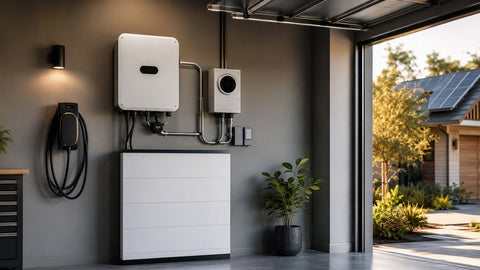
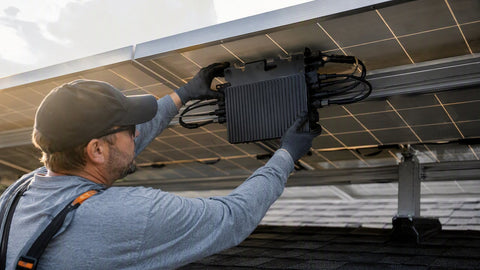
Four architectures cover nearly every installation. String inverters centralize conversion for a whole array or array segments — lowest cost per watt, simplest install, but a shaded panel drags its whole string. Microinverters mount one per panel — full panel-level optimization and monitoring, 25-year warranties, premium price. Power optimizer systems pair per-panel DC conditioners with a central string unit — SolarEdge's model. Hybrid inverters integrate battery management, and they're now the fastest-growing category we ship, led by units from Sol-Ark and Growatt. For a broader look at architectures, our hybrid inverter explainer and power optimizer guide go deeper.
The Specs That Actually Predict Performance
Spec sheets are marketing documents until you know which numbers correlate with field results. Four of them do:
| Spec | What It Means | What Good Looks Like (2026) | Why It Matters |
|---|---|---|---|
| CEC Weighted Efficiency | Real-world conversion efficiency across operating conditions | 96.5–98% | Every 1% of efficiency ≈ 1% of lifetime energy — and revenue |
| MPPT Voltage Range | Window where the tracker can operate | Wide (e.g., 90–500V residential) | Wide range = flexible string design, better low-light harvest |
| Max DC/AC Oversizing | How much array the unit accepts above its AC rating | 1.3–1.5× | Oversizing boosts morning/evening output at near-zero cost |
| Operating Temperature / Derating | Output behavior in heat | Full power to 45–50°C ambient | Cheap units derate hard on hot rooftops — exactly when you want production |
The efficiency math deserves emphasis. On an 8 kW system producing 12,000 kWh/year at $0.16/kWh, one point of efficiency is about $19/year — $475 over 25 years. That's real money, but it's smaller than the difference between a unit that dies at year 11 with a warranty and one that dies at year 11 without one. Warranty length is the manufacturer's own actuarial statement about reliability; a 5-year warranty on a hard-working power electronic is a confession.
SMA and Solis: What We Actually See in the Field
SMA is the German incumbent — the Sunny Boy line has been a residential benchmark for two decades, and their Sunny Tripower/Highpower series anchors commercial jobs. What you buy with SMA is conservative engineering: generous thermal headroom, honest derating curves, and failure rates that have stayed low across generations. Their ShadeFix-style string optimization squeezes respectable performance out of imperfect roofs without module-level electronics. We see Sunny Boys come back for service rarely, and usually for fan or display issues rather than power stage failures.
Solis (Ginlong) plays a different game: aggressive pricing with specs that genuinely compete. Their S6 residential string inverters and three-phase commercial units — up through the 255 kW three-phase platform — have earned installer trust faster than any value brand I've watched. Ten-year warranties standard, wide MPPT windows, and rapid shutdown integration without drama. The trade-off is support depth: SMA's service organization is older and deeper in North America, while Solis relies more on distributor-level support — which, full disclosure, is where suppliers like us earn our keep.
| Attribute | SMA (Sunny Boy / Tripower) | Solis (S6 / Three-Phase) |
|---|---|---|
| CEC efficiency (typical residential) | 96.5–97.5% | 97.0–98.0% |
| Standard warranty | 5–10 years, extendable to 20–25 | 10 years, extendable |
| DC/AC oversizing allowance | Up to ~1.5× | Up to ~1.3–1.5× by model |
| Strengths | Thermal design, longevity, deep service network, monitoring maturity | Price per watt, wide MPPT range, fast RMA turnaround through distribution |
| Watch-outs | Premium price; warranty extension costs extra | Support quality varies by distributor; verify local parts stocking |
| Best fit | Long-hold residential, commercial jobs where downtime is expensive | Value-driven residential, budget-sensitive commercial |
For context across the category, the SMA Sunny Boy line (covered in our Sunny Boy 3.8 review) competes directly with Fronius Primo/Symo — see the Symo Advanced 10.0-3 guide — while Solis battles Growatt and Sungrow (see the SG36CX-US review) in the value tier. Browse current stock across all of them in the inverter catalog, or the string, microinverter, and hybrid subcategories.
Sizing Math: Getting the DC/AC Ratio Right
Correct inverter sizing is arithmetic, not vibes. The core calculation: array STC wattage divided by inverter AC rating gives the DC/AC ratio; 1.2–1.35 is the sweet spot for most fixed-tilt systems. Worked example for a residential job:
| Step | Calculation | Result |
|---|---|---|
| 1. Array size | 20 panels × 440 W | 8,800 Wdc (8.8 kW) |
| 2. Target DC/AC ratio | 1.25 (moderate climate, south-facing) | — |
| 3. Inverter AC size | 8,800 W ÷ 1.25 | 7,040 W → select a 7.0–7.7 kW unit |
| 4. String voltage check (coldest day) | 10 panels × 49.6V Voc × 1.14 cold factor | ~565V — too high for a 600V string with margin; use 9 per string |
| 5. NEC 690.8 output circuit | 7.7 kW ÷ 240V × 125% continuous | ~40.1A → 45A breaker, 8 AWG copper (50A at 75°C per NEC 310.16) |
Step 4 is where designs fail inspection. NEC 690.7 requires sizing string voltage for record-low temperature, and on a 600V-residential limit (one- and two-family dwellings are capped at 600V DC), a 10-panel string of modern 440W modules can exceed it in cold climates. Step 5 applies the NEC 690.8 125% continuous-load multiplier and standard breaker sizes from NEC 240.6(A). Run your own configuration through the inverter sizing calculator — it handles the string math, and the NEC compliance guide covers the code sections inspectors actually cite.
Rapid Shutdown and Code Requirements in 2026
NEC 690.12 rapid shutdown has shaped inverter design more than any other rule of the past decade. The current requirement: conductors more than 1 foot inside the array boundary must drop to 30V within 30 seconds of shutdown initiation. In practice this means module-level power electronics — microinverters, optimizers, or rapid shutdown devices — on virtually every new residential roof, or an inverter with certified integrated RSD transmitters.
| Code Section | Requirement | Design Implication |
|---|---|---|
| NEC 690.12 | Rapid shutdown: ≤30V within 30 seconds inside array boundary | Module-level electronics or integrated RSD required on most roofs |
| NEC 690.7 | Max system voltage: 600V DC for one- and two-family dwellings | String length limited by cold-weather Voc correction |
| NEC 690.8 | Circuit sizing at 125% of max continuous current | Determines conductor and OCPD sizing for inverter output |
| NEC 705.12 | Interconnection: 120% busbar rule or supply-side tap | May force panel upgrade or line-side connection on older services |
| UL 1741 SB / IEEE 1547 | Grid-interactive functions, anti-islanding | Only listed inverters can interconnect; smart-inverter functions now mandatory in many states |
I've watched more than one DIY project die at inspection over the 705.12 busbar rule — a 200A panel with a 200A main can only accept 40A of solar backfeed under the 120% rule, and a 7.7 kW inverter needs all of it. Know your service panel before you buy equipment.
Case Patterns: What Performance Data Teaches
Across the monitoring platforms we see, three patterns repeat. First, clipping is not the enemy: systems at 1.3 DC/AC lose only 1–3% of annual energy to clipping while gaining 8–12% in morning and evening harvest — oversizing pays. Second, thermal management separates brands: inverters mounted in direct sun on south walls derate measurably on hot afternoons; the units with conservative thermal design (SMA's hallmark) hold output longest. Third, monitoring catches failure early: a single string underperforming by 15% is usually a failed bypass diode or a blown fuse, and systems with string-level or module-level data get fixed in days instead of bleeding production for a season.
Customer satisfaction tracks boring factors: whether the app works, whether the installer answers the phone, and whether warranty claims resolve in weeks or months. On that last point, brands with real North American parts stocking — and distributors who actually stock spares — resolve fastest. It's unglamorous, but a warehouse with replacement units on the shelf is worth more than any spec-sheet feature.
Choosing the Right Inverter: A Field Checklist
Boil the decision down to six questions. Is there shade? Yes pushes you to module-level electronics. Battery now or later? Later means hybrid-ready or AC-coupled planning now. What's the service panel situation? Check the 120% rule before anything else. Who services it? A great unit with no local support is a liability. What's the real warranty? Ten years standard is the 2026 baseline for string units; 25 for micros. And what's the all-in price per warranted year? That last calculation — cost divided by warranty years — is the single most honest comparison metric we use, and by it, value brands like Solis compete far better than their price tags suggest.
What Inverters Cost in 2026

Budget honestly across the architectures — the equipment price is only part of the installed picture:
| Architecture | Equipment Cost (8 kW system) | Installed Premium vs. String | Expected Replacement Need |
|---|---|---|---|
| String inverter | $1,200–$2,000 | Baseline | Likely one replacement in years 10–15 ($2,000–$3,000 installed) |
| String + RSD devices | $1,600–$2,500 | +$400–$600 | Same as string |
| Optimizers + string | $2,400–$3,400 | +$1,200–$1,800 | Inverter replacement; optimizers typically carry 25-year coverage |
| Microinverters | $2,800–$3,800 | +$1,500–$2,200 | 25-year warranty; individual unit swaps, not whole-system downtime |
| Hybrid inverter | $2,500–$4,500 | +$1,300–$2,500 (before battery) | 10–15 year horizon; enables storage without retrofit |
On a pure 25-year ownership-cost basis, microinverters often win despite the higher sticker — no mid-life $2,500 replacement and no whole-array downtime when one unit fails. On a simple shade-free roof where upfront cost rules, string plus RSD remains the value champion. There is no universal answer, which is exactly why we stock both ends of the inverter catalog.
Monitoring: The Feature You'll Use Every Day
Ask inverter owners what they actually interact with and it's never the box on the wall — it's the app. Panel-level monitoring (microinverters, optimizers) tells you which module is underperforming; string-level monitoring tells you a string is down; system-level monitoring tells you something is wrong somewhere. The difference shows up in truck rolls: panel-level data turns a diagnostic visit into a parts swap. SMA's monitoring platform is mature and installer-friendly; Solis has improved its cloud platform substantially over the past three years. Whichever you choose, set production alerts on day one — the systems that fail expensively are the ones nobody watched.
Single-Phase vs. Three-Phase: The Residential/Commercial Divide
North American homes run split-phase 240V; commercial buildings run three-phase 208V or 480V. That single electrical fact drives inverter selection more than brand preference. Residential string units (SMA Sunny Boy class, Solis S6 class) top out around 11–12 kW; above that, you're in three-phase territory where Solis's commercial line and SMA's Tripower/Highpower platforms compete directly. On 480V commercial services, string inverters in the 30–125 kW range have largely displaced central inverters for flexibility — a failed 50 kW string unit costs you 10% of plant output, not all of it. Our commercial inverter selection covers the three-phase range, and the SMA Highpower Peak3 review profiles the larger end.
Warranty Fine Print That Costs Real Money
Read three clauses before you sign anything. Coverage scope: some warranties cover parts but not labor or shipping, and a "free" replacement inverter plus $800 of labor and freight is not free. Transferability: if you sell the building, does coverage follow? Registration requirements: several brands require online registration within 30–90 days of install or the warranty defaults to a shorter term — a detail installers forget and owners discover at claim time. The 25-year microinverter warranties and 10-year string warranties are both only as good as the paper they're written on, and I've watched claims succeed or fail on exactly these clauses.
Clipping: The Fear That Costs More Than the Problem
Inverter clipping — the array producing more DC than the inverter can convert at solar noon — terrifies first-time designers and shouldn't. Run the numbers on a 1.3 DC/AC system: clipping losses typically total 1–3% of annual energy, concentrated in a few spring hours when cool, bright conditions push panels past nameplate. In exchange, the undersized inverter harvests meaningfully more during the 90% of hours when the array runs below rating: mornings, evenings, winter, and cloudy days. The annual energy math favors moderate oversizing almost everywhere. The genuine clipping mistake is the extreme version — 1.6+ ratios that spend whole seasons saturated — or pairing a high-ratio design with a utility demand-charge regime where the clipped noon peak was the valuable part.
Common Inverter Alarms and What They Actually Mean
Field guide to the alarms we troubleshoot most: "Grid fault" / voltage out of range — usually utility-side voltage rise on weak feeders; the inverter is protecting itself and the grid, and the fix is often a tap change at the transformer or a volt-var setting, not a new inverter. "Insulation resistance low" (ISO fault) — moisture in a junction box, a nicked conductor, or a failed module backsheet; wet mornings trigger it, dry afternoons clear it, and it will get worse until someone finds the leak. "Arc fault" — take it seriously; a loose MC4 mate or pinched homerun is the usual cause, and arc faults that keep recurring after re-termination point to a damaged conductor run. Fan or temperature warnings — clean the heatsink and clear the airflow path before blaming the unit; half of these are cottonwood seeds and dust. Communication failures — almost always the network, not the inverter; check the router before the RMA.
Where to Mount the Inverter
Placement is a longevity decision. North-facing walls and garages beat south-facing walls in full sun; every 10°C of sustained temperature rise roughly doubles the aging rate of electrolytic capacitors. Respect clearances — the airflow path is part of the thermal design. Keep units out of direct sprinklers and snow-drift lines, mount at a height that survives the snowpack and the kids, and plan conduit runs that don't turn the install into modern art. A shaded, ventilated, accessible location adds years to any brand's service life and makes the eventual service visit an hour instead of an ordeal.
Spares and Service Planning
The last lesson from the field: plan the service before you need it. On commercial jobs, we recommend stocking one spare string inverter per site or per fleet — a $2,000 shelf item that converts a two-week RMA outage into a one-day swap. On residential fleets, installers who keep a loaner unit and a test kit close more warranty work with less windshield time. Ask your supplier what's actually on the shelf locally before you standardize on a brand, and ask the brand what their RMA turnaround ran last quarter. Both answers are knowable, and both matter more at year nine than any feature on the datasheet.
The Bottom Line on SMA and Solis
After years of shipping both, our honest summary: SMA is the brand you buy when the cost of failure exceeds the cost of equipment; Solis is the brand you buy when value per watt matters and you have a distributor who stocks parts. Both beat the no-name units that fill the discount end of the market, and both lose to a bad installation. Pick the architecture for the roof, the brand for the service model, and the installer for the long haul — in that order.
Frequently Asked Questions
How long do solar inverters last?
String inverters typically run 10–15 years; microinverters carry 25-year warranties and generally outlast string units. Heat is the killer — shade the unit and keep clearances, and you'll reach the top of the range.
Is SMA better than Solis?
They win different contests. SMA wins on thermal engineering, service depth, and long-horizon reliability. Solis wins on price per watt and value-tier features, with 10-year standard warranties. For a 30-year hold on a premium home, SMA; for a budget-conscious install with a strong distributor behind it, Solis is entirely defensible.
What size inverter do I need for an 8 kW solar array?
At a 1.25 DC/AC ratio, 8,800W of panels pairs with a 7.0–7.7 kW inverter. The ratio matters more than matching watts one-to-one — moderate oversizing improves annual yield.
Do I need rapid shutdown devices with a string inverter?
On a roof-mounted system, yes in practice. NEC 690.12 requires conductors inside the array boundary to drop below 30V within 30 seconds, which requires module-level electronics or an inverter with certified integrated rapid shutdown. Ground mounts outside the boundary rules can be exempt.
Can I add a battery to my existing solar inverter?
Only if it's a hybrid model or you AC-couple a battery with its own inverter. Standard string inverters can't charge batteries. If storage is even a maybe, buy hybrid-ready now — retrofitting costs far more.
What does CEC efficiency mean and why does it matter more than peak efficiency?
CEC weighted efficiency measures conversion across realistic operating points, not just the single best condition. Peak efficiency is a lab trophy; CEC efficiency predicts your actual kilowatt-hours.
Why did my inverter shut down on the hottest afternoon of the year?
Thermal derating or over-temperature protection. Power electronics protect themselves by reducing or cutting output when internal temperatures hit limits. Better-cooled units and shaded mounting locations hold output longer — it's a real differentiator between brands.
Ready to compare current models and pricing? Start with the inverter catalog, sanity-check your design with the sizing calculator, or talk to our team — we stock SMA-class premium units and Solis-class value units side by side, and we'll tell you which one your project actually needs.