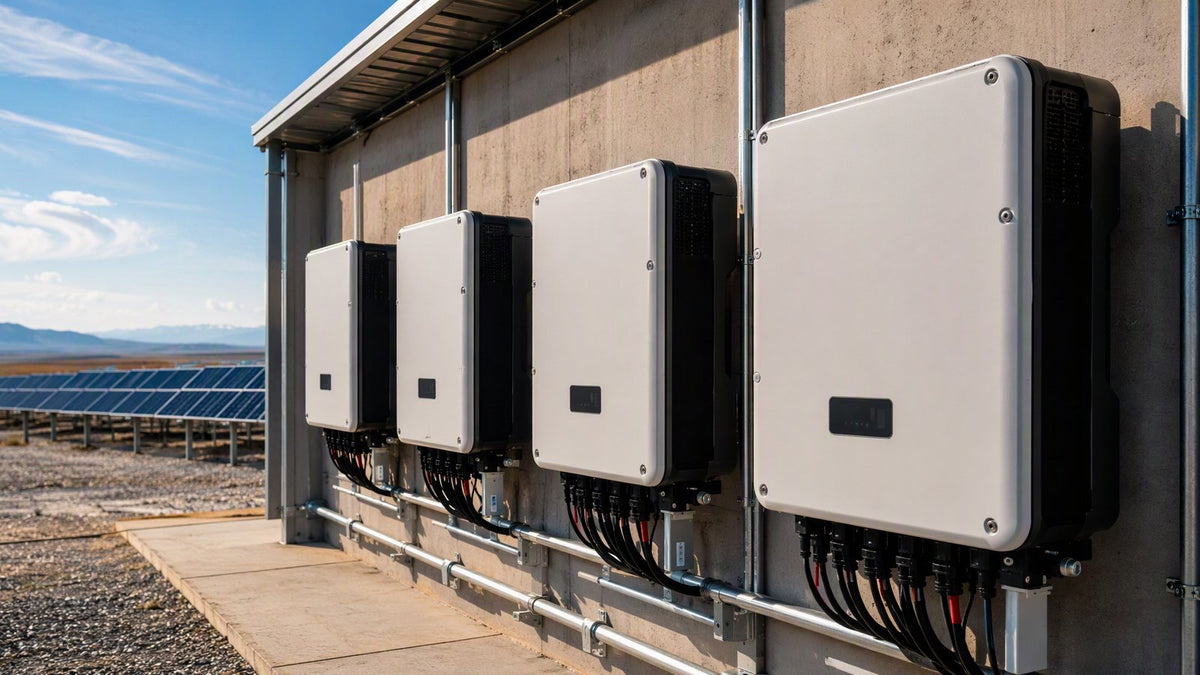
As the world increasingly turns to renewable energy sources, solar power has taken a prominent position in energy discussions. At the heart of any solar energy system is the inverter, a crucial component that ensures the effective conversion of energy from solar panels to usable electricity. The Solis 255kW Three Phase String Inverter is a standout product in this field, offering advanced technology and efficiency for solar power systems.
What is a Solar Inverter?
A solar inverter is an essential device that converts direct current (DC) generated by photovoltaic (PV) modules into alternating current (AC), which is synchronized with the grid frequency. This conversion is vital for the integration of solar energy into the existing electrical grid, enabling homes and businesses to utilize solar-generated electricity effectively. The inverter's capability to perform this conversion efficiently ensures that solar power systems can operate optimally and contribute to energy sustainability.
Importance of MPPT in Inverters
Maximum Power Point Tracking (MPPT) is a cutting-edge technology integrated into solar inverters to optimize the power output from solar panels. By continuously adjusting the electrical operating point of the modules, MPPT ensures that the inverter extracts the maximum possible power, even under varying environmental conditions. This optimization plays a crucial role in enhancing the overall efficiency and performance of solar power systems, making them more reliable and effective in energy generation.
Overview of Solis Inverters
Solis has been a leader in the development and manufacture of inverter solutions for over a decade. Their extensive portfolio includes grid-tied, hybrid, and storage inverters, as well as charge controllers and related accessories. These solutions are designed to cater to a wide range of applications, from private households to commercial properties and large industrial facilities. Solis inverters are renowned for their high precision, featuring a wide range of input parameters, intelligent MPPT control, and efficiencies exceeding 98%. The Solis 255K-EHV-5G is a modern three-phase inverter with a capacity of 255 kW and 14 MPPTs, allowing solar arrays to be divided into independent groups to reduce shading losses and enhance power tracking.
Technical Specifications
The Solis 255K-EHV-5G is an advanced grid-tied solar inverter designed to provide high efficiency and reliability for large-scale solar PV systems. This three-phase string inverter boasts a power capacity of 255 kW and features 14 MPPTs, which contribute to its superior power tracking capabilities. The inverter operates with a pure sine wave form and a nominal frequency of 50 Hz, achieving a maximum efficiency of 99.0% and a European efficiency of 98.7%. With a robust IP66 protection class, it is built to withstand harsh environmental conditions, operating effectively in temperatures ranging from -30℃ to +60℃.
| Specification | Details |
|---|---|
| Dimensions | 1125 × 770 × 384 mm |
| Voltage | Maximum input voltage: 1500 V; Rated voltage: 1080 V; Start-up voltage: 500 V |
| MPPT Voltage Range | 480 to 1500 V |
| Current | Maximum input current: 14 × 26 A; Maximum short circuit current: 14 × 40 A |
14 MPPT Configuration
The Solis 255K-EHV-5G is equipped with a 14 MPPT configuration, enabling it to optimize the performance of large solar arrays. This feature allows the division of solar arrays into independent groups, significantly reducing shading losses and enhancing the overall efficiency of the solar power system. By optimizing the maximum power point tracking, the inverter ensures that each string operates at its highest potential, even under varying environmental conditions. This configuration is particularly beneficial for utility-scale solar projects where maximizing output power and efficiency is crucial.
Utility-Scale Applications
The Solis 255kW-EHV is specifically engineered for utility-scale solar power plants, where high power and efficiency are paramount. This high-voltage (1500V) inverter integrates seamlessly with high-performance large-area PV panels, including bifacial modules, and is designed to reduce the Levelized Cost of Electricity (LCOE).
| Feature | Description |
|---|---|
| Power Capacity | Largest single power capacity for string inverters |
| MPPTs | Greatest number available for string inverters |
The inverter’s capability to support up to 30A per input with enhanced DC input features and "Y" type DC connections makes it ideal for utility-scale PV systems that require robust and efficient power conversion solutions.
Maximum Efficiency in Power Conversion
The Solis 255K-EHV-5G delivers exceptional efficiency in power conversion, reaching a maximum efficiency of 99.0% and a European efficiency of 98.7%. Its design incorporates a unique heat dissipation system and intelligent temperature control, allowing it to operate at full load even at ambient temperatures of 45°C. This capability results in up to 5%-7% higher output power, translating to an additional 50-70 kWh per MW per hour. With efficiency reaching 98.8% under real-world conditions, this inverter is a testament to Solis’s commitment to high-precision engineering and performance optimization in solar power systems.
Compatibility with Various PV Modules
The Solis 255kW-EHV string inverter is designed to be fully compatible with a wide range of PV modules, including high power and bifacial panels. Its three-phase design is optimized for utility-scale PV systems, accommodating bifacial panels and integrating an anti-PID function to enhance system efficiency. This compatibility ensures that the inverter can support the growing trend towards high-efficiency and high-power solar projects, making it a versatile choice for modern solar power plants.
Reverse Polarity Protection
Incorporating comprehensive safety features, the Solis 255K-EHV-5G includes DC reverse-polarity protection along with overvoltage and short circuit protection. These protective measures ensure the safe and reliable operation of the solar PV system, safeguarding it against potential electrical faults. By mitigating the risks associated with reverse polarity, the inverter provides peace of mind for operators and enhances the longevity and durability of the solar power installation.
Grid-Tied System Setup
The Solis 255K-EHV-5G is a grid-tied inverter that is ideal for large-scale solar projects. Specialists from Lirik Solar provide comprehensive installation services for this powerful inverter, ensuring a seamless transition from site inspection to grid connection. Lirik Solar's team develops customized projects tailored to specific site needs, configuring and testing the equipment to ensure optimal performance. They also offer training for staff on proper operation and maintenance of the system. Adhering to international safety standards and using certified materials, Lirik Solar guarantees reliable and long-term performance for the Solis 255kW three-phase string inverter, making it a trustworthy choice for utility-scale power plants.
Maintenance Best Practices
The Solis 255K-EHV-5G inverter features a fuse-less design, which significantly enhances the safety and reduces the maintenance needs of the system. Its advanced weak grid adaptive algorithm and active harmonic suppression algorithm ensure that the inverter can connect perfectly to areas with a low short circuit ratio (SCR <1.5). This adaptability makes the inverter maintenance-free, reducing the requirement for frequent check-ups and interventions, which in turn lowers operational costs and extends the lifespan of the solar PV system.
Common Troubleshooting Tips
To facilitate efficient troubleshooting, the Solis-255K-EHV string inverter incorporates high-precision intelligent strings monitoring, which reduces the time needed to locate faults. Moreover, the inverter is equipped with a high-speed IV curve diagnosis function, which allows for precise detection and resolution of issues. This advanced monitoring capability ensures that any disruptions in output power are quickly identified and addressed, minimizing downtime and maintaining the maximum efficiency of the solar power system. These features make the Solis-255K an excellent choice for operators seeking high reliability and easy maintenance.
Why Choose Solis 255kW for Your Solar Project?
Clients choose the high-power Solis 255kW inverter for its exceptional load resistance, intelligent optimization algorithms, and convenient remote control features. The Solis-255K-EHV-5G combines high efficiency with advanced remote monitoring capabilities, allowing users to track system performance in real-time. This combination of features makes it a leading choice for solar PV systems, providing significant benefits in terms of performance, efficiency, and ease of use.
Future of Solar Power with Solis Inverters
The Solis-255K inverter is storage-ready, offering a reserve DC energy storage interface that facilitates the expansion of energy storage capacity at a later stage. This feature makes it possible to add storage solutions without transforming the entire power station, addressing future grid stability concerns. By integrating energy storage capabilities, the Solis-255K inverter prepares solar projects for evolving energy needs, supporting the transition towards a more sustainable energy future.
How to Buy Solis Inverters
Purchasing the Solis 255K-EHV-5G inverter is straightforward with multiple options available. Interested buyers can order via phone, messengers, email, or through the contact form on Lirik Solar’s website. The inverter can be conveniently picked up at the Lirik Solar office, or delivered to a Nova Poshta branch, or shipped directly via Nova Poshta courier or Lirik Solar logistics within Kyiv. This flexibility ensures that acquiring a Solis inverter is accessible and efficient, enabling more projects to benefit from its cutting-edge technology.
Related Resources:
- Best Solar Panels 2026 — Buyer's Guide
- EG4 vs Tesla Powerwall
- Qcells vs Trina vs JA
- Solar Inverter Buyer's Guide
- Solar Battery Buyer's Guide
- 5kW Solar Kit
- 10kW Solar + Battery Kit
- Off-Grid Cabin Kit
- EG4 Batteries
- Qcells Solar Panels
- Trina Solar
- JA Solar
- REC Solar
- Mission Solar
- Sol-Ark Inverters
- SolarEdge Inverters
- Generac PWRcell
Calculate how much storage you need with our battery sizing calculator.
Use our free solar system calculator to size your array.
Check out our Solar Panel Comparison Tool. Check out our Inverter Sizing Calculator.
Calculate your solar payback and 25-year savings with our Solar ROI Calculator. Follow our complete DIY solar installation guide for step-by-step instructions. Keep your system running at peak performance with our Solar Maintenance Guide.
Related Products

Solis 6kw 4G Single phase Three MPPT. US Version with 10 years warranty Solar Inverter - Solis 1P6K-4G-US
View
Solis 255kW 3-Phase 12-MPPT String Inverter with 5 Year Standard Warranty - 255K EHV-5G-US-PLUS
ViewRelated Resources
- Solar System Calculator
- Battery Sizing Calculator
- Solar Panel Comparison Tool
- Inverter Sizing Calculator
- Solar ROI Calculator
- Solar Installation Guide
- Solar Maintenance Guide
- Solar Permitting Guide
- Battery Installation Guide
- NEC Code Compliance Guide
- Solar Panel Mounting Guide
- Grounding & Bonding Guide
- Solar Incentives by State
- Pro Account — Wholesale Pricing
- PowerLink Network — Contractor Program
What size solar panel do I need?
Sizing depends on your daily energy consumption, available roof space, and peak sun hours in your area. A typical home uses 15-25 panels (400W each) for full offset. Call (502) 790-0600 for a free sizing consultation.
How much do solar panels cost in 2026?
PES Supply distributes panels from major manufacturers including Jinko, Mission Solar, and more. Pricing varies by wattage and quantity. Request a quote for current pricing.
Do you offer BABA-compliant solar panels?
Yes. PES Supply provides BABA documentation at no extra charge. All our solar products meet Build America, Buy America requirements.
PES Supply carries 80,000+ products from 300+ manufacturers. One PO, one invoice, every trade covered.
Need help sizing? Our team can calculate loads, select equipment, and source everything from one PO.
Call (502) 790-0600
Where a 255 kW String Inverter Sits in the Commercial Stack
The 250 kW-class three-phase string inverter has become the workhorse of North American commercial and small-utility solar. It hits a sweet spot: large enough that a 1 MW AC site needs only four units, small enough that each mounts on a wall or rack without a crane, and granular enough that a single failure idles 255 kW rather than a megawatt-scale central cabinet. When we help an EPC lay out a commercial job, the first conversation is almost never whether to use string inverters — that argument ended years ago — it is how many blocks of this size the array divides into most cleanly.
The multi-MPPT architecture is the other half of the value story. A 255 kW unit in this class typically carries a dozen or more independent MPPT inputs, each tracking two strings. On a rooftop with parapet shading, HVAC setbacks, and three different tilt zones, that independence is not a luxury; it is the difference between a design that models accurately and one that underperforms its P50 estimate from day one.
String Sizing for 1,500 V Systems Under NEC 690.7
Maximum system voltage is a hard ceiling, and NEC 690.7 requires it to be calculated at the lowest expected ambient temperature using the module's temperature coefficient of Voc. The worked example below uses a representative modern commercial module: Voc of 49.8 V at STC and a Voc temperature coefficient of −0.27 percent per degree Celsius. At a design low of −10°C, the correction spans 35 degrees below the 25°C reference, giving a correction factor of 1 + 35 × 0.0027 = 1.0945, and a cold Voc of 49.8 × 1.0945 ≈ 54.5 V.
| Design Low Temp | Correction Factor | Cold-Corrected Voc per Module | Max Modules per 1,500 V String | String Cold Voc (Check) |
|---|---|---|---|---|
| 0°C | 1.0675 | 53.2 V | 28 | 28 × 53.2 = 1,489.6 V ✓ |
| −10°C | 1.0945 | 54.5 V | 27 | 27 × 54.5 = 1,471.5 V ✓ |
| −20°C | 1.1215 | 55.9 V | 26 | 26 × 55.9 = 1,453.4 V ✓ |
| −30°C | 1.1485 | 57.2 V | 26 | 26 × 57.2 = 1,487.2 V ✓ |
| −40°C | 1.1755 | 58.5 V | 25 | 25 × 58.5 = 1,462.5 V ✓ |
Every cell in the rightmost column passes under 1,500 V, and one module more in each row would fail — at −10°C, 28 modules produce 28 × 54.5 = 1,526 V, which is a code violation and a warranty problem. I've reviewed plan sets from out-of-region designers who sized strings for a 0°C low on a site in Minnesota; catching that at the design review stage costs an email, and catching it after rough-in costs a repull. The 690.7 math is five minutes with a calculator. Do it.
Conductor and Overcurrent Sizing Under NEC 690.8
On the DC side, NEC 690.8 treats maximum circuit current as 125 percent of module Isc, then requires conductors and overcurrent devices rated for 125 percent of that value again for continuous operation — a combined 1.56 × Isc. On the AC side, inverter output is sized at 125 percent of rated output current. For a 255 kW inverter on a 480 V three-phase service, rated output current is 255,000 ÷ (480 × √3) ≈ 306.7 A, and the continuous sizing basis is 1.25 × 306.7 ≈ 383 A.
| Circuit Segment | Basis of Calculation | Design Current | Conductor Selection (75°C Cu) | OCPD (NEC 240.6) |
|---|---|---|---|---|
| Single string (Isc 13.9 A) | 1.56 × Isc | 21.7 A | 10 AWG (35 A) | 25 A (where required) |
| Two paralleled strings | 1.56 × 27.8 A | 43.4 A | 6 AWG (65 A) | 50 A |
| Four-string combiner output | 1.56 × 55.6 A | 86.7 A | 3 AWG (100 A) | 100 A |
| Inverter AC output (255 kW, 480 V) | 1.25 × 306.7 A | 383.4 A | 500 kcmil (380 A) → parallel 4/0 | 400 A |
The last row is where commercial jobs get their copper bill. A 400 A feeder per inverter, four inverters per megawatt, home-run distances measured in hundreds of feet — conductor selection and voltage-drop management dominate the electrical balance of system. We stock PV wire and THHN in the full range for exactly these builds, and my crew will tell you the unglamorous truth of commercial solar: the inverter gets the brochure photo, but the wire schedule decides whether the job makes money.
DC-to-AC Ratio and Clipping: Sizing the Array to the Inverter
Inverter nameplate is an AC number; the array attached to it is a DC number, and the ratio between them is a design choice with real economics. A 1.3 DC/AC ratio on a 255 kW inverter means 331.5 kW of modules — about 736 modules at 450 W. Higher ratios harvest more energy per inverter dollar because the array spends most of its life below nameplate; the cost is clipping on the best cold, clear hours. The table below shows the trade with representative annual figures for a fixed-tilt commercial site.
| DC/AC Ratio | Array Size on 255 kW AC | Modules at 450 W | Approx. Annual Clipping Loss | Annual Energy Gain vs 1.0 Ratio |
|---|---|---|---|---|
| 1.0 | 255 kW | 567 | ~0% | Baseline |
| 1.15 | 293 kW | 652 | <0.5% | +14.5% |
| 1.30 | 331 kW | 736 | ~1.5% | +28% |
| 1.45 | 370 kW | 822 | ~3.5% | +41% |
The pattern is consistent across climates: gains stay nearly linear while clipping stays modest through the 1.3-to-1.4 range, which is why that band dominates commercial design. Push past 1.5 and the marginal module spends its best hours clipped. Interconnection limits sometimes force the ratio the other way — a service capped at 200 kW AC with a 300 kW array is a 1.5 ratio by constraint, not by choice — and in those cases the inverter's ability to hold its rated output through long flat-topped days is precisely what the owner is paying for.
MPPT Count as a Design Variable
Multi-MPPT architecture deserves a final word because it is routinely undersold. Each independent tracker isolates one string pair's electrical behavior from every other string's. On a roof with a west parapet, the strings behind that parapet collapse every afternoon; on a single-MPPT central design, their behavior would distort the operating point of healthy strings. With per-MPPT isolation, the shaded strings sink and the healthy strings sail, and the energy model's shading losses actually match the monitoring data a year later. When we compare proposals for commercial customers, MPPT count per installed kW is one of the first specs we normalize, because it predicts model accuracy better than nameplate efficiency does.
String inverters in the 255 kW class have effectively absorbed the commercial market because they resolve the industry's oldest tradeoff — centralization for cost versus distribution for resilience — in favor of both. A megawatt built from four serviceable blocks, each with a dozen independent trackers, wired per the NEC tables above, is simply a better asset than a single cabinet with a single point of failure. The math is on the wall, and so, increasingly, are the inverters.
Related Guides and Equipment
Specifying a commercial string inverter job? Browse the Solis collection and adjacent classes like 100 kW inverters and 150 kW inverters for smaller blocks. The wiring tables above are expanded in our NEC wire sizing guide, the wire ampacity chart, and the PV wire versus USE-2 versus THHN guide. For protection and isolation, see the NEC 690 disconnect guide and the string wiring basics. Budget planning starts with our commercial installation cost breakdown, and module selection pairs naturally with the 450 W panel collection used in the string-sizing examples above.
Frequently Asked Questions
What is a 255 kW three-phase string inverter used for?
An inverter in the 250 kW class serves commercial rooftops, carports, and ground-mount arrays from roughly 300 kW to several megawatts of DC capacity. Multiple units are paralleled on larger sites. String architecture keeps array wiring distributed, so a single inverter fault takes out one 255 kW block instead of an entire central-inverter plant.
What does MPPT mean on a solar inverter?
MPPT stands for maximum power point tracking. A module's output power peaks at a specific voltage-current combination that shifts with irradiance and temperature. The inverter continuously adjusts its operating point to hold each input at that peak. Multi-MPPT inverters track many strings independently, so a shaded or differently-oriented string does not drag down its neighbors.
How many solar panels can connect to a 255 kW inverter?
That depends on module wattage and DC-to-AC ratio. At a typical 1.3 DC/AC ratio, a 255 kW inverter accepts about 331 kW of array, which is roughly 736 modules at 450 W each. String-level counts are set by the voltage math: with a 1,500 V system limit and cold-corrected module Voc near 54.5 V, strings top out at 27 modules per NEC 690.7 calculations.
Why do commercial inverters use 1,500 V DC strings?
Higher system voltage means more modules per string and fewer strings per megawatt, which cuts combiner boxes, home-run cable, trenching, and labor. Moving from 1,000 V to 1,500 V strings increases string length by about 50 percent and can reduce balance-of-system electrical cost meaningfully on large sites. The tradeoff is stricter component ratings and 1,500 V-rated connectors, wire, and disconnects throughout.
How is inverter output wiring sized under the NEC?
Inverter output circuits are continuous loads, so conductors and overcurrent devices size at 125 percent of rated output current per NEC 690.8 and 705.28. A 255 kW inverter on a 480 V three-phase service outputs about 307 A, requiring conductors rated for at least 384 A — typically paralleled 4/0 or 500 kcmil copper runs — protected at the next standard size under 240.6.
What is the difference between a string inverter and a central inverter?
A central inverter aggregates the whole array through one large cabinet; string inverters distribute conversion across many smaller units, each with multiple MPPT inputs. String designs degrade gracefully — one failure costs one block of capacity — and simplify string-level monitoring. Central designs can be cheaper per watt at very large scale but concentrate risk. The commercial market has moved decisively toward string architecture over the past decade for exactly these reasons.