I've diagnosed enough "mystery underproduction" calls to have a strong opinion: on any roof with mixed orientations, chimneys, or a single inconvenient tree, module-level power electronics pay for themselves, and power optimizers are the most proven way to get them. They're not magic, they're not right for every array, and the marketing around them overpromises in places — but the physics underneath is real, and the NEC rapid-shutdown compliance they bring along is worth money by itself. This guide covers what optimizers actually do, when they earn their cost, how they compare to microinverters and plain string inverters, and how to integrate them without design mistakes.
Browse the hardware in our power optimizers category — SolarEdge and Tigo Energy dominate the space — and compare against microinverters and string inverters before committing. For system-level planning, the inverter buyer's guide and inverter sizing calculator are the companion reads.
What a Power Optimizer Actually Does
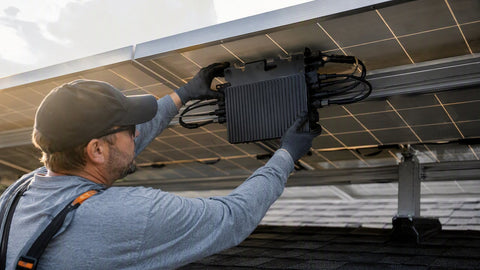
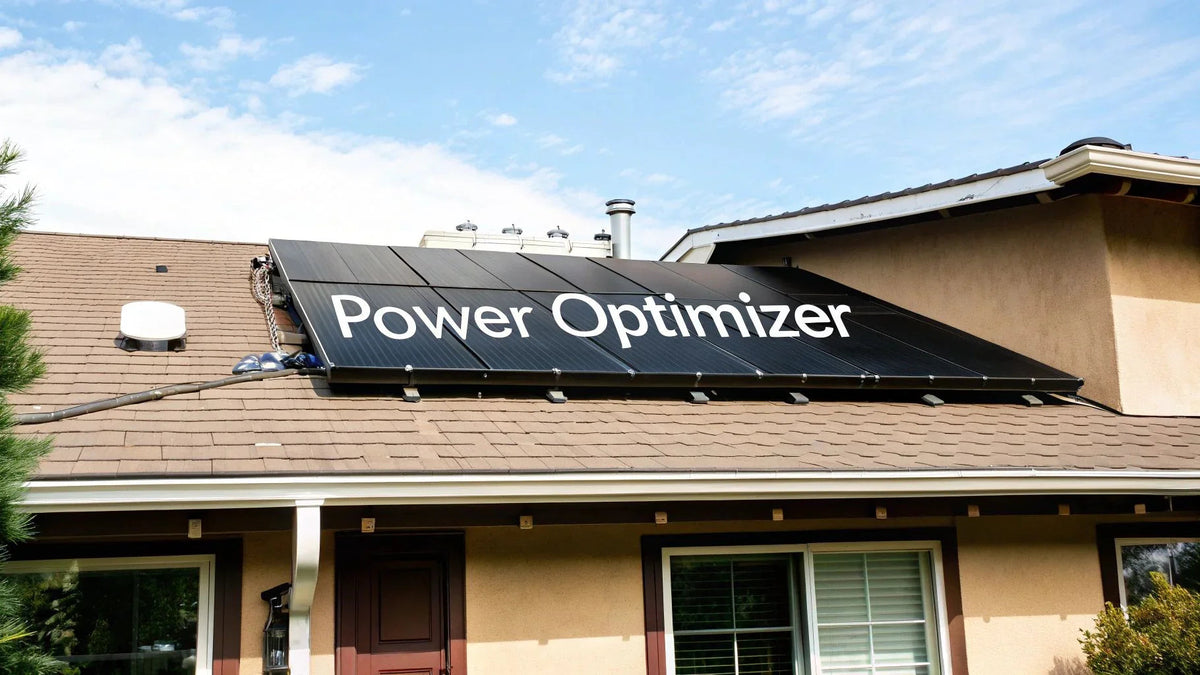
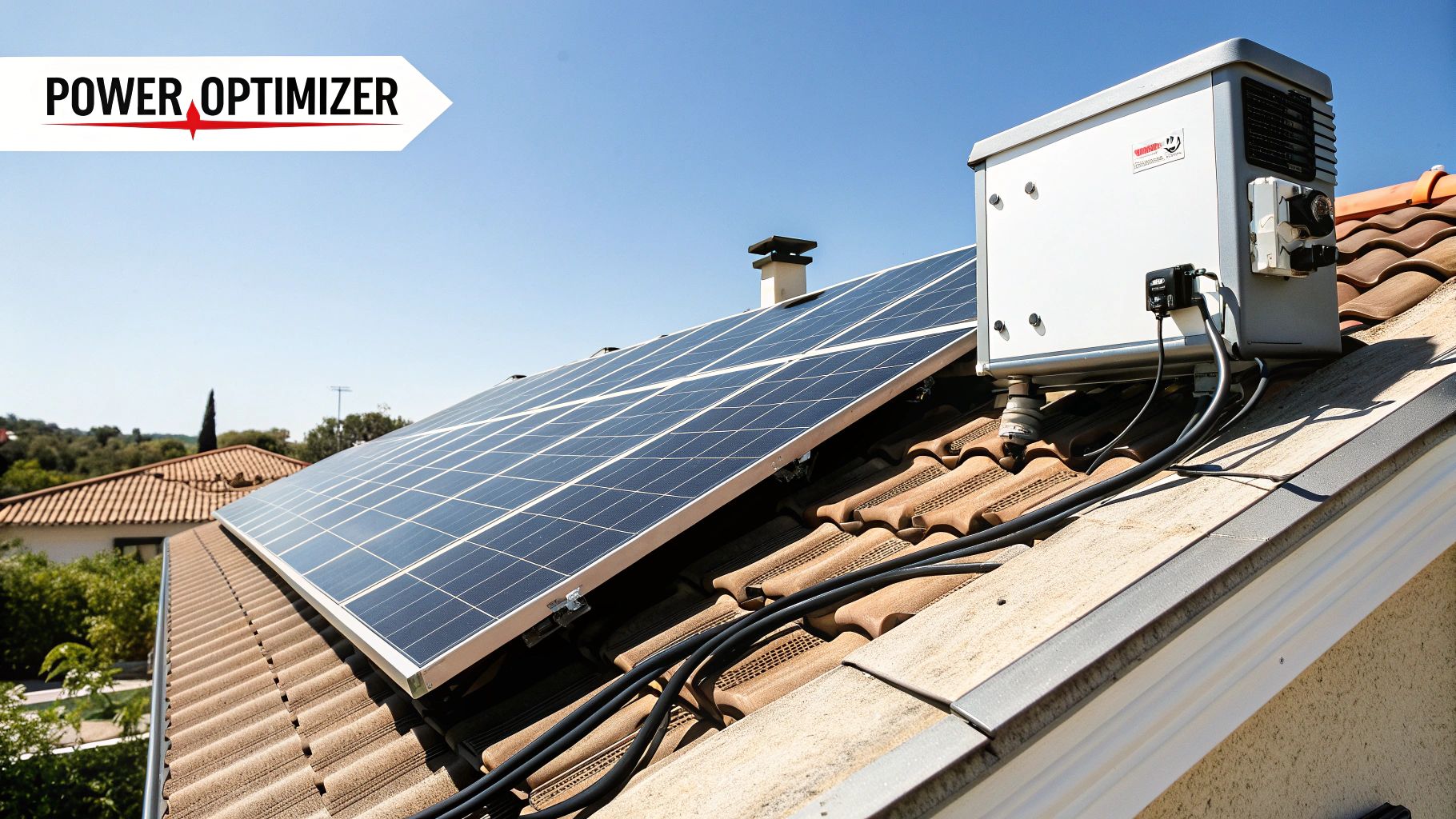
A power optimizer is a DC-to-DC converter bolted behind each solar module. It does one job: it finds the module's maximum power point (MPPT) independently, then re-outputs that power at whatever voltage the string inverter's bus wants. The central inverter stops hunting for a compromise operating point across mismatched modules — each module runs at its own peak, and the optimizer translates.
That one function unlocks four practical benefits:
| Benefit | Mechanism | Impact for Installers, EPCs & Owners |
|---|---|---|
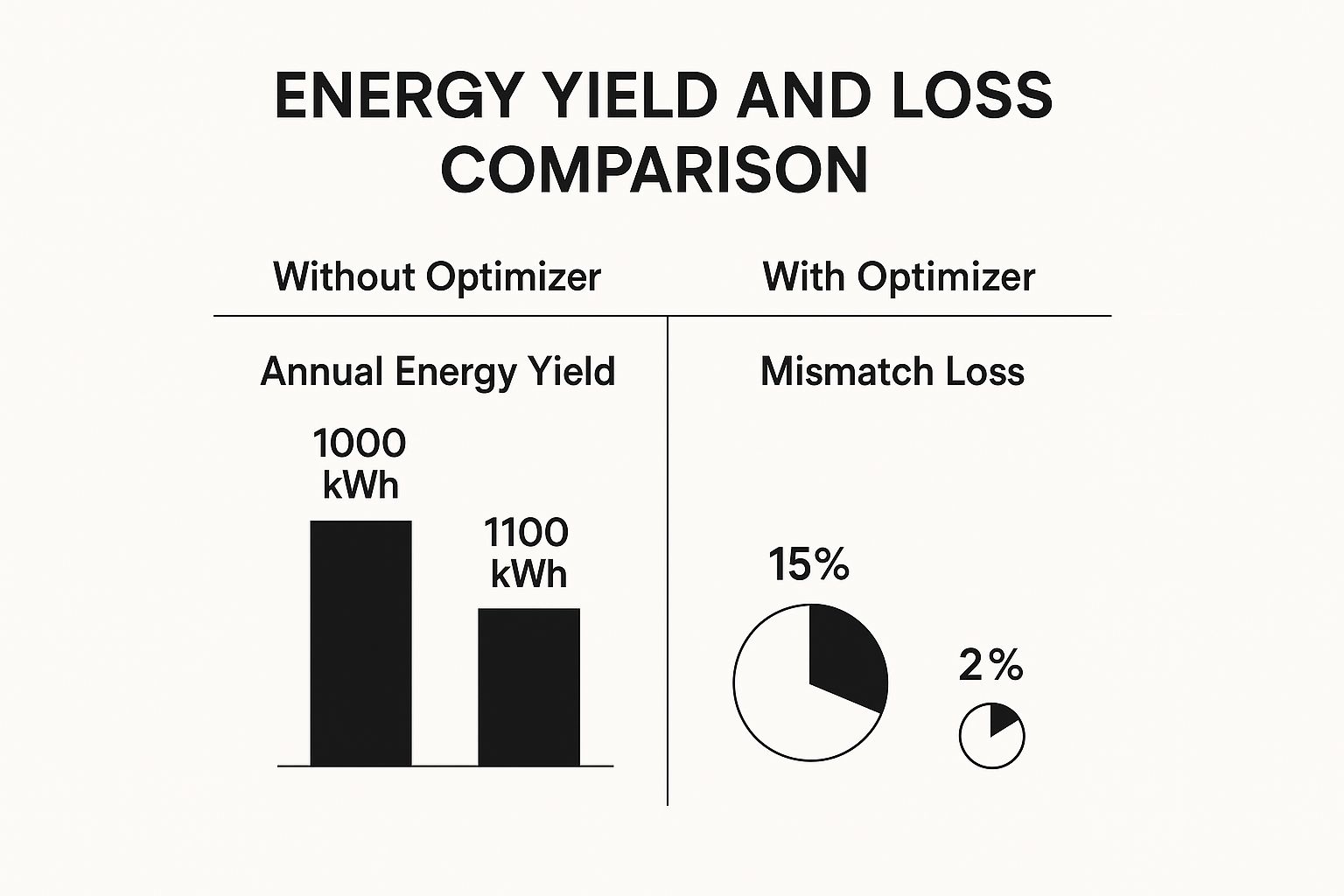
| Increased energy harvest | Per-module MPPT isolates shade, soiling, and mismatch losses | Shaded or complex roofs recover output that a string inverter would sacrifice; vendor and third-party data typically shows 5–12% gains on compromised roofs, ~1–3% on clean ones |
| Design flexibility | Each module operates independently within wide string voltage windows | Mixed tilts, mixed azimuths, and unequal string lengths land on one inverter without penalty |
| Panel-level monitoring | Every optimizer reports per-module production | Underperforming modules are pinpointed remotely — no truck roll to find a dead panel in a 40-module array |
| Rapid shutdown compliance | Optimizers drop module output to ~1V when the inverter commands it | NEC 690.12 module-level shutdown is built in — no separate RSD devices to buy and wire |
How Optimizers Recover Energy: The Shade Math
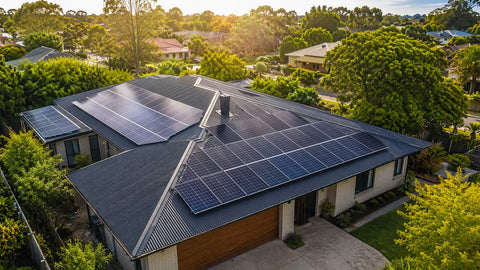
String inverters force every module in a string to run at one shared current. A module shaded to 60% output doesn't just lose its own 40% — it drags every unshaded module in the string down toward its level, or the bypass diodes kick in and the string loses the module entirely plus voltage headroom. Either way, one chimney shadow can cost 20–30% of a string's daily harvest.
With optimizers, the shaded module runs at its own degraded MPPT, the optimizer steps its output to string voltage at reduced current, and its neighbors run untouched. Worked example from a real 20-module, 8.6 kW rooftop with late-afternoon chimney shade on two modules:
| Scenario | String Inverter Only | With Optimizers | Difference |
|---|---|---|---|
| Unshaded hours (morning–3 p.m.) | Full production, ~38 kWh/day | Full production, ~38 kWh/day | 0% |
| Shaded hours (3–6 p.m., 2 modules at 50%) | String derates ~15–20%; diodes bypass shaded modules | Only 2 modules derate; 18 run at full MPPT | +8–12% daily energy |
| Annual harvest (this roof) | ~12,100 kWh | ~13,100 kWh | +~8% ≈ 1,000 kWh/yr |
| Annual value @ $0.16/kWh | $1,936 | $2,096 | +$160/yr |
At $60–$90 per optimizer, 20 modules add $1,200–$1,800 to the job — a 7–11 year simple payback from shade recovery alone on this roof. On an unshaded single-plane roof, that payback stretches past the equipment warranty and optimizers lose. This is a site-specific decision, and anyone selling them as universally necessary is selling.
Optimizers vs Microinverters vs String Inverters
The three architectures solve overlapping problems with different trade structures:
| Feature | Power Optimizers | Microinverters | String Inverter Only |
|---|---|---|---|
| Shade performance | Excellent — per-module MPPT | Excellent — full per-module inversion | Poor — shared operating point, diode bypass |
| System efficiency | High — central inverter runs at fixed voltage near peak efficiency | High per-module, but more roof-mounted conversion stages | Highest on clean, matched arrays |
| Monitoring | Module-level | Module-level | String or system level only |
| Single point of failure | The central inverter (but it's ground-level and serviceable) | None — but a failed micro means a roof visit | The inverter |
| Roof electronics count | 1 per module (DC-DC only, runs cooler) | 1 per module (full inversion, more heat) | None |
| DC string voltage | High-voltage DC runs to the inverter | No high-voltage DC — AC off the roof | High-voltage DC |
| Rapid shutdown (NEC 690.12) | Built in | Inherent | Needs added module-level RSD devices |
| Battery integration | Strong in hybrid ecosystems (e.g., SolarEdge + storage) | AC-coupled batteries pair naturally | AC-coupled batteries only |
| Typical added cost (20 modules) | $1,200–$1,800 + compatible inverter | $2,000–$3,000 total MLPE premium | Baseline |
| Expansion flexibility | Good within inverter capacity | Best — add modules + micros any time | Constrained by string windows |
Our field shorthand: clean single-plane roof → string; complex roof with a monitoring-obsessed owner → microinverters; complex roof where you want one serviceable ground-level inverter, or where the storage ecosystem points at SolarEdge/Tigo — optimizers. There's no universal winner, and our inverter fundamentals piece plus the top inverter picks cover the model-level details.
Design Rules That Keep Optimizer Systems Out of Trouble
Optimizer systems have their own failure modes, and they're all design-stage mistakes:
- Respect minimum string lengths. Optimizers need enough modules in series to build the inverter's fixed bus voltage. Too few modules on a short string and the string can't reach operating voltage — the inverter faults or the string never starts. SolarEdge's minimums depend on inverter model and module Voc (often 8–16 modules); check the designer tool, not a rule of thumb.
- Match optimizer current rating to the module. High-current 550W+ modules can exceed older optimizer input ratings. Pair current-generation modules with current-generation optimizers — the datasheets have to agree on Imp and Isc.
- Mixed-module strings are legal here — mostly. Optimizers tolerate different module wattages on a string far better than string inverters do, but firmware and compatibility lists still apply. Verify on the manufacturer's compatibility matrix before mixing.
- Wire the monitoring. The whole panel-level-monitoring benefit evaporates if the communication link (usually powerline or proprietary RF to the inverter/gateway) isn't commissioned. Map serials to roof positions during install — retroactively mapping is a ladder day nobody enjoys.
- Plan service access. Optimizers fail at low rates (they're simple, cool-running DC-DC stages) but not zero. A dead optimizer under a mid-array module on a steep roof is a two-hour swap. Log positions so the tech knows which module to lift.
Safety: Rapid Shutdown Done Right
NEC 690.12 requires conductors inside the array boundary to drop to 30V within 30 seconds of shutdown initiation. Optimizers satisfy this at the module level: kill AC to the inverter (or trigger the RSD initiator) and every module's output collapses to roughly a volt. For firefighters, that means the array goes electrically quiet; for owners, it means the code box is checked without a third device category in the BOM.
Two commissioning steps we insist on: physically verify shutdown with a meter at the string ends (don't trust the status LED), and label the initiator per 690.12(C) so a first responder can find it in the dark. Grounding and bonding of the optimizer frames follows the same discipline as the modules themselves — our grounding and bonding guide covers 690.43 and Article 250 practice.
Where Optimizers Fit in a Storage-Ready Design
If batteries are in the plan — now or later — the optimizer-plus-hybrid-inverter path keeps DC coupling available, which preserves the 2–4% round-trip efficiency advantage over AC coupling. The SolarEdge ecosystem was built around exactly this pairing; Tigo optimizers pair with a wider range of hybrid inverters from other brands. Compare architectures in our hybrid inverter guide, size the storage side with the battery sizing calculator, and see complete architectures in the solar backup systems guide. For the array itself, current module inventory lives in solar panels and pre-bundled options in complete solar kits.
The Honest Verdict
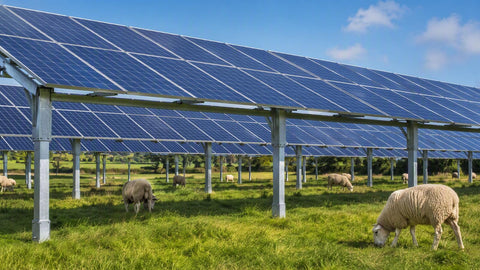
Buy optimizers when the roof justifies them: shade that moves across the array, multiple orientations sharing one inverter, an owner who will actually watch per-module monitoring, or a compliance path where built-in RSD simplifies the BOM. Skip them on clean commercial rooftops and ground mounts where a string inverter at $0.10/W less will produce within a percent or two of the optimized design for 25 years. The worst outcome is the one we see quarterly: optimizers installed on a flawless south-facing array because the sales rep's spiff structure preferred them. Match the electronics to the roof, not the other way around.
Monitoring and Diagnostics: Where Optimizers Pay Daily Dividends
The least-discussed optimizer benefit is what panel-level data does to operations and maintenance. On a string system, "production is down 15%" launches a detective story: meter at the inverter, IR scan for hotspots, IV-curve traces if you're thorough, ladder time regardless. On an optimized system, the portal shows module 17 at 40% of its neighbors — and you know before anyone climbs anything whether you're dealing with a soiling issue (17 recovers after rain), a diode failure (17 shows a flat-topped curve), or a dead optimizer (17 reports zero). For EPCs holding O&M contracts, that difference is measured in truck rolls, and truck rolls are the margin. For homeowners, it's the difference between noticing a failure in a day and noticing at true-up.
Compatibility Checklist Before You Buy
| Check | What to Verify | Where |
|---|---|---|
| Optimizer-to-module electrical match | Module Imp and Isc within optimizer input ratings; module Voc at record-low temp within input max | Both datasheets; manufacturer compatibility tool |
| Optimizer-to-inverter ecosystem | Exact inverter model on the optimizer's approved list; firmware versions current | Manufacturer compatibility matrix |
| String length limits | Minimum and maximum modules per string for your module's electricals | Design tool output, not rules of thumb |
| Frame/rail mounting | Optimizer bracket compatible with your racking rail profile | Racking and optimizer install manuals |
| Rapid shutdown listing | The optimizer+inverter pair appears together on a listed RSD solution | UL listing documentation |
| Monitoring hardware | Gateway/communication kit included in the BOM; cellular vs Wi-Fi plan decided | Inverter BOM |
Warranty Landscape and Failure Reality
Optimizers carry 25-year warranties from the majors — deliberately matched to module life so the electronics don't become the weak link in a 30-year asset. Real-world field failure rates published across the industry run low (well under 1% per year, front-loaded into early-life failures). The practical warranty questions to settle before purchase: who pays the labor to swap a failed optimizer (parts warranties rarely cover the ladder time), how cross-shipment works (the majors ship replacements before return), and whether the monitoring must stay connected to keep the warranty valid (some programs tie full terms to active monitoring registration). Get those answers in the quote, not after the first failure.
Retrofitting Optimizers onto an Existing String System
Can you add optimizers to an array that's already up? Sometimes, and the decision tree matters more than the hardware. The retrofit works when: the existing inverter is being replaced anyway (the natural moment — a failed 12-year-old string inverter is the classic trigger), the new inverter is an optimizer-compatible model, and every module is accessible enough to bolt an optimizer behind it. It does not work when the modules are inaccessible (integrated roof systems), when the existing inverter is healthy (you're paying for two inverters' worth of equipment for one), or when module-level shading is the actual problem and microinverters would serve better. Field note from a retrofit we supported: 24 modules, failed string inverter, heavy tree shade added by a neighbor's landscaping since install. Optimizer retrofit added $1,700 to an inverter replacement that was happening regardless, and recovered 11% annual production. That's the profile where retrofit wins — the inverter replacement absorbs the labor, and the shade pays the premium.
The Spec-Sheet Numbers That Actually Matter
Optimizer datasheets run long; four numbers decide the match:
| Spec | What It Governs | How to Check |
|---|---|---|
| Max input current (A) | Whether today's high-current modules (13–15A Imp) are supported | Module Imp and Isc must both sit under the optimizer limits with margin |
| Max input voltage (V) | Cold-weather Voc ceiling per NEC 690.7 correction | Module Voc at your site's record low must stay under the limit |
| Max output voltage / system voltage | String length windows and inverter pairing | Design tool verification for your exact module count |
| Rated continuous power (W) | Clipping on high-wattage modules | Module Pmax at or under optimizer rating; oversizing wastes the module's top end |
That last row trips up upgrades: pairing a 430W-rated optimizer with a 470W module "because it physically connects" clips peak production for 25 years. The mismatch shows up nowhere on the roof and everywhere on the true-up bill.
Cost Accounting: Where the Optimizer Premium Goes
On a representative 24-module residential job, the optimizer path versus plain string breaks down roughly as: optimizers $1,500–$2,200 (24 × $65–$90), compatible inverter premium $200–$500 over a plain string unit, installation labor +$150–$300 (mounting and mapping), and avoided costs on the other side — no separate RSD devices ($300–$600 saved) and simpler design time on complex roofs. Net premium: typically $1,500–$2,200 on the job. At a recovered 5–10% on a 10,000 kWh/year array at $0.16/kWh, that's $80–$160/year of recovered production — call it a 10–18 year payback on shade recovery alone, compressed considerably when the monitoring value (caught failures, avoided truck rolls, warranty leverage with module makers) counts. Optimizers are a resilience-and-visibility purchase as much as an energy purchase, and buyers who understand that are never disappointed; buyers sold "up to 25% more power" on a shade-free roof are.
What the Independent Data Actually Shows
Vendor shade-recovery claims deserve the discount you'd apply to any vendor claim, but the independent numbers still land in a useful band. NREL and university test-bed work on module-level power electronics has repeatedly shown: on genuinely unshaded, well-matched arrays, MLPE (optimizers or micros) recovers 0–3% — within noise of a good string inverter. Under real shade — vent pipes, dormers, deciduous trees — recovery climbs to 5–25% depending on severity and geometry, with the high end reserved for genuinely brutal roofs. The middle of that band, 5–12% on typically compromised residential roofs, is the number we use in customer models and the number that survives contact with actual production data. Mismatch and soiling recovery add another 1–2% that accrues to everyone. Underperformance modeling — LID, PID, and degradation divergence between modules over decades — is where MLPE quietly compounds its advantage: modules age at different rates, and per-module MPPT harvests the divergence instead of letting the weakest module tax the string.
A Design Walkthrough With Real Numbers
Worked example from a recent design review: 7.6 kW array, 19 × 400W modules, split 11 south / 8 west on a two-plane roof, one chimney shadowing two south modules in winter afternoons. Plain string design: two strings, one inverter with two MPPTs — workable, but the west string at a different azimuth and the shaded south modules cost a modeled 9% annually versus the unshaded ideal. Optimized design: all 19 modules on one string (within the inverter's optimizer-system window), modeled loss 2.5%. Delta: 6.5% of ~10,600 kWh ≈ 690 kWh/year ≈ $110/year at local rates against a ~$1,600 net MLPE premium. Straight energy payback: ~14.5 years — marginal on energy alone. The decision tipped on three non-energy factors: built-in 690.12 compliance simplified the permit set, the owner wanted per-module monitoring for a warranty-conscious portfolio approach, and the hybrid-inverter roadmap (battery planned for year three) favored the optimizer ecosystem. That's an honest decision process: the energy math said "maybe," the system context said "yes." Beware any sales process that shows you the first half of that sentence only.
One more scenario worth naming, because it comes up weekly: the phased build. Owners adding an array now and a second array later (post-EV purchase, post-addition) should know that optimizer ecosystems handle expansion gracefully — new modules with new optimizers extend existing strings within window limits, and mismatched module generations coexist without penalty. String systems force matched modules and window gymnastics; microinverters expand best of all. If expansion is a stated plan rather than a fantasy, say so at design time — the inverter choice you make this year quietly decides how cheap the second array can be in 2029.
A final word on the DIY question, since optimizers sit at the intersection of roof work and electrical work: physically mounting an optimizer is two bolts and a click, but the commissioning side — serial mapping, firmware pairing, string verification, RSD function test — is where unpermitted DIY systems quietly go wrong. If you're self-installing, budget the same commissioning discipline a pro would bring, and have the electrical tie-in inspected. The full installation guide covers the sequence end to end, and the permit conversation applies whether or not a contractor is involved. Done right, an optimized array is the most observable power plant a homeowner can own — every module reporting in, every anomaly visible from the couch, every warranty conversation backed by data instead of anecdote. For installers, that observability is a service-retention product; for owners, it's the difference between trusting the system and wondering about it. That trust, compounded over a 25-year monitoring relationship, is what the optimizer premium really buys. Spend it where the roof earns it, skip it where it doesn't, and you'll never have to apologize for either call — that's the whole philosophy, honestly stated.
Common Questions About Solar Power Optimizers
What does an optimizer actually do? Per-module MPPT via a DC-DC stage behind each panel — shade isolation, module-level monitoring, and built-in rapid shutdown, feeding a central string inverter at fixed voltage.
Are they worth it? On shaded or multi-orientation roofs, usually yes (5–12% shade recovery plus RSD compliance). On clean single-plane roofs, usually no — the 1–3% gain doesn't pay back.
Optimizer vs microinverter? Optimizers keep DC and one ground-level inverter; micros invert at the module with no single point of failure. Both give module-level MPPT and monitoring; micros cost more and put more electronics on the roof.
Do they work with batteries? Yes — DC-coupled hybrid ecosystems pair naturally, preserving DC-coupling efficiency.
Maintenance needs? Essentially none beyond commissioning discipline and firmware updates; failures are rare and pinpointed by the monitoring they enable.
Separate rapid shutdown still needed? No — listed optimizer systems satisfy NEC 690.12 module-level shutdown natively. Verify at commissioning and label the initiator.
Shop Related Products
- Power optimizers — SolarEdge, Tigo
- Microinverters
- String inverters
- Hybrid inverters for storage-ready designs
- Solar panels
Sources & Standards
- NFPA 70, National Electrical Code (2023): Articles 690 (PV systems) and 690.12 (rapid shutdown)
- Manufacturer design tools and compatibility matrices (SolarEdge Designer, Tigo design resources)
- NREL and field study data on module-level power electronics shade recovery