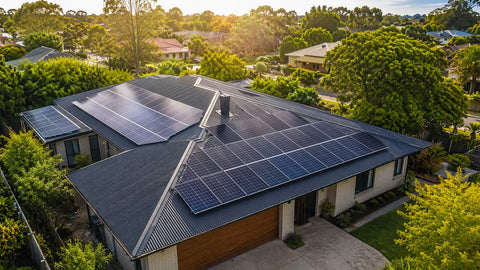
Solar energy has crossed the line from "alternative" to ordinary. More than 5 million U.S. homes now run on rooftop PV, module prices sit near historic lows, and the equipment on a 2026 roof is meaningfully better than what installers were selling five years ago. This guide covers the whole arc — how photovoltaic power actually works, what a system costs this year, how the economics shake out, and how to choose equipment that won't leave you stranded in year nine. We sell this gear wholesale every day, so the numbers below are the ones we quote across the counter, not the ones from a marketing deck.

What Is Solar Energy?
Solar energy is the conversion of sunlight into usable power, and it arrives in two flavors. Photovoltaic (PV) systems turn light directly into electricity using semiconductor cells — that's what this guide covers, because it's what goes on homes and businesses. Solar thermal systems capture heat for water or space heating; they're a niche product in the U.S. now, largely displaced by PV plus heat pumps. When someone says "solar" in 2026, they mean PV.
The scale of the resource is hard to overstate: the sunlight hitting Earth in about 90 minutes carries more energy than humanity uses in a year. The engineering challenge was never availability — it was cost. In 1977, a watt of solar module cost around $77. Today, wholesale modules trade under $0.30 per watt. That 250-fold collapse is why solar is now the cheapest new electricity source in most of the world.
How Does Solar Energy Work?
The Photovoltaic Effect
Every solar cell is a sandwich of silicon layers doped with different elements to create an electric field. Photons knock electrons loose; the field pushes them in one direction; that directed flow is direct current (DC) electricity. Wire cells together into a module, wire modules into an array, and you have a power plant with no moving parts. The physics is settled — what has improved relentlessly is the efficiency: mainstream panels converted 15% of sunlight a decade ago, and current TOPCon and HJT modules run 21–23%.
Key Components of a Solar Energy System
A working system is more than panels. Each component below has its own failure modes, warranty terms, and buying criteria:
| Component | Function | Key Considerations |
|---|---|---|
| Solar Panels | Capture sunlight and convert it into DC electricity through photovoltaic cells | Efficiency rating, warranty terms, degradation rate, temperature coefficient |
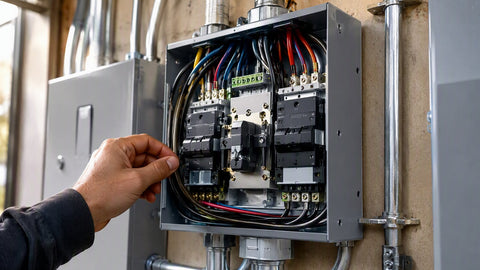
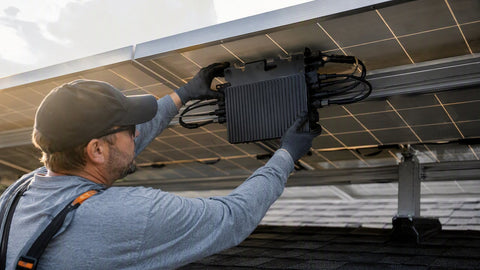
| Inverter | Converts DC power to AC power for use in your home or business | String vs. microinverter, efficiency, monitoring features, warranty |
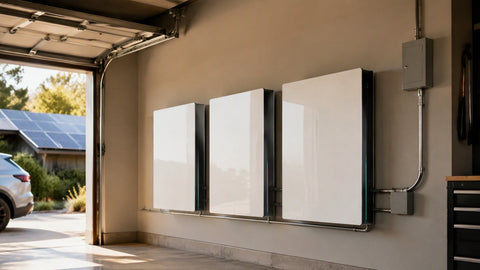
| Battery Storage | Stores excess energy for use during nighttime, cloudy days, or grid outages | Capacity (kWh), power output (kW), cycle life, chemistry type |
| Net Meter | Tracks energy sent to and received from the grid for billing credits | Utility policies, credit rates, time-of-use considerations |
| Mounting System | Secures panels to roof or ground at optimal angles for maximum production | Roof compatibility, wind/snow ratings, tilt adjustability |
| Monitoring System | Tracks real-time and historical energy production and consumption | App accessibility, alert notifications, panel-level vs. system-level data |
Of everything on that list, the inverter deserves the most attention at purchase time. Panels are commodities with 25-year warranties and rare failures; inverters are electronics that work hard every day and typically carry 10–12 year warranties (25 for microinverters). I've replaced exactly two failed panels in fifteen years of supply work — I've lost count of the inverter swaps. For a deeper treatment, see our solar inverter buyer's guide and the field comparison of SMA and Solis inverter performance.
Benefits of Solar Energy: Financial and Environmental
Financial Benefits
| Financial Benefit | Typical Impact | How It Works |
|---|---|---|
| Reduced Electricity Bills | 50–90% reduction in monthly costs | Solar offsets grid electricity purchases; excess production earns credits |
| Federal Tax Credit (ITC) | 30% of installation cost | Direct reduction of federal tax liability; can be carried forward |
| State/Local Incentives | Varies by location | Additional rebates, tax credits, and performance incentives |
| Property Value Increase | 4–6% premium over comparable homes | Buyers pay more for homes with lower operating costs |
| Energy Price Protection | Lock in energy costs for 25+ years | Solar production cost is fixed; utility rates historically rise 2–4% annually |
| Lifetime Savings | $25,000–$75,000+ | Cumulative savings over 25–30 year system lifespan |
Environmental Benefits
A typical 8 kW residential system displaces roughly 5–8 metric tons of CO₂ per year depending on the local grid mix — the equivalent of taking a car off the road. Panels carry an embodied energy debt from manufacturing, but they repay it in 1–2 years of operation and then produce cleanly for decades. End-of-life recycling is maturing too: glass, aluminum, and silicon are all recoverable, and state-level recycling mandates are spreading — we covered the details in our piece on solar recycling mandates.
Solar Energy Costs: What to Expect in 2026
Residential Solar System Costs (2026)
Installed residential pricing in 2026 runs $2.50–$3.50 per watt depending on market, roof complexity, and equipment tier. Here's what that means in dollars:
| System Size | Avg. Cost (Before Credits) | After 30% ITC | Best For |
|---|---|---|---|
| 5 kW | $12,000–$15,000 | $8,400–$10,500 | Small homes, apartments, condos |
| 8 kW | $18,000–$24,000 | $12,600–$16,800 | Average-sized homes (most common) |
| 12 kW | $26,000–$35,000 | $18,200–$24,500 | Large homes, EV owners, home offices |
| 15+ kW | $32,000–$45,000 | $22,400–$31,500 | Large homes, pools, full electrification |
The ITC math is simple multiplication: gross cost times 0.30 comes straight off your federal tax bill. On the 8 kW midpoint — $21,000 gross — that's $6,300 back, for a net of $14,700 before any state incentives. For a full breakdown by state, brand tier, and financing structure, read our companion piece on what solar panels actually cost in 2026 and the 2026 solar energy pricing guide.
Commercial Solar System Costs
| System Size | Avg. Cost (Before Credits) | Typical Applications |
|---|---|---|
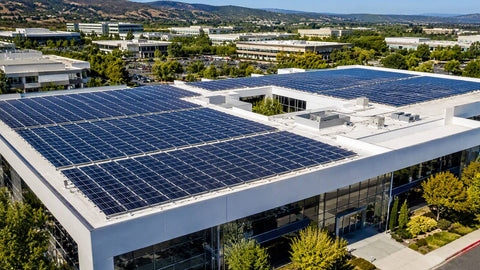
| 25–50 kW | $50,000–$100,000 | Small businesses, retail stores, restaurants |
| 100–250 kW | $175,000–$450,000 | Medium businesses, warehouses, manufacturing |
| 500 kW – 1 MW | $750,000–$1.5M | Large commercial, industrial facilities |
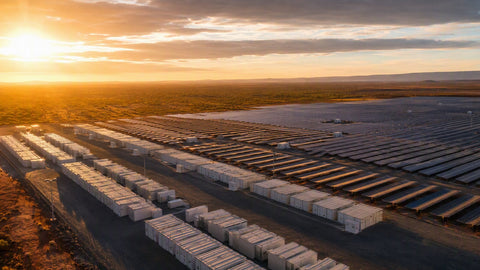
| 1 MW+ | $1.2M–$2M+ per MW | Utility-scale, large industrial, ground-mount |
Commercial projects layer on MACRS depreciation, which recovers another 20–30% of system cost through accelerated write-offs, plus the commercial ITC with domestic content and energy community adders that can push the effective credit to 40–50%. Our commercial solar guide works through that stack.
Is Solar Energy Worth It? ROI Analysis
ROI Factors and Payback Timeline
Nationally, payback runs 6–12 years; the spread is driven by five variables more than by any equipment choice:
| ROI Factor | Impact on Returns | Optimization Strategy |
|---|---|---|
| Local Electricity Rates | Higher rates = faster payback | Compare current and projected utility costs over 25 years |
| Sun Exposure | More sun = more production | South-facing roof with minimal shading is ideal |
| Available Incentives | Reduces net installation cost | Federal ITC + state/local incentives stack for maximum savings |
| Net Metering Policy | Full retail credit maximizes value | Understand local utility compensation structure |
| System Size vs. Usage | Right-sizing optimizes economics | Size system to offset 80–100% of annual consumption |
| Equipment Quality | Better efficiency = more kWh | Premium panels produce 5–15% more energy over lifetime |
The single biggest mistake I see homeowners make is oversizing. A system producing 130% of your usage doesn't earn 30% more return — excess production often credits at avoided-cost rates well below retail, so those extra panels pay back slowly if ever. Size to 80–100% of annual consumption, then stop. The solar ROI calculator and our guide on how much money solar panels save will run your specific numbers.
Types of Solar Energy Systems
| System Type | Advantages | Considerations | Best For |
|---|---|---|---|
| Grid-Tied | Lowest cost, best ROI, net metering benefits, minimal maintenance | No backup during outages, dependent on grid | Most residential and commercial installations |
| Off-Grid | Complete independence, no utility bills, works anywhere | Higher cost, requires careful sizing, battery maintenance | Remote locations, cabins, complete energy independence |
| Hybrid | Backup power, net metering benefits, energy security | Higher cost than grid-tied, battery management | Areas with unreliable grid, critical power needs |
Grid-tied is the right answer for about 90% of buyers with utility service. Hybrid earns its premium where outages are routine or where net metering has been gutted. True off-grid is a lifestyle decision as much as an electrical one — our off-grid system design guide covers the sizing discipline it demands, and the off-grid cabin kit page shows a worked example.
Choosing the Right Solar Equipment
Solar Panel Selection Criteria
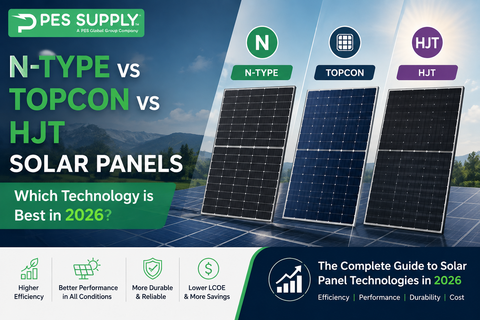
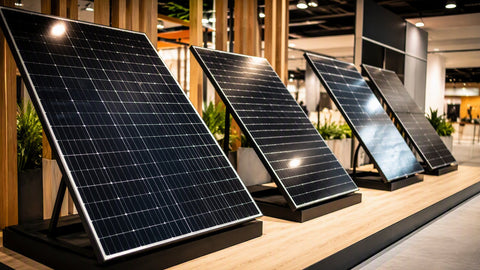
Four specs actually matter. Efficiency: 19–22% is the 2026 mainstream; higher only matters on space-constrained roofs. Temperature coefficient: −0.30 to −0.35%/°C is good; it governs summer output loss. Degradation: look for ≤0.5%/year with a 25-year production warranty guaranteeing 84–87% at end of term. Warranty: 25 years product coverage is now standard among serious brands. Browsing the solar panel catalog, you'll see Qcells, REC, JA Solar, Trina, and Mission Solar all hitting these marks at different price points — the Qcells vs. Trina vs. JA Solar comparison breaks down the differences, and N-type vs. TOPCon vs. HJT explains the cell technology choices underneath.
Inverter Options
| Inverter Type | How It Works | Best For |
|---|---|---|
| String Inverter | Single unit converts power from all panels; most cost-effective | Simple roofs with consistent sun exposure, no shading |
| Microinverters | Small inverter on each panel; panel-level optimization | Complex roofs, partial shading, maximum monitoring |
| Power Optimizers + String | Optimizers on each panel feed central inverter; hybrid approach | Moderate shading, panel-level monitoring needed |
| Hybrid Inverter | Manages solar, battery, and grid in single unit | Systems with battery storage, backup power needs |
Rule of thumb from the field: if any part of your array sees shade between 9 a.m. and 3 p.m., go module-level (microinverters or optimizers); if it's a clean rectangle facing one direction, a string inverter saves real money with no production penalty. Adding batteries now or later pushes you toward hybrid units — Sol-Ark and SolarEdge dominate that conversation on our floor, and the hybrid inverter overview explains why.
Installation Process and Timeline
Installation Steps and Timeline
| Phase | Duration | What Happens |
|---|---|---|
| 1. Consultation & Design | 1–2 weeks | Site assessment, energy analysis, system design, proposal review |
| 2. Contract & Permits | 2–4 weeks | Agreement signed, permit applications submitted to local authorities |
| 3. Equipment Procurement | 1–3 weeks | Panels, inverters, and hardware ordered and delivered |
| 4. Installation | 1–3 days | Mounting system, panels, inverter, and electrical connections installed |
| 5. Inspection | 1–2 weeks | Local building department inspects installation for code compliance |
| 6. Utility Interconnection | 1–4 weeks | Utility approves connection, installs net meter, grants permission to operate |
| Total Timeline | 6–12 weeks | Varies by location, permit processing times, and utility policies |
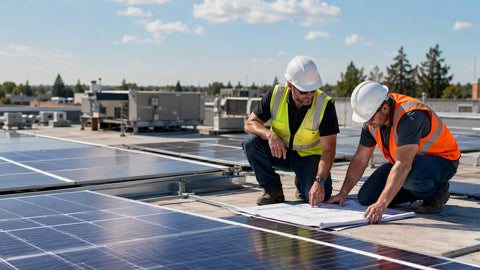
The physical install is the fast part — two days for a typical home. The calendar gets eaten by permits and utility interconnection, which is why picking an installer with an established AHJ relationship matters more than most buyers realize. Our solar installation guide and permitting guide walk through each checkpoint, and what solar permits involve sets realistic expectations by jurisdiction type.
How Solar Cell Technology Evolved — and What You're Buying in 2026

The panel on a 2026 roof is not the panel your neighbor bought in 2016. Cell architecture has moved through three generations in a decade, and the differences show up on your production meter:
| Cell Technology | Era / Status | Typical Module Efficiency | What to Know |
|---|---|---|---|
| Poly PERC (p-type) | 2015–2022 mainstream | 17–19% | Cheap and proven; largely phased out of premium lines |
| Mono PERC (p-type) | 2019–2024 mainstream | 19–21% | Still sold at value price points; solid workhorse |
| TOPCon (n-type) | 2023–present dominant | 21–23% | Lower degradation (~0.4%/yr), better heat behavior, now the volume leader |
| HJT (n-type) | Premium niche | 22–23.5% | Best temperature coefficient (~−0.24%/°C); premium pricing |
| Back Contact (IBC/ABC) | Premium residential | 22–24% | All contacts on rear; cleanest aesthetics, top efficiency |
The practical upshot: n-type TOPCon is the default smart buy in 2026 — first-year degradation around 1% instead of 2%, and 30-year performance warranties are becoming common. Paying a large premium for back-contact only makes sense when roof area is your binding constraint.
A Worked Month: What Solar Does to an Electric Bill
Abstract percentages don't pay bills, so here's one honest month. A household using 900 kWh in June, with a 9 kW system producing about 1,250 kWh that month, on a utility with full retail net metering at $0.16/kWh:
| Line | Amount | Math |
|---|---|---|
| Old bill (no solar) | $144.00 | 900 kWh × $0.16 |
| Energy drawn from grid | 380 kWh | Nighttime and morning loads |
| Grid energy cost | $60.80 | 380 × $0.16 |
| Exported surplus | 730 kWh | 1,250 produced − 520 self-consumed |
| Net metering credit | −$116.80 | 730 × $0.16 banked |
| Fixed customer charge | $12.00 | Not offset by solar |
| New bill | $12.00 | $60.80 − $116.80 credits + $12 fixed; excess credits roll forward |
That $56.00 in leftover credit doesn't vanish — it banks against December, when the same system might produce 350 kWh against 950 kWh of usage. Over a full year, the household offsets 90%+ of consumption even though no single winter month comes close. This is the mechanism that makes solar economics work in four-season climates, and it's why net metering policy matters more than panel brand to your payback.
Five Myths That Won't Die
"Solar doesn't work in cold or cloudy climates." Panels actually run more efficiently in cold — voltage rises as temperature drops. Germany, with Seattle-ish irradiance, built one of the world's largest solar fleets. "Panels need constant cleaning." Rain does the job in most climates; soiling losses run 1–3% annually where it rains regularly. "Solar will ruin my roof." Properly flashed attachments protect the roof underneath — we routinely see shingle sections under arrays outlast the exposed sections. "The technology will be obsolete next year." A panel installed today produces for 30 years; waiting for next year's 0.5% efficiency gain forfeits a full year of savings. "Solar is only for the wealthy." With $0-down loans and the ITC, the median solar household is solidly middle income — the equipment itself has never been cheaper.
Solar for Business: A Quick Note for Commercial Readers
Everything above scales, but commercial buyers get a different incentive stack and a different decision process. The 30% ITC applies to commercial projects with adders for domestic content and energy communities that can push the effective credit toward 40–50%; MACRS accelerated depreciation recovers another fifth or more of system cost through tax write-offs; and commercial electricity demand charges make strategically timed solar-plus-storage worth more than simple kWh math suggests. The evaluation discipline is the same as residential, just with bigger numbers: itemized quotes, production modeling against actual interval data, and three competing bids. Businesses burning serious electricity should also look at commercial panel options built for larger-format arrays.
Adding Battery Storage: When It Pencils and When It's Insurance
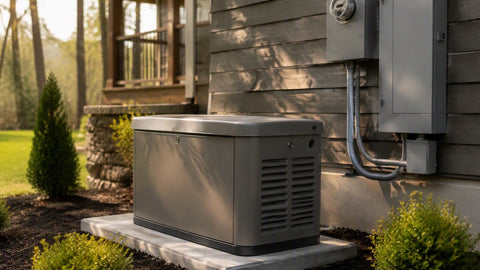
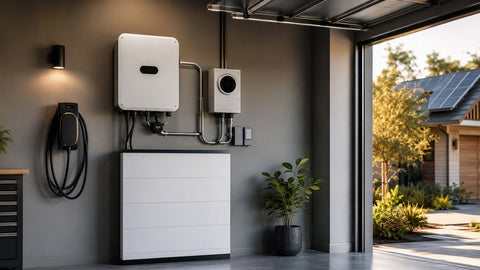
Storage has crossed from accessory to mainstream: more than half of new residential installs in leading markets now include batteries. The economics split cleanly by utility policy. Under full retail net metering, a battery is insurance — you buy it for outage protection, and the payback question is the wrong frame. Under time-of-use rates or reduced export compensation, a battery is an investment — it shifts your solar production into expensive evening windows, and the daily arbitrage plus demand-charge avoidance can pay it back in 7–10 years. Chemistry is settled: LFP (lithium iron phosphate) has won the stationary market on cycle life and thermal safety. Sizing discipline matters more than brand: inventory your critical loads, size the battery to overnight them plus margin, and resist the urge to back up the whole panel unless you're prepared to pay for it. The battery sizing calculator runs the load math, and EG4 and Generac cover the value and premium ends of the storage shelf.
How to Vet an Installer (or Decide to DIY)
The installer matters more than any equipment choice on the quote. Five checks separate professionals from risks: license and insurance verified with the state, not the brochure; NABCEP-certified personnel on the crew; recent local references you actually call; workmanship warranty of 10 years with a company old enough to honor it; and itemized pricing that survives comparison with two competitors. Ask the questions in our questions to ask your solar company list and watch how they handle the uncomfortable ones — the answer to "what happens to my warranty if you close?" tells you everything about how they think. DIY is legitimate for off-grid, ground-mount, and small systems, and suicidal for permitted grid-tied roof work unless you genuinely know NEC 690 and your AHJ's amendment package.
The Environmental Ledger, Honestly Kept
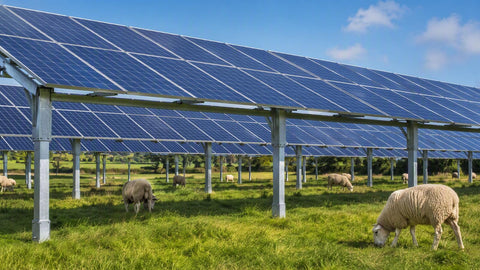
Solar's environmental case is strong but worth stating precisely. Manufacturing a panel consumes energy — silicon refining and cell fabrication are power-hungry — and a module repays that embodied energy in roughly 1–2 years of operation, depending on where it was made and where it's installed. Over a 30-year life, that's 15–25× energy return. Land use is real for utility-scale (hence agrivoltaics and brownfield siting), rooftop systems use space that's already built, and end-of-life recycling recovers the glass, aluminum, copper, and silicon. The honest summary: solar is not impact-free, and it is overwhelmingly cleaner than the marginal grid generation it displaces everywhere in the U.S.
The First Year: What New Owners Should Expect
Your system will not match the proposal every month, and that's fine — production estimates are annual figures built from typical weather files. A cloudy June and a smoky September will both show up in the data. What deserves action is a persistent gap: if cumulative production runs more than 10% below the estimate for a full season with no weather explanation, call the installer. Check the monitoring app weekly for the first quarter, monthly after that. Set a calendar reminder for the ITC paperwork at tax time — the credit doesn't claim itself, and form 5695 is the one piece of this project nobody can do for you. And save every document: permits, interconnection agreement, warranties, and the final inspection sign-off all matter at resale.
Frequently Asked Questions
Does solar energy work on cloudy days?
Yes — panels produce 10–25% of rated output under overcast skies from diffuse light. Annual production figures already account for cloudy weather, which is why systems in cloudy climates are sized larger rather than abandoned.
How long do solar panels last?
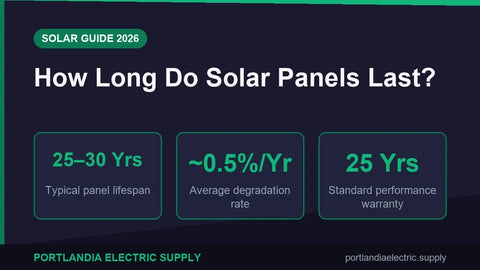
Panels carry 25-year production warranties and routinely operate past 30 years, losing roughly 0.4–0.5% of output per year. Inverters are the shorter-lived component: 10–15 years for string units, 25 for microinverters.
What maintenance do solar panels require?
Very little. Rain handles most cleaning; an occasional rinse in dusty or pollen-heavy seasons helps. Monitor production through your app — a sudden drop is usually a tripped breaker or inverter fault, not a panel problem. Our maintenance guide covers the full checklist.
Will solar panels work during a power outage?
A standard grid-tied system shuts down during outages by code (anti-islanding protection for line workers). Only systems with batteries and a hybrid inverter or transfer equipment keep power flowing. If outage protection matters, plan for storage at install time.
How much roof space do I need for solar?
Figure 17–20 square feet per panel, or roughly 350–450 sq ft for a typical 8 kW array. Modern 400–450W panels mean fewer modules and less racking than older systems needed for the same output.
What is net metering and how does it work?
Net metering credits you for excess power exported to the grid, typically at the full retail rate, offsetting power you draw at night or in winter. Policies vary widely by state and utility — check our incentives by state guide for your local rules.
Should I wait for solar technology to improve before installing?
No. Efficiency gains now arrive incrementally — maybe half a percent a year — while every year of delay costs a year of bill savings and risks incentive changes. The best time in hindsight was five years ago; the second-best time is when your roof and finances are ready.
Can I install solar panels myself?
Physically, a capable DIYer can; legally and practically, permitting, utility interconnection, and NEC code compliance trip up most self-installs. DIY works best for off-grid and small systems — our guide to installing solar panels yourself lays out where the line sits, and NEC compliance essentials cover the code side.
The Smart Choice for 2026 and Beyond
Solar in 2026 is a mature technology at near-floor prices with a 30% federal credit still on the table. The buyers who do best are the ones who size to their actual usage, buy Tier 1 equipment with real warranties, and treat quotes as line-item negotiations rather than lump sums. When you're ready to price equipment, browse the complete solar kits or talk to our team — we supply installers and informed homeowners alike, and we'll quote you at wholesale.