Solar Recycling Mandates 2025: State-Level EPR Laws and Circular Economy
As the first wave of utility-scale solar installations from the early 2010s approaches end-of-life, the question of what happens to decommissioned photovoltaic modules has moved from theoretical discussion to regulatory reality. In 2025, state-level Extended Producer Responsibility (EPR) laws and universal waste classifications are reshaping how installers, distributors, and manufacturers handle panel disposal. Here is what contractors need to know about the evolving solar recycling landscape.
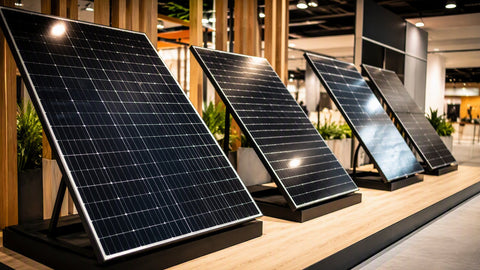
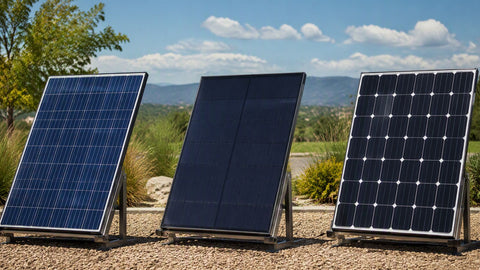
Equipment to consider: JA Solar DeepBlue 3.0 550W Panel or REC 360W Solar Panel or Axitec 390W Solar Panel. All available with 7-10 business days delivery from PES Supply's 50,000+ SKUs across 169 authorized brands.
Washington State: The Pioneer EPR Framework
Washington State established the nation's first solar-specific EPR framework through legislation passed in 2017, codified as RCW 70A.510.010. The law requires PV module manufacturers or distributors to implement an end-of-life stewardship plan, financing the takeback and recycling of modules sold within or into the state after July 1, 2017, at no cost to the end user. The stewardship plan requirements took effect starting in 2024, meaning 2025 is the first full year of compliance.
According to the DOE Solar Energy Technologies Office PV End-of-Life Action Plan, Washington's regulation represents the most comprehensive state-level mandate for manufacturer-funded module recycling in the United States. Manufacturers that fail to comply face restrictions on selling modules within the state.
California: Universal Waste Classification
California took a different regulatory path. The state's Department of Toxic Substances Control (DTSC) classified photovoltaic modules as universal waste effective 2021, streamlining the handling, transport, and processing requirements under California Code of Regulations, Title 22, Chapter 23. This classification reduces the regulatory burden on handlers while still ensuring proper management of hazardous constituents.
Key compliance requirements for California handlers include:
- Universal waste handlers that accept more than 100 kg (200 lbs) of PV modules from offsite sources, or that generate 5,000 kg (10,000 lbs) or more in a calendar year, must submit an annual report to DTSC by February 1.
- Handlers must contain PV modules in a manner that prevents breakage and release of any constituent to the environment.
- Handlers conducting disassembling and processing treatment activities must submit additional reporting.
California also maintains more stringent toxicity level requirements for leaching tests than EPA standards, reflecting the state's aggressive approach to hazardous waste management. The DTSC maintains a public list of universal waste handlers that accept PV modules and a separate list of recyclers that treat PV modules, giving contractors a directory for responsible disposal.
Module End-of-Life: Defining the Timeline
Understanding when modules reach end-of-life is critical for planning recycling logistics. According to DOE's action plan, module end-of-life is typically defined as the point when a module operates at 80% (T80) or 50% (T50) of nameplate power. Assuming a degradation rate of 0.7% per year, T80 end-of-life occurs at approximately 30 years, while T50 would occur at roughly 70 years. However, modules can reach end-of-life earlier due to weather damage, installation errors, or manufacturing defects.
The useful operational lifespan of PV systems is currently considered 25–35 years. With the first major wave of U.S. solar installations dating to 2010–2015, the industry is now entering the period where early retirements, storm damage replacements, and warranty claims are generating meaningful volumes of decommissioned modules.
Recycling Technology: What Gets Recovered
Silicon Module Recycling
The commercial process for silicon modules begins with mechanical removal of aluminum frames and shearing off the junction box. The module is then shredded, ground into fine particles, and processed using eddy currents and sifting to separate glass, polymers, interconnect ribbons, and cells. Alternative techniques use heat to remove polymers from glass and chemical treatments to separate metals from silicon.
CdTe Thin-Film Recycling
For cadmium telluride (CdTe) modules, the commercial process removes the frame and junction box, shreds the laminate, grinds it in a hammermill, and mechanically separates glass and laminate pieces. The material is then immersed in a series of chemical baths to recover cadmium and tellurium — a rare element with abundance on par with platinum.
Material Recovery Potential
| Material | % of Module Weight | Recovery Notes |
|---|---|---|
| Glass and aluminum | Bulk of mass | Most of module mass; readily recyclable |
| Silver | 0.3–0.4% | Difficult to recover from screen-printed contacts; high value |
| Silicon | Varies | Difficult to recover with sufficient purity for reuse |
| Copper | Small fraction | Recoverable via eddy current separation |
Overall, PV module materials are 99% non-hazardous and 95% recyclable with current technologies, according to the DOE action plan. The challenge is economic: recycling costs approximately $15–$45 per module, while landfill disposal costs only $1–$5 per module. Landfill fees range from $30 to $70 per ton depending on location.
The Circular Economy Push
The NREL report on PV module recycling in IEA PVPS Task 12 countries, published in 2025, provides a comprehensive examination of recycling approaches worldwide. The report reviews country-by-country strategies, including the European Union's WEEE Directive, Japan's developing PV-specific recycling regulations, South Korea's EPR scheme, and China's national incentive-driven recycling initiatives.
DOE's Solar Energy Technologies Office (SETO) has set a goal to reduce the cost of module recycling by more than half by 2030. The office is also working to create a database to track PV end-of-life materials, including quantity, age, location, cause of end-of-life, and handling methods.
Federal Research Investments
Several federal research initiatives are advancing recycling technology:
- SRI International (2017): $900,000 awarded to develop a more efficient process for recycling silicon waste from wafer cutting into PV-grade silicon.
- University of Pittsburgh (2021): $1,037,733 from the REMADE Institute to design a framework for high-efficiency modules that can be economically recycled, recovered, and remanufactured.
- Arizona State University (2021): $485,410 from the REMADE Institute to develop recycling technologies for improved materials recovery from silicon solar modules.
What This Means for Installers and Contractors
As state recycling mandates expand, contractors should incorporate end-of-life planning into project bids and customer agreements. Key considerations include:
- Know your state's rules: If you operate in Washington, California, or other states with EPR or universal waste rules, understand your handling, reporting, and disposal obligations.
- Document module serial numbers: Tracking installed modules by serial number simplifies future warranty claims and recycling logistics.
- Partner with certified recyclers: Use DTSC-listed or state-approved recyclers to ensure compliance and recover material value.
- Educate customers: Increasingly, project owners and EPCs require end-of-life plans as part of RFP responses and sustainability commitments.
PES Supply stocks the components you need for both new installations and system maintenance. Browse our solar panels, inverters, and electrical accessories. All orders ship with delivery in 7-10 business days.
Looking Ahead: Waste Volumes on the Horizon
The scale of the recycling challenge will grow substantially. DOE projects that by 2050, annual PV module end-of-life volumes may reach up to 12% of annual municipal electronic waste volumes in the United States. The projected total PV module waste in 2050 ranges from 0.8 to 1.5 million metric tonnes. While this represents only about 0.1% of total waste generated in 2018, the concentration of specialized materials — silver, tellurium, high-purity silicon — makes responsible recovery both an environmental and economic imperative.
For contractors, the message is clear: the circular economy for solar is arriving, and early preparation for recycling compliance will reduce costs and liability as volumes grow. Stay ahead with quality components from our solar panel collection and full catalog of 50,000+ SKUs from 169 authorized brands.
Sources
- DOE SETO — Photovoltaics End-of-Life Action Plan
- California DTSC — PV Modules Universal Waste Management
- California DTSC — List of PV Module Recyclers
- Washington State Legislature — RCW 70A.510.010
- NREL — Status of PV Module Recycling in IEA PVPS Task 12 Countries
🛒 Shop This Article
Find the equipment mentioned in this article across our 50,000+ SKUs from 169 authorized brands. 7-10 business days delivery.
Why 2025 Became the Tipping Year for Module End-of-Life
The U.S. solar fleet aged into its first real retirement wave this decade. Modules installed during the 2009-to-2012 buildout, when the ITC was first extended and utility-scale went mainstream, are now hitting repowering age. Industry estimates put annual U.S. module waste in the hundreds of thousands of tons by the early 2030s, up from a rounding error a decade ago. State legislatures noticed, and the result is a patchwork of extended producer responsibility laws, universal waste rules, and decommissioning bond requirements that every installer, EPC, and equipment distributor now has to track.
I've had this conversation from both sides of the counter. We supply modules to installers who are pulling fifteen-year-old arrays off commercial rooftops, and the first question is never about the new wattage — it's "what do I do with forty pallets of old glass?" Two years ago my honest answer was a shrug and a phone number for one recycler. Today I can hand them a state-by-state framework, and that change happened almost entirely between 2021 and 2025.
State EPR and Stewardship Landscape
Washington remains the only state with a fully enacted, module-specific EPR statute: the Photovoltaic Module Stewardship and Takeback Program, passed in 2017, requires manufacturers selling into the state to finance and operate a take-back program, with implementation rolling out through the Department of Ecology in the mid-2020s. California took a different route by designating PV modules as universal waste under DTSC rules effective in 2021, which does not fund collection but does prohibit landfill disposal and imposes handler requirements. Several other states have active bills or study committees, and the trend line is unmistakable.
| State | Mechanism | Status (2025) | Key Obligation |
|---|---|---|---|
| Washington | EPR stewardship law (2017) | Program rollout via Dept. of Ecology | Manufacturers fund and operate take-back |
| California | Universal waste designation (2021) | In force | No landfill disposal; handler/transport rules |
| New Jersey | EPR legislation introduced | Pending | Producer responsibility organization model |
| North Carolina | Study and decommissioning rules | Active rulemaking | Utility-scale decommissioning plans |
| Hawaii | EPR bill drafted | Pending | Island logistics carve-outs under debate |
| Minnesota | Agency study completed | Recommendations published | Likely stewardship framework proposal |
The pattern mirrors what happened with paint, mattresses, and electronics: one or two early states build the model, a national industry group drafts model legislation to avoid fifty divergent programs, and within five to eight years the approach spreads. SEIA has run a national PV recycling working group since 2016 precisely to keep ahead of that curve, and its preferred-operator network gives installers a vetted starting point in states without statutes.
What Is Actually Inside a Retired Module
Recycling economics start with material composition. A standard 60- or 72-cell crystalline module is overwhelmingly low-value bulk material with a thin layer of high-value metals. The mass breakdown below is the industry-standard profile cited in IRENA and IEA-PVPS end-of-life research.
| Material | Share of Module Mass | Mass in a 21 kg Module | Recovered in Bulk Recycling? | Recovered in Advanced Recycling? |
|---|---|---|---|---|
| Glass | 76% | 15.96 kg | Yes | Yes |
| Polymer (backsheet, encapsulant) | 10% | 2.10 kg | Often incinerated | Partial |
| Aluminum frame | 8% | 1.68 kg | Yes | Yes |
| Silicon cells | 5% | 1.05 kg | No | Yes, high purity |
| Copper ribbon and wiring | 1% | 0.21 kg | Partial | Yes |
| Silver paste | <0.1% | ~20 g | No | Yes, 90%+ recovery |
Do the arithmetic on the silver row and you see why advanced recyclers exist: 20 grams per module is trivial until you multiply by a 100 MW repowering project — roughly 250,000 modules at 400 W each — which yields about 5,000 kg of silver. At recent silver prices that is a seven-figure recovery stream sitting inside what used to be treated as trash.
The Cost Math: Recycling vs. Landfill
The uncomfortable truth of module recycling economics is that the responsible option costs more than the irresponsible one where landfilling remains legal. The table below models a 500-module commercial decommissioning job with realistic 2025 pricing.
| Path | Per-Module Fee | Freight (per pallet of 30) | 500-Module Job Total | Compliance Risk |
|---|---|---|---|---|
| Dedicated PV recycler | $25 | $180 | $15,490 | None; certificate of recycling issued |
| Electronics recycler (mixed stream) | $15 | $180 | $10,490 | Low; verify downstream vendors |
| Reuse / secondary market | −$5 (revenue) | $180 | −$510 net revenue | None for functional, tested modules |
| Landfill (where legal) | $3 | $120 | $3,540 | Rising; banned in CA universal-waste rules |
Freight assumes 17 pallets at 30 modules per pallet for the recycler rows — 17 × $180 = $3,060, which is why the dedicated-recycler total is $25 × 500 = $12,500 plus $3,060, landing near $15,490. Landfill freight is cheaper because transfer stations are closer. The gap between $15,490 and $3,540 on one mid-size job is the entire argument for EPR funding: without producer money in the system, the spreadsheet keeps pointing at the landfill.
Universal Waste Rules: What Changes on the Truck
California's designation deserves a closer look because it is the model other states are studying. Under universal waste rules, modules can be accumulated on-site for up to one year, must be labeled as universal waste, cannot be treated (no crushing or shredding) without a permit, and must ship to an authorized handler or destination facility with basic tracking. For an installer, the practical changes are palletizing intact modules instead of tossing them in a dumpster, keeping a simple log, and using a licensed transporter for larger loads. None of it is exotic, but all of it is enforceable.
We adjusted our own warehouse process the year those rules took effect. My crew now stages decommissioned modules on dedicated racking with accumulation dates marked, and our logistics team books recycler pickups in full-truckload batches to spread the freight. The discipline costs us a few hours a month and has already paid off in cleaner audits and a new revenue line: customers will pay for documented, compliant disposal.
The Circular Economy Opportunity Behind the Compliance Burden
Step back from the compliance detail and the strategic picture is genuinely interesting. The same material table that makes recycling expensive today makes it strategically valuable tomorrow. Domestic glass, aluminum, and silicon feedstock reduces supply-chain exposure; recovered silver and silicon reduce virgin material demand; and a functioning secondary market for warrantied, tested used modules serves exactly the budget and off-grid segment that new-module pricing still prices out. IRENA's landmark 2016 end-of-life report projected that recovered PV materials could be worth billions of dollars cumulatively by 2050 — value that only materializes if collection infrastructure exists, which is precisely what EPR laws build.
Manufacturers are responding with design-for-recycling changes: frameless formats in some product lines, reduced fluoropolymer backsheets, and bills of material published for downstream processors. First Solar has operated in-house thin-film recycling for years, and several crystalline manufacturers now advertise recycled-content frames. The circular version of this industry is not hypothetical; it is under construction, and the 2025 state mandates are the scaffolding.
Related Reading and Equipment
If you are repowering an aging array rather than landfilling it, our solar panel kits buyer's guide maps current module options, and the bifacial solar panel collection covers the dual-glass formats that dominate new utility procurement. For a broader view of where panel technology is heading, see the 2026 guide to hourly solar production and our best solar panels roundup. Installers planning compliant end-of-life logistics will also want the solar installation guide for decommissioning checklists, and anyone pairing repowering with storage should start with the energy storage systems primer and the batteries and energy storage collection.
Frequently Asked Questions
Which states have solar panel recycling mandates?
Washington State has the oldest dedicated photovoltaic module stewardship law, enacted in 2017 with a manufacturer-funded take-back program. California classifies end-of-life PV modules as universal waste, which triggers handling and transport rules rather than a full EPR program. Several other states, including New Jersey, North Carolina, and Hawaii, have introduced or studied EPR bills, and most observers expect the list to grow as early-2010s installations reach retirement age.
What is EPR and how does it apply to solar panels?
EPR stands for extended producer responsibility. It shifts the cost and logistics of end-of-life collection from taxpayers and system owners to the manufacturers who placed the product on the market. Applied to PV modules, EPR typically requires manufacturers to join a stewardship organization, fund collection sites, and meet recovery-rate targets.
How much of a solar panel can actually be recycled?
A typical crystalline silicon module is about 76 percent glass, 10 percent polymer, 8 percent aluminum, 5 percent silicon, and 1 percent copper by weight, with a fraction of a percent of silver. Bulk recycling recovers the glass and aluminum routinely; advanced facilities can recover silicon, copper, and silver at high purity. Realistic mass-recovery rates today run 85 to 95 percent.
How much does it cost to recycle a solar panel?
Current U.S. pricing typically runs 15 to 45 dollars per module at a dedicated recycler, plus freight. By comparison, landfill disposal where legal often costs 1 to 5 dollars per module. The gap is exactly what EPR laws are designed to close by building volume and manufacturer funding into the system.
Are solar panels hazardous waste?
Most crystalline silicon modules pass federal TCLP toxicity tests and are not federally hazardous, but some older or damaged modules can leach lead above the 5 mg/L threshold, and cadmium telluride thin-film modules raise separate concerns. California treats all end-of-life PV modules as universal waste regardless, which means they cannot go to a municipal landfill there.
What should an installer do with decommissioned panels?
First, check your state's rules: in universal-waste states you need proper accumulation labeling, one-year storage limits, and shipment to an authorized handler. Elsewhere, get a recycling quote, request a certificate of recycling for your customer records, and never send modules to a landfill without confirming local acceptance rules. Reuse and secondary-market resale are legitimate first options for functional modules.