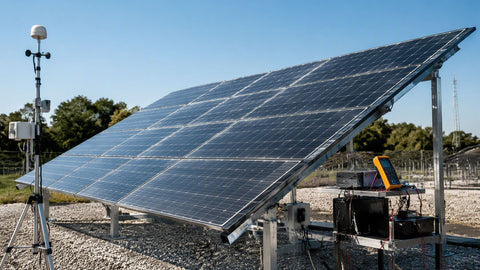
A 6kW solar system costs $17,400–$21,600 installed before incentives in 2026, and $12,180–$15,120 after the 30% federal tax credit. Buy the equipment wholesale and install it with your own electrician and the gross drops to $13,200–$16,800. Six kilowatts is the right size for an average 1,200–2,000 sq ft home using 600–900 kWh a month, and it is the most commonly mis-quoted size we see — usually inflated by salespeople padding the system to hit a commission tier. Here are the real numbers, with the math shown, so you can audit any quote in five minutes.

The Short Answer: 2026 Price Table
| Buying Path | Price per Watt | Gross Cost (6,000W) | After 30% ITC |
|---|---|---|---|
| Full-service installer (turnkey) | $2.90–$3.60 | $17,400–$21,600 | $12,180–$15,120 |
| Kit + your own electrician/roofer | $2.20–$2.80 | $13,200–$16,800 | $9,240–$11,760 |
| Wholesale equipment only (DIY) | $1.30–$1.90 | $7,800–$11,400 | $5,460–$7,980 |
The check: 6,000W × $3.00/W = $18,000 gross; × 0.70 = $12,600 net. Small systems carry a slightly higher $/W than big ones because permits, engineering, and the truck roll cost the same whether the array is 6kW or 16kW. If a turnkey quote comes in above $3.60/W for a straightforward comp-shingle roof, the fat is in the margin, not the hardware.
Equipment Breakdown at Wholesale
This is the bill of materials we build from daily at Portlandia Electric Supply, priced at 2026 wholesale levels:
| Component | Typical Spec | Qty | Cost Range |
|---|---|---|---|
| Solar modules (400–460W) | Mono N-type, 25-yr warranty | 13–15 | $2,600–$4,200 |
| Inverter (string or 13–15 micros) | 5–7.6kW string, or IQ8-class micros | 1 or 13–15 | $1,200–$2,600 |
| Racking + flashing | Comp-shingle flashed mounts, rails | 1 set | $850–$1,300 |
| Electrical BOS | 10 AWG PV wire, conduit, disconnect, RSD | 1 lot | $550–$950 |
| Monitoring + labels + misc. | Gateway, placards, lugs | 1 lot | $200–$400 |
| Equipment subtotal | — | — | $5,400–$9,450 |
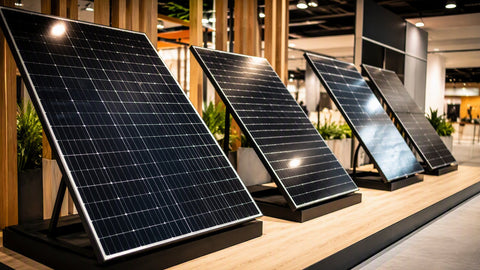
Add $6,000–$9,000 of licensed labor, permits, and interconnection to the mid-column and the turnkey band reproduces itself. That is not an argument against installers — a good crew earns every dollar on a steep roof — it is an argument for knowing what the hardware line should read before you negotiate. Panels live in our solar panels collection; matched inverter options in solar inverters and 6–8kW hybrid inverters.
How Many Panels, How Much Roof?
| Module Wattage | Panels for ~6kW | Actual Array Size | Roof Area Needed* |
|---|---|---|---|
| 400W | 15 | 6,000W | ~300 sq ft |
| 430W | 14 | 6,020W | ~280 sq ft |
| 460W | 13 | 5,980W | ~265 sq ft |
| 550W (large-format) | 11 | 6,050W | ~290 sq ft |
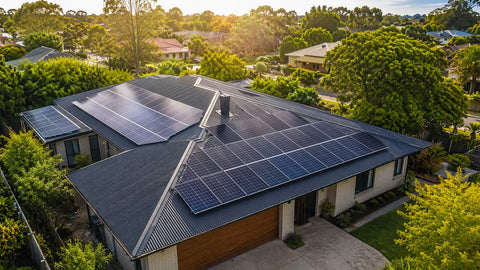
*Includes realistic row spacing and one code pathway; your fire marshal's setback rules add the rest. Note the 550W row: big-format modules save panel count, not area — they are physically larger per panel. On small, chopped-up roofs, standard-format 400–460W modules from the 400W class usually lay out better.
What 6kW Produces in a Year
Same formula as every honest production model: annual kWh = 6 kW × effective peak sun hours × 365 × 0.86 derate. Effective PSH means your roof's tilt and azimuth are already accounted for, which is the only honest way to quote.
| Region | Effective PSH | Annual kWh | Monthly Avg | Value at $0.17/kWh |
|---|---|---|---|---|
| Southwest (Phoenix) | 5.5 | 10,359 | 863 | $1,761/yr |
| South Central (Dallas) | 5.0 | 9,417 | 785 | $1,601/yr |
| Southeast (Atlanta) | 4.6 | 8,664 | 722 | $1,473/yr |
| Mid-Atlantic (Philadelphia) | 4.1 | 7,722 | 644 | $1,313/yr |
| Pacific NW (Portland) | 3.5 | 6,592 | 549 | $1,121/yr |
Verify the Dallas row: 6 × 5.0 = 30; × 365 = 10,950; × 0.86 = 9,417. If your home uses more than these monthly averages, 6kW will shrink your bill but not erase it — that is fine, partial offset still pays. If you use less, you are overbuilding; run your real number through the panel sizing calculator or read how many watts to power a home first.
Will 6kW Run Your House? A Load Reality Check
A 6kW array on a bright afternoon pushes roughly 4,800–5,200W at the inverter terminals after losses. What that covers, simultaneously:
| Load | Running Watts | Covered by 6kW Midday? |
|---|---|---|
| 3-ton central AC (SEER2 15) | ~2,800W | Yes, with ~2,000W to spare |
| Refrigerator | 150–250W | Easily |
| Electric water heater | 4,500W (duty-cycled) | Shares capacity; not alongside AC at full tilt |
| EV Level 2 charging | 7,200–9,600W | No — schedule charging for off-peak grid hours or oversize |
| LED lighting, whole house | 200–400W | Easily |
| Well pump (3/4 HP) | ~1,900W surge ~3,000W | Yes, one large load at a time |
I had a customer outside Sacramento last summer who sized to 6kW, then bought an EV in month three. His array covers the house beautifully and the car eats the grid. Size for the loads you are about to own, not only the ones on last year's bill. The deeper treatment is in can solar panels power a whole house.
The NEC Math Is Friendlier at 6kW
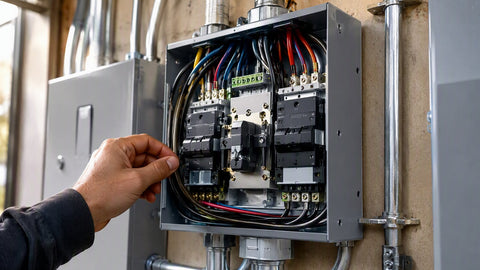
Here is where 6kW beats its bigger siblings: 6,000W ÷ 240V = 25A output. NEC 690.8's 125% continuous multiplier gives 31.25A; NEC 240.6 rounds to a 35A breaker; NEC 310.16's 75°C copper column puts 8 AWG THHN-2 at 50A — ample. And the 120% busbar rule (705.12(B)) that kills 12kW projects on 200A panels? A 200A panel with a 200A main allows 40A of backfeed. Your 35A solar breaker fits. Most 6kW jobs interconnect with zero panel surgery, which is $1,800–$4,000 that stays in your pocket compared with the 12kW-and-up crowd.
| Design Item | Calculation | Result | Code Reference |
|---|---|---|---|
| Inverter output current | 6,000W ÷ 240V | 25.0A | NEC 690.8(A) |
| Continuous multiplier | 25.0A × 1.25 | 31.25A | NEC 690.8(B) |
| Breaker size | Next standard above 31.25A | 35A | NEC 240.6(A) |
| Conductor (Cu, 75°C) | Ampacity ≥ 31.25A | 8 AWG THHN-2 (50A) | NEC 310.16 |
| 120% rule check (200A bus / 200A main) | 200 × 1.20 − 200 = 40A allowed | 35A ≤ 40A — passes | NEC 705.12(B) |
Our wire ampacity chart covers the full 310.16 table if you want to double-check me — and you should double-check everyone, including me.
Incentives and Payback at the 6kW Scale
The 30% federal ITC applies the same at every size, so the percentage story is identical to bigger systems — but state rebates that pay per watt (where they still exist) and fixed permit fees hit small systems harder. On an $18,600 turnkey 6kW system:
| Line Item | Amount | Running Total |
|---|---|---|
| Gross installed price | $18,600 | $18,600 |
| Federal ITC (30%) | −$5,580 | $13,020 |
| Typical state credit (where available) | −$1,500 to −$5,000 | $8,020–$11,520 |
| Year-1 bill offset (Atlanta, 8,664 kWh × $0.17) | −$1,473/yr | — |
| Flat payback (ITC only) | — | 8.8 years |
| Payback with 3%/yr rate escalation | — | ~7.5 years |
Run your own scenario on the solar payback calculator, and check your state's stack on solar incentives by state.
25-Year Savings Picture
Using the Atlanta production figure with 0.5%/yr degradation and 3%/yr utility escalation:
| Year | Output Factor | Production (kWh) | Effective Rate | Savings | Cumulative |
|---|---|---|---|---|---|
| 1 | 1.000 | 8,664 | $0.170 | $1,473 | $1,473 |
| 5 | 0.980 | 8,491 | $0.191 | $1,622 | $7,720 |
| 10 | 0.955 | 8,274 | $0.222 | $1,837 | $16,380 |
| 15 | 0.930 | 8,058 | $0.257 | $2,071 | $26,210 |
| 20 | 0.905 | 7,841 | $0.298 | $2,337 | $37,280 |
| 25 | 0.880 | 7,624 | $0.346 | $2,638 | $49,750 |
A $13,020 net investment returning roughly $49,750 over the warranty life — that is the asset case for ownership, and it is why cash or a plain installment loan beats any lease at this scale.
String, Micro, or Hybrid for 6kW
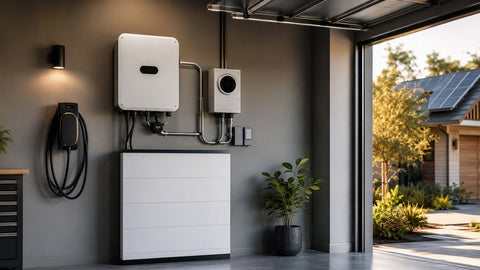
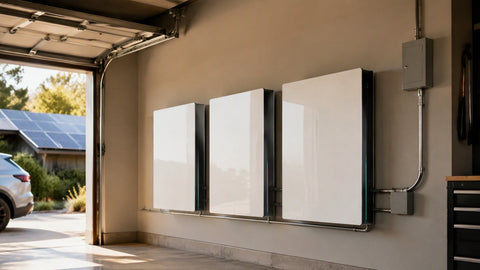
At 13–15 panels, the architecture decision is cheap to get right and expensive to get wrong. A single 5–6kW string inverter is the value play on an unshaded roof. Microinverters add $1,000–$1,800 at this size and earn it back fast under any shade at all — one shadowed panel on a string drags every panel behind it. A 6–8kW hybrid inverter adds $800–$1,600 over a string unit and makes the system battery-ready, which matters more than it used to: utilities keep gutting net metering, and self-consumption with a battery is where the economics are drifting. If storage is on your three-year horizon, start with the battery sizing calculator and read how many batteries a mid-size system needs before you pick the inverter, because retrofitting is the expensive path. My crew's default recommendation at 6kW in 2026 is a hybrid unit even for grid-tie customers — the $1,200 premium is cheap insurance against a net-metering rule change.
Wiring and Balance of System Notes
Thirteen to fifteen panels typically form a single string or two short strings. Keep string voltage inside the inverter's MPPT window after cold-weather correction: a 430W module with a 49.5V Voc, corrected for a −10°C design morning at roughly 1.12× per NEC 690.7 practice, lands near 55.4V per module — fifteen in series is 831V, under the common 1,000V ceiling but past many residential inverters' 600V input limit. Two strings of seven or eight is the clean answer. The series-versus-parallel trade-offs are laid out in solar panel wiring basics.
Common Ways 6kW Quotes Go Wrong

Three patterns I flag on quote reviews every week. First, production modeled at horizontal PSH instead of effective PSH — inflates promised kWh by 15–25%. Second, "$0 down" financing folded into a grossed-up $4.50/W price, where the loan origination fee (often 20–30% of the financed amount, hidden in the principal) quietly doubles the hardware cost. Third, lease escalators of 2.9%/yr signed by homeowners whose utility raises rates 1.5%/yr — the lease passes the utility bill in year 14 and never looks back. Ask for the cash price, the $/W, and the effective PSH assumption, and most of these games evaporate. Our installation guide covers the post-contract sequence so you also know what happens after you sign.
Frequently Asked Questions
How much is a 6kW solar system in 2026?
$17,400–$21,600 turnkey before incentives; $12,180–$15,120 after the 30% federal credit. Wholesale equipment runs $5,400–$9,450 for buyers managing their own install.
How many panels is 6kW?
Fifteen 400W panels, fourteen 430W panels, thirteen 460W panels, or eleven 550W large-format modules — roughly 265–300 sq ft of roof.
How much does a 6kW system produce per day?
Multiply 6kW by your effective peak sun hours and the 0.86 derate: about 25.8 kWh/day in Dallas (5.0 PSH), 21.5 in Atlanta (4.6), 18.1 in Portland (3.5).
Does 6kW need a panel upgrade?
Usually no. The 35A backfeed breaker fits the 40A allowance under the 120% rule on a standard 200A/200A service panel — one of the nicest cost advantages of this system size.
Is 6kW enough for a house with AC?
For annual energy offset, yes in most climates if usage is under ~900 kWh/month. For running loads midday, it covers a 3-ton AC plus the house base load, but not AC plus EV fast-charging at once.
Should I add a battery to 6kW?
Only with a hybrid inverter or if your utility's net metering is weak. A single 10kWh battery pairs well at this scale; oversizing storage on a small array wastes charging capacity.
Which Homes Actually Fit 6kW
Abstract sizing rules fail people; concrete profiles do not. Match your household against these four:
| Home Profile | Monthly Usage | 6kW Fit? | Better Answer |
|---|---|---|---|
| 1,400 sq ft ranch, gas heat + water heater, no EV | 550–750 kWh | Excellent — full offset in most climates | 6kW as specified |
| 1,800 sq ft, central AC, electric dryer, no EV | 750–950 kWh | Good — 80–100% offset | 6kW, or 7kW if roof allows 2 more panels |
| 2,200 sq ft, AC + EV charging 200 mi/wk | 1,100–1,400 kWh | Undersized — covers ~60% | 8–10kW |
| Townhouse / small shaded roof, 500 kWh | ~500 kWh | Oversized for usage | 4–5kW with micros |
The two-second version: pull your last 12 bills, add the kWh, divide by 12. Under 900 and you are a 6kW customer. Between 900 and 1,400 and you are shopping the 12kW guide instead. Over that, read about bigger arrays or commercial-grade layouts.
Roof Condition and Shade: The Gates Before Price
Before any price conversation, two pass/fail tests. Roof age: asphalt shingles under about 12 years old pass; older than 15 and you should reroof first, because removing and reinstalling a 6kW array in year 8 costs $2,500–$4,000 — a third of the system's net price. Shade: any roof plane that accumulates more than about 90 minutes of obstruction shadow during the production window needs either microinverters, a different plane, or a tree conversation with the neighbor. I have walked away from sales over both gates. A system that underproduces by 20% because someone ignored a sweetgum tree is not a deal at any $/W.
DIY vs Turnkey at This Size
Six kilowatts is the most DIY-friendly size that still matters on a bill. The single-string layout is simple, the 35A backfeed usually drops into the existing panel, and 14 panels is one long weekend for two careful adults with proper fall protection. The honest catch list: the permit package still costs $500–$1,500 from a design service; freight on a pallet of panels runs $400–$800 with liftgate; and your roof warranty, your homeowner's insurance, and your utility's interconnection agreement all want licensed-electrician signatures in most jurisdictions. Realistic all-in DIY lands $11,000–$14,500 gross — a genuine $5,000–$7,000 savings if you value your weekends at zero. If you do not, turnkey wins.
Warranties and the Quiet Decades
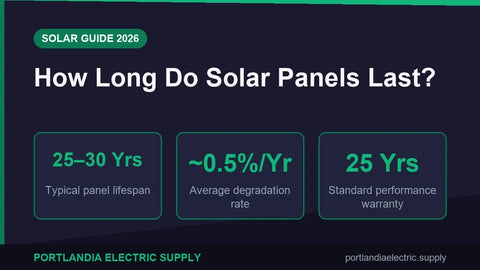
Budget almost nothing for maintenance in wet climates — rain handles cleaning — and $150–$250 per cleaning visit where dust or pollen is heavy. The wear item is the inverter: string units carry 10–12 year standard warranties (extend them; the extension is a few hundred dollars and inverters are the component most likely to need service in years 12–18), microinverters carry 25, and modules carry 25-year product plus 30-year performance warranties from the tier-one brands. Keep your permit card, interconnection letter, and single-line diagram in one folder forever. Every warranty conversation starts by asking for those papers, and I have watched legitimate claims stall for months because the paperwork went out with the recycling.
Bottom Line
At $12,000–$15,000 after the federal credit, a 6kW system is the cheapest way to make a utility bill mostly disappear, and its electrical footprint is small enough to dodge the panel-upgrade costs that complicate bigger arrays. The mistakes are all in sizing and financing, not hardware: size to your next five years of loads, demand the cash $/W figure, and verify the production model uses effective peak sun hours. Bring us your 12-month kWh total and we will confirm the fit — or tell you to buy smaller, which happens more often than you would think. And if the right answer turns out to be 6kW exactly, you now hold every number needed to buy it without being upsold: the price bands, the panel counts, the NEC breaker math, and the production formula. That is the whole point of this guide. Buy on arithmetic, not on enthusiasm, and the system will treat you well for three decades.
DC/AC Ratio: Why a 6kW Array Often Pairs With a 5kW Inverter
Quotes listing "6kW solar with a 5.0kW inverter" are not a mistake. Arrays rarely hit nameplate — heat, soiling, and off-angle sun see to that — so sizing the inverter to 80–90% of array capacity (a DC/AC ratio of 1.11–1.25) harvests the same annual energy with cheaper silicon-free hardware. The trade is a few hours of clipping on perfect cold spring afternoons, worth roughly 1–2% of annual production, against several hundred dollars saved on the inverter. Where the ratio goes wrong is past 1.3: then clipping eats 4–6% of the year and the "savings" cost you money. Ask for the modeled clipping loss on any quote with a ratio above 1.25.
Seasonal Shape and the Net-Metering Question
A 6kW system in the Mid-Atlantic makes roughly 1.6× as much in June as in December. Summer surplus, winter deficit, and the annual math only balances if your utility credits exports fairly. Under full retail net metering, the grid is your free battery and the seasonal swing is irrelevant. Under avoided-cost or time-of-use export rates — increasingly the norm — summer noon exports can be worth half of evening imports, and a modest battery starts penciling out. Check your utility's current tariff before assuming 1:1 netting; the assumptions baked into an installer's savings projection must match your actual tariff sheet, not the one from three years ago. This single check has saved our customers more money than any hardware decision we sell.
The Quote Comparison Checklist
Line competing quotes up on these seven rows and the differences expose themselves:
| Row | What to Demand | Red Flag |
|---|---|---|
| System size | kW DC, in watts | "A 15-panel system" with no wattage |
| Cash price | Gross dollars before incentives | Only a financed monthly payment shown |
| $/W | Compute it: gross ÷ watts | Above $3.60/W turnkey without panel work |
| Year-1 production | kWh with effective PSH stated | PSH above 6.0 outside the desert SW |
| Degradation assumption | 0.5%/yr or better | 25-year savings with zero degradation |
| Rate escalation assumption | ≤3%/yr to stay honest | 5–7% escalation inflating "savings" |
| Equipment list | Panel + inverter model numbers | "Tier-1 panels" with no datasheet |
I've reviewed quotes where rows 5 and 6 alone inflated 25-year "savings" by $11,000. The hardware was fine; the spreadsheet was fiction. Ten minutes with this table is the best hourly rate you will ever earn.
Expanding Later: Plan It Now or Pay Twice
If there is any chance of an EV, a hot tub, or a heat-pump conversion in your five-year future, tell your installer before design, not after. Expansion-friendly choices cost almost nothing up front: microinverters scale panel-by-panel; a hybrid inverter accepts a battery later without a second inverter; leaving two rail positions open on the layout costs zero dollars today and $1,500 of re-engineering tomorrow. What does not expand gracefully is a maxed-out string inverter or a panel backfeed breaker already at the 40A limit — at that point growth means replacement, not addition. Our solar system calculator models both today's fit and the step-up scenario side by side.
Where to Buy and What to Read Next
For wholesale equipment, our complete solar kits bundle matched panels, inverter, racking, and BOS with the plan-set paperwork available at checkout — the package contractors order when they do not want to babysit a BOM. For deeper reading: the installation guide for process, the incentives page for your state's stack, and whole-house coverage analysis if your loads are borderline. Bring the 12-month kWh total; everything else follows from that one number.