When the grid drops, the difference between an inconvenience and a crisis is measured in watts and planning. I've sized backup systems for everything from a two-bedroom ranch that just needed the fridge, furnace, and a few lights, to a 4,000-square-foot home with a well pump, medical equipment, and a deep freeze full of a season's venison. The right answer is rarely the biggest generator on the lot — it's the one matched to your actual loads, your fuel reality, and how long outages really last where you live. This guide walks through the load math, the four families of backup power, fuel consumption in plain numbers, transfer equipment and code requirements, and what each tier actually costs installed.

Step One: Know Your Loads Before You Shop
Every failed generator purchase I've seen started the same way: someone bought a box-store unit based on a neighbor's advice, then discovered it couldn't start the well pump. Do the load audit first. Every appliance has two numbers that matter — running watts (what it draws continuously) and starting watts (the surge a motor-driven load pulls for the first half-second to three seconds). Motors are the killers: a compressor or pump can demand two to four times its running watts to get spinning.
| Load | Typical running watts | Typical starting watts | Notes |
|---|---|---|---|
| Refrigerator/freezer (18–22 cu ft) | 150–400 | 1,200–2,200 | Surge duration under 1 second |
| Furnace blower, 1/3–1/2 hp | 600–900 | 1,800–2,600 | Gas heat still needs electricity |
| Sump pump, 1/3 hp | 800 | 1,300–2,400 | Non-negotiable in flood-prone basements |
| Well pump, 1/2 hp 240V | 1,000 | 2,100–4,000 | Check nameplate; 3/4 and 1 hp scale up fast |
| Central AC, 3-ton (36,000 BTU) | 3,000–3,800 | 6,000–11,000+ | Locked-rotor amps rule; soft-start kits cut surge 60–70% |
| Electric water heater, 4,500W | 4,500 | 4,500 | Usually shed, not backed up |
| Microwave, 1,000W class | 1,000–1,500 | 1,000–1,500 | No surge, but a heavy continuous draw |
| Window AC, 10,000 BTU | 900–1,200 | 1,800–3,600 | Good candidate for load management |
| LED lighting, whole house | 200–500 | 200–500 | The cheapest comfort you can back up |
| Internet/router/laptop + phone chargers | 50–150 | 50–150 | Keeps you working and informed |
| Garage door opener, 1/2 hp | 500–750 | 1,000–1,500 | Battery backup models cover this separately |
Add up the running watts of everything you intend to power simultaneously, then add the single largest starting surge on the list. That's your minimum generator size. A worked example: refrigerator (400 running), furnace blower (800), sump pump (800), lights (300), internet and devices (150) totals 2,450 running watts. The largest surge is the furnace blower at about 2,600, so you need roughly 5,000 watts of surge capability — which means a 7,500-watt portable is comfortable, or a 10–12 kW standby with margin for the water heater on a managed circuit. My shop's rule: after your math, add 20 percent. Loads grow, generators age, and a unit loafing at 60 percent capacity outlasts one screaming at 95.
The Four Families of Home Backup Power
Portable Generators
The $400–$1,500 entry point. Gasoline, 2,000 to 12,000 watts, recoil or electric start, and you roll it out, fuel it, and run extension cords or a transfer switch. Strengths: cheap, no installation, takes your essentials seriously. Weaknesses: you must be home and awake to deploy it, refueling every 6 to 12 hours, carbon monoxide kills people every hurricane season because someone ran one in a garage, and gasoline goes stale in months. A portable belongs outside, at least 20 feet from the house with the exhaust aimed away — that distance isn't a suggestion, it's the CDC's number.
Inverter Generators
Portables with cleaner power. An inverter generator produces AC, converts to DC, and inverts back to stable sine-wave AC, so total harmonic distortion stays under 3 percent — safe for laptops, modern furnace boards, and medical devices that hate the dirty power of cheap conventional units. They're also dramatically quieter (50 to 60 dB at quarter load versus 70-plus for open-frame units) and throttle the engine to match load, roughly doubling runtime per gallon. The trade: you pay $0.15 to $0.25 per watt instead of $0.08, and the biggest inverter units top out around 7,000 to 9,000 watts.
Home Standby Generators
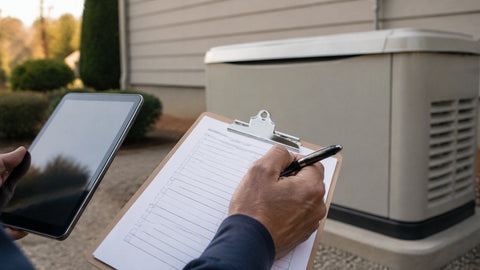
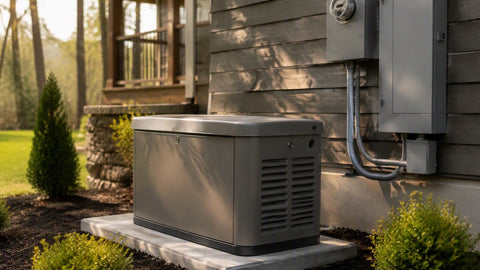
The permanently installed answer: a 10 to 26 kW air-cooled unit on a concrete or composite pad, plumbed into your natural gas or propane, paired with an automatic transfer switch that starts it within seconds of an outage whether you're home or in Maui. Installed cost runs $9,000 to $18,000 for most homes. Strengths: whole-house or managed-whole-house coverage, no refueling, weekly self-exercise, and genuinely seamless transfer. Weaknesses: cost, permitting, and gas service that must be verified — a 22 kW unit pulls 250 to 350 cubic feet of gas per hour at full load, and plenty of residential meters can't deliver that alongside a furnace and water heater without a utility upgrade. If you're weighing options, browse our standby home generators and the broader generator catalog, and our whole-house generator reviews break down specific models.
Battery Storage and Solar+Storage
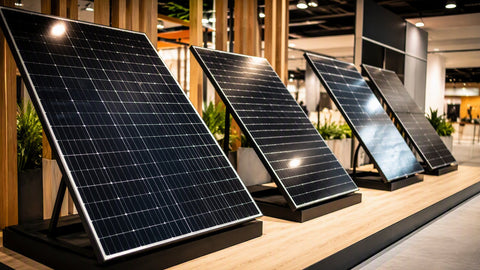
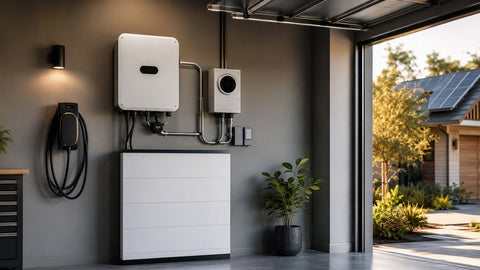
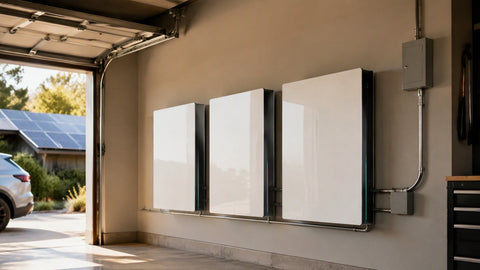
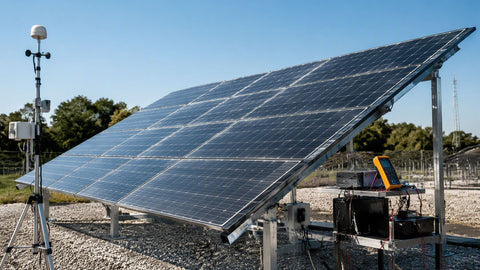
The silent, indoor-safe, zero-fuel option. A 10 to 15 kWh battery with a hybrid inverter covers a curated critical-loads panel — fridge, lights, internet, furnace blower, a few outlets — for 12 to 24 hours, and recharges from solar or the grid when it returns. Cost: $10,000 to $18,000 installed for the battery and integration. It will not run central air or electric heat for long, and multi-day outages without solar mean diminishing returns, but for short-duration outages it's the most civilized power you'll ever not notice. Our battery sizing calculator and battery buyer's guide walk the capacity math, and our runtime calculator article shows realistic endurance numbers.
| Type | Power range | All-in cost | Runtime limit | Best for |
|---|---|---|---|---|
| Portable gasoline | 2,000–12,000 W | $400–$1,500 | 6–12 hr per tank | Budget essentials, occasional outages |
| Inverter generator | 1,800–9,000 W | $700–$3,500 | 8–18 hr per tank | Electronics-sensitive loads, noise-restricted areas |
| Home standby (NG/LP) | 10–26 kW | $9,000–$18,000 installed | Unlimited (utility gas) | Whole-house, medical needs, frequent outages |
| Battery + hybrid inverter | 3–11.5 kW output | $10,000–$18,000 installed | 12–24 hr (critical loads) | Short outages, indoor install, solar pairing |
Fuel: What an Outage Actually Burns
Fuel is where generator shopping meets reality. A day's outage is a nuisance; a week is a logistics problem. Here's honest consumption at half load, which is where these machines live most of the time:
| Fuel / unit class | Consumption @ 50% load | 24-hour burn | Storage reality |
|---|---|---|---|
| Gasoline portable, 7,500 W | 0.5–0.75 gal/hr | 12–18 gal | Stale in 3–6 months; stabilizer extends to ~12 |
| Inverter, 2,200 W class | 0.1–0.15 gal/hr | 2.4–3.6 gal | Same gasoline limits; sips fuel |
| Propane standby, 22 kW | 2.1–2.8 gal/hr | 50–67 gal | A 500-gal tank (400 usable) lasts ~6–8 days |
| Natural gas standby, 22 kW | 180–280 cu ft/hr | 4,300–6,700 cu ft | Unlimited unless the utility goes down too |
| Diesel (larger liquid-cooled) | 0.8–1.2 gal/hr @ 20 kW | 19–29 gal | Stores 1–2 years treated; gels in deep cold |
The propane row surprises people: a 22 kW standby running half-loaded around the clock empties a 500-gallon tank in about a week. For context, a hurricane-week outage on propane is a $700–$1,000 fuel event at typical delivered prices. Natural gas dodges storage entirely but chains you to the utility's survival — after major earthquakes, gas gets shut off. Dual-fuel portables (gasoline/propane) buy flexibility at a 10 to 15 percent output penalty on propane, since propane carries about 73 percent of gasoline's energy per gallon-equivalent.
Getting Power Into the House: Transfer Equipment
Backfeeding through a dryer outlet with a suicide cord is how linemen get hurt and houses burn. Every legal connection isolates your home from the grid before generator power flows. Your three legitimate options:
| Method | Installed cost | How it works | Code notes |
|---|---|---|---|
| Breaker interlock kit | $150–$400 | Mechanical plate prevents main and generator breaker from being on together | Must be listed for your panel model; NEC 702.5 |
| Manual transfer switch (6–10 circuits) | $400–$900 | Flip pre-selected circuits from LINE to GEN | Curated circuits only; NEC 702 |
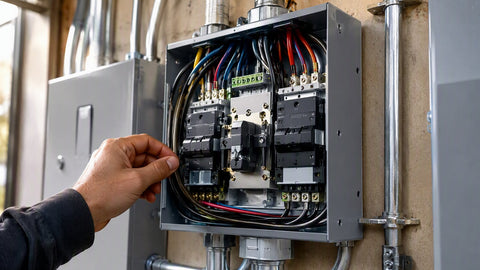
| Automatic transfer switch | Included with standby ($1,500+ alone) | Senses outage, starts generator, transfers in seconds | Service-rated ATS required ahead of main panel |
NEC Article 702 governs optional standby systems. The headline rules: transfer equipment must prevent inadvertent interconnection of sources (702.5), the system must be sized for the load it serves or employ load management (702.4), and standby generators don't carry the life-safety mandates of Article 700 emergency systems — but your AHJ may still require permits, inspections, and specific clearances. Our NEC compliance guide covers the general framework, and our deep dive on automatic transfer switches explains the sequence of operation in detail. Grounding and neutral switching get subtle with separately derived systems — the grounding and bonding guide is worth ten minutes before you sign a contract.
Installation, Maintenance, and Safety Reality

Portable units need no permit in most places, but the transfer equipment does. Standby installs involve a building permit, an electrical permit, often a plumbing or gas permit, setback rules (typically 5 feet from openings, 18 inches minimum from the structure, per manufacturer instructions which the code adopts), and sometimes an HOA. Budget four to eight weeks from contract to commissioning in normal times, longer after a named storm when every electrician in the county is booked.
Maintenance is not optional. Change oil on a portable every 50 to 100 hours, standby units annually or every 100 to 200 hours, exercise standby units weekly (they self-exercise), keep a battery tender on the start battery, and test under real load twice a year. I've revived exactly zero generators that sat three years with stale fuel and a dead battery — by the time you remember it exists, the carburetor is varnished and the outage has already started.
On safety: carbon monoxide is the killer. Never in a garage, never under a window, never in a basement — not with the door open, not "just for a minute." Portable units belong 20-plus feet from the structure, exhaust pointed away. Install CO detectors with battery backup on every floor; they're $25 and they're the cheapest line item in this entire guide.
A Worked Sizing Example, Start to Finish
Let's size a real house: 2,200 square feet, gas furnace, well, finished basement with a sump pump, one refrigerator plus a chest freezer, no central air backup desired. The simultaneous-winter-outage load list: furnace blower (800 running), well pump (1,000 running, 2,400 surge), refrigerator (300 running, 1,800 surge), chest freezer (250 running, 1,500 surge), sump pump (800 running, 2,400 surge), LED lighting (300), internet and device charging (150), TV (150). Running total: 3,750 watts. The largest single surge is a tie between the well pump and sump pump at 2,400 — add one: 6,150 watts of required capability. Add the 20 percent margin and you're at 7,400 watts, which means a 7,500-watt portable is the absolute floor and a 9,000–10,000-watt inverter or a 12–14 kW standby is the comfortable answer. Notice what changed the whole picture: the well pump. That same house on city water would need barely 5,000 watts. This is why the audit matters more than the marketing sticker, and why two houses with identical square footage can need generators twice apart in size.
Preparing Your Home Before the Outage
The generator is only half the system; the house has to be ready to receive it. Walk these steps before storm season, not during the storm. First, label your panel — every circuit, legibly — because transfer-switch selection and interlock installation both depend on knowing exactly what feeds what. Second, decide your critical circuits now: refrigerator, furnace, sump or well, one kitchen outlet, one lighting circuit per floor, internet. Third, if you're going portable, pre-stage the hardware: the transfer switch or interlock installed and inspected, the outdoor inlet box mounted, the cord set coiled in the garage, fuel stored in sealed cans with stabilizer and rotated twice a year. Fourth, test the whole chain twice a year — kill the main breaker, start the generator, transfer, and run the house for thirty minutes. You'll learn more in that half hour than from any manual: which breakers actually matter, whether the furnace board is happy with the power quality, and how loud your solution really is at 11 p.m. Fifth, brief the household. Every adult should know where the generator lives, how the transfer works, and the carbon-monoxide rules. In my shop we hand customers a laminated one-pager with exactly these steps, because the middle of an ice storm at 2 a.m. is the worst possible classroom. Finally, photograph your panel directory and generator setup on your phone — when you're standing in a dark garage, that photo is the manual you'll actually read.
Noise, Neighbors, and Local Rules
Open-frame portables run 70 to 80 decibels at 25 feet — loud enough to earn complaints and, in some municipalities and HOAs, fines. Inverter units at 50 to 60 dB are suburb-friendly; standby units typically run 60 to 70 dB at the property line and many jurisdictions require that to be measured at the lot line, which drives pad placement. Check your local noise ordinance and HOA covenants before the pad is poured; moving a 500-pound standby unit after the fact is a crane day, not a Saturday project.
Common Buying Mistakes I See Every Season
After years of post-mortems on failed purchases, the same five errors account for nearly all of them. First, buying on peak watts alone: a "9,500-watt" generator that only sustains 7,500 running watts is a 7,500-watt generator, and the marketing department knows you won't read the second number. Second, ignoring the starting surge of the single biggest motor — usually a well pump or AC compressor — and discovering at 11 p.m. that everything runs until that one load tries to start. Third, undersizing the gas line on a standby install: the generator gets blamed for low gas pressure that a proper load calc on the meter and piping would have caught before the pad was poured. Fourth, buying the generator and deferring the transfer equipment, which is how perfectly good machines spend their first year powering one extension cord through a cracked window. Fifth, and most expensive, buying for the outage you fear instead of the outages you actually get — a family that loses power twice a year for four hours does not need a $16,000 standby system, and a family that rode out a nine-day ice storm does not need to gamble on a $600 portable. Match the machine to the history, add margin for the future, and you'll spend exactly once.
What Should You Actually Buy?
Match the tier to your outage profile. One or two short outages a year, no critical medical loads: a 2,200-watt inverter generator and extension cords, or an interlock kit if you want hardwired convenience. Rural property with a well, or a household with medical equipment: a 7,500-watt-plus portable or inverter with a manual transfer switch at minimum — and honestly consider standby. Frequent multi-day outages, elderly occupants, or a home office that can't go dark: standby generator or solar-plus-storage, full stop. And if outages in your area are measured in hours rather than days, a battery system may beat combustion on silence, safety, and indoor comfort — run the numbers with the ROI calculator and the system sizing calculator before deciding.
Whatever tier you land on, buy the transfer equipment at the same time, from the same supplier, on the same order. The generator without the legal connection path is a very heavy lawn ornament.
Frequently Asked Questions
What size generator do I need to run my whole house?
Add the running watts of everything you'll operate simultaneously, then add the largest motor-starting surge. Most 2,000-square-foot homes land at 12–20 kW for genuine whole-house coverage including central air; homes that shed the AC, electric water heater, and range can live comfortably on 7.5–12 kW. A load audit beats any rule of thumb — fifteen minutes with your breaker panel and appliance nameplates answers the question definitively.
Can I plug a generator into a dryer outlet to power my house?
No. Backfeeding through a dryer outlet with a male-to-male cord is illegal, lethal to line workers, a fire hazard, and voids insurance. Use a listed interlock kit, a manual transfer switch, or an automatic transfer switch — all three isolate your home from the grid before generator power flows, per NEC 702.5.
How long will a portable generator run on a tank of gas?
Most 5,000–7,500-watt portables hold 5–8 gallons and burn 0.5–0.75 gallons per hour at half load, giving 8–12 hours per tank. Inverter models throttle down at light loads and can stretch a tank past 15 hours. Plan on refueling two to three times a day during continuous use, always with the engine off and cooled.
Is a standby generator worth the cost?
If your outages are multi-day events, anyone in the home depends on powered medical equipment, you have a well or sump pump protecting a finished basement, or you travel and need the house protected while away — yes. For occasional short outages, the $9,000–$18,000 installed cost buys convenience more than necessity, and a portable with a transfer switch covers the same essentials for a tenth of the money.
Can solar with batteries replace a generator?
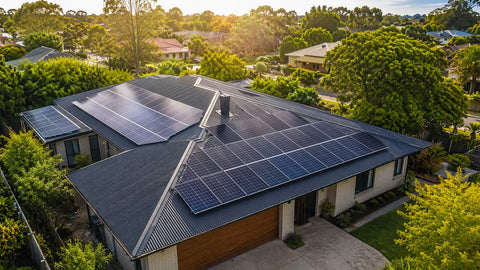
For outages under about 24 hours, a properly sized battery handles critical loads silently and safely. Multi-day outages require enough solar to recharge daily — roughly 5 kW of panels for a 10–15 kWh battery cycle — and central air conditioning remains impractical. Many homes now pair a modest battery with a small generator as a hybrid: the battery carries the nights, the generator tops it up.
Get the Sizing Right the First Time
Backup power is a system, not a SKU: loads, generator, fuel, transfer equipment, permits, and maintenance all have to agree with each other. Start with the load audit, pick the tier that matches your real outage history, and never skimp on the legal connection. Browse portable generators and standby options in our catalog, read the best backup generator roundup, and when you're ready for numbers on your specific panel and gas service, request a quote — our team sizes these systems every week, and we'd rather sell you the right one than the big one.