Wholesale solar panels are how serious installers, EPCs, and cost-conscious DIYers actually buy equipment. I've been on the distribution side of this business for years, and I can tell you the gap between paying retail and paying wholesale on a 30-panel residential job is often the difference between a project that pencils and one that doesn't. This guide walks through how wholesale solar buying really works — pricing mechanics, minimum orders, pallet math, electrical sizing for what you buy, freight and receiving, warranty realities, and the traps that catch first-time bulk buyers. Whether you're an installer building a repeatable supply chain, a developer pricing a commercial rooftop, or a homeowner planning one carefully executed DIY build, the mechanics below are the same ones we use to quote thousands of panels a year.

Understanding Wholesale Solar
What is Wholesale Solar?
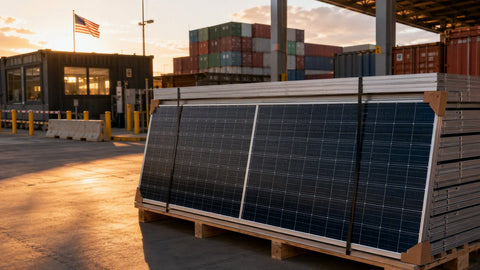
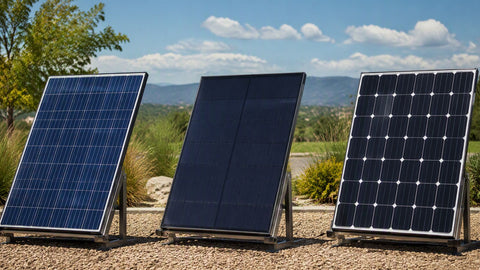
Wholesale solar means purchasing photovoltaic modules, inverters, racking, and balance-of-system components at distributor or manufacturer-direct pricing rather than retail. The wholesale channel serves installers, developers, resellers, and large-volume end users. Instead of buying one panel at a time from a retail listing, you're buying by the pallet or the truckload — typically 26 to 36 modules per pallet depending on panel dimensions — and the per-watt price drops accordingly.
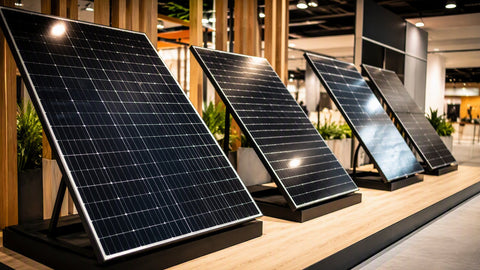
At Portlandia Electric Supply, our solar panel catalog spans everything from single 300–399W residential modules to full pallet deals and pallet bundles built specifically for volume buyers. The wholesale tier is where the economics of solar really start to work.
Benefits of Buying Wholesale Solar
- Lower cost per watt. Volume pricing routinely shaves 20–35% off per-module cost compared to one-off retail purchases.
- Matched modules. Panels from the same pallet come from the same production run, which means tighter binning tolerances and more uniform array performance.
- Freight efficiency. Shipping one pallet costs far less per panel than shipping five panels five times.
- Project-ready quantities. A single pallet of 31 panels at 405W each is a 12.5 kW array — a complete residential system in one delivery.
- Supply security. Locking in a full project's worth of modules at once protects you from mid-project price swings and stockouts.
Key Players in the Wholesale Solar Market
The wholesale solar ecosystem has four layers: manufacturers (the factories building modules), authorized distributors (who hold inventory and warranty relationships), brokers (who move surplus and spot-market equipment), and hybrid distributor-retailers like us who serve both contractors and informed end users. The cleanest buying experience comes from distributors who stock what they sell, can show you actual serial-numbered inventory, and stand behind manufacturer warranties. Our B2B procurement guide goes deeper on vetting supplier tiers.
Buying Solar Panels
How to Buy Solar Panels
The process is the same whether you're buying one panel or a container: size the system, pick the module class, verify electrical compatibility with your inverter, then source. The difference at wholesale volume is that mistakes multiply — a spec mismatch on one panel is annoying; on 31 panels it's a project delay. Start with your load or offset target, run it through the solar system calculator, and then match wattage class to your roof or ground area.
Factors to Consider When Buying Solar Panels
- Wattage class and cell count. Residential roofs typically take 108-half-cell modules in the 400–460W range; commercial and ground mounts favor 144-half-cell formats from 540W up.
- Efficiency. Modern mono PERC and TOPCon modules run 20–22.5% module efficiency. Higher efficiency buys you more watts per square foot of roof.
- Temperature coefficient. Look for Pmax coefficients around −0.30 to −0.35 %/°C. On hot roofs, that coefficient decides real-world summer output.
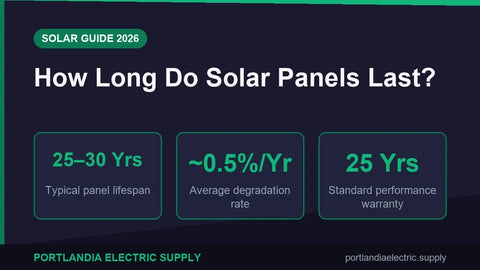
- Degradation warranty. First-year degradation of 1–2% and 0.4–0.55%/year thereafter is the current industry standard for Tier 1 mono modules.
- Mechanical load ratings. 5400 Pa front / 2400 Pa rear covers most snow and wind zones; check your local code requirements.
Real Numbers: What Wattage Class Buys You
| Panel Class | Typical Wattage | Cells | Approx. Efficiency | Best Use |
|---|---|---|---|---|
| Residential half-cell | 400–460W | 108 half-cut mono | 20.5–21.5% | Pitched residential roofs |
| Large residential / light commercial | 470–500W | 120–132 half-cut | 21.0–21.8% | Large roofs, carports |
| Commercial format | 540–600W | 144 half-cut mono | 21.0–21.6% | Flat roofs, ground mounts |
| Utility format | 650–700W+ | 132–144 large-format | 21.5–22.8% | Ground-mount, utility scale |
Browse current stock by class: 400–459W panels, 540W panels, and the 550–709W and 700W+ collections in the same catalog.
Best Places to Buy Solar Panels Wholesale
The reliable channels are: authorized stocking distributors, manufacturer-direct programs (usually reserved for installers with accounts), and vetted surplus dealers for discontinued-but-warrantied stock. I've watched buyers get burned on marketplace listings with panels that had no warranty backing, mismatched labels, or water-damaged junction boxes — the $12 per panel they saved cost them thousands in rework. Buy from suppliers who publish real inventory and pick up the phone.
Buying Solar Panels in Bulk
Advantages of Buying Solar Panels in Bulk
Bulk buying is where wholesale pricing gets serious. A pallet purchase drops you into the per-watt pricing tier that installers live in, and a full truckload drops you further. Beyond price, bulk buying guarantees module uniformity, simplifies permitting (one datasheet, one model number), and gives you spares from the same production lot for future service work.
How to Approach Bulk Purchases
Work the math backward from the array. Decide system size in kW, divide by module wattage, round up to a full pallet, and confirm the pallet count against your freight budget. Here's the pallet math for the most common classes we ship:
| Module Wattage | Panels per Pallet (typical) | kW per Pallet | String Layout at 10 Panels | Array Voc Check (10 × Voc × 1.14 cold factor) |
|---|---|---|---|---|
| 405W | 31 | 12.56 kW | 3 strings of 10 + 1 spare | 10 × 37.2V × 1.14 = 424.1V |
| 450W | 31 | 13.95 kW | 3 strings of 10 + 1 spare | 10 × 41.5V × 1.14 = 473.1V |
| 550W | 31 | 17.05 kW | 3 strings of 10 + 1 spare | 10 × 49.8V × 1.14 = 567.7V |
| 580W | 31 | 17.98 kW | 3 strings of 10 + 1 spare | 10 × 52.1V × 1.14 = 593.9V |
The voltage math matters: NEC 690.7 requires you to size strings for the coldest expected temperature using the module's Voc temperature coefficient, and the 1.14 factor above approximates a −10°C design condition for a module with a −0.28 %/°C Voc coefficient. Every string above stays under the 600V limit for residential systems even in harsh cold — but always verify against the actual datasheet for the module you buy.
Wholesale Buying vs. Retail Buying
| Factor | Retail Buying | Wholesale Buying |
|---|---|---|
| Typical quantity | 1–10 panels | Pallet (26–36) to truckload |
| Cost structure | Per-panel markup, parcel shipping | Per-watt volume pricing, LTL freight |
| Module matching | Mixed production lots possible | Same-lot, tight binning |
| Warranty handling | Varies by seller | Distributor-backed manufacturer warranty |
| Best for | Repairs, small off-grid, testing | Full systems, installers, developers |
Solar Panel Systems
Components of a Solar Panel System
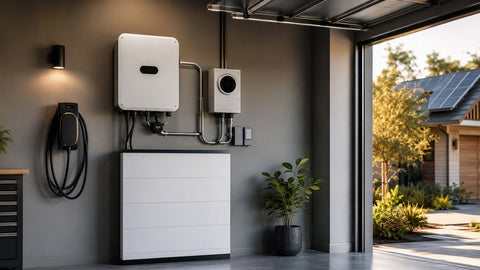
Panels are only 40–50% of a system bill. A complete grid-tied system also needs an inverter (string, microinverter, or hybrid), racking and attachment hardware, PV wire and connectors, rapid shutdown equipment where required, disconnects and overcurrent protection, and monitoring. Our system components overview breaks down each piece, and the solar panel kits buyer's guide shows pre-matched packages that take the compatibility guesswork out.
| Formula Component | Explanation |
|---|---|
| Total Energy Consumption (kWh/day) | ∑ (Power rating of device in watts × hours used per day) ÷ 1000 |
| Required Array Size (kW) | Daily kWh needed ÷ (peak sun hours × system efficiency factor, typically 0.80–0.85) |
| Panel Count | Required array watts ÷ module wattage, rounded up |
Worked example: a home using 40 kWh/day in a 5.0 peak-sun-hour region needs 40 ÷ (5.0 × 0.82) = 9.76 kW of array. At 405W per panel that's 9,756 ÷ 405 = 24.1, so 25 panels — conveniently less than one 31-panel pallet, leaving six spares from the same lot.
Installation Considerations for Solar Systems
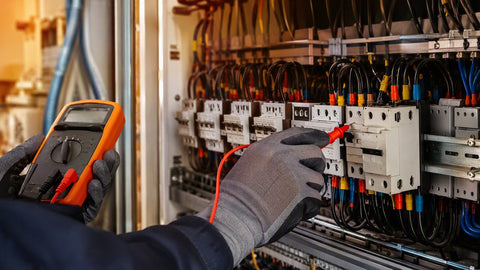
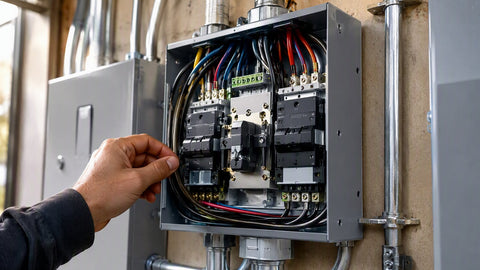
Bulk-bought systems still live or die on the install. Wire sizing follows NEC 310.16: for example, a string with 11.2A Isc combines into 22.4A for two strings, and NEC 690.8 applies the 125% continuous multiplier — 22.4 × 1.25 = 28A of required ampacity. That lands you on 10 AWG copper at 75°C (35A ampacity) protected by a 30A breaker from the NEC 240.6 standard size ladder. I've rejected more than one DIY array design where the buyer sized wire to Imp instead of Isc and ended up with undersized conductors. For wiring layout, see our panel wiring basics and the NEC wire sizing guide.
Choosing the Right Solar Equipment
Match modules to inverter architecture before you buy the pallet. String inverters want uniform strings of 8–14 modules; microinverters need modules whose voltage and current windows fit the micro's input specs; hybrid inverters add battery constraints. Our inverter catalog and the best panels of 2026 roundup compare the current module options side by side.
Finding Reliable Suppliers
How to Identify Trusted Solar Panel Suppliers
- They publish live inventory with real model numbers and datasheets.
- They're authorized for the brands they sell, or transparent about surplus provenance.
- Freight quotes come with liftgate, residential delivery, and damage-claim terms in writing.
- Warranty claims route through them with defined turnaround times.
- They answer technical questions — string sizing, rapid shutdown compatibility, racking loads — before the sale.
Evaluating Supplier Warranties
Two warranties matter: the product workmanship warranty (12–25 years on current Tier 1 modules) and the linear performance warranty (typically 84–87.4% of nameplate at year 25). Run the degradation math before you sign: a module warranted at 0.55%/year after a 2% first-year loss still delivers roughly 0.98 × (1 − 0.0055 × 24) = 85.1% of nameplate at year 25, while a premium 0.40%/year module holds 0.98 × (1 − 0.004 × 24) = 88.6%. Across a 12.5 kW pallet, that 3.5-point gap is more than 400W of guaranteed output two decades out — real energy you're either buying or giving away. At wholesale volume, confirm the warranty is transferable to your end customer if you're reselling, and get the claim process in writing. For export or large commercial buys, our container wholesale supply guide covers documentation, and commercial installation costs frames the full project budget. When you're ready to price a pallet, start in the panel catalog or reach out to us directly at Portlandia Electric Supply.
Freight, Delivery, and Receiving a Pallet of Panels

Wholesale buying lives and dies at the loading dock. A pallet of 31 large-format modules weighs 1,500–2,000 lb and ships LTL freight, not parcel. When you place a bulk order, get these items in writing before the truck rolls: liftgate service (if you don't have a dock or forklift), residential versus commercial delivery designation, a delivery appointment window, and the carrier's damage-claim procedure. I've personally inspected deliveries where the driver wanted a signature before shrink-wrap came off — never sign clean. Note any visible damage on the bill of lading before the driver leaves, photograph the pallet from all four sides, and open the wrap the same day.
Receiving Inspection Checklist
- Count cartons against the packing slip before signing.
- Check every carton corner for crush damage and every pallet rail for forklift punctures.
- Record serial numbers as you unbox — they matter for warranty claims and production-lot matching.
- Flash-test or at minimum open-circuit voltage test any module from a damaged carton before installing it.
- Store uninstalled pallets indoors, flat, and out of standing water.
New, Surplus, and Secondary-Market Panels
The wholesale channel includes three grades of inventory, and knowing which you're buying changes your risk profile:
| Inventory Grade | Warranty | Typical Discount vs. New | Risk Factors | Best For |
|---|---|---|---|---|
| Factory-new, current production | Full manufacturer product + performance warranty | Baseline wholesale price | Lowest | Permitted grid-tie systems, financed projects |
| Surplus / overstock (new, discontinued model) | Usually full warranty if distributor-authorized | 10–25% | Model may be unreplaceable later — buy spares | Budget builds, off-grid, expansions |
| Secondary market (used, decommissioned, blemished) | Often none or seller-only | 40–70% | Unknown history, degradation, possible microcracks | Experienced buyers, non-critical off-grid, testing |
My standing advice: if the system will be inspected, permitted, or financed, buy factory-new or authorized surplus with warranty paperwork. The secondary market is legitimate for the right buyer, but it's a place where I've seen modules with 15 years of desert service sold as "lightly used." Assume nothing; test everything.
Cost Modeling: What Wholesale Actually Saves
Panel prices move, so treat these as structure rather than gospel — but the ratio between channels has been stable for years. On a typical 12.5 kW residential pallet purchase:
| Line Item | Retail Channel | Wholesale Pallet Channel |
|---|---|---|
| Module cost basis | Per-panel retail pricing | Per-watt volume pricing (20–35% lower) |
| Shipping | Parcel, per-box surcharges | One LTL freight charge for the pallet |
| Sales effort | Transaction-only | Account support, spec review, freight coordination |
| Total landed cost on 31 × 405W | Highest per watt | Lowest per watt, spares included from same lot |
Run your own project economics with the solar ROI calculator — at wholesale module pricing, payback periods on self-installed systems commonly compress by a year or more versus retail-sourced equipment. And if the end goal is whole-home offset, our article on whether solar can power a whole house helps set the system size before you ever price a pallet.
Timing, Tax Credits, and Procurement Strategy
Wholesale buyers think in quarters, not days. Module pricing has historically moved with polysilicon and cell markets, tariff decisions, and shipping rates. Three procurement habits separate smooth projects from expensive ones:
- Buy the full bill of materials together. Modules, racking, inverter, and wire from one purchase order means one freight plan and one compatibility review.
- Lock pricing before permit approval when lead times are long. Most distributors will hold a quoted price for a defined window; get the window in writing.
- Confirm incentive eligibility. Domestic content requirements and safe-harbor rules can affect which modules qualify for the best tax treatment on commercial projects. Our state incentives page is the starting point for what's available where you build.
On the residential side, the federal credit situation has shifted more than once in recent years, so verify current rules with your tax professional before you size a purchase around an incentive. What hasn't changed is the math: wholesale equipment cost is the single biggest lever a buyer controls, and it pulls payback forward regardless of what incentives do.
Common Wholesale Buying Mistakes (And How to Avoid Them)
After years of supplying wholesale buyers, the same handful of mistakes show up again and again. Every one of them is avoidable:
- Buying wattage, not watts. A "12 kW system" of 400W panels is 30 panels; of 550W panels it's 22. Buyers who shop by system size without locking the module first end up redesigning strings mid-order. Pick the exact module model, then count.
- Ignoring the inverter window. I've had buyers try to pair 550W commercial modules with microinverters rated for smaller residential formats. Check the inverter's maximum input current (Isc) and voltage against the module datasheet before the pallet ships, not after.
- Underestimating freight logistics. No forklift, no dock, no plan — a 1,700 lb pallet sitting in a driveway while you scramble is a bad afternoon. Arrange the liftgate and a place to land the pallet before delivery day.
- Skipping the spare. Modules get damaged in handling and occasionally in service. Ordering one or two extra panels from the same production lot costs little now and saves a mismatched replacement hunt later.
- Chasing the absolute lowest price. The cheapest listing is often unlisted risk — no warranty path, unknown storage history, no technical support. A few cents per watt of "savings" can evaporate in one freight claim dispute.
How We Handle Wholesale Orders at PES
Our wholesale workflow is built around the buyer's project, not the other way around. You tell us the system size, module class, and delivery constraints; we quote pallet pricing with freight, confirm stock and production lot, review string compatibility if you want a second set of eyes, and coordinate delivery with appointment and liftgate as needed. Contractors running repeat volume can standardize on modules from our commercial and residential collections, and the mounting systems comparison pairs the right racking with the pallet.
The bottom line on wholesale solar: the equipment is the same hardware the installers use, the pricing is dramatically better at volume, and the only real barriers are planning — freight, storage, electrical compatibility, and a supplier who answers the phone. Handle those four and wholesale buying is the single smartest move in any solar project budget.
Frequently Asked Questions
How many solar panels come on a pallet?
Most residential-format modules (400–460W) ship 31 per pallet. Large commercial formats run 26–36 per pallet depending on dimensions. A 31-panel pallet of 405W modules delivers 12.56 kW of nameplate capacity in one shipment.
Is it cheaper to buy solar panels wholesale?
Yes, substantially. Volume pricing plus LTL freight typically saves 20–35% per watt versus retail per-panel purchases, and the savings scale with quantity up to full truckload pricing.
Can a homeowner buy solar panels at wholesale prices?
Absolutely. Wholesale channels aren't restricted to contractors. A DIY homeowner buying a pallet for a ground mount or a full roof gets the same per-watt pricing as an installer — you just need to plan for freight delivery and have your electrical design reviewed by a licensed electrician before energizing.
What size wire and breaker do I need for a two-string array?
For two strings at 11.2A Isc each: 2 × 11.2A × 1.25 (NEC 690.8 continuous multiplier) = 28A required ampacity. NEC 310.16 gives 10 AWG copper 35A at 75°C, and NEC 240.6 standard sizes put you on a 30A breaker. Always verify against your actual module datasheet.
Do wholesale solar panels come with warranties?
From authorized distributors, yes — full manufacturer product and performance warranties apply. From surplus or broker channels, warranty status varies by lot, so confirm in writing before you buy.
How do I know how many panels I need?
Divide your daily kWh usage by (peak sun hours × 0.82), then divide by module wattage. A 40 kWh/day home in a 5-sun-hour region needs about 25 panels at 405W. Our system calculator automates this.