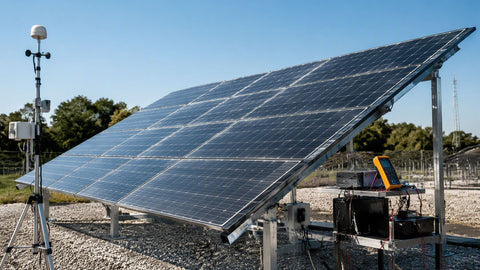
Sustainable Energy Solutions: Modular Energy Systems
How stackable solar, storage, and inverter building blocks let you size for today and expand tomorrow — with the NEC math that keeps every stage code-compliant.

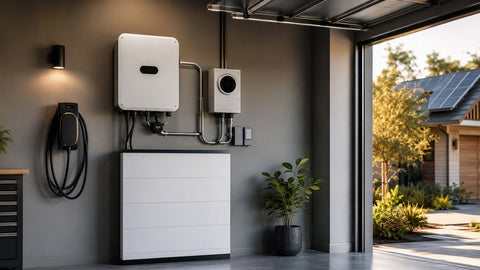
The biggest shift in residential and light-commercial energy design over the last five years isn't a chemistry or a panel technology — it's an architecture. Modular energy systems replace the old "size it once, live with it for 25 years" philosophy with stackable building blocks: batteries that grow five kilowatt-hours at a time, hybrid inverters that parallel for more output, and PV arrays designed in sub-arrays you can extend without re-engineering the whole roof. A household that starts with 8 kW of solar and one 5 kWh battery can add a second battery when the EV arrives, a third when the heat pump replaces the furnace, and a second inverter when the workshop goes in — all on the same electrical backbone.
That flexibility only works if each stage is designed correctly on paper first. This guide covers the components, the sizing math, the code requirements (NEC 690.7, 690.8, 705.12, and 706), real cost structures, and the mistakes we see when modular systems get assembled without a growth plan.
Three properties separate a genuinely modular system from a fixed one with good marketing:
1. Granular capacity blocks. Storage comes in increments small enough to match real load growth — typically 3.8 to 5.12 kWh per battery module in server-rack or wall-mount form factors. Adding capacity means sliding in another module and updating BMS settings, not replacing the bank.
2. Parallelable power conversion. Hybrid inverters in the 8–12 kW class (the Sol-Ark, EG4, and OutBack Radian families) support stacking two to twelve units for split-phase or three-phase output. The first inverter is sized for today's loads; the second arrives with tomorrow's.
3. Extensible PV input. Multiple MPPT inputs with headroom — both in voltage and in breaker space — so array expansion means adding strings, not replacing equipment. This is where most "modular" claims fall apart in practice, and where the NEC math below earns its keep.
| Layer | Modular Building Block | Typical Increment | Expansion Trigger |
|---|---|---|---|
| Generation | PV sub-array per MPPT input | 3–6 kW per string | New roof face, ground-mount extension, EV purchase |
| Storage | 48V LFP battery module | 5.12 kWh (100Ah class) | Longer outage coverage, added night loads |
| Conversion | Hybrid inverter, stackable | 8–12 kW per unit | Whole-home backup upgrade, workshop or ADU |
| Control | BMS + energy management gateway | Firmware/config update | Rate-plan change, demand-charge management |
| Distribution | Load center with spare breaker positions | 2–4 positions reserved | Every expansion stage above |
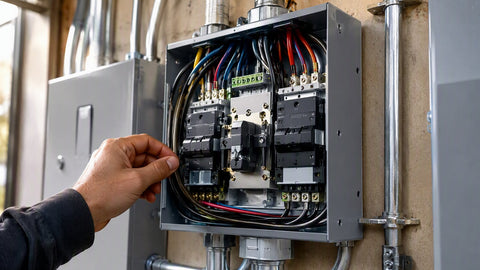
The last row is the one people skip. A modular system with a full panel isn't modular at all. We spec a 200A, 40-space load center on any new install with growth ambitions, and our NEC code compliance guide explains why breaker-space and busbar headroom are design decisions, not afterthoughts.
Modular design fails when stage one is undersized at the backbone level. Run these three calculations before buying anything, using the full build-out you expect in five years — not just day-one loads.
PV string voltage (NEC 690.7). Crystalline module voltage rises in cold weather, so maximum system voltage must be corrected by the Table 690.7(A) factor for your design minimum temperature: 1.12 at −1 to −5°C, 1.18 at −16 to −20°C, up to 1.25 at −36 to −40°C. A 10-panel string of 45.6V Voc modules produces 456V at STC but 538V after a 1.18 correction — fine on a 600V residential inverter, with 62V to spare. Design every future string slot with the same discipline.
Inverter and conductor current (NEC 690.8). Size circuit conductors and overcurrent devices at 125% of the inverter's continuous output current. An 8 kW hybrid inverter delivering 33.3A at 240V needs conductors and a breaker rated for at least 41.7A — landing on a 50A breaker from the NEC 240.6(A) standard ratings and 8 AWG copper (50A at 75°C per Table 310.16). If the five-year plan includes a second stacked inverter, pull the larger feeder now: two stacked units at 66.6A continuous need 83.3A capacity, which is 4 AWG copper and a 90A breaker.
Backfeed limits (NEC 705.12). The familiar 120% rule caps breaker-fed solar backfeed on a load center busbar: a 200A panel with a 200A main accepts up to 40A of backfed breakers under 705.12(B)(2)(3). A single 8 kW inverter on a 40A breaker consumes the entire allowance. Plan the second inverter around a supply-side tap or a panel with a 225A bus — decide at stage one, because retrofitting a service later costs ten times the breaker you saved.
| Expansion Stage | Continuous AC Current @240V | NEC 690.8 ×1.25 | Breaker (240.6(A)) | Copper @75°C (310.16) |
|---|---|---|---|---|
| One 8 kW hybrid inverter | 33.3A | 41.7A | 50A | 8 AWG |
| Two stacked 8 kW units | 66.6A | 83.3A | 90A | 4 AWG |
| Three stacked 8 kW units | 100.0A | 125.0A | 125A | 2 AWG |
| One 12 kW unit | 50.0A | 62.5A | 70A | 6 AWG |
| Two stacked 12 kW units | 100.0A | 125.0A | 125A | 2 AWG |
Pair this with the inverter sizing calculator for your exact equipment, and cross-check conductor choices against Table 310.16 in the NEC guide linked above.
Battery storage is where the modular philosophy delivers the clearest dollars. A fixed 13.5 kWh all-in-one battery forces a single bet on your future consumption. A rack of 5.12 kWh LFP modules lets the bank grow with the household — and LFP chemistry tolerates partial state-of-charge operation that would age lead-acid or stress NMC packs. A practical sizing framework:
| Storage Goal | Nightly Load Profile | Usable kWh Needed | 5.12 kWh Modules (90% DoD) |
|---|---|---|---|
| Critical loads only (fridge, lights, internet, furnace fan) | ~8 kWh/night | 8.9 kWh | 2 modules (10.2 kWh nominal) |
| Critical loads + kitchen circuits | ~14 kWh/night | 15.6 kWh | 4 modules (20.5 kWh nominal) |
| Whole home minus central AC | ~22 kWh/night | 24.4 kWh | 5 modules (25.6 kWh nominal) |
| Whole home with managed AC + EV top-up | ~35 kWh/night | 38.9 kWh | 8 modules (41.0 kWh nominal) |
Usable kWh = nightly load ÷ 0.90 depth of discharge ÷ 0.95 round-trip efficiency buffer. The battery sizing calculator and the deeper worksheet solar battery sizing for off-grid living walk through the same arithmetic with your actual load list.
NEC Article 706 governs the storage side: listed equipment (UL 9540 for the system, UL 9540A test data for thermal runaway behavior), working clearances, disconnects, and labeling. Modular racks simplify compliance because each added module sits inside the original listing — versus field-built banks where every expansion reopens the approval question. The brain that keeps stacked modules balanced is the BMS; our explainer on battery management systems covers why the BMS, not the cell, usually determines real-world lifespan. For the full system-level picture, see what a battery energy storage system actually is.
Modular systems carry a modest first-stage premium — the oversized load center, the growth-capable inverter platform, and per-module battery pricing that's slightly above a single monolithic pack per kWh. The payback comes at expansion time, when adding capacity costs a module and an hour of labor instead of a redesign.
| Cost Element | Monolithic Approach | Modular Approach | Net Difference Over 10 Years |
|---|---|---|---|
| Stage-one equipment (8 kW + 10 kWh) | ~3–5% cheaper hardware | ~3–5% premium for headroom | Modular behind by a few hundred dollars |
| Expansion: +10 kWh storage | Second full battery + new inverter wiring | Two rack modules + config update | Modular ahead $1,500–$3,000 in labor and equipment |
| Expansion: second inverter | Panel upgrade + new feeders likely | Pre-pulled feeders + spare breaker space | Modular ahead $1,200–$2,500 |
| Service event at year 7 | Full-system downtime for one failure | Failed module isolated, rest of bank runs | Modular ahead on avoided downtime |
Run your own numbers with the solar ROI calculator, and check incentives by state — several state storage rebates pay per kWh installed, which means modular expansions keep earning incentives at each stage.
The inverter platform is the spine of a modular system, and this choice locks in your expansion path more than any other. Evaluate on stacking capability, PV input headroom, and battery-agnostic communication — not just day-one watts.
| Platform Class | Unit Size | Stacking | Best Modular Fit |
|---|---|---|---|
| All-in-one hybrid (EG4 18kPV class) | 12 kW, 48V battery bus | Up to 6–10 units paralleled | Homes planning whole-home backup in phases |
| Modular hybrid (Sol-Ark 15K class) | 15 kW, wide battery compatibility | Stacked split-phase or three-phase | Light commercial and large residential |
| Off-grid inverter-charger (OutBack Radian class) | 8–9 kW per unit | 2–10 units, split or three-phase | Off-grid and resilience-first builds |
| Microinverter + AC-coupled battery | Per-panel conversion | Add panels and batteries independently | Complex roofs, incremental PV growth |
Battery platform choice follows the inverter's communication protocol — CAN-bus or RS485 handshake between BMS and inverter is what unlocks closed-loop charging, accurate state-of-charge reporting, and warranty-safe operation. Mixing a battery that only "voltage-matches" with an inverter expecting a data handshake is the single most common modular mistake we troubleshoot; the system works, but it charges blind. Match protocols first, price second. Our EG4 18kPV system overview and the Sol-Ark brand guide show how two leading platforms handle this handshake.
Three Build-Out Paths We See Every Week

Path A: The Phased Backup Home. Stage one: 8 kW PV, one hybrid inverter, two battery modules (10.2 kWh) covering fridge, furnace fan, lights, and internet through outages. Stage two (year two, EV arrives): four more modules (30.7 kWh total) plus a 50A EV circuit. Stage three (year four, heat pump conversion): second inverter stacked, third PV sub-array on the garage. Total added cost spread over four years instead of one oversized day-one bet.
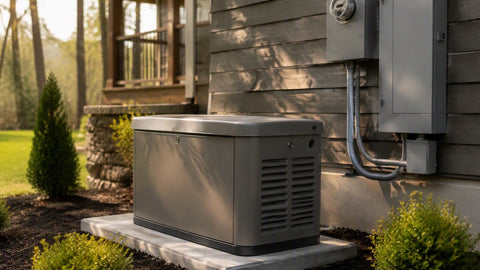
Path B: The Off-Grid Homestead. Stage one is sized for survival loads with a generator input for deep-winter charging. Storage starts at 20.5 kWh because there's no grid to borrow from. Expansion follows the seasons: a ground-mount array extension before the second winter, a second inverter-charger when the shop building goes up. Off-grid modular design lives and dies on the battery bank's ability to absorb the coldest-week load at reduced solar harvest — our whole-house generator guide covers sizing the backup charging source that keeps the modular bank healthy.
Path C: The Light-Commercial Suite. A strip-mall suite or small workshop starts with 15 kW of PV and demand-charge management: the battery shaves the 15-minute demand peaks that drive commercial tariffs. Expansion is driven by the utility bill, not lifestyle — when demand charges cross a threshold, two more modules pay for themselves inside three years of shaved peaks. Commercial operators should model this with interval data from the utility, not rules of thumb.
The Three Modular Mistakes That Cost Real Money
1. Filling the load center at stage one — expansion then requires a panel change, not a breaker. 2. Mixing battery modules of different ages or firmware in one bank without verifying the BMS supports it — imbalance currents shorten the whole rack's life. 3. Buying an inverter whose listing doesn't cover paralleling — AHJs inspect the listing, not the brochure, and an unlisted stack fails inspection.
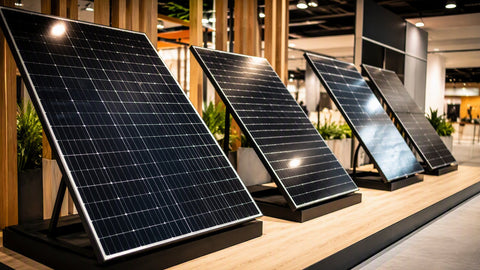
A modular system produces more data than a fixed one, and that data is your early-warning system. At the panel level, monthly production compared against the same month last year exposes degradation or shading long before the utility bill does — modern mono modules should degrade around 0.4–0.55% per year after a 1–2% first-year step, so a year-over-year drop beyond 2% warrants investigation, not a shrug. At the battery level, watch per-module voltage spread: a healthy LFP rack holds modules within roughly 50mV of each other at rest, and a drifting module is a warranty conversation to start early, while the manufacturer still has stock of your revision.
Physical maintenance is genuinely light but not zero. Torque-check accessible DC and AC terminations at the one-year mark (thermal cycling loosens lugs), keep inverter intake filters and heatsink fins clear of dust and mud-dauber nests, and exercise the system quarterly by running a deliberate backup-mode test: flip the main, watch the transfer happen in the milliseconds the spec sheet promises, and confirm every backed-up circuit actually carries. A backup system you've never tested is a hope, not a system. Firmware deserves the same discipline — hybrid inverter and BMS updates routinely fix charge-curve bugs and add grid-support features, but apply them one component at a time with the release notes read, because a half-updated stack can drop its CAN handshake until everything matches. The solar maintenance guide has the seasonal checklist we hand every customer, and the battery installation guide covers clearance, ventilation, and torque specs for the storage layer.
Budget-wise, plan ownership costs at roughly 1% of system cost per year averaged over the first decade — mostly monitoring subscriptions, occasional service calls, and one inverter fan or relay replacement along the way. Modular architecture keeps each of those events small: a failed module or a single inverter swap is a line item, not a catastrophe.
What We've Learned Building Modular Systems That Actually Expand
- I've torn out exactly one "modular" system in my career, and it failed because the original installer filled every breaker space in the panel — the homeowner's expansion quote came back at $6,000 for what should have been a $2,200 battery add.
- My rule of thumb: pull the feeder for the inverter you'll own in five years, not the one you're buying today — copper is cheap in the rough-in and brutal as a retrofit.
- On a three-module LFP rack we commissioned last fall, the BMS flagged one module drifting 40mV off the pack within the first month; because it was modular, we swapped that single module under warranty in 40 minutes instead of decommissioning a monolithic battery for weeks.
- We always photograph the one-line diagram and tape it inside the load-center door — the tech who expands your system in year six will silently thank you.
A modular energy system succeeds on documentation and headroom: a one-line diagram that shows the build-out path, a load center with space and busbar capacity, strings designed under NEC 690.7 with expansion slots on every MPPT, conductors sized to NEC 690.8 for the future stack, and a storage bank on a listed platform with a competent BMS. Get those five right and the system grows with your life — the EV, the heat pump, the workshop, the ADU — without a single dumpster full of replaced equipment. Sustainability, in the end, is as much about not wasting hardware as it is about harvesting sunlight: the greenest inverter is the one you never have to rip out, and the greenest battery bank is the one that absorbed three expansions without sending a single module to recycling before its time. That is the quiet environmental case for modular design, and it compounds alongside the financial one. Start the component shortlist with our hybrid inverter lineup, modular battery storage, and solar panels, or talk to our desk through PES PowerLink if you're a contractor speccing these at volume.
What is a modular energy system?
A modular energy system is built from stackable blocks — PV sub-arrays, 5 kWh-class battery modules, and parallelable hybrid inverters — so capacity can grow in stages without replacing the core equipment. The architecture requires upfront headroom in the load center, feeders, and inverter platform to work as intended.
How much battery storage do I need to start?
Divide your nightly kWh load by 0.90 depth of discharge and a 0.95 efficiency buffer. Critical-loads-only households typically need two 5.12 kWh modules; whole-home coverage without central AC takes five; adding managed AC and EV charging pushes toward eight. Expand later by adding modules, not replacing the bank.
How does the NEC 120% rule limit a modular solar system?
NEC 705.12 caps backfed breaker capacity on a load center at 120% of busbar rating minus the main breaker. A 200A panel with a 200A main accepts only 40A of solar backfeed — enough for one 8 kW inverter. Planning for stacked inverters requires a supply-side tap or a larger busbar decided at stage one.
Why size conductors for future inverters instead of today's?
NEC 690.8 requires 125% continuous sizing: one 8 kW inverter needs 41.7A capacity (50A breaker, 8 AWG copper), while two stacked units need 83.3A (90A breaker, 4 AWG). Pulling the larger feeder during initial construction costs a fraction of retrofitting it through finished walls later.
Are modular batteries as safe as all-in-one systems?
Yes, when the rack and modules carry UL 9540 system listing with UL 9540A thermal-runaway test data, which NEC Article 706 and local AHJs look for. Listed modular platforms keep expansions inside the original certification, while field-assembled banks can reopen approval questions at every stage.
Does expanding a system later reset my incentives?
Generally no — many state storage rebates pay per kWh installed, so each expansion stage earns its own incentive. Federal treatment depends on project type and timing; commercial projects follow Section 48/48E rules while the residential Section 25D credit terminated after December 31, 2025. Confirm current programs before each stage.
- Solar System Calculator
- Battery Sizing Calculator
- Inverter Sizing Calculator
- Solar ROI Calculator
- What Is a Battery Energy Storage System?
- Battery Management Systems Explained
- MPPT vs PWM Charge Controllers
- How Hybrid Inverters Work
- Solar Installation Guide
- NEC Code Compliance Guide
- Solar Incentives by State
PES Supply carries 80,000+ products from 300+ manufacturers. One PO, one invoice, every trade covered.
Need help sizing? Our team can calculate loads, select equipment, and source everything from one PO.
Call (502) 790-0600