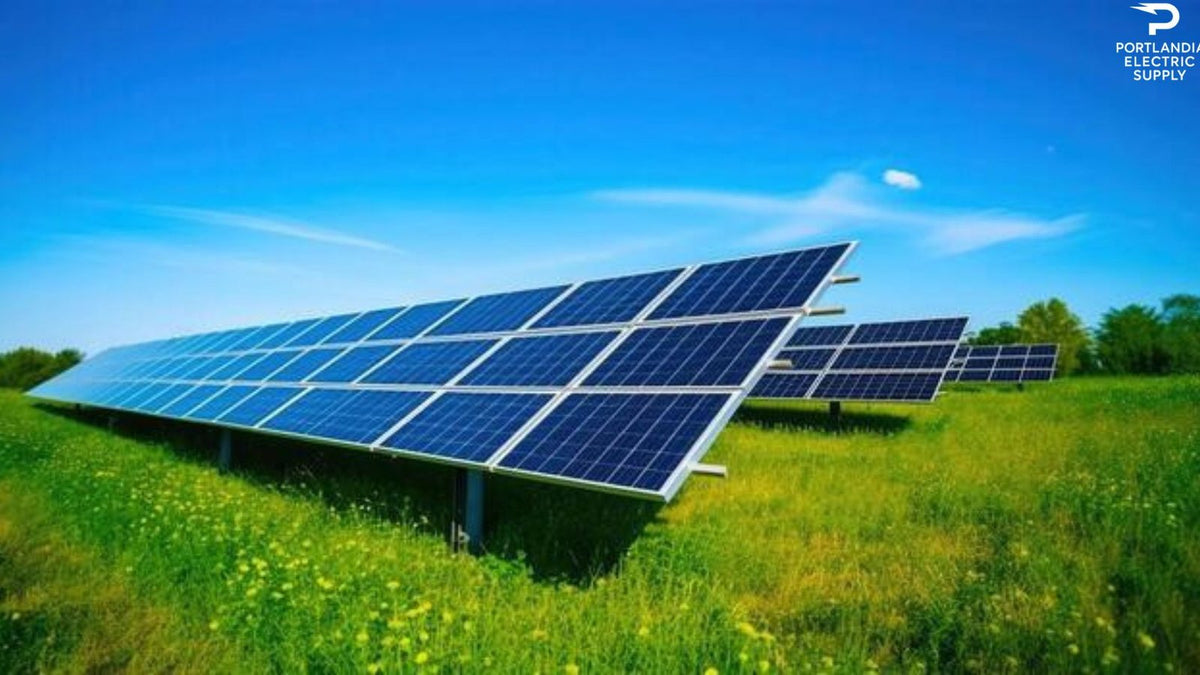
A 20 kW solar system is where residential ends and light commercial begins. It is roughly double the size of the average American home installation, it needs 1,100 to 1,400 square feet of roof or ground, and in 2026 it produces somewhere between 24,000 and 34,000 kWh a year depending on where it sits. Whether it is worth it depends on three numbers you can verify in an afternoon: what you pay for electricity, how much of that electricity you can consume when the sun is out, and what incentives still apply to your situation after the federal rule changes that took effect at the end of 2025.

This guide runs the real math — production, cost, payback, and the electrical realities of pushing 20 kW into a building service — so you can decide with numbers instead of a sales pitch. If you want to model your own bills, start with our solar ROI calculator and the system size calculator.
What a 20 kW System Actually Produces
The production formula is simple: system size × peak sun hours × 365 × system efficiency (derate factor). Using a realistic 0.80 derate (inverter losses, temperature, soiling, wiring):
| Location Class | Avg. Peak Sun Hours | Daily Production | Annual Production | Math Check |
|---|---|---|---|---|
| Southwest (Phoenix, Las Vegas) | 5.8–6.5 | 93–104 kWh | 33,900–38,000 kWh | 20 × 6.0 × 365 × 0.80 = 35,040 kWh |
| South / Southeast (Dallas, Atlanta) | 4.8–5.4 | 77–86 kWh | 28,000–31,500 kWh | 20 × 5.1 × 365 × 0.80 = 29,784 kWh |
| Mid-Atlantic / Midwest (Columbus, Richmond) | 4.0–4.5 | 64–72 kWh | 23,400–26,300 kWh | 20 × 4.2 × 365 × 0.80 = 24,528 kWh |
| Northeast / Pacific NW (Albany, Seattle) | 3.2–3.8 | 51–61 kWh | 18,700–22,200 kWh | 20 × 3.5 × 365 × 0.80 = 20,440 kWh |
Seasonal shape matters as much as the annual total. Existing field data from comparable arrays shows the swing clearly:
|
Month |
Average Daily kWh |
|
January |
70 |
|
April |
90 |
|
July |
100 |
|
October |
85 |
July produces roughly 43% more than January in this sample (100 vs. 70 kWh/day). If your heavy loads are summer air conditioning, that curve works for you. If your business peaks in winter — greenhouses, some manufacturing — model month by month before committing.
Who a 20 kW System Fits
The honest filter: 20 kW fits properties using roughly 2,000 to 2,800 kWh per month in average-sun regions, or up to 3,200 kWh per month in the Southwest. That means big homes with pools and multiple HVAC systems, small retail, offices, houses of worship, agricultural operations, and light industrial shops. For a sense of scale, our article on how big a 25 kW solar array is covers the next size up, and how many watts it takes to power a home explains why most single-family homes sit closer to the 8–12 kW range.
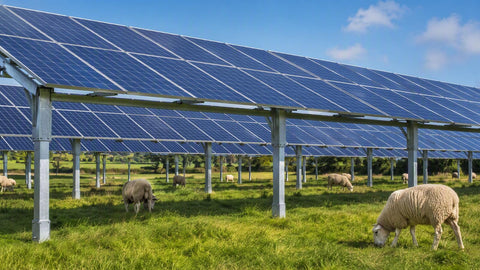
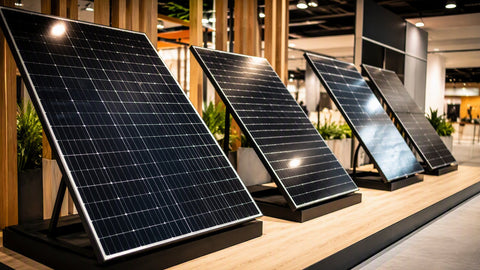
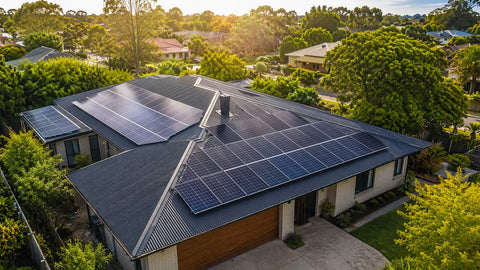
Roof and land requirements: with modern 430–450 W panels, 20 kW is 45 to 47 modules; with 550 W commercial-format modules, about 36 to 37. Figure 18 to 20 square feet per installed module including row spacing, so 850 to 1,000 square feet of usable roof with 450 W modules — before you subtract fire setbacks and obstructions. A ground mount needs about a tenth of an acre.
What It Costs in 2026
Module prices have kept falling, but labor, permitting, and electrical gear have not. Current all-in pricing for a professionally installed 20 kW system runs $2.30 to $3.00 per watt — $46,000 to $60,000 before incentives, with ground mounts and complex roofs at the top of the band. The hardware breakdown our estimators use:
|
Item |
Estimated Cost (USD) |
|
Solar panels |
$10,000 - $14,000 |
|
Inverter |
$1,500 - $2,500 |
|
Mounting hardware |
$1,000 - $1,500 |
|
Wiring and electrical |
$800 - $1,200 |
|
Labor |
$3,000 - $4,000 |
|
Permits and inspections |
$300 - $700 |
|
Total |
$16,600 - $23,900 |
Those equipment subtotals ($16,600–$23,900) cover the physical kit; the gap to the $46,000–$60,000 installed figure is labor, design, permitting, overhead, and margin. DIY-capable buyers can close much of that gap with a pre-engineered package from our complete solar kits or by sourcing panels and inverters directly — but read the electrical section below before you decide a 20 kW job is a weekend project.
The 2026 Incentive Reality
This is where 2026 differs sharply from guides written a year or two earlier. The residential clean energy credit (IRC Section 25D) — the 30% credit homeowners claimed for two decades — terminated for expenditures after December 31, 2025. What remains:
- Business-owned systems: The Section 48E technology-neutral credit still offers a 30% base (plus domestic content and energy community bonuses) for systems that begin construction by mid-2026 under current commence-construction rules, or meet the later placed-in-service windows. A 20 kW system on a shop, office, or rental property owned by a business entity can still qualify.
- Third-party-owned residential (lease/PPA): Because the financing company — not the homeowner — owns the system, these structures can still access commercial credits. That is why lease and PPA offers have surged since the homeowner credit sunset.
- State and utility programs: State tax credits, utility rebates, SREC markets, and property/sales tax exemptions remain fully intact and unchanged by the federal shift. Check current programs on our solar incentives by state page.
Run the payback both ways — with and without a federal credit — before you assume the deal dies without one. In high-rate states, it often still works.
Savings and Payback: The 2026 Arithmetic
Take the mid-case: 26,000 kWh/year in the Mid-Atlantic, blended utility rate $0.17/kWh, installed cost $52,000, no federal credit (cash purchase by a homeowner in 2026):
| Scenario | Annual Value | Net Cost | Simple Payback | 25-Year Cumulative Savings* |
|---|---|---|---|---|
| High-rate state ($0.24/kWh, e.g., CA, MA), no federal credit | $6,240 | $52,000 | 8.3 years | ~$104,000 |
| Average rate ($0.17/kWh), no federal credit | $4,420 | $52,000 | 11.8 years | ~$58,500 |
| Average rate, business-owned with 30% 48E credit | $4,420 | $36,400 | 8.2 years | ~$74,100 |
| Low rate ($0.11/kWh, e.g., LA, WA), no federal credit | $2,860 | $52,000 | 18.2 years | ~$19,500 |
*Assumes 0.5% annual panel degradation offset by ~2% annual utility rate escalation — a conservative standard pairing — over a flat no-escalation baseline. The verdict from the table is clean: above about $0.15/kWh, a 20 kW system pays for itself well inside its 25-year warranty even without a federal credit. Below about $0.12/kWh, it struggles unless incentives or business ownership change the math.
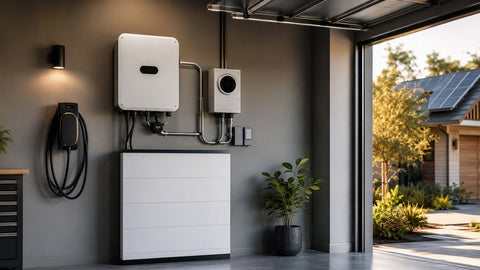
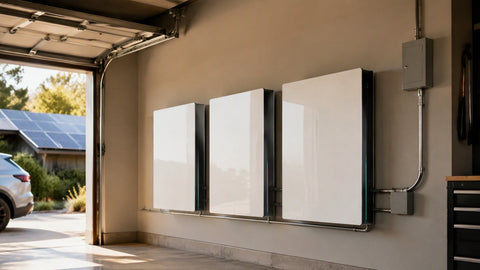
One adjustment every honest analysis makes: export rates. If your utility credits exports at avoided cost ($0.03–$0.05/kWh) instead of retail, a 20 kW system on a property that cannot self-consume daytime production is worth far less than the table suggests. This is the strongest argument for pairing the array with battery storage — stored solar is valued at your retail rate, not the utility's pity price. The home battery bank sizing guide walks the storage math.
The Electrical Realities of 20 kW
A 20 kW array is not a bigger version of a residential install — it crosses thresholds that change the design:
| Design Item | Requirement | Why It Matters at 20 kW |
|---|---|---|
| Inverter AC output current | 20,000 W ÷ 240 V ≈ 83 A (split-phase); ÷ 208 V 3-phase ≈ 56 A per NEC 3-phase math | Exceeds what a single standard residential breaker position can backfeed on most 200 A panels |
| 120% rule (NEC 705.12) | Busbar rating × 1.20 − main breaker ≥ backfeed | 200 A bus / 200 A main allows only 40 A of backfeed — a 20 kW system typically needs a supply-side tap, a main breaker downgrade, or a 400 A service |
| OCPD sizing (NEC 240.6) | 83 A continuous × 1.25 = 104 A → 110 A breaker (standard sizes: 100, 110) | Confirms a load-side connection is impractical on a 200 A panel; plan the tap early |
| String voltage (NEC 690.7) | Voc corrected for record-low temperature | With 450 W modules (Voc ≈ 41.5 V, ×1.14 cold factor ≈ 47.3 V), strings top out at 12 modules on 600 V residential equipment |
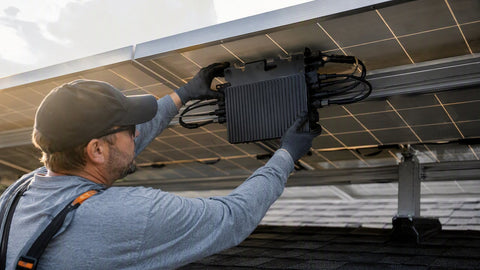
| Rapid shutdown (NEC 690.12) | Module-level shutdown inside the array boundary | Microinverters/optimizers satisfy it natively; string systems need listed MLPE devices per module |
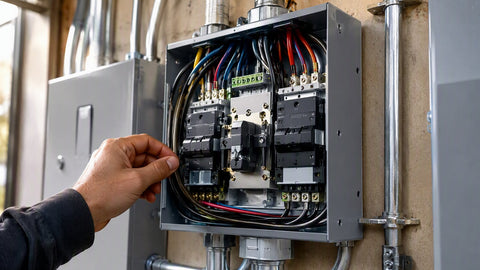
Check the 120%-rule math: a 200 A busbar allows 240 A of combined sources; minus the 200 A main leaves 40 A for solar. A 20 kW inverter needs roughly an 104–110 A backfeed breaker. The gap is not close, which is why I tell every 20 kW customer the same sentence before we price anything: "Your service equipment decides the design, not your roof." Half the 20 kW proposals I have re-quoted from competitors failed right there — beautiful panel layouts backfeeding into a panel that legally cannot accept them. Our solar panel wiring guide covers string design fundamentals, and for a plain-language look at whole-home coverage, see can solar panels power a whole house.
Field Notes: What 20 kW Jobs Actually Teach You
Three lessons from the field. First, roof condition is destiny: I have told two customers to re-roof before we would put 45 panels up, because tearing off a 20 kW array for a reroof in year six costs $8,000 to $12,000 — more than the reroof premium of doing it first. Second, shading that looks minor on a site visit is not minor at 20 kW scale; one flue pipe shadow across six modules with string inverters cost a customer 7% of annual yield until we moved the string. Third, production monitoring is not optional at this size — a single failed optimizer is $200+ a year in lost production, invisible without per-module data.
Business and Agricultural Use Cases
Twenty kilowatts is a workhorse size for small commercial and farm operations, where daytime loads line up with solar production almost perfectly:
| Operation Type | Typical Daytime Load | What 20 kW Covers | Notes from the Field |
|---|---|---|---|
| Retail / convenience | 800–1,600 kWh/month (refrigeration + HVAC + lighting) | 60–90% of daytime consumption | Refrigeration compressors cycle all day — near-perfect solar load shape |
| Small office / professional | 500–1,200 kWh/month | Full offset is common | Watch weekend export; weekday-heavy use is ideal |
| Agricultural (barns, irrigation, shop) | Highly seasonal | Irrigation pumping matched to sun hours | Long wire runs to fields favor higher-voltage strings; ground mounts simplify service |
| Light manufacturing / shop | 1,500–3,000 kWh/month | 50–80% of daytime draw | Demand charges may dominate the bill — pair with storage if peaks fall outside solar hours |
| Houses of worship / nonprofits | Low weekday, high weekend | Structurally mismatched load | Direct-pay 48E structures and leases changed the math for nonprofits after the 25D sunset |
The load-shape column is the one to weigh. Solar's value per kWh is highest when the electrons are consumed behind the meter at the moment they are made. Every kWh exported at wholesale instead is worth a third as much. For the business-owned configurations that still capture the 30% credit, this alignment of load and ownership structure is where 20 kW projects quietly produce their best returns.
Financing a 20 kW System in 2026
The financing landscape shifted with the credit sunset. The honest comparison:
| Financing Path | Effective Cost Profile | Incentive Access | Who It Fits |
|---|---|---|---|
| Cash | Lowest lifetime cost; full savings from day one | Business entities: 48E credit; homeowners: state/utility only | Buyers with capital and a long ownership horizon |
| Solar loan (10–20 yr) | Adds interest; savings usually still exceed payments in high-rate states | Same as cash (ownership) | Owners who want the asset but not the upfront hit |
| Lease / PPA (third-party owned) | No upfront cost; payment escalators matter | Financing company claims commercial credits — part of why offers improved after 2025 | Homeowners locked out of 25D who still want below-retail power |
| PACE (where available) | Repaid via property tax assessment | Varies by program | Owners with strong equity and short credit horizons |
Two warnings from the paperwork side. First, read escalator clauses: a PPA starting at $0.14/kWh with a 2.9% annual escalator passes a $0.17 utility rate's historical escalation within a decade and keeps climbing. Second, dealer fees on solar loans — sometimes 20% to 30% baked into the financed amount — turn a "$52,000 system" into a $65,000 loan. Ask for the cash price and the financed price side by side; the difference is the fee, and it is negotiable.
Off-Grid and Hybrid Configurations at 20 kW
Off-grid 20 kW is a serious power plant — enough for a large home plus shop, or a small farm — but the design discipline is different from grid-tie. You size for the worst month, not the average: December production of ~51–70 kWh/day in northern regions must cover the load plus charging losses, and the battery bank must carry multiple cloudy days. A realistic off-grid pairing is 20 kW of array, 40–60 kWh of lithium storage, and a generator for the deep-winter tail. The battery bank sizing guide covers the autonomy-day math, and our off-grid inverters collection carries the 12–18 kW hybrid units typically stacked in pairs for this array size.
Hybrid grid-tied systems — 20 kW of solar, 20–40 kWh of storage, grid connection retained — are the configuration I recommend most often in 2026 for high-rate states. You keep the grid as the safety net, self-consume nearly everything you make at retail value, and carry the house through outages without a generator. The battery is not cheap, but at $0.24/kWh utility rates, self-consumed solar is worth 40% more than exported solar, and that spread is what pays the battery off.
Lifespan, Maintenance, and the Long Tail
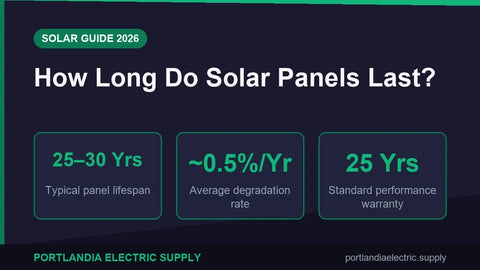
A 20 kW array is a 30-year asset wearing a 25-year warranty. Plan the ownership curve honestly: panels degrade about 0.5% per year (0.4% for n-type TOPCon), string inverters need replacement around years 12 to 15 (microinverters carry 25-year warranties but any electronics can fail earlier), and roofs outlast predictions only when they were inspected before the array went up. Annual maintenance is light — visual inspection, production review, occasional cleaning in dusty or pollen-heavy regions — but it is not zero. Budget $150 to $400 a year in professional inspection/cleaning, or an hour of your own time with the monitoring app each month.
Property value treatment is a genuine secondary benefit: multiple studies over the past decade have found owned (not leased) solar adding roughly $4 per watt of premium — on a 20 kW system, that is an $80,000 headline figure that I would discount hard in practice. Appraisers and buyers pay for documented production and transferable warranties, not for nameplate size. Keep every production report and warranty registration; the file folder is what the premium attaches to.
Permits, Timelines, and What the Process Actually Feels Like
A 20 kW project runs 8 to 16 weeks from signed contract to permission to operate in most jurisdictions. The sequence: site survey and engineering (1–2 weeks), permit submission and utility interconnection application (2–6 weeks of review, occasionally longer in backlogged AHJs), installation (3–7 working days for a crew of three to five on a straightforward roof), inspection and meter swap (1–3 weeks of scheduling), then PTO and energization. The installation itself is the shortest phase by far — everything else is paperwork, and paperwork is where experienced installers earn their margin. Ask any bidder for their average permit-to-PTO time in your specific AHJ; a contractor who cannot answer that has not built enough in your area.
HOA and historic-district overlays add real time in some states despite solar-access laws. Get the HOA architectural review started in parallel with engineering, not after it. And if your property is rural, verify whether the county requires a structural stamp on ground-mount foundations — frost-depth footing requirements in northern counties have added two weeks and $1,500 to more than one farm project I have been part of.
The Decision Checklist
Run these seven questions before you sign anything:
- Is your blended utility rate above roughly $0.15/kWh? (Below that, the case needs incentives to work.)
- Do you use — or will a business on the property use — at least 60% of production during daylight hours?
- Can your service panel accept the backfeed, or is a supply-side tap / service upgrade priced into the quote?
- Does the roof have 15+ years of life left and 850+ square feet of unshaded area (or land for a ground mount)?
- Have you priced the system as a cash deal and compared it against every financed offer?
- Do you know your utility's export compensation rate, in writing?
- Does the quote include module-level monitoring and a named warranty contact?
Seven yeses and the answer to the title question is yes. Three or more noes and the honest answer is "not yet — fix the noes first." I have walked away from signing 20 kW contracts when the panel or the roof failed this list, and I have never had a customer come back later and say the walk-away was wrong.
Frequently Asked Questions
How much does a 20 kW solar system cost in 2026?
Professionally installed, $46,000 to $60,000 before incentives ($2.30–$3.00 per watt). Ground mounts, complex roofs, and service upgrades push toward the top. DIY equipment kits run $25,000 to $35,000 for the same capacity.
How much power does a 20 kW system produce per day?
Between 51 and 104 kWh per day depending on location and season — about 64–72 kWh daily in the Mid-Atlantic on an annual average, and over 90 kWh daily in the Southwest.
Can a 20 kW system run a whole house?
Easily for most homes — the average U.S. home uses about 30 kWh/day, and a 20 kW array produces roughly double that in average sun. The limiting factor is night-time and outage power, which requires batteries, not more panels.
Is there still a federal tax credit for solar in 2026?
The residential credit (25D) ended for expenditures after December 31, 2025. Business-owned systems can still claim the 30% Section 48E credit within its construction windows, and third-party-owned (lease/PPA) residential systems access commercial credits through the financing entity. State, utility, and SREC incentives are unaffected.
How many panels and how much roof space does 20 kW need?
About 36–37 panels at 550 W, or 45–47 at 430–450 W. Plan on 850–1,000 square feet of unshaded roof with residential-format modules, or roughly a tenth of an acre for a ground mount.
What is the payback period for a 20 kW system?
In states with rates above $0.15/kWh, roughly 8 to 12 years cash-purchased without a federal credit, and 7 to 9 years for business-owned systems claiming the 30% credit. Below $0.12/kWh, payback stretches past 15 years and the case usually depends on incentives.