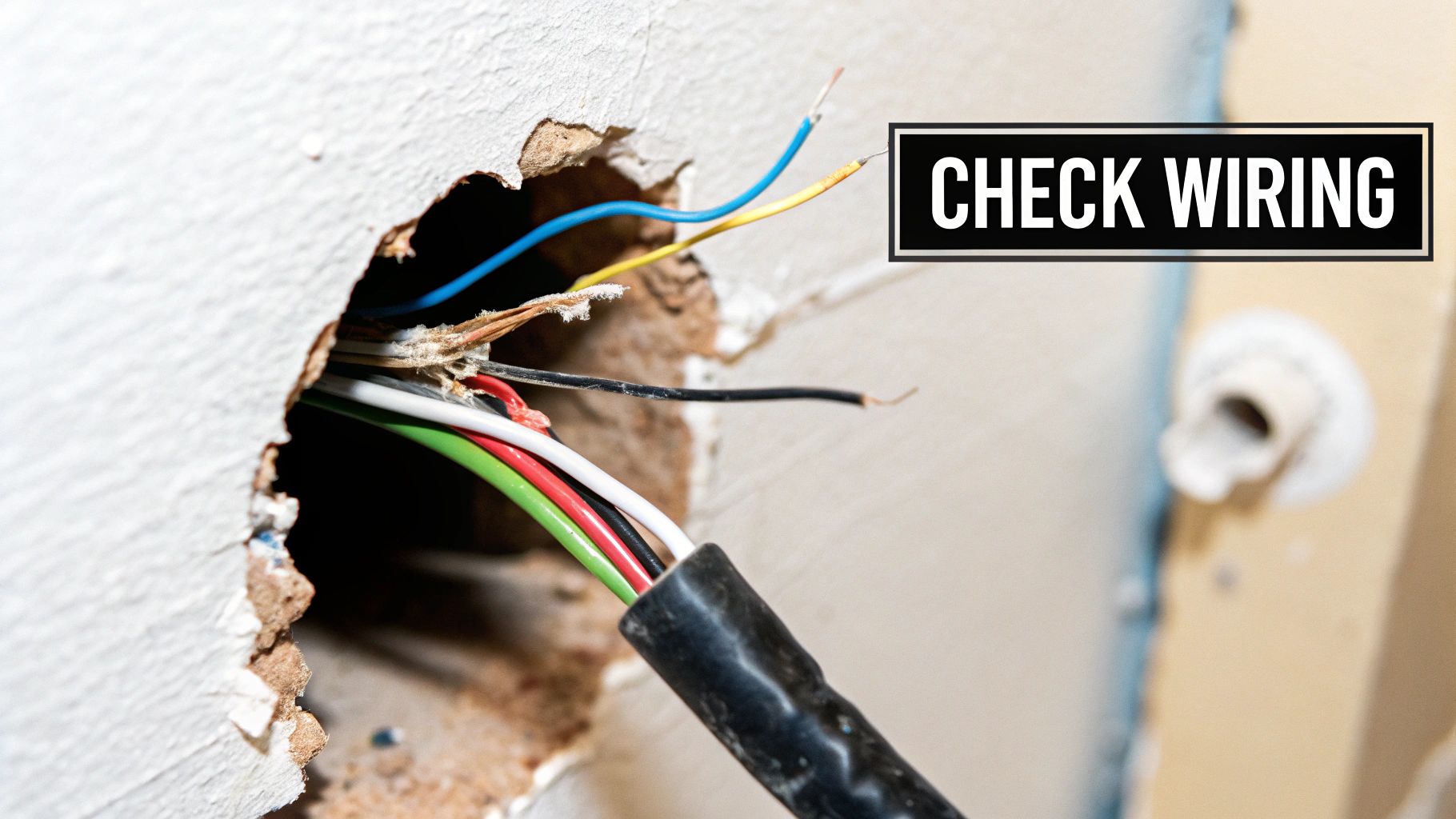
I've walked into more than one house that smelled like hot Bakelite and found a panel one loose neutral away from a 2 a.m. structure fire. Electrical fires don't announce themselves. They smolder inside walls for hours — sometimes days — after a loose connection starts arcing. The National Fire Protection Association attributes tens of thousands of home structure fires per year to electrical distribution and lighting equipment, with wiring and related equipment consistently the leading category. The good news: nearly all of it is preventable with inspection discipline, correct devices, and load management that respects what the wiring was actually designed to carry.
This guide is written for three audiences at once — installers who want to leave a safer job, facility managers building an inspection program, and property owners who want to know what to look for between professional visits. Where the work crosses into rewiring or panel changes, pair this with our service upgrade guide and the NEC code compliance overview.
Understanding the Real Sources of Electrical Fires
The popular image of an electrical fire is a dramatic short circuit. The reality is quieter. In my experience troubleshooting problem buildings, the ignition sources rank roughly like this:
| Ignition Source | Mechanism | Typical Locations | Primary Defense |
|---|---|---|---|
| Loose connections (series arcing) | High-resistance joint heats under load; arcs in series with the load, often below breaker trip threshold | Receptacles (especially backstabbed), wire nuts, breaker lugs, neutral bars | Torque to spec; AFCI protection; periodic re-torque on commercial panels |
| Overloaded circuits | Conductors carry more than rated ampacity for sustained periods; insulation degrades | Kitchens with added appliances, garages with space heaters, older 15A general-purpose circuits | Load calculation per NEC 220; dedicated circuits for heavy loads |
| Damaged cords and extension-cord abuse | Undersized cords overheat; cords under rugs trap heat and abrade | Entertainment centers, home offices, holiday lighting | Correct cord gauge; permanent wiring instead of extension cords |
| Aging aluminum branch wiring (1965–1973) | Aluminum expands/contracts, loosens at terminations, oxidizes to a resistive layer | Whole branch circuits in homes of that era | Copalum/AlumiConn remediation or rewiring; CO/ALR devices |
| Faulty or counterfeit devices | Unlisted breakers that don't trip; fake GFCI/AFCI devices | Panels with mismatched breaker brands; bargain online purchases | Listed (UL) devices matched to the panel; buy from authorized channels |
| Lighting and fixture heat | Lamps exceeding fixture rating; insulation buried over non-IC recessed cans | Recessed lighting, closets, attics | Respect wattage labels; IC-rated fixtures; LED retrofits |
Notice what's missing: dramatic dead shorts. A bolted fault draws enough current to trip a breaker fast. It's the series arc — a loose lug glowing inside a panel at 3,000°F while pulling only 12 amps — that burns houses down without ever touching the breaker's trip curve. That's exactly the failure mode AFCIs exist to catch.
Your First Line of Defense: Proactive Inspections
An inspection program doesn't need to be complicated. It needs to be scheduled and honest. Here's the cadence we recommend and what each level covers:
| Area of Inspection | What Homeowners Should Look For | What Professionals Should Verify (NEC Focus) |
|---|---|---|
| Outlets & Switches | Discoloration, cracks, warm to the touch, buzzing/sizzling sounds, plugs that fall out. | Proper receptacle tension, correct wiring (no backstabbing — use the screw terminals or spec-grade back-wired clamps), AFCI/GFCI functionality per manufacturer test procedures. |
| Cords & Plugs | Frayed, cracked, or pinched cords; cords under rugs; overloaded power strips; missing ground pins. | Appropriate cord gauge for the load (14 AWG minimum for 12A continuous), strain relief, correct NEMA configurations. |
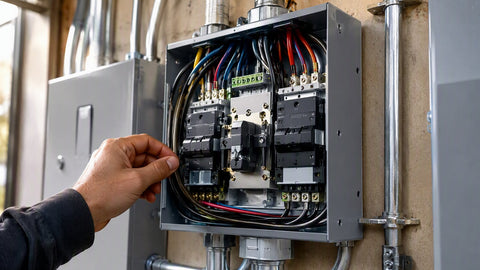
| Electrical Panel | Odd smells (fishy/acrid), warm cover, rust, blocked access, scorched or double-tapped breakers. | Torque on all lugs per the panel label, breaker-to-panel compatibility, working clearances per 110.26 (30" wide, 36" deep, 6'6" headroom), no alien breakers. |
| Lighting | Flickering, fixtures hot to the touch, bulbs exceeding the wattage label. | Insulation contact ratings (IC vs non-IC), proper junction box support per 314.23, thermal protection on recessed fixtures. |
| Attic & Crawlspace | Visible rodent damage to cable jackets, junctions outside boxes. | All splices in accessible enclosures (300.15), cable protection from physical damage (334 for NM), vapor and clearance issues. |
| Exterior & Wet Locations | Cracked covers, non-GFCI outdoor outlets, corroded boxes. | In-use ("bubble") covers per 406.9, WR-rated receptacles, GFCI protection per 210.8(A)(3). |
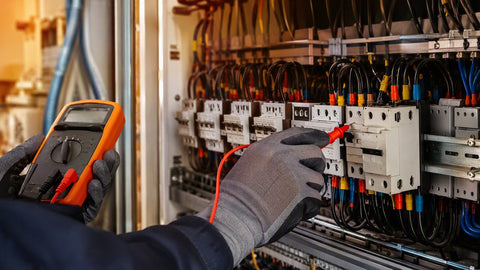
For commercial facilities, add a thermographic (infrared) scan of panels and switchgear to the annual routine. A loose lug shows up as a 30–50°F hot spot on IR long before it shows up as a fire. I've had IR scans catch three failing neutral connections in a single 400A distribution panel — all invisible to the eye, all pulling normal current on a clamp meter.
Choosing the Right Materials and Safety Devices
Modern codes layer protective devices so each catches what the others miss. Understand the division of labor:
| Safety Device | Primary Function | Detects & Prevents | Common NEC Required Locations |
|---|---|---|---|
| AFCI (Arc-Fault Circuit Interrupter) | Fire prevention | Unintended series and parallel arcs from damaged or loose wiring. | 210.12: bedrooms, living rooms, kitchens, laundry, hallways, closets, and similar dwelling areas — combination-type at the breaker. |
| GFCI (Ground-Fault Circuit Interrupter) | Shock prevention | Current imbalance (4–6 mA trip) when electricity leaks through a person or water path. | 210.8: bathrooms, kitchen countertops, garages, outdoors, crawlspaces, basements, laundry, within 6 ft of sinks. |
| Dual-Function AFCI/GFCI | Both | Arc faults and ground faults from one breaker. | Convenient where both protections are required (e.g., kitchens, laundry). |
| Whole-Home SPD (Surge Protective Device) | Equipment protection | Voltage transients from lightning and utility switching that degrade electronics and insulation over time. | 230.67: required on dwelling unit services (2020 NEC+); Type 1 or Type 2 at the service. |
| Tamper-Resistant Receptacles | Shock prevention (children) | Spring shutters block foreign objects. | 406.12: nearly all dwelling-unit receptacle locations. |
On breakers themselves: use only the breakers listed for your panel. A breaker that physically clips in is not the same as a breaker that's classified for the enclosure — wrong bus contact pressure means heat, and heat at the bus stab is the classic panel fire start. We carry listed replacements across the major lines in our circuit breaker category, including Square D, Siemens, Eaton, and GE. For solar-connected homes, add DC-side surge protection — our solar SPD sizing guide covers Type 1 vs Type 2 placement.
Safe Installation and Proper Load Management
Half of fire prevention is math done before the drywall closes. NEC 220 load calculations and Article 210's dedicated-circuit requirements exist because residential loads have grown while the wiring stock hasn't. The rules we enforce on every job:
- Dedicated circuits where the code demands them: two 20A small-appliance kitchen circuits (210.11(C)(1)), a 20A laundry circuit, a 20A bathroom circuit, individual circuits for dishwashers, disposals, microwaves, and refrigerators as required.
- Continuous loads at 80%: Anything running 3+ hours (EV chargers, space heaters, server racks, grow lights) is a continuous load. Size conductors and breakers at 125% — a 40A EVSE goes on a 50A circuit. Our EV charging installation guide walks through that sizing.
- Respect Table 310.16: 14 AWG = 15A breaker, 12 AWG = 20A, 10 AWG = 30A for copper branch circuits. If someone "fixed" nuisance tripping by upsizing the breaker without upsizing the wire, that's a fire waiting for a cold night. Verify with the ampacity chart.
- No backstabs, ever: The push-in connections on cheap receptacles rely on a tiny spring contact that loosens with heat cycling. Use the screw terminals, torque them, and use spec-grade devices in high-use locations.
- Torque everything: 110.14(D) makes a calibrated torque tool mandatory, not optional. Lug torque values are printed on the equipment — 12 AWG device screws typically 12–14 in-lb, panel lugs anywhere from 20 to 375 in-lb depending on size.
For owners wondering whether their panel is even big enough for what they're asking of it, start with how to calculate power consumption and how many watts to power a home. If the answer points at a service upgrade, that article linked earlier covers the process end to end.
Best Practices for Appliance and Cord Safety
The last layer is behavioral, and it's where homeowners have the most direct control:
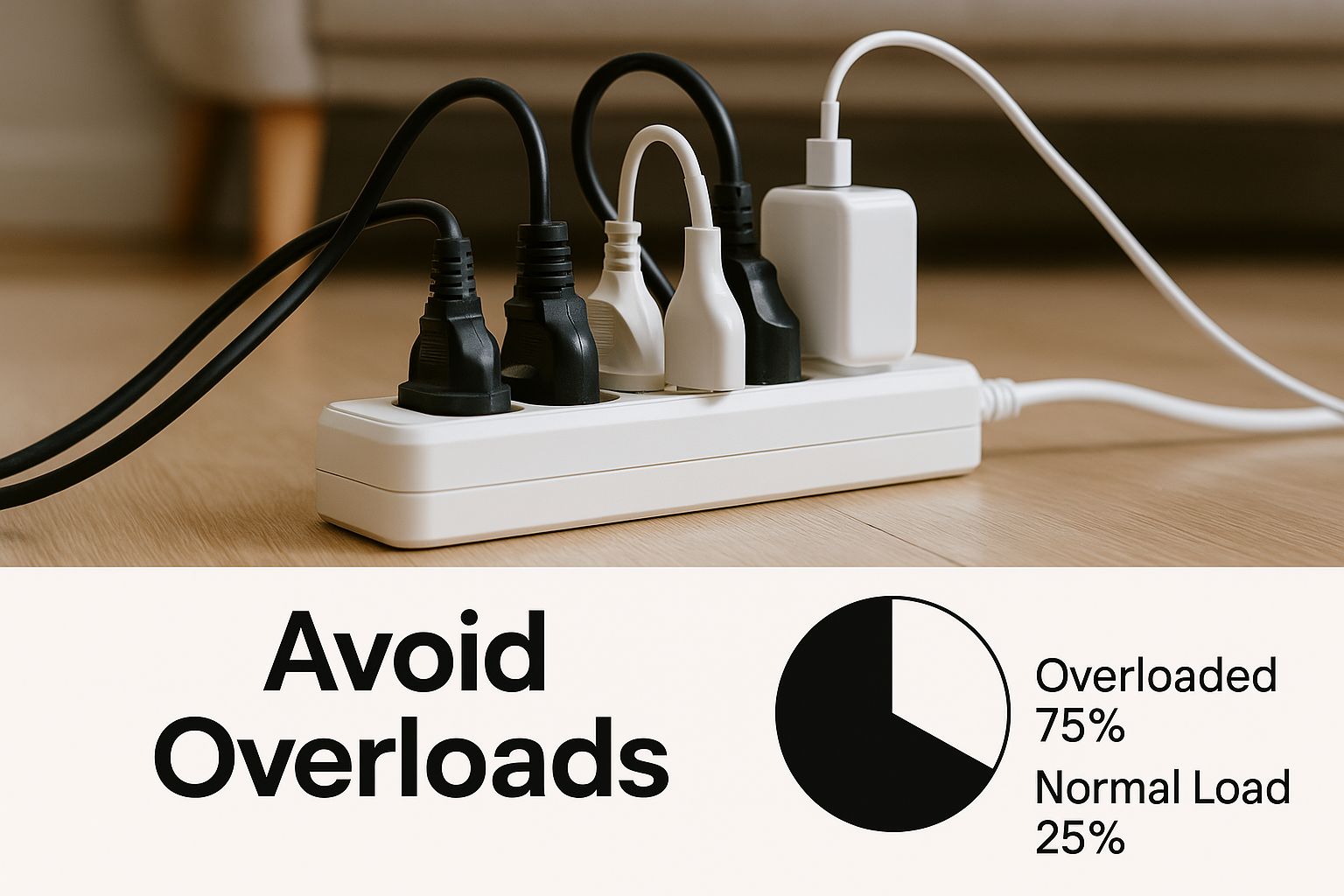
- Extension cords are temporary wiring. NEC 400.12 prohibits using flexible cords as a substitute for permanent wiring. If a cord has been in place for more than 90 days, the correct fix is a new receptacle, not a heavier cord.
- Match cord gauge to load: A 16 AWG cord on a 1,500W space heater will heat up measurably. 1,500W at 120V is 12.5A — use 14 AWG minimum, and plug heaters directly into wall outlets, never strips.
- One heat-producing appliance per receptacle: Space heater, hair dryer, toaster, coffee maker — these draw 10–15A each. Sharing a duplex receptacle or strip stacks them onto one 15A circuit.
- Retire damaged equipment immediately: A cord that trips a GFCI once has told you something. Believing it is cheaper than a fire investigation.
- Holiday and seasonal loads: Check light string ratings, use outdoor-rated cords outside, and put displays on timers — both for the load profile and because an unattended fault at 2 a.m. is how small problems become total losses.
One more from the field: I keep a $30 plug-in circuit analyzer in my truck and hand them to customers. In thirty seconds it shows open grounds, reversed polarity, and bootleg grounds — the three wiring defects we find most in older homes. It is the cheapest fire-prevention device in the trade.
A Practical Annual Fire-Safety Checklist
| Frequency | Task | Owner or Pro? |
|---|---|---|
| Monthly | Test every GFCI and AFCI using the device test button; check smoke/CO detector batteries. | Owner |
| Quarterly | Walk-through: feel receptacle faces for warmth under load, look for discoloration, sniff for hot-plastic odor near panels. | Owner |
| Annually | Panel torque check and IR scan; exercise main breaker; verify working clearances; test interconnection of smoke alarms. | Pro |
| Annually | Inspect attic and crawlspace wiring for rodent damage and open splices; check exterior boxes and in-use covers. | Pro |
| Every 3–5 years | Full electrical safety inspection in homes over 40 years old, homes with aluminum branch wiring, or after any major renovation. | Pro |
| Immediately | Any burning smell, warm panel cover, repeatedly tripping breaker, or buzzing device gets diagnosed now, not at the next service visit. | Pro |
Stock up on the hardware side through our electrical supplies and safety and protection categories, and if a standby power system is part of your resilience plan, see the generator sizing guide — generator installations done wrong (backfeeding through a dryer outlet) are a fire and electrocution category of their own.
Panels With a Reputation: What to Do About Legacy Equipment
Certain panels carry known hazard histories, and part of fire prevention is recognizing them on sight. We won't litigate brands here — the point is the inspection trigger, not the verdict. Any panel from an era or manufacturer with documented breaker-to-bus connection failures, non-tripping breakers, or aluminum bus problems deserves a professional evaluation, full stop. What we tell customers:
- Know your panel's age and lineage. A 40-year-old panel has 40-year-old bus plating, spring tension, and breaker trip mechanisms. Breakers are not lifetime devices in high-fault or high-cycle environments.
- Alien breakers are a red flag. Breakers from a different manufacturer clipped into a panel they aren't classified for create point-contact heating at the bus stab. If the panel label doesn't list it, it doesn't belong — and "classified" replacement breakers must carry that classification mark.
- Rust or water trails inside the enclosure end the conversation. Moisture plus buswork equals corrosion, resistance, and heat. The panel gets replaced, not dried out.
- Double-tapped neutrals and grounds under one screw violate 408.41 and create loose-neutral failure modes that cook connected equipment before anything trips.
Commercial and Facility Programs: Beyond the Residence
Facility managers operate under a different risk model: more connected load, more motors, longer runtimes, and insurance carriers that increasingly demand documented preventive maintenance. The program we help facilities stand up has four pillars:
| Pillar | Scope | Cadence | Documentation |
|---|---|---|---|
| Infrared thermography | Panels, switchgear, MCCs, bus plugs, disconnects — under load | Annually (semi-annual for critical or high-load processes) | Report with delta-T ratings; repair priority tiers |
| Torque and connection maintenance | Re-torque lugs and terminations to manufacturer values (110.14(D)) | Per manufacturer interval; after any fault event | Torque log with values and tech initials |
| Protective device testing | GFCI/AFCI function, breaker exercise, ground-fault protection of equipment per 230.95 where applicable | Annually | Test records per device |
| Load studies | Clamp-meter or logger capture of actual demand vs. capacity on feeders and panels | Every 2–3 years or before adding load | Load report feeding the NEC 220 calculation for any expansion |
The load-study pillar is the one facilities skip and regret. Every rooftop unit, compressor, and server rack added "temporarily" over the years is still connected. We've logged panels carrying 85% of their rating that everyone believed were at 50% — one HVAC addition away from a chronic overload that no breaker would ever announce, because 85% doesn't trip anything. It just slowly cooks insulation.
Detectors, Extinguishers, and the Last Mile
Prevention fails sometimes, and detection is what keeps a failure from becoming a loss. The current code and field consensus:
- Smoke alarms: Interconnected (one trips, all sound), inside every bedroom, outside sleeping areas, and on every level including basements (NFPA 72). Replace the units themselves every 10 years — sensors drift.
- Placement near panels and workshops: A garage or shop with charging batteries, power tools, or a subpanel earns its own detection. Heat detectors suit dusty shop environments where smoke alarms nuisance-trip.
- Extinguishers: An ABC-rated unit within reach of the panel and the kitchen. Train the household: PASS (pull, aim, squeeze, sweep), and the rule that an extinguisher is for escape routes and incipient fires, not for fighting a wall that's already glowing.
- Whole-home monitoring: Clamp-on energy monitors with anomaly detection have matured to the point where they flag arcing signatures and failing loads before humans notice. For rental portfolios and second homes, they're the cheapest watchman available.
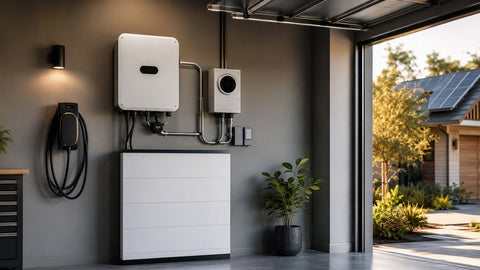
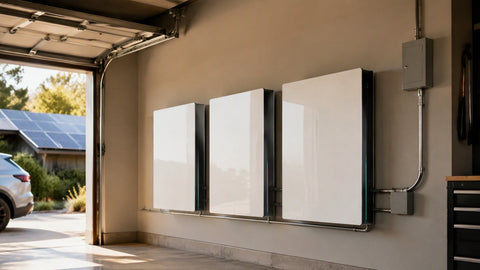
For off-grid and backup-power properties, fold fire safety into the energy system design itself: battery rooms and garages need ventilation and clearances per the battery manufacturer's instructions, and inverter/battery installations should follow the spacing and protection practices in our solar backup systems guide and battery installation guide.
The New High-Load Appliances: EV Chargers, Heat Pumps, and Induction
The residential load profile changed more in the last five years than the previous forty. A Level 2 EV charger at 40A, a heat-pump water heater, an induction range, and a heat-pump HVAC can each be managed safely — but stacked onto a 100A service with no load calculation, they're a slow thermal failure of conductors that were sized for a 1975 lifestyle. Our field guidance:
- Every new 30A+ appliance triggers a load calculation (NEC 220.83 for existing dwellings). A 15-minute calc prevents the mystery warm panel cover a year later. Our power consumption guide has the worksheet logic, and EV charger installation specifics covers the 125% continuous-load sizing.
- EV circuits are continuous loads: 40A charging means a 50A circuit — no exceptions, including for "smart" chargers that can throttle. The circuit is sized to the EVSE rating, not the car.
- Load-management devices are the modern fix. Code-recognized energy management systems (220.57, 750.30) let a panel share capacity safely — an EV charger that pauses while the range runs. It's often the difference between keeping a 100A service and buying a $4,000 upgrade.
- Watch the neutrals on MWBCs. Multi-wire branch circuits with shared neutrals from the electric-resistance era misbehave when one leg gets modern electronic loads. Harmonic currents add on the neutral instead of canceling. If a home has MWBCs and adds big electronics, verify neutral loading.
Documentation: The Fire-Prevention Asset Nobody Buys
After a fire, the investigation asks two questions: what was the system's condition, and who touched it last. Owners and facilities that keep records fare measurably better in insurance outcomes — and the same records prevent the fire in the first place by forcing the inspection cadence. Keep: panel schedules updated after every circuit change (required by 408.4 anyway), torque and IR-scan reports, permits and inspection sign-offs, device test logs, and photos of the panel interior annually. It costs nothing but discipline, and we've watched it settle claims in weeks instead of months.
Space Heaters, Wood Stoves, and the Winter Spike
Fire statistics spike in January for a reason: heating equipment is a leading category of home fire ignition, and portable electric heaters sit near the top of the electrical sub-list. The rules are blunt. Heaters plug directly into wall receptacles — never strips, never extension cords, and never into the same receptacle as another heat-producing appliance. Three feet of clearance from anything combustible, including the dog bed. Units with tip-over and overheat protection only, and units get unplugged when the room is empty — the "smart outlet" timer is not supervision. For permanent electric heat, hardwired baseboards and wall heaters with dedicated circuits beat portables in both safety and cost per BTU, and a mini-split heat pump beats resistance heat at roughly a third of the operating cost — our mini-split cost guide runs those numbers.
Rental Properties and the Minimum-Code Trap
For landlords and property managers: code minimum is a floor, not a defense. Older rentals legally grandparented under past codes still carry duty-of-care exposure, and plaintiff attorneys treat "met code in 1968" as an opening argument, not a conclusion. The pragmatic rental upgrades with the best risk-per-dollar: GFCI protection in all wet areas regardless of grandfathering, tamper-resistant receptacles anywhere children live, interconnected smoke alarms with 10-year sealed batteries, panel IR scans at turnover, and a written ban on space heaters and daisy-chained strips in the lease — with the alternative (hardwired heat, enough receptacles) actually provided. Document every one of those in the file. One more that costs a Saturday: photograph every unit's panel interior, water heater connections, and laundry circuit at each turnover. It builds the condition timeline that both prevents fires — you'll spot the scorched breaker before the tenant reports the smell — and settles liability questions fast if the worst happens anyway.
Frequently Asked Questions
What causes most electrical fires? Loose connections arcing in series with the load — at receptacles, splices, and lugs. They run below breaker trip current while heating to ignition temperatures. Combination AFCIs are the code answer.
How often should wiring be inspected? Device tests monthly by the owner, panel torque and IR scan annually by a pro, full inspections every 3–5 years in older or renovated homes.
AFCI vs GFCI — which does what? AFCI catches fire-starting arcs; GFCI catches shock-causing ground faults. Many locations now require both, which dual-function breakers handle in one device.
Can I upsize a breaker to stop tripping? Never without upsizing the wire. The breaker's job is protecting the conductor, and a 20A breaker on 14 AWG wire turns your walls into the fuse.
Are power strips OK for heaters? No. 1,500W heaters go straight into a wall receptacle, on their own circuit, period.
Does aluminum wiring mean a full rewire? Not necessarily — COPALUM or AlumiConn remediation by a qualified electrician is an accepted alternative. Get it assessed; don't ignore it.
Shop Related Products
- Circuit breakers — Square D, Siemens, Eaton, GE
- Safety and protection devices
- Surge protective devices
- General electrical supplies
Sources & Standards
- NFPA 70, National Electrical Code (2023): Articles 110, 210, 220, 230, 300, 310, 314, 400, 406
- NFPA Research — Home Electrical Fires report series
- U.S. Consumer Product Safety Commission — guidance on aluminum branch wiring remediation
- UL 1699 (AFCI), UL 943 (GFCI), UL 1449 (SPD)