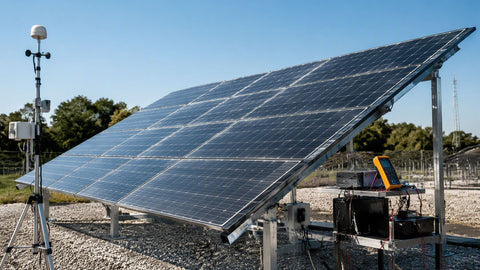
BYD 144 TOPCon Cells Black/Silver 580W Solar Panel — NLBK-36 555–580W: The Future of Solar Power
TOPCon cell technology explained, the 144-half-cut architecture, string-sizing math, degradation economics, and how the 580W class fits modern residential and commercial arrays.

Five years ago, a 400-watt residential panel was premium equipment. Today the BYD NLBK-36 series — 144 TOPCon half-cut cells in black or silver frames, rated 555 to 580 watts — represents where the center of the market has moved: n-type cell architecture, utility-class wattage, and efficiency numbers that PERC panels physically cannot reach. BYD is better known in North America for batteries and electric vehicles, but the company is one of the largest solar manufacturers on the planet, and its TOPCon modules compete directly with the Jinko, JA Solar, and Canadian Solar panels dominating commercial procurement.
We supply the BYD solar and storage line alongside the other Tier 1 brands, and I've had installers ask the same three questions about this panel family for two years running: what does TOPCon actually buy me, how does a 144-cell 580W module change my string design, and does BYD's warranty support exist in North America for module buyers specifically. This guide answers all three with numbers, then covers degradation economics, string design, procurement discipline, and where this module class fits against adjacent options on the current market.
TOPCon — Tunnel Oxide Passivated Contact — is the n-type cell architecture that took over the mainstream market between 2023 and 2025. The physics in plain terms: a conventional PERC cell loses a meaningful slice of its generated current to electron-hole recombination at the cell's rear surface. TOPCon adds an ultra-thin silicon oxide tunneling layer with a doped polysilicon contact that lets current pass while suppressing that recombination. The result, in field terms rather than lab terms:
- Higher efficiency at the same footprint — the 555–580W range in a standard 144-half-cut format, versus ~410–450W for equivalent PERC formats a generation ago.
- Lower temperature coefficient — n-type modules typically lose about 0.24–0.30% of output per °C above 25°C cell temperature, versus 0.34–0.40% for PERC. On a 95°F roof, that gap is real production, every summer afternoon, for thirty years.
- Lower first-year and annual degradation — TOPCon's resistance to light-induced degradation (the boron-oxygen problem that costs PERC cells output in their first weeks) underpins the 1% first-year / 0.40%-per-year warranty structure that's become the n-type standard.
- Better low-light and bifacial behavior — morning, evening, and overcast production improves modestly but measurably; bifacial variants add rear-side gain on reflective surfaces.
The honest counterpoint: TOPCon's advantages are incremental, not magical — a few percent here, a fraction of a percent per year there. The reason the industry converted is that those increments compound across a 30-year asset life into double-digit percentage differences in lifetime energy harvest. The degradation math below makes that concrete.
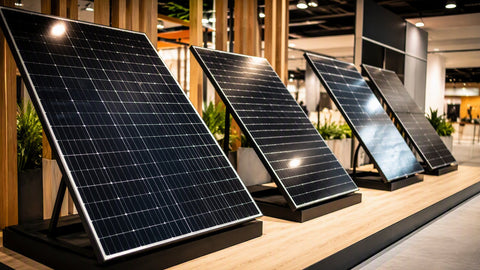
The "144" in this panel's name refers to 144 half-cut cells — a full-size 72-cell layout where each cell is laser-cut in half and wired in a split configuration. Half-cutting isn't marketing; it does two useful things electrically. First, halved cells carry halved current, and since resistive losses scale with the square of current, internal losses drop — worth roughly one to two percentage points of module efficiency on its own. Second, the split wiring creates two independent halves of the panel, so partial shading (a vent pipe shadow, a chimney, the neighbor's oak at 4 p.m.) disables only part of the module rather than dragging the whole string down. Pair that with modern module-level or optimizer-equipped designs and shade tolerance improves further.
| Design Attribute | NLBK-36 Class Value | Field Impact |
|---|---|---|
| Power range | 555–580 W | Multiple bins simplify matched-string design |
| Cell format | 144 half-cut n-type TOPCon | Lower resistive loss, better shade tolerance |
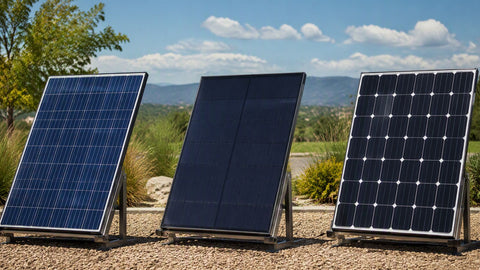
| Frame options | Black or silver anodized aluminum | Black for residential aesthetics, silver for C&I reflectivity |
| Efficiency class | ~21.5–22.5% (bin dependent) | More watts per square foot of roof |
| Cell technology | TOPCon (n-type) | Lower degradation, better heat behavior |
| Application fit | Residential large-format, C&I, ground mount | One SKU family across project types |
A note on spec discipline: exact electrical values (Voc, Isc, Vmpp) vary by power bin within the 555–580W range, and the bin on your pallet is the bin that matters for string design. Always design from the datasheet of the exact bin you're buying — we supply bin-specific datasheets with every order for precisely this reason. The figures in this guide are class-representative planning values, clearly labeled as such.
Here's the design sequence your engineer or plan reviewer runs, with representative values for the 580W TOPCon class. Substitute your exact bin's datasheet values before finalizing anything:
| Calculation Step | Representative Value | Rule Applied |
|---|---|---|
| Module Voc (STC) | ≈52.5 V (class-typical, 580W bin) | Datasheet value |
| Voc temperature coefficient | ≈−0.25 %/°C | Datasheet value |
| Cold-corrected Voc @ −10°F (−23°C) | ≈52.5 × (1 + 0.0025 × 48) ≈ 58.8 V | NEC 690.7 cold-temperature correction |
| Max modules per 1,000V string | ⌊1,000 ÷ 58.8⌋ = 17 | Inverter DC window limit |
| String power (17 × 580W) | 9.86 kW per string | Array layout input |
| Design circuit current | Isc ≈ 13.9 A × 1.56 ≈ 21.7 A | NEC 690.8 continuous-duty sizing |
| Home-run conductor (Cu, 75°C) | 10 AWG PV wire (40 A) — ample margin | NEC Table 310.16 + 690.8 |
What that math shows in practice: a 580W-class module builds ~10kW strings of 17 panels within a 1,000V residential/light-commercial inverter window, and standard 10 AWG PV wire carries the design current with comfortable headroom. The cold-temperature correction is the row people get wrong — I reviewed a plan set last winter where a designer in Minnesota used STC Voc without the 690.7 correction and ended up two modules over the inverter's absolute max input. That design would have been fine in October and smoked the inverter in January. Our panel wiring guide and the PV wire NEC compliance guide cover the wiring side in depth, and the NEC 690 disconnect guide handles the protection requirements.
Module shopping that stops at watts-per-dollar misses the specification that decides year-twenty production. Typical linear performance warranty structures by technology generation:
| Technology | First-Year Degradation | Annual Thereafter | Warranted Year-25 Output |
|---|---|---|---|
| TOPCon (n-type, this class) | 1.0% | 0.40%/yr | ≥91.4% of nameplate |
| PERC (p-type, legacy) | 2.0% | 0.55%/yr | ≥84.8% of nameplate |
Translated to a real system: a 12kW residential array (about 21 of the 580W bins) at 1,400 kWh/kWp annual yield produces roughly 16,800 kWh in year one. At year 25, the TOPCon warranted floor delivers about 15,360 kWh; a PERC array's floor delivers about 14,250 kWh — a gap of roughly 1,100 kWh in that year alone, and a cumulative gap over the warranty period measured in the tens of thousands of kilowatt-hours. At $0.15/kWh retail, the degradation spec alone is worth four figures over the system's life. That's the entire answer to "is TOPCon worth the premium": the premium is usually smaller than the degradation gap's dollar value.
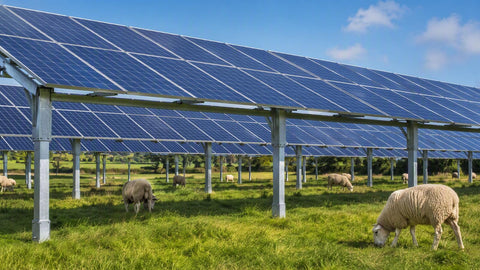
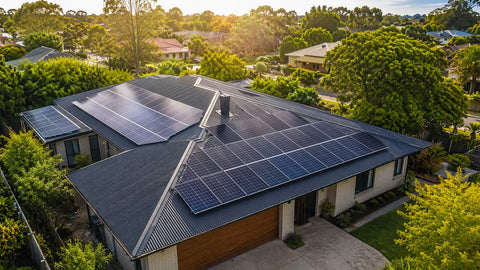
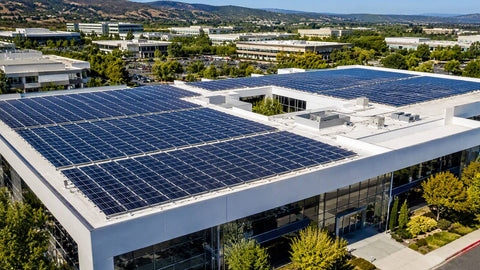
The 555–580W 144-cell format is a genuinely versatile size class. On residential roofs, it maximizes watts per roof square — fewer panels, fewer rails, fewer roof penetrations per kilowatt — though its large-format dimensions demand two-person sets and careful layout around obstructions. On commercial roofs and carports it's squarely in the current sweet spot, and for small ground mounts it works with standard fixed-tilt racking. Where adjacent classes make more sense: constrained roofs with heavy vent/obstruction density often lay out better on the compact 460–549W class; utility-scale projects chasing the absolute lowest module count move up to the 630W+ and 700W+ formats; and full system planning belongs in the system size calculator before any module decision is final.
Racking compatibility deserves one sentence of its own: large-format modules have specific clamping zones on the frame, and using a racking system outside the module's approved clamping range voids the mechanical warranty. Match the module to the racking line — our racking systems guide covers the selection logic.
Procurement: Warranty Support and What to Verify

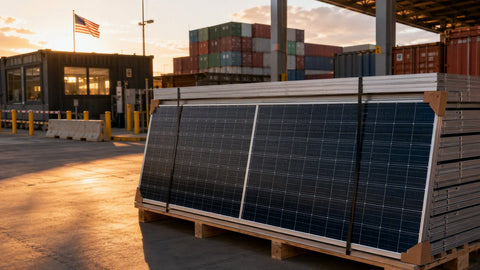
BYD's North American presence runs deeper in storage than in modules, which makes the supplier channel the critical variable for panel buyers. What we verify before stocking any BYD module lot: UL 61730 listing naming the exact model string, serial-traceable flash-test data, manufacturer warranty registration pathway confirmed for U.S. addresses, and packaging that survives container freight (large-format modules are more fragile in transit than compact ones — corner protection and upright palletizing aren't optional). Buyers should ask any supplier the same four questions; the answers separate stocked-and-supported inventory from paper inventory that dropships from a broker's queue. For the storage side of a BYD-based system, the solar battery buyer's guide and our system components overview complete the picture.
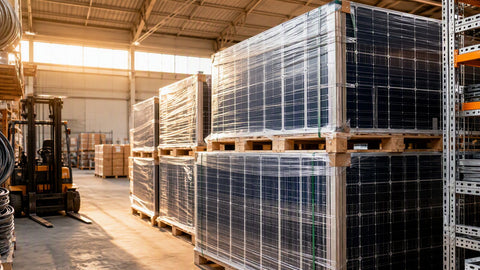
For installers and small developers buying this class by the pallet or container, the logistics numbers drive the per-watt economics. Large-format 580W-class modules pack roughly 31–36 per pallet and approximately 900–1,000 per 40-foot high-cube container depending on packaging spec — call it 520–580 kW of DC capacity per container. Worked example: a 100 kW commercial rooftop needs about 173 modules at 580W, which is roughly five pallets — a clean LTL freight shipment rather than a container play. A 500 kW community project wants about 863 modules, which fills most of one container and justifies container-level pricing. I always tell growing installers the same thing: know your pallet count before you negotiate, because suppliers price differently for the buyer who says "five pallets of the 580 bin" than for the buyer who says "some panels." Specificity is a discount code that never expires.
| Project Scale | Array Size | Modules @ 580W | Logistics Reality |
|---|---|---|---|
| Large residential | 10–13 kW | 18–23 | Partial pallet; order with spares |
| Small commercial roof | 50–100 kW | 87–173 | 3–5 pallets, LTL freight |
| Commercial / community | 250–500 kW | 431–863 | Half to full container territory |
| Developer / multi-site | 1 MW+ | 1,725+ | Full containers; negotiate on lot documentation |
One handling note that belongs in every large-format purchase order: 580W-class modules run roughly 2.3 meters on the long side and 30+ kg each. They require two-person handling per manufacturer warranty terms, suction-cup or clamp-frame lifting discipline, and racking with clamping zones matched to the frame drawing. I've seen more large-format glass broken by one-person carries in the first month of a crew's transition to big modules than by every storm combined since. Budget the second pair of hands; it's cheaper than the breakage rate.
BYD — Build Your Dreams — is a Shenzhen-based vertically integrated giant best known in North America for batteries, electric vehicles, and energy storage, but its solar division has manufactured modules for over two decades and ships at Tier-1-adjacent scale globally. For a module buyer, vertical integration matters for one practical reason: the company controls its cell supply rather than buying cells on the spot market, which stabilizes both quality consistency and warranty solvency. The same manufacturing depth that underpins the Battery-Box storage line underpins these modules, and for buyers building a single-ecosystem solar-plus-storage bill of materials, that shared engineering lineage is a genuine integration convenience rather than a marketing line.
Module pricing moves weekly, so treat any static per-watt number with suspicion — including ours, three weeks from now. The durable guidance is relative: n-type TOPCon modules in the 555–580W class typically carry a modest per-watt premium over legacy PERC stock and a discount versus flagship back-contact modules, and at pallet-plus volumes the all-in module line item for this class has been running at a small fraction of total installed system cost. On a residential project, modules are typically 15–25% of the turnkey price; labor, permitting, and the inverter stack dominate the rest. The practical consequence: chasing the absolute cheapest module saves less than choosing the right module once. A 580W TOPCon panel with a 30-year linear warranty, bought from a supplier who registers serials and answers the phone, beats a mystery-bin panel at 8% less per watt — the degradation section above quantifies exactly why.
Datasheet watts are measured at 25°C cell temperature under lab flash; roofs run hotter. On a 95°F summer day, cell temperature on a dark-shingle roof commonly reaches 60–65°C — 35–40 degrees above rating conditions. With a TOPCon temperature coefficient around −0.25%/°C, a 580W module delivers roughly 530–535W at that operating point; an equivalent PERC module at −0.35%/°C delivers about 510–515W. Multiply that 20-watt gap across 20 modules and 1,500 summer hours a year and the temperature coefficient alone is worth several hundred kilowatt-hours annually on a typical residential array. Shade behavior is the second real-world lever: the split-wired half-cut architecture means a shadow across one long edge of the panel costs you roughly half the module instead of all of it, and on strings without module-level electronics that difference decides whether a chimney shadow is an annoyance or a design failure. In my experience reviewing production data from half-cut versus legacy full-cell arrays on shaded roofs, the half-cut arrays consistently over-deliver their shading-loss estimates — the physics of split wiring is kinder than the models assume.
Soiling is the third lever and the one owners control: large-format glass with an anti-reflective coating sheds dust reasonably well, but pollen season and wildfire ash still cost measurable production. A gentle rinse schedule — early morning, plain water, no pressure washer — keeps the coating intact and the output honest year after year. Owners who track production through their monitoring app will see the difference within the first season — a clean array on a cool bright morning is still the best-performing combination in residential solar.
The NLBK-36 class fits buyers who want current-generation n-type performance in a proven large format from a vertically integrated manufacturer: residential arrays with open roof planes, commercial rooftops, carports, and small ground mounts. It fits installers who value one SKU family across the 555–580W bins for flexible string design. It fits procurement teams building solar-plus-storage BOMs who want module and battery from one manufacturing ecosystem.
Buy something else if: your roof is chopped up with vents and dormers and a compact 108-cell format would squeeze out an extra kilowatt of layout; your project demands the absolute efficiency frontier (look at the back-contact flagships); or your inverter fleet is a legacy 600V platform where module count per string becomes awkward — though that's a shrinking corner of the market. We stock across all of these classes, and I've recommended each direction to different customers in the same week. The right panel is the one that matches your roof geometry, your inverter window, and your budget discipline — not the one with the biggest number on the label.
What is TOPCon and why does it matter? TOPCon (Tunnel Oxide Passivated Contact) is an n-type cell architecture that suppresses electron recombination at the cell's rear surface. In field terms: higher efficiency, lower degradation (typically 1% first year, 0.40%/year thereafter), and better hot-weather performance than the PERC technology it replaced as the market standard.
How many BYD 580W panels do I need for a typical home? Divide your target system size by the module wattage: a 10kW array is about 18 panels at 580W, a 12kW array about 21. Most U.S. homes installing solar in 2026 land in the 8–13kW range depending on consumption and roof — the system size calculator refines that against your actual usage.
What warranty does the BYD 580W TOPCon panel carry? Current n-type modules in this class ship with a product warranty in the 15–25 year range and a 30-year linear performance warranty — first-year degradation capped at 1%, then 0.40% per year, with a year-30 output floor around 87%. Confirm the exact terms on the warranty document for your specific model string and register the serials at install; warranty coverage attaches to documented modules, not to good intentions.
Is BYD a Tier 1 solar panel manufacturer? BYD is one of the world's largest solar manufacturers with vertically integrated production, and its modules carry the standard international certifications. As with any brand, verify bankability status against current independent rankings and confirm the specific model's UL listing for U.S. installations.
Black frame or silver frame — does it matter? Electrically, no. Aesthetically and thermally, slightly: black frames suit residential rooftops visually, while silver frames reflect marginally more heat in commercial arrays. Choose on looks and racking match; the performance difference is within noise.
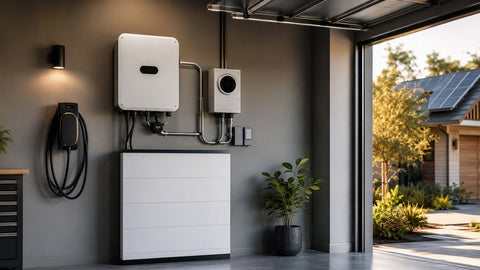
Can these panels work with battery storage systems? Yes — modules are storage-agnostic; the inverter determines how solar and batteries interact. Pair the array with a hybrid inverter or AC-coupled storage and the panels simply feed the system. BYD's own Battery-Box line is a natural pairing for buyers standardizing on one manufacturer ecosystem.
What's the difference between 144-cell and 108-cell panels? 144-cell (half-cut from 72 full cells) is the large format — 555–580W, optimized for commercial and spacious residential roofs. 108-cell (half-cut from 54) is the compact residential format at ~400–460W, easier to handle and easier to lay out around obstructions. Same cell technology, different physical package.
Price the BYD 580W Class for Your Project
We stock and source BYD modules with bin-specific datasheets, verified certifications, and freight that treats large-format glass with respect. Tell us your array size and roof or ground-mount plan — we'll quote real inventory.
Browse BYD Products