In today’s ever-evolving energy ecosystem, companies are turning to high-efficiency, long-lasting storage systems to support sustainability and meet growing power demands. One standout in this domain is the Soluna 15kWh PACK HV LFP Battery, a state-of-the-art solution that brings together advanced battery technology and robust performance. Designed for flexibility, reliability, and scalability, this battery pack is revolutionizing how businesses approach energy independence and grid resilience.
In this article, we’ll explore how the Soluna 15kWh PACK HV LFP Battery empowers commercial and industrial operations to manage energy better, reduce costs, and embrace a greener future.
The Growing Need for Smarter Energy Storage
Energy efficiency isn’t just a trend—it’s a necessity. As more companies incorporate solar and wind energy into their operations, reliable energy storage solutions like the Soluna 15kWh PACK HV HV LFP Battery are vital to optimizing performance and minimizing waste.
Why Battery Storage is Essential
Renewable energy production is inherently inconsistent due to environmental factors. The Soluna 15kWh PACK HV LFP Battery captures surplus energy during high-generation periods and discharges it when supply drops or demand spikes. This buffer reduces dependency on grid power and ensures uninterrupted operation even during blackouts or demand surges.
Battery energy storage systems (BESS) not only help with energy reliability but also offer financial benefits. By using the Soluna 15kWh PACK HV LFP Battery, businesses can shift energy usage from peak-rate hours to off-peak hours, leading to significant savings over time.
Introducing the Soluna 15kWh PACK HV HV LFP Battery
The Soluna 15kWh PACK HV LFP Battery is not your average storage unit. It is built using Lithium Iron Phosphate (LiFePO4) chemistry, widely recognized for its stability, safety, and extended cycle life. With high voltage (HV) capabilities and modular architecture, this battery system is ideal for diverse applications—from small enterprises to large industrial setups.
Key Features at a Glance
-
High Voltage (HV) Performance: Delivers efficient power throughput, enabling fast response times and consistent output.
-
15kWh Capacity: Sufficient to support heavy equipment, critical systems, or supplement large-scale renewable installations.
-
LFP Technology: Ensures safety and extended lifecycle—over 6000 charge-discharge cycles without significant degradation.
-
Modular Design: Expandable based on energy needs, making the Soluna 15kWh PACK HV LFP Battery future-proof.
These features combine to create a powerhouse of energy storage that’s easy to install, manage, and scale.
Addressing Business Energy Challenges
Modern businesses need more than just power—they need predictable, manageable, and clean energy. The Soluna 15kWh PACK HV LFP Battery helps companies align with these needs seamlessly.
Grid Independence and Reliability
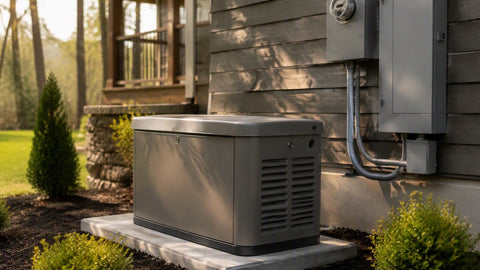
Frequent power cuts or unstable grids can be detrimental to business productivity. The Soluna 15kWh PACK HV LFP Battery provides backup during outages, allowing critical operations to continue smoothly. This is particularly useful for data centers, manufacturing plants, healthcare facilities, and remote businesses with limited grid access.
Renewable Integration
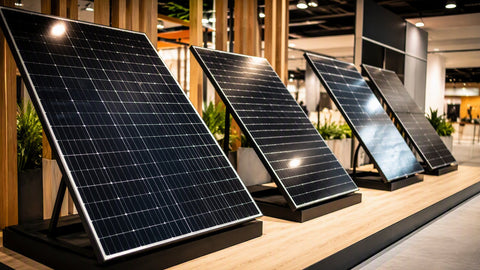
Whether you're harnessing solar panels or wind turbines, the Soluna 15kWh PACK HV LFP Battery makes renewable integration more efficient. It captures every extra watt during production peaks and makes it available when generation dips, ensuring maximum utility of green energy sources.
Long-Term Value and Performance
When evaluating energy storage, longevity and reliability are top considerations. The Soluna high-voltage battery modules score high on both.
Longevity That Pays Off
With a cycle life exceeding 6000 cycles, the Soluna 15kWh PACK HV LFP Battery offers years of dependable service. Its chemistry resists thermal runaway and degradation, ensuring performance doesn’t fade with time. For businesses, this translates to lower maintenance costs and fewer replacements.
Consistent Power in Harsh Conditions
Engineered for various environments, this battery performs across a wide range of temperatures. The Soluna 15kWh PACK HV LFP Battery includes built-in protections for overvoltage, short circuit, and thermal extremes—ensuring stable output in any condition.
Smart Energy Management with Soluna
The Soluna 15kWh PACK HV LFP Battery isn’t just about storage—it’s about smart energy usage. It includes an intelligent Battery Management System (BMS) that regulates energy flow, prevents wear, and extends the system’s lifespan.
Advanced Monitoring and Controls
With real-time monitoring, users gain visibility into their energy usage, battery health, and charging/discharging cycles. The Soluna 15kWh PACK HV LFP Battery can be integrated with energy dashboards, allowing facility managers to optimize energy flow according to specific business schedules or peak demand hours.
Cost-Efficiency in the Long Run
Initial investment in a quality battery system may seem significant, but the Soluna 15kwh hv lfp battery quickly justifies its cost through multiple savings avenues.
Reducing Operational Costs
By optimizing peak shaving and time-of-use billing, businesses can reduce electricity costs substantially. The Soluna 15k pack HV lithium battery also eliminates reliance on diesel generators, which are both costly and polluting.
Enhancing ROI on Solar Installations
If your business already has a solar system in place, the Soluna 15kWh PACK HV LFP Battery boosts its ROI by storing unused energy and using it during non-generating hours. This approach slashes grid dependency and increases self-consumption, which is critical for sustainability targets.
Future-Proofing Energy Infrastructure
The Soluna 15kWh PACK HV LFP Battery is built for the energy landscape of tomorrow. It’s compatible with evolving technologies like microgrids, virtual power plants, and AI-powered energy systems.
Preparing for Smart Grids
Smart grids are revolutionizing energy distribution by allowing two-way communication between providers and consumers. The Soluna 15kWh PACK HV LFP Battery is ready to support this evolution through its adaptive BMS and modular functionality.
Scalable for Growing Demands
Businesses aren’t static, and neither should their energy infrastructure be. With its modular nature, the Soluna 15kWh PACK HV LFP Battery allows companies to scale storage incrementally—avoiding the need for disruptive upgrades.
Sustainability and Environmental Impact
The LiFePO4 chemistry used in the Soluna 15kWh PACK HV HV LFP Battery is environmentally friendlier than other battery types. It’s non-toxic, recyclable, and manufactured under strict ecological standards.
Reducing Carbon Footprint
By enabling higher reliance on renewable energy and reducing fossil-fuel dependency, the Soluna 15kWh PACK HV LFP Battery helps businesses lower their carbon footprint. This is increasingly important in industries with ESG (Environmental, Social, Governance) mandates or sustainability reporting requirements.
Real-World Applications Across Industries
Industries across the board—from agriculture to hospitality—are adopting the Soluna 15kWh PACK HV LFP Battery for a variety of uses:
-
Retail: Prevent losses due to refrigeration failures during outages.
-
Manufacturing: Power heavy machinery during load shedding.
-
Healthcare: Ensure uninterrupted power to critical medical equipment.
-
Education: Maintain digital learning platforms without disruptions.
In every case, the Soluna 15kWh PACK HV LFP Battery delivers dependable performance tailored to the sector’s unique needs.
Conclusion: A Smarter Way Forward
As energy needs continue to grow and sustainability becomes a business imperative, the Soluna 15kWh PACK HV LFP Battery offers a future-ready solution. It empowers companies to take control of their energy usage, lower costs, and achieve long-term goals with confidence.
Whether you’re scaling up operations, integrating renewables, or simply seeking more resilient energy systems, the Soluna 15kWh PACK HV LFP Battery is your ideal partner for success in a clean energy future.
Calculate how much storage you need with our battery sizing calculator.
Use our free solar system calculator to size your array.
Check out our Solar Panel Comparison Tool. Check out our Inverter Sizing Calculator.
Calculate your solar payback and 25-year savings with our Solar ROI Calculator. Follow our complete DIY solar installation guide for step-by-step instructions. Keep your system running at peak performance with our Solar Maintenance Guide.
Related Products

Outback Power SystemEdge 8.0 kW FLEXpower Radian w/ 59kWh Energy Storage Package - SE-860XLC-300AFCI
View
SimpliPhi Power ExprESS 48V 7.6kWh Energy Storage Solution
ViewRelated Resources
- Solar System Calculator
- Battery Sizing Calculator
- Solar Panel Comparison Tool
- Inverter Sizing Calculator
- Solar ROI Calculator
- Solar Installation Guide
- Solar Maintenance Guide
- Solar Permitting Guide
- Battery Installation Guide
- NEC Code Compliance Guide
- Solar Panel Mounting Guide
- Grounding & Bonding Guide
- Solar Incentives by State
- Pro Account — Wholesale Pricing
- PowerLink Network — Contractor Program
How long do solar batteries last?
Most lithium-ion solar batteries last 10-15 years or 6,000+ cycles. The 20-80% charging rule extends battery life significantly.
What size battery do I need?
Battery sizing depends on your backup power needs. A typical home needs 10-15kWh of storage for overnight backup. Calculate your critical loads first.
Are batteries BABA-compliant?
PES Supply provides BABA documentation for qualifying products. Contact us for specific compliance documentation.
PES Supply carries 80,000+ products from 300+ manufacturers. One PO, one invoice, every trade covered.
Need help sizing? Our team can calculate loads, select equipment, and source everything from one PO.
Call (502) 790-0600
Why LFP Won the Home Battery Chemistry War
Five years ago, a buyer comparing home batteries had to weigh NMC's energy density against LFP's durability and make a real tradeoff. That tradeoff has effectively closed. Lithium iron phosphate now dominates the stationary storage market for reasons that are easy to state and hard to argue with: cycle life in the 6,000-plus class at high depth of discharge, a thermal runaway threshold far above NMC's, no cobalt in the cathode, and cell costs that fell for a decade straight as Chinese gigafactory capacity scaled. The only genuine penalty is gravimetric energy density, and a battery bolted to a garage wall does not care about grams per watt-hour.
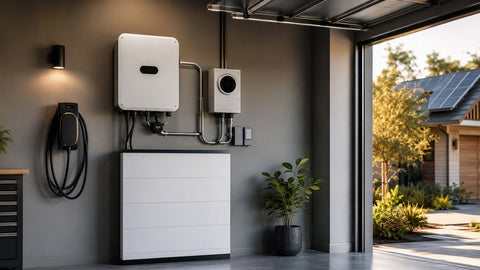
We sell across chemistries and I have no dog in the fight beyond what ships back to us under warranty — and the warranty math is blunt. LFP packs come back rarely and mostly for electronics, not cells. That field experience is why our own recommendations have converged on LFP for any homeowner planning to cycle daily, and the Soluna 15K Pack HV sits squarely in that design philosophy: a high-voltage LFP block in the 15 kWh class, sized to carry an efficient household through the night on one pack.
LFP vs. NMC: The Reference Numbers
The chemistry comparison in numbers, using the published ranges both chemistries occupy in the stationary storage market:
| Property | LFP (Lithium Iron Phosphate) | NMC (Nickel Manganese Cobalt) | Practical Consequence |
|---|---|---|---|
| Typical rated cycle life (high DoD) | 6,000+ cycles | 2,000–4,000 cycles | LFP outlasts the 10-yr warranty on cycles alone |
| Thermal runaway onset | ~270°C | ~150–210°C | LFP tolerates abuse and hot garages better |
| Gravimetric energy density | ~90–160 Wh/kg | ~150–220 Wh/kg | NMC wins in EVs; irrelevant on a wall |
| Cathode cobalt | None | Yes | LFP avoids cobalt supply and cost exposure |
| Safe daily DoD window | Up to 90–100% | Typically 80–90% | More usable kWh per nameplate kWh with LFP |
The last row compounds with the first: a chemistry that both cycles longer and lets you use more of each cycle delivers disproportionately more lifetime energy per dollar, which is exactly what the throughput table below quantifies.
The Cycle-Life Arithmetic of a 15 kWh LFP Pack
Battery economics reduce to throughput: kilowatt-hours delivered over the pack's life. A 15 kWh LFP pack cycled daily at 90 percent depth of discharge moves about 13.5 kWh per cycle. Over a 6,000-cycle rating, that is 81,000 kWh of lifetime throughput — a number worth writing down next to the purchase price, because it converts the battery from a sticker shock into a per-kWh delivery cost.
| Cycling Pattern | DoD | Energy per Cycle | Cycles per Year | Calendar Life at 6,000 Cycles | Lifetime Throughput |
|---|---|---|---|---|---|
| Daily deep cycling | 90% | 13.5 kWh | 365 | 16.4 years | 81,000 kWh |
| Daily moderate cycling | 70% | 10.5 kWh | 365 | 16.4 years | 63,000 kWh |
| Weekday-only cycling | 90% | 13.5 kWh | 260 | 23.1 years | 81,000 kWh |
| Backup-only (25 events/yr) | 90% | 13.5 kWh | 25 | Warranty-limited | ~3,375 kWh per decade |
Divide the installed cost by the lifetime throughput and the technology's trajectory becomes obvious: packs that delivered stored energy at effective costs near grid parity a few years ago now beat evening peak rates in half the country. The backup-only row carries the opposite lesson — 3,375 kWh per decade means the pack's bill savings are negligible, so a resilience-only buyer should size small or justify the purchase as insurance, exactly like a standby generator.
High-Voltage Architecture: The Amperage Advantage
The HV in the product name is not marketing garnish. Power equals voltage times current, so pushing the same kilowatts at 400 V instead of 48 V divides current by more than eight. Current is what sizes conductors, heats connections, and taxes conversion efficiency, which is why high-voltage stacks dominate grid-tied hybrid systems while 48 V banks hold the off-grid niche built around legacy inverter-chargers.
| Load Point | Current at 48 V Nominal | Current at 400 V HV Bus | Conductor Implication (75°C Cu) |
|---|---|---|---|
| 2 kW continuous | 41.7 A | 5.0 A | 6 AWG vs 14 AWG |
| 5 kW continuous | 104 A | 12.5 A | 1/0 AWG vs 14 AWG |
| 10 kW continuous | 208 A | 25.0 A | Parallel 3/0 vs 12 AWG |
| 15 kW peak | 313 A | 37.5 A | Impractical LV vs 10 AWG |
Read the 15 kW row slowly, because it is the whole argument: a 48 V bank asked to deliver 15 kW must move more than 300 A through copper, lugs, and contactors, while the HV bus does it at 37.5 A on 10 AWG wire. Lower current also means lower I²R losses — at 10 kW, a 48 V path with even 0.005 ohms of total resistance burns over 200 W as heat, while the HV path at the same resistance burns about 6 W. Efficiency, safety, and install cost all pull in the same direction.
Sizing Storage Against the Overnight Load
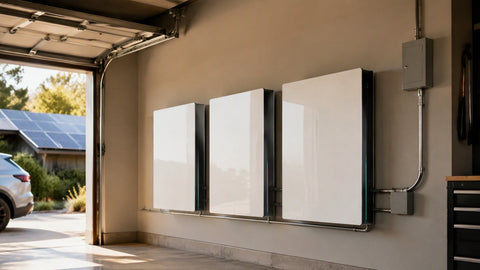
A 15 kWh pack is a deliberate size: large enough to carry a typical efficient household from sunset to sunrise with margin, small enough that one wall mount covers the job. The sizing discipline is identical to every other battery: measure the overnight load, then match usable capacity to it. Households running 8 to 12 kWh overnight land inside one pack's comfortable envelope; heavier overnight loads — electric cooking, heat pumps, EV charging — point at a second pack or load management.
| Overnight Load Profile | Overnight Consumption (6 p.m.–7 a.m.) | 13.5 kWh Usable Covers It? | Recommendation |
|---|---|---|---|
| Efficient home, gas heat and cooking | 7–9 kWh | Yes, with 30%+ margin | One pack |
| Average all-electric home | 11–14 kWh | Marginal | One pack plus load discipline, or two packs |
| All-electric with EV charging overnight | 20+ kWh | No | Two packs and scheduled EV charging off-peak |
| Backup-critical-loads only | 3–5 kWh | Yes, multi-day with solar | One pack is generous; consider sizing down |
On the charging side, the array must refill the pack daily for the cycle math to hold. The proposal rule we use: dedicated charging kW equals usable kWh divided by peak sun hours divided by an 0.85 charging-path derate. For 13.5 kWh in a 4.5 peak-sun-hour region: 13.5 ÷ 4.5 ÷ 0.85 ≈ 3.5 kW of array beyond daytime household consumption — roughly eight 450 W modules. I've reviewed proposals from competitors that paired a 15 kWh pack with an array that could never fill it from October to March; the customer gets a battery that idles at 40 percent state of charge all winter and a payback that never arrives. The array and the pack are one system, and they should be priced as one.
NEC Ground Rules for a Residential Battery Install
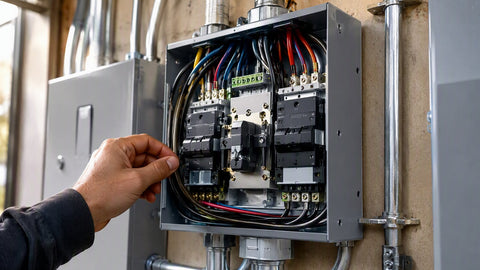
Energy storage installs run on NEC Article 706 with the wiring rules of Articles 240, 250, and 310 underneath. The owner-facing highlights: the battery needs a listed disconnect within sight or lockable, working clearances follow 110.26, conductors size at 125 percent of continuous inverter output, and the interconnection into the service panel obeys the 120 percent rule of 705.12 — on a 200 A bus with a 200 A main, combined solar-plus-storage backfeed is capped at 40 A before a panel upgrade or a line-side tap enters the quote. AHJs increasingly ask for the UL 9540 listing documentation at plan check, and a labeled, permitted install is the difference between a battery the insurer accepts and one the insurer prices against.
Charging Habits That Protect the Investment
LFP forgives more than any other lithium chemistry, but the same habits still pay: avoid parking the pack at 100 percent for weeks, avoid sustained operation at cell-temperature extremes, and let the battery management system do its job without manual override. Firmware that ships with modern packs already enforces most of this — reserve floors, temperature derates, charge tapering — which is why the single best longevity practice is boring: keep firmware current and leave the BMS settings alone unless the manual says otherwise. Our support desk's entire battery-longevity advice fits in that sentence, and it has aged well across thousands of installed packs.
Related Guides and Equipment
Compare the Soluna approach against the rest of our Soluna collection, the 15 kWh battery class, and modular alternatives like the Fortress eFlex Max 5.4 and server-rack battery systems. Sizing starts at the battery sizing calculator, and the charging-habit rules are laid out in the 20-80 battery rule. For wiring and code context, see the NEC wire sizing guide and the string wiring basics. Off-grid buyers should also read the off-grid storage sizing guide, and everyone should skim the solar battery buyer's guide before requesting quotes.
Frequently Asked Questions
What is the Soluna 15K Pack HV?
The Soluna 15K Pack HV is a high-voltage lithium iron phosphate home battery in the 15 kWh class. LFP chemistry trades some energy density for thermal stability and long cycle life, and the high-voltage architecture keeps currents low, which reduces conductor size and conversion losses compared to 48 V battery banks of the same capacity.
Why does LFP chemistry matter for home batteries?
Lithium iron phosphate cells tolerate deep daily cycling far better than the NMC chemistries used in many EVs and older home batteries. LFP packs are routinely rated for 6,000 or more cycles at high depth of discharge, contain no cobalt, and have a substantially higher thermal runaway threshold. For a stationary battery that cycles daily for a decade, those properties outweigh the modest weight penalty.
How long will a 15 kWh battery power a house?
Runtime is usable capacity divided by average load. A 15 kWh pack with about 13.5 kWh usable runs a 500 W critical-load panel for roughly 27 hours, a 1 kW partial-home load for about 13.5 hours, or a 2.5 kW unmanaged household load for about 5.4 hours. Solar recharging during daylight extends all of these figures on clear days.
How many years will an LFP home battery last?
At one cycle per day, a 6,000-cycle rating implies about 16.4 years of cycling headroom, which exceeds the standard 10-year warranty period — meaning calendar aging, not cycle count, becomes the limiting factor for most owners. Expect 10 to 15 years of useful service, with capacity gradually fading rather than falling off a cliff.
Is a high-voltage battery better than a 48 V battery bank?
For grid-tied hybrid systems, usually yes. A 10 kW inverter draws only about 26 A from a 400 V pack versus more than 200 A from a 48 V bank, so high-voltage designs use smaller conductors, run cooler, and convert more efficiently. Low-voltage 48 V banks remain the simpler, well-supported choice for off-grid systems built around 48 V inverter-chargers.
Can I expand a Soluna battery system later?
Modular high-voltage LFP systems are generally designed for stacking additional packs, subject to the inverter's supported capacity and the manufacturer's current installation manual. If expansion is likely, say so at design time — conduit sizing, wall space, and inverter selection all get easier when the second pack is planned rather than improvised.