Portland gets a bad rap for sunshine, and honestly, some of it is earned. We log roughly 144 clear or partly cloudy days a year, and November through February can feel like one long gray exhale. But here's what I've learned after years of speccing systems for Pacific Northwest rooftops: solar in Portland works, and the math works, as long as you design for our actual climate instead of pretending we live in Phoenix. This guide walks through real costs, real production numbers, Oregon's incentive stack, and the situations where solar genuinely doesn't pencil out.
Solar in Portland: Quick Overview
Before the deep dive, here's the snapshot we give homeowners who walk up to our counter asking whether solar is worth it in Portland:
| Factor | Portland Details |
|---|---|
| Average System Size | 12.59 kW (typical residential installation) |
| Average Cost Before Incentives | $34,500 (includes panels, inverter, installation) |
| Federal Tax Credit | 30% of total cost through 2032, stepping down after |
| Average Annual Savings | $800–$1,400 per year on energy bills depending on usage and utility |
| Typical Payback Period | 7–11 years with incentives in the Portland metro |
| System Lifespan | 25–30 years (panels), 10–15 years (string inverters), 25 years (microinverters) |
| Summer Daylight | Up to 16 hours in June |
| Net Metering | Available through PGE and Pacific Power at full retail rate |
One number in that table deserves a second look: the payback period. National solar marketing loves to quote 5–7 year paybacks. In Portland, with our moderate electricity rates (PGE residential averages around 14–16¢/kWh) and our winter production dip, an honest payback estimate is 7–11 years. I've run these numbers for hundreds of homeowners, and anyone promising you a 5-year payback in Portland is either assuming rate hikes or selling you something.
How Much Does Solar Actually Produce in Portland?
Portland averages about 4.0–4.3 peak sun hours per day on an annual basis, but that average hides enormous seasonal swings. A south-facing 8 kW system on a 30° roof in southeast Portland will produce roughly:
| Season | Daylight Hours | 8 kW System Monthly Production (est.) |
|---|---|---|
| Summer (June) | Up to 16 hours | 1,100–1,250 kWh — peak production; excess credits banked |
| Spring/Fall | 12–14 hours | 700–900 kWh — good production; near energy neutral for most homes |
| Winter (December) | 8–9 hours | 250–400 kWh — lower production; use banked net metering credits |
| Annual total | — | 8,800–10,200 kWh (1,100–1,275 kWh per installed kW) |
The math checks like this: 8 kW × 4.1 peak sun hours × 365 days × ~0.80 system efficiency (inverter losses, soiling, temperature derate) ≈ 9,600 kWh/year. That's the honest middle of the range. Cloud cover hurts less than people assume because modern panels harvest diffuse light, but December and January are genuinely lean. The reason Portland solar still works is Oregon's net metering structure: summer overproduction banks as kilowatt-hour credits that you draw down all winter. You're using the grid as a free battery.
The 5 Major Advantages of Solar Energy in Portland
1. Real Bill Savings, Even Under Gray Skies
A correctly sized system offsets 80–100% of a typical Portland home's annual consumption. At PGE's residential rates, every 1,000 kWh you generate is $140–$160 you don't pay. Over a 25-year panel life with modest 2–3% annual utility rate escalation, a $24,000 net system commonly returns $35,000–$50,000 in avoided bills.
2. The Incentive Stack Is Genuinely Strong
Oregon layers state and utility incentives on top of the federal 30% Investment Tax Credit. Between the ITC, Energy Trust of Oregon rebates, and the state rebate program, a standard-income Portland household can cut gross cost by 40–50%. The incentive table below breaks this down.
3. Summer Production Aligns With Peak Value
Portland's long summer days coincide with air-conditioning loads and, increasingly, time-of-use rate windows where evening power costs more. Panels pumping out 16-hour-day production in June are generating your most valuable kilowatt-hours of the year.
4. Home Value Lift
Studies from Lawrence Berkeley National Laboratory put the solar premium at roughly $4 per installed watt nationally — around a 4–6% bump on a median Portland home. Owned systems add value; leased systems mostly add paperwork.
5. Carbon Math That Actually Matters Here
The Northwest grid is already hydro-heavy, so solar's carbon advantage is smaller than in coal country — but PGE and Pacific Power still burn gas and coal at the margins, and every solar kWh displaces that marginal generation. A typical Portland system avoids roughly 4–6 metric tons of CO₂ per year depending on the marginal mix.
Oregon Solar Incentives: What's Actually Available in 2026
This is where Portland homeowners leave money on the table most often, so let's be precise:
| Incentive | Standard Amount | Income-Qualified Amount |
|---|---|---|
| Federal ITC | 30% of cost (~$10,350 on the average system) | 30% of cost (~$10,350) |
| Energy Trust Solar | $2,500 | Up to $6,600 |
| Energy Trust Storage | Up to $5,000 | Up to $11,700 |
| Oregon State Rebate | Up to $5,000 | Up to 60% of cost |
| Total Potential Savings | $17,000–$22,000 | $25,000+ |
A caution from the field: Energy Trust and Oregon Department of Energy rebate budgets are allocated in funding rounds and do run dry mid-year. I've watched customers lose $2,500 because they waited until September to file. If you're serious, get your reservation in during the first half of the year, and verify current program status before you sign a contract — rebate rules shift more often than the rain forecast.
For a broader view beyond Oregon, our state-by-state solar incentives guide tracks what's live across the country.
The 5 Key Challenges of Solar in Portland
1. Upfront Investment
Even after incentives, you're writing a check (or financing) $14,000–$22,000 for a typical system. Solar loans at 6–8% APR eat $4,000–$8,000 of lifetime savings in interest. Cash is king if you have it; a short loan term is second best.
2. Weather Variability
Winter production is a quarter of summer production. If your roof is shaded by Douglas firs — and in neighborhoods like Sellwood or Beaverton, many are — your annual yield drops fast. Any honest site assessment starts with a shade analysis, not a sales pitch.
3. Roof Condition and Orientation
Panels last 25–30 years. If your comp roof has 8 years left, reroof first. I tell every customer the same thing: never bolt a 30-year asset to a 7-year roof. South-facing at 25–35° tilt is ideal; east/west roofs lose roughly 15–20% of production but still pencil out; flat roofs need tilt-up racking that adds cost.
4. Manufacturing Footprint
Panels carry an embodied energy cost — roughly 1–2 years of their production output pays it back. It's a real consideration, though the 25-year math is overwhelmingly positive.
5. Battery Storage Costs
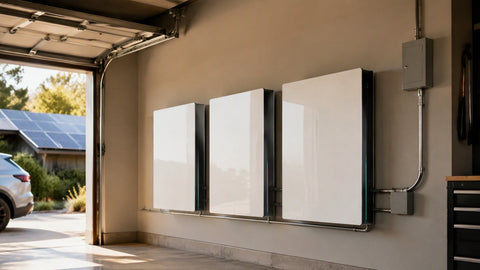
Net metering means you don't need a battery in Portland. Adding 13.5 kWh of storage runs $10,000–$14,000 installed and extends payback by years — worth it only if outage resilience matters more to you than ROI. Our battery sizing calculator helps if you want to run those numbers, and the battery 20–80 rule guide covers how to size and operate storage for longevity.
Worked Example: The Real Math on a Portland 8 kW System
Let's run one honest scenario end to end, because this is where most guides wave their hands:
| Line Item | Amount | Notes |
|---|---|---|
| Gross installed cost | $24,000 | 8 kW at $3.00/W, Portland metro average |
| Federal ITC (30%) | −$7,200 | $24,000 × 0.30 |
| Energy Trust rebate | −$2,500 | Standard income tier |
| Net cost | $14,300 | $24,000 − $7,200 − $2,500 |
| Year-1 production | 9,600 kWh | 4.1 PSH × 8 kW × 365 × 0.80 |
| Year-1 bill savings | $1,440 | 9,600 kWh × $0.15/kWh |
| Simple payback | ~9.9 years | $14,300 ÷ $1,440 (ignores escalation and degradation) |
| 25-year net savings | ~$22,000–$28,000 | With 2.5%/yr rate escalation, 0.5%/yr panel degradation |
Two adjustments separate honest math from brochure math. First, degradation: quality panels lose about 0.4–0.5% of output per year, so year 25 production is roughly 88–90% of year 1. Second, rate escalation: PGE rates have climbed faster than 2.5% some years, which shortens payback. These two effects roughly cancel, which is why the simple payback number above is a decent planning figure. Want to run your own roof? The solar ROI calculator and system sizing calculator take your actual usage and address.
Is Solar Right for Your Portland Home?
Solar Is Likely a Good Fit If:
- Your roof is south, southeast, or southwest facing with minimal shading from 9 a.m. to 4 p.m.
- Your roof has 10+ years of life remaining, or you're already planning a reroof
- Your annual usage exceeds 7,000 kWh (smaller bills make payback long)
- You plan to stay in the home at least 8–10 years, or you want the resale premium
- You can use the federal tax credit (you have tax liability to offset)
Solar May Not Be Ideal If:
- Mature conifers shade your roof most of the day — trimming helps, but a wall of 80-foot firs is a wall
- Your usage is under 5,000 kWh/year and you heat with gas — the fixed costs dominate
- You're moving within 3–5 years (the resale premium rarely covers full net cost)
- Your electrical panel needs a $3,000+ upgrade and your budget is already tight — though our installation guide covers how to sequence that work
Equipment Notes From the Supply Side
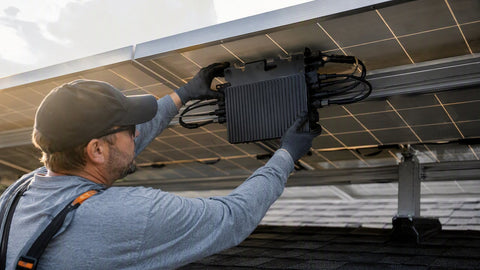
Since we sell this equipment wholesale, a few practical observations. Panel choice matters less than people think: any Tier 1 module — Qcells, REC, JA Solar, Trina — within the 19–22% efficiency band will serve a Portland roof well, and the full solar panel catalog shows current pricing. Inverter choice matters more, because the inverter is the part that dies first. If your roof has any shade complexity, microinverters or optimizers pay for themselves; on a clean south roof, a quality string inverter is the value play. Our inverter buyer's guide walks through that decision, and the panel comparison tool lines up the current models.
If you're sizing from scratch, start with your usage: a home burning 1,500 kWh a month needs roughly 11–13 kW in Portland's climate, which our 1,500 kWh/month sizing guide works through panel by panel. For current pricing context, see what solar panels actually cost in 2026, and for a broader perspective, whether solar is worth it for your specific situation.
PGE vs. Pacific Power: How Your Utility Changes the Math
Portland splits between two utilities, and the difference is not cosmetic. Both offer full retail-rate net metering under Oregon's program, but rates, fee structures, and time-of-use options diverge enough to move payback by a year or more:
| Factor | PGE | Pacific Power (PacifiCorp) |
|---|---|---|
| Typical residential rate | ~$0.15–0.17/kWh (higher, faster recent escalation) | ~$0.12–0.14/kWh |
| Net metering credit | Full retail kWh credit, annual true-up in spring | Full retail kWh credit, annual true-up |
| Time-of-use option | Yes — evening peak pricing rewards solar + shifting loads | Limited TOU availability by tariff schedule |
| Interconnection timeline | Typically 2–4 weeks after inspection | Typically 2–6 weeks; rural feeders can run longer |
| Solar payback tendency | Faster — higher rates make each kWh worth more | Slower — cheap power stretches payback 1–2 years |
The counterintuitive takeaway: PGE customers, who complain about rates the loudest, actually have the better solar economics. I've quoted identical systems a mile apart where the PGE house penciled at 9 years and the Pacific Power house at 11. Same sun, same panels, different utility tariff.
Roof Suitability: The Four Checks We Run First
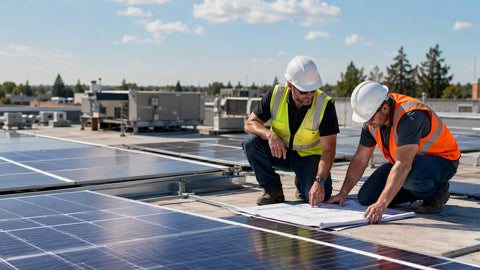
Before any talk of panel brands, a Portland site assessment comes down to four checks. Azimuth: true south is ideal, and every 45° off south costs roughly 10–15% of annual yield — west-facing roofs still work but need a larger system for the same offset. Pitch: 25–35° matches our latitude well; flat roofs need tilt racking that adds $0.15–0.30/W. Shade: a single flue vent is trivial, but a mature fir casting shadow from 10 a.m. to 2 p.m. can cut a string's output by a third unless you use module-level electronics. Structure: composite shingle is the easiest attachment, standing-seam metal is the best (clamp-on, no penetrations), and tile or cedar shake drives labor cost up fast.
What 25 Years of Production Actually Looks Like
Panel degradation is the quiet number that separates real projections from sales projections. Quality Tier 1 modules degrade around 0.4–0.5% per year after a first-year drop of about 1–2%. Here's the 8 kW example system across its life:
| Year | Est. Annual Production (kWh) | Cumulative Savings at $0.15/kWh + 2.5%/yr Escalation |
|---|---|---|
| 1 | 9,600 | $1,440 |
| 5 | ~9,400 | ~$7,700 |
| 10 (payback point) | ~9,200 | ~$16,400 — net cost recovered |
| 15 | ~8,950 | ~$26,800 |
| 20 | ~8,700 | ~$39,000 |
| 25 | ~8,450 | ~$53,000 |
Subtract the $14,300 net cost and you're left with roughly $38,000 in lifetime net savings on a system that needs almost no maintenance beyond an occasional rinse and one inverter replacement somewhere around year 12–15 (budget $2,000–$3,000 for that swap at today's prices). That's the honest shape of the investment: boring, slow, and reliably positive — which is exactly what you want from something bolted to your house.
Winter Bills and Time-of-Use: The Two Questions Portlanders Actually Ask
"What does my bill look like in January?" Honest answer: with net metering, your winter bills draw down the credits you banked June through September. A well-sized system typically carries customers credit-neutral into November or December; January and February usually produce a real but reduced bill. If your credits run dry early every year, your system is undersized for your usage — a fixable design problem, not a climate verdict.
"Should I go on time-of-use rates?" PGE's TOU pricing makes evening power expensive and midday power cheap. Solar alone can conflict with TOU because your best production lands in cheap midday windows — but solar plus a battery flips that: charge from panels at noon, discharge through the 5–9 p.m. peak. Whether the spread justifies battery cost depends on your usage shape; this is exactly the analysis the ROI calculator runs.
Three Objections I Hear Every Week
"I'll wait for prices to drop more." Panel prices are near historic floors and the federal credit step-down is a known clock. Waiting for cheaper hardware while paying full utility rates is usually a net loss — I ran the comparison for a customer last spring and her year of waiting cost more than the plausible equipment saving. "My roof is too old." Maybe — but reroofing first and bundling the projects often costs less than people fear, and the array protects the roof section beneath it. "The technology is changing too fast." Cell efficiency improves about half a percent a year now; the panel you'd install today will still be competitive hardware in 2035. Change is incremental, not disruptive.
Permitting and Inspection in the Portland Metro
Portland's permitting is friendlier than its reputation. Residential solar permits through the Bureau of Development Services are largely over-the-counter or short-review for standard flush-mount systems, and the city has adopted streamlined solar permitting practices. What slows jobs down here isn't the building department — it's utility interconnection and the occasional structural question on older homes. Homes built before 1940 (Portland has thousands) sometimes need a rafter capacity check, and knob-and-tube-era electrical services often need a panel upgrade before solar backfeed is legal. Budget the upgrade into the project rather than discovering it at rough-in; a 200A service change runs $2,500–$4,500 and is money well spent for an electrifying household anyway.
Solar and Electrification: Planning for the EV and the Heat Pump
The smartest sizing question in 2026 isn't "what do I use now" — it's "what will I use in three years." A Portland household adding an EV (+2,500–3,500 kWh/year) and swapping a gas furnace for a heat pump (+2,000–4,000 kWh/year) can nearly double consumption. If either is on your horizon, size the array for the future load now: adding panels later means new permits, new racking, and often a different (mismatched) module model. The one boundary condition is your electrical service — a 100A panel gets crowded fast when solar, an EV charger, and a heat pump all arrive together.
Frequently Asked Questions
Do solar panels work in Portland's cloudy weather?
Yes. Panels generate power from diffuse light on overcast days — typically 10–25% of full-sun output. Portland's annual average of about 4.1 peak sun hours is lower than the Southwest but comparable to much of northern Europe, where solar is widespread. Net metering smooths the seasonal swings by banking summer surplus for winter use.
How much does solar cost in Portland after incentives?
A typical 8 kW system runs about $24,000 gross and roughly $14,000–$16,500 net after the 30% federal tax credit and Energy Trust rebates. Income-qualified households can stack additional state rebates that push net cost below $10,000 in some cases.
What is net metering and how does it work in Oregon?
Both PGE and Pacific Power offer full retail-rate net metering. Excess kilowatt-hours you export in summer become credits on your bill that offset winter usage. Credits roll month to month and true up annually, which effectively turns the grid into free seasonal storage.
Do I need battery storage for solar in Portland?
No — net metering already covers your night and winter needs economically. Batteries make sense if you want backup power during outages or if you're on a time-of-use rate with expensive evening peaks. Expect $10,000–$14,000 installed for a typical 13.5 kWh system before incentives.
How long do solar panels last?
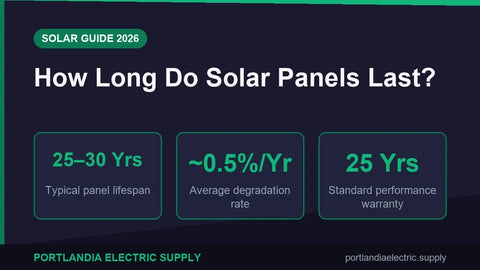
Panels carry 25-year production warranties and commonly run 30+ years. Expect about 0.4–0.5% output loss per year. String inverters typically need one replacement around year 12–15; microinverters carry 25-year warranties.
Will solar panels increase my home's value?
Owned systems generally do — research consistently shows buyers paying a premium for lower operating costs, on the order of 4–6% for a median Portland home. Leased systems are a different story and can complicate a sale.
Ready to Explore Solar for Your Portland Home?
Solar in Portland isn't a slam dunk for every roof, but for a south-facing home with decent usage, the 25-year math is solidly positive — and the incentive stack available right now is the strongest it's likely to be. Start with your actual numbers: pull 12 months of kWh from your utility bill, run them through the system calculator, and if you'd rather talk it through with a human who's specced a few thousand of these, reach out to our team — we sell the equipment wholesale and we'll tell you straight whether your roof makes sense.