I sell solar equipment for a living, so take this with the appropriate grain of salt — but the reason I got into this business fifteen years ago wasn't idealism. It was watching the cost curves cross and realizing the transition was going to happen with or without any of us, and the only question was who'd be positioned for it. Renewable energy has moved from environmental preference to economic default across most of the world's electricity markets. This guide covers where the technologies actually stand — real costs, real constraints, real numbers — and what the shift means for a homeowner making decisions in the next twelve months rather than the next fifty years.

The Five Pillars of Renewable Generation
"Renewables" gets used as one word for five very different technologies, each with its own physics, economics, and role on the grid:
| Source | How It Generates | Capacity Factor (Typical) | Distinguishing Strength | Structural Limit |
|---|---|---|---|---|
| Solar PV | Photons to electrons in semiconductor junctions | 15–25% (fixed-tilt, U.S.) | Cheapest new-build electricity in most markets; scales from one panel to a gigawatt | Daytime only; seasonal swing |
| Onshore wind | Rotor kinetic energy through a gearbox/direct-drive generator | 30–45% | Lowest cost per MWh in windy regions; complements solar's daily curve | Site-dependent; transmission-hungry |
| Hydropower | Elevated water through turbines | 40–60% | Dispatchable, century-long asset life, grid inertia | Best sites built out; drought exposure |
| Geothermal | Earth heat to steam/binary cycles | 70–90% | Baseload renewables — runs day and night | Geographically constrained (today) |
| Bioenergy | Combustion/gasification of organic feedstock | 50–80% | Dispatchable; uses waste streams | Feedstock logistics and land-use limits |
The pattern that matters: solar and wind are the growth engines because their costs collapsed and keep falling, while hydro, geothermal, and biomass provide the steady backbone that variable sources can't. A decarbonized grid isn't one technology winning — it's a portfolio where each covers the others' gaps.
How the Economics Flipped
The single most important chart in energy is the learning curve: every doubling of cumulative solar production has historically cut module prices by roughly 20–25%, a pattern that has held for four decades. The result, in round numbers drawn from public cost analyses (Lazard's annual LCOE series and IRENA's cost reports):
| Source | ~2010 LCOE (approx.) | Recent Unsubsidized LCOE | Change |
|---|---|---|---|
| Utility-scale solar PV | ~$0.25–0.35/kWh | ~$0.03–0.09/kWh | Down ~85–90% |
| Onshore wind | ~$0.08–0.12/kWh | ~$0.03–0.08/kWh | Down ~60–70% |
| Natural gas combined cycle | ~$0.06–0.09/kWh | ~$0.045–0.11/kWh | Roughly flat |
| Coal | ~$0.09–0.12/kWh | ~$0.07–0.17/kWh | Flat to rising |
That crossover — renewables undercutting the operating cost of existing fossil plants, not just new ones — is why solar has led U.S. capacity additions for consecutive years and why the International Energy Agency's scenarios keep underestimating solar growth and then revising upward. Forecasts keep failing in the same direction: reality outruns the models.
Storage: The Keystone That Arrived on Schedule
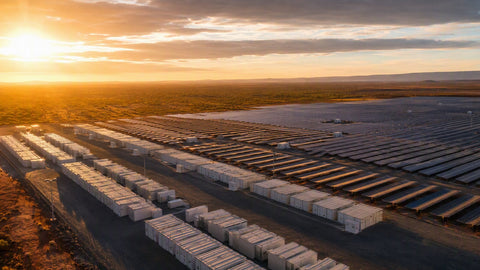
The legitimate knock on solar and wind was always variability, and the honest answer was always "storage will get there." It has. Lithium-ion battery pack prices fell by roughly an order of magnitude over the past decade-plus, and grid-scale storage installations now pair with the majority of new large solar projects in leading markets. The technology ladder as it stands:
| Storage Technology | Duration Sweet Spot | Round-Trip Efficiency | Status |
|---|---|---|---|
| Lithium-ion (LFP dominant) | 2–8 hours | ~88–95% | The incumbent; costs still falling |
| Pumped hydro | 6–20+ hours | ~70–80% | The largest installed base globally; site-limited |
| Flow batteries | 6–12+ hours | ~65–75% | Commercializing; long-duration niche |
| Iron-air and other chemistries | Multi-day (100 hr targets) | ~40–50% | Emerging; aimed at seasonal gaps |
| Green hydrogen | Seasonal | ~25–40% (round trip) | Early; industrial decarbonization first |
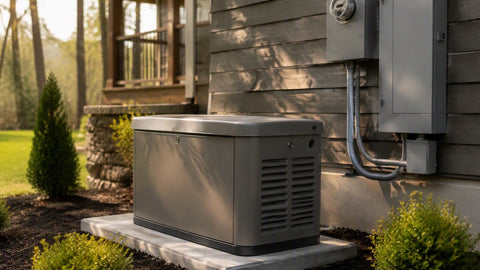
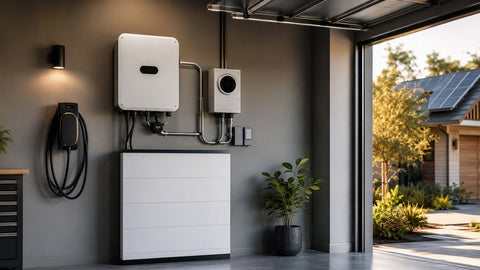
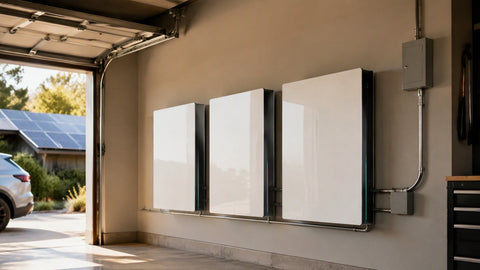
At the residential scale, storage is already a product, not a promise — a 10–15 kWh battery paired with rooftop solar covers evening peaks and outages for most homes. Our battery sizing guide and runtime calculator do that math, and the battery storage collection shows current hardware. For outage-first buyers, compare against generator backup via the whole-home generator guide — the right answer is often both.
What the Grid Transition Looks Like From Inside the Industry
Three structural shifts are visible from where I sit, quoting systems every week:
1. Interconnection is the new bottleneck. Generation is cheap; permission to connect is slow. Interconnection queues in U.S. markets hold more proposed renewable capacity than the entire existing grid. Reform is grinding forward, but for now, the constraint on the transition is paperwork and transmission steel, not technology or money.
2. Electrification multiplies the prize. Every heat pump and EV that replaces a gas furnace or gasoline car moves demand onto the electric grid — where renewables can serve it. Buildings and transport together represent the majority of fossil demand; electrifying them is how renewable electricity becomes renewable energy. The EV charging installation guide covers the residential end of that shift.
3. Distributed generation keeps taking share. Rooftop solar isn't a rounding error anymore; in leading states it visibly reshapes the daily demand curve (the famous "duck curve"), which is exactly why rate design and storage matter more every year. The grid is becoming millions of small power stations coordinated by software, and that architecture is more resilient, not less, than the centralized model it supplements.
What This Means for One Homeowner
Global trends are background; your decision is specific. Here's how the macro transition translates into household-level action right now:
| Action | Typical Cost Range | Payback Mechanism | Why Now |
|---|---|---|---|
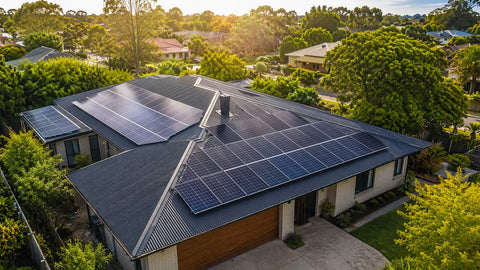
| Rooftop solar (owned) | ~$2.50–3.25/W installed before incentives | 6–10 yr payback vs. retail rates; 25+ yr production | Equipment costs near historic lows; ITC available |
| Home battery (10–15 kWh) | Varies by brand and install complexity | TOU arbitrage, outage protection, weak-net-metering fix | Storage incentives stacking in many states |
| Heat pump HVAC | Comparable to conventional replacement at end-of-life | 2–4× efficiency vs. resistance heat; beats gas in most climates | Best economics when replacing dead equipment anyway |
| EV + home charging | Charger install typically $500–2,000 | Fuel cost per mile ~1/3 of gasoline | Pairs with solar for the cheapest "fuel" available |
| Backup power (generator or battery) | Portable: hundreds; standby: $9–15k installed | Consequence avoidance: pipes, food, medical loads | Outage frequency rising with extreme weather |
The sequence I recommend: efficiency first (weatherization is still the cheapest "generation"), then solar sized to your post-efficiency load with the system size calculator, then storage or backup matched to your outage profile, then electrification of heat and transport as equipment reaches end-of-life. Each step makes the next one cheaper. Equipment to start with: high-efficiency panels, hybrid inverters that leave the battery door open, and the panel kits buyer's guide.
The Honest Constraints
A credible case for renewables includes the hard parts. Variability is managed, not solved — multi-day regional weather events still require dispatchable backup, which today means gas, hydro, and demand flexibility. Supply chains for modules, batteries, and transformers concentrate in a handful of countries, and trade policy whipsaws project economics; I've watched tariff announcements add 15% to a quote between site visit and signature. Permitting and transmission take years. Raw material extraction has real environmental and labor costs that responsible sourcing mitigates but doesn't erase. And recycling infrastructure for first-generation panels and turbine blades is still maturing. None of these reverse the direction — they set the pace. The transition is a decades-long industrial project with friction at every step, and anyone selling you frictionless versions of it, in either direction, is selling something.
Where This Leaves the Next Decade
Strip away the advocacy and the trajectory is a set of compounding curves: module costs following their learning rate downward, battery costs following theirs, EV adoption following an S-curve that every technology from smartphones to refrigerators has traced, and policy ratcheting rather than reversing across administrations and countries. The world's grids will not look like today's in 2040 any more than today's look like 1990's. For a homeowner, that future arrives one decision at a time — and the decisions that pencil today are the ones built on the technologies whose costs already crossed: solar generation, lithium storage, efficient electrification, and resilient backup. Everything else is waiting for its own curve to bend.
Solar's Technology Ladder: How Panels Got This Good

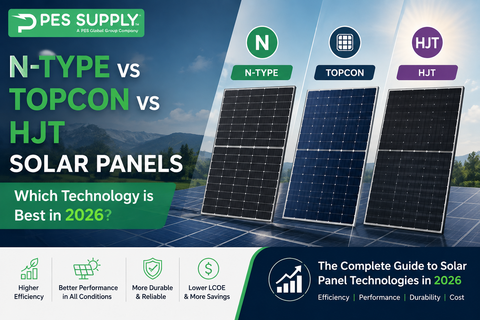
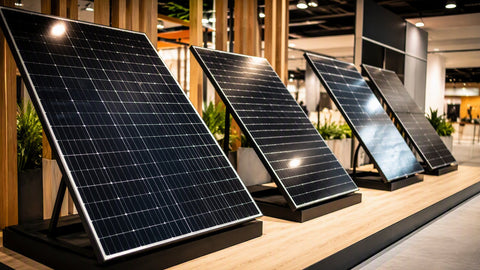
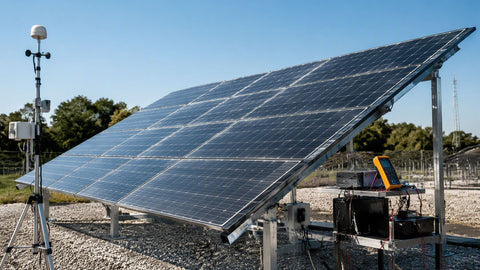
The module on a 2026 roof would be unrecognizable to a 2010 installer. Cell architecture climbed a clear ladder: conventional aluminum back-surface field cells gave way to PERC (passivated emitter rear cell), which now gives way to TOPCon and heterojunction (HJT) designs pushing module efficiencies from the mid-teens past 22% in mass production. Wafer sizes grew, cells got cut in halves and thirds to cut resistive losses, multi-busbar interconnects replaced ribbons, and bifacial glass-glass construction started harvesting reflected light off the ground. Each step was incremental; the sum is that a residential panel today makes 440+ watts in the footprint where 250 watts used to live. That's why roof area — once the binding constraint on home solar — increasingly isn't, and why repowering old arrays with modern modules is becoming its own business. Current high-efficiency stock sits in our 400–459W collection.
Wind: The Quiet Giant
Wind doesn't photograph as well as rooftop solar, but it remains the largest single source of renewable generation in the U.S. mix, and its economics in the Great Plains corridor are the benchmark every other technology chases. Modern turbines are colossal — hub heights past 100 meters, rotors longer than a football field — because capacity factor scales with swept area and wind speed aloft. Offshore wind extends the same logic into stronger, steadier ocean winds, at higher construction cost but with capacity factors approaching 50–60% that onshore can't touch. For a homeowner, wind's relevance is mostly indirect — it shapes the wholesale power your utility buys — but small wind exists for rural properties with genuinely good wind resource (consistent 10+ mph averages, tall towers, no obstructions). It's a niche I'll specify maybe once a year, only after the anemometer data justifies it; solar is the better rural answer nine times out of ten because it's modular, silent, and maintenance-light.
Policy as Scaffolding, Not Engine
The durable policy lesson of the past fifteen years is that incentives accelerate transitions that economics already favors. The Investment Tax Credit pulled U.S. solar forward by years; production tax credits did the same for wind; state renewable portfolio standards created early markets when costs were still high. What changed is that the scaffolding now supports a structure that could increasingly stand without it — unsubsidized renewables beating subsidized incumbents in head-to-head procurement. Policy still matters enormously at the edges: interconnection reform, transmission permitting, storage incentives, and building codes decide how fast the transition proceeds, and slow is expensive in both dollars and emissions. But the direction no longer depends on any single program surviving any single election, which is the deepest form of durability an energy transition can have.
The Industrial Shift: Jobs, Factories, and Skills
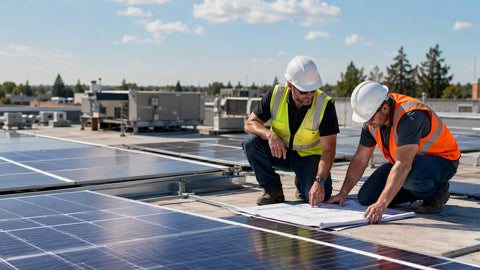
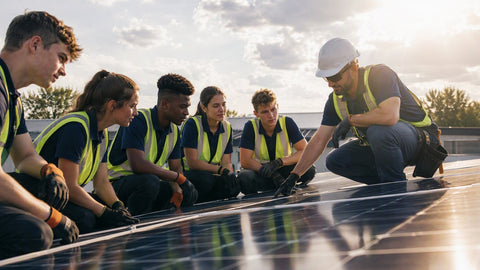
The transition is also a labor story. Solar installation and wind turbine technician roles have ranked among the fastest-growing U.S. occupations for years, and domestic module and battery factories have come back online under recent industrial policy. From the distributor's chair, the skills gap is the real pinch: licensed electricians, NABCEP-credentialed installers, and lineworkers for the transmission buildout are the constraint I hear about from every EPC we supply. For anyone early in a career — or considering a pivot — the trades adjacent to electrification are among the few sectors where demand is structurally guaranteed for decades. The grid of 2040 gets built by hands, and there aren't enough of them yet.
Hydro and Geothermal: The Firm Backbone
Variable renewables get the headlines, but firm clean power does the quiet heavy lifting. Hydropower has anchored grids for a century — dispatchable in seconds, with reservoirs that double as the world's largest batteries. Its growth ceiling is real (the best river sites are built, and drought years expose the risk), but its existing fleet is irreplaceable grid infrastructure that newer technologies complement rather than displace. Geothermal is the sleeper: today's conventional plants are confined to volcanic geography, but next-generation enhanced geothermal — applying shale drilling techniques to hot rock anywhere — has moved from pilot projects to commercial contracts. If it scales, it solves the hardest problem in clean energy: 24/7 carbon-free power with a tiny land footprint. Watch it the way we watched batteries in 2015 — early, imperfect, and about to matter far more than the headline share suggests.
Decentralization: Your Roof as Infrastructure
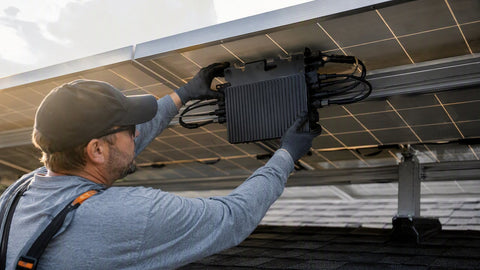
The least appreciated feature of the renewable grid is architectural. The 20th-century grid was a hierarchy: a few giant plants pushing power one way down transmission arteries. The emerging grid is a network — millions of rooftops, batteries, EVs, and smart loads coordinated in both directions. That topology fails differently: a downed transmission line darkens a region in the old model, while a distributed grid islands, shares, and limps rather than collapses. After every major storm I field the same wave of calls from people who watched their neighbor's solar-plus-battery home keep its lights on, and those calls are the transition spreading one block at a time. Your roof isn't just a bill-reduction device; it's a node in a more resilient national infrastructure, and it's the only infrastructure investment most households will ever make that pays a dividend. The system components overview shows what that node is actually made of.
Three Myths That Refuse to Die
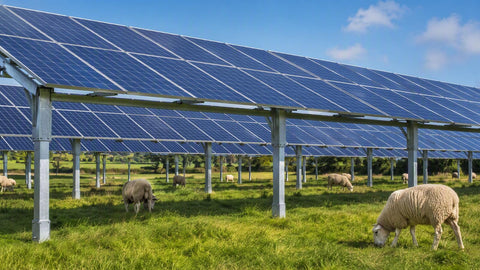
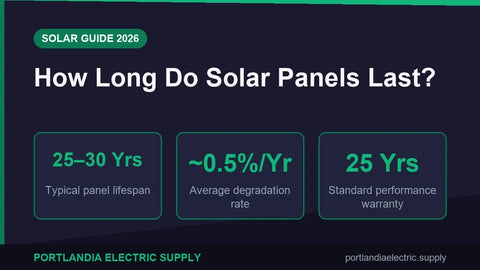
"Panels take more energy to make than they produce." Disproved by basic math: modern modules repay their manufacturing energy in roughly 1–2 years of operation and then produce for 25–30 more. "Renewables need 100% backup, so nothing is saved." Grids don't work on 100% backup for any source — they work on portfolios and margins; every renewable MWh displaces fuel burn directly. "The land footprint is unmanageable." Total U.S. electricity from solar at high penetration requires on the order of a fraction of one percent of land area — less than what's currently devoted to golf courses — before counting rooftops, parking canopies, and dual-use agrivoltaics. The honest constraints (transmission, permitting, supply chains) are real enough; there's no need to invent false ones.
A Note on Pace, From Someone Watching It Daily
I've supplied equipment through three generations of solar technology, and the pattern that still surprises people is how ordinary each step feels from inside it. Nobody threw a parade when module prices crossed a dollar a watt, or when batteries crossed the price points that made home storage routine — the milestones arrived as line items on quotes, and the industry just kept working. That's how industrial transitions actually happen: not as revolutions but as procurement decisions repeated millions of times across warehouses like ours and rooftops like yours. I've watched customers go from "solar is a nice idea" to "why doesn't every roof have this" in the span of one utility rate hike, and that shift in gut instinct — replicated across millions of households — is the engine under everything in this article. The sustainable future isn't coming as an event. It's arriving as a default, one rational decision at a time.
The honest constraints (transmission, permitting, supply chains, recycling scale-up) are real enough; there's no need to invent false ones, and repeating debunked claims only delays the procurement decisions that actually move the needle. I spend part of every week correcting one of these three myths for a smart, skeptical customer — and the correction usually ends with a quote request, because the real numbers are stronger than the mythology in either direction.
Frequently Asked Questions
Can renewable energy realistically power the whole grid? Yes, as a portfolio rather than a single source: solar and wind for bulk energy, hydro and geothermal for steady output, storage for shifting hours to days, and demand flexibility at the edges. Every serious grid study reaches high renewable shares with current technology; the constraints are transmission buildout and permitting speed, not physics.
Why did solar get so much cheaper than fossil fuels? A decades-long learning curve: each doubling of cumulative production has cut module costs roughly 20–25%, driven by manufacturing scale, cell efficiency gains, and supply-chain maturation. Fossil generation has no equivalent curve because fuel — its dominant cost — doesn't get cheaper with scale.
What happens when the sun isn't shining and wind isn't blowing? Storage shifts energy across hours; geographic diversity smooths regional lulls; dispatchable sources (hydro, geothermal, and transitional gas) cover multi-day gaps. At the home level, a battery or generator covers your personal version of the same problem.
Is now a good time to buy solar, or should I wait for cheaper panels? Module prices will likely keep drifting down, but installation labor, permitting, and financing dominate system cost and aren't falling. Meanwhile every year of waiting is a year of paying retail rates. For most properties, the modeled return favors acting now rather than timing a bottom.
How do I participate if I rent or have a shaded roof? Community solar subscriptions deliver bill credits at a discount to retail with no installation, and efficiency upgrades plus green-power utility programs cut your fossil exposure immediately. Renters have more doors into the transition than they did five years ago.
What's the single highest-impact step for a typical household? For most U.S. homes with a suitable roof and average-or-higher electric rates, owned rooftop solar is the largest durable lever — six-figure lifetime kWh at a locked-in effective rate. Run your specific numbers before committing; the answer is property-specific, not generic.
The Transition You Can Hold in Your Hands
Renewable energy stopped being a slogan the day the spreadsheets flipped, and everything since has been execution. The sustainable future gets built out of specific hardware on specific roofs — panels, inverters, batteries, chargers — purchased by people running their own numbers. If you're ready to run yours, our renewable energy components collection and the guides linked throughout this article are the working tools, and our team quotes real systems for real properties every day.