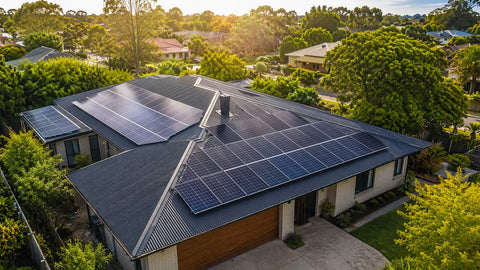
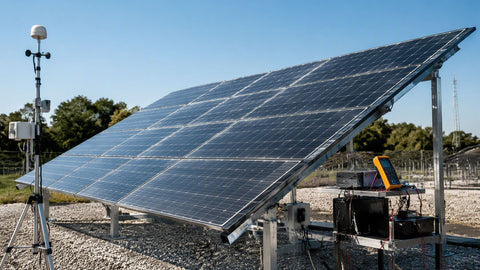
To produce 3,000 kWh per year, you need between 5 and 9 solar panels — about 2 to 2.6 kW of array depending on your sunlight. In Phoenix, five 450W panels do it. In Seattle, plan on eight. This is a small, affordable system by residential standards — the size people install for cabins, efficient homes, RV roof decks, workshops, or as a first phase that offsets the most expensive slice of their bill. Here is the exact math, the full panel-count tables by state and panel wattage, and the practical details that decide whether a small system punches at its weight.

The Math
System size (kW) = 3,000 kWh ÷ (peak sun hours × 365 × 0.80 system efficiency)
At the national-average 4.5 peak sun hours: 3,000 ÷ (4.5 × 365 × 0.80) = 3,000 ÷ 1,314 = 2.28 kW. Then divide by panel wattage:
2,280W ÷ 450W = 5.1 → 6 panels (rounding up builds in ~18% headroom, which you want).
The 0.80 efficiency factor prices in inverter losses, wiring, temperature, and soiling. Small systems actually deserve a slightly harsher derate in some configs — a single-phase string inverter running at 20% of its rating is less efficient than one at 70% — which is one more reason to round up on panel count rather than down.
Panel Count by Location (3,000 kWh/Year Target)
| Location | Avg Peak Sun Hours | System Size Needed | Panels @ 400W | Panels @ 450W | Panels @ 550W |
|---|---|---|---|---|---|
| Phoenix, AZ | 6.5 | 1.6 kW | 4 | 4 | 3 |
| Los Angeles, CA | 5.7 | 1.8 kW | 5 | 4 | 4 |
| Denver, CO | 5.5 | 1.9 kW | 5 | 5 | 4 |
| Dallas, TX | 5.2 | 2.0 kW | 5 | 5 | 4 |
| Atlanta, GA | 4.8 | 2.2 kW | 6 | 5 | 4 |
| Chicago, IL | 4.2 | 2.5 kW | 7 | 6 | 5 |
| New York, NY | 4.0 | 2.6 kW | 7 | 6 | 5 |
| Portland, OR | 3.9 | 2.7 kW | 7 | 6 | 5 |
| Seattle, WA | 3.6 | 2.9 kW | 8 | 7 | 6 |
Check any row: 3,000 ÷ (PSH × 365 × 0.80) ÷ panel watts, round up. The spread from 4 panels to 8 panels for identical production is entirely geography — which is why "how many panels" questions never have one honest national answer.
What 3,000 kWh per Year Actually Covers
Context matters more than panel counts. Here is where 3,000 kWh lands against real loads (roughly 250 kWh per month, 8.2 kWh per day):
| Scenario | Annual Load (kWh) | Does 3,000 kWh Cover It? |
|---|---|---|
| Average US home | ~10,500 | ~29% — a meaningful bill offset |
| Efficient apartment, gas heat | 3,600–6,600 | 50–80% — most of the bill |
| Cabin / weekend retreat | 1,500–3,500 | Often 100%+ |
| Workshop (tools, compressor, mini-split) | 1,800–3,000 | Most or all of it |
| One EV driven ~12,000 mi/yr | 3,000–4,000 | Essentially the whole EV |
| Pool pump + hot tub | 2,500–4,000 | Most of the backyard loads |
| Server rack / home lab | 2,600–5,000 | 60–100% depending on the rack |
The pattern: 3,000 kWh is a whole load, not a whole house, for most people. That is a feature. Targeting your single most expensive load — the EV, the pool, the guest house — is often a better financial move than a fractional whole-house system, especially where utilities have minimum-bill charges that small systems cannot eliminate anyway.
System Anatomy: What a 2–2.5 kW Build Looks Like
| Component | Typical Spec for 3,000 kWh/yr | Notes |
|---|---|---|
| Panels | 5–8 × 400–550W | ~100–150 sq ft of roof; browse 400–459W panels or 500W-class modules |
| Inverter | 2–3 kW string, or 5–8 microinverters | Micros shine on shaded or multi-face roofs; see microinverters and inverter options |
| Racking | Standard rail kit for 6–8 modules | Racking guide covers layout and loads |
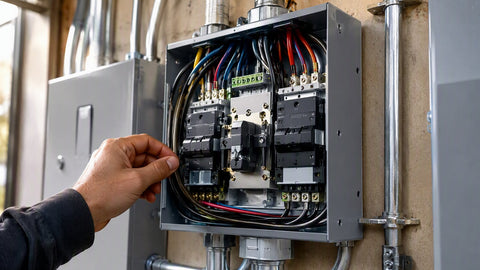
| Wiring | One string, 12–10 AWG PV wire | Single-string Isc ~14A → NEC 690.8 sizing: 14 × 1.56 ≈ 21.8A → 12 AWG copper per NEC 310.16 |
| Overcurrent / disconnect | 20–25A breaker (NEC 240.6 standard size) | Details in the NEC 690 disconnect guide |
| Panel backfeed | 20A breaker on most 100A+ panels | Comfortably inside NEC 705.12's 120% rule on nearly any service |
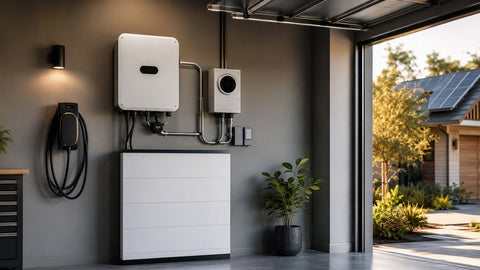
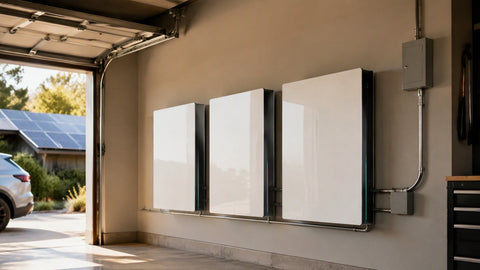
| Optional battery | 5 kWh class | A single 5 kWh battery covers evening use of a cabin-sized system |
Small systems are where kit packaging pays off — matched panels, inverter, racking, and wiring in one BOM. The panel kits buyer's guide, the 5 kW kit page (one size up, often the better value), and the DIY solar kit collection are the three places I send people pricing a build this size. Off-grid cabin builds have their own quirks; the off-grid cabin kit page and the off-grid battery sizing guide cover the storage side.
On-Grid vs. Off-Grid at This Scale
The same 3,000 kWh target is two very different projects. Grid-tied, it is a bill-offset play: six panels, an inverter, and a permit, with the grid acting as your free battery. Off-grid, 3,000 kWh of annual production potential must survive winter — and December delivers 40% of July. A cabin needing 250 kWh every month of the year needs the array sized to December, not to the annual average:
| Design Basis | Array Size (4.5 PSH region) | Panels @ 450W | Storage Needed |
|---|---|---|---|
| Grid-tied annual offset (3,000 kWh/yr) | 2.3 kW | 6 | None — grid is the battery |
| Off-grid 250 kWh/month, sized for December (2.8 PSH) | ~3.7 kW | 9 | 10–15 kWh for multi-day autonomy |
| Off-grid + propane backup generator for dark weeks | 2.5–3 kW | 6–7 | 5–10 kWh; generator covers the worst stretches |
That December-sizing penalty — 60% more panels for the same monthly energy — is the single most-missed item in DIY cabin quotes I review. The energy storage primer and the battery bank sizing guide are the follow-ups if you are going the off-grid route.
What It Costs and What It Returns
At current pricing, a 2.3–2.7 kW system runs roughly $2,000–$3,500 in equipment for a DIY build, or $6,000–$9,000 fully installed. At $0.17/kWh, 3,000 kWh is worth about $510 per year — call it a 6–12 year simple payback installed, faster DIY, faster still in high-rate states. Note one 2026 reality: the federal Section 25D residential solar credit expired at the end of 2025, so current math runs on equipment prices and state/utility incentives alone — check the state incentives guide and run your numbers through the solar ROI calculator before committing.
Field Notes
Three lessons from small-system builds. First, the fixed costs dominate: permits, design, and the electrical tie-in cost nearly the same for 2 kW as for 8 kW, which is why I often talk 3,000-kWh shoppers up to 5 kW — the incremental panels are the cheapest kWh they will ever buy. Second, small arrays feel shading more: losing one of six panels to a chimney shadow is 17% of the system, so microinverters earn their premium faster at this scale than any other. Third, owners of small systems become students of their own usage — the monitoring app on a 6-panel cabin system has turned more of my customers into energy-literate load-managers than any efficiency lecture ever has.
The Phased Approach: Starting at 3,000 kWh on Purpose
A growing share of my customers deliberately start at this size, and the strategy is sound when it is designed for expansion from day one. The rules of an expandable first phase: buy an inverter with headroom (or microinverters, which scale one panel at a time), leave physical roof or ground space mapped for the second array, run conduit and wiring sized for the final system rather than phase one, and confirm the utility's net-metering agreement permits expansion without re-application. A 6-panel first phase that followed those rules expands to 18 panels for the price of parts and a day of labor; one that ignored them becomes a tear-out. The ~$800 of "oversizing" baked into phase-one conduit, racking spans, and inverter capacity is the cheapest money in the whole project.
Who should actually start small: renters-to-be (a small system is easier to justify to a future buyer), the budget-staged (cash flow beats financing cost), the usage-curious (live with monitoring for a year before committing), and cabin/shop owners whose loads genuinely are 3,000 kWh. Who should not: anyone planning an EV within three years — just size for the EV now.
Electrical Details at 2–3 kW

Small systems are electrically forgiving, which is part of their charm, but four numbers still matter. A single string of six 450W panels (2.7 kW) produces about 13–14A of short-circuit current; NEC 690.8's 156% multiplier puts conductor sizing at ~21.8A, met by 12 AWG copper (25A at 75°C per NEC 310.16) with a 25A fuse or breaker per NEC 240.6's standard sizes. String voltage at STC runs roughly 250–300V — trivially within any residential inverter's 600V window, and even at record-low temperatures a six-module string stays under 380V. The backfeed side is friendlier still: 2.7 kW is 11.3A at 240V, so a 15A two-pole breaker covers it, and NEC 705.12's 120% rule accepts that on virtually any panel ever made, including ancient 100A services that could never host a full-size array. Small systems are the one case where I can promise the service panel will not be a problem.
Permits, Net Metering, and the Small-System Bureaucracy
The paperwork at this scale is the same species as for a 10 kW system — electrical permit, possibly structural sign-off, utility interconnection agreement — just thinner. Many jurisdictions offer over-the-counter or simplified permitting for residential solar under 10 kW, and several states exempt small systems from structural review when attachments land on rafters per the standard details. The utility side is similarly scaled: simplified interconnection (sometimes called "fast track") typically covers inverter-based systems under 10–25 kW, and approval timelines run weeks instead of months.
Two traps to avoid. First, minimum bill charges: many utilities charge $10–30/month in fixed fees that solar cannot offset, so a 3,000 kWh system zeroing a small home's energy charges still leaves a floor — model payback on energy charges only, not the whole bill. Second, export limits: a few utilities cap small-system export or pay avoided-cost rates for it, which flips the design goal from "produce 3,000 kWh a year" to "self-consume 250 kWh a month" — daytime loads and a small battery become more valuable than panel count. Ask the utility which regime applies before finalizing the array size.
DIY vs. Professional Install at This Scale
| Factor | DIY Kit Build | Professional Install |
|---|---|---|
| Total cost (2.3–2.7 kW) | $2,000–$3,500 equipment + permits | $6,000–$9,000 turnkey |
| Labor | 2–3 weekend days for a handy owner | 1 crew-day typically |
| Permitting | Owner-managed; most AHJs allow homeowner electrical | Handled by contractor |
| Roof warranty risk | On you — flashing mistakes cause leaks | Workmanship warranty (10 yr typical) |
| Best fit | Ground mounts, shops, cabins, simple garages | Steep or complex roofs, tile, two-story |
The honest middle path I recommend often: DIY the ground mount or garage array where falls and flashing are not in play, hire out anything on a steep composition roof. A 6-panel ground mount is the single most DIY-friendly solar project that exists — concrete, posts, rails, six modules, one trench, done.
Keeping 3,000 kWh on Track: The Small-System Owner's Routine
Small systems fail quietly because their absolute numbers are small — a 15% loss is 450 kWh a year, easy to miss without a habit. The routine that works: pick a clear day each season and compare production against the same clear day last year (your monitoring app makes this a two-minute job); rinse the array when pollen or dust visibly coats it; and once a year, tighten nothing but look at everything — wiring for abrasion, clamps for movement, the inverter for error history. Owners who do this will still be producing within a few percent of their year-one curve at year fifteen. Owners who do not will discover in year six that a tripped GFCI in the inverter has been producing zero since March — a sentence I have had to say to real people more than once.
Bill Impact: What 3,000 kWh Does to a Real Statement
Take a home using 800 kWh/month at $0.17/kWh with a $15 fixed charge: a bill of about $151. Add a 2.4 kW system producing ~250 kWh/month and the energy charge drops to (800−250) × $0.17 = $93.50, plus the fixed charge — about $108, a 28% reduction. Two nuances matter. First, the percentage shrinks as usage shrinks, because the fixed charge is a growing share of a small bill — a reality small-system buyers should model honestly. Second, under time-of-use rates the same 250 kWh is worth more if it displaces 4–9 PM power and less if it displaces cheap overnight energy; a timer on the water heater is the cheapest battery ever invented. Model your own statement, not the national average, and the 3,000 kWh question answers itself.
Panel Choice at This Scale
Small arrays change the panel-selection calculus in one specific way: per-panel fixed costs (clamps, labor minutes, wiring home-runs) dominate, so the premium for high-wattage modules shrinks to nearly nothing while their benefit — fewer panels for the same kWh — stays. Six 450W panels versus nine 300W panels is the same energy with three fewer attachments, three fewer flashings, and three fewer future reroof obstacles. At this scale I default to the highest-wattage residential modules that fit the roof layout and skip the budget lines entirely; the lifetime math favors it every time.
Microinverters vs. a Small String Inverter at 2.5 kW
At this scale the topology choice deserves its own paragraph, because the economics flip relative to big systems. A 2–3 kW string inverter is cheap (~$400–700) and efficient, but it runs far below its sweet spot, one panel's shade drags the whole string, and expansion means matching module specs years later. Six to eight microinverters cost more upfront (~$150–200 each) but give per-panel maximum power, per-panel monitoring (invaluable on a system where one failed panel is 17% of production), and trivial expansion — bolt on panel nine and its micro whenever. For a starter system explicitly designed to grow, microinverters are the correct default. For a cabin ground mount in open sun that will never change, a small string inverter or an all-in-one off-grid inverter-charger is simpler and cheaper. Match the topology to the five-year plan, not the day-one price.
Timeline: From Decision to First kWh
Small systems move fast when sequenced right. Week 1–2: design, equipment order, permit application. Week 2–4: permit issuance (over-the-counter in many jurisdictions for systems this size), utility interconnection application. Week 4–6: install — one day for a crew, two or three weekends DIY. Week 5–8: inspection and utility permission to operate. DIY ground mounts without net metering (off-grid cabins) compress all of it to "order, build, done." The only long pole is usually the utility, and the fix is the same as at every scale: file early.
The Mistake to Avoid: Sizing to the Average Month
One sizing error is so common at this scale that it deserves its own warning: sizing the array to replace an average month instead of an average year (grid-tied) or worst month (off-grid). A grid-tied owner who sizes to the 250 kWh average month and assumes it "covers the bill every month" will over-produce all spring and under-produce all winter — fine under annual net metering, disappointing under monthly-settled plans. An off-grid owner who makes the same mistake discovers in January that "average" is a summer-weighted fiction. Pick the design basis that matches your metering regime — annual for net metering, December for off-grid, peak month for zero-export — and the panel count follows mechanically from the tables above.
One last perspective. A 3,000 kWh system is the training-wheels size in the best sense: big enough to matter on a bill or run a cabin, small enough to install without drama, cheap enough to learn on, and expandable when the household grows. More of my long-term solar customers started here than started big — and none of them regrets the modest beginning, because the second phase always arrived with better knowledge, better prices, and a monitoring history that made the expansion math trivially easy. Start with the six panels; the roof will tell you when it wants twelve. Small done well beats big done eventually, every single time I have watched it play out on a real roof, a real cabin, or a real workshop meter.
Frequently Asked Questions
How many solar panels do I need for 3,000 kWh per year?
Four to nine panels depending on location and wattage. At national-average sun (4.5 peak sun hours), six 450W panels produce about 3,300 kWh per year with standard derating. Phoenix needs four; Seattle needs seven to eight.
Is 3,000 kWh a year enough to power a house?
Not a typical one — the US average home uses about 10,500 kWh per year. But 3,000 kWh fully covers an efficient apartment, a cabin, a workshop, or one electric vehicle, and offsets roughly 29% of an average home's bill.
How big is a system that makes 3,000 kWh per year?
About 2 to 2.9 kW depending on sunlight — roughly 100–160 square feet of roof. That is five to eight modern panels, one small inverter or a handful of microinverters, and a single string of wiring.
How much does a 3,000 kWh-per-year solar system cost?
Roughly $2,000–$3,500 in equipment for a DIY kit build, or $6,000–$9,000 professionally installed at typical $2.50–$3.50/watt pricing. At $0.17/kWh the system returns about $510 per year in bill savings.
Can I run a cabin off-grid on 3,000 kWh per year?
Yes, if the array is sized to your darkest month rather than the annual average. In a 4.5-PSH region, plan on 9 panels (about 3.7 kW) plus 10–15 kWh of battery to guarantee 250 kWh every month including December — or keep a small generator for the dark stretches.
Do I need a battery for a 3,000 kWh solar system?
Grid-tied: no — net metering (or the grid itself) banks your surplus. Off-grid or backup-critical: yes, and a single 5 kWh battery covers the evening loads of a cabin-scale system, while 10–15 kWh provides multi-day autonomy.
Related reading: Solar panels · Solar system calculator · Residential starter kits · Portable solar panels