Every few months a customer calls asking whether they should wait for solid-state batteries before building their solar storage system. The honest answer hasn't changed in five years: no. But the question deserves a real answer, not a dismissal — because solid-state and the technologies behind it are genuinely advancing, and understanding what's coming (and when) makes you a smarter buyer of today's LiFePO4 batteries. This is the state of battery technology as we see it from the equipment side: what's proven, what's promised, what's marketing, and what it all means for a system you install this year.

Why Storage Chemistry Moves Slowly — Then Suddenly
Lithium-ion took roughly twenty years to travel from Sony's 1991 camcorder cell to the rack batteries hanging in garages today. The pattern repeats across the industry: a decade of laboratory progress, a decade of manufacturing scale-up, then a price collapse that reshapes markets. LFP — the chemistry in nearly every home battery we sell — was commercialized in the late 1990s and only became the residential default around 2020 when Chinese cell capacity flooded the market and prices fell below the psychological threshold where batteries beat generators on cost.
That context matters because solid-state is somewhere in the middle of that same journey. The lab results are real. The manufacturing scale-up is the hard part, and it's exactly where every breathless press release quietly runs out of detail.
Solid-State: What's Actually Different
A conventional lithium-ion cell moves lithium ions through a liquid electrolyte. Solid-state designs replace that liquid with a solid electrolyte — ceramic, sulfide, or polymer — and the consequences cascade:
- Higher energy density potential. Solid electrolytes tolerate lithium-metal anodes, which store far more lithium per gram than graphite. Announced prototype cells from various developers claim 350–500 Wh/kg at the cell level, versus roughly 160–205 Wh/kg for current LFP cells and 250–300 Wh/kg for high-nickel NMC. Treat all prototype numbers as claims until they're shipping in volume.
- Fire resistance. Removing the flammable liquid electrolyte removes the fuel for thermal runaway. It doesn't make cells indestructible — but it changes the failure mode in a way fire marshals and insurers care deeply about.
- The catch. Solid electrolytes are brittle, interfaces between solid layers resist ion flow, lithium-metal anodes grow dendrites that can pierce separators, and manufacturing at scale requires pressure and precision the industry hasn't industrialized yet. Every one of those problems has a published solution and a pilot line. None has a commodity product.
The Technology Landscape, Chemistry by Chemistry
Here's how the major storage technologies compare on the metrics that decide real installations. Figures for emerging chemistries are announced targets or prototype results, not shipping specs:
| Chemistry | Cell-Level Energy Density | Cycle Life (Typical Rating) | Commercial Status (2026) | Residential Fit |
|---|---|---|---|---|
| LFP (lithium iron phosphate) | 160–205 Wh/kg | 4,000–8,000 cycles | Mature, commodity-priced | The current default — safe, long-lived, affordable |
| NMC (nickel manganese cobalt) | 250–300 Wh/kg | 1,500–3,000 cycles | Mature, dominant in EVs | Dense but costlier per cycle; thermal management required |
| Sodium-ion | 140–160 Wh/kg | 3,000–5,000 cycles (claimed) | Early commercial production, mostly Chinese suppliers | Promising for stationary storage — cheap materials, cold-tolerant |
| Solid-state (sulfide/ceramic) | 350–500 Wh/kg (announced prototypes) | 1,000+ cycles (demonstrated, target much higher) | Pilot lines and sampling; no volume production | EV-first; stationary versions years behind automotive |
| Flow batteries (vanadium) | 20–35 Wh/kg (system level) | 10,000–20,000 cycles | Commercial for utility/industrial scale | Too bulky for homes; interesting for microgrids |
| Lead-carbon | 35–50 Wh/kg | 2,000–3,000 cycles | Niche commercial | Legacy off-grid niche, superseded by LFP pricing |
Read that table the way an installer does: only the first two rows and, increasingly, the third are things you can order with a lead time and a warranty department behind them. Everything else is a slide deck with promising physics — interesting to track, irrelevant to this year's build list.
Announced Timelines vs. Shipped Product
Automakers and cell developers have published solid-state roadmaps for a decade. The pattern is instructive enough to tabulate:
| Developer | Announced Milestone | Status Pattern |
|---|---|---|
| Toyota | Solid-state EVs targeted for 2027–2028 | Repeatedly revised; pilot production confirmed, volume dates floating |
| QuantumScape | Sample cells to automakers; production mid-2020s | Samples shipped; gigawatt-scale production remains ahead |
| Solid Power | Electrolyte production for partners | Electrolyte supplier model — sells material, not finished cells |
| Samsung SDI | Mass production targeted ~2027 | Pilot line operating; automotive samples in evaluation |
| CATL | Condensed/semi-solid cells announced at 500 Wh/kg class | Announced for aviation-first applications; stationary versions unpriced |
None of this is failure — pilot lines and sampling are exactly what the middle of the commercialization curve looks like. But note the destination: every serious solid-state program targets electric vehicles first, where weight and density justify premium cost. Stationary storage, where weight is irrelevant and cost per kilowatt-hour is everything, gets solid-state last. If history is a guide, residential solid-state products trail automotive by five-plus years after automotive actually ships.
What Actually Changed Residential Storage Recently
While the headlines chased solid-state, the boring chemistry transformed the market. Three real developments from the last few years matter more to a homeowner than any prototype:
1. LFP cell prices collapsed. Pack-level costs for stationary LFP fell by roughly half over a few years of Chinese capacity expansion. That's why a 5.12 kWh rack module costs what a 2.4 kWh lead-acid string did a decade ago — and lasts ten times as long.
2. Sodium-ion entered production. Sodium is cheap, abundant, and cold-tolerant. Energy density is lower than LFP, but for stationary storage — where the battery sits on a wall and never needs to accelerate a car — density is a minor virtue. If sodium-ion pricing undercuts LFP at scale, residential storage gets cheaper still. Watch this space; it's the most plausible near-term shift.
3. Integration ate the complexity. Closed-loop BMS-to-inverter communication, all-in-one hybrid inverters, and pre-configured complete solar kits collapsed the engineering burden of a home system. The battery got boring, and boring is what mass adoption requires. Our energy storage system overview covers how the pieces fit together today.
The Economics: Waiting Costs More Than It Saves
The "wait for better tech" argument fails on arithmetic. Consider a homeowner weighing a 20 kWh LFP bank today against waiting five years for hypothetical solid-state residential products:
| Factor | Install LFP Now | Wait 5 Years for Next-Gen |
|---|---|---|
| System cost (20 kWh class) | Example: $8,000–$12,000 today | Unknown; first-generation products historically price at a premium |
| Outage protection | Immediate | None for 5+ years |
| Bill savings / time-shifting value | Begins now; typical homes offset $500–$1,500/yr depending on rates | Deferred — call it $2,500–$7,500 of foregone value over the wait |
| Incentive environment | Current credits and programs available now | Future policy unknowable |
| Technology risk | Mature chemistry, 10-year warranties standard | First-generation risk premium on price and reliability |
| Upgrade path | Modular banks expand later with whatever chemistry wins | Starts from zero either way |
The deferred savings alone — $2,500 to $7,500 over five years for a typical time-shifting home — can exceed any plausible price drop in next-generation hardware. And here's the part that settles it: storage is modular. A rack of 48V batteries installed today doesn't block you from adding whatever ships in 2031. Buy the value that exists; let the future bolt on later.
Degradation Reality: What Today Already Delivers
One underappreciated reason the "wait" argument has weakened: current LFP longevity is already past the point of economic irrelevance for most owners. A module rated for ~6,000 cycles at 80% depth of discharge, cycled daily, theoretically serves sixteen years. Degradation math for a realistic home:
| Year | Typical Retained Capacity (Well-Managed LFP) | Notes |
|---|---|---|
| 1 | ~97% | Initial settling loss is front-loaded |
| 5 | ~90–93% | Slow linear decline in moderate climates |
| 10 | ~82–88% | Within the window most warranties cover |
| 15 | ~75–85% | Beyond warranty, still functionally useful |
Those are typical patterns, not guarantees — heat, deep daily discharge, and cold-weather charging move real numbers, which is why the battery life extension practices and the 20–80 charging discussion are worth reading. But the headline stands: a bank bought today will very likely still be working when solid-state finally shows up at residential scale — and it will have paid for itself in the meantime.
What We're Watching From the Supply Side

From a distributor's chair, three signals will tell us the future has actually arrived, as opposed to being announced:
Priced SKUs with lead times. When a next-generation chemistry appears in a distributor catalog with a price and a ship date, it's real. Until then it's a press release. Sodium-ion is approaching this threshold for stationary applications; solid-state is not.
Warranty terms. Manufacturers vote with their warranty departments. When a maker stands behind 10,000 cycles or 15 years on a new chemistry, the actuarial math says they believe it. Prototype claims come with no such skin in the game.
Inverter compatibility. A battery is only as useful as the equipment that charges it. New chemistries with different voltage windows need BMS profiles in the inverters people actually own — the hybrid inverters on the wall today will receive firmware for whatever wins, and that integration lag is its own adoption timeline.
The Practical Bottom Line
Solid-state batteries are real science approaching real manufacturing, aimed at cars first and homes years later. Sodium-ion is the nearer-term story for stationary storage. Neither changes what a homeowner should do in 2026: install proven LFP storage, size it correctly with the battery bank sizing guide, and collect a decade of outage protection and bill savings while the laboratories finish their work. The system you install this year isn't a bet against the future — it's how you fund your way to it.
Recycling and Materials: The Part of the Story That Matters Long-Term
Any honest look at battery futures has to include where the materials come from and where the packs go. LFP's material story is comparatively benign: iron and phosphate are abundant, and the chemistry carries no cobalt — the metal with the most troubling supply-chain history in the battery world. Nickel and cobalt remain central to NMC, which is one reason automakers are shifting mainstream models to LFP and reserving nickel chemistries for long-range trims.
Recycling is the real frontier. Lead-acid set the bar — over 95% of lead-acid batteries in the U.S. get recycled because the economics and infrastructure matured over a century. Lithium recycling is building that infrastructure now, driven by the coming wave of end-of-life EV packs. Hydrometallurgical and direct-recycling processes recover lithium, copper, aluminum, and cathode materials at improving rates. For a homeowner, the practical takeaway: an LFP bank installed today will reach end of life into a recycling industry that is actively scaling to meet it, and the absence of cobalt and the presence of recoverable lithium and copper make the pack a feedstock rather than a waste problem.
How to Read a Battery Announcement Like an Installer
Since storage went mainstream, my inbox fills with "revolutionary" announcements. The filter I apply, in order:
- Is it a cell or a system? Cell-level claims ignore the weight, cost, and complexity of the pack, the BMS, and the enclosure. System-level numbers are the ones that install.
- Is there a cycle-life warranty attached? Anyone can claim 10,000 cycles. A warranty means actuaries signed off.
- What's the price per warranted kWh delivered? Divide cost by (capacity × DoD × warranted cycles). That single number collapses most hype into comparable terms.
- Who makes the inverter talk to it? A battery without closed-loop support in mainstream inverters is a science project, however good the chemistry.
- What's the ship date and the distributor? "Sampling to partners" is not a product. A SKU, a price, and a lead time is.
Run every announcement through those five questions and the future gets a lot less confusing. The announcements that survive this filter — LFP's price collapse, sodium-ion's entry — are the ones that changed what we stock. The rest are reading material.
What the Next Five Years Plausibly Bring
Forecasting with appropriate humility, the changes most likely to touch a residential buyer before 2031, ranked by confidence:
| Development | Confidence | Impact on Homeowners |
|---|---|---|
| Further LFP price declines | High | Bigger banks for the same budget; storage attached to more retrofits |
| Sodium-ion stationary products | Medium-high | Cheaper entry-level storage, better cold-weather performance |
| Higher-voltage residential battery architectures | Medium | Thinner cables, better efficiency on large installs |
| Solid-state in premium EVs | Medium | Indirect — drives cell-manufacturing learning curves |
| Solid-state residential storage products | Low in this window | Not a planning factor for systems installed now |
| Second-life EV packs in stationary storage | Medium | Budget storage options with caveats on remaining life |
The through-line: everything with high confidence makes today's decision look better, not worse. Cheaper storage rewards the homeowner who already owns the infrastructure — the inverter, the rack space, the permit history — to plug it into.
The Grid-Scale Context: Why Utility Storage Matters to Homeowners
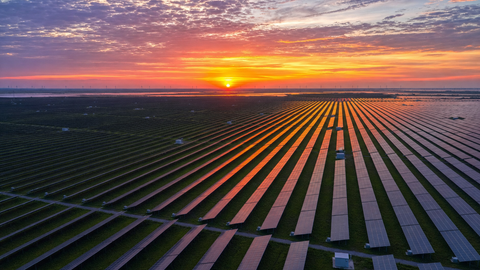
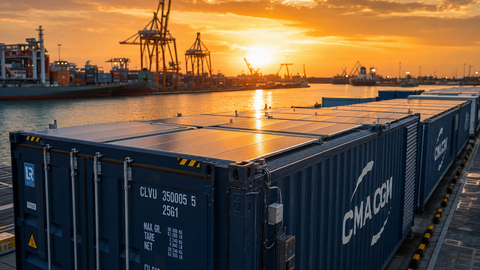
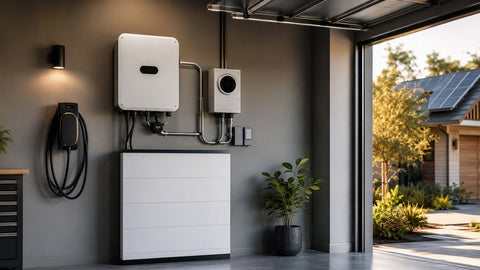
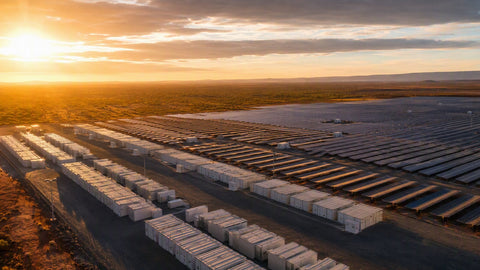
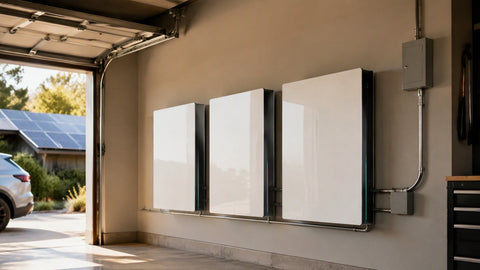
Residential storage doesn't evolve in a vacuum — it rides the cost curves that utility-scale deployments create. Grid-scale battery installations have grown from novelty to the fastest-growing segment of new generating capacity in the U.S., and every gigawatt-hour of utility procurement pulls cell manufacturing capacity, recycling infrastructure, and BMS software maturity forward for everyone. The containerized MWh-scale battery systems and commercial-and-industrial battery cabinets in our own catalog share cell supply chains with the rack modules on a garage wall. When utility buyers hammer suppliers on price per warranted kWh, residential buyers collect the spillover. This is the mechanism behind the LFP price collapse, and it's why the utility market's chemistry choices — overwhelmingly LFP, with sodium-ion entering — preview the residential shelf two years later.
What This Means for Installers and Distributors
For the trade, technology forecasting isn't entertainment — it's inventory policy. The practical playbook we run:
- Stock the proven, watch the pipeline. LFP moves today; sodium-ion gets a watch file; solid-state gets a news feed. Inventory follows sell-through, not press releases.
- Design for chemistry-agnosticism. Systems built around standard 48V battery interfaces and well-supported hybrid inverters can adopt future chemistries with a BMS profile update, not a redesign.
- Sell the warranty, not the chemistry. Customers remember the ten or fifteen years on paper long after they forget which cathode they bought. Warranty terms are the honest proxy for a manufacturer's real confidence in any new technology.
- Educate against the wait. Every customer persuaded to wait for next-generation batteries is a customer paying retail electricity rates in the meantime. The arithmetic section above is the antidote — show the deferred savings, not just the spec sheets.
The industry has been here before. Microinverters, then optimizers, then LFP itself — each was "the future" until the day it was simply the shelf. The installers who thrive are the ones who learn the new technology on the early-adopter jobs while keeping the bulk of their business on proven equipment. That balance — curiosity at the margins, discipline at the core — is how you surf a technology transition instead of being swamped by it.
The Environmental Ledger
Storage's sustainability case gets made too lazily, so let's be concrete. A 20 kWh LFP bank carries a manufacturing footprint — cell production is energy-intensive — but it enables displaced fossil generation every day of its service life, and the break-even on embodied emissions for grid-paired storage is measured in a small number of years, not decades. The chemistry shift matters here too: LFP's cobalt-free cathode removed the most ethically fraught material from the residential equation, and sodium-ion would go further, eliminating lithium itself from the bill of materials. The solid-state research pipeline, meanwhile, is chasing density for vehicles — its environmental contribution to homes, if it comes, will arrive as cheaper cell manufacturing learned in automotive plants and transferred to stationary products. Every layer of the technology road map points the same direction: cheaper, safer, more recyclable storage. The buyer's part in that story is simply to participate — every installed bank funds the learning curve the next generation rides.
And if you're the kind of buyer who wants the technology story to end in a purchase rather than a waitlist, the path is short: size the bank from your actual loads, pick the chemistry that's proven rather than promised, and let the learning curve work for you from the day of commissioning instead of from some future announcement. The storage market's history is unambiguous on this point — the buyers who installed on the proven technology of their moment always ended up ahead of the ones who waited for the next one. That's as true in 2026 as it was for every transition before it — and the next one will rhyme.
Frequently Asked Questions
Are solid-state batteries available for home solar storage now?
No. As of 2026, solid-state cells exist as prototypes, samples, and pilot-line products aimed at automotive applications. No residential solid-state storage product is shipping at volume with distributor pricing and standard warranties.
Will today's LiFePO4 batteries become obsolete?
Obsolete is the wrong frame. LFP systems installed today carry 10-year warranties and 15-plus-year service expectations. Even when newer chemistries arrive at residential scale, an installed LFP bank continues delivering value for its full life, and modular designs let future capacity additions use whatever chemistry wins.
What is sodium-ion and why does it matter for homes?
Sodium-ion replaces lithium with abundant, cheap sodium. Energy density runs lower than LFP, but for stationary storage weight barely matters. Early commercial production is underway, mostly from Chinese suppliers, and it is the most plausible near-term path to even cheaper home storage.
How much longer do solid-state batteries last?
Demonstrated cycle life varies by design, with targets well above 1,000 cycles and claims much higher. Until volume products carry warranties, treat longevity claims as targets rather than specifications.
Should I wait for better battery technology before going solar?
No. Five years of deferred bill savings and outage protection typically outweigh any plausible price drop in next-generation hardware, and storage systems are modular enough to expand with future technology.
What battery chemistry does Portlandia Electric Supply recommend today?
LiFePO4 — the chemistry across our server-rack battery and wall-mount lines. It offers the best combination of safety, cycle life, and cost per delivered kilowatt-hour of anything shipping at scale today.