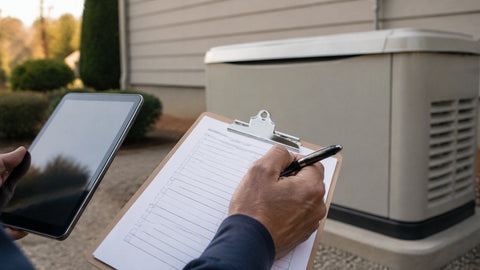
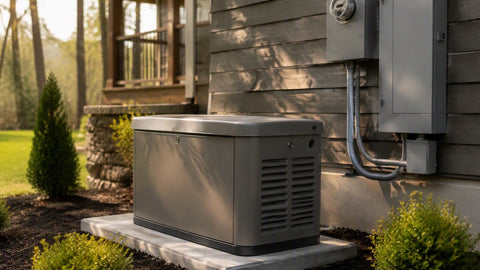
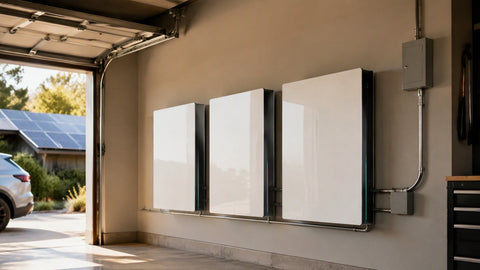
A whole-house generator — also called a standby generator — is a permanently installed backup power system that detects a utility outage, starts itself, and switches your home's electrical load to generator power in about 10 to 30 seconds, all without you lifting a finger. When the grid comes back, it reverses the process and shuts itself down. This guide explains exactly how that sequence works, what's inside the machine, how fuel consumption and load math determine the right size, and what the electrical code requires for a safe installation.

I've commissioned standby units in everything from 1,200-square-foot ranch homes to small commercial shops, and the technology genuinely is set-and-forget when it's installed correctly — but the sizing and the transfer equipment are where projects succeed or fail, so we'll spend most of our time there. If you're comparing specific sizes, see our guides on 22 kW generators and 26 kW generators.
The Five Components That Make It Work
1. The engine
Standby generators run on natural gas (NG) or liquid propane (LP) — the same fuels as your furnace — so there's no gasoline to store and no refueling during an outage. Air-cooled engines dominate the 10–26 kW residential class; liquid-cooled engines take over above roughly 30 kW and in commercial units. The engine spins at a governed 3,600 RPM (air-cooled) or 1,800 RPM (liquid-cooled) to produce 60 Hz power.
2. The alternator
The engine's shaft turns an alternator — the part that actually makes electricity. Residential standby units produce 120/240 V single-phase split-phase power, identical to what the utility delivers to your panel. Voltage regulation (typically ±1% on quality units) keeps sensitive electronics safe.
3. The automatic transfer switch (ATS)
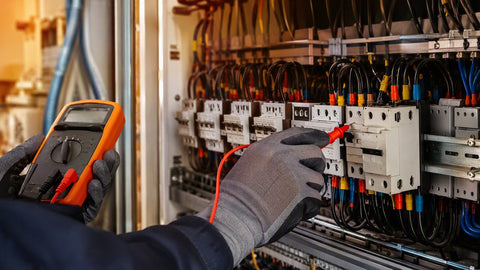
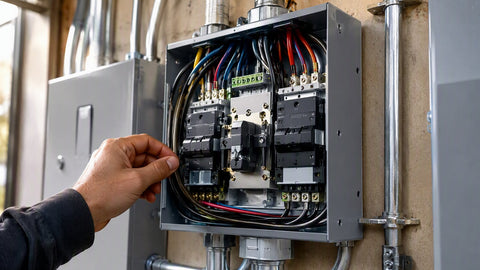
The ATS is the brain of the system and the legal heart of the installation. It monitors utility power continuously. When voltage drops out, the ATS signals the generator to start, waits for the generator to stabilize (usually 10–20 seconds), then physically transfers your home's circuits from utility to generator. Critically, an ATS is a break-before-make device: your home is never connected to both sources at once, which protects utility lineworkers from backfeed. See our automatic transfer switches, including 100–125 A and 200–225 A classes for whole-house service.
4. The controller
Modern controllers handle exercise cycles (typically a 5–12 minute self-test weekly), self-diagnostics, maintenance reminders, and Wi-Fi monitoring to your phone. They log runtime, battery health, and fault codes.
5. The fuel system and battery
NG units connect to your gas meter (requiring adequate gas pressure and meter capacity — your gas utility may need to upsize the meter). LP units draw from a propane tank sized for multi-day runtime. A standard 12 V starting battery, kept charged by the controller, cranks the engine.
The Outage Sequence, Second by Second
| Elapsed Time | Event | What's Happening |
|---|---|---|
| 0 sec | Utility fails | ATS senses voltage loss or deep sag |
| 3–5 sec | Outage confirmed | Built-in delay ignores momentary blinks so the generator doesn't start for nothing |
| 5–10 sec | Engine cranks and starts | Battery-driven starter; engine reaches governed speed |
| 10–25 sec | Output stabilizes | Controller verifies voltage and frequency are in range |
| ~15–30 sec | ATS transfers load | Home's circuits physically switch to generator power — lights are back |
| Utility returns | Re-transfer begins | ATS confirms stable utility power for ~5–15 minutes |
| +5 min | Cool-down and shutdown | Engine runs unloaded briefly, then stops; system re-arms |
Fuel Consumption: The Real Math
Fuel burn scales with load — a generator loafing at 25% load drinks far less than one at full tilt. The figures below are representative for air-cooled residential units (always verify against your specific model's datasheet):
| Generator Size | Fuel | Consumption @ 50% Load | Consumption @ 100% Load | Cost per Day @ 50% Load (typical fuel prices) |
|---|---|---|---|---|
| 14 kW | Natural gas | ~160 ft³/hr | ~245 ft³/hr | 160 × 24 = 3,840 ft³ ≈ $58/day @ $1.50/therm* |
| 14 kW | Propane | ~1.7 gal/hr | ~2.6 gal/hr | 1.7 × 24 = 40.8 gal ≈ $102/day @ $2.50/gal |
| 22 kW | Natural gas | ~228 ft³/hr | ~327 ft³/hr | 228 × 24 = 5,472 ft³ ≈ $82/day |
| 22 kW | Propane | ~2.5 gal/hr | ~3.6 gal/hr | 2.5 × 24 = 60 gal ≈ $150/day |
| 26 kW | Natural gas | ~260 ft³/hr | ~380 ft³/hr | 260 × 24 = 6,240 ft³ ≈ $94/day |
| 26 kW | Propane | ~2.9 gal/hr | ~4.2 gal/hr | 2.9 × 24 = 69.6 gal ≈ $174/day |
*Natural gas is billed in therms (100,000 BTU); 1,000 ft³ ≈ 10.3 therms at typical pipeline heat content, so 3,840 ft³ ≈ 39.6 therms ≈ $59 at $1.50/therm. The table rounds consistently. Two takeaways: natural gas is roughly 40–45% cheaper per hour than propane at typical prices, and propane tank size becomes the runtime constraint. A standard 500-gallon LP tank (400 gallons usable) at 50% load on a 22 kW unit gives 400 ÷ 2.5 = 160 hours — about 6.7 days of continuous runtime.
Sizing: The Load Math That Picks Your Generator
Generator sizing starts with an honest load list. Running watts are what appliances draw continuously; starting (surge) watts are what motor-driven loads demand for the first second or two — typically 2–3× running watts for compressors and pumps.
| Load | Running Watts | Starting Watts |
|---|---|---|
| Central AC (3 ton) | 3,500 | ~8,000–10,500 (soft-start kits cut this sharply) |
| Refrigerator | 700 | ~2,100 |
| Well pump (1 HP) | 1,000 | ~3,000 |
| Sump pump | 800 | ~2,400 |
| Electric water heater | 4,500 | 4,500 (resistive — no surge) |
| Electric range (one oven + two burners) | ~5,000 | 5,000 |
| Electric dryer | 5,000 | 5,000 |
| Furnace blower (gas heat) | 800 | ~2,400 |
| Lighting + outlets + electronics (whole house) | 1,500 | 1,500 |
| Microwave | 1,200 | 1,200 |
Now the sizing arithmetic for a typical 2,000 ft² home with gas heat: essentials plus one big motor load. Refrigerator (700) + furnace blower (800) + lights/electronics (1,500) + sump pump (800) + microwave (1,200) = 5,000 W running, plus the central AC at 3,500 W = 8,500 W running if everything coincides. Worst-case surge: the AC starting while 5,000 W runs = 5,000 + 10,500 = 15,500 W momentary. A 22 kW unit (like the Generac 26 kW Guardian with 200 A ATS's smaller sibling, or our 22 kW generators) covers this comfortably; a 14 kW unit with load management (which sheds the AC or water heater when capacity is tight) also works and costs less. That's why load management modules exist — they let a smaller generator serve a bigger house by sequencing the heavy loads.
| Home Profile | Recommended Size | Collection |
|---|---|---|
| Up to 1,500 ft², gas heat, no central AC or managed AC | 10–14 kW | 10–14 kW standby generators |
| 1,500–2,500 ft², one central AC | 18–22 kW | 20–28 kW standby generators |
| 2,500–4,000 ft², two ACs, electric cooking | 24–26 kW | 26 kW generators |
| Large homes, all-electric, multiple HVAC zones | 30–48 kW liquid-cooled | 30 kW / 48 kW generators |
For the full sizing walkthrough, read our 2026 whole-home generator sizing guide and what generator size do I need.
The Electrical Hookup: NEC Sizing Done Right
The generator's feeder, breaker, and transfer equipment must follow the NEC. Two tables do most of the work: NEC 240.6 for standard breaker sizes and NEC 310.16 for conductor ampacity. A 22 kW generator on a 240 V single-phase service delivers 22,000 ÷ 240 = 91.7 A. With continuous-load and manufacturer requirements, you typically land on a 100 A breaker with 2 AWG copper (95 A at 75°C, but 1 AWG at 110 A gives margin — follow the unit's installation manual, which governs):
| Generator Output | Full-Load Amps @ 240 V | NEC 240.6 Breaker | NEC 310.16 Conductor (Cu, 75°C) | ATS Rating |
|---|---|---|---|---|
| 14 kW | 14,000 ÷ 240 = 58.3 A | 60 A | 6 AWG (65 A) | 100 A service-rated |
| 22 kW | 22,000 ÷ 240 = 91.7 A | 100 A | 2 AWG (115 A @ 90°C basis / 95 A @ 75°C — verify per manual) | 100–200 A service-rated |
| 26 kW | 26,000 ÷ 240 = 108.3 A | 125 A | 1/0 AWG (150 A) per typical manual | 200 A service-rated |
| 48 kW | 48,000 ÷ 240 = 200 A | 200 A | 4/0 AWG (230 A) or parallel runs | 200–400 A |
A service-rated ATS installed between the meter and your main panel lets the generator back up the entire house — the "whole house" in whole-house generator. For code details on the wiring side, see our NEC wire sizing guide for solar and generator installations and the NEC wire ampacity chart. Permits and inspections are required essentially everywhere, and gas line work requires a licensed plumber in most jurisdictions — budget both into the project.
Standby Generator vs. Batteries vs. Portable
| Factor | Standby Generator | Battery Backup | Portable Generator |
|---|---|---|---|
| Runtime | Unlimited on NG; days on LP tank | Hours (until recharged by solar/grid) | As long as you keep refueling |
| Whole-house capable | Yes | Possible, expensive at whole-house scale | No — selected circuits via cord or interlock |
| Automatic | Yes (~10–30 sec) | Yes (~milliseconds) | No — manual setup |
| Installed cost (typical) | $10,000–$18,000 turnkey | $12,000–$20,000+ per 13.5 kWh-class unit | $500–$2,500 |
| Fuel independence | Needs gas utility or LP deliveries | Recharges from solar | Needs gasoline storage |
Many homeowners pair both: a generator for multi-day outages and solar batteries for seamless, silent overnight power. Our standby generator for the home and whole-house generator articles compare configurations, and the home backup generators collection spans both categories.
Maintenance: What Ownership Actually Requires

Standby generators are engines, and engines need service: oil and filter changes every 100–200 runtime hours or annually, air filter and spark plugs on schedule, battery replacement every 3–4 years, and an annual professional inspection. The weekly self-exercise handles itself. Skip maintenance and the unit will likely still start — the first few times you need it. Budget $250–$500/year for a service plan, or DIY with the manufacturer's maintenance kits. Cold-climate installs need cold weather kits (battery warmer and oil warmer) below about 20°F.
One thing I tell every customer at commissioning: run a real test. Kill your main breaker on a Saturday morning, watch the transfer happen, listen to the unit under load for twenty minutes, and learn what normal sounds like — the middle of an ice storm is the wrong time to discover a problem. And keep the area clear: five feet of clearance around the unit, snow shoveled away from the enclosure vents, because a suffocated generator is a dead generator.
Ready to spec yours? Browse standby generators, natural gas and propane models, brands like Generac, Kohler, Cummins, and Briggs & Stratton, or call Portlandia Electric Supply — we'll run the load math with you and quote the generator, ATS, and accessories as a complete package.
What Installation Actually Involves
A turnkey residential standby installation runs one to three days on site plus permitting, and follows a predictable sequence:
- Site assessment and load calc: the installer verifies gas capacity, electrical service size, siting clearances, and runs the load calculation.
- Permits: electrical and mechanical/plumbing permits; many jurisdictions also require HOA approval for placement.
- Pad: a poured concrete pad or composite mounting pad, level and above flood grade.
- Gas plumbing: a licensed plumber runs the gas line with the correct pipe size for the BTU load — a 22 kW unit can draw over 300 cubic feet of gas per hour at full load, which often requires a dedicated 1-inch or larger run and sometimes a meter upgrade from the gas utility.
- Electrical: the ATS goes in at the meter/main panel, the feeder is pulled to the generator, and the control wiring is landed.
- Commissioning: startup, exercise schedule programming, a live transfer test, and warranty registration.
- Inspection: AHJ sign-off closes the permit.
Total Cost of Ownership: A Realistic Breakdown
| Line Item | Typical Range (22 kW class) | Notes |
|---|---|---|
| Generator + ATS equipment | $5,500–$8,000 | e.g. Generac Guardian with 200 A SE ATS class packages |
| Pad, gas plumbing, electrical labor | $3,500–$7,000 | Varies most with gas run length and service location |
| Permits and inspection | $200–$800 | Jurisdiction-dependent |
| Turnkey total | $10,000–$18,000 | Regional labor markets move this ±20% |
| Annual maintenance | $250–$500 | Service plan or DIY with maintenance kits |
| Fuel during a 3-day outage (NG, 50% avg load) | ≈ $250 | 228 ft³/hr × 72 hr ≈ 16,400 ft³ ≈ 169 therms @ $1.50 |
Siting Rules That Save Headaches
Placement is governed by the manufacturer manual and, in most jurisdictions, code minimums of 5 feet from openings (doors, windows, vents) and 18 inches from combustible walls — always default to the manual, which is usually stricter. Keep the unit out of drainage paths, off property-line easements, and where the exhaust can't reach a bedroom window. Flood-prone lots need elevated pads. And plan for the service technician: two feet of clearance on three sides means the next oil change doesn't require dismantling your landscaping. I've seen beautifully sized systems rendered nearly unserviceable by a shrub bed planted the following spring — leave the working room permanently, not just on install day.
Natural Gas vs. Propane: The Detail Most Buyers Miss
Engines produce less power on natural gas than on propane because NG carries less energy per cubic foot — a unit rated 26 kW on LP is typically rated around 22–24 kW on NG. Always size from the NG rating if you're on utility gas. The other hidden constraint is gas pressure and meter capacity: a 22 kW unit at full load draws roughly 300+ ft³/hr (about 300,000+ BTU/hr), and many residential meters top out near 250–425 ft³/hr total capacity shared with the furnace, water heater, and range. Your gas utility will confirm whether the meter needs upgrading — usually free or low cost, but it can add weeks to the schedule, so ask early.
When a Portable or Inverter Generator Is Enough
Honesty check: not everyone needs a standby system. If your outages are rare, short, and your critical loads are a refrigerator, a furnace blower, and some lights, a quality portable generator or inverter generator with a manual transfer switch covers the essentials for a tenth of the cost. The standby system's value is automation and capacity — it's there when you're on vacation, when the outage hits at 3 a.m., and when the freezer, sump pump, and medical equipment can't wait for someone to wheel a generator out of the garage. I ask every customer one question before recommending size or even type: "What's the worst outage you've had here, and what did it cost you?" The answer usually picks the machine.
The First Year of Ownership: What to Expect
Once commissioned, a standby generator mostly takes care of itself, but the first year sets the pattern. The weekly exercise cycle runs automatically — pick a weekday mid-morning slot so it never wakes anyone. After the first real outage, check the oil level and listen for anything new; log the runtime hours in the controller. Schedule the first professional service at the manufacturer's break-in interval (often 25–50 hours for valve-lash checks on air-cooled units), not the generic annual mark. Test the Wi-Fi monitoring alerts by running a manual transfer so you know the notification actually reaches your phone. And walk the gas line and electrical conduit once a season — weed trimmers and frost heave do more damage to generator installations than engines do to themselves. Owners who treat the first year as a shakedown cruise get a machine that starts every time for fifteen-plus years; owners who never look at it again are the ones calling me during ice storms.
The bottom line: a whole-house generator is simple in concept — engine, alternator, transfer switch — and exacting in execution. Get the load math right, size the gas supply honestly, follow the NEC on the feeder and transfer equipment, and maintain it on schedule. Do those four things and the next multi-day outage becomes an inconvenience you watch from a warm, lit living room instead of a crisis. Portlandia Electric Supply stocks the generators, transfer switches, and accessories to build exactly that system, with published pricing and real people to check your math.
That's what a standby generator is really for — not just power, but the absence of worry when the grid goes down.
Frequently Asked Questions
How long can a whole-house generator run continuously?
On natural gas, essentially indefinitely — the gas utility keeps supplying fuel, and the limiting factors are oil service intervals and engine wear, so plan an oil check every 100–200 runtime hours during extended outages. On propane, runtime is set by tank size: a 500-gallon LP tank at half load on a 22 kW unit lasts roughly 6–7 days.
Does a whole-house generator add value to my home?
Yes. Appraisers and real estate agents consistently report that a permitted, professionally installed standby generator recovers a substantial share of its cost at resale — often cited in the 50–75% range — and it differentiates the listing in outage-prone regions.
Can I install a standby generator myself?
Practically, no. The project involves permitted electrical work (service-rated transfer switch, utility coordination), gas plumbing, concrete pad or composite base, and manufacturer commissioning requirements that protect the warranty. DIY-leaning owners sometimes handle the pad and trenching and hire licensed trades for the electrical and gas connections.
How loud is a whole-house generator?
Modern air-cooled residential units measure roughly 63–70 dB at 23 feet under load — comparable to a central air conditioner. Placement, sound-attenuated enclosures, and local noise ordinances (many set limits at the property line) should factor into siting.
What size generator do I need for a 2,000-square-foot house?
Most 2,000 ft² homes with gas heat land at 18–22 kW, which covers the essentials plus a central AC. All-electric homes or those wanting zero load management typically need 24–26 kW or more. The only correct answer comes from adding your actual running and starting loads — use the tables above or our sizing guide.
Natural gas or propane — which should I choose?
If you have utility natural gas at the house, choose it: cheaper per hour, unlimited runtime, no tank. Propane is the answer for rural homes without gas service — just size the tank for your target autonomy. Note that most engines produce slightly less power on NG than LP, so compare NG ratings when sizing.