The MegaRevo MPS0030 is a 30kW, 3-phase, 208V hybrid microgrid inverter that treats the utility grid as an option rather than a requirement. Part inverter, part battery gateway, part microgrid brain, it converts solar DC, manages bidirectional battery flow, and islands a facility in under 20 milliseconds when the grid drops — in one IP65-rated box. This guide goes inside the architecture: full electrical specifications, operating modes, parallel scaling to 120kW, compliance certifications, the demand-charge economics that pay for it, and the design details that separate a resilient installation from an expensive wall ornament.

What Is the MegaRevo MPS0030?
Product: MegaRevo MPS0030 Microgrid Hybrid Inverter | Class: 30kW 3-phase 208V commercial energy independence platform
The Problem: Commercial Power Is Fragile and Expensive
Commercial facilities face a two-front war on energy: reliability and cost. Outages kill productivity and spoil inventory, while demand charges — the utility's penalty for your worst 15-minute peak each month — quietly dominate bills for facilities with spiky loads. A microgrid-hybrid inverter attacks both fronts at once, and that dual mandate is why this product category has exploded in the C&I market.
| Challenge | Impact on Commercial Facilities | Traditional Solution | Microgrid Solution |
|---|---|---|---|
| Grid Outages | Lost productivity, data loss, safety risks | Diesel generators | Seamless islanding with stored energy |
| Peak Demand Charges | 30–50% of commercial electric bills | Manual load shedding | Automated peak shaving |
| Rising Energy Costs | Unpredictable operating expenses | Efficiency upgrades | Self-generation + storage arbitrage |
| Sustainability Mandates | Compliance requirements, reputation | RECs, carbon offsets | On-site renewable generation |
| Power Quality Issues | Equipment damage, process disruption | UPS systems, filters | Clean, conditioned power output |
I have sat across from facility managers who budgeted diesel generators for resilience and got a machine that starts when the grid fails, runs loud, drinks fuel, and does nothing the other 8,700 hours of the year. The MPS0030's proposition is the opposite: a system that earns its keep every single day through peak shaving and solar self-consumption, and happens to also keep the lights on when the grid fails. Resilience as a byproduct of economics is a much easier capital request than resilience as insurance.
Inside the Hybrid Architecture
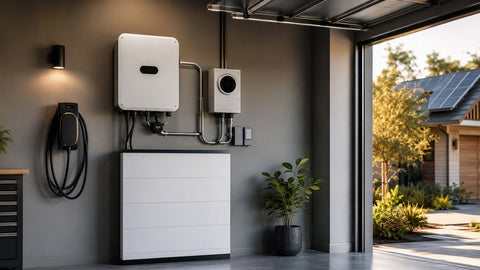
The MPS0030 is a multi-port power conversion platform: solar arrays connect as DC-coupled inputs, battery storage connects bidirectionally, the grid connects as one AC source, and facility loads hang on the output — with the inverter's control system deciding, millisecond by millisecond, where every watt flows.
| Energy Source/Load | Integration Type | Function |
|---|---|---|
| Solar PV Arrays | DC-coupled input | Primary generation source; converts DC to AC |
| Battery Energy Storage (BESS) | Bi-directional DC connection | Stores excess; provides backup and peak shaving |
| Utility Grid | AC connection with anti-islanding | Import/export; automatic disconnect during outages |
| On-Site Electrical Loads | AC output distribution | Powers facility equipment directly |
| Backup Generator (Optional) | AC input with synchronization | Extended backup during prolonged outages |
The bidirectional power stage is the heart of it. The same silicon that inverts DC to AC for your loads reverses to rectify AC to DC for battery charging — from solar surplus, off-peak grid power, or a generator. One conversion stage, four power-flow jobs.
| Power Flow Direction | Function | When Used |
|---|---|---|
| DC → AC (Inverting) | Converts solar/battery DC to AC for loads or export | Daytime solar production, battery discharge |
| AC → DC (Rectifying) | Converts grid AC to DC for battery charging | Off-peak grid charging, pre-storm preparation |
| DC → DC (Passthrough) | Direct solar-to-battery charging | Excess solar storage |
Core Electrical Specifications
The nameplate story: 30kW of continuous AC output at 208V three-phase, the standard service voltage for a huge share of US commercial buildings — no transformer gymnastics required for most 208V services.
| Parameter | Specification |
|---|---|
| Rated AC Output Power | 30 kW |
| AC Voltage (Nominal) | 208V, 3-Phase |
| AC Voltage Range | 176V–264V |
| Frequency | 60 Hz (59.3–60.5 Hz range) |
| Power Factor | ±0.8 leading/lagging (adjustable) |
| Total Harmonic Distortion (THD) | <3% at rated power |
| Maximum Continuous Current | 83.4A per phase |
PV Input Capability
| Parameter | Specification |
|---|---|
| Maximum PV Input Power | 39 kW (1.3× DC/AC ratio) |
| MPPT Voltage Range | 200V–850V DC |
| Maximum DC Voltage | 1,000V DC |
| Number of MPPT Channels | 2 independent MPPTs |
| Maximum Input Current per MPPT | 26A |
| MPPT Efficiency | >99.5% |
The 39kW PV input against 30kW AC output supports a 1.3× DC/AC ratio — the oversizing that modern design practice uses to keep the inverter at full output through mornings, evenings, and cloudy stretches. Two independent MPPT channels let east and west roof planes coexist without mismatch penalty.
Battery Interface
| Parameter | Specification |
|---|---|
| Battery Type Compatibility | Lithium-ion (LFP, NMC), Lead-acid |
| Battery Voltage Range | 200V–850V DC |
| Maximum Charge/Discharge Power | 30 kW bi-directional |
| Maximum Battery Current | ±75A |
| Battery Communication | CAN bus, RS485 |
The 200–850V battery window covers both lithium chemistries — LFP and NMC — and legacy lead-acid, which matters for retrofits: existing battery rooms can be integrated rather than landfilled. Browse our 100–200kWh C&I battery range for storage options that pair at this scale.
Efficiency and Physical
| Parameter | Specification |
|---|---|
| Maximum Efficiency (PV to AC) | 98.4% |
| European Weighted Efficiency | 97.8% |
| Battery Round-Trip Efficiency | >95% |
| Standby Power Consumption | <50W |
| Grid Transfer Time | <20ms (seamless for most loads) |
| Off-Grid Voltage Regulation | ±2% |
| Parameter | Specification |
|---|---|
| Dimensions (W × H × D) | 660 × 860 × 265 mm (26 × 34 × 10.4 in) |
| Weight | ~75 kg (165 lbs) |
| Enclosure Rating | IP65 (outdoor rated) |
| Operating Temperature | -25°C to +60°C (-13°F to +140°F) |
| Cooling Method | Intelligent forced-air cooling |
| Noise Level | <55 dB(A) at 1m |
Two numbers I check first on any hybrid spec sheet: 98.4% peak efficiency means conversion losses stay in the noise of the system economics, and the IP65 outdoor rating plus -25°C low-temperature capability means this unit mounts where commercial reality demands — the exterior wall by the service entrance, not a climate-controlled shrine.
Operating Modes: Grid-Connected, Islanded, and the 20-Millisecond Handoff
| Operating Mode | Description | Primary Benefit |
|---|---|---|
| Grid-Connected | Normal operation with grid import/export | Self-consumption, net metering |
| Islanded (Off-Grid) | Disconnected from grid, fully autonomous | Outage protection, energy independence |
| Backup Power | Automatic switchover during outages | Critical load protection |
| Peak Shaving | Battery discharge during demand peaks | Demand charge reduction |
| Load Shifting | Store off-peak energy for peak use | Time-of-use rate optimization |
| Self-Consumption | Maximize use of on-site solar | Energy cost reduction |
The mode table understates the engineering trick: the transition between them. Grid fault detection under 10ms and transfer to island under 20ms is faster than most equipment notices — servers don't reboot, VFDs don't trip, refrigeration compressors don't short-cycle. That speed is what separates a microgrid inverter from a backup inverter.
| Parameter | MPS0030 Specification | Significance |
|---|---|---|
| Grid Fault Detection Time | <10ms | Faster than human perception |
| Transfer Time to Island | <20ms | Unnoticeable to most equipment |
| Reconnection Synchronization | Automatic when grid stabilizes | No manual intervention required |
| Anti-Islanding Protection | IEEE 1547 compliant | Utility worker safety assured |
What seamless islanding is worth depends entirely on what stops when power blinks:
| Facility Type | Critical Equipment | Interruption Impact |
|---|---|---|
| Medical Clinics | Diagnostic equipment, refrigerated vaccines | Patient safety, compliance violations |
| Research Labs | Incubators, environmental chambers | Lost experiments, data corruption |
| Data-Driven Businesses | Servers, network equipment | Data loss, transaction failures |
| Manufacturing Operations | CNC machines, process controls | Scrapped batches, equipment damage |
| Critical Public Services | Emergency communications, pumping stations | Public safety risks |
Applications: Who the MPS0030 Serves
| Facility Type | Typical Load Profile | MPS0030 Benefit |
|---|---|---|
| Commercial Office Buildings | HVAC, lighting, IT equipment | Peak shaving, backup for critical systems |
| Educational Campuses | Variable occupancy, computer labs | Grid independence, sustainability goals |
| Light Manufacturing | Motors, process equipment | Power quality, production continuity |
| Retail/Mixed-Use | Refrigeration, POS systems, lighting | Cost reduction, customer experience |
| Healthcare Clinics | Medical equipment, refrigerated storage | Uninterruptible power, compliance |
| Municipal Infrastructure | Water/wastewater, public safety | Resilience, emergency operation |
The application pattern is consistent: any facility where loads are spiky, demand charges are material, and downtime has a real price tag. Specific project archetypes and their typical sizing:
| Application | Typical System Size | Primary Value Drivers |
|---|---|---|
| Commercial Solar + Storage Retrofit | 30–60 kW solar, 50–100 kWh battery | Demand charge reduction, backup power |
| Campus Microgrid Node | Multiple units networked | Building-level resilience, distributed control |
| Critical Facility Backup | Matched to critical load | Zero-downtime operation |
| Remote/Island Operations | Off-grid or weak-grid sites | Diesel displacement, fuel cost savings |
| EV Fleet Charging Support | Buffer for high-power chargers | Demand spike mitigation |
Battery Management and Solar Synergy
| Feature | Function | Benefit |
|---|---|---|
| Intelligent Charge Scheduling | Times charging based on solar availability and rates | Minimizes charging costs |
| Depth of Discharge Protection | Prevents damaging deep discharge | Extended battery lifespan |
| Overcharge Prevention | Stops charging at optimal SOC | Prevents thermal damage |
| Cell Balancing Communication | Works with BMS for uniform charge | Maximizes capacity utilization |
| Rapid Response Discharge | Full power available in milliseconds | Peak shaving effectiveness |
| Reserve Capacity Hold | Maintains backup reserve for outages | Guaranteed emergency runtime |
The intelligent charge scheduling row is where daily economics compound: the system times battery charging against solar availability and utility rate windows, and discharges against demand peaks. Pair it with a right-sized PV array — the array sizing guide gives a feel for footprint at this scale — and the facility's grid purchases shift from "whatever the building demands" to "whatever the building demands that solar and storage cannot cover." For storage chemistry and lifecycle planning at this scale, our battery bank sizing guide and battery storage catalog cover the options.
The EMS Brain: Monitoring and Control
| Monitored Parameter | Why It Matters | Decision Impact |
|---|---|---|
| Grid Availability/Quality | Detects faults, voltage sags, frequency drift | Triggers islanding when necessary |
| Load Demand | Tracks real-time facility consumption | Matches generation to demand |
| Battery State of Charge | Knows available stored energy | Optimizes charge/discharge timing |
| Solar Production | Current and predicted output | Prioritizes self-consumption |
| Time-of-Use Rates | Current and scheduled pricing | Optimizes economic dispatch |
| Operational Priorities | User-configured preferences | Balances resilience vs. savings |
| Interface | Protocol | Function |
|---|---|---|
| Ethernet | TCP/IP, Modbus TCP | Network monitoring, BMS integration |
| RS485 | Modbus RTU | Battery communication, meters |
| CAN Bus | CAN 2.0 | Battery BMS communication |
| Wi-Fi | 802.11 b/g/n | Local configuration, commissioning |
| Cloud Portal | HTTPS API | Remote monitoring, fleet management |
The communications stack is the unglamorous feature that determines whether this box plays nicely with a building management system five years from now. Modbus TCP over Ethernet for the BMS, RS485/Modbus RTU for meters and battery comms, CAN for battery BMS protocols — the interfaces that building automation actually speaks, not proprietary islands.
Scaling: From 30kW to 120kW
| Configuration | Total Capacity | Typical Application |
|---|---|---|
| Single MPS0030 | 30 kW | Small commercial, critical backup |
| 2× Parallel | 60 kW | Medium commercial building |
| 3× Parallel | 90 kW | Light industrial, large retail |
| 4× Parallel | 120 kW | Campus microgrid, manufacturing |
Parallel stacking matters for two reasons: load growth and redundancy. A facility that starts at 30kW and adds a production line adds a unit rather than replacing one — capital efficiency that a single large inverter cannot match. And an N+1 configuration means a single unit failure degrades capacity instead of killing it — a design property diesel backup never offers at this price point. For campuses planning phased buildouts, we typically rough-in conduit and wall space for the second unit at initial install; the incremental cost is trivial and the future retrofit savings are not.
Compliance: The Certifications That Unlock Interconnection

| Standard | Scope | Relevance |
|---|---|---|
| UL 1741-SA | Smart inverter grid support functions | Required for most U.S. interconnections |
| IEEE 1547-2018 | Interconnection and interoperability | Utility interconnection approval |
| Rule 21 (California) | CA-specific grid requirements | California installations |
| FCC Part 15 Class B | Electromagnetic compatibility | Commercial/residential environments |
| NEC 2020/2023 | National Electrical Code | Permit approval, inspection |
UL 1741-SA and IEEE 1547-2018 are not paperwork ornaments; they are the price of admission for utility interconnection in most US jurisdictions, and their grid-support functions — ride-through, volt-var, frequency-watt — are increasingly mandatory rather than optional. Verify the certificate versions against your utility's current interconnection handbook before submittal; the NEC compliance guide covers the surrounding installation framework, and the disconnect and overcurrent guide handles the NEC 690/705 interface details.
The Economics: Where the Money Comes From
| Value Stream | Mechanism | Typical Annual Value |
|---|---|---|
| Demand Charge Reduction | Battery discharges during peak demand | $50–$200/kW-month reduced |
| Energy Arbitrage | Charge low-rate, discharge high-rate | $0.05–$0.15/kWh spread |
| Solar Self-Consumption | Avoid retail rate grid purchases | $0.10–$0.25/kWh saved |
| Backup Power Value | Avoided outage costs | $5,000–$50,000/event (varies) |
| Federal ITC | 30% tax credit (through 2032) | Reduces system cost by 30% |
| Accelerated Depreciation | MACRS 5-year schedule | Additional 20–25% effective savings |
Demand-charge reduction is usually the headline value stream, and it is worth a worked example. A facility pulling a 150kW peak with a $18/kW-month demand charge pays $2,700 monthly for that peak alone. If the MPS0030 discharges the battery to cap the grid draw at 120kW during peaks, the demand line drops to $2,160 — $540/month, $6,480/year, from one behavior, before energy arbitrage or solar self-consumption add a dollar. Payback math like that is why CFOs approve microgrids faster than they approve generators.
Checked Math: Hybrid Microgrid vs. Diesel Backup
The resilience comparison deserves numbers. A representative 30kW diesel genset burns on the order of 2.5–3.0 gallons per hour at full load (small diesels run roughly 0.09–0.10 gal/kWh at rated output). At $3.50/gallon diesel, the checked arithmetic:
| Metric | 30kW Diesel Genset | MPS0030 + 60kWh Battery + Solar |
|---|---|---|
| Energy cost at full 30kW load | 2.9 gal/hr × $3.50 ≈ $10.15/hr ≈ $0.34/kWh | Solar marginal cost ≈ $0; battery round-trip loss ≈ 5% |
| 8-hour outage, 20kW average load (160kWh) | ≈160kWh × $0.34 ≈ $54 fuel | 60kWh battery + daytime solar recharge ≈ $0–15 |
| Value on non-outage days (~350/yr) | $0 — genset idles | Demand shaving + arbitrage: $5,000–$12,000/yr typical range |
| Transfer speed | Seconds to minutes (ATS start cycle) | <20ms — loads never notice |
| Maintenance cadence | Oil, filters, exercise runs, fuel polishing | Minimal — solid-state, monitored remotely |
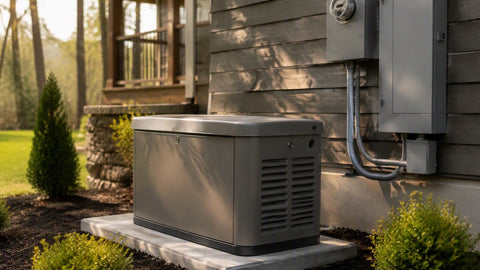
The diesel still wins one scenario honestly: multi-day outages without solar recharge, where fuel logistics beat stored kWh. That is why many resilient facilities run both — the microgrid handles the first hours and every normal day, the genset covers the catastrophic tail. For that belt-and-suspenders architecture, our standby generator and transfer switch catalogs pair with hybrid inverters routinely, and our team specs the combination as a single integrated package more often than either component alone.
Design and Installation Notes From the Field
Three lessons from projects in this class. First, commission the islanding test under real load before declaring victory — the <20ms transfer spec is a factory truth, and your installation's contactors and settings decide whether the building experiences it. Second, plan the battery room or enclosure location against NEC 706 and NFPA 855 spacing from day one; retrofitting clearances is misery. Third, involve the utility early: 208V three-phase commercial interconnections with export capability face review, and UL 1741-SA certification answers most of the reviewer's questions before they are asked — but only if the paperwork accompanies the application. The hybrid inverter primer and inverter sizing calculator support early-stage design; for project quotes and system integration, contact our team.
My bottom line: the MPS0030 represents where commercial energy equipment is heading — one box that converts, stores, islands, and earns its keep on ordinary Tuesdays. Facilities that buy it for the daily economics discover they bought resilience for free; facilities that buy it for resilience discover the economics pay the loan. Either direction, the math works — and in two decades around this industry, products whose math works from both directions are rarer than the brochures suggest.
Why 208V Three-Phase Matters More Than the Datasheet Suggests
Product pages lead with kilowatts; installers care about voltage. The 208V three-phase service is the workhorse of US light-commercial construction — strip retail, small industrial, schools, clinics, office buildings. An inverter native to 208V lands on these services without step-up transformers, which removes cost, conversion losses, a point of failure, and a heated debate with the electrical inspector about transformer sizing. Facilities on 480V services are equally served — step-down or step-up transformers handle the translation — but the 208V native design means the largest single slice of the C&I building stock connects directly. If you have ever priced a transformer addition into a storage retrofit, you know this is not a footnote; it is often the line that decides whether the project pencils.
How Peak Shaving Actually Gets Dispatched
The demand-charge savings in the economics table come from a control loop worth understanding. The inverter's energy management system watches the facility's grid import continuously, learns the load shape, and discharges the battery whenever import approaches the month's peak setpoint. Utilities measure demand in 15-minute rolling windows, so the battery only needs to carry the peak's crest — often 30 to 90 minutes of partial support a few times per month — which is why a modest 60–100kWh battery delivers outsized demand savings. The control subtlety is conservatism: miss one crest and the month's demand charge resets at the higher peak, so well-tuned systems shave with margin and recharge from solar or off-peak grid energy immediately after. When we design these systems, the battery sizing conversation starts from the customer's interval data — the utility's own 15-minute records — not from nameplate guesses. Bring that data to the design call and the savings model stops being a guess.
Islanding Done Right: Load Discipline
A 30kW inverter cannot carry every load in a 150kW-peak facility through an outage, and pretending otherwise is how microgrid projects disappoint. Proper designs split the panel schedule: critical loads — servers, refrigeration, life-safety systems, essential process equipment — land on the backed-up panel; discretionary loads stay grid-only. The MPS0030's fast transfer protects the critical panel seamlessly while the building's non-essential loads simply wait for the grid. This is not a compromise unique to this product; it is how every honest backup architecture works, from hospitals to data centers. The design deliverable that matters is the load study: measure the critical panel's real demand profile before promising runtime, and size battery kWh to the outage duration the owner's risk model actually requires.
Living With the System: Maintenance and Monitoring Reality
Solid-state hybrid inverters invert the maintenance model that diesel owners know: no oil, no filters, no exercise cycles, no fuel polishing — but a new dependency on firmware health and communications. The practical regimen: review the monitoring dashboard monthly (production, battery state of health, any fault codes), apply firmware updates on the manufacturer's cadence rather than immediately or never, and exercise the islanding function annually under controlled conditions — a planned midday transfer test that verifies the building rides through cleanly. Battery state-of-health trends deserve annual review against the degradation warranty; a pack drifting faster than spec at year four is a warranty conversation that gets easier with documented monitoring history. None of this is burdensome — a facility manager can own it in an hour a month — but it is not zero, and vendors who promise "maintenance-free" are selling, not engineering.
Procurement and Project Logistics
At ~75kg and IP65, the MPS0030 wall-mounts with a standard two-person lift and exterior-rated clearances — no crane day, no mechanical room renovation. The procurement sequencing that keeps projects on schedule: confirm utility interconnection requirements first (they gate everything), lock battery selection second (communications compatibility with the inverter's CAN/Modbus battery interface is the real constraint), and order long-lead electrical gear — panels, disconnects, transformers if any — alongside the inverter rather than after it. We bundle the full BOM across inverters, storage, PV, and BOS through our hybrid inverter and battery storage lines with consolidated freight; one truck, one receiving event, one phone call when anything is short.
The Generator Pairing Question
The most common design question I field on these systems: "Do I still need the generator?" The honest framework: the hybrid inverter covers the high-probability outage distribution — the minutes-to-hours events that make up the overwhelming majority of real grid failures — while also earning daily revenue. A generator covers the low-probability tail: the multi-day regional disaster where stored kWh and cloudy skies run out. Facilities with genuine life-safety or revenue-critical loads often keep both, with the generator feeding the inverter's AC input as a tertiary source. Facilities where outages are expensive but survivable increasingly skip the generator entirely and buy more battery instead. Neither answer is universal; the right one falls out of the load study and the owner's risk tolerance, and anyone selling you certainty before seeing your interval data is guessing on your budget.
Frequently Asked Questions
- What is the MegaRevo MPS0030?
- A 30kW 3-phase 208V hybrid microgrid inverter combining solar conversion (39kW PV input across 2 MPPTs), bidirectional battery flow (200–850V DC), and sub-20ms islanding in one IP65-rated outdoor unit.
- How fast does it switch during an outage?
- Under 10ms fault detection, under 20ms transfer to island — most equipment never notices.
- Can units be paralleled?
- Yes — up to 4× for 120kW total capacity, with N+1 redundancy benefits for critical facilities.
- What batteries are compatible?
- LFP, NMC, and lead-acid chemistries across a 200–850V DC window, at 30kW bidirectional power.
- How does it cut demand charges?
- Battery discharge caps grid peaks — trimming 150kW to 120kW at $18/kW-month saves ≈$6,480/year.
- What certifications does it carry?
- UL 1741-SA and IEEE 1547-2018 — the standard US interconnection requirements.
- Is it cheaper to run than diesel?
- Usually — diesel costs ≈$0.34/kWh and earns nothing on normal days; the hybrid earns $5,000–$12,000/year. Diesel still wins multi-day outages without solar; many sites run both.
PES Supply designs and supplies commercial solar-plus-storage and microgrid systems from Louisville, KY with nationwide logistics. Planning a resilient C&I installation? Talk to our engineering team.