A 12kW solar system lands between $30,000 and $42,000 before incentives in 2026, and between $21,000 and $29,400 after the 30% federal Investment Tax Credit. That spread is not marketing fog — it reflects real differences in panel class, inverter architecture, roof complexity, and local labor. I've quoted hundreds of these systems from our Portland warehouse, and the number one mistake buyers make is comparing a bare equipment price against a neighbor's fully installed turnkey number. This guide breaks both down line by line so you can check any quote you receive.

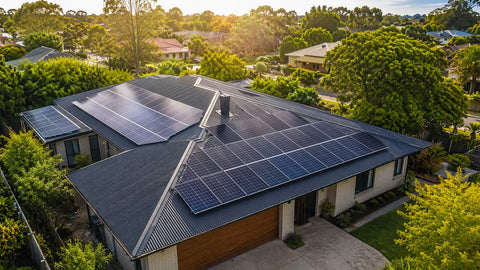
Twelve kilowatts is the sweet spot for a larger American home — roughly 2,400 to 3,500 square feet with central air, an electric water heater, maybe a pool pump or an EV in the driveway. It produces enough energy to zero out a $250–$400 monthly electric bill in most utility territories, and it fits on about 600 square feet of unshaded roof.
The Short Answer: 2026 Price Ranges
Here is what a 12kW system costs across the three buying paths we see most often:
| Buying Path | Price per Watt | Gross Cost (12,000W) | After 30% ITC | Who It Fits |
|---|---|---|---|---|
| Full-service installer (turnkey) | $2.90–$3.50 | $34,800–$42,000 | $24,360–$29,400 | Homeowners who want one contract, one warranty call |
| Equipment kit + hired electrician/roofer | $2.20–$2.70 | $26,400–$32,400 | $18,480–$22,680 | Handy owners managing their own subs |
| Wholesale equipment only (DIY) | $1.30–$1.80 | $15,600–$21,600 | $10,920–$15,120 | Contractors, off-grid builders, experienced DIY |
The math is plain: 12,000 watts × $2.50/W = $30,000 gross; $30,000 × 0.70 = $21,000 net of the federal credit. Every quote you collect should be convertible into a $/W figure this way. If a salesperson refuses to state system size in kilowatts and a gross price, walk.
What the Hardware Actually Costs
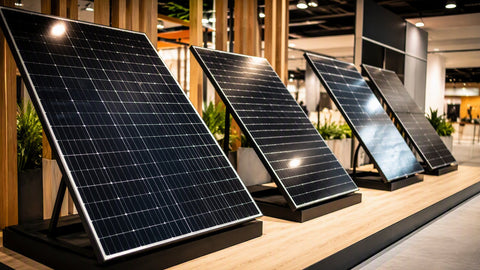
A 12kW array is 26 to 30 physical panels depending on module wattage. Here is the equipment-side breakdown at 2026 wholesale pricing, the same numbers behind our complete solar kits:
| Component | Typical Spec | Qty | 2026 Wholesale Cost Range |
|---|---|---|---|
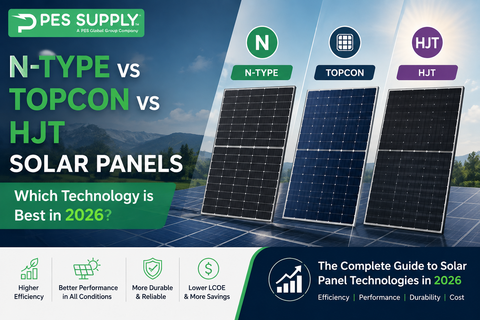
| Solar modules (400–460W class) | Mono N-type TOPCon, 25-yr product warranty | 26–30 | $5,200–$8,300 |
| String inverter OR microinverters | 11.4–12kW string, or 26–30 micros | 1 or 26–30 | $2,200–$4,800 |
| Racking and attachments | Flashed comp-shingle mounts, rails, clamps | 1 set | $1,600–$2,400 |
| PV wire, conduit, disconnects, rapid shutdown | 10 AWG PV wire, EMT/PVC, NEC 690.12 parts | 1 lot | $900–$1,500 |
| Monitoring, labels, misc. BOS | Gateway, placards, lugs, sealant | 1 lot | $300–$600 |
| Equipment subtotal | — | — | $10,200–$17,600 |
I pulled a 12kW kit off our shelves last month for a customer in Bend, Oregon — 28 Silfab 430s, an 11.4kW string inverter, IronRidge racking — and the equipment ticket came to $14,900 before freight. Add $8,000–$12,000 for licensed labor, permitting, and interconnection paperwork and you land squarely in the $23,000–$27,000 installed band, right where the $/W table above predicts. Shop panel options in our solar panels collection and inverter choices in solar inverters.
Panel Class: Where the Price Per Watt Moves
Module choice alone swings a 12kW equipment bill by $3,000. Three tiers dominate the 2026 residential market:
| Tier | Example Modules | Efficiency | Panels for 12kW | Module Cost |
|---|---|---|---|---|
| Value mono PERC | Solar4America 550W (pallet deals), Axitec 410W | 20.5–21.3% | 22–30 | $4,800–$6,200 |
| Mainstream N-type TOPCon | Silfab Elite 370, Qcells XL G11S, Canadian Solar CS3N-395MS | 21.8–22.8% | 26–33 | $5,800–$7,400 |
| Premium all-black / HJT | REC Alpha, Panasonic EverVolt class | 22.3–23.0% | 27–30 | $7,200–$8,800 |
Higher efficiency matters when roof area is tight — the premium tier squeezes 12kW into about 500 sq ft versus 600+ for value PERC. If the roof is big and shade-free, the value tier's extra $1,500–$2,500 in your pocket usually beats the spec-sheet bragging rights.
How Much Power Does 12kW Actually Make?
Annual production is the number that pays you back, and it hinges on effective peak sun hours (PSH) at your roof plane — not the horizontal-surface weather-station figure. The formula is boring and reliable:
Annual kWh = 12 kW × effective PSH × 365 × 0.86 system derate
The 0.86 factor accounts for inverter losses, wiring, soiling, and temperature — the standard default my crew uses on every bid until shading analysis says otherwise. Effective PSH already bakes in tilt and azimuth losses for a typical fixed roof mount.
| Region (example city) | Effective PSH | Annual Production (kWh) | Monthly Avg (kWh) | Bill Offset at $0.17/kWh |
|---|---|---|---|---|
| Southwest (Phoenix) | 5.5 | 20,717 | 1,726 | $3,522/yr |
| South Central (Dallas) | 5.0 | 18,834 | 1,570 | $3,202/yr |
| Southeast (Atlanta) | 4.6 | 17,327 | 1,444 | $2,946/yr |
| Mid-Atlantic (Philadelphia) | 4.1 | 15,444 | 1,287 | $2,625/yr |
| Pacific NW (Portland) | 3.5 | 13,184 | 1,099 | $2,241/yr |
Check the Phoenix row yourself: 12 × 5.5 = 66; 66 × 365 = 24,090; 24,090 × 0.86 = 20,717 kWh. Every row follows the same arithmetic. When a bid promises you Phoenix production on a Seattle roofline, the trick being played is raw PSH instead of effective PSH. Run your own numbers with our peak sun hours calculator and the panel output calculator.
Electrical Sizing: The NEC Math Behind a 12kW Interconnection
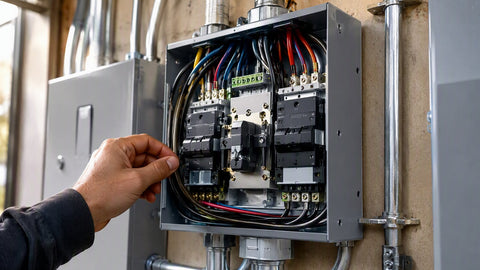
A 12kW inverter on a 240V split-phase service pushes 12,000 ÷ 240 = 50A continuous. NEC 690.8 treats solar as a continuous load, so conductors and overcurrent devices are sized at 125%: 50A × 1.25 = 62.5A. Per NEC 240.6, the next standard breaker size is 70A. Per NEC 310.16 (75°C copper column), 6 AWG THHN-2 carries 65A — acceptable under 240.4(B) round-up because the calculated load (62.5A) does not exceed the conductor ampacity.
| Design Item | Calculation | Result | Code Reference |
|---|---|---|---|
| Inverter output current | 12,000W ÷ 240V | 50.0A | NEC 690.8(A) |
| Continuous-load multiplier | 50.0A × 1.25 | 62.5A | NEC 690.8(B) |
| OCPD (breaker) size | Next standard above 62.5A | 70A | NEC 240.6(A) |
| Conductor (Cu, 75°C) | Ampacity ≥ 62.5A | 6 AWG THHN-2 (65A) | NEC 310.16, 240.4(B) |
| 120% busbar rule (200A panel, 200A bus) | 200A × 1.20 − 200A main | 40A max backfeed — fails! | NEC 705.12(B) |
That last row is the one that bites. A 70A solar backfeed breaker will not fit under the 120% rule on a standard 200A/200A service panel (40A allowance). The usual fixes: a line-side (supply-side) tap per 705.12(A), downsizing the main breaker to 175A where the load calculation allows it, or a full panel upgrade. Budget $1,800–$4,000 if your panel needs surgery. Our NEC wire sizing guide and code compliance guide go deeper on both tables.
Incentives That Move the Number
| Incentive | Value on a $34,000 System | Notes |
|---|---|---|
| Federal ITC (IRC §25D) | −$10,200 (30%) | Applies to equipment + labor + batteries ≥3kWh |
| Typical state tax credit (e.g., NY 25%, cap $5,000) | −$5,000 | State-dependent; many states have none |
| Utility rebate (varies, e.g., $0.20/W) | −$2,400 | Rare in 2026; check DSIRE before quoting |
| SRECs (NJ/MD/DC markets, ~10 yrs) | −$4,000 to −$9,000 | Only in SREC states; price floats |
Stack the federal credit alone and the $34,000 system nets $23,800. Add a $5,000 state credit and a modest SREC stream and strong markets dip under $15,000 net. The full state-by-state picture lives on our solar incentives by state page, and the solar ROI calculator turns those numbers into a payback year.
Payback and 25-Year Savings
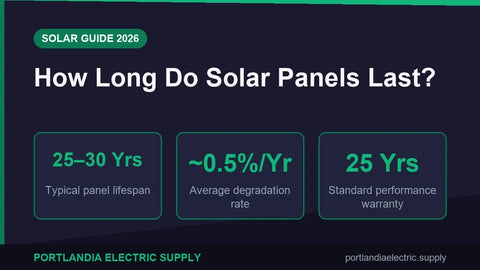
Using the Mid-Atlantic row above — 15,444 kWh/yr at $0.17/kWh = $2,625/yr avoided cost — a $23,800 net system pays back in 9.1 years flat, ignoring rate inflation. Fold in a realistic 3%/yr utility escalation and the payback compresses to roughly 7.5–8 years. Panels degrade about 0.5%/yr (0.25%/yr for premium N-type), so year-25 production is still 88–94% of year one.
| Year | Output Factor (0.5%/yr degrade) | Production (kWh) | Rate w/ 3% Escalation | Annual Savings | Cumulative |
|---|---|---|---|---|---|
| 1 | 1.000 | 15,444 | $0.170 | $2,625 | $2,625 |
| 5 | 0.980 | 15,135 | $0.191 | $2,891 | $13,760 |
| 10 | 0.955 | 14,749 | $0.222 | $3,274 | $29,180 |
| 15 | 0.930 | 14,363 | $0.257 | $3,691 | $46,640 |
| 20 | 0.905 | 13,977 | $0.298 | $4,165 | $66,300 |
| 25 | 0.880 | 13,591 | $0.346 | $4,703 | $88,600 |
That $88,600 cumulative figure against a $23,800 net investment is why lenders appraise solar as an income asset, not a home accessory. The asset outlives its own payback by a factor of three.
Cash, Loan, or Lease — What Financing Does to the Price
Cash is cheapest. A 10-year solar loan at 7.5% APR on $23,800 adds roughly $8,800 in interest — real money, but you still capture the ITC and the full savings stream. Leases and PPAs quote "$0 down," yet the lease escalator (often 2.9%/yr) and the fact that the lessor keeps the tax credit typically cost you $15,000–$20,000 of lifetime value versus ownership. My blunt advice after watching hundreds of these deals close: if you can hold the loan payment, own the system.
How to Vet a Quote in Five Minutes

Ask for these four numbers and compute the rest yourself: system size in kW DC, gross price, modeled year-one production in kWh, and the production guarantee terms. Gross ÷ kW = $/W — over $3.60/W turnkey in 2026 needs a very good reason (complex roof, panel upgrade, premium everything). Modeled kWh ÷ (kW × 365) = implied effective PSH; if that figure exceeds 6.0 outside the desert Southwest, the production model is flattering itself. Then compare the equipment list against our solar panel kits buyer's guide and best solar panels of 2026 shortlist.
One caution from the field: I've seen homeowners size a 12kW system off last year's bills, then add a heat pump and an EV and wish they'd gone to 15kW. If your usage is climbing, look at what a larger array involves or price the step-up to our 13–18kW hybrid inverter class now rather than retrofitting later. For whole-project sequencing, the complete go-solar guide and installation cost guide map the full calendar from site survey to permission-to-operate.
Timing the Purchase in 2026
Module prices keep drifting down a few percent a year, which tempts buyers to wait. Run the trade honestly: waiting 12 months might save $800–$1,200 on equipment, but it costs a full year of bill offset — $2,600–$3,500 in most territories — plus whatever your utility raises rates by. Waiting has been the losing bet every year we have tracked it. The one calendar item that genuinely matters is interconnection queue timing: utilities process applications slower in the spring rush, so a contract signed in late fall often reaches permission-to-operate faster than one signed in April. If you are collecting quotes now, ask each bidder for their current permit-to-PTO timeline in writing; a cheap quote from a backlog-buried installer is not actually cheap.
Bottom Line
A 12kW system is a $21,000–$29,000 decision after the federal credit, and the difference between the low end and the high end is almost never the panels — it is who manages the project, what your service panel allows, and whether your roof and shade cooperate. Get the $/W figure, verify the production model against effective peak sun hours, confirm the interconnection path against the 120% rule, and itemize every adder before signing. Do those four things and the quotes sort themselves. When you are ready to price hardware, our team at Portlandia Electric Supply quotes wholesale equipment packages and full BOMs daily — bring us your utility bill and we will size it honestly, including the times the honest answer is a smaller system. We would rather sell you the right 8kW kit than the wrong 12kW one, because a customer whose system covers their actual bill sends us their neighbors, and a customer with a bloated system and a lingering electric bill sends us complaints. That is the whole business model, stated plainly.
Frequently Asked Questions
How many panels make a 12kW system?
With 400W panels, exactly 30 (30 × 400 = 12,000W). With 460W modules, 27 panels (12,420W). Higher-wattage panels shrink roof footprint and racking count, which is why we stock the 400W-and-up class for space-constrained roofs.
How much roof space does 12kW need?
Modern residential modules run about 17.5–19 sq ft each. Thirty panels need roughly 525–570 sq ft of usable, unshaded roof — call it 600 sq ft with the ridge, eave, and pathway setbacks your AHJ enforces under the fire code.
Can 12kW power a whole house?
For a typical 2,500+ sq ft home using 1,000–1,400 kWh/month, yes, in most climates — see the production table above. Edge cases and backup strategy are covered in can solar panels power a whole house.
Is a battery worth adding to a 12kW system?
If your utility has weak net metering or time-of-use rates, yes. A 10–15kWh battery adds $8,000–$13,000 before incentives and also qualifies for the 30% ITC. Start with the battery buyer's guide and compare 10kWh battery options.
How long does installation take?
Physical install is 2–4 days for a competent crew. Permitting and utility interconnection run 3–10 weeks depending on your AHJ — that paperwork gap, not the roof work, sets the calendar.
Installation Adders That Change the Price
The $/W ranges assume a clean comp-shingle roof, a 200A panel with room to work, and a driveway the crew can park next to. Real houses add line items. These are the adders I itemize on every estimate after the site survey, with honest 2026 pricing:
| Adder | When It Triggers | Typical Cost |
|---|---|---|
| Main panel upgrade (200A) | Fails the 120% rule or panel is a recalled brand | $1,800–$4,200 |
| Supply-side (line-side) tap | Alternative to panel upgrade where AHJ allows | $900–$1,800 |
| Tile or metal roof labor premium | S-tile, standing seam, or stone-coated steel | +$0.15–$0.40/W |
| Steep roof (8:12+) or 3-story | Extra fall protection, slower production | +$500–$1,500 |
| Ground mount instead of roof | Bad roof, great yard — trench + concrete + steel | +$4,000–$8,000 |
| Trenching for detached structure | Array on a shop or barn, per 100 ft | +$800–$1,600 |
| Reroof before install | Shingles older than ~12–15 years | $9,000–$18,000 (roofing, not solar) |
| Structural engineering letter | Older trusses, heavy snow zone, tile | $300–$800 |
The reroof line is the one people fight me on, and I've stopped softening it: if your shingles have 8 years of life left, tearing a 12kW array off and re-installing it in year 8 costs $4,000–$6,000 in remove-and-reinstall labor. Re-roofing first is almost always cheaper. Do the roof, then the solar, in that order.
String, Micro, or Hybrid: Choosing the 12kW Brains
| Architecture | 2026 Cost Delta | Best For | Watch Out For |
|---|---|---|---|
| String inverter | Baseline | Unshaded simple roofs, tightest budget | One shaded panel drags the string; single point of failure |
| Microinverters | +$1,800–$2,800 | Complex roofs, partial shade, panel-level monitoring | More rooftop electronics to service decades out |
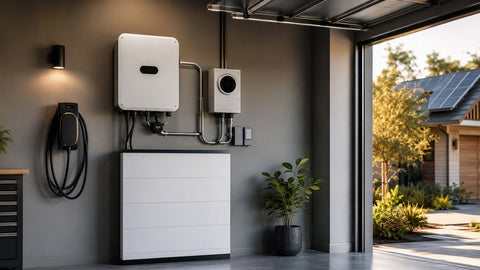
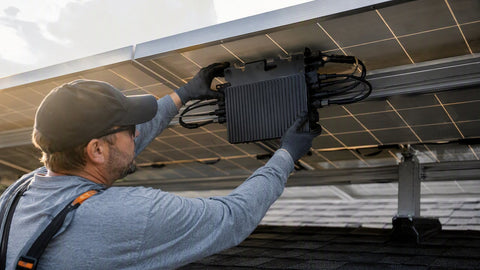
| Hybrid inverter (battery-ready) | +$1,200–$2,500 vs string | Adding storage now or later, outage backup | Oversized for grid-tie-only buyers |
On a clean south roof I still spec a string unit and pocket the savings. On anything with dormers, a chimney, or a big fir tree on the west side, micros pay for themselves in recovered production within 4–6 years. If a battery is even a maybe, buy the hybrid now — retrofitting a second inverter later is the most expensive way to add storage. Browse microinverters, string inverters, and hybrid inverters to compare the actual hardware.
Warranties, Maintenance, and the Boring 25 Years
Budget $150–$300 every year or two for a panel cleaning and torque-check visit in dusty or pollen-heavy regions, and $0 in wet climates where rain does the work. Inverters are the wear item: string units carry 10–12 year standard warranties (extend to 20–25 for a few hundred dollars — buy the extension), micros carry 25. Modules carry 25-year product and 30-year performance warranties from the tier-one brands. Keep a folder with your permit card, interconnection agreement, and as-built single-line diagram; every warranty claim starts by asking for those documents, and I've watched claims die because the homeowner threw the folder away with the installer brochures.
Who Should Not Buy a 12kW System
Three cases where I talk people out of it. First, a roof with under 10 years of life and no budget to reroof — fix the building first. Second, usage under 800 kWh/month: you are overbuying; a 6–8kW system fits better and the math lives in our 6kW cost guide. Third, heavy unfixable shade — no financing trick fixes photons that never arrive; a ground mount in the sunny corner of the lot is the honest answer. Solar is arithmetic, not religion, and the arithmetic occasionally says no.
12kW vs 8kW vs 15kW: The Sizing Decision
System size is a bill-arithmetic question before it is a hardware question. Pull 12 months of utility statements, total the kWh, and match against production at your effective PSH:
| System Size | Panels (430W) | Roof Area | Annual kWh at 4.6 PSH | Covers Monthly Usage Up To | Gross Cost Range |
|---|---|---|---|---|---|
| 8kW | 19 | ~400 sq ft | 11,551 | ~950 kWh/mo | $23,200–$28,000 |
| 12kW | 28 | ~600 sq ft | 17,327 | ~1,440 kWh/mo | $34,800–$42,000 |
| 15kW | 35 | ~750 sq ft | 21,659 | ~1,800 kWh/mo | $43,500–$52,500 |
The middle-row math: 12 × 4.6 × 365 × 0.86 = 17,327 kWh; ÷ 12 months = 1,444 kWh/mo. If your usage sits at 1,300–1,600 kWh monthly, 12kW is your size. Under that, read the 6kW guide on this blog first; over that, price 15kW before you sign anything.
DIY Freight, Permits, and the Real DIY Savings
Wholesale buyers forget two line items. Freight on 28 palletized modules plus rails runs $600–$1,200 LTL to most ZIP codes — order liftgate service if you do not have a forklift, because 40-lb panels do not hand-carry off a 53-foot trailer gracefully. And the permit package — plan set, structural calcs, electrical single-line, interconnection application — runs $500–$1,500 from a design service if you are not stamping it yourself. Net-net, a well-executed DIY 12kW lands at $19,000–$24,000 all-in before the ITC, saving $8,000–$14,000 against turnkey. That savings is real, and it is earned: you become the general contractor, the warranty coordinator, and the one on the roof. Our system size calculator article and the system calculator tool are the right starting points, and the permitting guide covers the paperwork sequence AHJ by AHJ.
Seasonal Shape of Production
Even a perfectly sized 12kW system runs a seasonal deficit in winter and a surplus in summer — that is what net metering exists to smooth. In the Mid-Atlantic example, expect June to produce roughly 1.6× the December output. Batteries shift energy hours, not months; only the grid or a generator shifts seasons. If your goal is true outage independence rather than bill reduction, pair the array with storage from our 15–30kWh battery range and read the battery bank sizing guide before finalizing inverter capacity.